
Bed Bugs in Hotels: 5-Minute Room Inspection Checklist
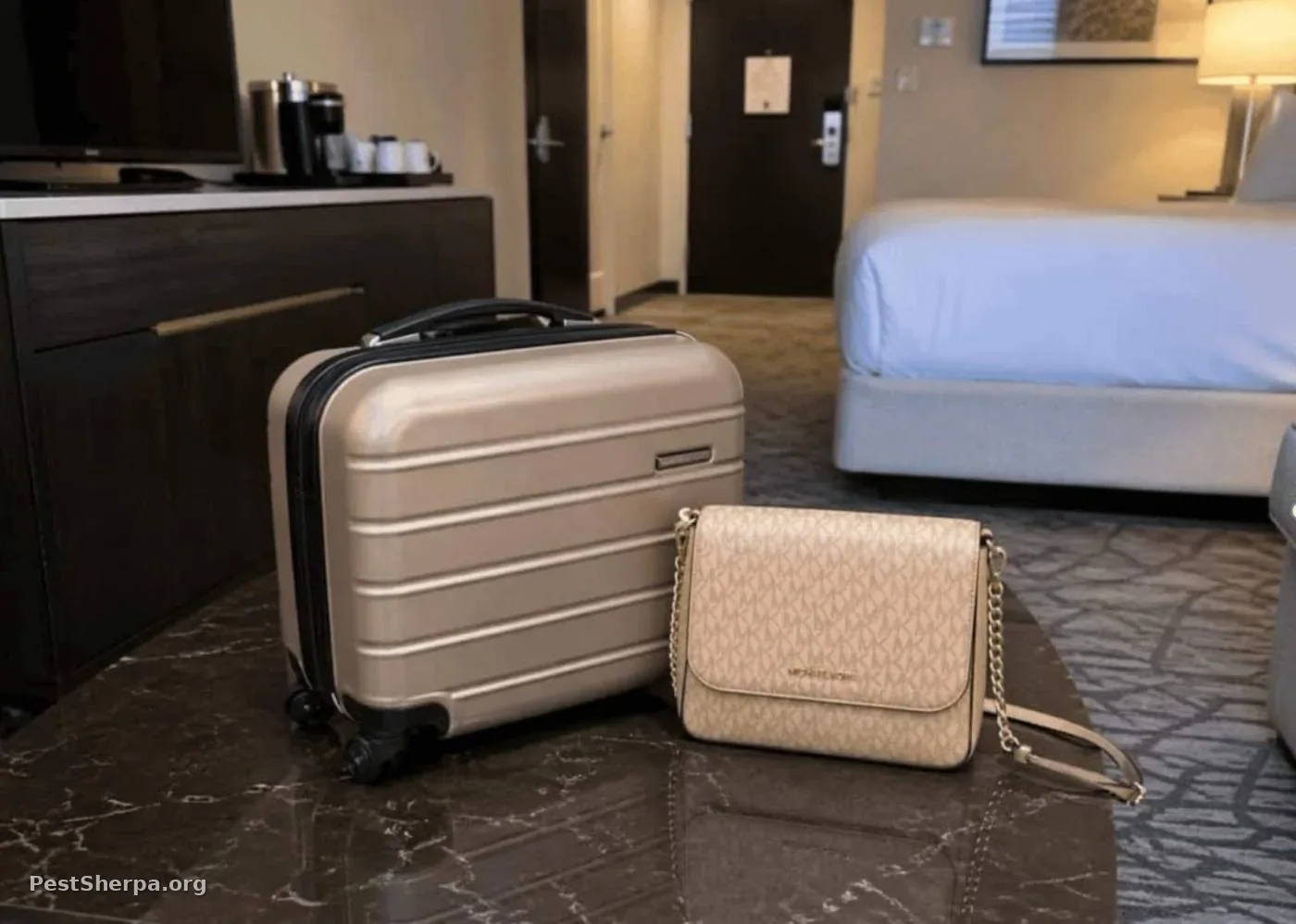
Learning how to check for bed bugs in a hotel room takes only five minutes and can dramatically reduce the chances of bringing these hitchhiking pests home. If you need a quick answer to “how do I check this hotel room for bed bugs before I unpack,” use the TL;DR checklist first, then follow the full inspection below. A hotel room may appear spotless and still harbor bed bugs because they are introduced by guests, not by poor housekeeping. Pest control professionals inspect hotel rooms in a logical sequence, beginning with the highest-risk hiding places before luggage is unpacked. This step-by-step guide shows you exactly where to look, what evidence to look for, and what to do if you find signs of bed bugs.
This hotel checklist is part of the Bed Bug Guide (identification, prevention, and what to do at home). Stay here for the room inspection; use the hub for ID and home response.
Pest control professionals know exactly where bed bugs hide because these insects rarely wander into open areas. Instead, they seek narrow cracks, mattress seams, fabric folds, headboards, furniture joints, and other protected locations close to sleeping people. Fortunately, those hiding places are limited, making a careful visual inspection both practical and highly effective.
Greg Baumann says: “Most travelers spend too much time looking across the mattress and not enough time inspecting seams, folds, and cracks. That’s where bed bugs actually hide.”
TL;DR: How to Check a Hotel Room for Bed Bugs (5 Minutes)
How to check for bed bugs at a hotel before you unpack: keep luggage safe, then inspect the highest-risk spots in order. Jump to the full step-by-step inspection below if you want every detail.
- Park luggage in the bathroom or bathtub (safe spot) before you unpack.
- Check mattress seams, piping, corners, labels, and buttons.
- Inspect the headboard and the gap behind it.
- Check the bed frame and platform joints.
- Skip the luggage rack if you can. If you must use it, inspect it first.
- Open the nightstand and check seams and drawer edges.
- Scan soft chairs and other upholstered furniture near the bed.
- If time allows, check picture frames, outlet covers, and baseboards behind the bed.
- Look for live bed bugs, black fecal spots, shed skins, eggs, and rusty stains.
- If you find evidence, request another room that is not adjacent, directly above, or directly below the original room.
People often search for “how to inspect a hotel room for bed bugs,” “how to check for bedbugs at a hotel,” or “how to find bed bugs in a hotel room.” Same job: a fast visual check before you settle in. Spelling varies (bed bugs vs bedbugs); the insects do not.
Although no inspection can guarantee that a room is completely free of bed bugs, these simple steps dramatically reduce the chance of sleeping near an active infestation or carrying hitchhikers home in your luggage.
Jump to Section
- Why Inspect Before You Unpack?
- The Professional 5-Minute Inspection Process
- The 10 Highest-Risk Places to Check
- Know What You’re Looking For
- Step-by-Step Hotel Room Inspection
- What to Do If You Find Bed Bugs
- What to Do When You Return Home
- Frequently Asked Questions
Why You Should Inspect Before You Unpack
Bed bugs are not attracted to dirty hotels. They are attracted to people. Every guest who enters a hotel room has the potential to introduce bed bugs inside luggage, clothing, backpacks, purses, wheelchairs, or other personal belongings. Even hotels with excellent housekeeping programs occasionally experience introductions because bed bugs arrive with guests, not because the property is poorly maintained.
The inspection should always occur before you place your suitcase on the bed, sit on upholstered furniture, or unpack clothing into drawers. A few minutes spent checking the highest-risk hiding places can prevent weeks or months of frustration after returning home.

The Professional 5-Minute Inspection Process
Professional pest management technicians rarely inspect an entire room at random. Instead, they begin where bed bugs are most likely to be found and work outward in a logical sequence. Following the same approach allows travelers to inspect a room efficiently without taking furniture apart or disturbing hotel property.
- Secure your luggage in the bathroom.
- Inspect the bed thoroughly.
- Check the headboard.
- Inspect the bed frame.
- Skip the luggage rack if you can, or inspect it before use.
- Inspect the nearest nightstand.
- Check upholstered furniture.
- Look around nearby wall fixtures and curtains.
The goal is not to prove that a room is completely free of bed bugs. Rather, it is to determine whether there is enough evidence of activity that you should request another room before settling in.
Expert Tip: Bed bugs avoid open spaces whenever possible. Focus your attention on seams, cracks, joints, folds, piping, screw holes, and areas where two surfaces meet. Those locations reveal infestations far more often than broad, flat surfaces.
The 10 Highest-Risk Places to Check for Bed Bugs
Not every part of a hotel room deserves the same attention. Bed bugs prefer tight, protected hiding places close to where people sleep. If you only have a few minutes, inspect these locations in order of importance. This approach mirrors how experienced pest management professionals evaluate sleeping areas during an inspection.
| Inspection Location | Likelihood | Inspection Time |
|---|---|---|
| Mattress seams and piping | ★★★★★ | 60 seconds |
| Headboard | ★★★★★ | 45 seconds |
| Bed frame joints | ★★★★☆ | 45 seconds |
| Luggage rack | ★★★★☆ | 30 seconds |
| Nightstand | ★★★☆☆ | 30 seconds |
| Upholstered chair | ★★★☆☆ | 30 seconds |
| Curtains near the bed | ★★☆☆☆ | 20 seconds |
| Picture frames and mirrors | ★★☆☆☆ | 20 seconds |
| Baseboards behind the bed | ★★☆☆☆ | 20 seconds |
| Electrical outlets / wall plates near bed | ★☆☆☆☆ | 20 seconds |
If your inspection finds no evidence in the first five locations, the likelihood of encountering an obvious infestation drops considerably. While no visual inspection can guarantee that a room is completely free of bed bugs, checking these high-risk hiding places greatly improves your chances of detecting an active problem before you unpack.
Know What You’re Looking For
Many travelers expect to see live bed bugs crawling across the mattress. In reality, that is uncommon. Bed bugs spend most daylight hours hidden inside narrow cracks and seams. More often, you’ll find the evidence they leave behind rather than the insects themselves.
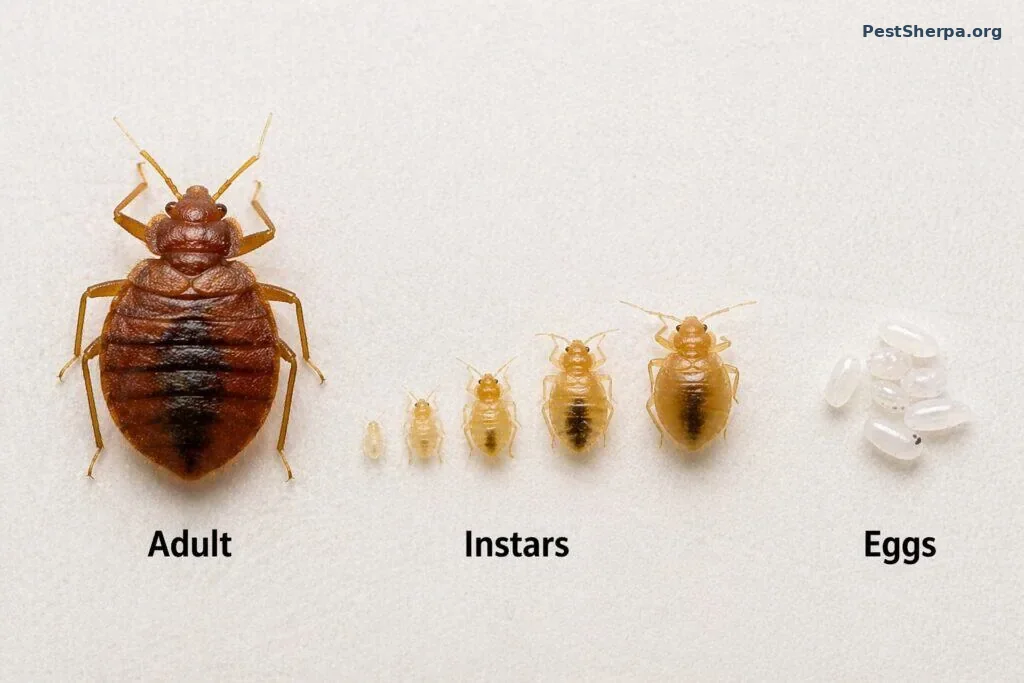
Look for These Signs
- Live bed bugs: Flat, oval insects about the size of an apple seed.
- Nymphs: Smaller, pale-colored immature bed bugs that become reddish after feeding.
- Tiny white eggs: About 1 mm long and often cemented into cracks and seams.
- Shed skins: Empty translucent exoskeletons left behind as bed bugs grow.
- Black fecal spots: Small ink-like stains caused by digested blood.
- Rust-colored stains: Small blood smears left on bedding after feeding.
- Sweet, musty odor: Occasionally present in heavy infestations but never a reliable inspection method.
Greg’s Expert Tip: Don’t become discouraged if you don’t see a live bed bug. During professional inspections, black fecal spotting and shed skins are often the first clues that an infestation is present.
Step-by-Step Hotel Room Bed Bug Inspection
Step 1: Place Your Luggage in a Safe Location
Before inspecting anything else, place your suitcase in the bathroom, bathtub, or another hard-surfaced area away from upholstered furniture and the bed. Bathrooms are generally among the least likely places to harbor bed bugs because they offer few hiding places and are visited less frequently by sleeping guests.
Keep purses, backpacks, jackets, and laundry off the bed, sofa, carpet, and luggage rack until the inspection has been completed. A small flashlight is helpful, but the flashlight on most smartphones provides sufficient light for a careful visual inspection.
Professional Tip: One of the most common mistakes travelers make is placing luggage on the bed “just for a minute” before beginning the inspection. If bed bugs are present, that brief contact may be enough for one to crawl into a suitcase.
Step 2: Inspect the Mattress First
The mattress remains the single most important location to inspect because it places bed bugs closest to a sleeping host. Begin by folding back the comforter, top sheet, and fitted sheet at each corner. Carefully examine mattress seams, piping, labels, handles, buttons, and fabric folds where bed bugs commonly hide during daylight hours.
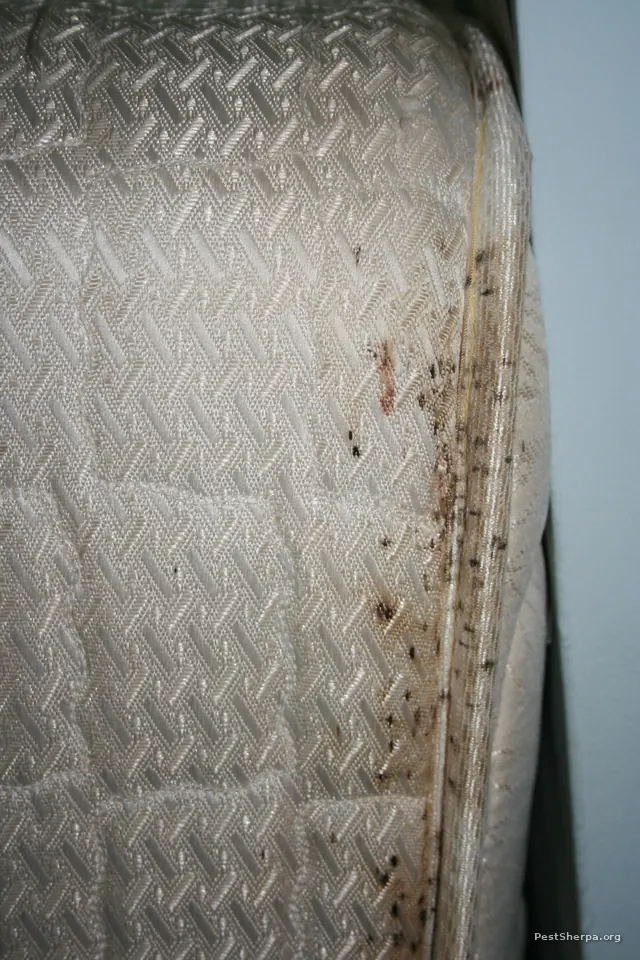
Lift the mattress edge just enough to inspect the side and underside nearest the head of the bed. There is no need to remove the mattress or dismantle hotel furniture. The objective is a careful visual inspection, not a destructive search.
Step 3: Examine the Headboard Carefully
After inspecting the mattress, turn your attention to the headboard. In many hotel rooms, this is one of the most common places to find bed bugs because it provides a dark, protected harborage only inches from sleeping guests. Bed bugs often hide where the headboard contacts the wall or around mounting hardware.
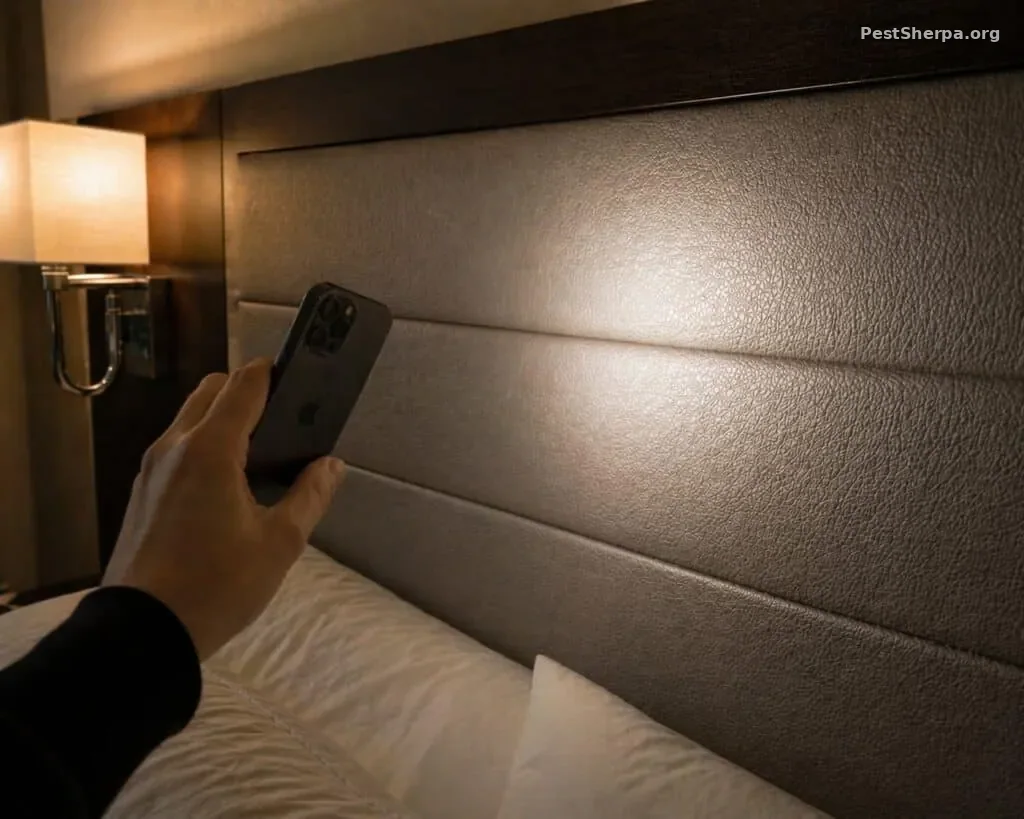
Do not remove a mounted headboard or attempt to disassemble hotel furniture. Instead, slowly shine your flashlight along the top edge, side edges, lower edge, mounting brackets, and the narrow gap between the headboard and wall.
Pay particular attention to screw holes, seams, trim, brackets, wall contact points, and any narrow spaces where the headboard meets another surface. Black fecal spotting, shed skins, or a live insect in this area should be treated as serious evidence.
Step 4: Inspect the Bed Frame and Platform
After the mattress and headboard, inspect the bed frame, platform, and support structure around the head of the bed. Bed bugs often use joints, screw holes, cracks, brackets, and places where wood, metal, or fabric surfaces meet.
Look along the side rails, corner joints, underside edges, and any fabric-covered platform areas. You do not need to move heavy furniture. A slow flashlight inspection around reachable cracks and joints is enough for a traveler’s screening inspection.
Step 5: Skip the Luggage Rack If You Can
The rack is riskier than it looks: hollow metal tubes have holes you cannot see inside. If you must use it, inspect it first. Bed bugs can hide in fabric straps, folded corners, wooden joints, metal joints, screw heads, and the underside of the rack.
- Fabric straps
- Wood or metal joints
- Screw heads
- Underside corners
- Folded areas
- Cracks where parts join together
If you must use the rack and it appears clear, pull it several inches away from both the bed and wall. Otherwise, keep your suitcase closed in the bathroom, bathtub, or another hard-surfaced area away from the bed.
Step 6: Inspect the Nightstand
Nightstands receive less attention than beds but frequently provide excellent hiding places because they remain close to sleeping guests and contain numerous protected joints and cracks.
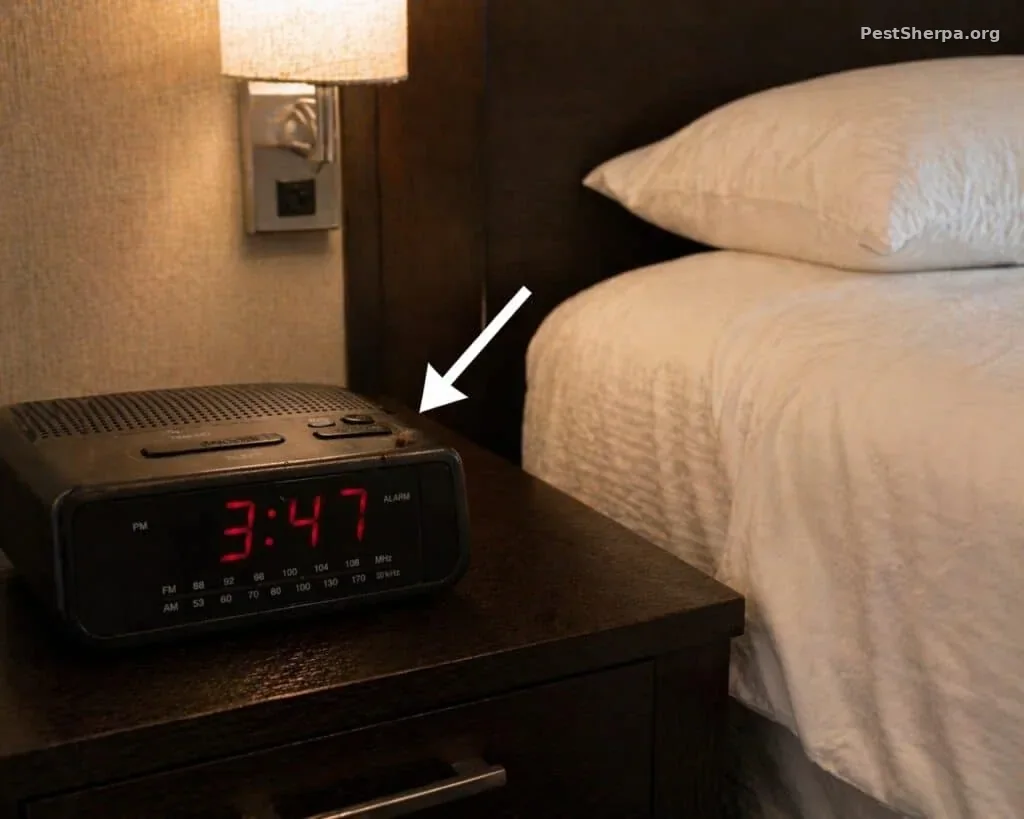
Inspect drawer corners, joints, screw holes, the underside of the tabletop, and the back edge nearest the wall. Look around, but do not disassemble, telephones, clocks, lamps, and other electrical devices.
Step 7: Check Upholstered Furniture
If the room contains upholstered chairs or sofas, spend a few moments inspecting cushion seams, zipper areas, welting, skirts, folds, and locations where cushions meet the frame. Although these areas are generally lower priority than the bed itself, they can harbor bed bugs, particularly in rooms where guests lounge or sleep on furniture.
Nearby curtains may also be inspected quickly by examining lower hems and folds closest to the bed.
Step 8: Scan Wall Fixtures Near the Bed
If time allows, give picture frames, mirrors, electrical outlets, and baseboards behind the headboard a quick look. Bed bugs sometimes hide behind wall plates and along the wall-to-carpet edge closest to the sleepers. This is a secondary pass after the mattress, headboard, frame, luggage rack, nightstand, and seating.
Common Mistakes Travelers Make
- Putting luggage on the bed before inspecting the room.
- Assuming luxury hotels cannot have bed bugs.
- Searching only for live insects while ignoring fecal spotting and shed skins.
- Leaving clothing spread across chairs or carpeting.
- Using a luggage rack when you could skip it, or using one without inspecting it first.
- Relying on bites instead of physical evidence.
- Accepting the room immediately next door after reporting bed bugs.
Professional Perspective: The cleanliness of a hotel room tells you almost nothing about the likelihood of bed bugs. These insects are introduced by guests and can appear in properties ranging from budget motels to five-star luxury resorts.
Bed Bug Evidence vs. Common Look-Alikes
Travelers often misread ordinary hotel-room debris as bed bugs. Use this quick compare: real evidence is usually clustered in seams and cracks near where people sleep.
| What you see | Likely bed bug evidence? | Often confused with |
|---|---|---|
| Black ink-like fecal dots on seams or fabric | Yes (very common) | Dirt, mascara flecks, ink, food crumbs |
| Tiny white eggs cemented in cracks | Yes | Dust clumps, salt grains, lint |
| Shed translucent skins (cast skins) | Yes | Skin flakes, paper bits, fabric fibers |
| Rust-colored blood spots on sheets | Often | Old makeup, food stains, rust from hardware |
| Live flat oval insects in seams | Yes | Other small insects; confirm shape and location |
| Loose dust, mold spots, hair, or random lint | No | Not clustered bed bug evidence by itself |
A complete inspection usually takes about five minutes. While even professional inspections cannot guarantee that every bed bug will be found, concentrating on the highest-risk hiding places dramatically improves your chances of identifying an active infestation before settling into the room.
What to Do If You Find Bed Bugs
Finding evidence of bed bugs does not necessarily mean the entire hotel has an infestation, but it does mean you should take immediate action before unpacking. The goal is to prevent your belongings from becoming exposed while allowing hotel management to respond appropriately.
1. Stop Unpacking Immediately
Leave bags where they are. If your luggage is still in the bathroom or bathtub, keep it there. Avoid placing clothing, shoes, backpacks, purses, or personal items on the bed, upholstered furniture, or carpet until hotel management has addressed the situation.
2. Document What You Found
Take clear photographs whenever possible. Close-up images of live insects, black fecal spotting, shed skins, eggs, or blood stains can help hotel management verify the problem and allow pest management professionals to respond more quickly.
If you safely collect a specimen, place it in a sealed plastic bag or disposable cup. Avoid crushing it, as an intact specimen is easier to identify.
3. Request a Different Room
Ask for another room that is not next door, directly above, or directly below the original room. Bed bugs can move through wall voids, utility penetrations, hallways, and housekeeping equipment, making nearby rooms more likely to share the same problem.
Greg’s Expert Tip: Accepting the room immediately next door is one of the biggest mistakes travelers make. If the infestation extends beyond one room, adjacent rooms are often affected first.
4. Don’t Treat the Room Yourself
Avoid using aerosol insecticides, total-release foggers, essential oils, alcohol, or over-the-counter sprays. These products rarely solve the problem, may scatter bed bugs into new hiding places, and can interfere with the hotel’s professional pest management program.
A reputable hotel should have established procedures for responding to suspected bed bug reports, including room inspections, temporary room closures when necessary, and treatment by licensed pest management professionals.
Protect Your Luggage During Your Stay
Even after changing rooms, continue practicing good travel habits throughout your stay. Most bed bugs are transported home because travelers unknowingly give them access to luggage or clothing.
- Keep your bags off the luggage rack when you can.
- If you must use the rack, inspect it first and pull it away from the bed and wall.
- Keep suitcases closed when not in use.
- Place dirty laundry in sealed plastic bags.
- Avoid leaving clothing on beds, sofas, or carpeting.
- Inspect luggage briefly before checking out.
Why seal dirty laundry? Worn clothing contains human scent that may attract bed bugs looking for a hiding place near a future blood meal. Sealing laundry reduces opportunities for hitchhiking insects.
What to Do When You Return Home
Your inspection doesn’t end when the trip does. A final check at home greatly reduces the chance of accidentally introducing bed bugs into your residence.
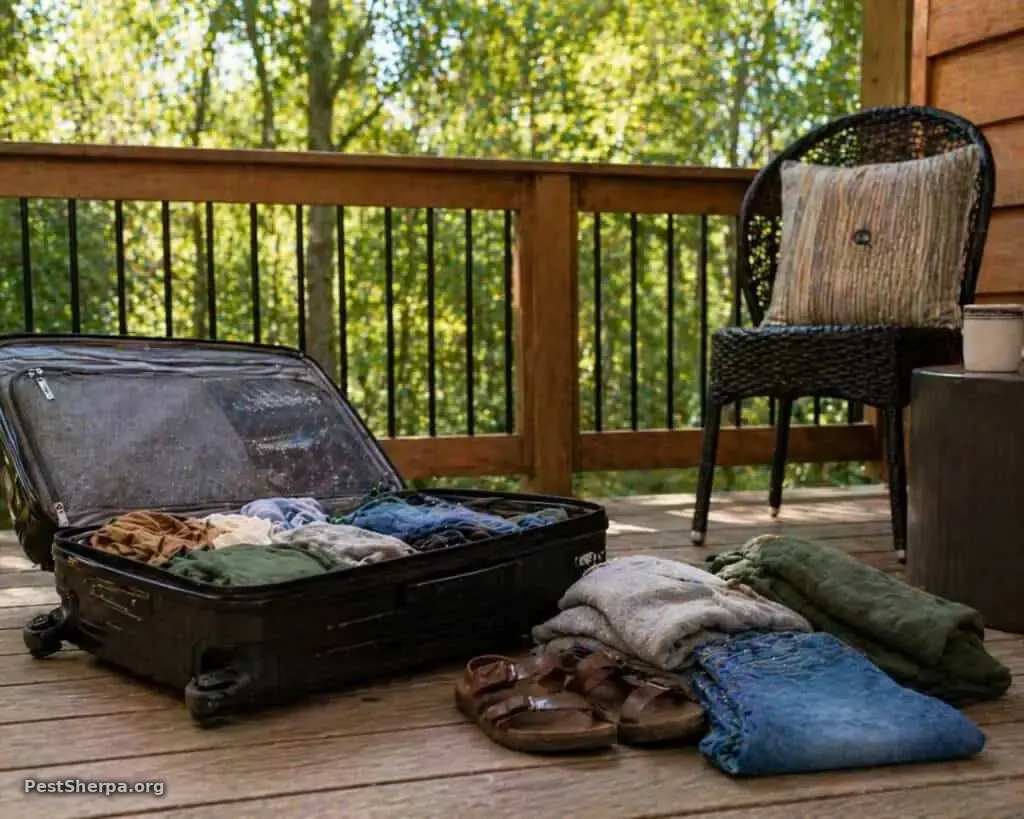
Inspect Your Luggage
Whenever practical, inspect luggage outdoors, in a garage, or another area away from bedrooms. Pay close attention to:
- Zippers
- Seams
- Handles
- Wheels
- Pockets
- Interior folds
Launder Clothing Promptly
Place washable clothing directly into the washing machine. Dry clothing using the highest temperature recommended for the fabric. High dryer temperatures are one of the most effective ways to kill bed bugs and their eggs on clothing and other washable fabrics.
Vacuum the Suitcase
Vacuum suitcase seams, folds, and pockets thoroughly. Immediately empty the vacuum contents into a sealed plastic bag before disposing of them. Store luggage away from bedrooms whenever possible until your next trip.
Professional Perspective: Most travelers who bring bed bugs home never realized they picked one up. A simple unpacking routine is the easiest prevention there is.
A hotel find is often a room change and a checkout. If the problem is home in a multi-unit building, shared walls change the response: see Bed Bugs in Apartments.
Frequently Asked Questions
Can expensive hotels have bed bugs?
Yes. Bed bugs are introduced by guests, not by poor sanitation. Luxury hotels, budget motels, vacation rentals, cruise ships, college dormitories, and even hospitals can occasionally experience bed bug introductions. Price and cleanliness are poor indicators of bed bug risk.
How long does a hotel room inspection take?
A careful inspection of the highest-risk hiding places usually takes about five minutes. Most professionals begin with the mattress and headboard before moving to nearby furniture and the luggage rack.
Should I inspect every hotel room?
Yes. Because bed bugs are transported by travelers, every occupied hotel has some level of risk. A brief inspection quickly becomes routine and can prevent a much larger problem later.
Can I rely on bed bug bites to know whether a room has bed bugs?
No. Many people show little or no reaction to bed bug bites, while others develop reactions that resemble mosquito bites, allergic skin conditions, or other insect bites. Physical evidence such as live insects, fecal spotting, shed skins, or eggs is far more reliable than bite appearance.
Do bed bugs only live in beds?
No. Although beds are their preferred location because they remain close to sleeping hosts, bed bugs also hide in headboards, nightstands, upholstered furniture, picture frames, luggage racks, baseboards, curtains, and many other protected cracks near sleeping areas.
Should I request the room next door if I find bed bugs?
No. Whenever possible, request a room that is not adjacent, directly above, or directly below the affected room. Bed bugs may spread through wall voids, utility penetrations, housekeeping equipment, or by guest movement.
Can bed bugs travel home inside my suitcase?
Yes. Suitcase seams, zippers, pockets, handles, and wheel assemblies all provide hiding places. That is why inspecting luggage before returning home is one of the most important parts of preventing an infestation.
What if I already unpacked before I checked?
Stop using the luggage rack and soft furniture. Move bags back to a hard surface such as the bathroom floor or bathtub, then finish the mattress, headboard, and frame check. If you find evidence, tell the front desk, request a non-adjacent room, and keep bags closed until you can re-inspect clothing and the suitcase.
Can I use a steamer on a hotel mattress?
Travelers sometimes ask about steaming. Hotel rooms are not a DIY treatment site. Steaming without training can miss harborages, damage finishes, or create a false sense of safety. Document what you found, request another room, and leave treatment to the property’s pest professionals.
Should I change hotels if I find bed bugs?
Often a different room in the same property is enough if it is not adjacent, above, or below the affected room and you re-inspect before unpacking. If management cannot provide a suitable room, or if you are uncomfortable staying, changing hotels is a reasonable traveler choice. Either way, protect luggage and re-check bags before you head home.
Expert Interpretation
After more than four decades working in structural pest management, I can confidently say that most hotel bed bug introductions occur because travelers unknowingly transport them, not because hotels ignore the problem. Bed bugs are exceptionally efficient hitchhikers, and even the best-managed properties occasionally encounter introductions from incoming guests.
The most effective strategy is not fear. It is preparation. A five-minute inspection performed before unpacking dramatically reduces your chances of encountering an obvious infestation or carrying bed bugs home. Learning where bed bugs actually hide, rather than relying on myths or bite reactions, gives travelers a practical advantage that takes only minutes to apply.
The Pest Sherpa Bottom Line:
Inspect before you unpack. Focus on mattress seams, headboards, and nearby furniture. Keep luggage isolated until your inspection is complete. If you discover evidence of bed bugs, request another room that is well separated from the original room and inspect your belongings before returning home.
Continue Learning About Bed Bugs
For identification, biology, prevention, bites, and home treatment options, continue with the Bed Bug Guide (parent hub for this hotel checklist):
- Bed Bug Bites
- Bed Bug Eggs
- Bed Bug Lifecycle
- Bed Bug Prevention
References
- U.S. Environmental Protection Agency: How to Find Bed Bugs
- U.S. Environmental Protection Agency: Travel Tips for Avoiding Bed Bugs
- Centers for Disease Control and Prevention: Bed Bugs
- University of Minnesota Extension: Bed Bug Resources
- World Health Organization: Public Health Significance of Urban Pests (Bonnefoy, Kampen & Sweeney, Editors)
- Harlan, H.J., Faulde, M.K. & Baumann, G.J.: “Bedbugs” chapter in Public Health Significance of Urban Pests (WHO PDF)
- National Pest Management Association: NPMA Field Guide to Structural Pests (2nd Edition) by Eric H. Smith & Richard C. Whitman
This article was written by Greg Baumann, founder of Pest Sherpa, and reflects more than 40 years of professional pest management experience.
About the Author

Greg Baumann | Pest Control Expert
Greg Baumann is the founder of Pest Sherpa and a Pest Control Expert with more than 40 years of professional pest management experience. His articles combine decades of field experience, technical expertise, and science-based guidance to help homeowners identify pests correctly, understand real-world risks, and make informed pest management decisions.
Mission: Identify the pest. Understand the risk. Stop the problem. Prevent the comeback. Know when it’s time to call a professional.