

Pest control for homeowners is a system: identify the pest, reduce what attracts it, block entry, then treat with the right tool if needed. This hub owns control strategy, DIY limits, safety, and when to hire. Identification and biology live in Pest Guides. Wood-destroying insects belong on the companion Termite Control hub.
On this page
- What pest control really means
- IPM in plain English
- How this hub relates to Pest Sherpa Pest Guides
- Common household pest categories
- The homeowner control framework
- Mistakes that look smart (and fail)
- Activity vs damage vs lookalike
- DIY product classes (not brands)
- Safety protocols
- Indoor vs outdoor and seasonal pressure
- When DIY fails / when to call a pro
- Myths that waste money or create risk
- FAQ
- Quick homeowner checklists
- Multifamily and shared-wall reality
- How to read a pest control service agreement
- References
- Related reading
What pest control really means
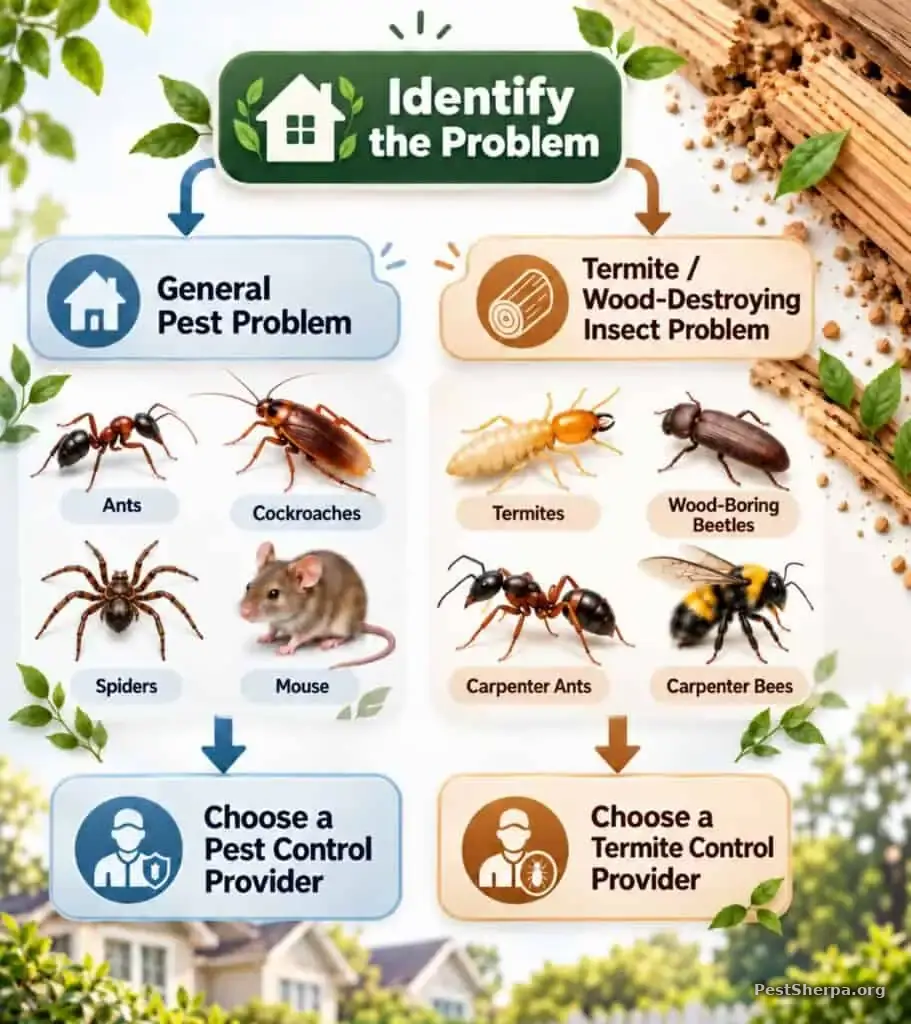
Many companies provide general pest and termite control. For a homeowner or property manager, effective pest control is a system:
| Pillar | What it does | Homeowner example |
|---|---|---|
| Prevention | Makes the property less suitable before pests establish | Fix leaks, store food airtight, trim vegetation off siding |
| Exclusion | Blocks entry | Door sweeps, screened vents, sealed utility gaps, filled foundation openings |
| Sanitation | Removes food, water, and harborage | Crumbs, trash lids, cardboard stacks, pet food overnight |
| Monitoring | Tells you how effective controls are working | Sticky traps, visual checks, noting when and where you see activity |
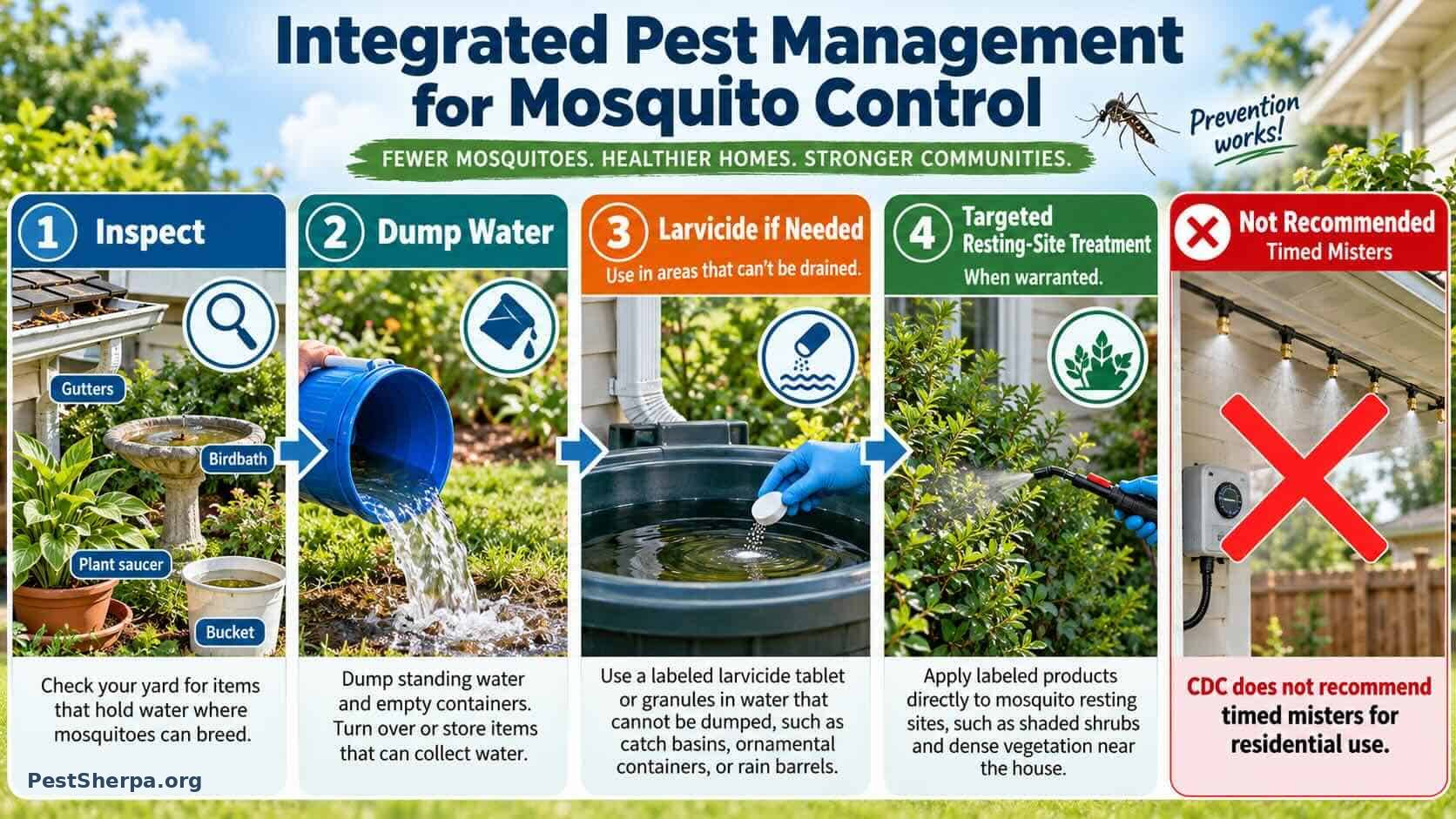
| Treatment | Targets the pest you actually have, with the right tool | Baits for cockroaches; snap traps for mice; larvicides (“dunks”) for mosquito water you cannot dump |
Just controlling the insect you see is often the least important step. If food, moisture, and entry points stay in place, the next generations (or the rest of the pests that you did not get) fill the gap.
Do this / don’t do this
- Do identify the pest first. Wrong ID drives wrong understanding of pest habits, wrong control methods and even wrong products to use.
- Research on this site or other unbiased sites to understand the biology and urgency. Avoid sites that are just sales tools.
- Do fix moisture and access before you reach for chemistry.
- Don’t fog an entire house because you saw one insect. In fact, don’t fog as a first choice.
- Don’t ignore the product labels; only use exact amounts specified and at the right mix. Ignore online posts about someone’s special recipe for control. Home brew insecticides might not only be illegal but they may be very dangerous especially for children and pets.
Termites are structural pests with different biology, treatment tools, and DIY limits. Use the Termite Guide for ID, and the companion Termite Control hub for treatment systems and warranties.
IPM in plain English
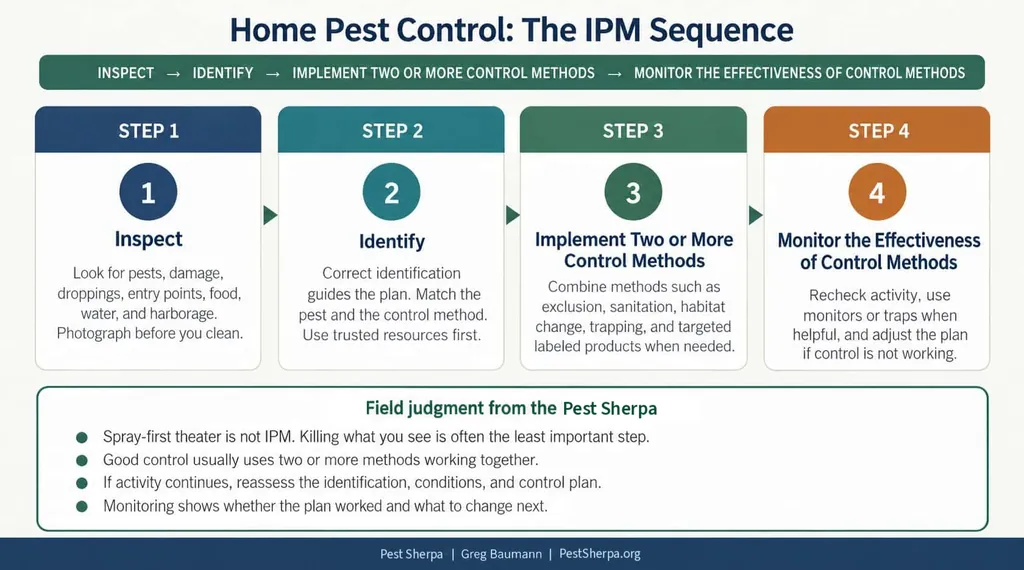
Integrated Pest Management (IPM) is the professional mindset translated for homes:
- Correct identification beats guessing and will save you time and money.
- Threshold matters. One ground beetle in mulch is not an “infestation.” German cockroaches breeding in a kitchen are.
- Use non-chemical tactics first when they work: exclusion, sanitation, habitat change, trapping.
- Targeted pesticides last, only products labeled for that pest and site, used exactly as labeled including safety precautions.
- Evaluate and adjust. If activity continues, change the plan. Do not just use more of the same product and never ignore dilution rates as rates are optimal for control of the pest. The idea that “if a little is good, more is better” is just not true. You wouldn’t take three times the amount of prescribed medicine; ignoring the pesticide label is just as foolish and maybe dangerous.
IPM is not “never use pesticides.” It is “use the right tool at the right time, at the least risk that still solves the problem.”
University and federal programs teach this same sequence. On Pest Sherpa, you will see it on category guides for ants, cockroaches, rodents, mosquitoes, fleas, and others.
Related on this site
- Confused by labels? Start with Labels & Law and the Q&A confused about pesticides / which chemical.
- Hiring help? How to hire a licensed pest control company.
How this hub relates to Pest Sherpa Pest Guides
| Nav / content job | Owns | Does not own |
|---|---|---|
| Pest Control hub (this page) | Methods, DIY frameworks, safety, decision trees, seasonal reality, when to call a pro | Full pest biology and photo ID galleries |
| Pest Guides | ID, lookalikes, pest type pages, pest-specific “what to do” advice | Site-wide pesticide safety encyclopedia |
| Termite Control hub (companion) | Termite inspection, treatment systems, warranties, DIY limits for wood-destroying insects | General kitchen ant baiting advice |
Browse the full index: Pest Guides.
If you are not sure what you have, identify first. Then come back here for the control playbook.
Common household pest categories
Use these verified category guides. Each guide routes you to species pages when you need finer ID.
Kitchen, food, and indoor breeders
| Category | Start here | Control note (hub-level) |
|---|---|---|
| Ants | Ant Guide | Bait type and nest location beat spray-and-pray |
| Cockroaches | Cockroach Guide | German = indoor priority; large outdoor species often = moisture + entry |
| Pantry pests | Pantry Pest Guide | Find the package; do not spray the pantry |
| Flies | Fly Guide | Source hunt (trash, drains, carrion) before adult sprays |
| Rodents | Rodent Guide | ID first; snap traps + exclusion; special cleanup for any rodent |
Biting / blood-feeding / medical concern framing
| Category | Start here | Control note |
|---|---|---|
| Bed bugs | Bed Bug Guide | Evidence over bites; heat/laundry/encasements; DIY limits are real |
| Fleas | Flea Guide | Pet + premises together; pupae keep emerging |
| Mosquitoes | Mosquito Guide | Dump and scrub water; adult fogging is temporary |
| Ticks | Tick Guide | Remove attached ticks per CDC; yard spray alone does not equal disease prevention |
| Spiders | Spider Guide | Most are not medical emergencies; ID and geography first |
Moisture, occasional invaders, fabric, wood
| Category | Start here | Control note |
|---|---|---|
| Moisture pests | Moisture Pest Guide | Dry it out, then exclude |
| Overwintering invaders | Overwintering Invader Guide | Seal before fall; vacuum, do not crush or fog voids |
| Carpet beetles | Carpet Beetle Guide | Larvae damage fabrics; find the source |
| Wood-boring beetles | Wood-Boring Beetle Guide | Confirm beetle vs termite before treatment |
| Termites | Termite Guide | Structural; see Termite Control for systems |
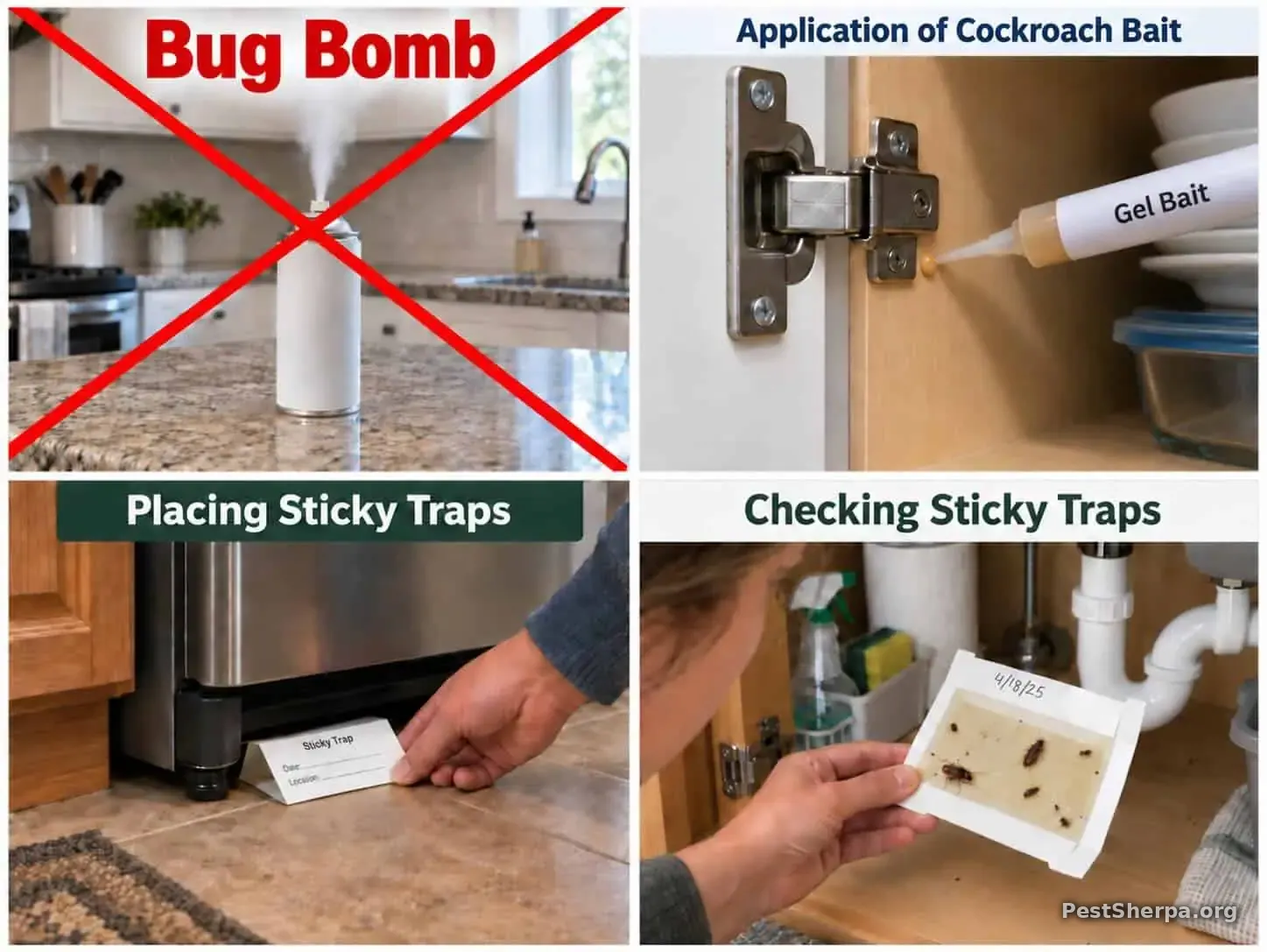
Also on the index: Bees and wasps and Crickets.
The homeowner control framework
Use this sequence for almost every household pest problem that is not an immediate medical emergency.
Step 1. Inspect
- Where do you see activity (kitchen, attic, crawlspace, yard, bed, pet bedding)?
- When (night only, after rain, dusk, daytime)?
- What evidence (droppings, frass, mud tubes, webbing, bites, live insects)?
- Photograph before you clean. Evidence helps ID and helps a pro if you call one.
Step 2. Identify
Open the matching Pest Guide. Match lookalikes. A wrong ID wastes weeks and can scatter pests (classic with German cockroaches and some ants).
If you cannot identify it, Ask the Sherpa or consult a licensed inspector rather than buying random chemistry.
Step 3. Implement Two or More Control Measures
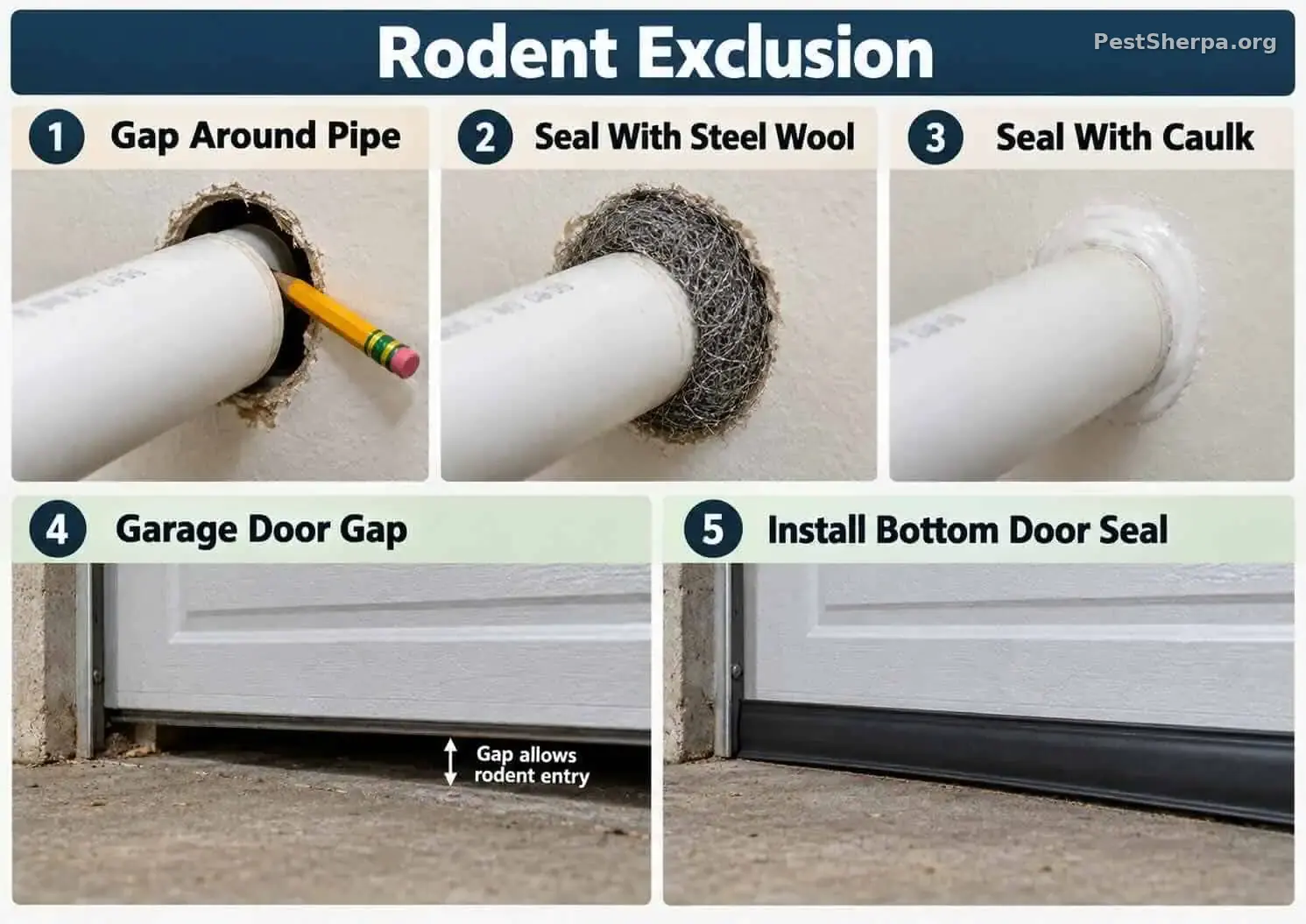
Exclude
- Seal gaps around doors, windows, pipes, cables, and foundation cracks that make sense for the pest size (mice: about 1/4 inch; rats: about 1/2 inch).
- Repair screens and door sweeps.
- Trim vegetation and tree limbs that bridge to the roof.
- For fall invaders, finish sealing before aggregation flights. See overwintering invaders.
Sanitize / change habitat
- Food: airtight storage, wipe residues, manage trash and recycling.
- Water: fix leaks, dehumidify damp rooms, dump outdoor standing water.
- Harborage: reduce cardboard, clutter, mulch against foundations, wood piles against siding.
Treat (targeted)
Choose a method matched to the pest:
- Baits for many ants and German cockroaches
- Traps for rodents and monitoring for insects
- Larvicides for mosquito water you cannot remove
- Vacuuming for spiders, overwintering invaders, and flea premises work
- Labeled residual or dust products only where the label allows and only after non-chemical steps
Step 4. Monitor
- Sticky traps in quiet corners (away from kids and pets)
- Recheck problem rooms on a schedule
- Stop when monitoring shows quiet for a full cycle of that pest’s life history, not after one quiet night
DIY-friendly vs call a pro soon
| Usually DIY-reasonable (after ID) | Call a licensed pro sooner |
|---|---|
| Occasional ants with clear trails + sugar baits | Carpenter ants with wood damage / moisture nests |
| Pantry moths or beetles after finding the package | German cockroaches spreading through multifamily walls |
| Occasional moisture invaders after drying and sealing | Bed bugs beyond a tiny, early introduction |
| Mosquito container dumping + larvicide dunks | Hidden breeding (sumps, neglected pools, neighbor sources) |
| House mice with snap traps + sealing | Established rats, attic roof rats, or deer-mouse heavy contamination |
| Single yellow sac spider (vacuum) | Confirmed brown recluse population in range |
Termites, fumigation, soil termiticides, and most whole-structure wood-destroying insect programs belong on the Termite Control hub, not in a weekend spray session.
Mistakes that look smart (and fail)
Hall of Fame field note: the moves that feel excessive are often the ones that break the plan.
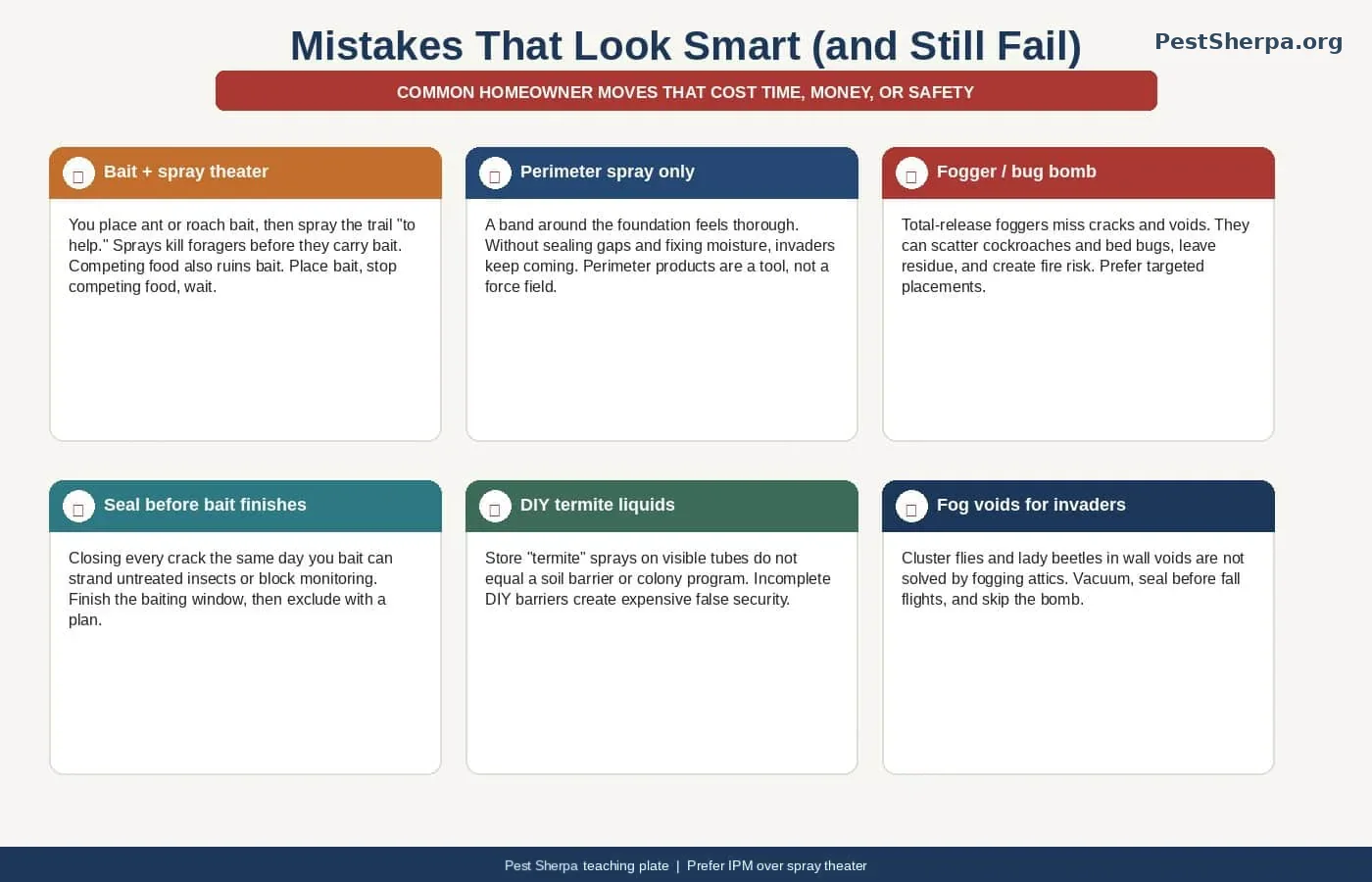
Bait placement theater
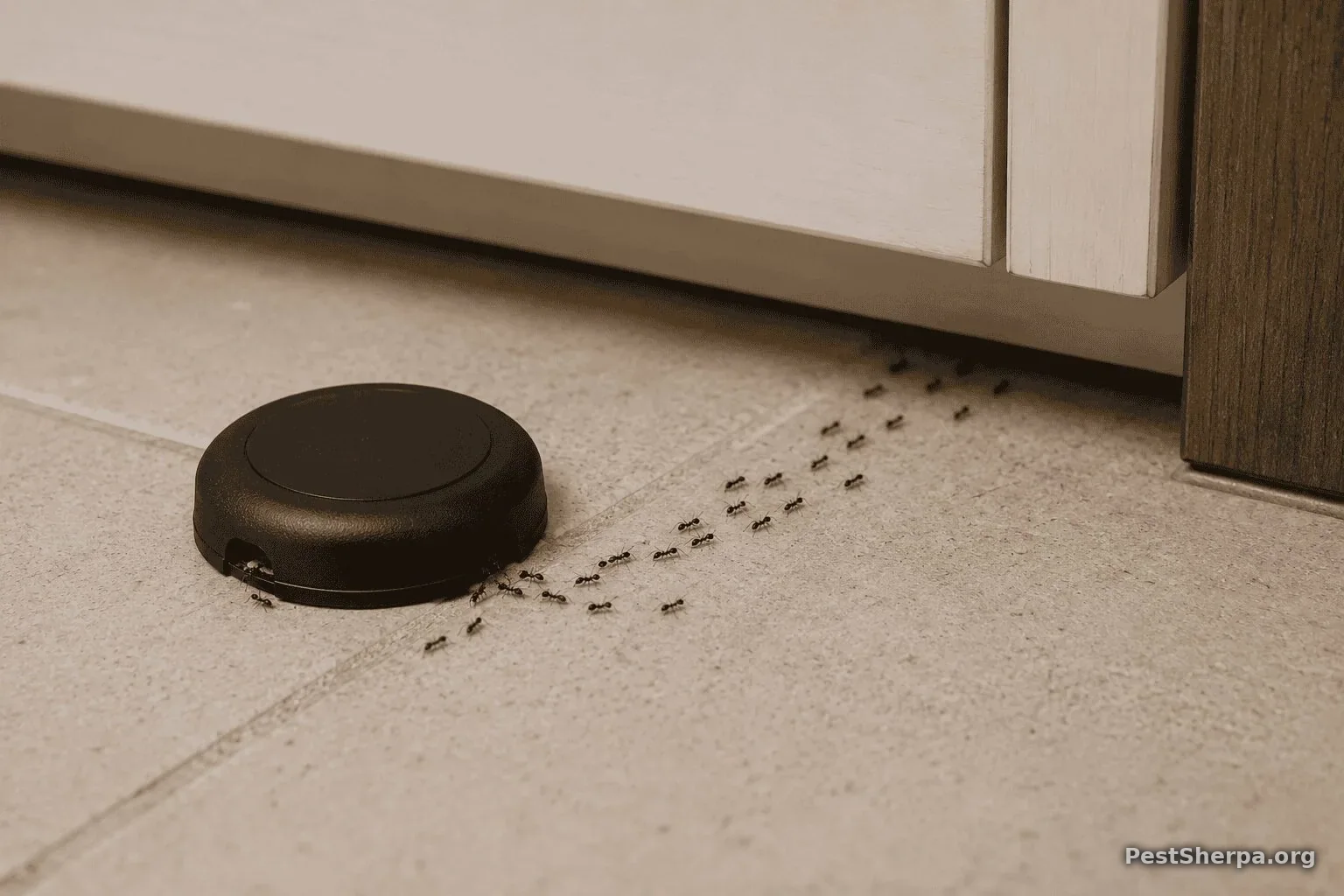
You buy the right ant or cockroach bait, then spray the trail “to help it along.” The spray kills foragers before they carry toxicant back to nestmates. Competing crumbs and sticky drink films do the same thing without a can. Place bait. Stop competing food. Wait. Do not stack residual spray on top of gel placements.
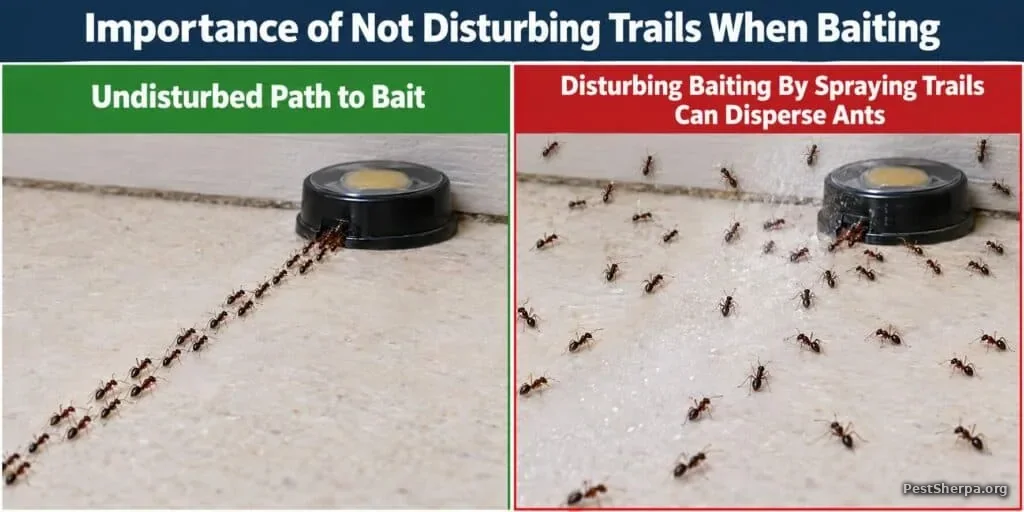
Bait works when foragers carry it to the colony. Spraying the trail can control a few visible ants but usually disperses ants rendering the bait worthless.
Perimeter spray theater
A band around the foundation looks professional. Without door sweeps, sealed utility gaps, and moisture fixes, invaders keep crossing. Perimeter products reduce pressure when used as labeled.
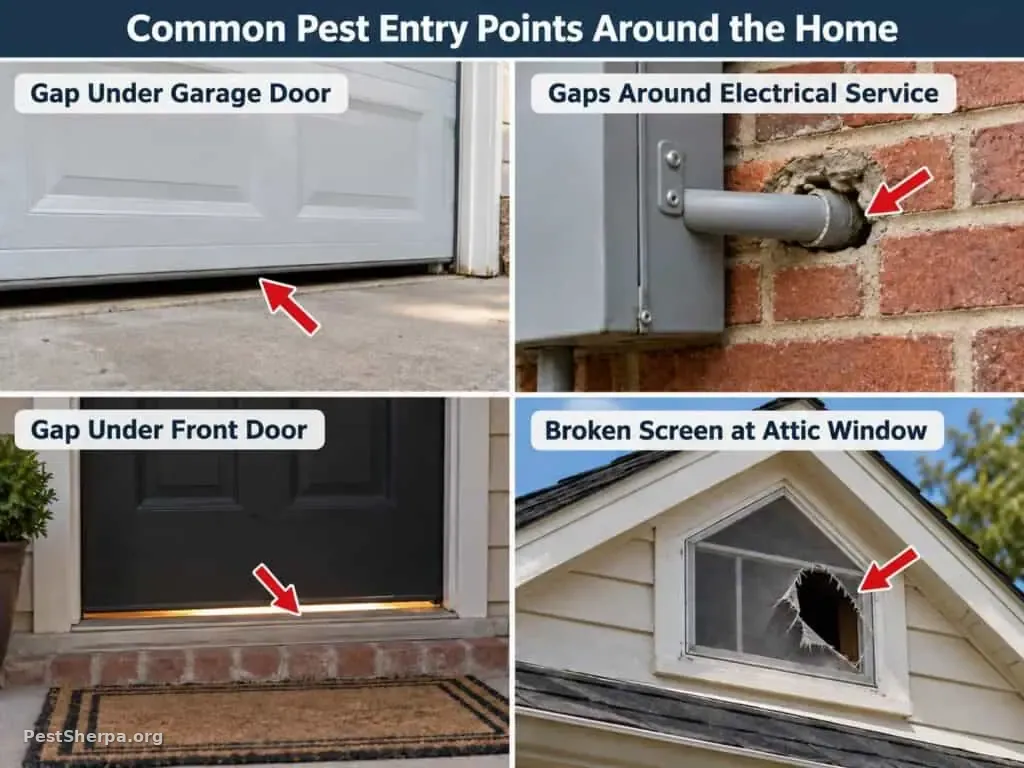
Perimeter spray is not a force field. Gaps under doors and around utilities are the highway.
Fogger blowback
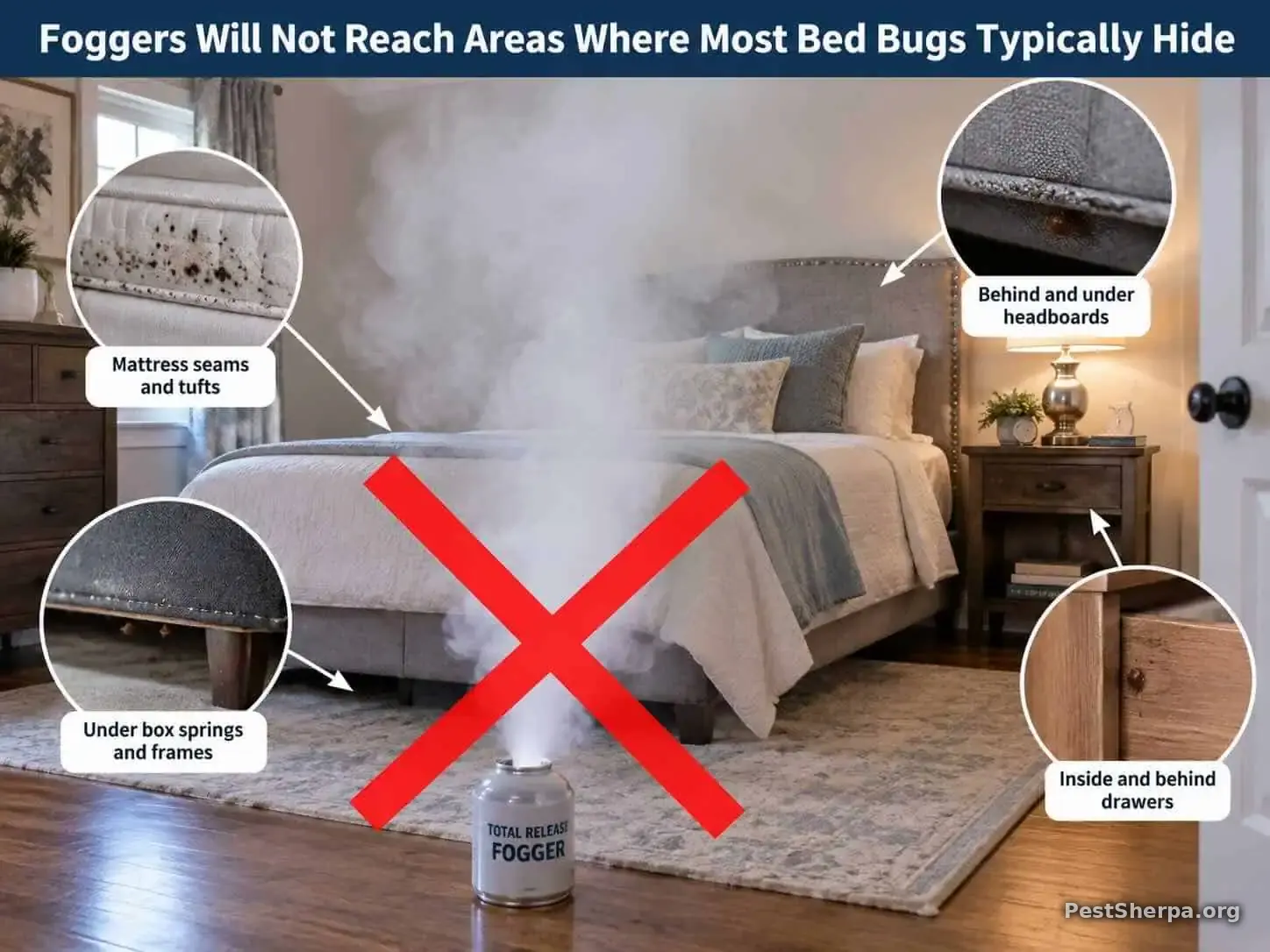
Total-release foggers feel like you “did the whole house.” They miss cracks and voids, can scatter German cockroaches and bed bugs, leave residue, and create fire risk near pilot lights. Prefer crack-and-crevice, baits, laundry heat, or a licensed professional plan after ID.
Sealing alone
Closing every gap as a control measure will prevent additional entry but it will not control the pests inside. Most pests once inside, stay inside and are not commuting from outside if they find food, water, comfortable temperature, and a place to live. You must get control inside.
DIY spray on termite mud tubes
Store sprays on visible mud tubes are not a soil barrier or colony program. This would merely treat a symptom, not the problem. That lane lives on the Termite Control hub. Incomplete DIY barriers create expensive false security.
Do this / don’t do this
- Do photograph evidence before you clean or spray.
- Do match product class to pest and your comfort zone (bait vs trap vs dump-water vs call a pro).
- Don’t fog first and identify later. Foggers have limited value indoors and can be dangerous.
- Don’t mix products or “double dose” because yesterday’s can “almost worked.”
Activity vs damage vs lookalike
Real houses can confuse homeowners. Use this field judgment before you buy chemistry.
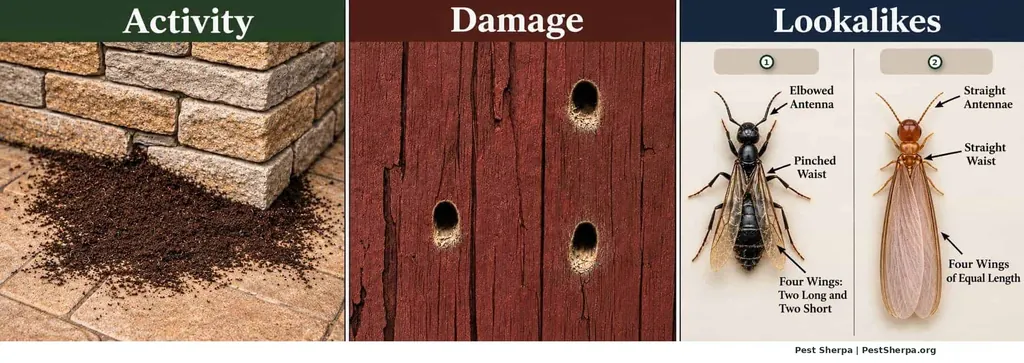
In the lookalikes panel, which one do you see? Match the number:
- Ant: elbowed antennae, pinched waist, four wings with the front pair longer than the back pair.
- Termite: straight antennae, straight waist, four wings of equal length.
Activity needs a plan now. Old damage needs inspection, not panic chemistry. Lookalikes change the entire plan (and success).
| What you are seeing | What it often means | What to do |
|---|---|---|
| Live insects on a trail or in a kitchen at night | Activity now | ID with Pest Guides; start IPM sequence |
| Old staining, empty wasp or termite tubes, old dead insects or historic holes with no fresh evidence | Possible old damage or old activity | Document; inspect before whole-house treatment |
| Soft wood near moisture | Moisture + possible wood pests | Separate rot from insects; see termites / wood-boring beetles |
| Flying ants vs termite swarmers | Lookalike that changes the entire plan | Antennae, waist, wing lengths (Termite Guide vs Ant Guide) |
| Bites alone | Not a diagnosis | Need insects or other evidence (see bed bugs, fleas) before treating a bedroom |
If you cannot tell activity from lookalike, Ask the Sherpa or hire a licensed inspector. Guessing is how people buy three wrong and ineffective products in a week.
DIY product classes (not brands)
Homeowners see shelves full of logos. Think in classes and jobs, then read the label.
Insect baits and gels
- Job: Pests feed on the bait or foragers carry toxicant back to the colony or nestmates
- Best suited to: Many kitchen ants, German cockroaches (gels), some other social insects when the label matches.
- Caveats: Do not spray over bait placements. Competing food if available gives more choice for the pest and ruins bait performance. Bait only after other food is removed. Wrong bait type (sugar vs protein) sits untouched. Keep away from children and pets per label.
Rodent Bait
While not a preferred control measure for indoors, it can have a place if the label is followed exactly and special care is used to follow all safety directions including making bait totally inaccessible to children and pets. Write down or take pictures of where bait is placed so you can remove all of it when rodents are eliminated.
Dusts
- Job: Thin films in wall voids (where labeled and accessed properly), attics, or cracks where insects travel.
- Caveats: Dusts drift so should be used in areas not subject to air movement such as voids. Respiratory exposure matters. Never dump into piles as if “more is better.” Never use outdoor dusts indoors unless the label allows. Boric acid and silica products still require label compliance.
Aerosols and contact sprays
- Job: Knock down visible insects or treat a small crack per label.
- Caveats: Often kill only what you see. Can scatter crawling insects such as cockroaches and ants. Poor substitute for baits on German cockroaches. Have a single fly bothering you? Use a fly swatter rather than chasing it with a can of spray. Total-release foggers miss harborages and can create fire and residue hazards.
Traps and monitors
- Job: Capture or detect (snap traps, sticky monitors, pheromone monitors).
- Caveats: Pheromone traps for pantry moths monitor males; they do not eradicate. Glue boards and snap traps are not a sole solution; find the food and source of entry. Some people prefer not to use glue boards as they view them as inhumane. Whatever your choice, use any traps safely and monitor daily. Place traps where kids and pets cannot access them.
Botanicals and “natural” products
- Job: Some labeled botanical products can help for specific uses.
- Caveats: “Natural” is not a synonym for “harmless” or “food-safe.” Many botanical products are EPA-registered. Only pesticides that qualify as minimum-risk pesticides are exempt from EPA registration. EPA has not reviewed them but they may only contain ingredients that EPA has allowed. Many states now require state review and registration. Exempt pesticide products still require a label and still must match the pest type and site. Follow all safety directions. Certain natural products can cause serious eye injury if not used according to the label. Essential-oil home brew folklore is not a pest treatment plan and may cause injury.
Outdoor residual perimeter products
- Job: Reduce invaders crossing a treated zone when used as labeled.
- Caveats: Drift, pollinators, water, and pets matter. Do not treat blooming plants against the label due to potential harm to pollinators. Perimeter spray is not a substitute for sealing and sanitation.
Related Q&A
- Confused about pesticide labels
- Do ultrasonic repellents work? (short answer for most established infestations: no)
Safety protocols
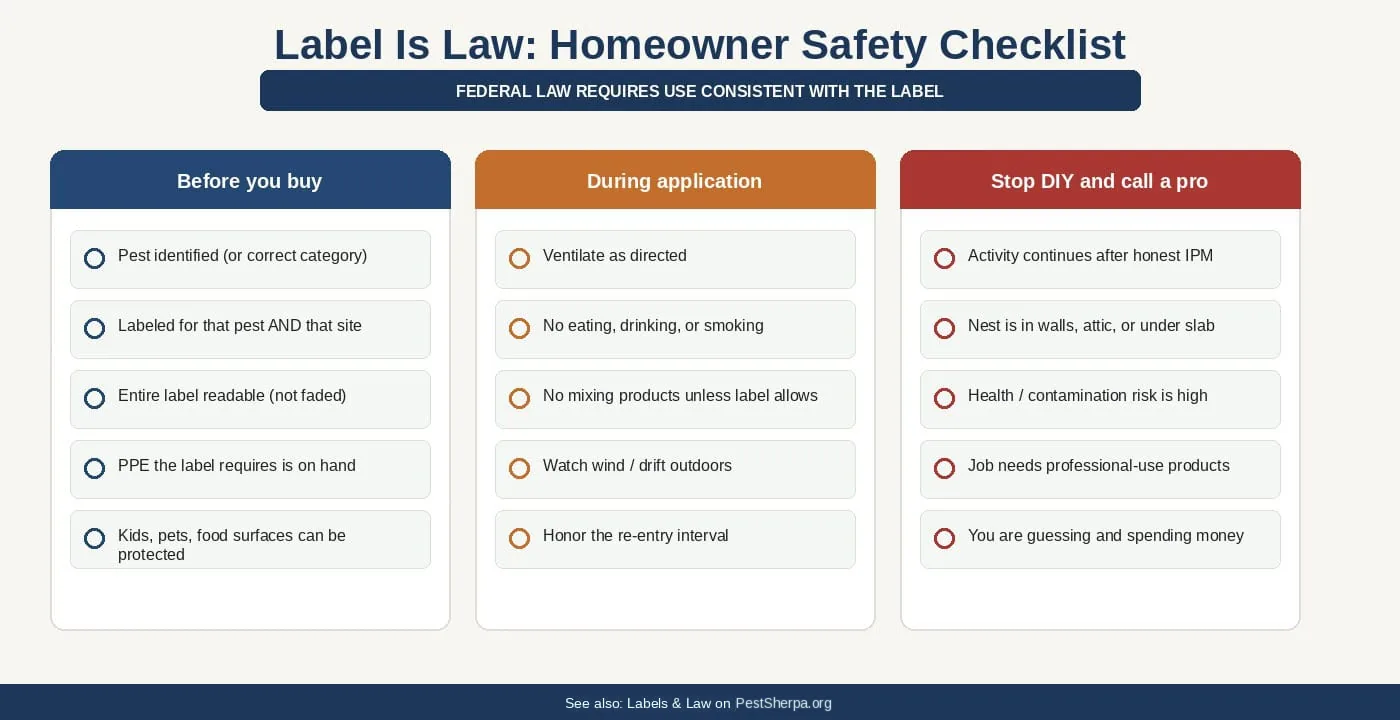
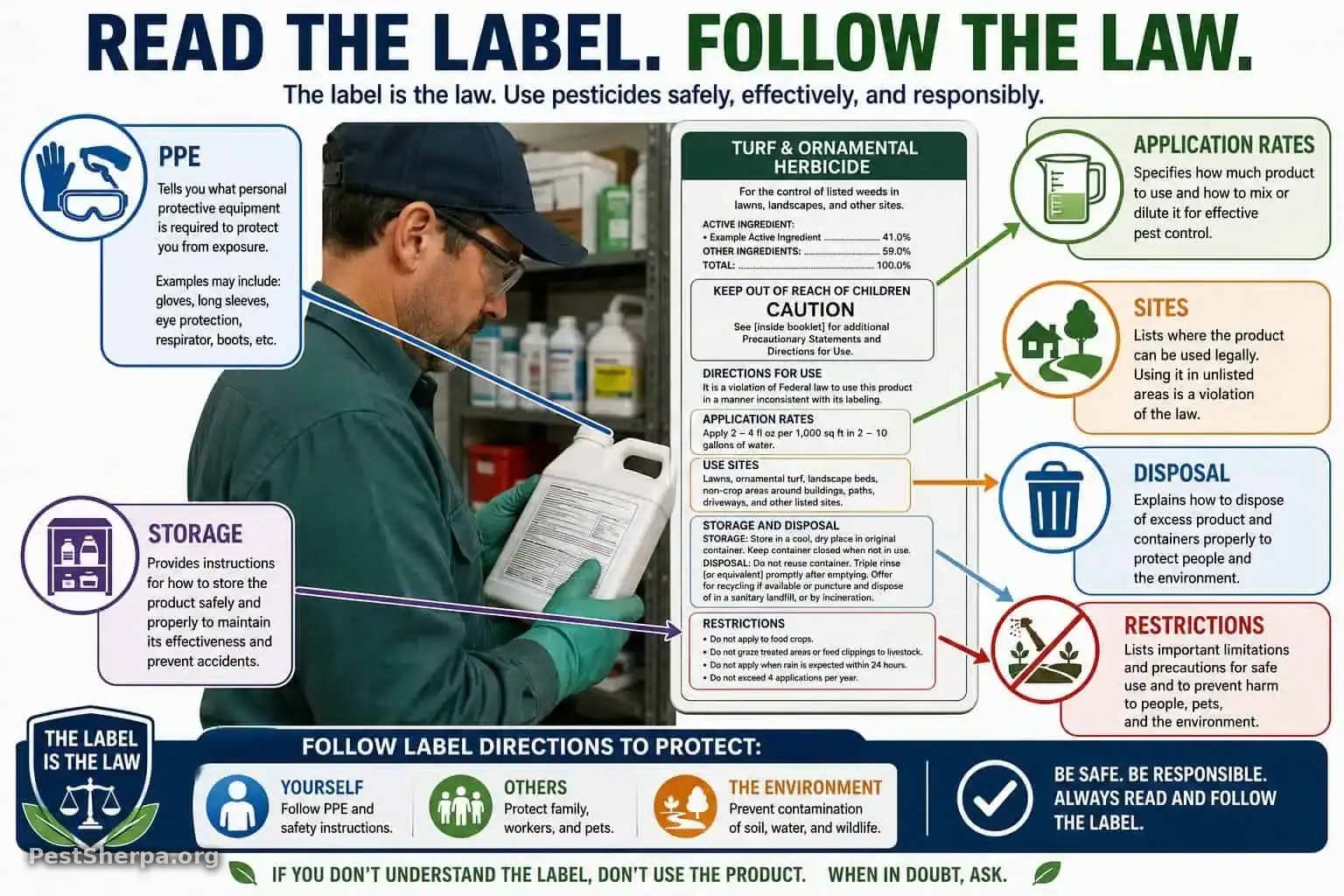
The label is the law. That is not a slogan. Federal law requires pesticide use consistent with the label. If the label says keep kids and pets off until dry, do that. If it says not for indoor use, there is a reason for that prohibition, so heed the warning.
See also: Labels & Law.
Label-is-law, from the field
I have watched homeowners invent uses because a neighbor “always sprays that under the sink.” I have seen people literally drown insects with insecticide. I have seen people use weed killer to drown ants. Federal law requires pesticide use consistent with the label. If the “site” is not on the label, it is not a legal use. If the re-entry interval says keep pets off until dry, that is not optional advice. See Labels & Law.
Crawlspaces and under-house work
Crawlspaces concentrate moisture, rodent contamination, and awkward chemistry exposure. If you cannot stand upright, see clearly, or ventilate, stop DIY pesticide work and hire. Photograph any signs of pests such as tubes and droppings from the opening if that is all you can safely do. Do not fog a crawl “to be sure.” More than one explosion has occurred due to fogging in a crawlspace or basement ignited by a hot water heater or furnace gas pilot light.
Before you buy or apply
- [ ] Pest identified (or at least narrowed to a correct product category)
- [ ] Product labeled for that pest type and that site (kitchen, crack-and-crevice, outdoor ornamentals, etc.)
- [ ] You can read the entire label (not a faded jug)
- [ ] You have the PPE the label requires (often at least chemical-resistant gloves; sometimes eye protection, respirator, long sleeves)
- [ ] Children, pets, toys, pet bowls, and food prep surfaces can be protected or removed as directed
- [ ] Make sure that you have a cool and dry place to store the product when you are finished with the application. DO NOT repackage it into a container such as soda bottles. Keep it in the original container.
During application
- Ventilate as the label directs.
- Do not eat, drink, or smoke while handling pesticides.
- Do not mix products unless the label explicitly allows a tank mix.
- Do not apply in wind that will drift onto neighbors, blooms, or water.
- Keep people and pets out of the treated area for the re-entry interval on the label.
Food areas and kitchens
- Prefer baits and crack-and-crevice placements over broadcast sprays on counters.
- Never treat food, utensils, or food-contact surfaces except as the label specifically allows (most do not).
- Wipe and restore food-prep surfaces only after following label directions for cleanup.
Children and pets
- Store products locked and high, in original containers.
- Rodenticides and some insecticides are dangerous if ingested. Prefer trapping and exclusion for rodents when kids or pets make bait placement unsafe. See rodents.
- Never use dog-only flea products on cats.
- Follow label instructions if product is used near aquariums or terrariums.
Outdoor drift and water
- Watch wind. Avoid applications before rain if runoff is likely and the label warns against it.
- Keep products out of storm drains, ponds, and wells.
- Bee and beneficial-insect cautions on labels are real, especially on blooming plants.
Storage and disposal
- Store cool, dry, locked, away from food and animal feed.
- Do not pour leftovers down drains, toilets, or onto soil “to get rid of it.”
- Use household hazardous waste programs for old or unwanted products. Full walkthrough: How can I get rid of old pest control products in my garage?
Do this / don’t do this (safety)
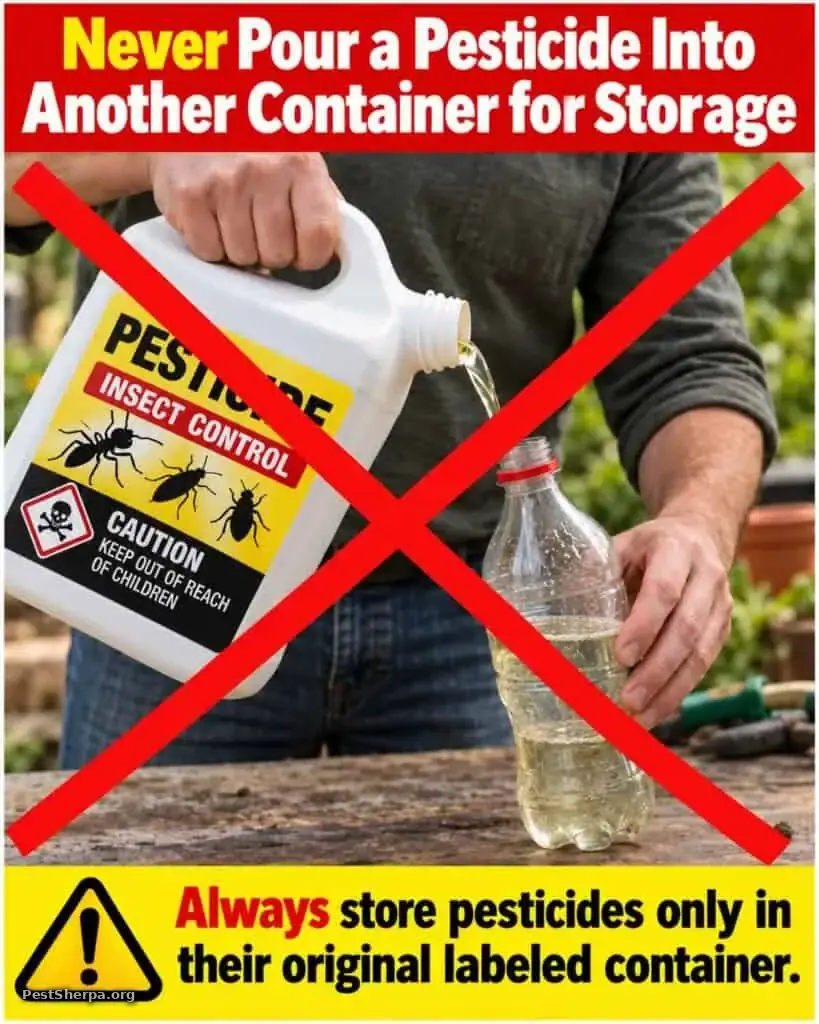
- Do keep products in original labeled containers.
- Do rinse or dispose of empty containers per label and local rules.
- Don’t reuse pesticide containers for anything else.
- Don’t combine bleach, ammonia, or random cleaners with pesticides.
- Don’t assume an old unlabeled jug is “probably fine.”
Indoor vs outdoor and seasonal pressure
U.S. homes face different pressure by region and season. Honest limits:
| Season / condition | Common pressure | Homeowner focus |
|---|---|---|
| Spring | Ant trails, termite swarmers (region-dependent), flies as trash warms | ID swarmers carefully (termites vs ants); sanitation |
| Summer | Mosquitoes, fleas, outdoor cockroaches at lights, wasps, termites | Water dump for mosquitoes; pet + premises for fleas |
| Fall | Overwintering invaders on sunny walls, rodents | Seal early; vacuum stragglers (overwintering invaders) |
| Winter | Rodents indoors, cluster flies / lady beetles appearing on warm days | Exclusion and trapping; do not fog voids |
| After heavy rain | Moisture pests, ant invasions, mosquito hatch | Dry foundations; dump containers |
Regional honesty: Formosan termites, kudzu bugs, lone star ticks, and Asian tiger mosquitoes are not nationwide stories. Use the species guides for geography. National “spray every month no matter what” plans often waste money.
Service frequency depends on pest pressure and property conditions, not a one-size slogan. Related: How often should I have regular pest control service?.
When DIY fails / when to call a pro
Call a licensed pest control company when:
- Activity continues after honest ID, sanitation, exclusion, and correctly used labeled products.
- The nest or breeding site is inaccessible (wall voids, attic, under slab, shared multifamily chases).
- Health or contamination risk is high (established German cockroaches in kitchens, bed bugs spreading, deer-mouse contamination, medically important spiders with confirmed populations).
- The job requires specialized equipment, or state licensing (many termiticides, fumigation, some wildlife).
- Kids, pets, pregnancy, asthma, or food-business rules make broadcast products a bad bet.
- A buyer, landlord, inspector, or health department needs documented treatment.
- You are not sure what you have and guessing is getting expensive.
- Like many people, you just don’t want to deal with the challenge of pest control.
How to hire carefully (license verification, written scope, red flags): How to hire a licensed pest control company.
Not every sighting is an emergency. Panic buying and same-day pressure sales are red flags. Know your state’s cancellation rights for service agreements.
For termites specifically, DIY soil barriers and fumigation are the wrong lane. See the Termite Control hub and Can a homeowner perform termite control?.
Myths that waste money or create risk
- “If I spray everything, the problem is solved.” Visible kill ≠ colony or breeding source eliminated.
- “Bug bombs clean out a house.” Foggers miss cracks and voids; can scatter cockroaches and bed bugs; fire and residue risks.
- “Ultrasonic gadgets clear rodents and insects.” Not reliable and most have no value whatsoever. See ultrasonic Q&A.
- “Natural means safe around kids, pets, and food.” Some are more toxic than registered pesticides. Still follow the label.
- “One large cockroach means my kitchen is infested with German cockroaches.” Species and location matter. See cockroaches.
- “Bites alone prove bed bugs.” Evidence on mattresses and headboards proves bed bugs. See bed bugs.
- “Termite control is just a stronger ant spray.” Different biology, products, and licensing. Use the Termite Control hub.
- “If I stop seeing them for a day, I can quit monitoring.” Life cycles and pupal stages (fleas, some flies) produce delayed comebacks.
FAQ
What is the difference between pest control and Pest Guides on this site?
Pest Guides identify pests and explain biology and pest-specific next steps. This Pest Control hub teaches the control system: IPM, DIY frameworks, product classes, safety, and hiring decisions. Use both.
Should I spray or bait for ants in the kitchen?
For many trail ants, baiting plus sanitation beats spraying foragers. Sprays often kill only what you see and can repel and scatter what you don’t see. Confirm species on the Ant Guide.
Are monthly pest control services required?
Not automatically. Frequency should match pest pressure, property conditions, and personal preference. Some people prefer monthly visits and some prefer less frequent if there is no recurring pest issue. Ask what is included and excluded (termites and bed bugs are often separate). See the hiring guide and service frequency Q&A.
Can I use the same product indoors and outdoors?
Only if the label lists the product as for indoor and outdoor use. This is due to ventilation requirements or safety concerns. Also many outdoor pests do not prefer indoors and vice versa. If anyone at the store where you buy your products tells you that you can ignore the label, do not do business with them. What they told you violates federal law.
What should I do with old pesticides in the garage?
Do not dump, burn, pour them down the drain or pour them out. Use household hazardous waste channels. It will vary by state and even local government rules. Details: old product disposal Q&A.
When are termites part of “regular pest control”?
Usually they are not. Termite inspection and treatment are specialized. See the Termite Guide and the Termite Control hub.
What is IPM in pest control?
Integrated Pest Management (IPM) means inspect, then identify the pest, use prevention and exclusion, then targeted products only as labeled, and keep an eye out for recurrence of the pests. It is not “never use pesticides.” It is the least risk that still solves the problem. Details: IPM in plain English and Pest Guides for pest-specific steps.
Is DIY pest control safe around kids and pets?
It can be when you match the product to the pest and site, follow the label exactly, and keep kids and pets out for the re-entry interval. Prefer baits and traps over broadcast sprays in living areas when the label allows. Stop DIY when harborages are inside walls, the pest is structural (termites), or activity continues after honest IPM. See Safety protocols and Labels & Law.
Quick homeowner checklists
15-minute exterior walk (monthly in season)
- [ ] Door sweeps and weatherstripping intact
- [ ] Screens without holes
- [ ] Vegetation not touching siding or roof
- [ ] Gutters flowing; downspouts extended
- [ ] Mulch / soil not piled against siding
- [ ] Firewood elevated and away from the house
- [ ] Trash lids tight; recycling rinsed
- [ ] No standing water in toys, trays, buckets, tires
Kitchen reset (when ants, roaches, or pantry pests appear)
- [ ] Identify the insect with the matching Pest Guide
- [ ] Empty and inspect problem cabinets / packages
- [ ] Store pantry food in airtight glass, metal, or heavy plastic
- [ ] Wipe residues (including sticky drink films)
- [ ] Fix drip leaks under sinks
- [ ] Place baits or traps per pest type (not random fogging)
- [ ] Set a 7-day monitor note: where and when you still see activity; this helps when you have professional service too
Travel / bed bug prevention (short)
- [ ] Inspect hotel mattress seams and headboard before unpacking (see bed bugs)
- [ ] Keep luggage off beds and upholstered chairs until clear
- [ ] Heat-dry washables after travel
- [ ] Inspect used furniture before it enters a bedroom
Multifamily and shared-wall reality
Apartments, condos, townhomes, and dorms change the control math:
- German cockroaches, bed bugs and even rodents move through wall voids and utility chases.
- Treating one unit while neighbors stay untreated often fails.
- Notify management early; ask for coordinated inspection of adjoining units. If you own a condo ask the owners’ association.
- Document dates, photos, and communications.
DIY still helps (sanitation, encasements, laundry heat), but building-level IPM beats solo fogging.
How to read a pest control service agreement
Before you sign a general pest plan:
- Which pests are named as covered?
- Which are excluded (often termites, bed bugs, wildlife)?
- What happens on the first visit vs follow-ups?
- What prep do you owe?
- How do retreatments work if activity continues?
- Cancellation and renewal terms?
Detail: How to hire a licensed pest control company.
For wood-destroying insects, use a termite-specific agreement and the Termite Control hub, not a generic “pest club” assumption.
References
Authoritative sources behind the control principles on this page. Product labels and state rules still control what you may apply.
- U.S. EPA: Integrated Pest Management (IPM) Principles
- U.S. EPA: Citizen’s Guide to Pest Control and Pesticide Safety
- U.S. EPA: Do You Really Need to Use a Pesticide?
- U.S. EPA: Introduction to Pesticide Labels (label is the law framing)
- U.S. EPA: Pesticide Labels hub
- U.S. EPA: Safe Pest Control (consumer)
- National Pesticide Information Center: Read the Label
- National Pesticide Information Center: Do It Yourself Pest Control
- CDC: Mosquitoes
- CDC: Bed Bugs
- CDC: Controlling Wild Rodent Infestations
- CDC: Ticks
- eXtension / Pests in the Home: research-based homeowner pest resources
- National Pest Management Association (NPMA)
Related reading
- Pest Guides index
- Pest Control Questions and Answers
- Ask the Sherpa
- Full bio
- Companion hub: Termite Control (inspection, bait vs liquid, warranties)
This article was written by Greg Baumann, founder of Pest Sherpa, and reflects more than 40 years of professional pest management experience.
About the Author

Greg Baumann | Pest Control Expert
Greg Baumann is the founder of Pest Sherpa and a Pest Control Expert with more than 40 years of professional pest management experience. His articles combine decades of field experience, technical expertise, and science-based guidance to help homeowners identify pests correctly, understand real-world risks, and make informed pest management decisions.
Mission: Identify the pest. Understand the risk. Stop the problem. Prevent the comeback. Know when it’s time to call a professional.