
Bees and Wasps Guide: Identification, Risk, and What to Do
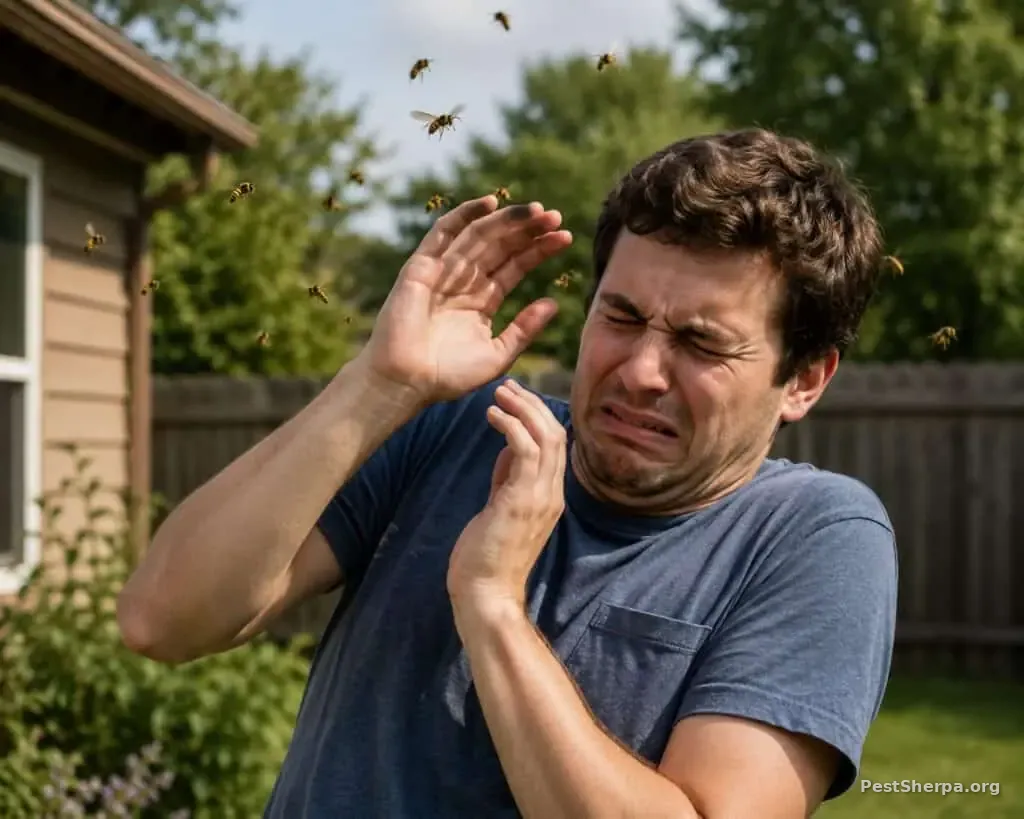
This hub helps you identify common bees and wasps around the home, judge sting and nest risk, and choose the right next step without treating the wrong insect.
Identify First, Then Act
- Most bees are beneficial → avoid killing unless necessary
- Carpenter bees = wood damage → targeted treatment + sealing
- Yellowjackets = high sting risk → often requires pro control
- Gray football-shaped aerial paper nest → bald-faced hornets (high sting risk if disturbed)
- Large brown wasp active at lights at night → European hornets
- Misidentification is the #1 reason treatments fail
Bee or wasp? Start here: If it is fuzzy, slower, and working flowers (not your hamburger), treat it as a bee first: honey, bumble, or a shiny-abdomen carpenter at wood. If it is smooth and shiny, fast, and on soda, meat, or trash in late summer, that is usually a yellowjacket, the highest-risk picnic and nest defender in this group, not a “meat bee.” Jump to the decision chart below before you spray. [UC IPM] [UMN Extension] [Penn State]
Start Here: Common Bee & Stinging Insect Clues
- Wood holes / sawdust Carpenter Bees
- Swarms in walls / structures Honey Bees
- Aggressive stinging insects Yellowjackets
- Large fuzzy ground bees Bumblebees
- Aerial gray paper nest Bald-Faced Hornets
- Large brown wasps at outdoor lights / in cavities at night European Hornets
- Huge midsummer ground wasp + U-shaped dirt mound (usually not a yellowjacket) Cicada Killer Wasps
Quick Navigation
- How to Identify Bees and Wasps
- Why It Matters
- What To Do
- What Fails (Common Mistakes)
- When to Call a Professional
- Species Hub (Compare Before You Act)
- Prevention Strategy
- Common Questions
- References
How to Identify Bees vs Wasps
Most homeowners misidentify stinging insects, and that leads to the wrong response.
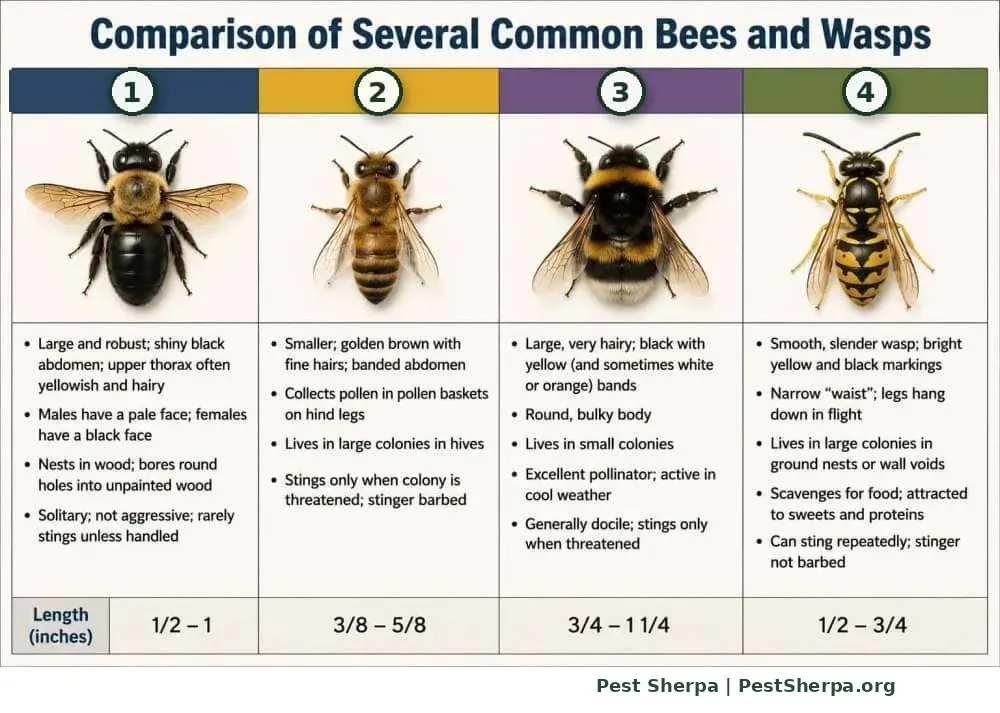
Which one do you see? Match the number:
- Carpenter bee: 1/2 to 1 inch, large and robust with a shiny black abdomen and a hairy yellowish thorax. Solitary, bores round holes into unpainted wood.
- Honey bee: 3/8 to 5/8 inch, smaller, golden brown with fine hairs and a banded abdomen. Carries pollen in baskets on the hind legs and lives in large hive colonies.
- Bumblebee: 3/4 to 1 1/4 inches, large and very hairy, black with yellow (sometimes white or orange) bands. Lives in small colonies.
- Yellowjacket: 1/2 to 3/4 inch, smooth slender wasp with bright yellow and black markings. Lives in ground nests or wall voids and can sting repeatedly.
Four of the most common types of bees and wasps; there are nearly 20,000 species of bees and wasps and most are not aggressive
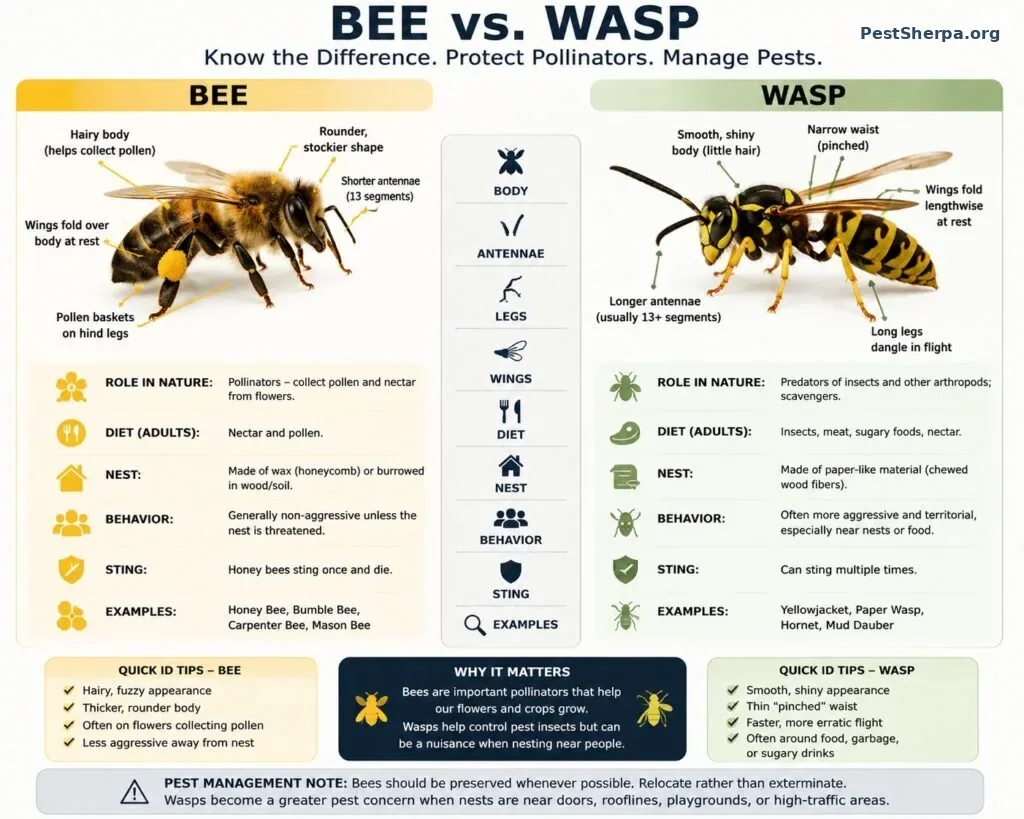
Visual & Behavioral Differences
- Bees: fuzzy, slower, focused on flowers
- Wasps (yellowjackets): smooth, fast, aggressive, attracted to food
- While both some bees and wasps can sting, below shows the technical differences
Nesting Clues
- Wood tunnels → carpenter bees
- Wax hive in cavity → honey bees
- Ground or wall void nests → yellowjackets
- Ground nests (low activity) → bumblebees
- Aerial gray paper envelope in tree, shrub, or eave → bald-faced hornets
- Cavities, attics, hollow trees + night flight → European hornets
High-Probability Misidentifications
- Carpenter bees vs bumblebees (most common)
- Yellowjackets vs honey bees (high-risk mistake)
- Bald-faced hornet nest vs yellowjacket (aerial enclosed gray vs ground/void)
- European hornet vs bald-faced (true Vespa, brown, often nocturnal vs black-and-white aerial yellowjacket)
Stinging-insect decision chart (nest, aggression, season)
Use nest location, how defensive they are, and the time of year, then open the matching guide. This chart lives on the page as HTML so you are not depending on a comparison photo. (Not to scale; university IPM cues.)
| If you see (nest) | Season / aggression | Likely | First move |
|---|---|---|---|
| Smooth wasp on soda, meat, or trash, no nest in sight | Late summer to fall scavengers; usually not defending a nest yet | Yellowjackets | Cover food and garbage; find the nest before you treat foragers |
| Steady traffic into a ground hole or wall / soffit gap | Defense rises as the colony grows; worst near the nest | Yellowjackets | Do not plug a wall hole. Call a licensed pro if the nest is hidden, in traffic, or anyone is allergic |
| Huge wasp + U-shaped dirt mound in bare soil | Midsummer; males dive-bomb but cannot sting | Cicada killer | Usually leave it: this is not a yellowjacket nest |
| Fuzzy bee on flowers; not interested in picnic food | Anytime plants bloom; low sting risk away from a nest | Honey / bumble | Leave them: pollinators, not a spray target |
| Temporary cluster on a limb or shrub | Spring to early summer; usually docile; often gone in hours to a couple of days | Honey swarm | Give them space, or call a beekeeper, not a bomb-the-cluster job |
| Wax comb / humming inside a wall, soffit, or chimney | Can persist year-round; defends brood once established | Honey colony | Beekeeper (or experienced bee-removal pro) to extract comb. Do not kill in place |
| Perfectly round holes in bare wood; shiny abdomen | Spring to summer; hovering males cannot sting | Carpenter bees | Paint or seal wood; treat and plug galleries after activity stops |
| Fuzzy bees using a ground, compost, or birdhouse nest | Summer colony; dies after a hard frost if you can wait | Bumblebees | Steer traffic away; leave them if the area can be avoided |
Greg Baumann insight: Most “bee emergencies” I get called to are either a yellowjacket nest someone kicked in the yard or a honey swarm that would have moved on by supper. Hair, food, nest material, and calendar beat a guess from color stripes. If it is a gray football in a tree or a big brown wasp at the porch light after dark, use the ID links you already have on this page, then stop. Don’t turn those into a second article.
Bee and Wasp Species Guides
Browse our expert guides to identify the stinging insect (bee or wasp) you’re dealing with and learn the appropriate control strategy.
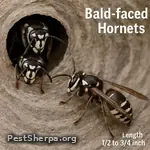
Bald-faced Hornets: Identification, Nest Risk, and What to Do
Bumblebees: Identification, When They Matter, and What to Do
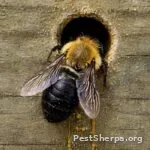
Carpenter Bees: Identification, Wood Damage, and What to Do
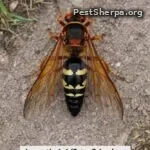
Cicada Killer Wasps: Identification, Burrows, and Sting Risk
European Hornets: Identification, Nests, Risks, and What To Do
Honey Bees: Identification Around Homes and What to Do
Northern Giant Hornet (Asian Giant Hornet): Identification, Biology, Range, and Control
Paper Wasps: Identification, Nests, Stings, and What to Do
Stinging Insect Myths: Which Nests to Worry About and Which to Leave Alone
Yellowjackets: Identification, Nests, Sting Risk, and What To Do
Why It Matters
Beneficial (Usually Leave Alone)
- Honey bees → essential pollinators
- Bumblebees → low aggression, ecological value
Structural Risk
- Carpenter bees weaken wood over time
- Repeated nesting can escalate damage quickly
Safety Risk
- Yellowjackets are the highest-risk stinging insect in this group around picnics, trash, and food
- Can sting multiple times and defend aggressively
- Aerial paper nests (bald-faced hornets, an aerial yellowjacket, not a true Vespa) and European hornets (Vespa crabro, the true hornet in the U.S.) can also defend aggressively; do not treat them like honey bees
Decision Rule:
- If beneficial + low risk → leave or relocate
- If structural or aggressive → take action
What To Do
Scenario 1: Pollinators Present (Honey Bees / Bumblebees)
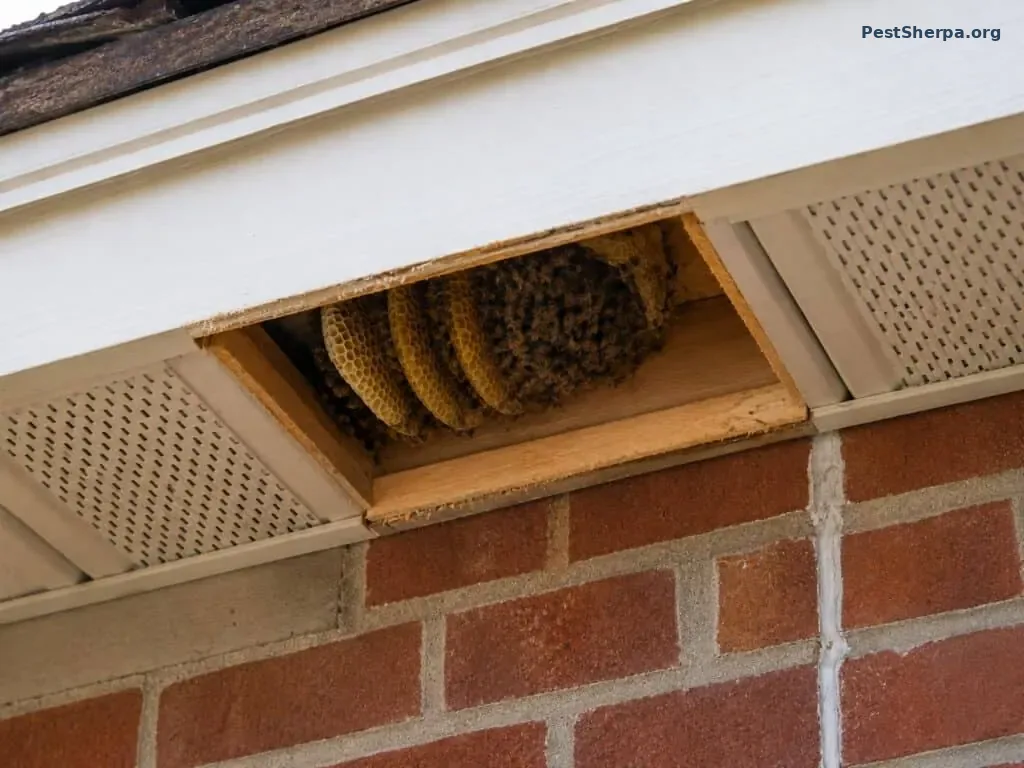
Opened soffit during remodeling of unoccupied structure revealed active honey bee hive…and bees
Goal: Protect, not eliminate
- Avoid spraying
- Keep distance from nests
- Use relocation services if possible if endangering people or pets
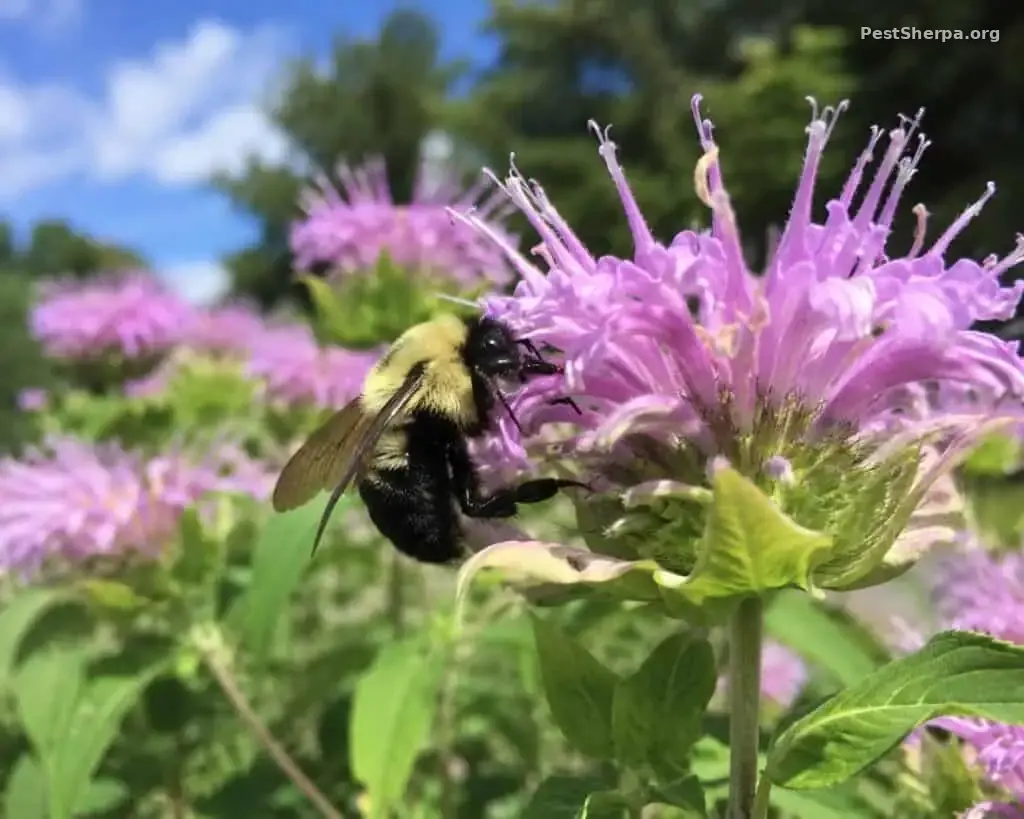
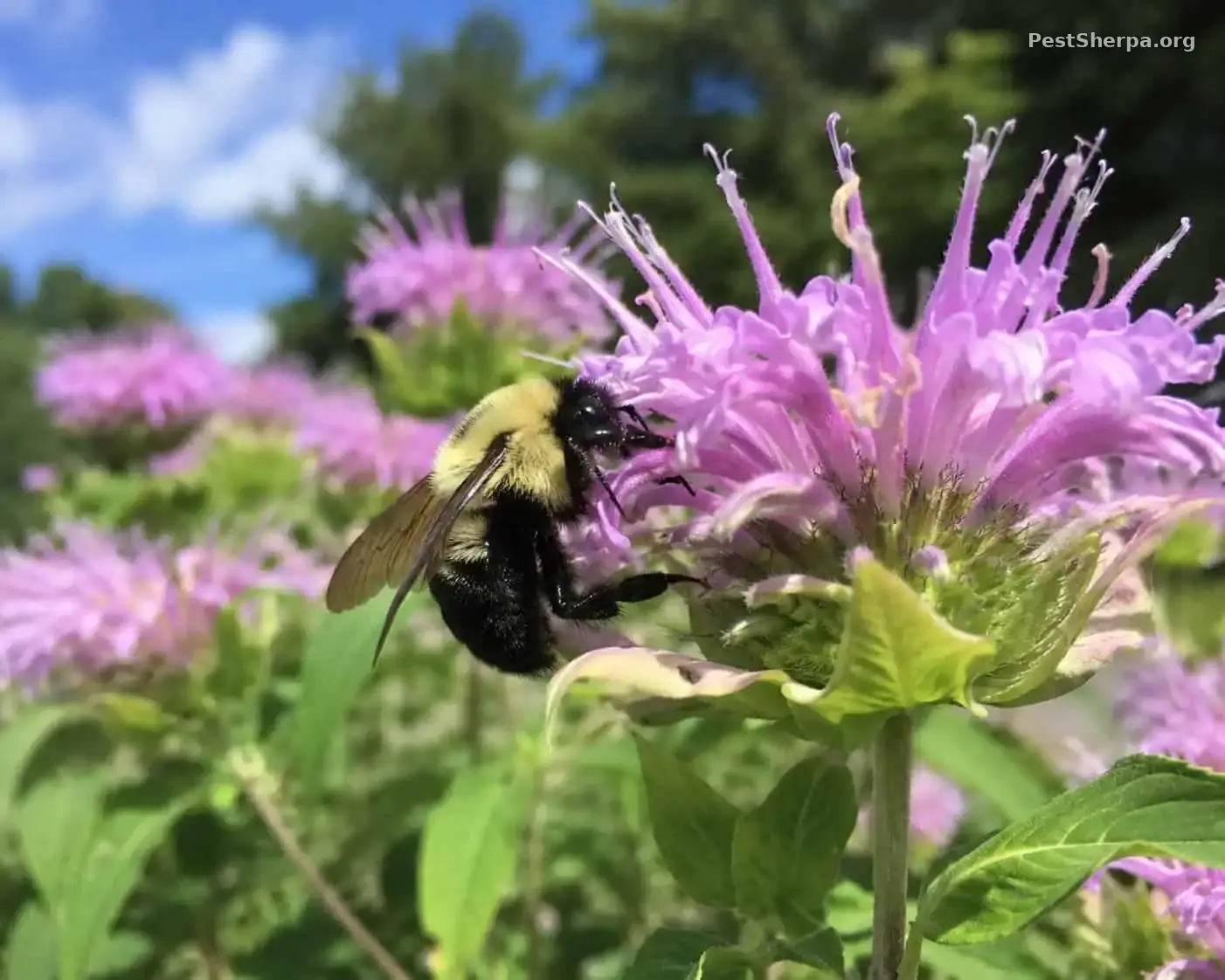
Bumblebee pollinating a flower. Bumblebees are not aggressive and are important pollinators for our food supply.
- Deep dive: Honey Bees
- Also see: Bumblebees
Scenario 2: Carpenter Bees Damaging Wood
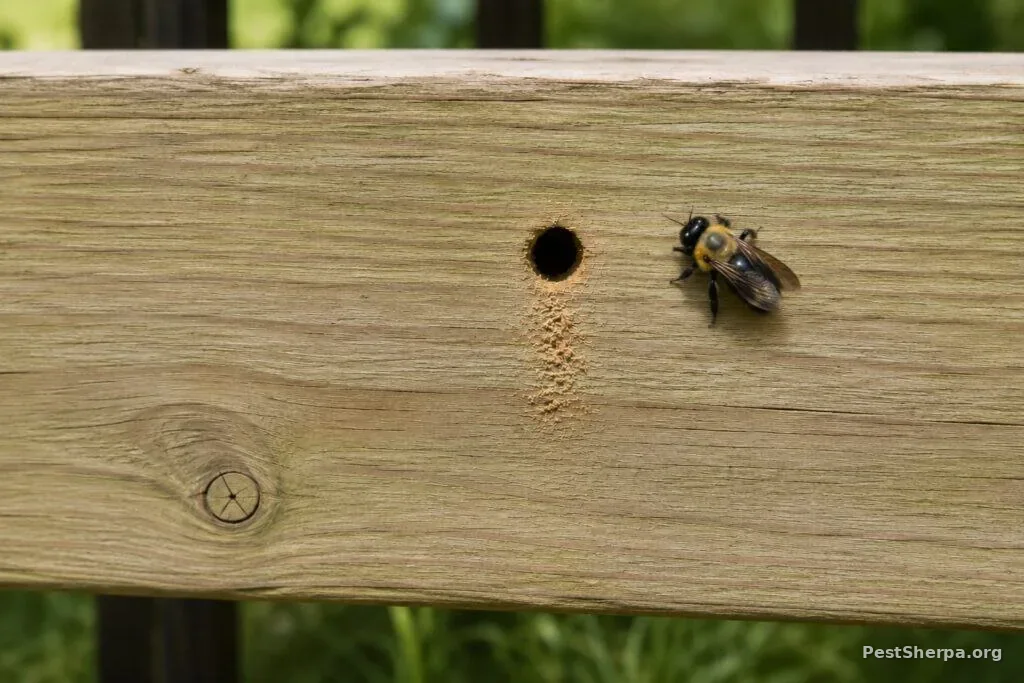
Carpenter bees drill holes to create galleries to laying eggs. This is a sign of active carpenter bee activity.
Goal: Stop damage + prevent return
- Identify active holes (round, clean edges)
- Apply targeted treatment to galleries
- Seal holes AFTER activity stops
- Paint or seal exposed wood surfaces
- Full guide: Carpenter Bees
Scenario 3: Aggressive Yellowjackets
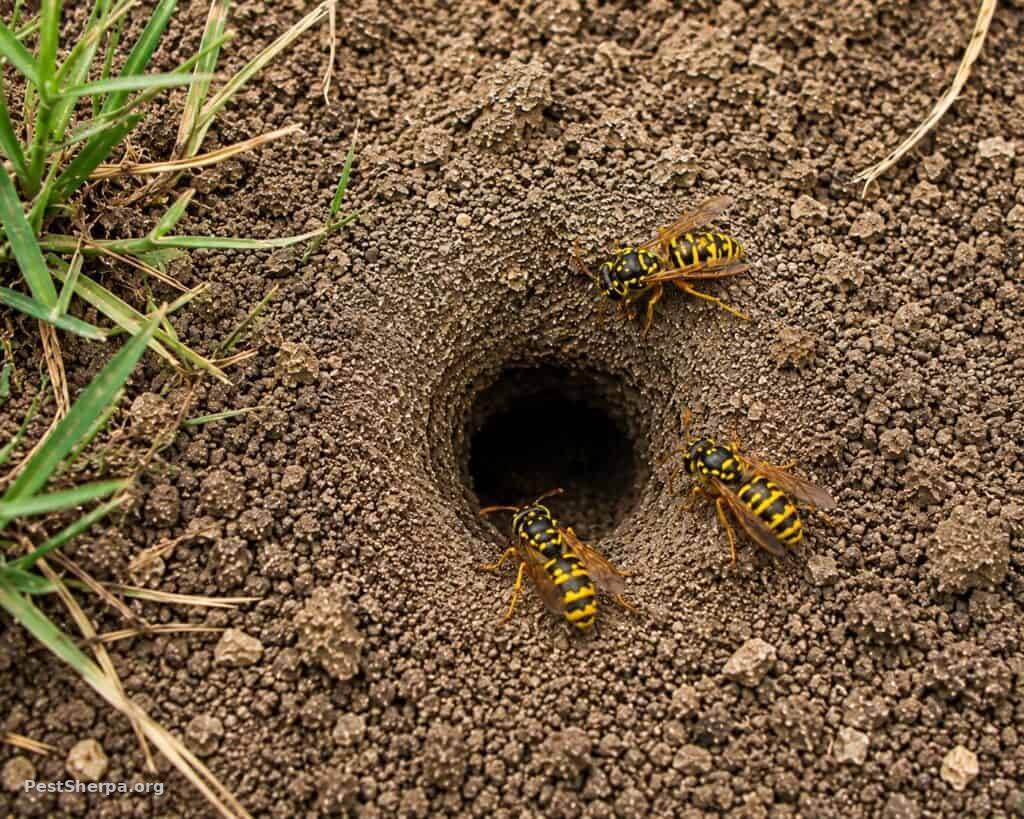
Yellowjackets commonly build nests underground and are a hazard for adults, children and pets walking onto the opening.
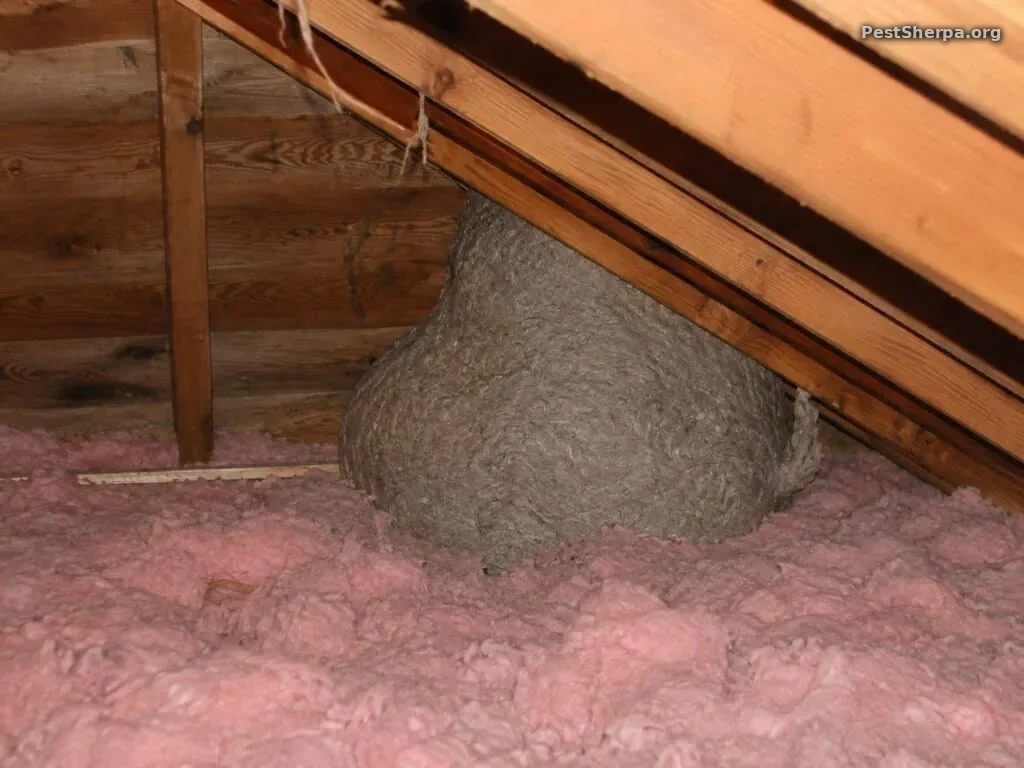
Yellowjacket nests can also be found in attics. This nest was found in an old house attic on a farm.
Goal: Reduce risk safely
- Do NOT disturb nest
- Avoid daytime intervention
- Remove food attractants (trash, sugary items)
- Use professional control for nests
- Full guide: Yellowjackets
What Fails (Common Waste of Time)
- Spraying unidentified insects
- DIY removal of hidden nests
- Ignoring nesting location
- Treating symptoms instead of the source
When to Call a Professional (Clear Triggers)
Call a pro if ANY of the following are true:
Greg Baumann insight: A yellowjacket on a soda can is a food problem. A stream of wasps into a wall void is a nest problem. University IPM programs say hidden yellowjacket nests in ground, attics, or walls are the ones to hand to a licensed professional (or your local vector district), especially if anyone in the house is allergic. Do not plug the exit hole and hope. A spring honey bee cluster on a limb is usually a beekeeper or a wait-it-out job, not a spray bomb; an established wax hive in a soffit needs extraction so honey does not rot in the wall. Leave cicada killers and most bumblebees alone unless the nest sits in a doorway you cannot avoid. [UC IPM] [UMN Extension] [Penn State]
- Nest is inside a wall, attic, or structure
- Insects are aggressive or swarming
- You cannot confidently identify the species
- There is risk to children, pets, or high-traffic areas
- Structural damage is visible (wood boring)
- Anyone in the household has a known sting allergy
High-priority cases:
- Yellowjackets (especially hidden nests in ground, walls, or attics; do not plug the opening first)
- Honey bee colonies established in structures (beekeeper / experienced removal, not kill-in-place)
- Advanced carpenter bee infestations with real risk to exposed wood
Species Hub (Compare Before You Act)
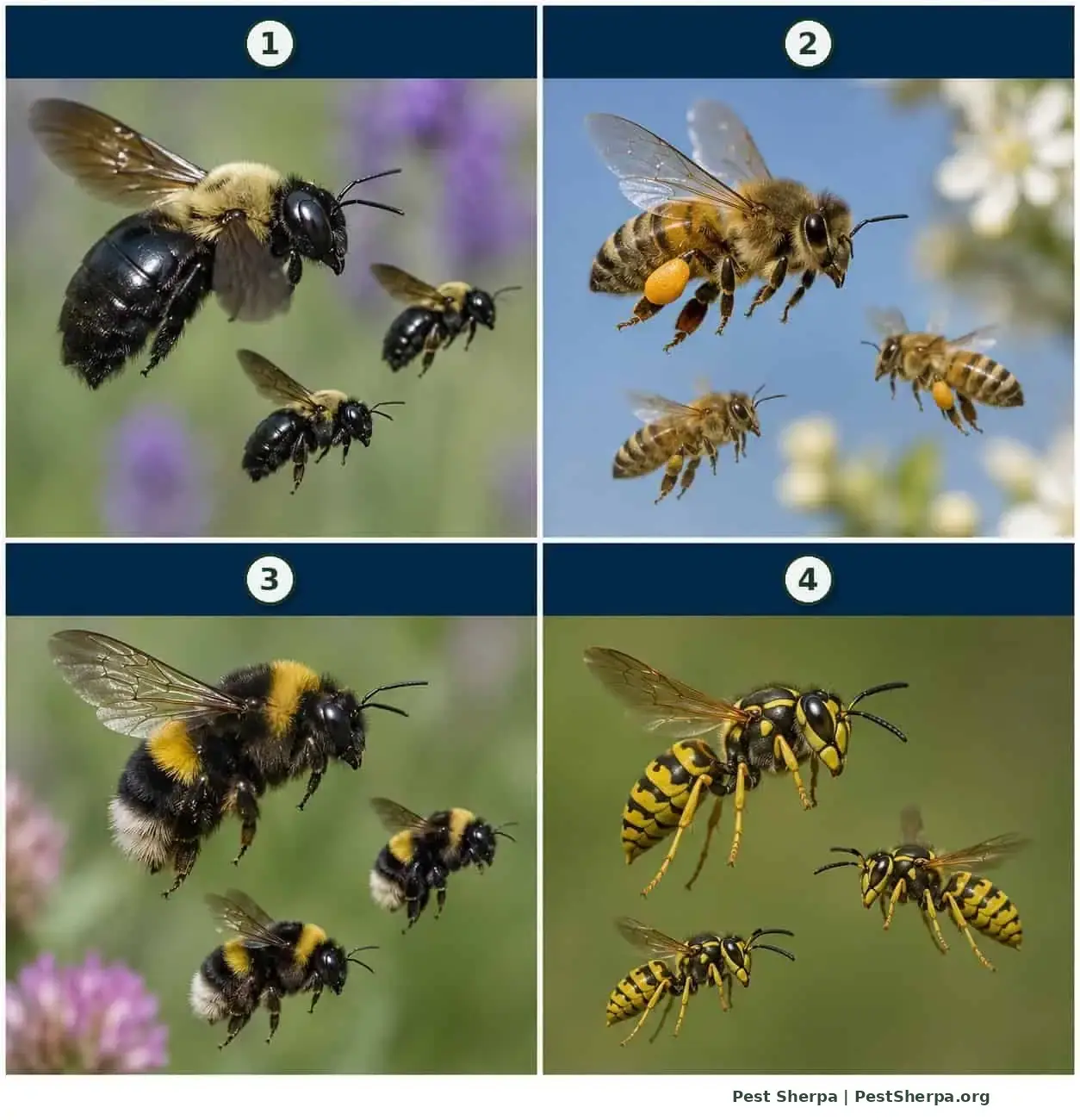
Which one do you see? Match the number:
- Carpenter bee: large, with a fuzzy yellow thorax and a shiny, bare black abdomen.
- Honey bee: smaller and slender, golden brown with darker bands, often carrying yellow pollen on the hind legs.
- Bumblebee: large, round and very fuzzy, black with yellow bands and often a white tail tip.
- Yellowjacket: smooth and nearly hairless, bright yellow and black with a narrow waist.
The four common species of bees and wasps flying in their habitat.
Carpenter Bees (Wood Destroyers)
- Large, black, shiny abdomen
- Drill perfectly round holes in wood
Honey Bees (Protected Pollinators)
- Golden-brown, colony-based
- Build wax comb structures
Bumblebees (Low-Aggression Pollinators)
- Fuzzy, round, ground nesters
Yellowjackets (Aggressive Wasps)
- Smooth, fast, highly defensive
- Nest in ground or wall voids
Prevention Strategy (Long-Term Control)
Exclusion & Maintenance
- Seal gaps and entry points
- Paint or treat exposed wood
Habitat Reduction
- Remove food sources (trash, spills)
- Reduce nesting sites (voids, debris)
Monitoring
- Inspect early in the season
- Watch for repeat activity in the same locations
Common Questions
- I read about how honey bees are endangered. What can I do to protect the bees?
- Do carpenter bee traps work?
How do I tell a bee from a wasp? Start with hair and behavior, not just yellow stripes. Bees are fuzzy and focused on flowers; honey bees have pollen baskets and wings that lie flat at rest. Wasps (especially yellowjackets) are smooth and shiny, fold their wings lengthwise, and will work a picnic or trash can. See the chart above and the yellowjackets and honey bee guides. [UMN Extension] [Penn State] [UC IPM Quick Tips]
Is that huge ground wasp a yellowjacket? Often no. A midsummer wasp about an inch-plus long with a rust-colored thorax and a U-shaped mound of soil is usually a cicada killer: solitary, useful, and far less defensive than a yellowjacket nest. Males look aggressive but cannot sting. [Ohio State] [Oklahoma State]
When should I call a professional instead of waiting? Call when the nest is in a wall or attic, in a path people use, or you cannot ID it, especially yellowjackets. Honey swarms on a branch are often temporary; an established hive in a house is not. Annual wasp and bumble colonies in the Upper Midwest die after a hard freeze if you can safely wait. [UC IPM] [UMN Extension] [Penn State]
References
Helpful Bee & Stinging Insect Resources
- USDA Forest Service: Pollinators
- USDA: Pollinator Health & Agriculture
- EPA: Bees and Wasps Safety / IPM Guidance
- CDC NIOSH: Protecting Yourself from Stinging Insects
- University of Minnesota Extension: Wasps and Bees
- UC IPM: Yellowjackets and Other Social Wasps
- UC Statewide IPM: Bee and Wasp Stings
- Penn State Extension: Getting Rid of Paper Wasps, Yellowjackets, and Other Stinging Insects
- UC Statewide IPM: Yellowjackets and Other Social Wasps (ANR 7450)
- UC IPM Quick Tips: Yellowjackets
- UC Statewide IPM: Carpenter Bees (ANR 7417)
- UC Statewide IPM: Removing Honey Bee Swarms and Established Hives
- University of Minnesota Extension: Wasps and bees (Reviewed 2025)
- Penn State Extension: Five-Step Decision Support: Nesting Bees and Wasps Near Homes
- Penn State Extension: Eastern Yellowjacket
- Ohio State University Extension: Cicada Killer Wasp (ENT-63)
- Oklahoma State Extension: Cicada Killer (Sphecius speciosus)
This article was written by Greg Baumann, founder of Pest Sherpa, and reflects more than 40 years of professional pest management experience.
About the Author

Greg Baumann | Pest Control Expert
Greg Baumann is the founder of Pest Sherpa and a Pest Control Expert with more than 40 years of professional pest management experience. His articles combine decades of field experience, technical expertise, and science-based guidance to help homeowners identify pests correctly, understand real-world risks, and make informed pest management decisions.
Mission: Identify the pest. Understand the risk. Stop the problem. Prevent the comeback. Know when it’s time to call a professional.