
Stinging Insect Myths: Which Nests to Worry About and Which to Leave Alone
Key Points
- Misconception that all wasps are dangerous: mud daubers and paper wasps do not warrant the same alarm as a yellowjacket nest.
- Misconception that sealing the nest entrance is the best control: sealing the entrance to an active nest can make matters worse indoors.
- What matters: the type of nest and the season should drive the decision far more than coloration alone.
- Recommended approach: identify the pest, protect anyone who is allergic, and use the linkable facts for citations.
In This Guide
- Why nest myths get people stung
- Myth: all bees are the same
- Fact: nest architecture
- Myth: mud tubes are yellowjackets
- Fact: which nests to leave
- Myth: seal the hole now
- Fact: spring vs late summer
- Myth: swatting helps
- What to do this weekend
- When to call a pro
- Linkable facts
- FAQ
- References
Mistakes with stinging insects tend to stem from misidentification and overconfidence. People spray paper wasp nests as though they were yellowjacket nests, strike open paper combs at midday, or fill a nest entry hole while a colony is still active inside. This guide is intended to support sound decisions about nests. Pair it with paper wasps, yellowjackets, mud daubers, bald-faced hornets, and European hornets.
A note on purpose: Pest Sherpa’s stinging insect guides are tools for making decisions about nests. Color pattern is a secondary clue; nest architecture and season are essential.
If you change only one habit after reading this page, stop sealing the entrances of active nests, whether on the interior or exterior of the home, and never seal over a nest that looks like paper. Sealing forces the insects to find an alternate escape path, maybe into the house, and it agitates the guard insects that are not sealed in and provokes them to attack.
Homeowners can share the section on sealing entrance holes before a well-meaning relative fills an active wall void with foam.
European hornets drawn to lights, bald-faced hornet envelopes in trees, and carpenter bee holes in the fascia can all appear on the same property in a single season. Sort them out with the bees and wasps hub before you buy a product that claims to solve every stinging insect problem.
When allergy is a possibility, the household’s epinephrine and its list of nest priorities belong in the same conversation. Have a plan in place in case someone is stung, and make sure anyone with a known sting allergy stays safely away from the insects.
When in doubt, identify the nest before you purchase any treatment product.
Why nest myths get people stung
Social wasps defend their nests, while solitary wasps generally do not. Because color patterns overlap between species, extension guides consistently direct people back to the type of nest. [UC IPM] [Penn State Extension] [Texas A&M]
MISCONCEPTION
“Bees means one kind of insect and one kind of spray”
The evidence: honey bees, bumble bees, carpenter bees, paper wasps, yellowjackets, and hornets are different animals, each with a different nesting strategy and, in some cases, different legal or ethical considerations. Never harm honey bees unless they are a direct threat.
Begin with the bees and wasps hub before you buy a product labeled for everything that flies.
WHAT THE EVIDENCE SHOWS
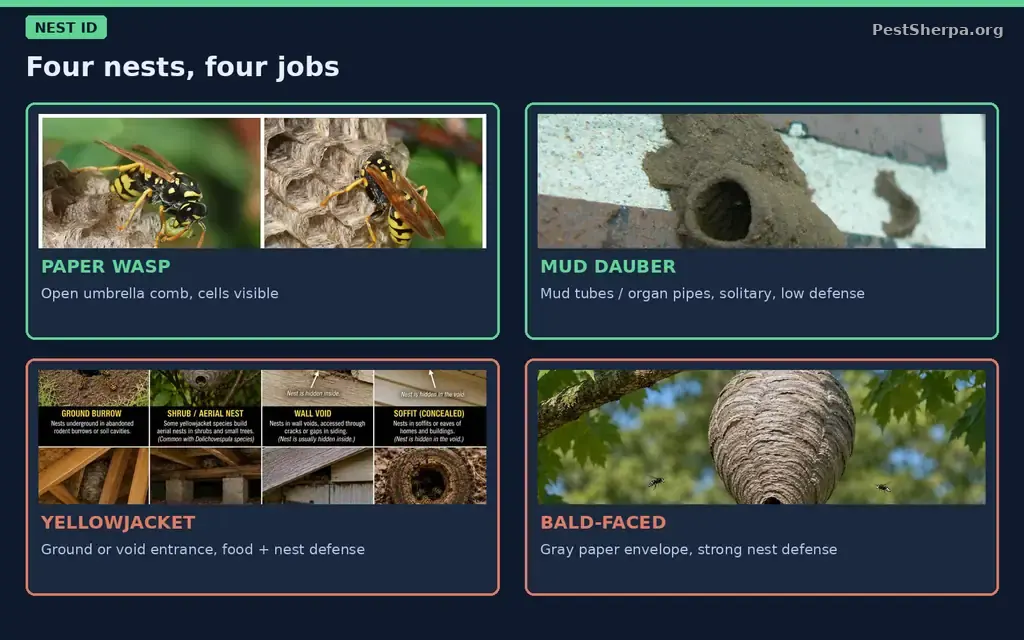
Open comb, mud tube, ground hole, gray envelope: four different jobs
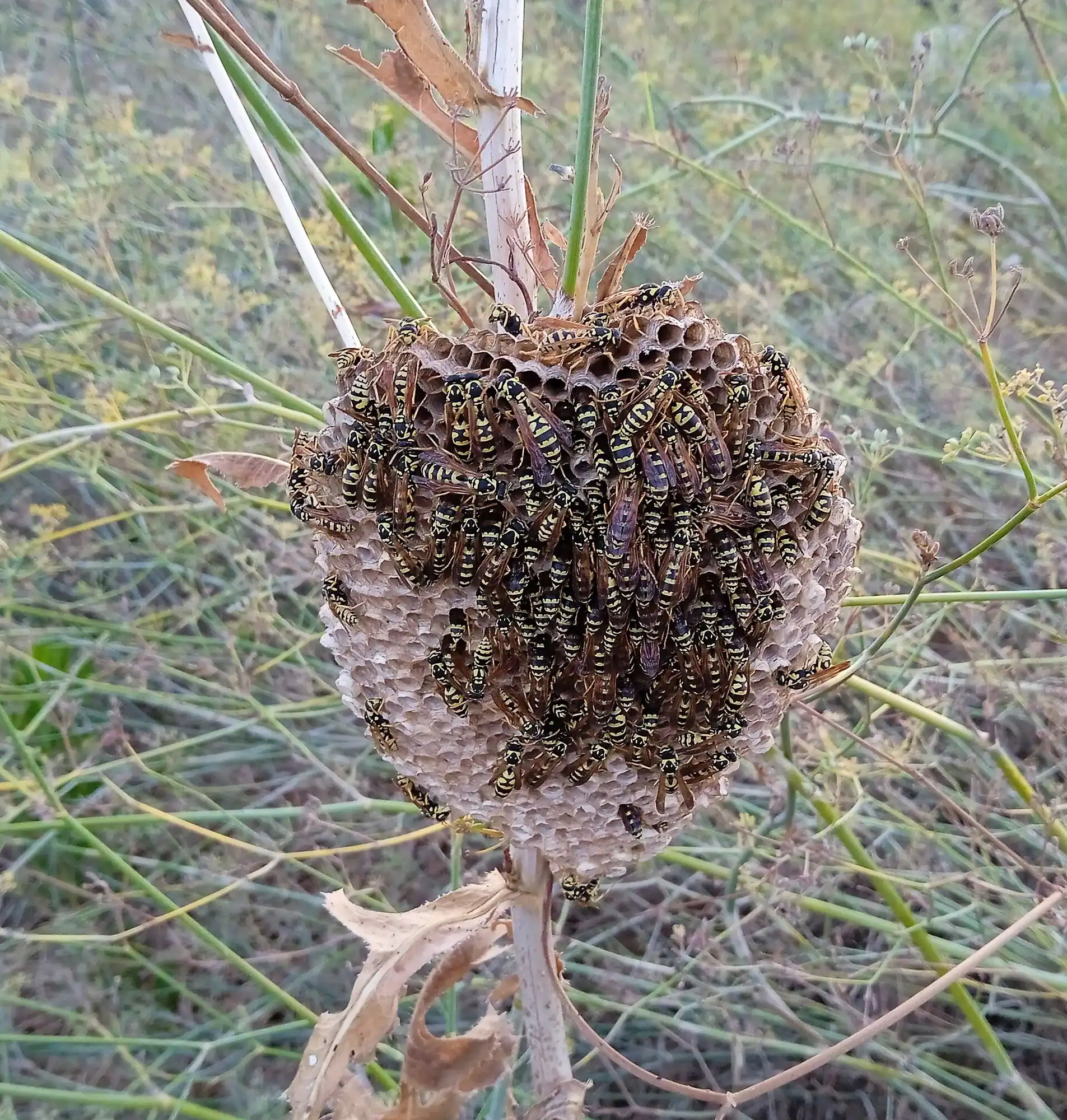
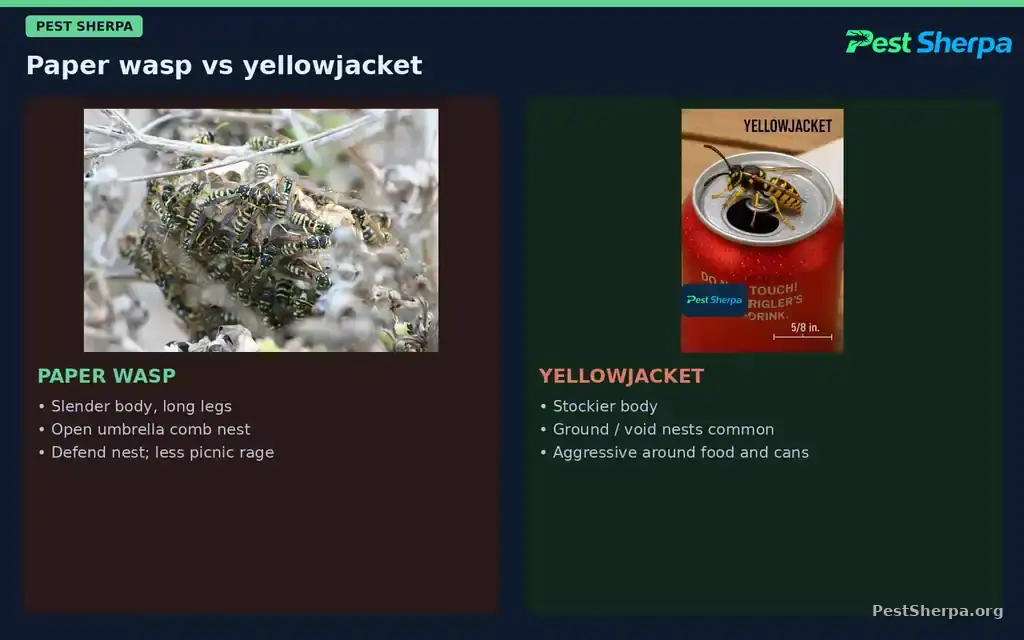
Paper wasps build an open, umbrella-shaped comb with the cells visible. Mud daubers build mud pipes or organ-pipe tubes. Yellowjackets usually nest in the ground or in voids and defend food sources aggressively. Bald-faced hornets build large gray paper envelopes in trees or on structures.
Identify the nest before you choose a treatment.
MISCONCEPTION
“Mud tubes on the wall mean yellowjackets”
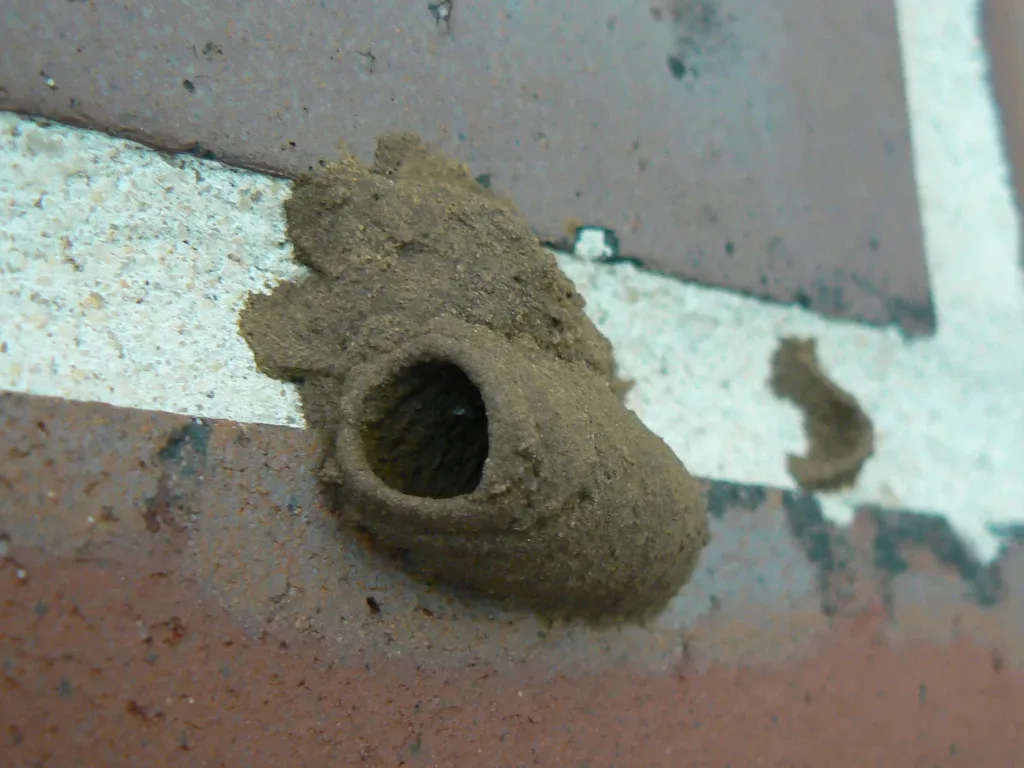
The evidence: organ-pipe or lump-shaped mud nests are usually built by mud daubers. These wasps provision their nests with spiders for their larvae and rarely defend them.
Scrape away inactive tubes if you dislike their appearance, but do not treat them as a yellowjacket emergency.
WHAT THE EVIDENCE SHOWS
Leave remote paper wasp nests; remove doorway problems early
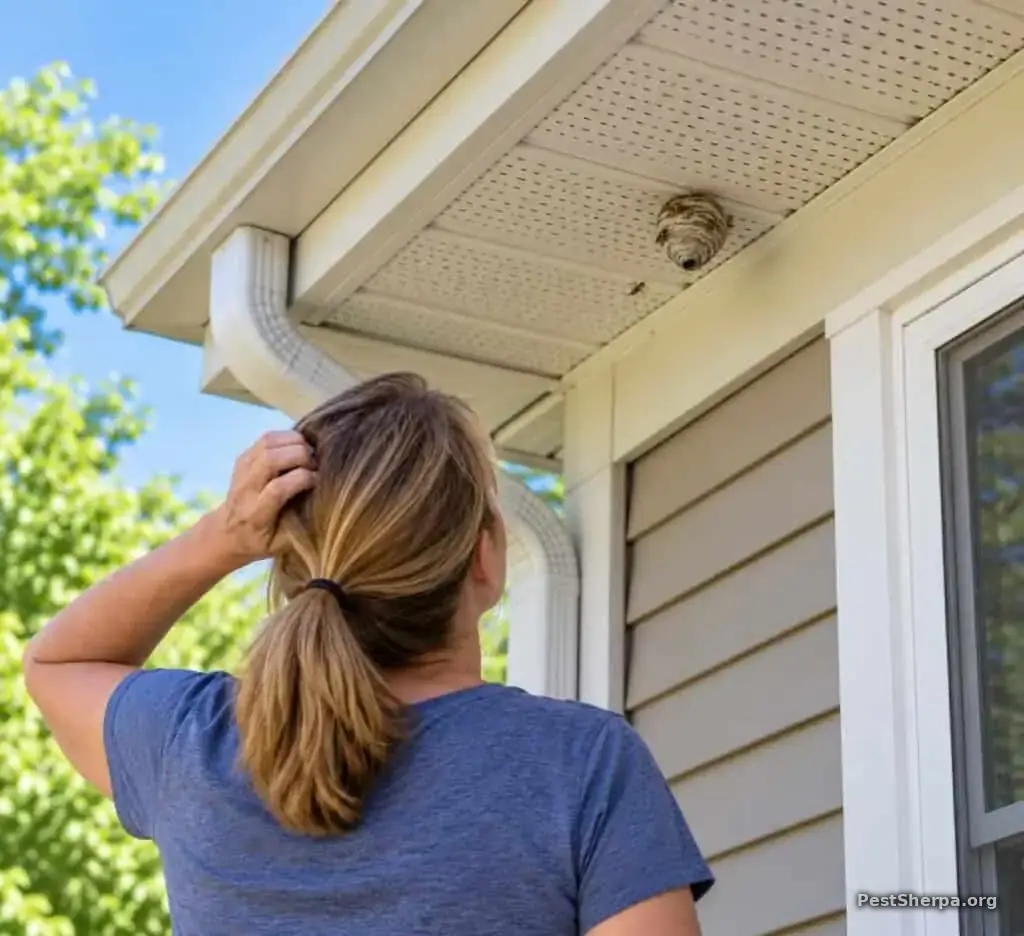
A paper wasp nest under a high eave, away from foot traffic, can be left in place. The same nest above a doorbell cannot. An allergy in the household lowers the threshold for removal.
Nests begun by a single foundress queen in early spring are the least expensive and safest to remove. [Texas A&M] [UC IPM]
MISCONCEPTION
“Foam the hole shut and the wasps will go away”
The evidence: sealing an active entrance can redirect the defenders into living spaces through other cracks. It is a classic way for a do-it-yourself project to become an emergency.
Treat the nest, or wait until it is inactive, and only then seal the opening. Yellowjackets and hornets nesting in wall voids are a job for a professional when access is difficult.
WHAT THE EVIDENCE SHOWS
Late summer is peak attitude season
By late summer, colonies are at their largest, their foraging shifts from protein toward sweets, and their defensiveness around food increases. A nest you ignored in May can sting someone in August, which is why timing is an integral part of integrated pest management rather than an afterthought.
MISCONCEPTION
“Swatting the air keeps you safer”
The evidence: flailing near a nest signals a threat. Moving calmly away from the flight path is far safer than any show of bravado. If a stinger remains in the skin, as it does with honey bees, scrape it out; wasps can sting repeatedly without leaving a stinger behind.
WHAT THE EVIDENCE SHOWS
Allergy changes the nest priority list
If someone in the household carries epinephrine for a stinging insect allergy, nests near doorways and play areas are not optional projects, and help should be called sooner. This is general safety guidance, not medical advice.
Ladder math: when DIY becomes an ER story
Most serious do-it-yourself stinging incidents combine height, a daytime attempt, and a misidentified species. Second-story eaves, large gray paper nests, and ground nests near walkways are where professionals earn their worth. If the plan requires a ladder and a brave friend to hold it, you most likely need a professional instead. Remember, stings from bees, wasps, hornets, yellowjackets, and fire ants account for about 500,000 emergency room visits each year. [ACEP]
Working at night is helpful with many social wasp nests because the foragers are inside, but you still need light, a clear path of retreat, and protective clothing. Many professionals do this type of work at night, but ladder work is even more concerning at night. And if your light goes out when you are on top of the ladder… well, it can be ugly. Read yellowjackets and bald-faced hornets before you devise a plan.
Beneficial exceptions people regret killing
Mud daubers provision their nests with spiders, and many paper wasps hunt caterpillars. Nests in remote locations can be allies. The goal is fewer stings near people, not a property entirely free of wasps and bees.
Carpenter bees damage wood but usually don’t behave like yellowjackets around outdoor meals. Use carpenter bee tactics for holes in the fascia rather than general-purpose sprays aimed into the air.
Schoolyards, mailboxes, and other high-regret nest sites
Play equipment, mailbox posts, grill lids, and door headers present a disproportionate risk because people are certain to pass by them. Inspect these locations monthly in the spring. A paper comb the size of a drink coaster in April is a five-minute task; by August it is a very different and potentially more dangerous situation.
Ground nests and the mower surprise
Yellowjacket ground nests usually reveal themselves the hard way, when a mower or string trimmer passes over the entrance. If you see a steady stream of wasps entering and leaving a hole in the lawn, mark the area, keep people and pets away, and treat with caution.
A plan for evening treatment, or professional help, is far better than swatting during the day. The Yellowjacket pages discuss nesting behavior in greater depth.
Homeowner kit vs bravado kit
A sensible homeowner’s kit consists of a labeled wasp aerosol with a long-reaching jet, eye protection, long sleeves, and a plan that includes the option of walking away. Use exactly as specified on the label. Do not mix wasp control products. Gasoline, a broom, and an audience should never be part of the plan.
For wall voids and large aerial nests, the right tool is a phone call. Hire licensed help, and keep children indoors while the work is under way.
Picnics, trash lids, and late-season sweets
In late summer, yellowjackets become increasingly aggressive around open soda cans and food waste. Tight-fitting trash lids and prompt cleanup prevent stings that have nothing to do with a nest on your eave, so keep decisions about outdoor dining separate from decisions about nest removal.
If workers continue to visit outdoor meals, look for a ground nest within a short flight. The Yellowjackets page explains that foraging pattern.
Home sellers, spring showings, and nests buyers notice
A paper nest above the front door during showings is not an attractive feature. Deal with doorway nests before listing photographs are taken. Leave beneficial nests in place only if they are truly away from foot traffic, and disclose any work you have had done rather than painting over mud stains.
Buyers with a history of sting allergy will lose interest quickly. In late summer, decisions about nests are part of a home’s curb appeal, whether or not listing agents acknowledge it.
After a nest is removed, scrape and clean the attachment points so that lingering scent cues do not encourage the insects to rebuild in the same spot.
The final point for homeowners is this: nest architecture is a better guide than alarm over color. Leave remote mud dauber nests and out-of-the-way paper combs in place whenever possible. Treat yellowjacket ground nests and wall voids with respect, and never seal an active entrance. An allergy in the household changes the priorities immediately, and confidence on a ladder is no substitute for judgment.
What to do this weekend
- Walk the exterior of your home and examine the eaves, play equipment, holes in the ground, and porch ceilings, taking photographs with your phone.
- Sort the nests you find using the paper wasp, yellowjacket, mud dauber, and bald-faced hornet guides.
- Remove or treat only the nests that threaten people, and leave remote beneficial nests whenever you can.
- Never seal the entrance to an active nest in a wall void.
- If you must treat a social wasp nest yourself, plan to do it at night and wear protective clothing. We do recommend treating this as a job for professionals due to safety concerns.
When to call a professional (and when your own efforts are enough)
A homeowner can reasonably remove a small early-season paper wasp nest that is safely within reach, or scrape away inactive mud dauber tubes. Call a professional for large aerial nests, ground nests near walkways, nests in wall voids or on second-story eaves, or any nest when a household member has a severe allergy. Hiring a licensed company is far safer than taking chances on a ladder.
Related guides: hub, yellowjackets, bald-faced hornets, European hornets, and carpenter bees.
Linkable facts
Concise, cite-ready statements. Deep-link this box with #linkable-facts or link a single line with #lf-1 through #lf-6.
- LF1. Mud dauber wasps are solitary and rarely defend their nests; their mud tubes are not yellowjacket nests.
- LF2. Paper wasp nests are open, umbrella-shaped combs; yellowjackets more often nest in the ground or in enclosed cavities and defend food sources aggressively.
- LF3. Sealing the entrance of an active nest in a wall can force stinging insects into living spaces.
- LF4. Honey bees, bumble bees, paper wasps, yellowjackets, and hornets each call for a different decision; “bee” does not describe a single plan.
- LF5. Nests begun by a foundress queen in early spring are safer to remove than late-summer colonies at their peak population.
- LF6. A sting allergy in the household raises the priority of nests near doors and play equipment.
Suggested citation: Greg Baumann, Pest Control Expert, Pest Sherpa. “Stinging Insect Myths: Which Nests to Worry About and Which to Leave Alone.” https://pestsherpa.org/pest-guide/bees-wasps/stinging-insect-myths/ (deep-link https://pestsherpa.org/pest-guide/bees-wasps/stinging-insect-myths/#linkable-facts).
Frequently asked questions
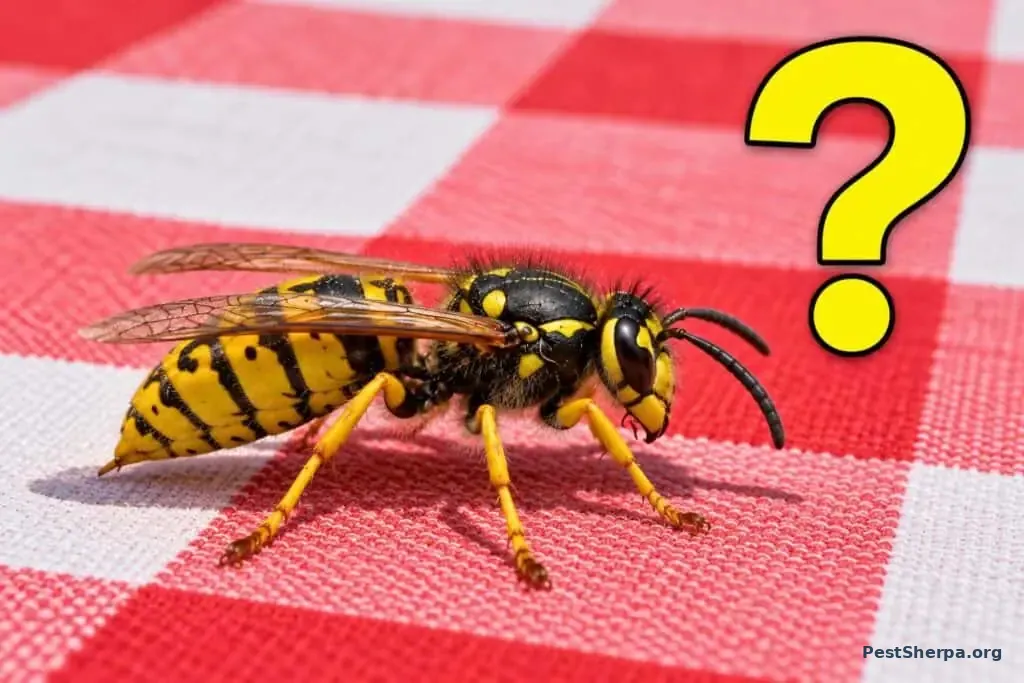
Is every black-and-yellow wasp a yellowjacket?
No. Some paper wasps are also black and yellow, and nest architecture and body shape distinguish them from yellowjackets.
Should I knock down every nest I see?
No. Remote paper wasp nests and mud dauber tubes can be left in place until late in the year. Nests at doorways and yellowjacket ground nests near walkways are a different matter.
Should I seal a hole if wasps are using it?
No. Sealing can trap the insects inside the wall and drive them into the house, so wait until the nest is inactive or follow a proper treatment plan.
Are mud daubers dangerous?
They can sting if handled roughly, but they do not defend their nests as social wasps do. Most homeowners can scrape away old tubes once activity has ended.
When is the right time to treat?
For many social wasp nests, treating at night or in the early morning means that more of the colony is inside and fewer insects are flying. Wear protective clothing and keep a clear path of retreat.
What if someone is allergic to stings?
Treat nests near doors, play areas, and walkways as a higher priority, and seek emergency care if systemic allergic symptoms follow a sting. Assume that everyone is allergic unless they have been stung before with no adverse reaction beyond the pain of the sting.
Have a question I did not cover? Send it to Ask the Sherpa.
References
- UC IPM: Yellowjackets and other social wasps
- Texas A&M: Paper wasp
- USDA ARS: Bee research context
- Penn State Extension: Paper wasps, yellowjackets, and other stinging insects
- American College of Emergency Physicians: Allergies and Anaphylaxis
This article was written by Greg Baumann, founder of Pest Sherpa, and reflects more than 40 years of professional pest management experience.
About the Author

Greg Baumann | Pest Control Expert
Greg Baumann is the founder of Pest Sherpa and a Pest Control Expert with more than 40 years of professional pest management experience. His articles combine decades of field experience, technical expertise, and science-based guidance to help homeowners identify pests correctly, understand real-world risks, and make informed pest management decisions.
Mission: Identify the pest. Understand the risk. Stop the problem. Prevent the comeback. Know when it’s time to call a professional.