
Carpenter Bees: Identification, Wood Damage, and What to Do
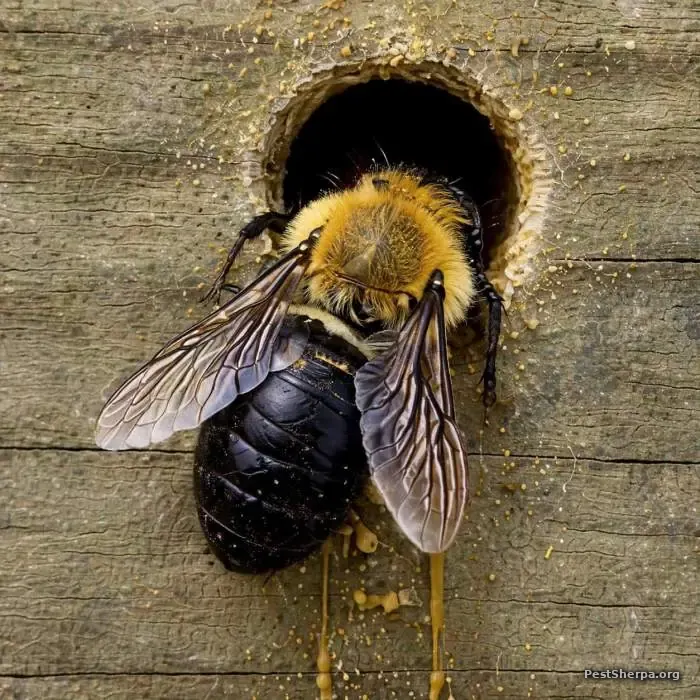
Carpenter bees are large native bees that bore round nesting holes into exposed wood. For most homeowners, the real issue is repeated reuse of decks, eaves, rails, trim, and similar wood over multiple seasons, not termite-like destruction overnight. Correct identification matters because carpenter bees are often confused with bumblebees, and the wood evidence can be confused with other pests.
TL;DR
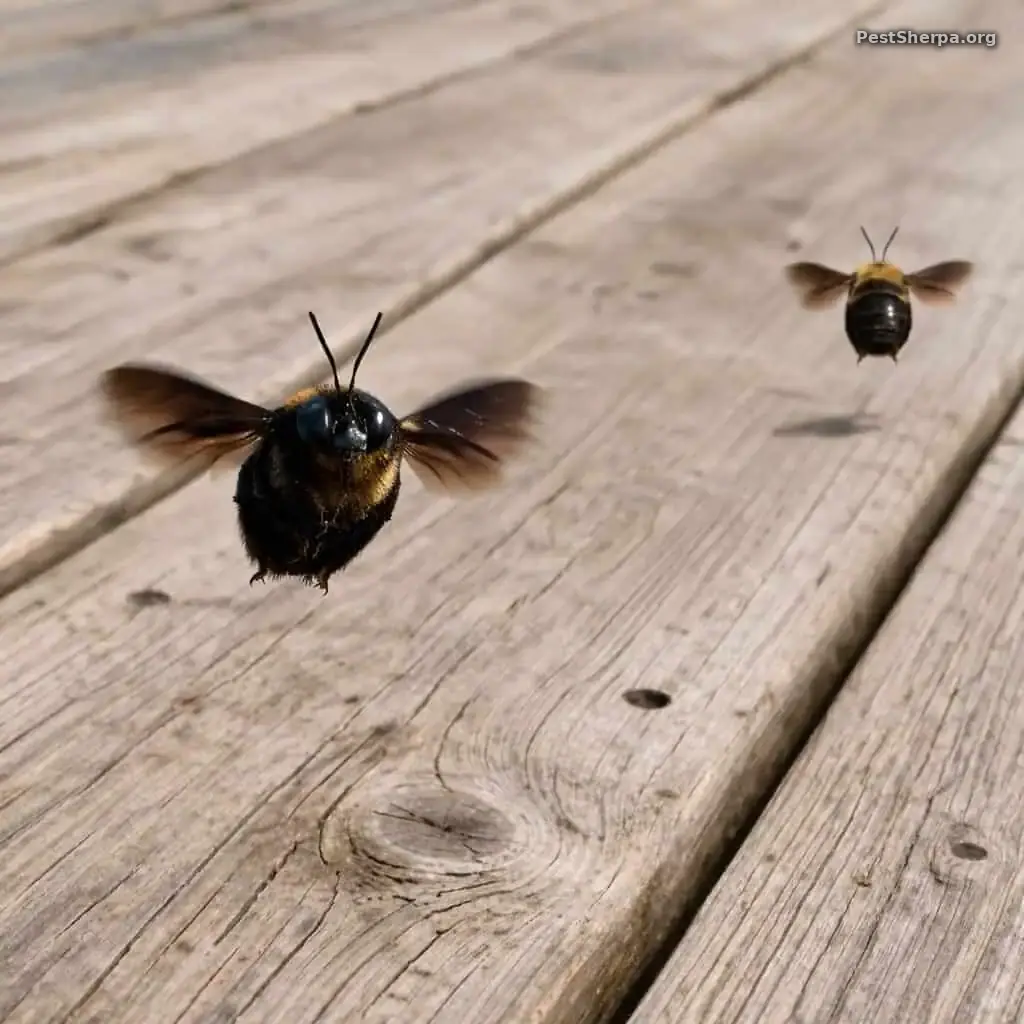
- Most useful ID clue: a large bee with a shiny, mostly hairless black abdomen hovering around perfectly round holes about 1/2 inch wide in exposed wood.
- What the damage usually means: carpenter bees do not eat wood like termites. They excavate tunnels for nesting, and the damage is usually localized at first but can build over time if the same wood is reused year after year.
- What usually works best: protect exposed wood, address active holes correctly, and seal openings only after the right timing.
- What wastes effort: panicking over hovering males, broad spraying, or sealing active holes too early.
- When the issue is more serious: many active holes, repeated yearly reuse, inaccessible activity, woodpecker damage, or uncertainty about whether the wood evidence is actually from carpenter ants or drywood termites.
Jump to: Identification Why It Matters Wood Damage What To Do When To Call a Pro Similar Pests References
Identification
In much of the eastern United States, the large carpenter bee homeowners most often notice is the eastern carpenter bee. The easiest field clue is the abdomen: carpenter bees look bumblebee-like at a glance, but the abdomen is shiny and mostly hairless rather than fuzzy.
What it looks like
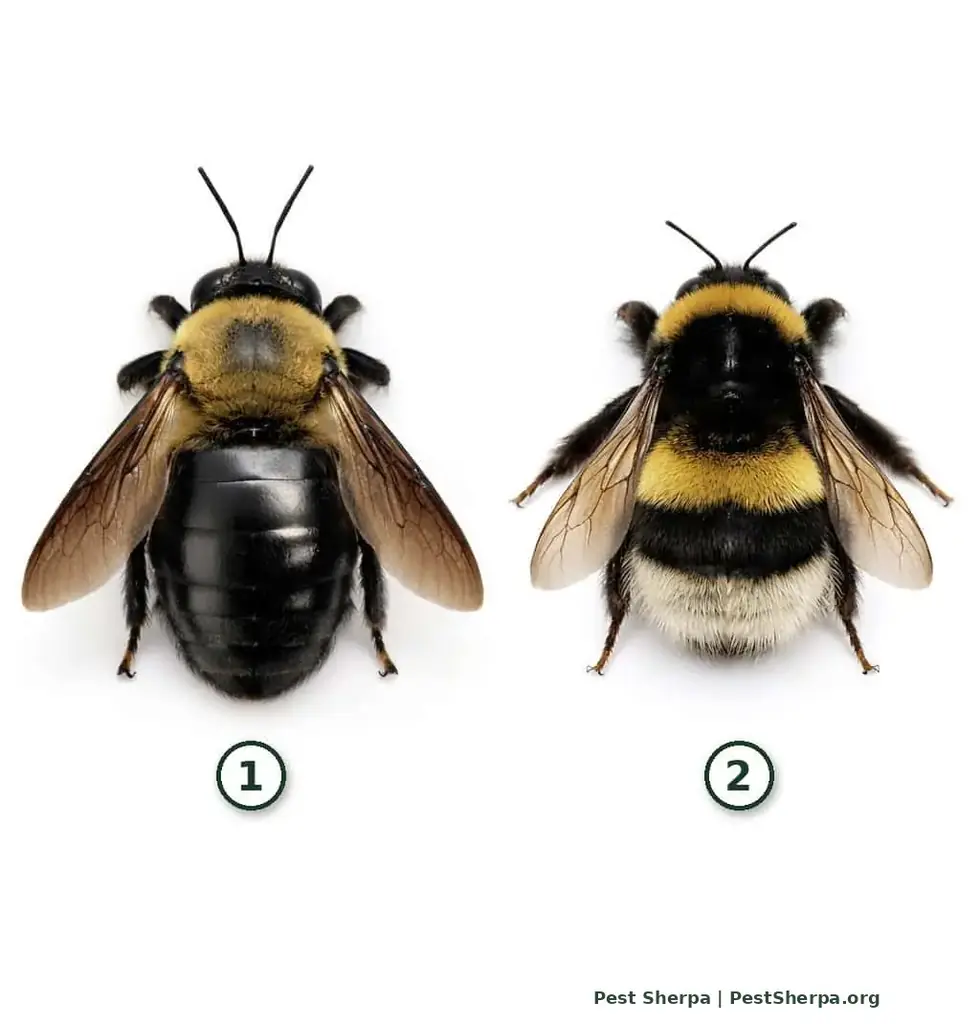
Which one do you see? Match the number:
- Carpenter bee: shiny, mostly bare black abdomen below a fuzzy yellow thorax.
- Bumblebee: fuzzy all over, including the abdomen, with yellow and black bands and often a pale tail.
- Large bee, usually about 3/4 to 1 inch long
- Thorax looks fuzzy and yellowish
- Abdomen looks black, smooth, and shiny
- Males often have a pale or yellowish face; females tend to have a darker face
- Males may hover in front of people and act aggressive, but they cannot sting
Where homeowners usually find them
- Deck rails and joists
- Porch ceilings
- Eaves, fascia, soffits, and trim
- Playsets, fences, and outdoor furniture
- Unpainted, weathered, or unfinished wood
They often prefer softer, exposed woods such as pine, cedar, cypress, and redwood, although painted or treated wood is not automatically safe from activity.
What confirms the ID
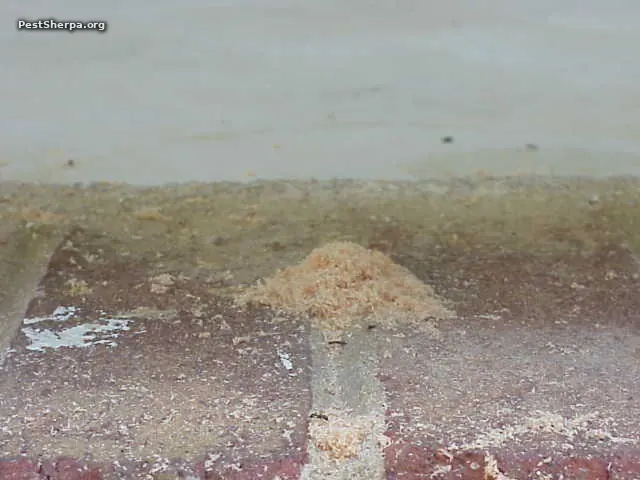
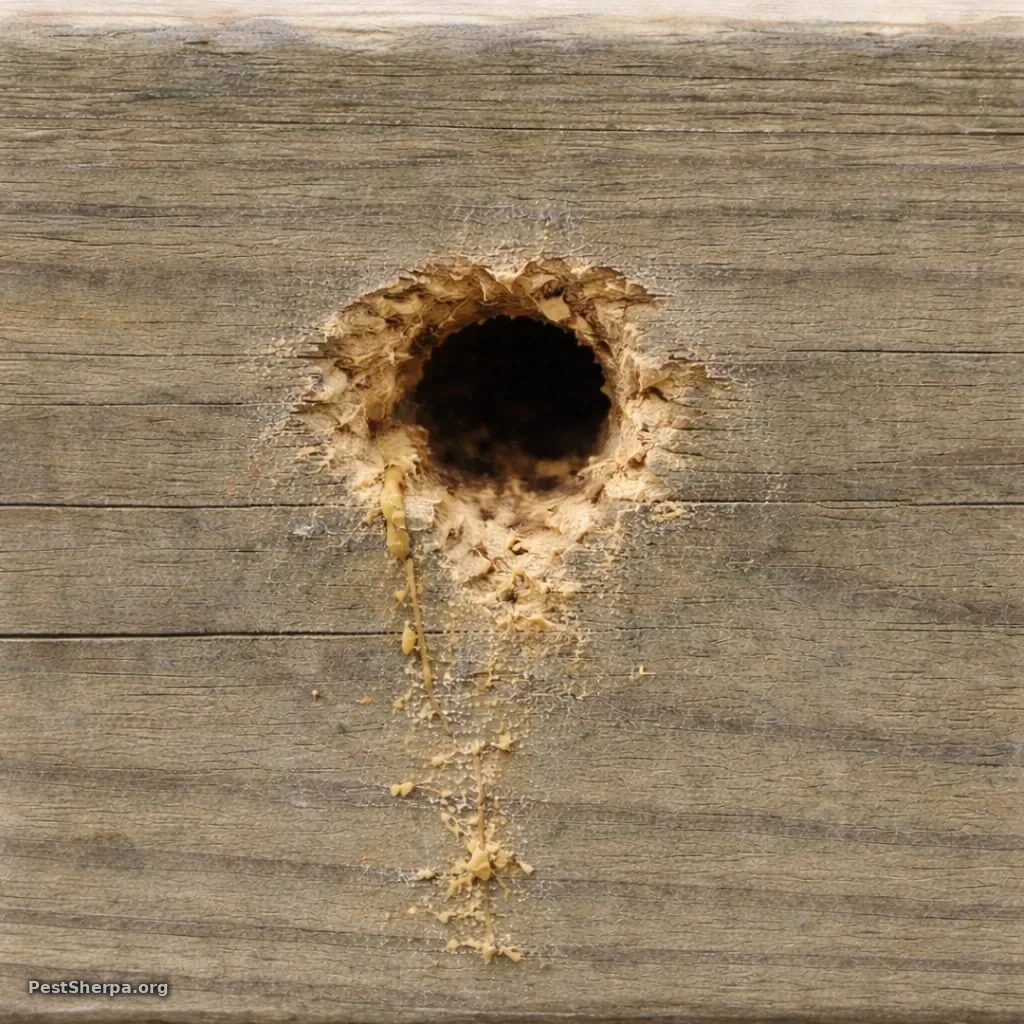
- Round entrance hole about 1/2 inch wide
- Fresh sawdust beneath the hole
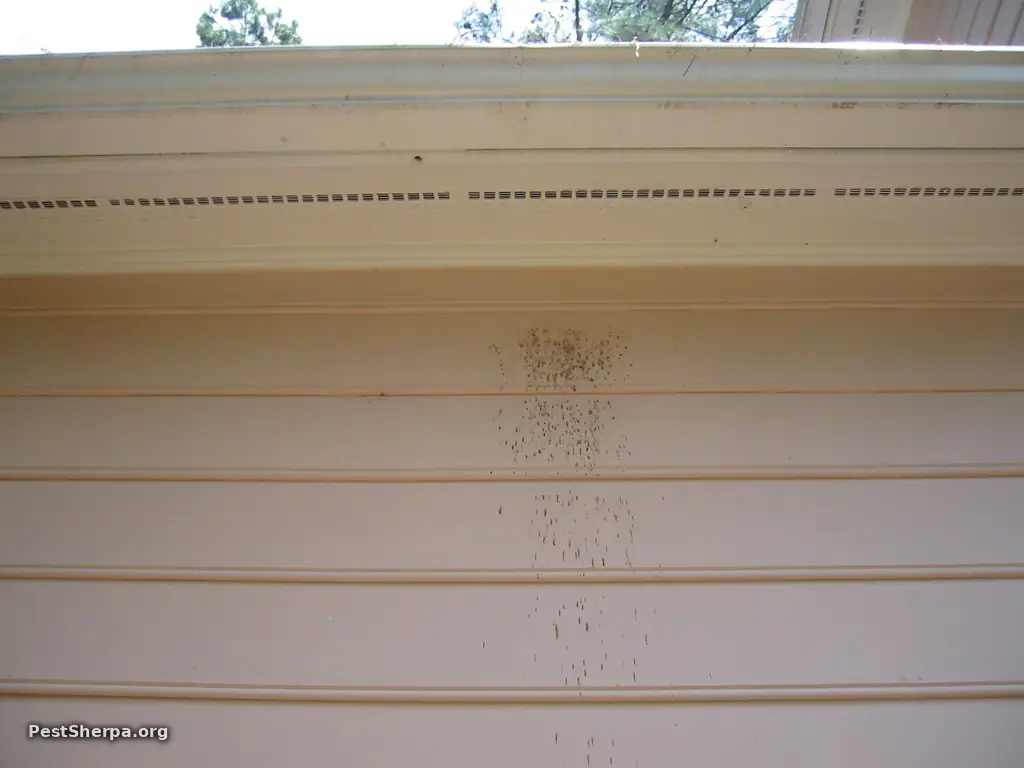
- Yellow or yellow-brown staining beneath the entry point
- A tunnel that goes inward briefly, then turns and follows the wood grain
- Hovering bees around the same rail, beam, or trim area in spring
What commonly misleads homeowners
- Seeing a large bee and assuming it is automatically a bumblebee
- Assuming every hovering bee can sting
- Assuming any hole in wood means termites
- Seeing one or two bees and assuming the structure is in immediate danger
Useful reality check: a carpenter bee sighting by itself is less useful than the combination of the insect, a round entry hole, and fresh wood evidence below that hole.
Why It Matters
For most homes, carpenter bees are a mixed concern. They are beneficial pollinators, but they can also create an annoying and sometimes expensive repeat-nesting problem on exposed wood.
- Nuisance concern: males hover aggressively
- Localized wood damage: repeated reuse enlarges tunnels
- Secondary damage: woodpeckers may worsen damage
- Low health risk: primarily a nuisance and repair issue. See Wood Damage below.
Wood Damage
Carpenter bees do not eat wood. A female chews a nearly perfect round hole about 1/2 inch across, goes in roughly 1/2 to 1 inch against the grain, then turns at a right angle and tunnels along the grain. Purdue puts a typical tunnel at 6 to 8 inches and Maryland at 6 to 12 inches. She uses the tunnel to raise her young, and the wood she chews out ends up as coarse sawdust under the hole. [Purdue] [UMD] [Penn State]
How one hole becomes a real problem
- Reuse year after year. New adults overwinter in the tunnels, and females often reuse and lengthen old galleries the next spring. Maryland and UC IPM both note galleries reused over many years can reach as much as 10 feet in large timbers. [UMD] [UC IPM]
- Moisture and rot. Open holes let water into the wood, and Kentucky and Maryland Extension both point to faster rot and decay as a real cost of leaving holes unrepaired. [UK Entomology] [UMD]
- Woodpeckers. Woodpeckers dig after the larvae inside and can tear open far more wood than the bees did. [Purdue]
- Stains. Bees defecate near the entrance, leaving yellow, fan-shaped stains that age black with mold on siding and trim. [UMD] [Penn State]
What they pick
They favor bare, weathered softwoods like redwood, cedar, cypress, and pine, especially pieces more than 2 inches thick, such as deck rails, fascia, rafter tails, and porch ceilings. Painted and pressure-treated wood is much less attractive. Stain is not a reliable barrier: Penn State notes stained wood usually is not protected, and Maryland lists stained, weathered wood as attractive. [Purdue] [Penn State] [UK Entomology] [UMD]
How serious is it?
Purdue notes significant damage generally builds up only when the same wood is attacked over many years. A few holes in a rail are a repair and prevention job, not a structural emergency. Many holes in the same beam, woodpecker damage, or soft, wet wood around the holes is when I would have the wood itself checked. If you find small pellets or mud tubes instead of round holes and coarse sawdust, read my signs of termites guide, and if you find shredded wood mixed with insect parts, read my carpenter ant guide. Those are different problems with different fixes. [Purdue]
What To Do
1. Confirm activity
Look for fresh sawdust, staining, or active bees. Fresh, coarse, pale sawdust on the deck or sill under a round hole means the hole is in use now. Old holes with weathered edges and no sawdust may be empty. In spring, watch the hole for a few minutes: a female flying in and out confirms it. Note every active hole before you treat, because you will come back to each one. [UMD] [UK Entomology]
2. Fix wood conditions
- Paint or seal exposed wood. Paint or varnish is the best long-term protection, and UK Entomology notes paint deters more than stain. [Purdue] [UK Entomology]
- Replace damaged boards, especially ones that are soft, wet, or riddled with holes. Pressure-treated or harder wood is less attractive. [Purdue]
- Protect vulnerable surfaces. Fill cracks and depressions, and cover rough ends of timbers with wire screening or metal flashing. [UC IPM]
3. Ignore hovering males
They cannot sting and are not the real issue. Males are territorial and buzz in front of people near nesting sites, but they have no stinger. Females can sting but seldom do unless handled. [Purdue] [UK Entomology]
4. Treat tunnels if needed
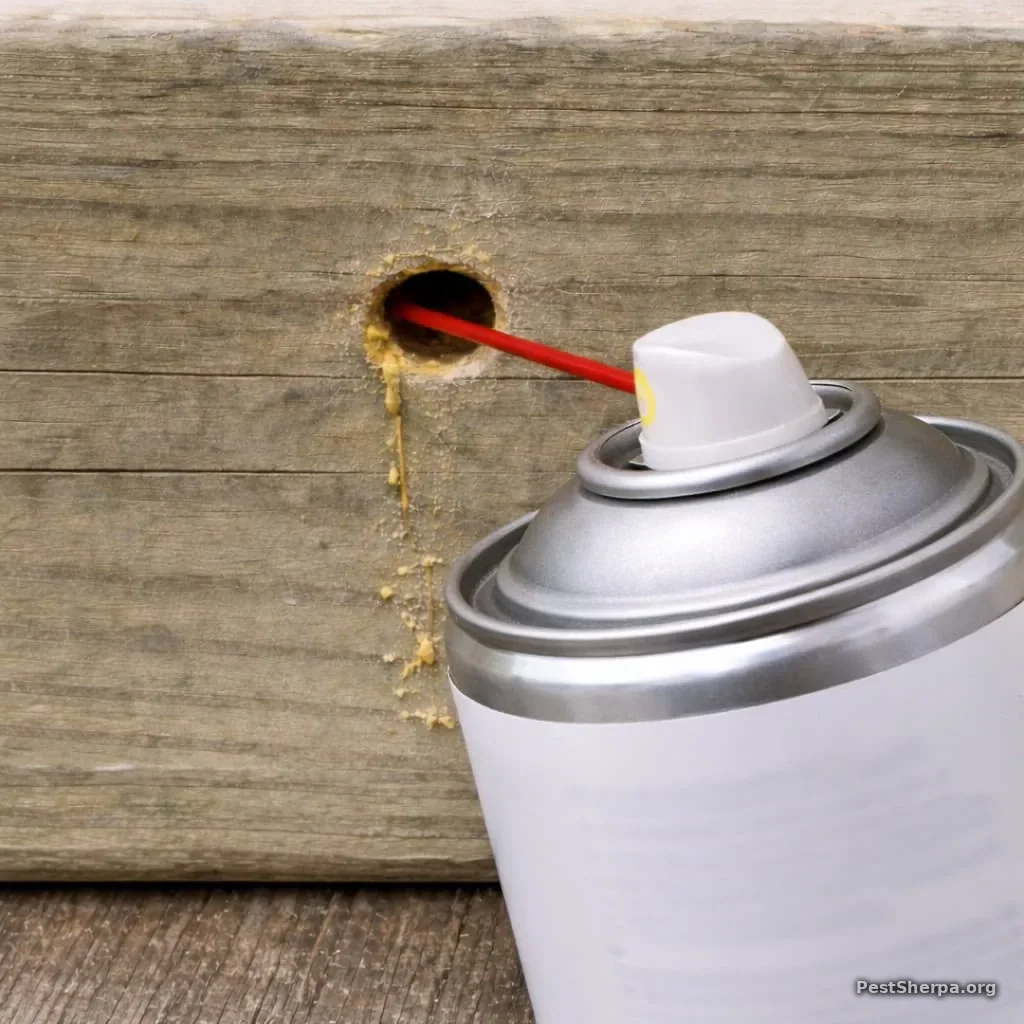
- Focus on the hole, not broad spraying. Puff a small amount of insecticidal dust labeled for carpenter bees directly into each active opening. Maryland notes heavy dusting can repel the bees, so a light puff works better; the returning female spreads it through the tunnel. Surface sprays on wood last only about 3 to 4 weeks, per UK Entomology. [UMD] [UK Entomology]
- Mind the timing. Extension guidance differs on the best window. Maryland and UC IPM favor early spring before nesting, or late summer into fall after new adults emerge, and UC IPM notes treating active nests in late spring and summer does little because each brood cell is sealed off. Penn State suggests treating in spring, again in midsummer, and in early fall. [UMD] [UC IPM] [Penn State]
- Protect yourself. Penn State suggests treating at night, using a flashlight covered with red cellophane, and wearing gloves, goggles, and a dust mask. Read and follow the label; UC IPM notes many of these dusts are sold only to licensed pros. [Penn State] [UC IPM]
- Avoid sealing too early. Leave treated holes open for a few days so returning bees contact the dust. Maryland says bees should be inactive about a week after treatment. [Purdue] [UMD]
- Traps are a supplement. Wooden box traps with 1/2-inch holes hung under eaves in early spring can catch females looking for nest sites. [UK Entomology]
5. Seal holes after activity ends
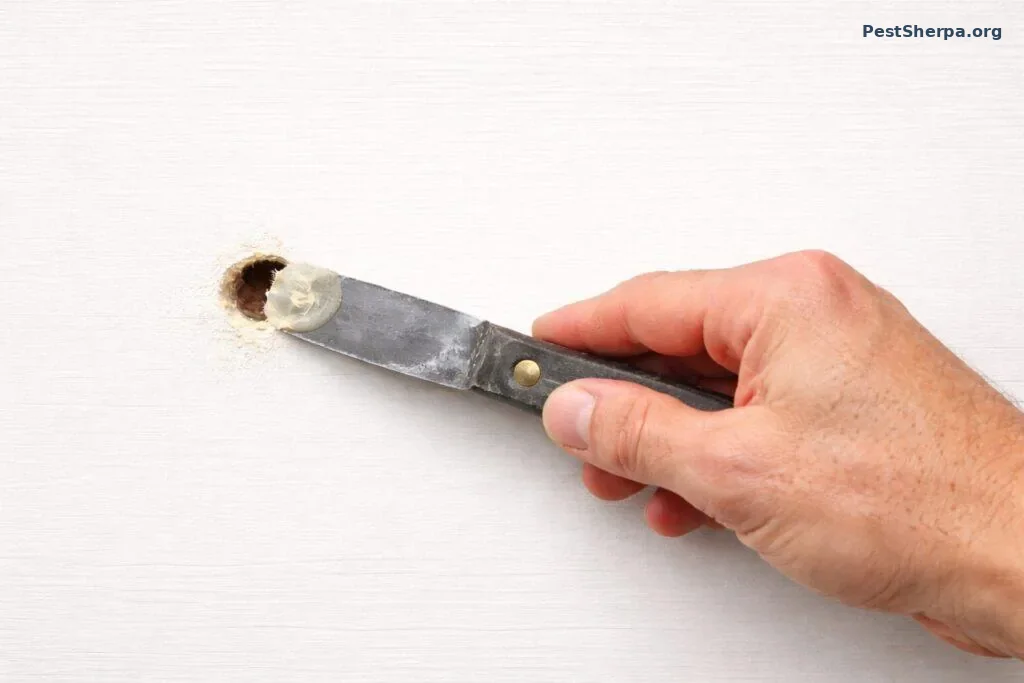
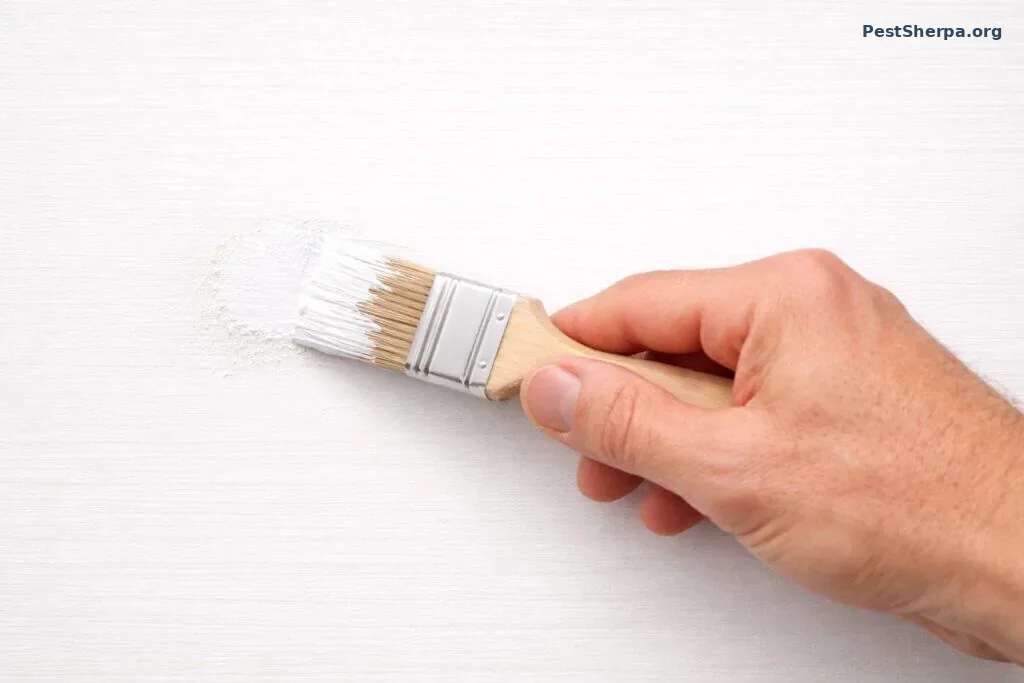
Seal and refinish to prevent reuse. Once activity has stopped, plug each hole with a wood dowel coated in carpenter’s glue, wood putty, or steel wool and caulk, then paint or varnish the whole surface. Penn State recommends filling holes in the fall. Do not caulk an untreated active hole; Maryland notes bees will chew back out. [UK Entomology] [UC IPM] [Penn State] [UMD]
Key takeaway: prevention + timing matters more than product volume.
When To Call a Pro
Most homeowners can handle a few low, reachable holes. I would bring in a licensed pro in these cases:
- Many holes, or holes in the same beam or rail year after year. That points to long galleries and wood that may need repair or replacement. [UMD]
- Hard-to-reach areas. Maryland recommends hiring a pest control company when the bees are overhead, awkward to reach, or treatment means a ladder or step stool. Penn State notes many homeowners hire out eave and soffit work because of the risks. [UMD] [Penn State]
- Repeat yearly activity after you have treated and sealed. Something about the wood or the timing is not working.
- Woodpecker damage. Torn-open wood usually means many larvae inside and repairs beyond a putty knife. [Purdue]
- Soft or rotted wood around the holes. That calls for a carpenter as well as pest control. [UK Entomology]
- You are not sure it is carpenter bees. Sawdust and holes can also come from other wood pests, and the fix is different.
A good pro will confirm which holes are active, treat them with a professional dust, tell you when to seal, and point out wood that needs paint or replacement to stop next year’s nesting.
Similar Pests
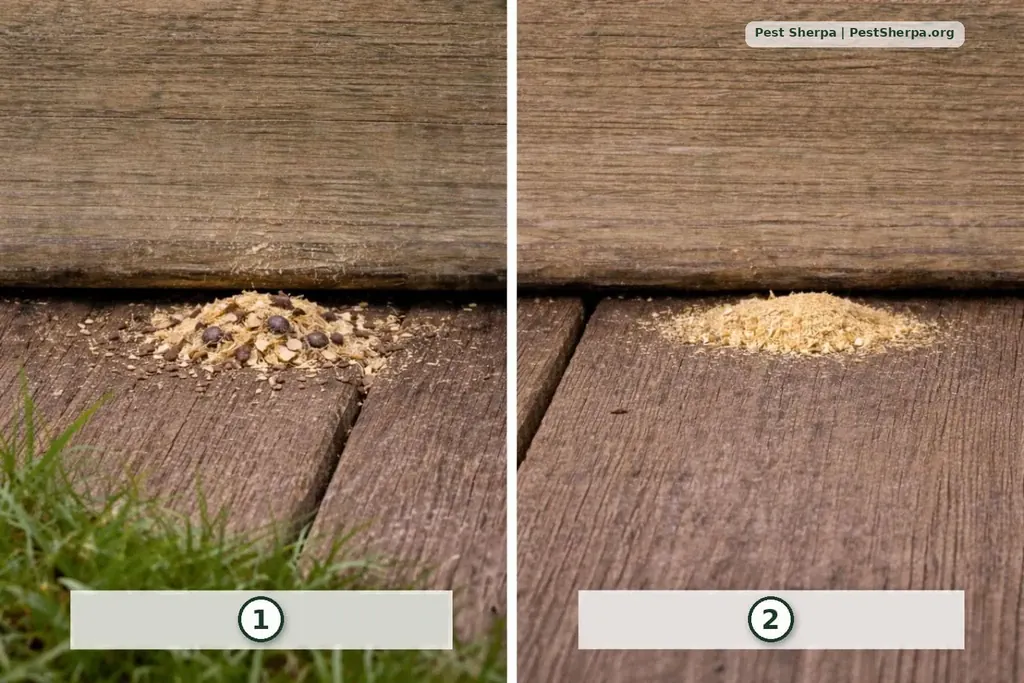
Which frass do you see? Match the number:
- Carpenter ant frass: coarse, shredded wood fibers mixed with dark bits of insect parts and debris.
- Carpenter bee frass: fine, pale, uniform sawdust with no insect parts, usually below a round hole about 1/2 inch wide.
- Bumblebees: fuzzy abdomen
- Carpenter ants: different damage pattern
- Drywood termites: pellet frass
Common Questions
- Do carpenter bee traps work?
- I’m seeing a lot of carpenter bees around my deck. Should I worry about damage?
References
- Purdue Extension: Carpenter Bees
- UC IPM: Carpenter Bees
- University of Maryland Extension: Carpenter Bees
- NC State Extension: Stinging Insects
- Penn State Extension: Carpenter Bees
- University of Kentucky Entomology: Carpenter Bees (EF611)
This article was written by Greg Baumann, founder of Pest Sherpa, and reflects more than 40 years of professional pest management experience.
About the Author

Greg Baumann | Pest Control Expert
Greg Baumann is the founder of Pest Sherpa and a Pest Control Expert with more than 40 years of professional pest management experience. His articles combine decades of field experience, technical expertise, and science-based guidance to help homeowners identify pests correctly, understand real-world risks, and make informed pest management decisions.
Mission: Identify the pest. Understand the risk. Stop the problem. Prevent the comeback. Know when it’s time to call a professional.