
I’m seeing a lot of carpenter bees around my deck. Should I worry about damage?
Short answer: Yes, take carpenter bees seriously around unfinished decks and eaves, but do not panic. They excavate round galleries in softwood that can expand over years. Males hover and look fierce yet cannot sting. Protect the wood with finish work, seal old holes after activity drops, and use traps or labeled treatments as helpers.
What the damage looks like
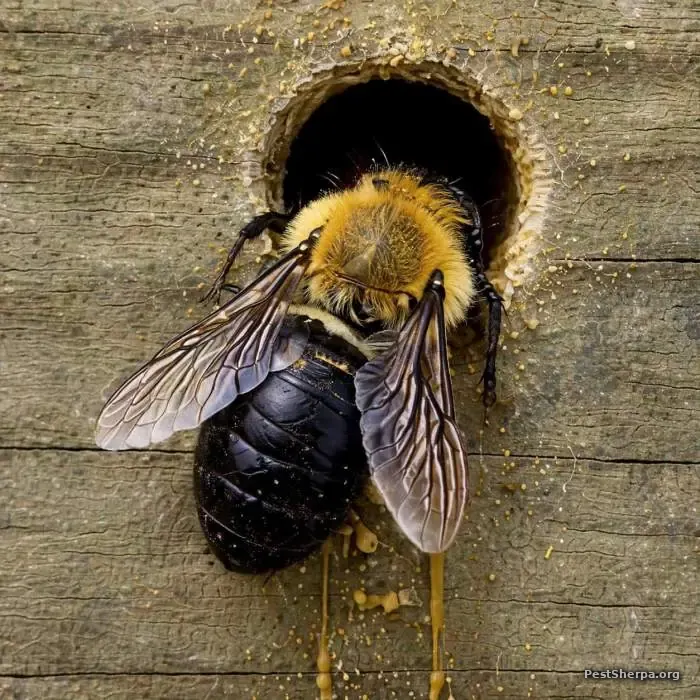
Carpenter bees drill nearly perfectly round holes about a half-inch across into deck rails, fascia, siding, and outdoor furniture. Females create tunnels along the grain and provision cells with pollen. Fresh sawdust under a hole is a clue. Old galleries get reused and extended, which is how structural concern grows over several seasons.
What to do this season
- Note active holes on sunny wood surfaces.
- Consider carpenter bee traps placed near galleries as a supplement.
- After activity slows (often late summer or fall), fill holes with wood filler or dowels and sand smooth.
- Paint, stain, or varnish unfinished softwood. Finished wood is much less attractive.
- Replace severely tunneled boards when strength is compromised.
What not to do
Do not seal holes while bees are actively entering and exiting if you have not addressed the insects first; trapped bees may chew new exits. Do not soak blooming plants with insecticide while chasing bees. Read labels carefully if you use a dust in galleries.
When to call help
High eaves, extensive tunneling in load-bearing members, or yearly return despite finish work are good reasons for a licensed technician and possibly a carpenter. Ask for a plan that includes exclusion and wood protection, not only a spray pass.
Why decks get hit hardest
Builders and homeowners love untreated cedar, pine, and other softwoods for outdoor projects. Weathering opens the grain. Once a few galleries succeed, bees reuse the same boards year after year. Finish work after sealing is the long-term fix that traps cannot replace. If the deck is already structural, budget for board replacement where tunnels honeycomb the rail.
Neighbor concerns
If bees are drilling a shared fence or a rental fascia, document holes with dates and photos before repairs. Property managers respond better to clear evidence than to a vague complaint about “big bees.” Keep the focus on wood protection and safe removal options.
Related guides
References
- Penn State Extension: Carpenter Bees
- Clemson HGIC: Carpenter Bees
- University of Kentucky: Carpenter Bees
This article was written by Greg Baumann, founder of Pest Sherpa, and reflects more than 40 years of professional pest management experience.
About the Author

Greg Baumann | Pest Control Expert
Greg Baumann is the founder of Pest Sherpa and a Pest Control Expert with more than 40 years of professional pest management experience. His articles combine decades of field experience, technical expertise, and science-based guidance to help homeowners identify pests correctly, understand real-world risks, and make informed pest management decisions.
Mission: Identify the pest. Understand the risk. Stop the problem. Prevent the comeback. Know when it’s time to call a professional.