
Signs of Termites: Mud Tubes, Swarmers, Frass, and Damage
Termites almost never show themselves. They stay hidden in the soil, inside mud tubes, or inside the wood they’re eating, and the EPA notes most people don’t know they have termites until they see a swarm or find damage. [EPA] So you have to know the clues. Here’s what I look for on a termite inspection, what each sign means, and what to do next without getting rushed into a bad contract.
Quick answer: the signs of termites
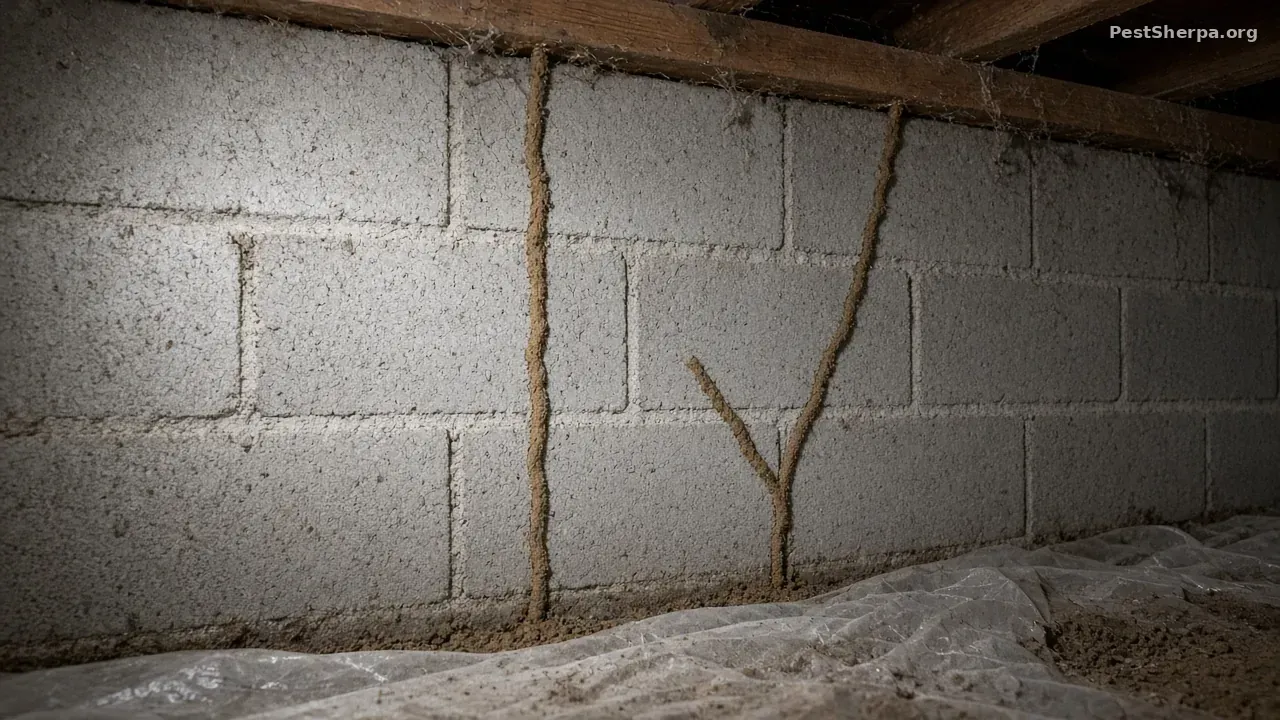
- Mud tubes: pencil-wide tunnels of dried soil running up foundation walls, piers, or joists. The top sign of subterranean termites.
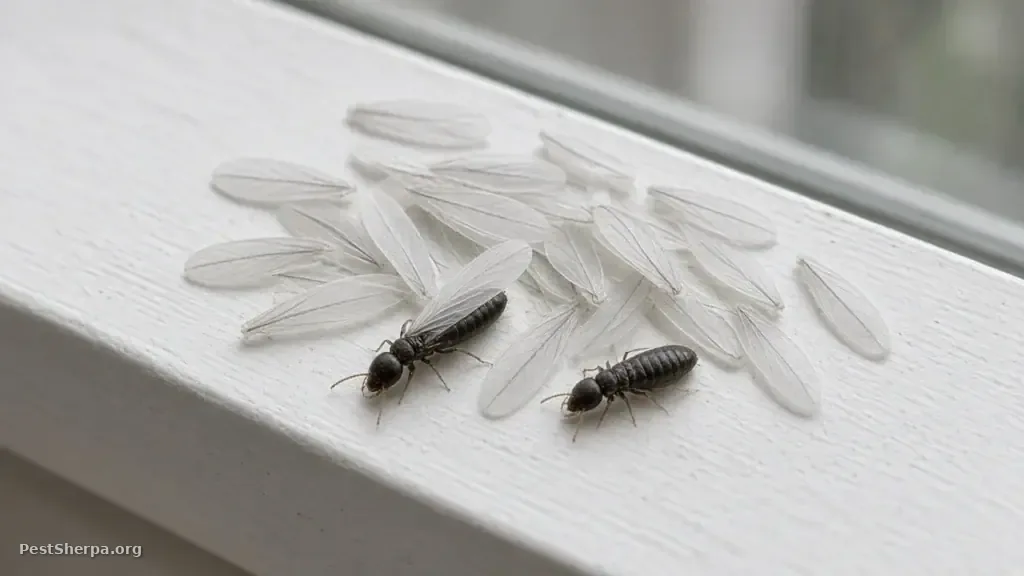
- Swarmers or piles of wings: winged termites indoors, or shed wings on windowsills and near doors, usually in spring.
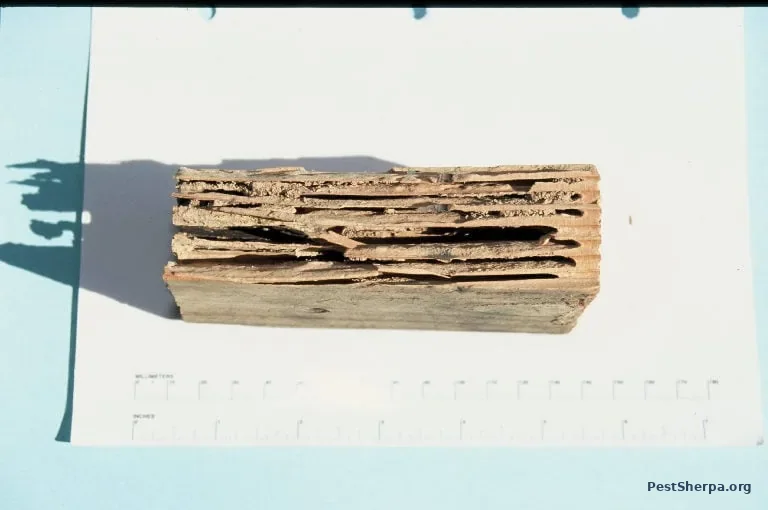
- Damaged wood: wood hollowed out along the grain, with dried mud packed in the tunnels.
- Hollow or soft wood: wood that sounds hollow when tapped or lets a screwdriver push in easily.
- Frass (drywood termites): small piles of tiny, hard pellets under pinhole-size kick-out holes.
- Rippled paint or wall coverings: wavy or sunken spots, or tiny holes in drywall with bits of soil around them.
Bottom line: winged termites coming out inside your house almost always mean an infestation that needs treatment. Termites work slowly, though, so take the time to get a proper inspection. See what to do first.
Based on University of Kentucky, EPA, UT Extension, and UC IPM guidance cited in the References below.
Mud tubes: the main sign of subterranean termites
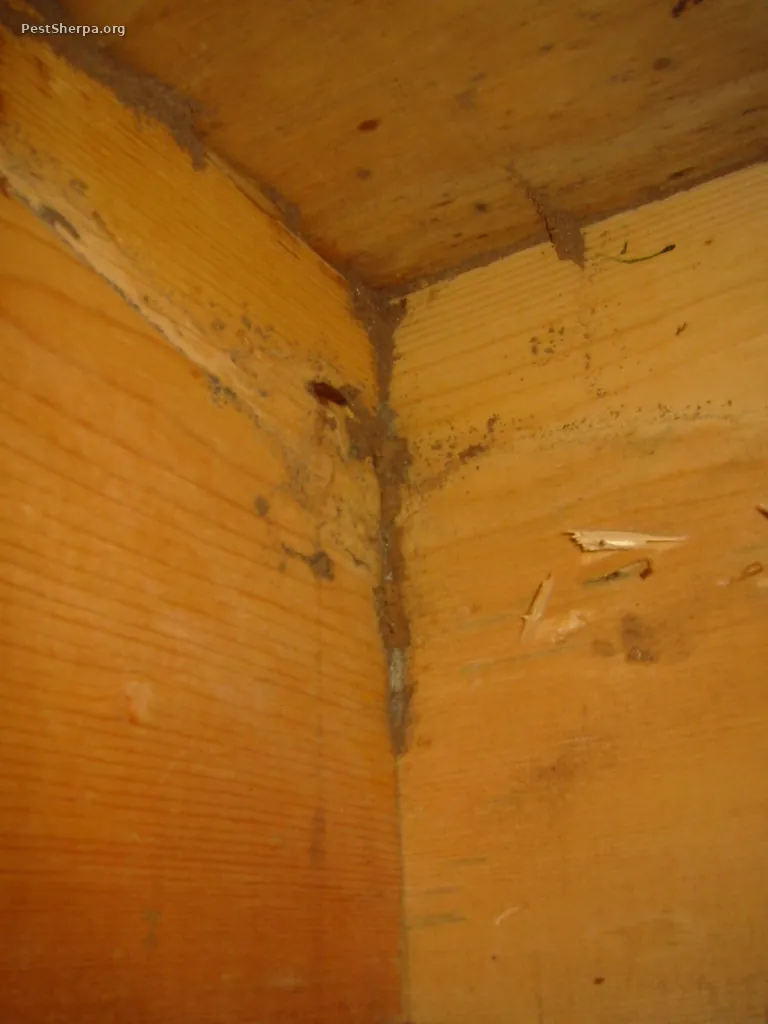
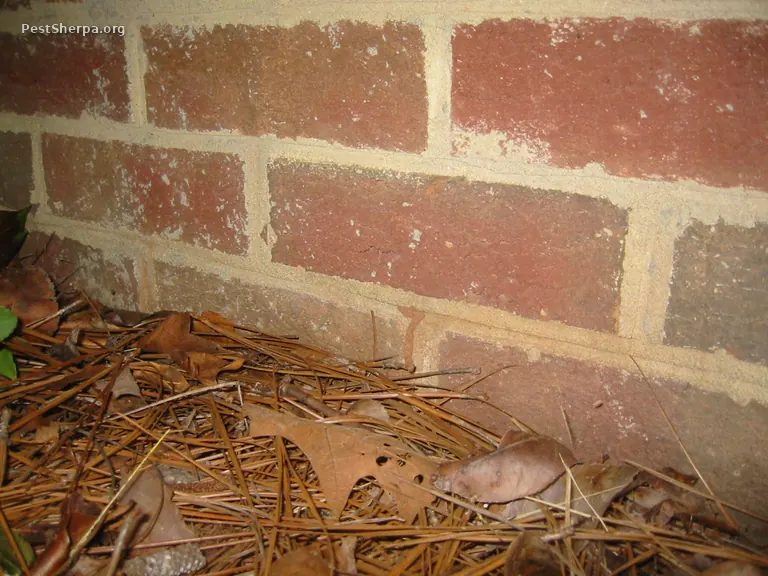
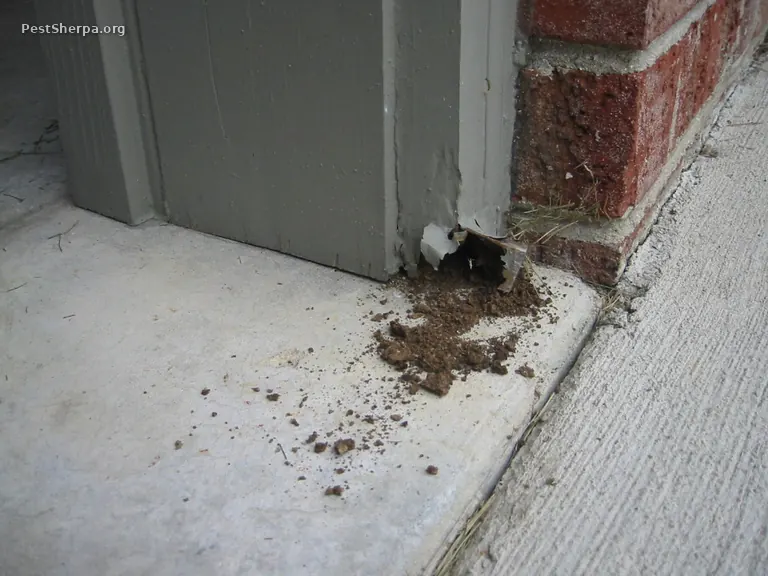
Subterranean termites live in the soil and need moisture, so when they have to cross something dry like a concrete foundation, they build shelter tubes out of soil and their own waste. [UT Extension] [Purdue] These mud tubes are usually about as wide as a pencil, although some are thicker. [University of Kentucky] In most of the country, including here in East Tennessee, subterranean termites are the ones that matter. [EPA] UT Extension calls them the most destructive wood-feeding insects in Tennessee. [UT Extension]
Where to look:
- Foundation walls, inside and out, especially behind shrubs, mulch, and stored items
- Crawlspace piers, sill plates, and floor joists
- Basement walls and around door and window trim near the floor
- On slab homes, around expansion joints, cracks, and where plumbing and utility lines come through the slab [UT Extension]
To see if a tube is active, break off a small section and look for small, creamy-white worker termites. An empty tube doesn’t prove the termites are gone, because they often abandon sections of tube while they feed somewhere else. [University of Kentucky] If you check later and the break has been patched with fresh mud, they’re active.
Greg’s Expert Tip: Photograph every tube before you touch it, and leave most of it in place for the inspector. A good termite inspector reads those tubes like a map: where they start, where they go, and whether they’re fresh.
Swarmers and discarded wings
Swarmers are the winged termites a mature colony sends out to start new colonies. The University of Kentucky says spring is typically when large numbers emerge inside homes, triggered by warmer temperatures and rainfall. They fly, drop, shed their wings, and pair off. Because they’re attracted to light, you usually find them, or just their wings, around windows and doors. [University of Kentucky] Penn State notes that very often, the shed wings are the only evidence that termites are in a building. [Penn State]
- Swarmers inside the house: almost always means an infestation that needs treatment. [University of Kentucky]
- Swarmers from a stump or woodpile out in the yard: not necessarily a problem for the house. [University of Kentucky]
- Swarmers coming up next to the foundation, a porch, or a patio: there’s a good chance the house is infested too. [University of Kentucky]
- Swarmers themselves can’t hurt anything. They don’t damage wood and only live about a day, so vacuum them up after you save a few for identification. [University of Kentucky]
Didn’t see a swarm but an inspector found termites anyway? That’s common, and I cover it in termite swarms are a sure sign, but my inspector found termites and I never saw a swarm. For timing, see when do termites become active?
Termites vs flying ants
Winged ants swarm at the same time of year as termites, and people mix them up all the time. [University of Kentucky] The good news is the differences are easy to see once you know them. [EPA] [UT Extension] [Penn State]
| Feature | Termite swarmer | Flying ant |
|---|---|---|
| Antennae | Straight | Bent at an elbow |
| Waist | Thick, no pinch between body sections | Narrow, pinched waist |
| Wings | Four wings, all about the same length | Front wings longer than the back wings |
| Wing length | About twice as long as the body | About as long as the body |
| Color | Most common swarmers are dark brown to black | Varies by species |
Flying ants inside can still matter. Carpenter ants nest in damp or damaged wood and push out piles of sawdust-like debris, but their tunnels are clean and smooth, without the mud you see in termite damage. [University of Kentucky] If you can’t tell, put one in a sealed bag or stick it to clear tape and have it identified. The ant guide can help, too.
Frass: drywood termite pellets
Drywood termites live inside dry wood and don’t need soil, so they don’t build mud tubes. Instead, they push their droppings out of small kick-out holes, less than 2 millimeters across, and the pellets pile up below. UC IPM says those six-sided pellets are diagnostic for drywood termites, although pellets alone don’t tell you if the infestation is still active. [UC IPM] Texas A&M describes them as about 1/32 inch long, the color of the wood being eaten, blunt at one end and pointed at the other, with ridges you can see under a magnifier. [Texas A&M]
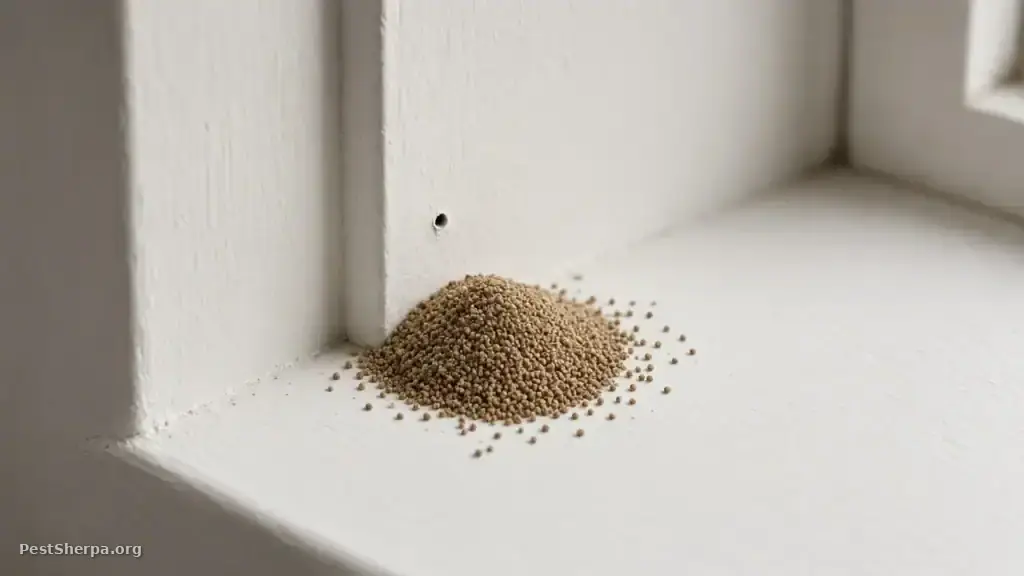
- Drywood termite pellets: hard, gritty, uniform little pellets, often in a neat cone-shaped pile. See the drywood termite guide.
- Carpenter ant debris: coarse, shredded, sawdust-like material, often mixed with insect parts.
- Powderpost beetle frass: very fine, flour-like powder under small round exit holes. See lyctid powderpost beetles.
Drywood termites are mostly a problem in the warmest parts of the South and West; my drywood termite range map shows where. University of Tennessee entomologists call them rarely encountered in Tennessee, and they wrote up one East Tennessee case where the pellets were first mistaken for acrobat ant damage. [UT Entomology] That’s why I say get pellets identified by someone who knows what they’re looking at. Drywood termites also swarm, and UC IPM notes they’re drawn to lights after dark. [UC IPM]
Damaged wood, hollow sounds, and bubbling paint
Termite-damaged wood is hollowed out along the grain, with bits of dried mud or soil lining the tunnels. Wood damaged by moisture or by carpenter ants won’t look like that. [University of Kentucky] The EPA suggests probing exposed wood with a flathead screwdriver to find hollow spots. [EPA] UC IPM adds that the surface of damaged wood is often thin and easy to puncture, and that darkening or blistering of structural wood can be a sign. [UC IPM]
- Walls: rippled or sunken spots behind paint or wallpaper, or tiny holes in drywall or plaster with bits of soil around the edges. [University of Kentucky]
- Floors and trim: baseboards, door frames, and window trim near the floor that feel soft or sound hollow when you tap them.
- Outside: wood touching the soil, like porch posts, deck supports, fences, and siding that runs down into mulch.
To be fair, bubbling paint and soft wood have other causes, mainly water. A leak can make paint blister and wood rot without a single termite. Mud in the damage, mud tubes nearby, or swarmers point to termites. When in doubt, have it checked.
Found signs of termites? What to do first
- Don’t panic, and don’t spray. Store-bought bug spray on swarmers or tubes won’t reach the colony. Termites damage wood slowly, so a few days to get a proper inspection won’t make a meaningful difference.
- Document it. Photograph tubes, damage, wings, or pellets, and save a few swarmers or wings in a sealed bag. Vacuum up the rest of the swarmers.
- Leave the evidence for the inspector. Don’t tear out every tube or clean up every pellet before someone qualified sees it.
- Fix moisture. Clean gutters, point downspouts away from the house, fix leaks, and keep soil around the foundation dry.
- Get wood away from the house. Move firewood and wood debris away, and keep mulch and soil off siding and wood trim.
- Get a licensed inspection, and don’t get rushed. Avoid any company that pressures you to sign on the spot with specials or scare tactics.
Sources: University of Kentucky, EPA, UC IPM.
When to call a pro
Any real sign of termites in or on the house is worth a professional inspection: swarmers indoors, live mud tubes, damaged wood with mud in it, or drywood pellets. The University of Kentucky says it’s best not to treat a home infestation yourself, because it takes special skills, knowledge of how the house is built, and equipment like masonry drills and long soil rods, plus a lot of termiticide placed along the foundation and under slabs. [University of Kentucky] UC IPM adds that do-it-yourself pesticides for termites are generally not effective. [UC IPM] NPIC also stresses identifying which termite you have first, because control is different for drywood, dampwood, and subterranean termites. [NPIC]
Get more than one inspection and quote, compare treatment types and warranties, and check the license. These guides will help: how termite control works, what to look for when hiring a pro for termites, how to hire a licensed termite company, and what termite damage and treatment really cost. Curious about the treatment itself? Read can a homeowner perform termite control? and how termite baiting works.
Common questions about signs of termites
What are the first signs of termites?
For most homeowners, the first sign is a swarm of winged termites indoors or a pile of discarded wings near a window or door, usually in spring. Other early signs are pencil-wide mud tubes on the foundation or in the crawlspace, wood that sounds hollow or gives under a screwdriver, and, for drywood termites, small piles of tiny pellets under wood.
What does termite frass look like?
Drywood termite frass is a pile of tiny, hard pellets about 1/32 inch long. Under a magnifier each pellet has six flat sides with ridges running lengthwise, and the color matches the wood the termites are eating. The piles collect under small kick-out holes. Subterranean termites do not leave pellet piles; they use their waste to build mud tubes.
How do I tell flying ants from termites?
Look at three things. Termites have straight antennae, a thick waist, and four wings that are all about the same length. Flying ants have bent, elbowed antennae, a pinched waist, and front wings that are longer than the back wings. Save one in a sealed bag or on clear tape if you’re not sure, and get it identified.
I found termite wings on my windowsill. Do I have termites?
Probably, if they came from inside the house. Swarmers are drawn to light, so their shed wings pile up on sills and near doors. The University of Kentucky says finding winged termites indoors almost always means an infestation that needs treatment. Save some wings, vacuum up the rest, and schedule an inspection with a licensed termite company.
Do termite swarmers damage wood?
No. Swarmers can’t damage wood and only live about a day, so you can simply vacuum them up. They’re a sign of a colony nearby, and the workers in that colony are the ones that eat wood.
Can I treat termites myself?
For an active infestation in a home, I don’t recommend it. Termite treatment takes special equipment, knowledge of how the house is built, and often hundreds of gallons of termiticide placed along the foundation and under slabs. You can fix moisture problems and move wood and mulch away from the house, but hire a licensed company for the treatment.
Keep learning
- Termite Guide: identification, damage, risk, and what to do
- Eastern subterranean termites
- Dark southeastern subterranean termites
- Light southeastern subterranean termites
- Native subterranean termites
- Formosan subterranean termites
- Asian subterranean termites
- Western subterranean termites
- Drywood termites
- Dampwood termites
- Conehead termites (Florida)
- Drywood termite range map
- Q&A: Do termites bite?
- Q&A: My neighbor’s house was just treated for termites. Is my house at risk?
- Q&A: Carpenter bees around the deck: should I worry about damage?
Found something and want a second opinion? Ask the Sherpa and send a photo of the tubes, wings, pellets, or damage.
References
- EPA: Termites: How to Identify and Control Them
- University of Kentucky Entomology: Termite Control: Answers for Homeowners (ENTFACT-604)
- University of Tennessee Extension: Subterranean Termite Control (PB1344)
- University of Tennessee Entomology and Plant Pathology: Interesting Drywood Termite Structural Infestation (Insec(tc)ure, March 2024)
- Purdue University Extension: Termite Control (E-4)
- University of California IPM: Subterranean and Other Termites
- University of California IPM: Drywood Termites
- Texas A&M Urban and Structural Entomology: Drywood Termites
- Penn State Extension: Eastern Subterranean Termites
- National Pesticide Information Center: Termites
This article was written by Greg Baumann, founder of Pest Sherpa, and reflects more than 40 years of professional pest management experience.
About the Author

Greg Baumann | Pest Control Expert
Greg Baumann is the founder of Pest Sherpa and a Pest Control Expert with more than 40 years of professional pest management experience. His articles combine decades of field experience, technical expertise, and science-based guidance to help homeowners identify pests correctly, understand real-world risks, and make informed pest management decisions.
Mission: Identify the pest. Understand the risk. Stop the problem. Prevent the comeback. Know when it’s time to call a professional.