
Formosan Subterranean Termites: Identification, Damage, and Control
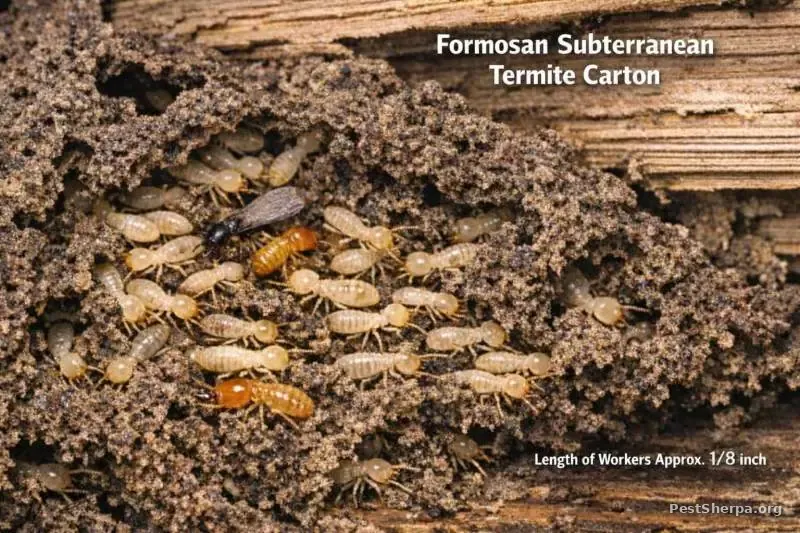
Updated for accuracy: Formosan subterranean termites (Coptotermes formosanus) are among the most destructive termite species in the United States. They form extremely large colonies and aggressively attack structural wood. They can cause serious hidden damage long before homeowners realize termites are there.
TL;DR
Formosan subterranean termites are highly destructive structural pests. They are often found in warm, humid regions, including parts of the Southeast, Gulf Coast, Hawaii, and other subtropical areas. Look for mud tubes, hollow wood, swarmers attracted to lights, and severe hidden damage around moist structural areas. Because colonies can contain millions of termites, active infestations usually require professional treatment.
Jump to:
- Identification
- Why It Matters
- What To Do
- When To Call a Pro
- Similar Pests
- Common Questions
- References
Identification: What Formosan Subterranean Termites Look Like
Formosan subterranean termites are social insects that live in massive underground colonies. They are often mistaken for other subterranean termites. But Formosan termites usually form much larger colonies and can damage structures faster.
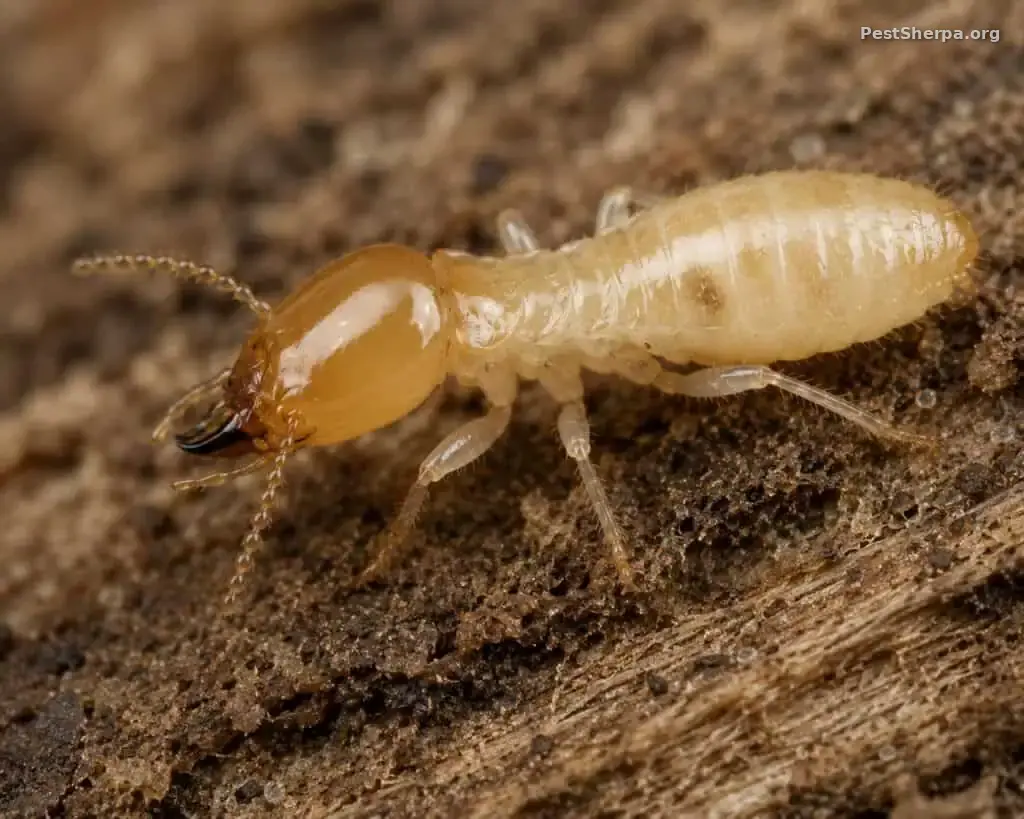
Workers: Cream-colored, soft-bodied termites responsible for feeding and colony maintenance.
Soldiers: Slightly larger with elongated orange-brown heads and powerful jaws used for defense.
Swarmers (alates): Yellowish-brown to brown reproductive termites with smoky-colored wings covered in tiny hairs. Swarms are often attracted to lights at night.
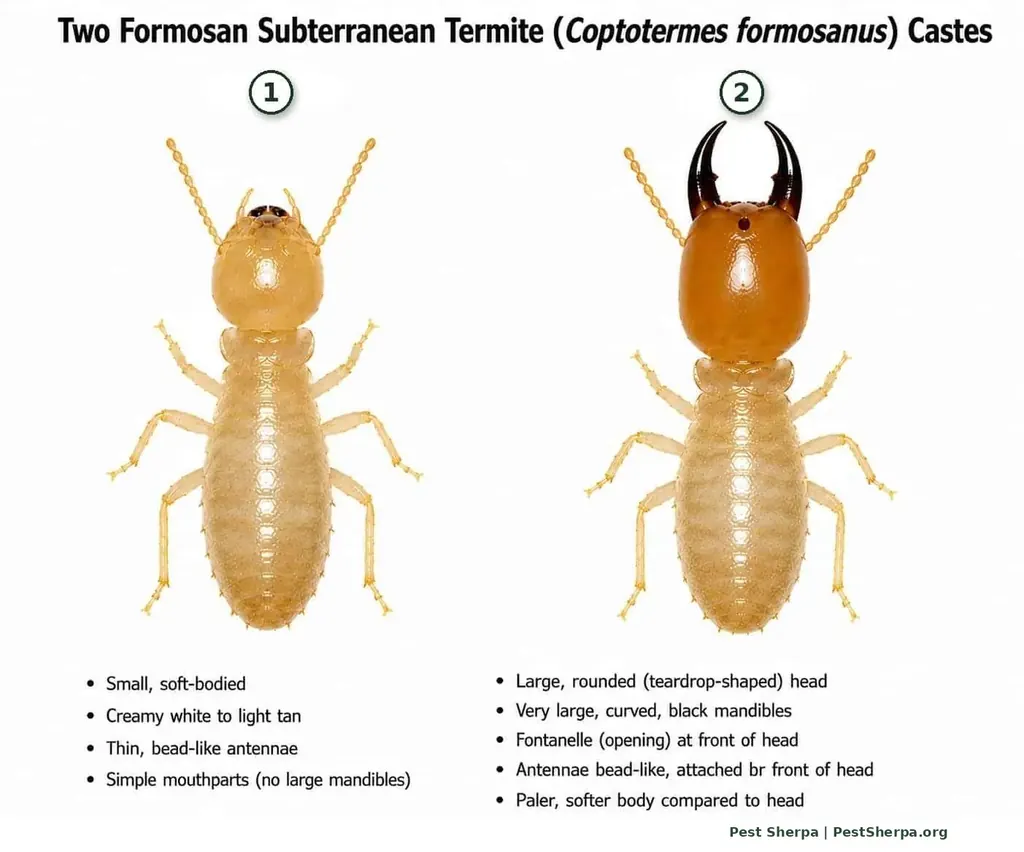
Which caste do you see? Match the number:
- Worker: small and soft-bodied, creamy white to light tan, with simple mouthparts and no large mandibles. Workers do the feeding and the wood damage.
- Soldier: large, rounded orange-brown head with very large, curved black mandibles used to defend the colony.
Common signs include:
- Mud tubes on foundations, piers, crawl-space walls, or structural supports.
- Soft or hollow wood that breaks apart easily.
- Blistered paint or distorted wood surfaces.
- Large swarms of winged termites near lights.
- Discarded equal-length wings around windows, doors, or vents.
- Structural damage linked to moisture.
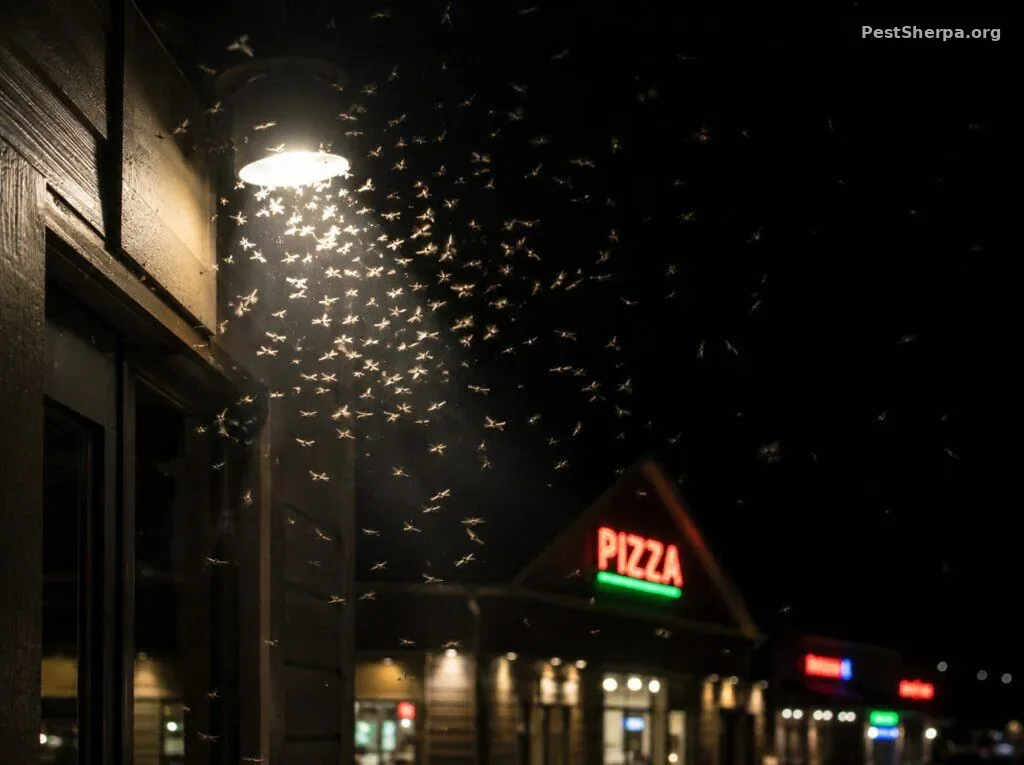
Top: Formosan termite swarmers at night. Bottom: Formosan Termite carton along Gulf Coast
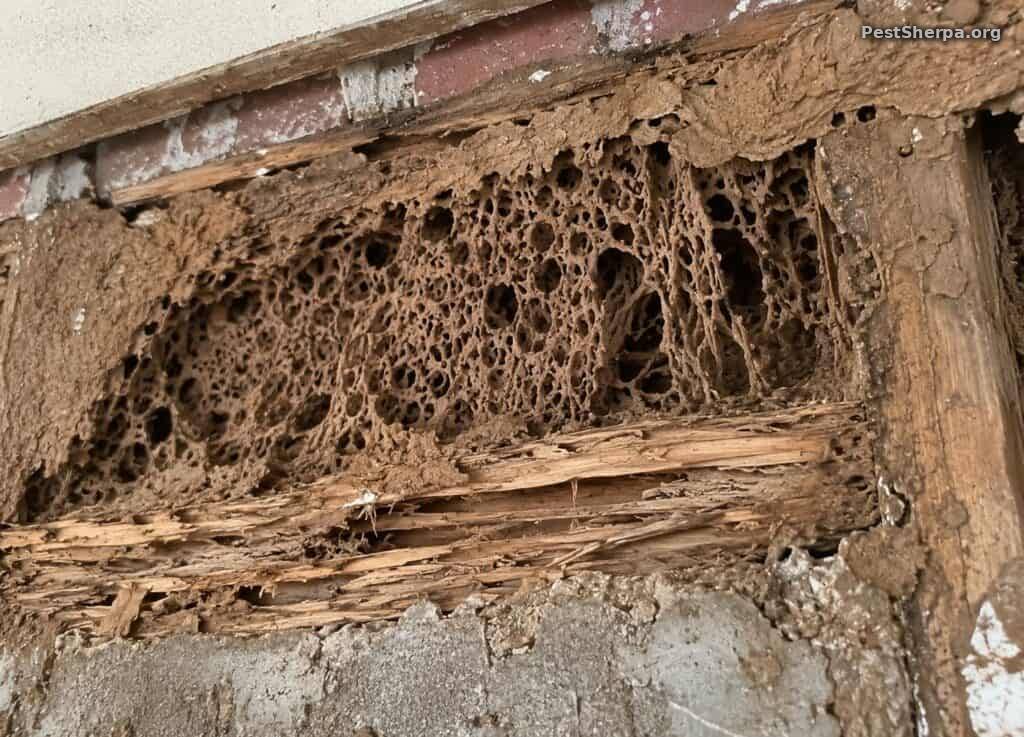
If enough moisture is present, Formosan termites can sometimes build above-ground carton nests. Look in wall voids, attics, or moisture-damaged structural areas. Carton looks like damp, soil-like paper.
Many homeowners confuse termite swarmers with carpenter ants. Carpenter ants have elbowed antennae, narrow waists, and unequal wing lengths. Termite swarmers have straighter antennae, broader waists, and wings of equal length.
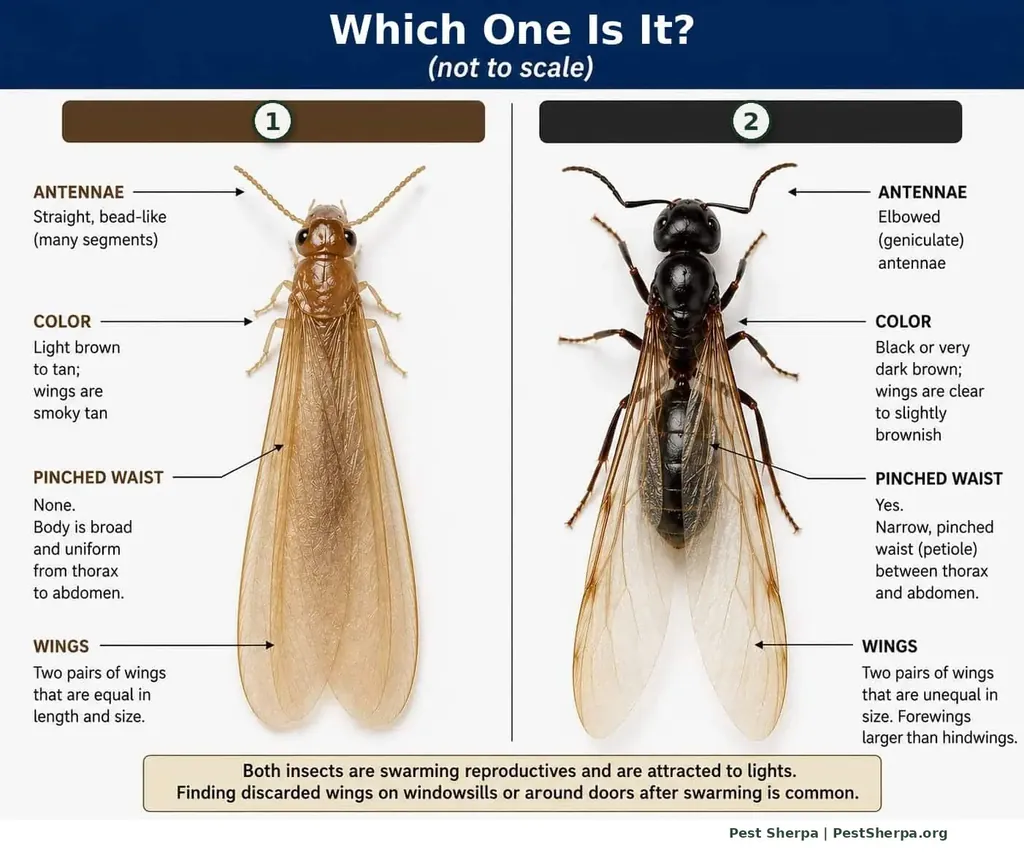
Which one did you find? Match the number:
- Formosan termite swarmer: light brown to tan, straight beaded antennae, a broad waist with no pinch and two pairs of wings of equal length.
- Winged ant: black or very dark brown, bent (elbowed) antennae, a narrow pinched waist and front wings larger than the back wings.
Seeing number 1 indoors? Call a licensed termite pro for an inspection.
Formosan termites are also often confused with other subterranean termites including western subterranean termites. In regions with several termite species, professional identification may be necessary.
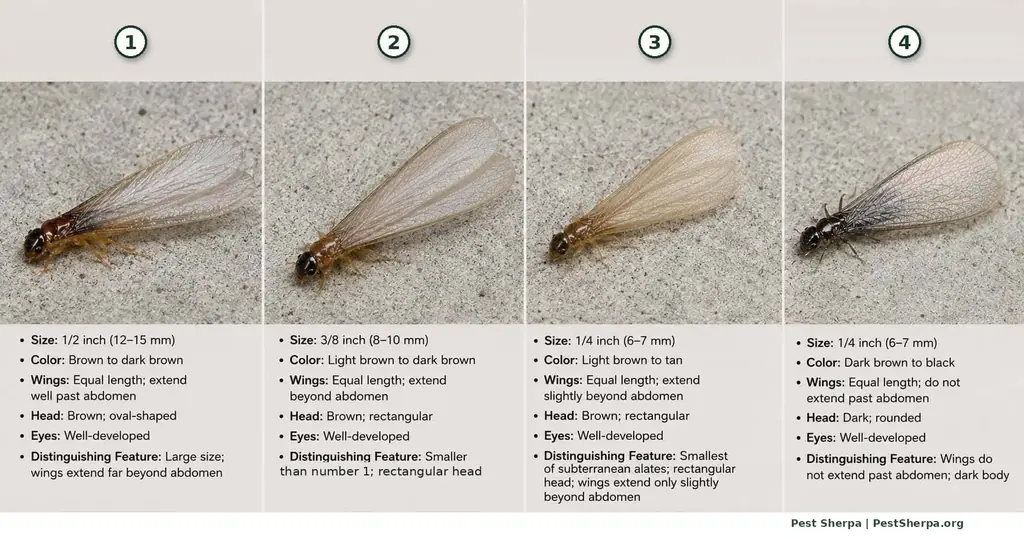
Which one did you find? Match the number:
- Formosan termite: the largest, about 1/2 inch, brown to dark brown, with wings that reach well past the abdomen and an oval head.
- Eastern subterranean termite: about 3/8 inch, light to dark brown, with a rectangular head.
- Western subterranean termite: the smallest subterranean swarmer, about 1/4 inch, light brown to tan.
- Western drywood termite: about 1/4 inch, dark brown to black, with a rounded dark head.
Swarmers indoors mean a colony may be close by. Call a licensed termite pro for an inspection.
Why It Matters
Formosan subterranean termites are considered one of the most economically destructive termite species in the United States. Colonies can contain millions of termites. They aggressively attack structural wood, flooring systems, wall framing, utility poles, and other cellulose-based materials (wood and paper products).
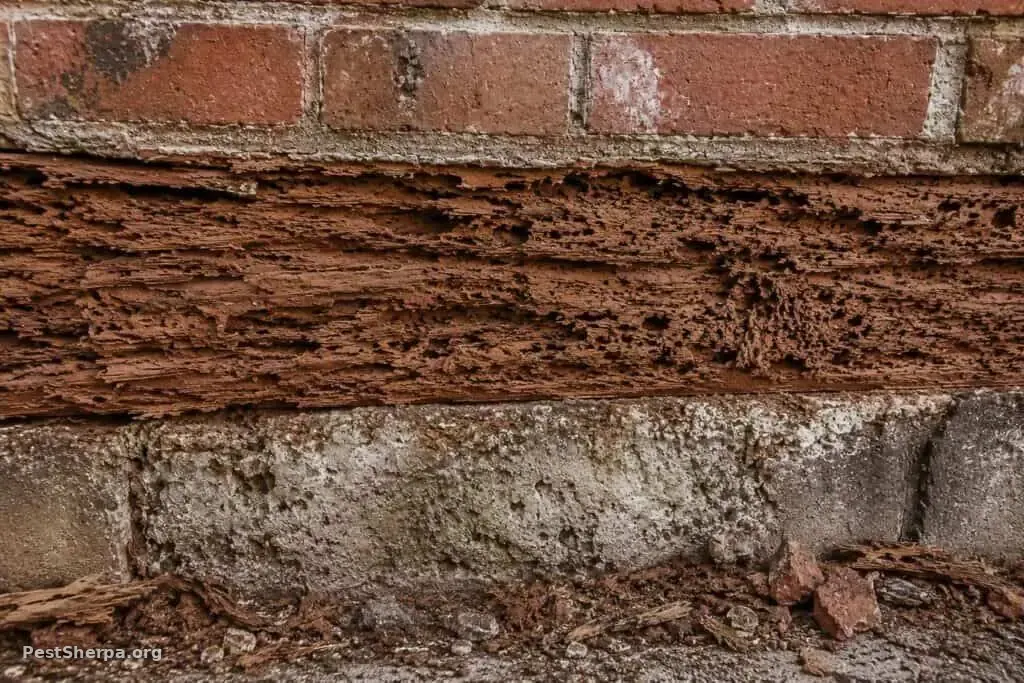
Unlike smaller subterranean termite colonies, Formosan termites may stay active for years. All that time, they can cause extensive hidden structural damage. Severe infestations left untreated can weaken a building’s structure.
The University of Florida IFAS Extension notes that Formosan subterranean termites are especially destructive because of their large colony size and aggressive feeding behavior. Source: University of Florida IFAS: Formosan Subterranean Termites.
High-risk conditions include:
- Excess moisture around the structure.
- Wood-to-soil contact.
- Leaking roofs, plumbing, or HVAC systems.
- Poor drainage near foundations.
- Heavy mulch against siding.
- Untreated crawl spaces.
- Dead trees, stumps, or buried wood debris near structures.
For broader termite prevention and inspection guidance, review the Pest Sherpa termite guide.
What To Do: Practical Homeowner Steps
1. Preserve visible evidence
Take clear photos of mud tubes, swarmers, wings, damaged wood, or suspected carton nest material before disturbing anything. Large termite infestations often leave several clues that help during an inspection.
2. Correct moisture problems quickly
Repair plumbing leaks, roof leaks, irrigation overspray, drainage problems, condensation issues, and crawl-space humidity. Formosan termites thrive in warm, damp places.
3. Remove wood-to-soil contact
Keep siding, posts, trim, lattice, stairs, and structural wood separated from direct soil contact whenever possible.
4. Reduce termite food sources
Move firewood away from the structure and keep it elevated. Remove dead roots, buried lumber, cardboard, wood debris, and untreated cellulose materials near foundations.
5. Understand the limits of DIY termite control
Formosan termite colonies are rarely eliminated with over-the-counter sprays or basic DIY methods. Effective treatment often requires professionally installed bait systems, trenching and soil termiticides, foam applications, wood treatments, void treatments, or integrated termite management plans. Compare those options in the termite treatment systems overview. This termite is rarely if ever controlled by do it yourself methods.
The National Pesticide Information Center recommends proper termite identification before selecting treatment methods. Source: NPIC termite information.
DIY work is most useful for fixing conditions that favor termites and for supporting prevention. It does not replace professional structural treatment when colonies are active.
When To Call a Pro
Contact a licensed termite professional if you find:
- Active mud tubes attached to the structure.
- Large swarms indoors or around exterior lighting.
- Discarded termite wings inside the home.
- Soft, hollow, or collapsing wood.
- Evidence of termites inside walls, attics, crawl spaces, flooring systems, or structural framing.
- Possible carton nests inside wall voids or moisture-damaged areas.
- Repeated termite activity after prior treatment.
- Uncertainty about whether the infestation involves termites, drywood termites, or carpenter ants.
If you are unsure whether the infestation requires professional treatment, use Ask the Sherpa before spending money on unnecessary or misdirected treatment.
Similar Pests / Misidentification Comparison
Formosan Termites vs. Native Subterranean Termites
Formosan termites usually form much larger colonies than many native subterranean termite species. They can also cause structural damage faster. Swarms may also be larger and more noticeable around lights.
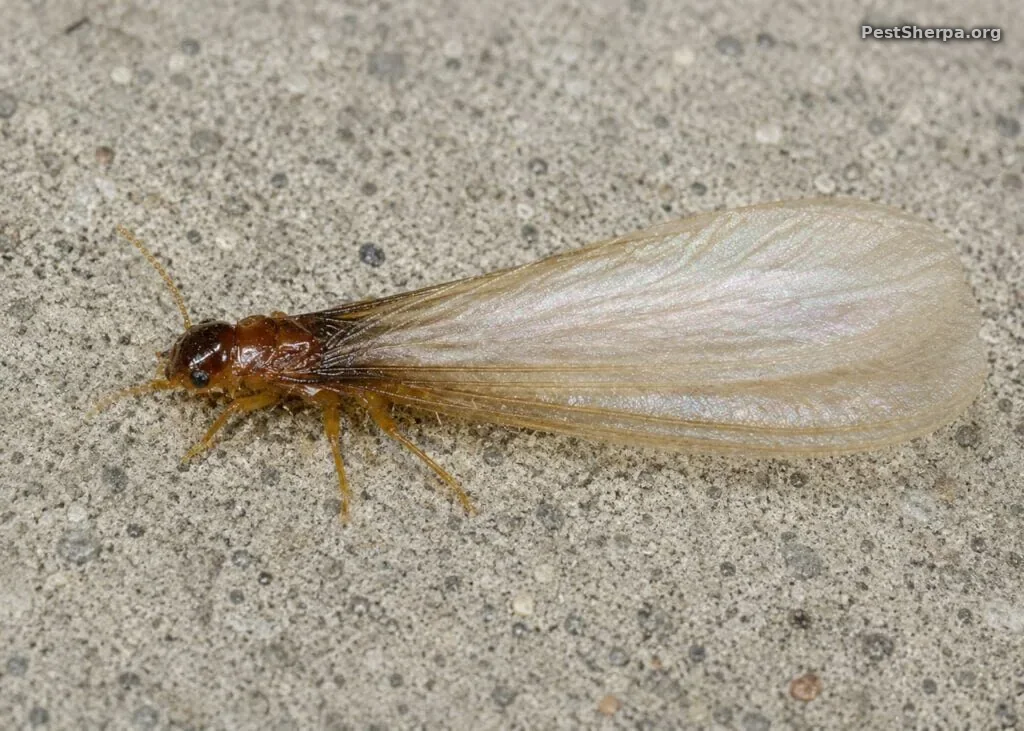
Close up of Formosan Termite swarmer (alate).
Formosan Termites vs. Drywood Termites
Drywood termites do not require soil contact and usually leave pellet-like frass. Formosan termites usually build mud tubes and keep their tunnels (galleries) moist.
Formosan Termites vs. Carpenter Ants
Carpenter ants tunnel through wood but do not eat it. Carpenter ant debris resembles sawdust and insect fragments. Formosan termite damage often contains soil or mud.
Formosan Termites vs. Dampwood Termites
Dampwood termites usually live in heavily decayed or wet wood. They generally depend less on soil foraging than Formosan subterranean termites.
Common Questions
- Do termites bite?
- I heard that termites swarming is the sure sign of a problem but my inspector found termites and I didn’t see a swarm. Should I be worried?
- Can a Homeowner Perform Termite Control?
References
- University of Florida IFAS: Formosan Subterranean Termite, Coptotermes formosanus
- LSU AgCenter: Formosan Subterranean Termites
- U.S. EPA: Termites: How to Identify and Control Them
- National Pesticide Information Center: Termites
This article was written by Greg Baumann, founder of Pest Sherpa, and reflects more than 40 years of professional pest management experience.
About the Author

Greg Baumann | Pest Control Expert
Greg Baumann is the founder of Pest Sherpa and a Pest Control Expert with more than 40 years of professional pest management experience. His articles combine decades of field experience, technical expertise, and science-based guidance to help homeowners identify pests correctly, understand real-world risks, and make informed pest management decisions.
Mission: Identify the pest. Understand the risk. Stop the problem. Prevent the comeback. Know when it’s time to call a professional.