
Dampwood Termites: Identification, Damage Signs, and Control
Updated for accuracy: Dampwood termites are moisture-dependent wood-destroying insects that infest wet, decaying, or water-damaged wood. Unlike subterranean termites, they usually do not require soil contact, but they are strongly associated with chronic moisture problems, leaks, rot, or poorly ventilated structural areas.
TL;DR
Dampwood termites are large termites commonly associated with wet or decaying wood. Homeowners often discover them in water-damaged framing, leaking roofs, crawl spaces, decaying siding, or poorly ventilated structures. Fixing moisture problems is critical. Active infestations inside structural wood often require professional inspection to determine how much hidden damage exists.
Jump to:
- Identification
- Why It Matters
- What To Do
- When To Call a Pro
- Similar Pests
- Common Questions
- References
Identification: What Dampwood Termites Look Like
Dampwood termites are among the largest termites found in North America. They prefer wood with elevated moisture levels and are commonly associated with leaks, decay, fungal growth, condensation, or chronically damp structural areas.
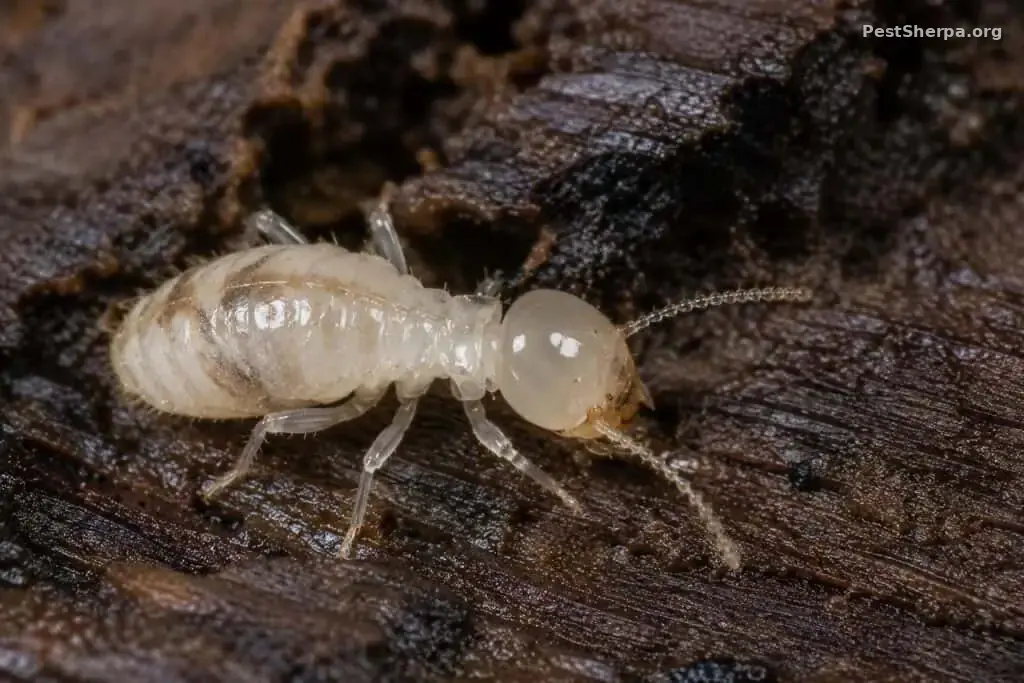
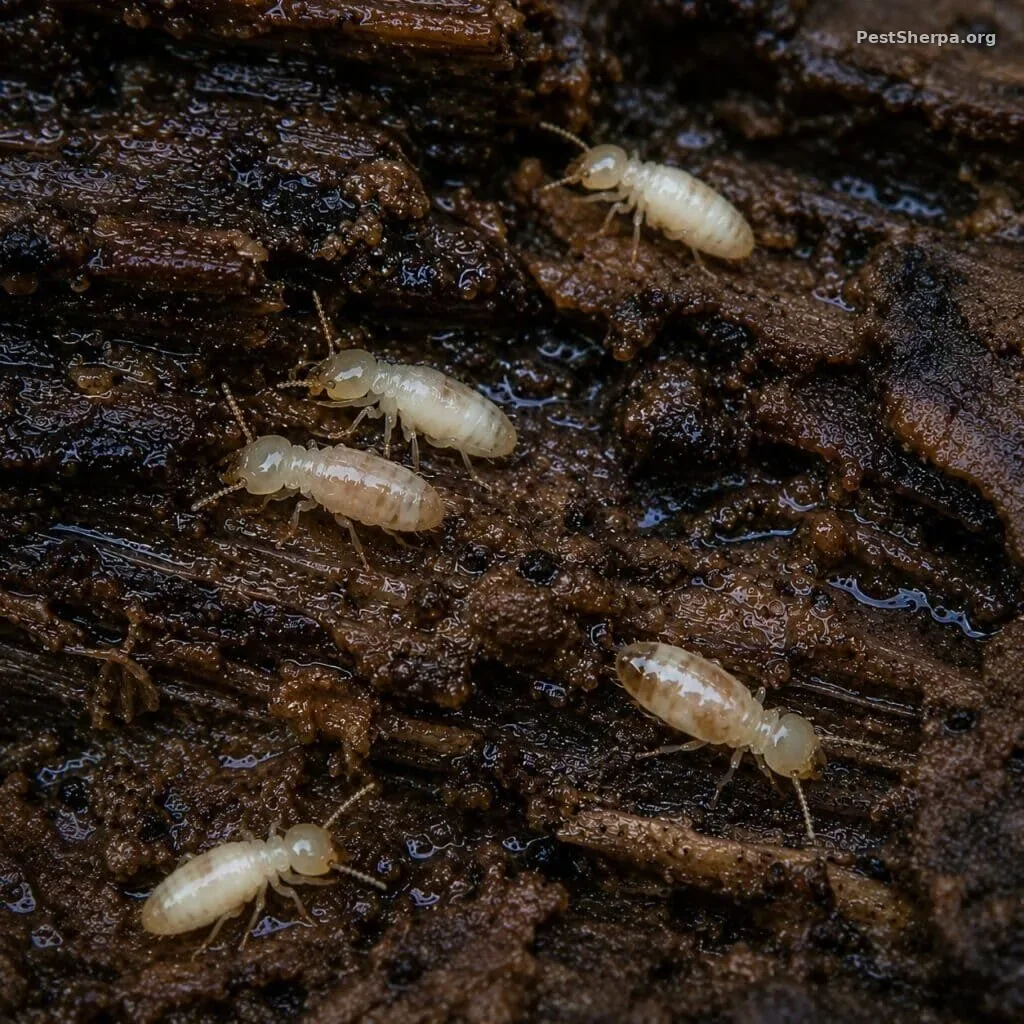
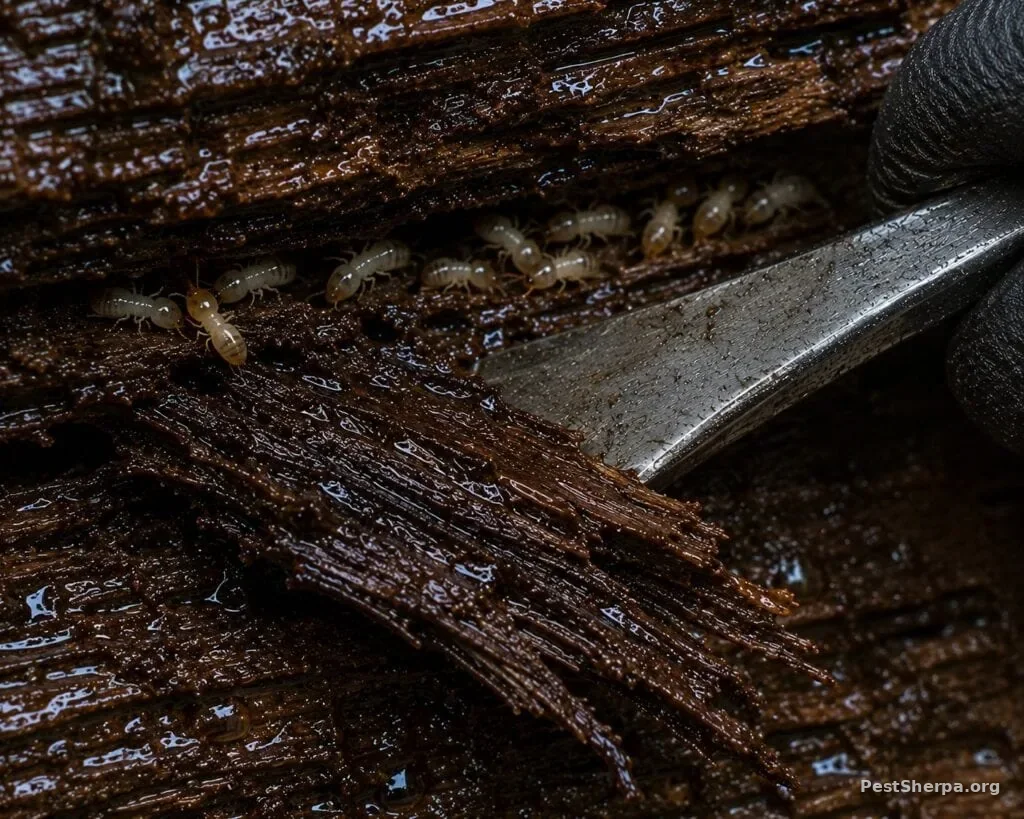
Workers and immature termites: Cream-colored, soft-bodied termites hidden inside damp wood galleries.
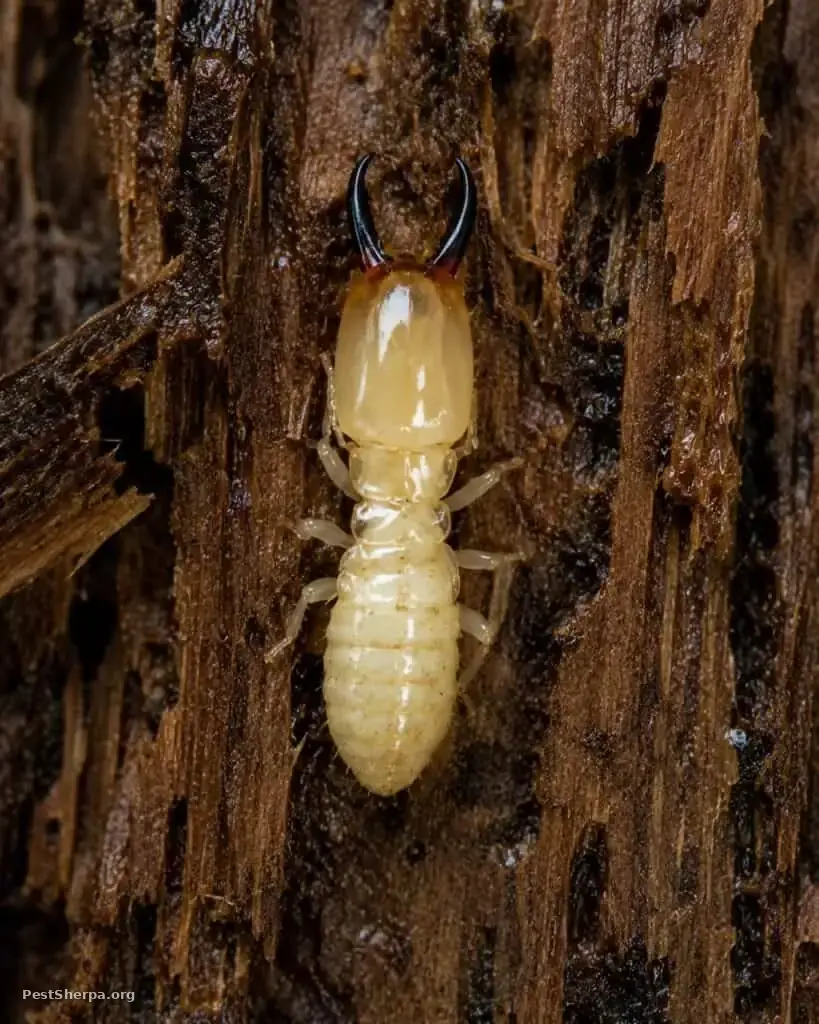
Soldiers: Larger-bodied termites with enlarged reddish-brown heads and strong jaws.
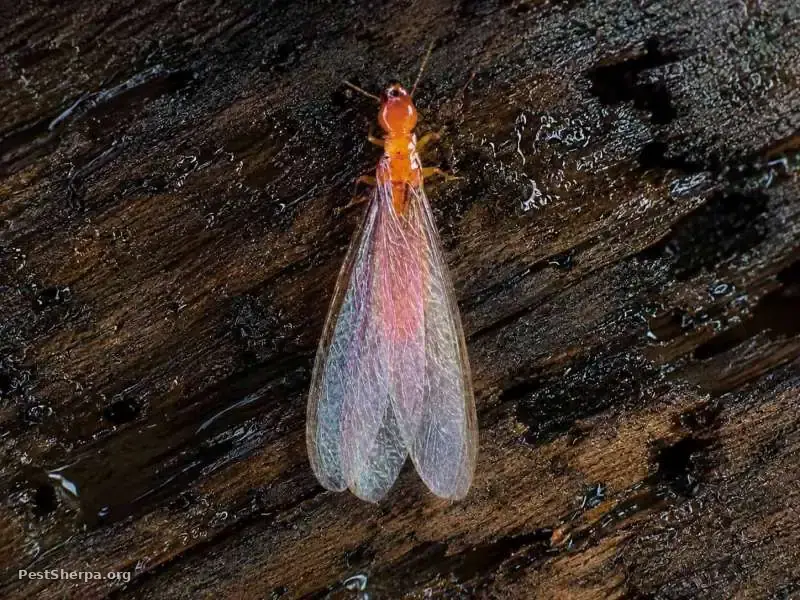
Swarmers (alates): Large winged termites with long smoky wings and brownish bodies.
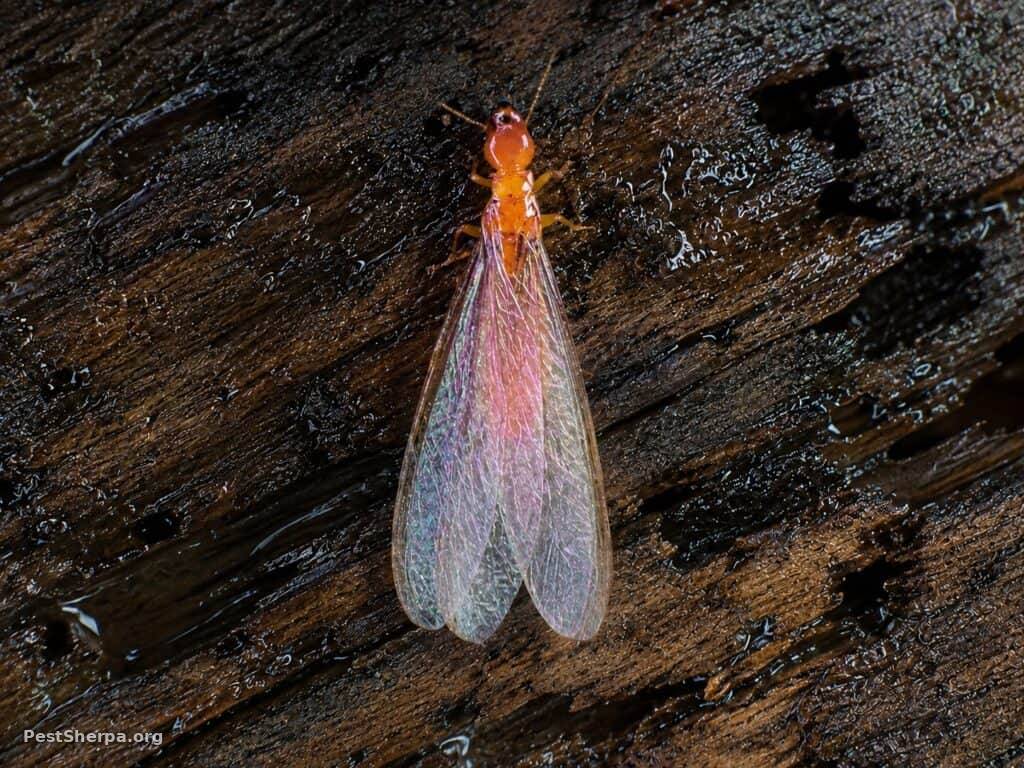
Common signs include:
- Infestations in wet, decaying, or water-damaged wood.
- Soft wood associated with leaks or rot.
- Large termite swarmers near windows or lights.
- Pellet-like fecal material near infested wood.
- Damage inside crawl spaces, attics, rooflines, or leaking wall areas.
- Visible moisture problems near infestation sites.
Dampwood termites are commonly confused with subterranean termites, but subterranean termites usually require soil contact and construct mud tubes. Dampwood termites are more strongly associated with wet wood itself.
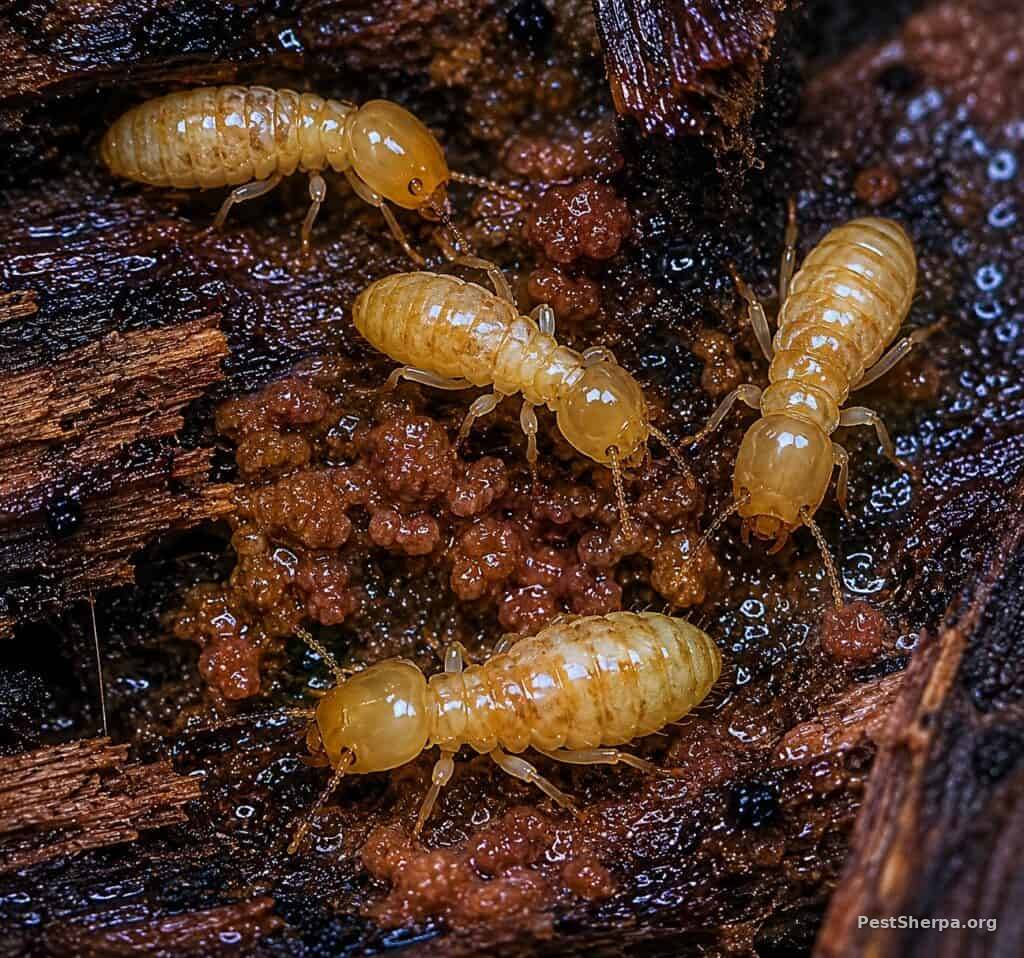
They may also be confused with drywood termites, which infest much drier wood and commonly produce hard pelletized frass without requiring excessive moisture. Drywood termites are generally not found in conditions which favor dampwood termites.
Wood damage and moisture-related deterioration may also attract carpenter ants, especially in damp crawl spaces or leaking wall voids.
Why It Matters
Dampwood termites are structural pests, but they are also important indicators of underlying moisture problems. Their presence often signals conditions that can support wood decay, fungal growth, or additional wood-destroying organisms.
Unlike Formosan termites or aggressive subterranean termites, dampwood termite colonies are generally smaller and more localized. However, the wood damage and moisture intrusion associated with infestations can still become significant over time.
The University of California IPM notes that dampwood termites are strongly associated with wood having high moisture content caused by leaks, condensation, or contact with moist environments. Source: University of California IPM: Dampwood Termites.
High-risk conditions include:
- Roof leaks.
- Plumbing leaks.
- Poor crawl-space ventilation.
- Condensation problems.
- Wood rot and fungal decay.
- Wet siding or trim.
- Poor drainage near structures.
- Chronically damp attic framing.
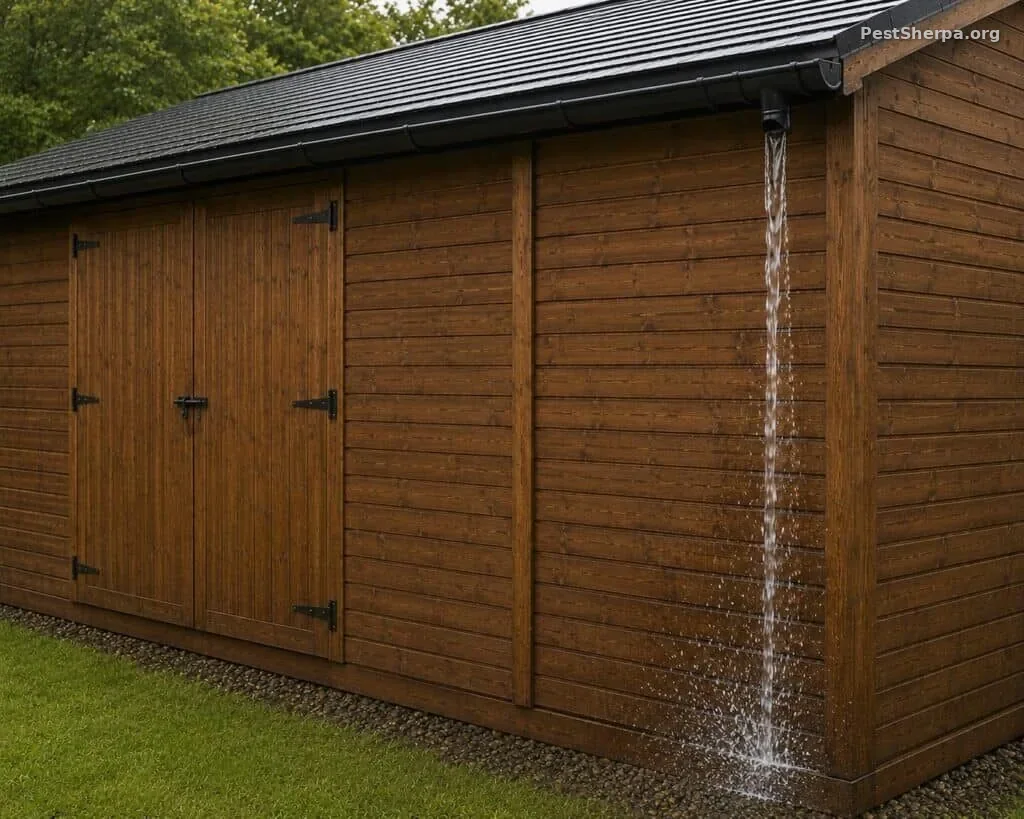
For broader termite prevention and inspection guidance, review the Pest Sherpa termite guide.
What To Do: Practical Homeowner Steps
1. Identify and correct moisture sources
Fix roof leaks, plumbing leaks, drainage issues, crawl-space humidity problems, condensation buildup, or irrigation overspray contributing to elevated wood moisture.
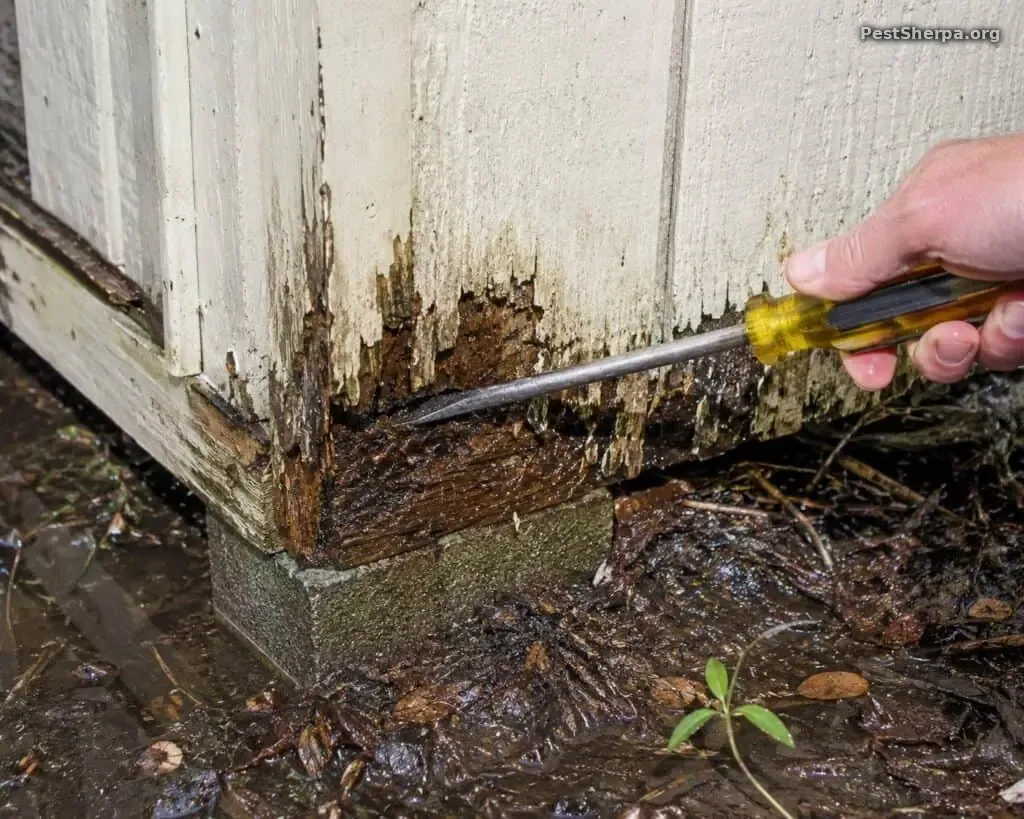
2. Remove severely damaged wood
Heavily decayed or structurally compromised wood may need replacement once the moisture source is corrected.
3. Improve ventilation and drying
Increase airflow in crawl spaces, attics, and enclosed wall areas where moisture accumulates.
4. Preserve evidence before disturbing activity
Photograph swarmers, damaged wood, frass, or visible termite activity before repairs begin.
5. Understand treatment limitations
Correcting moisture problems is often the most important long-term control step. However, hidden infestations inside structural wood may still require professional treatment or inspection. When treatment is on the table, the Termite Control hub outlines inspection and warranties expectations.
The National Pesticide Information Center recommends proper termite identification before treatment decisions are made. Source: NPIC termite information.
DIY sprays alone rarely address the underlying moisture conditions supporting infestations.
When To Call a Pro
Contact a licensed termite professional if you find:
- Termites inside structural framing.
- Large areas of water-damaged wood.
- Repeated termite swarmers indoors.
- Wood that is soft, collapsing, or structurally weakened.
- Hidden moisture damage inside walls, roofs, attics, or crawl spaces.
- Uncertainty about whether the infestation involves dampwood termites, drywood termites, or subterranean termites.
If you are unsure whether the infestation requires professional treatment, use Ask the Sherpa before spending money on unnecessary or misdirected treatment.
Similar Pests / Misidentification Comparison
Dampwood Termites vs. Subterranean Termites
Subterranean termites typically require soil contact and build mud tubes. Dampwood termites are more directly associated with wet wood itself.
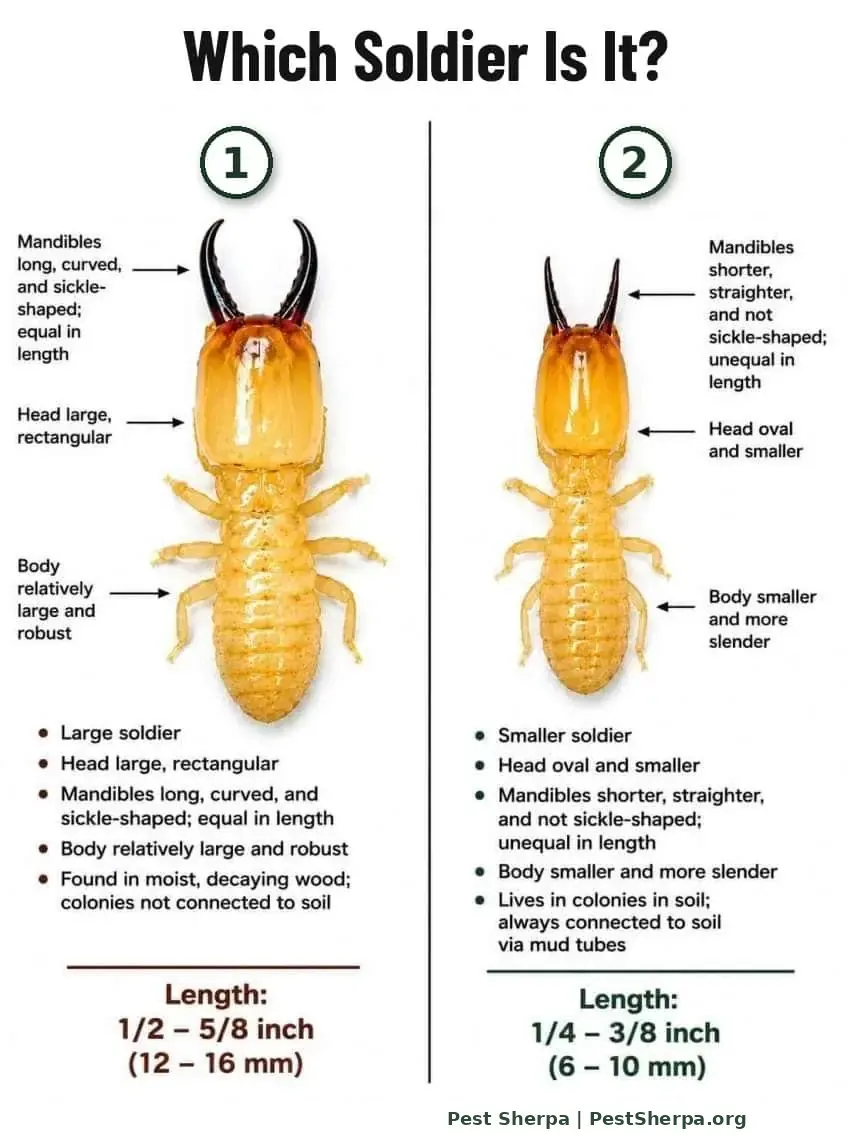
Which soldier do you see? Match the number:
- Dampwood termite soldier (Zootermopsis angusticollis): 1/2 to 5/8 inch, large rectangular head and long, curved, sickle-shaped mandibles of equal length. Lives in moist, decaying wood not connected to soil.
- Western subterranean termite soldier (Reticulitermes hesperus): 1/4 to 3/8 inch, smaller oval head and shorter, straighter mandibles of unequal length. Lives in soil and uses mud tubes.
Dampwood Termites vs. Drywood Termites
Drywood termites infest relatively dry wood and commonly leave hard pelletized frass. Dampwood termites are associated with elevated moisture and decaying wood conditions.
Dampwood Termites vs. Carpenter Ants
Carpenter ants commonly infest moisture-damaged wood but do not consume cellulose like termites do. Carpenter ant debris resembles fibrous sawdust rather than termite pellets.
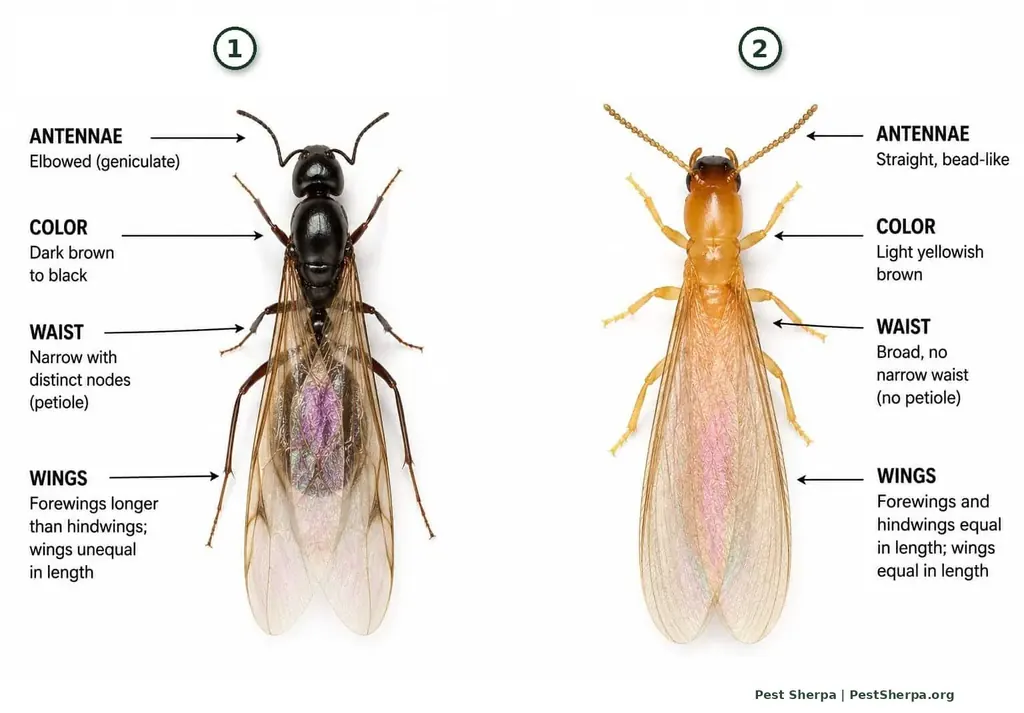
Which one do you see? Match the number:
- Western carpenter ant alate (Camponotus spp.): elbowed antennae, dark brown to black, narrow waist with distinct nodes, front wings longer than hind wings.
- Dampwood termite alate (Zootermopsis angusticollis): straight bead-like antennae, light yellowish brown, broad waist with no narrowing, front and hind wings equal in length.
Dampwood Termites vs. Wood Rot
Wood rot and fungal decay may exist alongside dampwood termite infestations. Not all soft wood indicates termites, but both problems often share the same underlying moisture conditions.
Common Questions
- Do termites bite?
- I don’t understand baiting. Why use a bait like Centricon (sic) to attract termites?
- I heard that termites swarming is the sure sign of a problem but my inspector found termites and I didn’t see a swarm. Should I be worried?
References
- U.S. EPA: Termites: How to Identify and Control Them
- National Pesticide Information Center: Termites
- University of Arizona Extension: Termites
This article was written by Greg Baumann, founder of Pest Sherpa, and reflects more than 40 years of professional pest management experience.
About the Author

Greg Baumann | Pest Control Expert
Greg Baumann is the founder of Pest Sherpa and a Pest Control Expert with more than 40 years of professional pest management experience. His articles combine decades of field experience, technical expertise, and science-based guidance to help homeowners identify pests correctly, understand real-world risks, and make informed pest management decisions.
Mission: Identify the pest. Understand the risk. Stop the problem. Prevent the comeback. Know when it’s time to call a professional.