
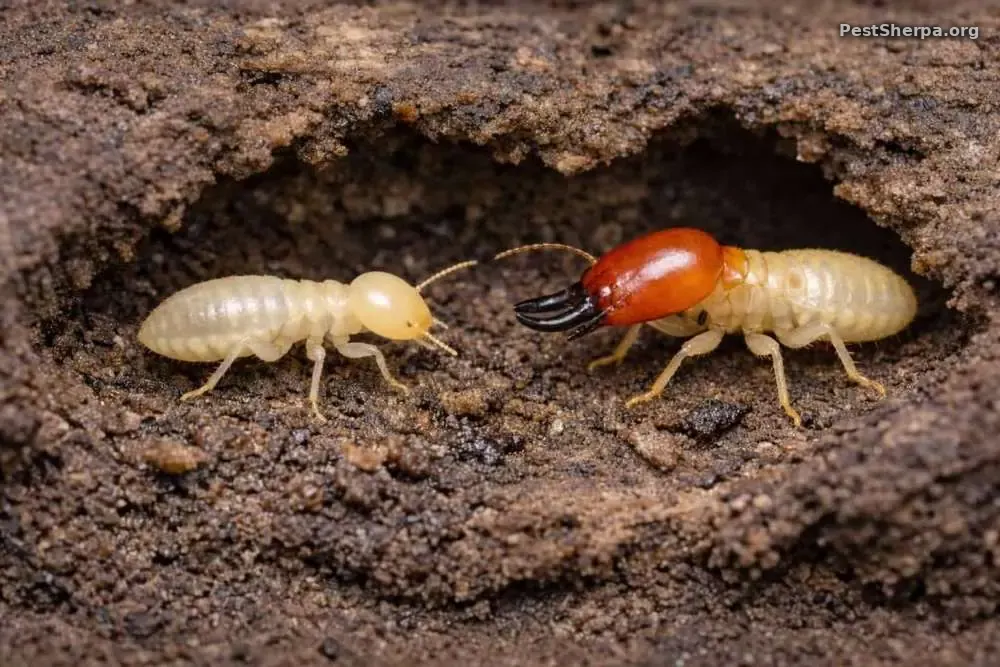
Do termites bite?
Short answer: No. Termites do not bite people or pets the way ants, spiders, or mosquitoes do. Their mouthparts are built for chewing wood and cellulose, not for piercing skin for blood. The real risk from termites is structural damage over time, not a painful bite.
Why people ask this
Winged swarmers on a windowsill look alarming. Soft-bodied workers in a mud tube look strange. It is natural to wonder if they will crawl onto skin. In field work, I have never treated a medically significant “termite bite” case. When someone reports bites after seeing swarmers, we usually find another pest (mosquitoes, fleas, bed bugs, or biting midges) or irritation unrelated to termites.
Soldier termites have larger heads and jaws used against ants and rival termites inside the colony. Those jaws are not adapted for feeding on people. Drywood and subterranean workers focus on wood. If you feel a sting or itch after outdoor time, look at mosquitoes, fire ants, or spiders first.
What termites actually threaten
- Structural wood: sill plates, joists, framing, and wood in contact with soil.
- Finish wood and trim when galleries expand from hidden areas.
- Property value and repair cost if colonies run for years unnoticed.
- Peace of mind when swarmers appear indoors and the cause is unknown.
What to do if you see termites
- Collect clear photos of insects, wings, tubes, or pellets.
- Do not crush every insect and walk away. Note where you found them (soil side vs attic vs furniture).
- Schedule a licensed inspection if you find tubes, swarmers indoors, or damaged wood.
- Reduce moisture and wood-to-soil contact while you wait for findings.
When a pro helps
Identification separates termites from flying ants. Treatment choice depends on subterranean vs drywood biology. Use the Termite Guide for habits and signs, then compare licensed plans. Education beats guessing with a can of spray that never reaches the colony.
If something bit you anyway
After outdoor work, biting midges, mosquitoes, chiggers, and spiders are far more likely culprits than termites. Note where you were, when welts appeared, and whether anyone else was affected. Use that information with a clinician if needed, and use termite signs (tubes, wings, damaged wood) to drive the property response separately.
Flying ants vs termites again
If the insects have elbowed antennae and a pinched waist, you are likely dealing with ants, which can still sting or bite depending on species. Correct ID keeps you from buying termite gear for an ant swarm or ignoring termite tubes because “nothing bit me.”
Related guides
References
This article was written by Greg Baumann, founder of Pest Sherpa, and reflects more than 40 years of professional pest management experience.
About the Author

Greg Baumann | Pest Control Expert
Greg Baumann is the founder of Pest Sherpa and a Pest Control Expert with more than 40 years of professional pest management experience. His articles combine decades of field experience, technical expertise, and science-based guidance to help homeowners identify pests correctly, understand real-world risks, and make informed pest management decisions.
Mission: Identify the pest. Understand the risk. Stop the problem. Prevent the comeback. Know when it’s time to call a professional.