
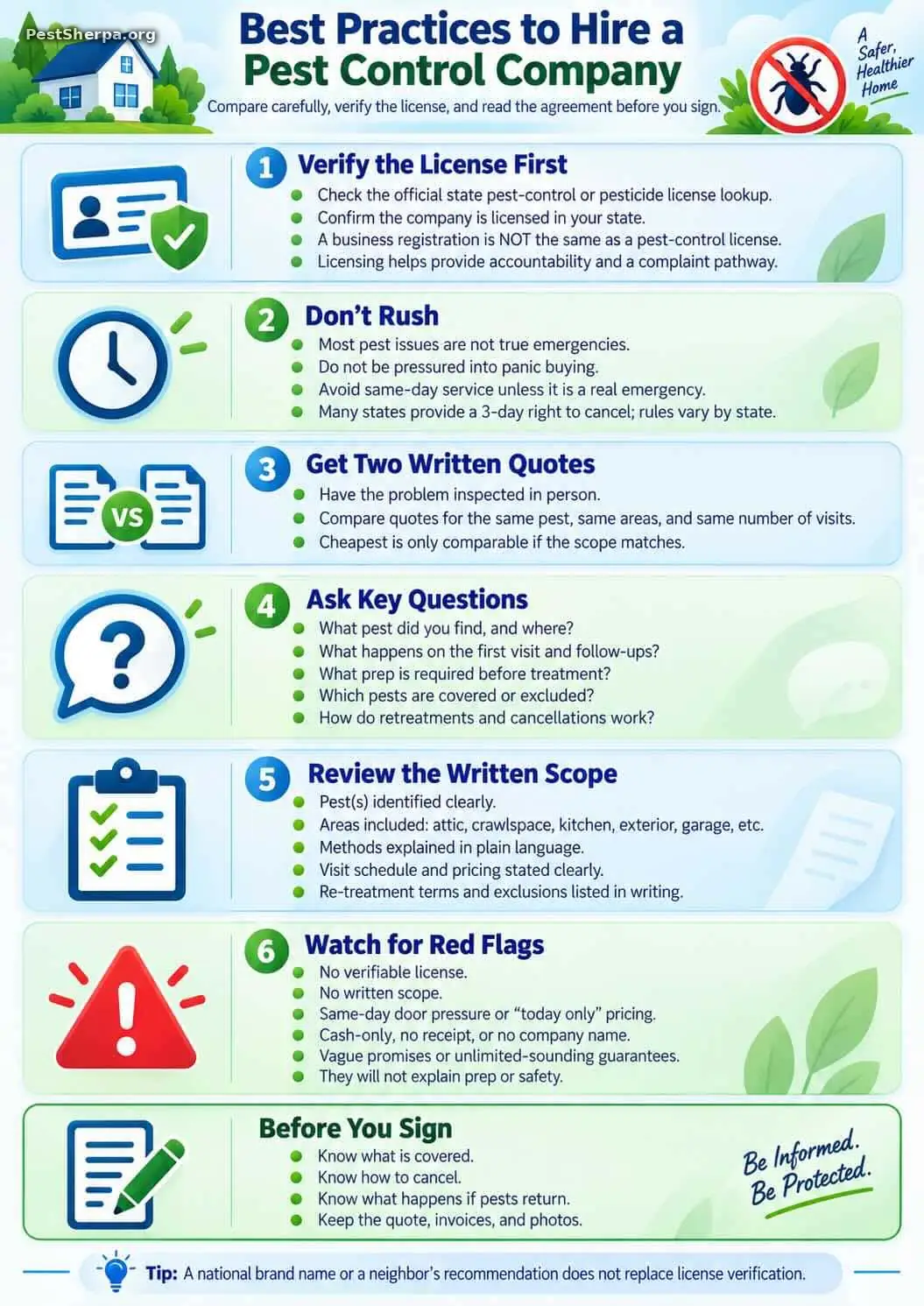
What to Look for When Hiring a Pro for Termites
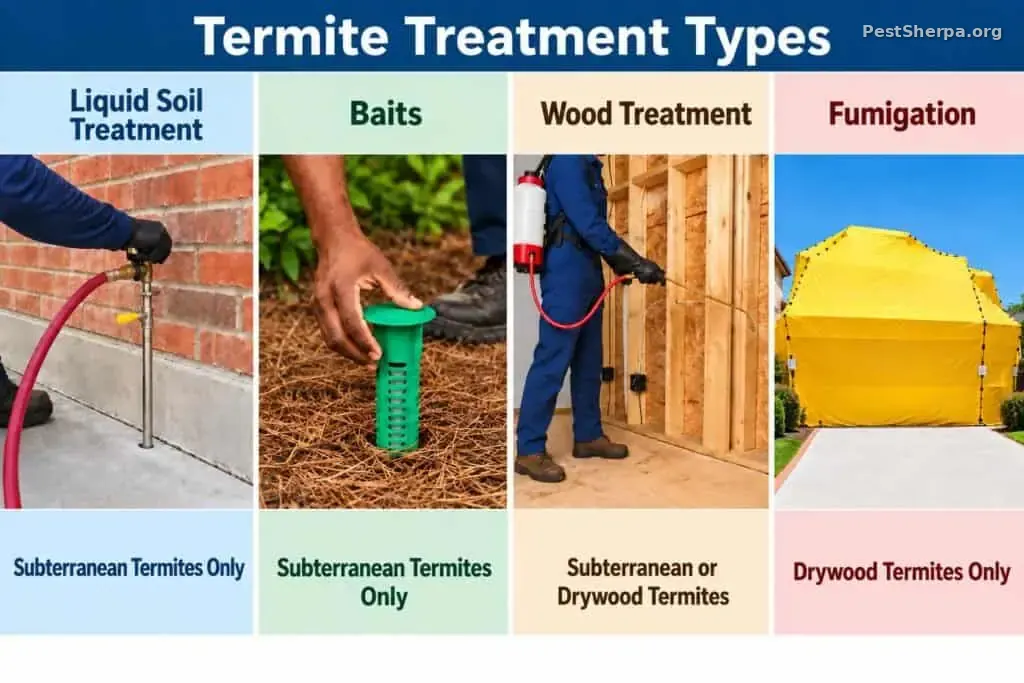
Termite work is structural protection, and the type of termite dictates the type of effective treatment to be used. Subterranean colonies that need soil moisture are managed with liquid soil termiticides and/or monitored bait systems and/or wood treatments for accessible wood. Drywood termites that live inside wood are addressed with whole-structure fumigation, heat, or with localized liquid wood treatments at the infestation source, not with a soil treatment. University of California Statewide IPM (UC IPM) is explicit: subterranean termites in structures cannot be controlled with drywood methods such as fumigation, heat, freezing, or electrocution devices, because reproductives and most of the colony remain in or near soil. This guide helps you hire with species first, then method, credentials, and contract details.
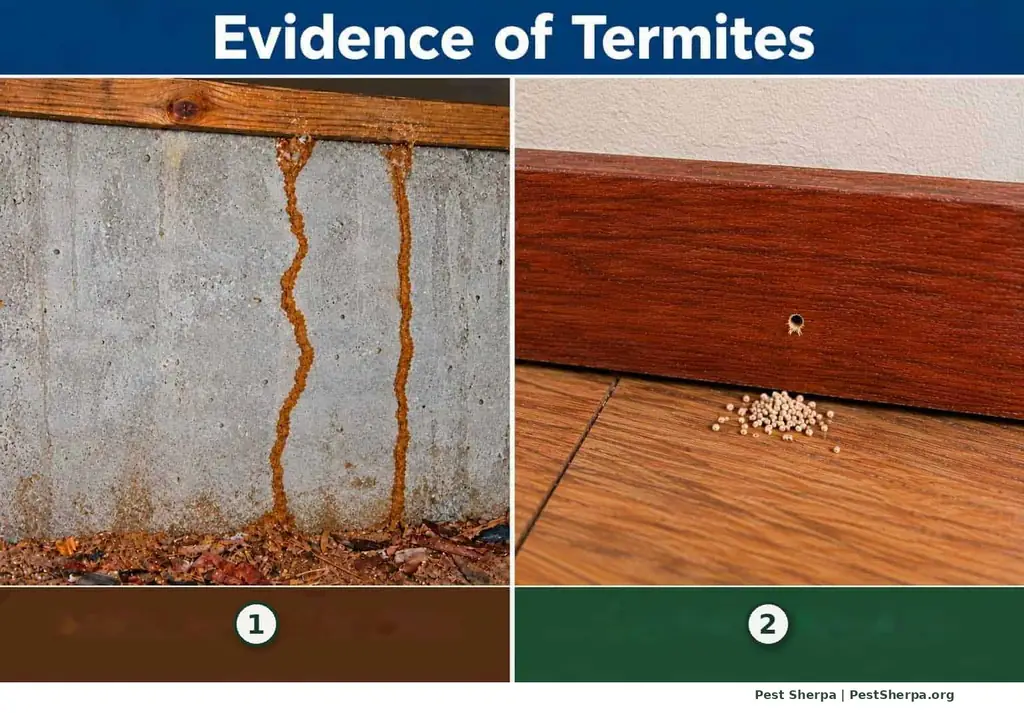
Which one did you find? Match the number:
- Subterranean termites: mud tubes made of soil, running up foundations or walls from the ground.
- Drywood termites: small, hard pellets (frass) piled below a tiny kick-out hole in wood. No mud tubes.
Either one is a reason to call a licensed termite pro for an inspection.
Confirm Infestation and Identify the Type
Seeing swarmers does not always mean your house is the source; winged termites can emerge from yard wood or a neighbor’s structure (UC IPM, EPA). Learn to separate termites from ants: termites have roughly equal-length wings and straight antennae; ants have longer front wings and elbowed antennae (EPA).
- Subterranean clues: shelter (mud) tubes; wood that sounds hollow when probed; damage often following the grain; live termites in tubes or wood (UC IPM; EPA).
- Drywood clues: distinctive hexagonal fecal pellets (frass) under kick-out holes; shed wings; cryptic galleries inside dry wood (UC IPM).
- Dampwood note: dampwood termites are very rare indoors and are generally not considered a threatening termite. They prefer wet or decayed wood and often signal a moisture problem. Do not confuse with drywood or subterranean plans (UC IPM).
Start with our termite guide, then species pages such as eastern subterranean termites, Formosan subterranean termites, and drywood termites. On common myths: Do termites bite? and swarming is not the only sign.
UC IPM notes that professional inspection is usually required to confirm infestation, that drywood extent is hard to delimit from accessible visual search alone, and that mixed species can infest one building. Regular inspections annually or every few years help catch problems early (UC IPM Quick Tips cite a 3-to-5-year cadence as helpful practice).
DIY Versus Professional Termite Control
Homeowners should fix conducive conditions: leaks, poor drainage, clogged gutters, wood-to-soil contact, and crawl-space moisture (EPA, UC IPM). UC IPM suggests keeping substructural wood well above soil where practical (ideally about 12 inches, check local codes) and destroying shelter tubes when found, knowing tube destruction does not replace colony control. Pressure treated lumber is termite resistant for some time but it is not a permanent solution.
Active structural treatment is a weak DIY path. EPA states that in most cases termiticide application can only be properly performed by a trained professional; improper treated areas can contaminate wells or fail to protect. UC IPM (California): there are no reliable over-the-counter termite control products for the public in California; effective subterranean products are professional-use only and highly regulated. That CA OTC note is California-specific, not a national claim. Oklahoma State University and Texas A&M AgriLife extensions advise against DIY/OTC bait systems as equivalents to professionally monitored programs. We discuss the big picture in Can a Homeowner Perform Termite Control? and baiting logic in why termite baiting is used. For bait vs liquid systems side by side, see the Termite Control hub.
What Good Treatment Means: By Type of Termite
Subterranean: liquid soil treatments, baits, and wood treatments
- Liquid soil termiticides. EPA describes soil-applied barrier or treatment-zone applications (via trenching, rodding, and/or sub-slab injection) as the most common post construction professional technique. The goal is a continuous treated zone between structure and soil colonies (protecting the structure; not always eliminating every colony in the yard). UC IPM notes a shift toward nonrepellent actives (examples discussed in UC IPM include chlorantraniliprole, fipronil, and imidacloprid). Improper placement can affect ducts, plumbing, or runoff: another reason for licensed applicators.
- Bait systems. The term “baits” can be misleading. Baits do not draw in subterranean termites but insects that find the systems feed on the material, frequently with slow-acting insecticides or insect growth regulators; workers share toxicant through the colony (EPA, UC IPM). Advantages include less soil disturbance and usefulness where liquids are difficult. Limitations: control can take months to a year or more and requires ongoing professional monitoring (UC IPM, OSU, TAMU). Some baiting systems start with monitoring only and changing to insecticides only when termites are found in the stations by the technicians.
- Wood treatments. Exposed wood may be treated primarily using borates. Hidden wood may be made accessible by making treatment ports in drywall for localized infestation.
- IPM extras. Habitat modification by correcting conditions which support termites will help reduce chances of termites (UC IPM).
Drywood: fumigation, heat, or localized work
- Whole-structure fumigation (sulfuryl fluoride). High efficacy when correctly applied; treats hidden sites; no residual after aeration (UC IPM, TAMU). Occupants, pets, and plants vacate for several days depending on structure and dosage. EPA: sulfuryl fluoride is the only fumigant registered for residential structures and is restricted-use (certified applicators only). Re-entry is label- and clearance-device driven, and is very precise. Fumigation does use a poisonous gas so regulations are strict. Fumigation leaves no residual protection; it controls only what drywood termites are there at the time and reinfestation is a possibility.
- Whole-structure heat. UC IPM drywood guidance describes heating wood core to a minimum core temperature (all susceptible wood) of 120°F for at least 33 minutes; shorter vacancy than fumigation but variable efficacy around heat sinks and large beams; no residual and may damage electronics, toilet seals, and other sensitive objects such as aquariums and foods.
- Localized / spot treatments. Inject liquids, dusts, or foams into galleries; or limited nonchemical spot tools and wood replacement. Success hinges on finding the active termites: hidden infested areas can be missed (UC IPM). Marketing that “orange oil cures everything” is not supported by UC-cited evaluations of some botanical claims. Ask for evidence and limits.
Gimmicks and mismatched methods
- Ultrasonic or electronic devices for subterranean control. OSU: not scientifically proven effective.
- “Secret formulas” from online chat courses or unregistered special ingredients. OSU and TAMU: all termiticides must be EPA-registered.
- Products that only claim to kill termites on contact without structural-protection data. EPA warns these have not demonstrated ability to protect structures.
- Assuming fumigation or heat fixes subterranean soil colonies, contradicted by UC IPM.
- Pricing bids only by gallons of chemical as the sales model. OSU and TAMU list this as a red flag. True professionals do not charge by the gallon.
Credentials and Questions Before You Sign
Firms offering termite services must be licensed by your state. Ask to see the license and verify with the state pesticide regulator (EPA). Categories matter: Florida’s UF/IFAS materials, for example, separate Termites/WDO and Fumigation certifications; Texas vehicles must show license numbers. National Pest Management Association membership is a voluntary designation, not a substitute for state licensure. Interview several companies (UF suggests 3 to 5; TAMU/OSU suggest three or more) and require on-site inspection before accepting a price.
- What species or type did you find, and where is the evidence on a diagram or proposal? Can you show me pictures?
- Is evidence active or inactive?
- Why this method (liquid, bait, fumigation, heat, localized) for this species and construction?
- What product names and labels will you use? Will you provide me with a label and Safety Data Sheet?
- Will you address conducive conditions (moisture, wood-soil contact)?
- For baits: monitoring frequency and realistic timeline (months, not days)?
- For fumigation: vacancy length, food/med prep, aeration, and who posts clearance and how does that work?
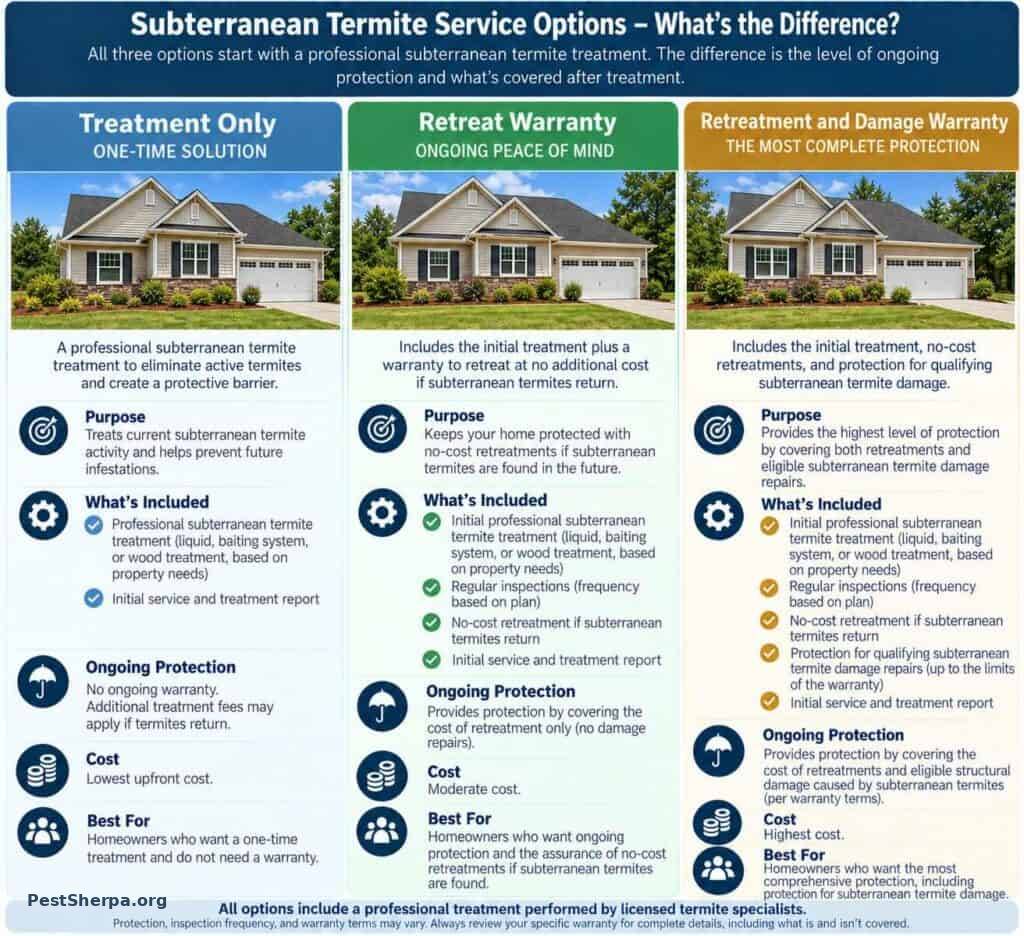
- Warranty: retreatment vs. damage repair; exclusions; renewal cost; what voids coverage? (Warranties are service agreements, not everlasting barriers.)
- Who supervises technicians / is the technician certified or credentialed by the state?
- May I have a written or electronic graph?
Comparing Bids, Treatment Day, and Aftercare
Align bids by species diagnosis, method, graph completeness, and warranty language, not scare tactics. Red flags from OSU and TAMU include door-to-door emergencies, leftover chemical discounts, false university endorsements, PO-box-only operators, and pressure on elderly homeowners alone. If one bid looks far out of line, check it against national termite treatment and repair cost ranges before you decide.
On liquid service days, expect trenching/drilling noise and keep people and pets away from active work zones as the applicator and label direct; re-entry times vary by product. Bait programs mean an install plus a monitoring calendar. Fumigation requires precise prep, extinguished pilots as directed, and stay-out until clearance. Aftercare: do not disturb treated soil or stations; keep moisture corrected; maintain inspections tied to any warranty; re-inspect after renovations that open slabs.
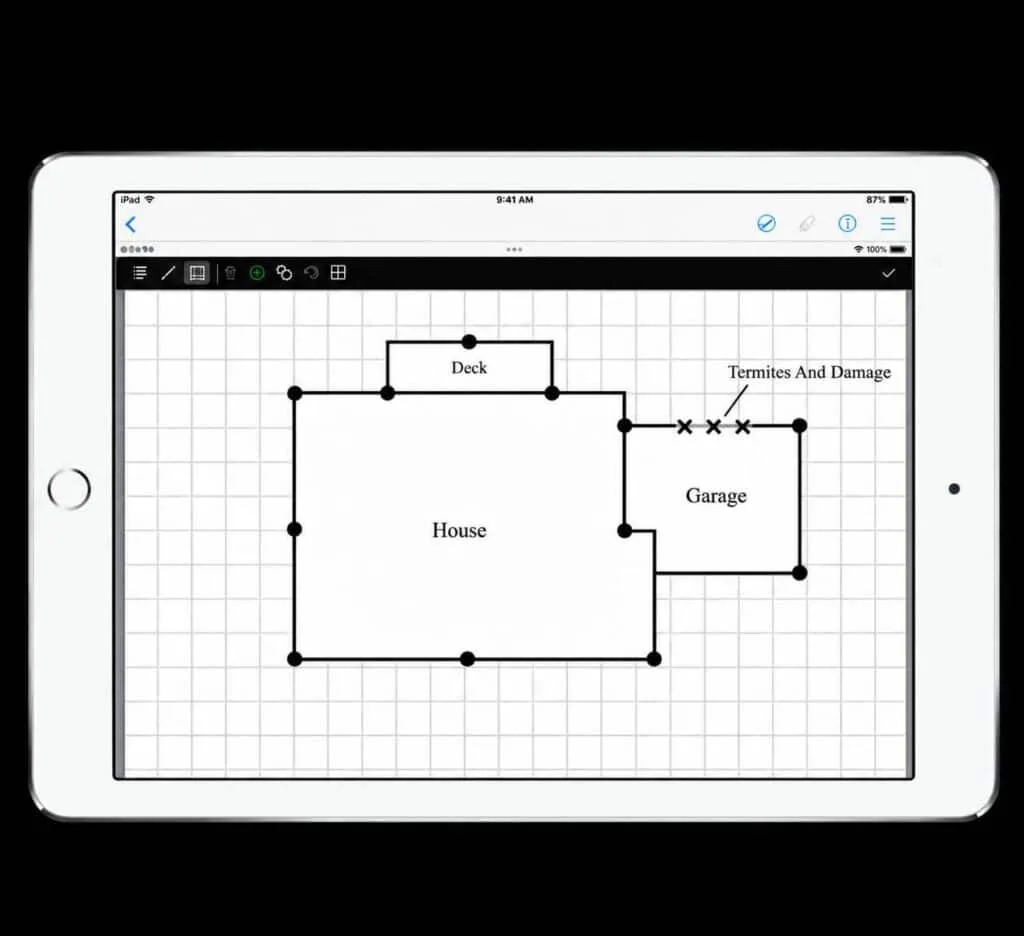
Graphs, hard copy or electronic do not have to be fancy. Graphs or other documentation is required by most states but the purpose really is to show what the concern is and where it is found. Some companies write paragraphs in states where graphs are not required.
Hiring Checklist: Termites
- Identify subterranean vs. drywood before buying a service. Do you homework and research information on the pest and company.
- Use the termite guide and species pages to follow the inspection.
- Fix conducive conditions; leave structural termiticides to licensed pros.
- Remember: CA “no reliable OTC” language is California-specific; still prefer pros nationwide for active infestations (EPA).
- Match treatment type to the pest; no honest companies will mix and match treatment types; they will clearly distinguish your needs.
- Follow only EPA label wording regardless what sales materials or marketing information states. The label is the law.
- Verify licenses; compare written graphs and warranties; avoid gallon-only pricing and secret formulas.
- Take your time and educate yourself. Termite work is not an emergency. While termites do cause damage, the rate of damage should not pressure you into making an immediate decision.
- Buy services from the company that you are most comfortable with and don’t jump at the cheapest unless you are most comfortable.
- Questions welcome at Ask the Sherpa.
Hire the team that shows you the biology, the map, and the long-term plan, not the team that only shows you a discount.
Sources & Further Reading
Selected public authorities used to check the hiring guidance above (not an exhaustive bibliography):
- EPA: Termites: How to Identify and Control Them
- UC IPM: Subterranean and Other Termites
- UC IPM: Drywood Termites
- Texas A&M: How to Select a Termite Control Service (E-369)
- Oklahoma State Extension: Choosing a Termite Pest Management Company
This article was written by Greg Baumann, founder of Pest Sherpa, and reflects more than 40 years of professional pest management experience.
About the Author

Greg Baumann | Pest Control Expert
Greg Baumann is the founder of Pest Sherpa and a Pest Control Expert with more than 40 years of professional pest management experience. His articles combine decades of field experience, technical expertise, and science-based guidance to help homeowners identify pests correctly, understand real-world risks, and make informed pest management decisions.
Mission: Identify the pest. Understand the risk. Stop the problem. Prevent the comeback. Know when it’s time to call a professional.