
Asian Subterranean Termites: Identification, Damage, and Control
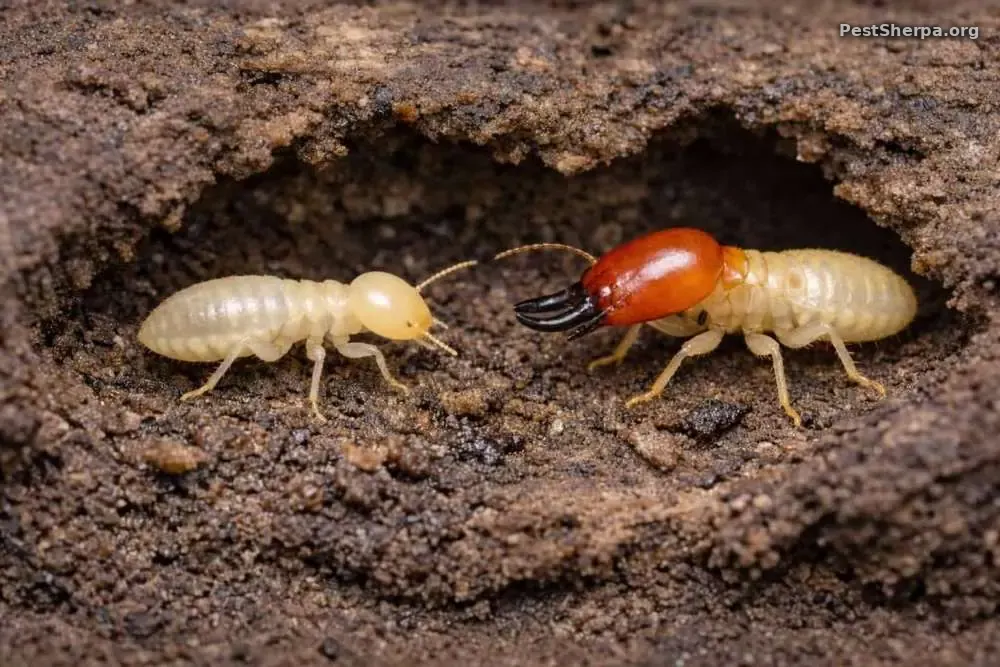
Updated for accuracy: Asian subterranean termites, Coptotermes gestroi, are invasive wood-destroying termites associated with warm, humid environments. They live in underground colonies, travel through soil and shelter tubes, and can damage structural wood, trees, and cellulose-based materials before homeowners realize an infestation exists.
| Common name | Asian subterranean termite |
|---|---|
| Scientific name | Coptotermes gestroi |
| Pest type | Invasive subterranean termite |
| Main concern | Structural wood damage, tree infestations, and hidden colony activity |
| Primary signs | Mud tubes, swarmers, discarded wings, hollow wood, soil-lined galleries, hidden damage |
| DIY difficulty | High; active infestations usually require professional termite treatment |
| Common confusion | Formosan termites, native subterranean termites, eastern subterranean termites, drywood termites, and carpenter ants |
TL;DR
Asian subterranean termites are invasive structural pests that live in soil, build moisture-protective shelter tubes, and feed on wood and other cellulose materials. They are most relevant in warm, humid areas where established populations occur, especially parts of Florida. Homeowners should look for mud tubes, hollow or blistered wood, soil-lined galleries, discarded equal-length wings, and swarming termites around lights. Active infestations generally require professional inspection and treatment.
Jump to:
- Identification
- Where They Are Found
- Signs of Infestation
- Why It Matters
- What To Do
- What Not To Do
- When To Call a Pro
- Similar Pests
- Comparison Table
- Common Questions
- References
Identification: What Asian Subterranean Termites Look Like
Asian subterranean termites are social termites that live in underground colonies and forage into structures through moisture-protected pathways. Like other subterranean termites, they rely on soil contact, moisture, and shelter tubes to move between the colony and food sources.1
Workers: Pale cream-colored, soft-bodied termites responsible for feeding, tunneling, and colony maintenance.
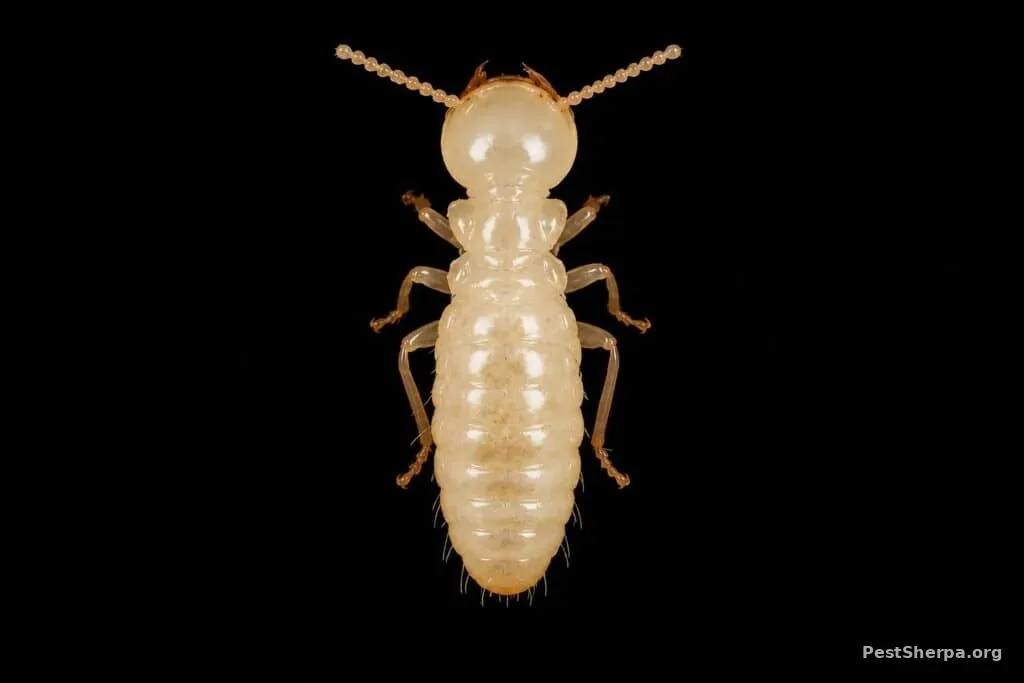
Asian subterranean termite workers are pale, soft-bodied termites that feed on cellulose and maintain the colony.
Soldiers: Slightly larger termites with enlarged heads and defensive jaws. Soldier characteristics are often more useful for professional identification than homeowner-level observation.
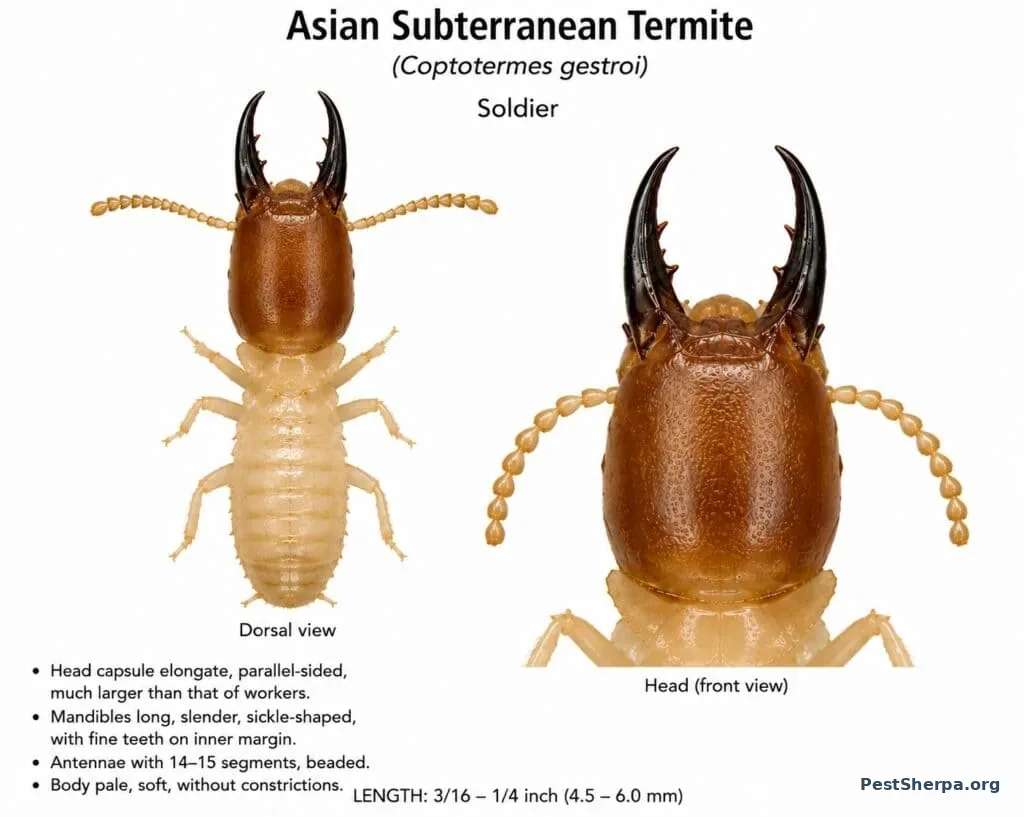
Soldiers help defend the colony and can assist with species-level termite identification.
Swarmers (alates): Dark-bodied reproductive termites with two pairs of equal-length wings. Swarmers are often attracted to lights during active swarming periods.
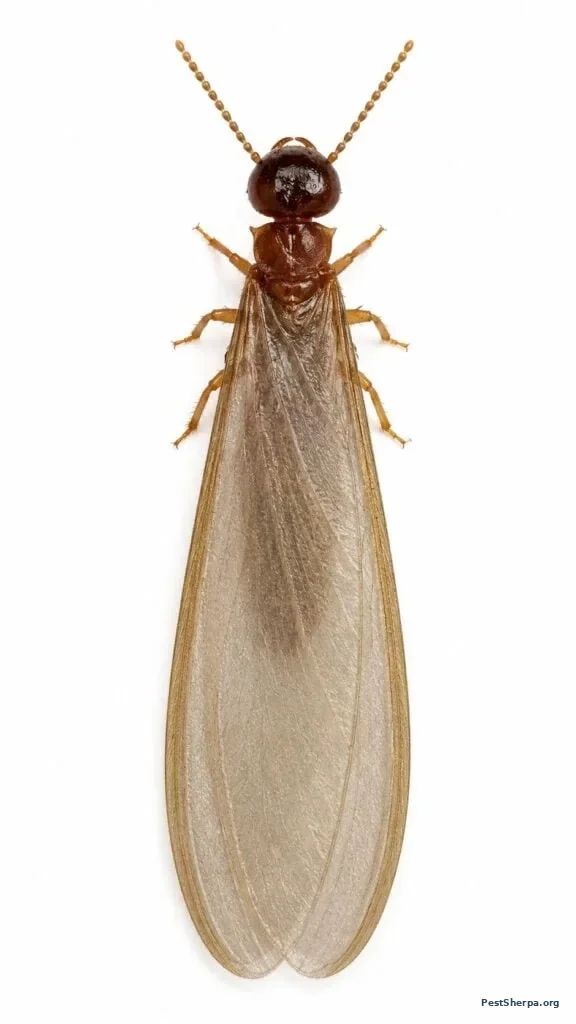
Termite swarmers have broad waists, straighter antennae, and two pairs of equal-length wings.
Asian subterranean termites are commonly confused with Formosan subterranean termites, native subterranean termites, and eastern subterranean termites. Flying termites are also commonly mistaken for carpenter ants. Carpenter ants have elbowed antennae, narrow waists, and unequal wing lengths, while termite swarmers have straighter antennae, broader waists, and equal-length wings.
Where Asian Subterranean Termites Are Found
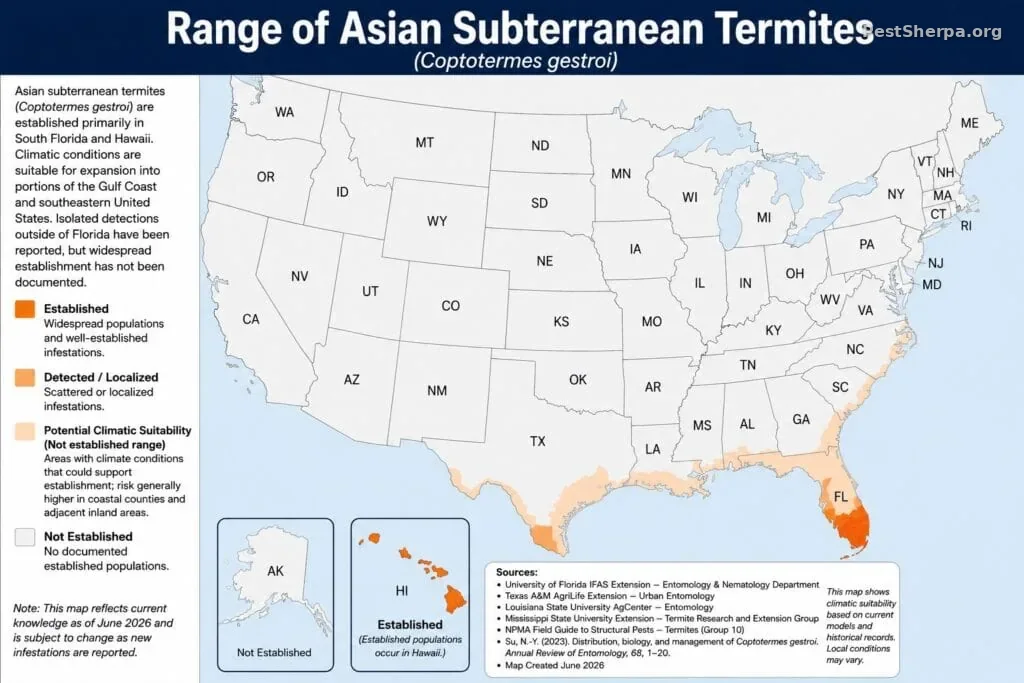
Asian subterranean termites are native to tropical Asia and have become invasive in several warm regions. In the United States, they are especially associated with Florida, where UF/IFAS has documented established populations and continued monitoring of their spread.13
This does not mean every termite in a warm state is an Asian subterranean termite. In many parts of the United States, homeowners are more likely to encounter native subterranean termites, eastern subterranean termites, drywood termites, or Formosan subterranean termites depending on location. Species-level confirmation may require a termite sample and expert identification.
Signs of an Asian Subterranean Termite Infestation
Most homeowners do not identify Asian subterranean termites by seeing the colony underground. They usually discover signs of activity in or around the structure.
- Mud tubes on foundations, crawl-space walls, slab penetrations, or support structures.
- Wood that sounds hollow, feels soft, or breaks apart easily.
- Discarded equal-length wings near windows, doors, or light sources.
- Swarming termites emerging indoors or around the structure.
- Soil-lined galleries inside damaged wood.
- Hidden structural damage behind walls, flooring, baseboards, or trim.
- Termite activity around trees, stumps, dead roots, or wood debris near the structure.
Mud tubes are especially important because subterranean termites use them to protect themselves from drying out while moving between soil and wood. UC IPM identifies shelter tubes and soil access as key subterranean termite clues.7
Why It Matters
Asian subterranean termites are structural pests capable of damaging framing lumber, subflooring, wall studs, trim, support beams, wooden attachments, trees, and other cellulose-containing materials.
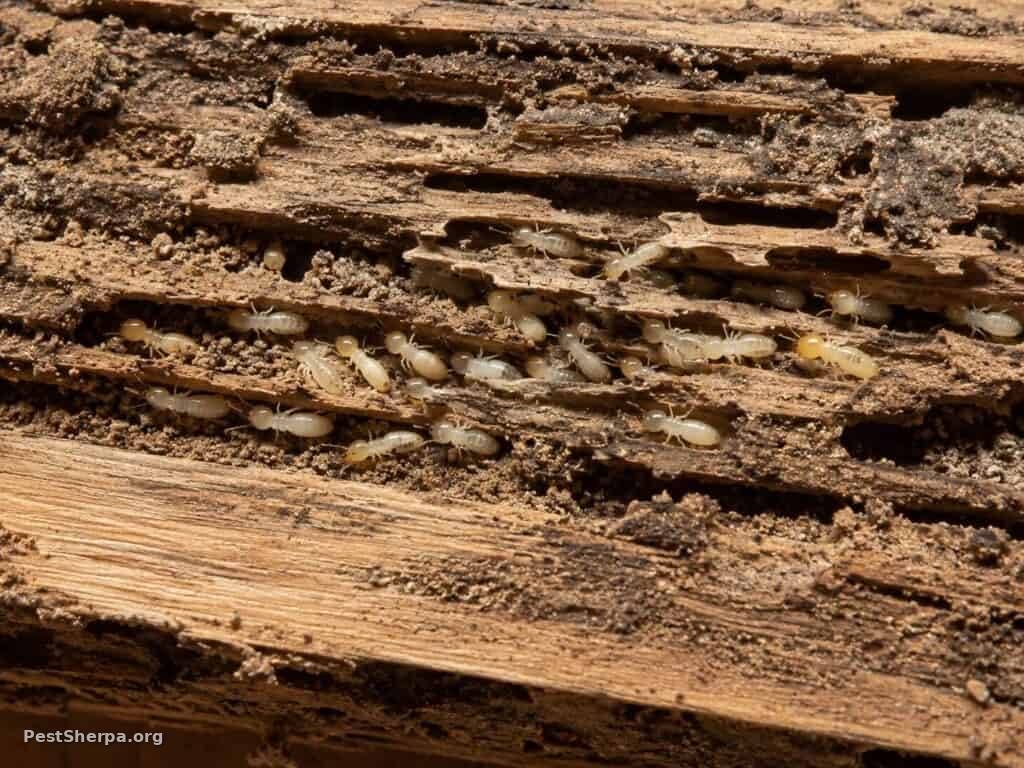
Subterranean termite damage is often hidden inside wood, behind finishes, or in protected structural areas.
Because subterranean termite colonies often remain hidden underground, damage may continue for years before becoming obvious. Infestations are commonly discovered during inspections, remodeling, moisture investigations, or after swarming events.
Risk factors include:
- Wood-to-soil contact.
- Excess moisture around foundations.
- Poor drainage and standing water.
- Leaking plumbing, roofs, or irrigation systems.
- Damp crawl spaces.
- Foundation cracks and slab penetrations.
- Buried wood debris, stumps, or dead roots near structures.
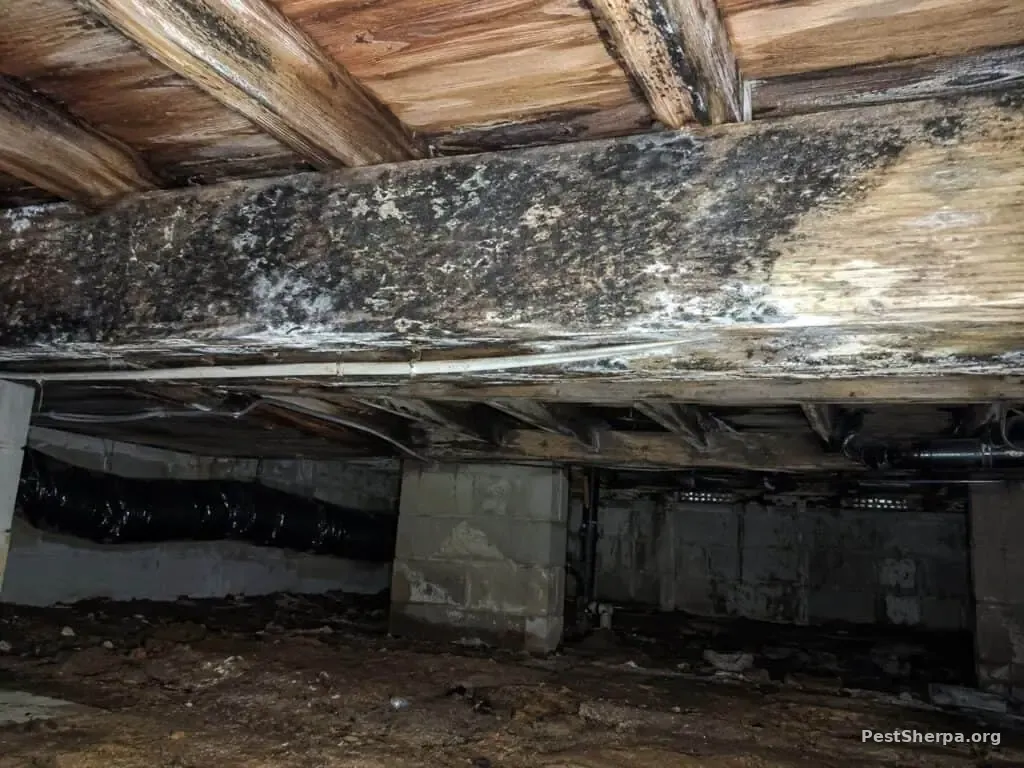
Damp crawl spaces, poor drainage, and wood-to-soil contact can increase subterranean termite risk.
The U.S. Environmental Protection Agency notes that termites cause billions of dollars in structural damage each year and lists liquid soil-applied termiticides, termite baits, treated building materials, and wood treatments among recognized termite control options.5
For broader inspection and prevention guidance, review the Pest Sherpa termite guide.
What To Do: Practical Homeowner Steps
1. Preserve visible evidence
Photograph mud tubes, damaged wood, swarmers, discarded wings, or visible termite activity before disturbing the area. If possible, save a few insects in a small container or bag for identification.
2. Correct moisture problems
Repair plumbing leaks, roof leaks, condensation issues, poor drainage, crawl-space humidity, and irrigation overspray contributing to damp conditions. Moisture correction does not eliminate an active termite colony by itself, but it helps reduce conditions that favor subterranean termites.
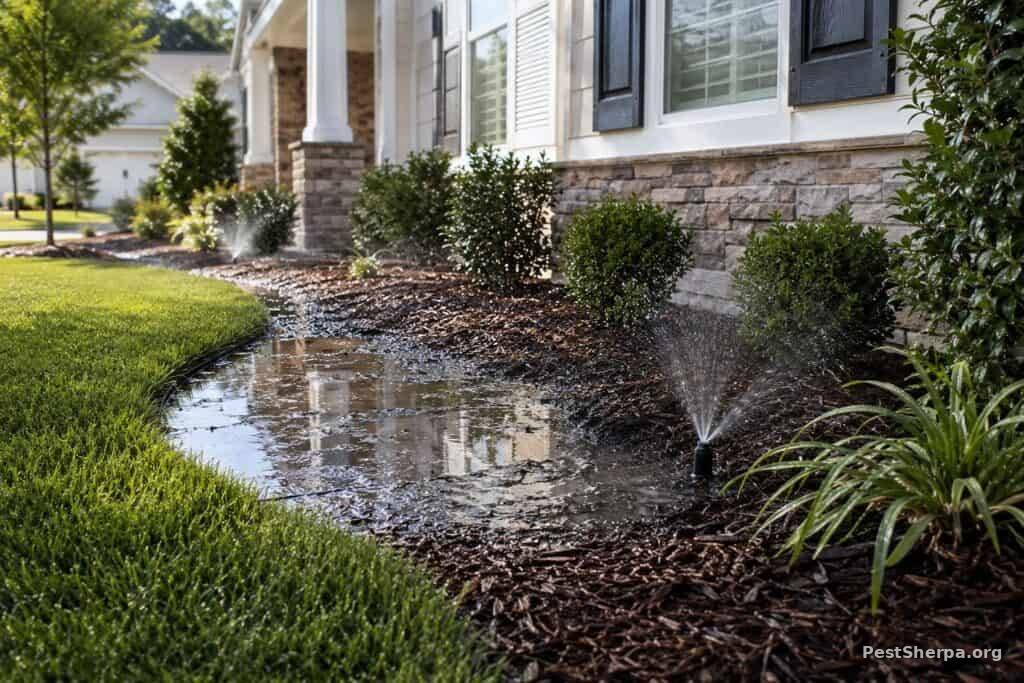
Overwatering, poor drainage, and irrigation against the foundation can create termite-conducive moisture conditions.
3. Remove wood-to-soil contact
Keep siding, posts, trim, lattice, stair framing, and structural wood separated from direct soil contact whenever possible. Wood touching soil can give subterranean termites a direct hidden route into a structure.
4. Remove cellulose debris
Move firewood away from the structure and remove buried lumber, cardboard, dead roots, stumps, and wood debris near the foundation.
5. Get the termite identified
Asian subterranean termites can look similar to other subterranean termites. UF/IFAS notes that photos of termite damage are often not enough for reliable identification; actual insect specimens are usually more useful.4
6. Understand DIY treatment limitations
Store-bought sprays rarely eliminate active subterranean termite colonies inside structures. Professional treatment may involve bait systems, trenching, drilling, liquid termiticides, foam applications, localized wood treatments, or integrated termite management approaches. NPIC cautions that successful termite control often requires termite-specific knowledge, treatment techniques, and sometimes products restricted to licensed professionals.6
DIY prevention measures are useful, but they are not a reliable substitute for professional structural treatment when active infestations are present.
What Not To Do
- Do not rely on surface sprays to eliminate a subterranean termite colony.
- Do not destroy all evidence before photographing or collecting samples.
- Do not assume swarmers are “just flying ants” without checking wing length, waist shape, and antennae.
- Do not ignore mud tubes because the visible area looks small.
- Do not repair cosmetic damage before the infestation is inspected and addressed.
- Do not assume termite damage is inactive just because no live termites are visible.
When To Call a Pro
Contact a licensed termite professional if you find:
- Active mud tubes attached to the structure.
- Swarming termites indoors.
- Discarded termite wings inside the home.
- Soft, hollow, blistered, or soil-lined structural wood.
- Evidence of termites in crawl spaces, framing, subflooring, or wall voids.
- Repeated termite activity after prior treatment.
- Uncertainty about whether the infestation involves Asian subterranean termites, Formosan termites, or another subterranean termite species.
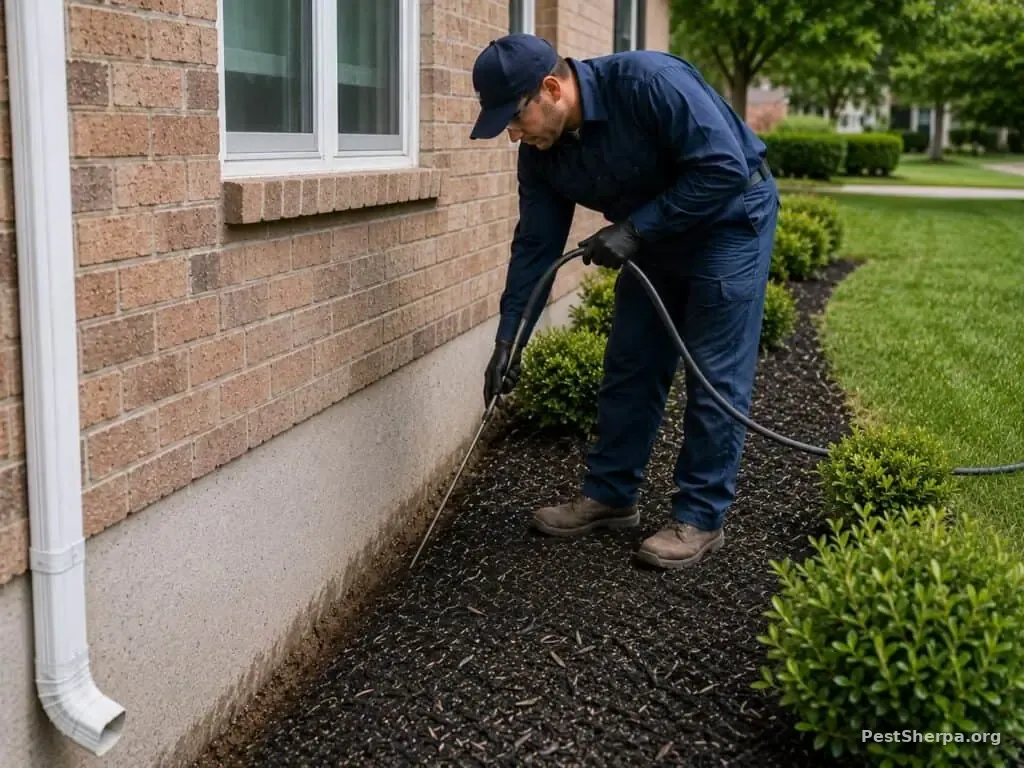
Active subterranean termite infestations usually require professional inspection and treatment planning.
If you are unsure whether professional treatment is necessary, use Ask the Sherpa before spending money on unnecessary or misdirected treatment.
Similar Pests / Misidentification Comparison
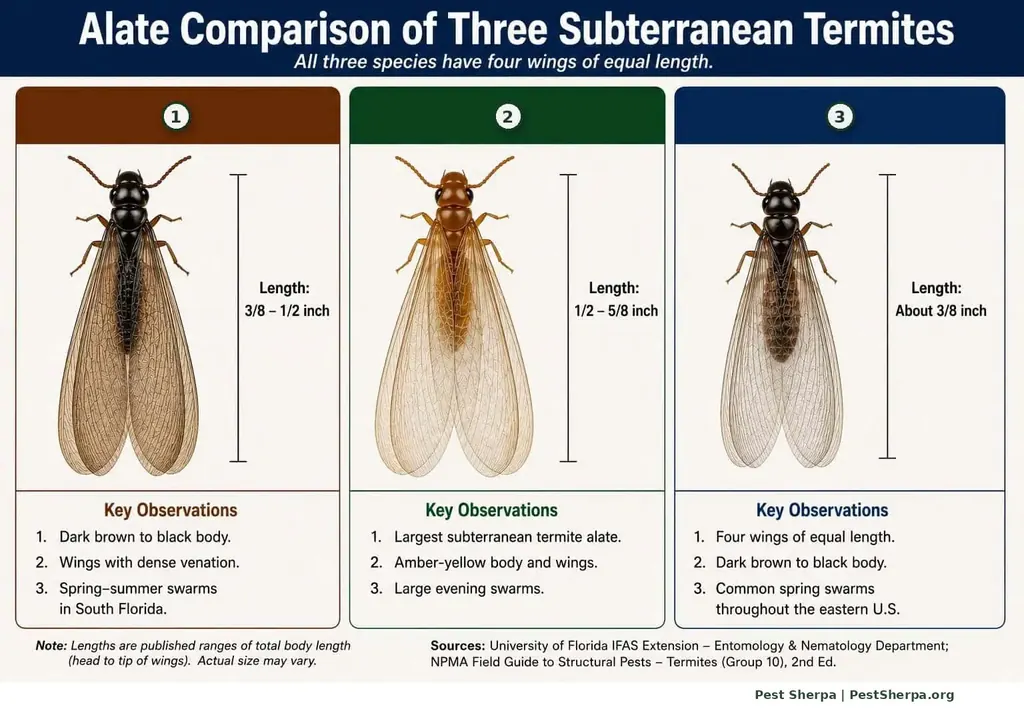
Which one do you see? Match the number:
- Asian subterranean termite alate (Coptotermes gestroi): 3/8 to 1/2 inch, dark brown to black body, wings with dense venation. Swarms in spring and summer in South Florida.
- Formosan subterranean termite alate (Coptotermes formosanus): 1/2 to 5/8 inch, the largest of the three, amber-yellow body and wings. Large evening swarms.
- Eastern subterranean termite alate (Reticulitermes flavipes): about 3/8 inch, dark brown to black body. Common spring swarms throughout the eastern U.S.
Termite swarmers are often confused with winged ants. Wing length, waist shape, and antennae are key differences.
Asian Subterranean Termites vs. Formosan Termites
Formosan subterranean termites are another invasive Coptotermes species and are among the most aggressive structural termites in the United States. Both Formosan and Asian subterranean termites can be serious pests in warm, humid regions, and expert identification may be needed where their ranges overlap.
Asian Subterranean Termites vs. Native Subterranean Termites
Native subterranean termites include several common U.S. termite species that also rely on soil contact and moisture-protected foraging pathways.
Asian Subterranean Termites vs. Eastern Subterranean Termites
Eastern subterranean termites are widespread across the eastern United States and are among the most common native structural termites.
Asian Subterranean Termites vs. Drywood Termites
Drywood termites do not require soil contact and commonly leave pelletized frass instead of mud tubes.
Asian Subterranean Termites vs. Carpenter Ants
Carpenter ants excavate wood for nesting but do not consume cellulose the way termites do. Winged carpenter ants have narrow waists, elbowed antennae, and unequal wing lengths.
Asian Subterranean Termite Comparison Table
| Pest | Soil Contact? | Common Sign | Key Difference |
|---|---|---|---|
| Asian subterranean termite | Yes | Mud tubes, swarmers, soil-lined galleries | Invasive Coptotermes species associated with warm, humid regions |
| Formosan subterranean termite | Yes | Large swarms, mud tubes, aggressive structural activity | Another invasive Coptotermes species; often associated with very large colonies |
| Eastern subterranean termite | Yes | Mud tubes, hidden wood damage, swarmers | Common native subterranean termite across much of the eastern U.S. |
| Drywood termite | No | Pelletized frass, dry wood galleries, swarmers | Lives inside dry wood and does not need soil contact |
| Carpenter ant | No | Frass, galleries, large ants, winged ants | Excavates wood for nesting but does not eat cellulose |
Common Questions
Are Asian subterranean termites worse than regular termites?
They can be a serious invasive termite where established, especially in warm, humid areas. The practical concern for homeowners is not the label “worse,” but whether the structure has active subterranean termite activity that needs professional treatment.
Can I identify Asian subterranean termites from damage alone?
Usually not with confidence. Mud tubes and soil-lined galleries can confirm subterranean termite-type activity, but species-level identification often requires termite specimens and expert review.
Do Asian subterranean termites swarm indoors?
Yes, swarmers may appear indoors when a colony is active in or near a structure. Indoor swarmers or piles of equal-length discarded wings are strong reasons to schedule a termite inspection.
Will removing mud tubes solve the infestation?
No. Breaking mud tubes may interrupt visible termite access temporarily, but it does not eliminate the underground colony. Preserve evidence first, then have the structure inspected.
Can I treat Asian subterranean termites myself?
DIY moisture correction, debris removal, and prevention steps are useful, but active structural subterranean termite infestations usually require professional treatment. The treatment plan depends on construction type, infestation location, soil access, and local regulations.
- I live in Texas and my neighbor warned me that his house was just treated for termites. Does that put my house at risk?
- Do termites bite?
- I don’t understand baiting. Why use a bait like Centricon (sic) to attract termites?
References
- University of Florida IFAS. Asian Subterranean Termite, Coptotermes gestroi.
- Journal of Economic Entomology. Elimination of Structural and Tree Infestations of Asian Subterranean Termites.
- University of Florida IFAS. Asian Subterranean Termites Confirmed in Tampa.
- University of Florida IFAS. Termite Prevention and Control.
- U.S. Environmental Protection Agency. Termites: How to Identify and Control Them.
- National Pesticide Information Center. Termites.
- University of California IPM. Subterranean and Other Termites.
This article was written by Greg Baumann, founder of Pest Sherpa, and reflects more than 40 years of professional pest management experience.
About the Author

Greg Baumann | Pest Control Expert
Greg Baumann is the founder of Pest Sherpa and a Pest Control Expert with more than 40 years of professional pest management experience. His articles combine decades of field experience, technical expertise, and science-based guidance to help homeowners identify pests correctly, understand real-world risks, and make informed pest management decisions.
Mission: Identify the pest. Understand the risk. Stop the problem. Prevent the comeback. Know when it’s time to call a professional.