
Native Subterranean Termites: Identification, Damage, and Control
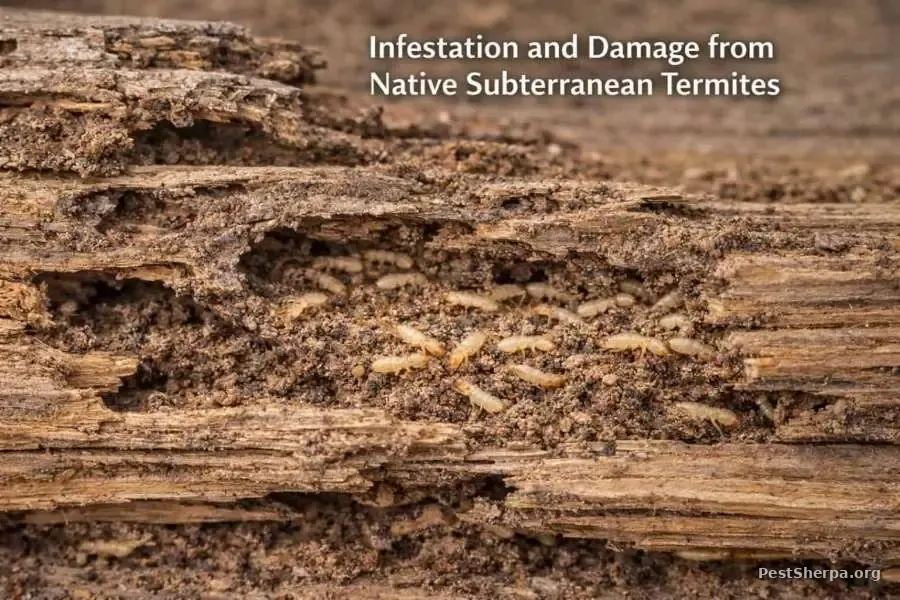
Updated for accuracy: Native subterranean termites are soil-associated wood-destroying insects, most often in the genus Reticulitermes, that occur across much of the United States. They live in colonies, travel through soil and mud tubes, and can quietly damage structural wood before homeowners notice obvious signs. These species are called native because they are indigenous to the United States. Invasive subterranean termites such as the Formosan and Asian subterranean termites are not included in this group. Nearly fifty species of native subterranean termites are recorded in the United States with less than ten species considered pests of structures and the three species described here are considered major.
TL;DR
Native subterranean termites are serious structural pests. They usually live in soil, maintain moisture-protected pathways, and enter buildings through foundation cracks, slab penetrations, crawl spaces, expansion joints, wood-to-soil contact, or hidden gaps. The most useful warning signs are mud tubes, soil-lined wood galleries, soft or hollow wood, indoor swarmers, and piles of equal-length discarded wings. If termites are active in structural wood, professional inspection is strongly recommended.
Jump to:
- Identification
- US Subterranean Termite Location Map
- Why It Matters
- What To Do
- When To Call a Pro
- Similar Pests
- Common Questions
- References
Identification: What Native Subterranean Termites Look Like
Native subterranean termites are social insects that live in colonies with workers, soldiers, and reproductives. Most structural infestations involve termites foraging from soil into wood, although the colony itself may remain hidden underground or inside moisture-protected wood.
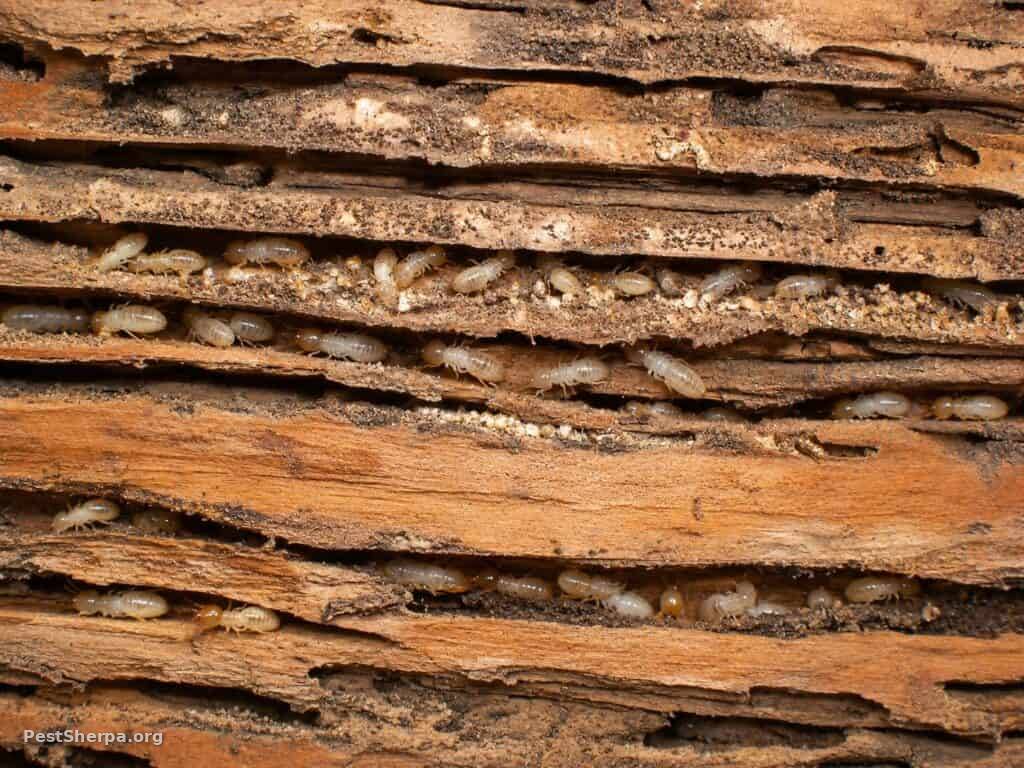
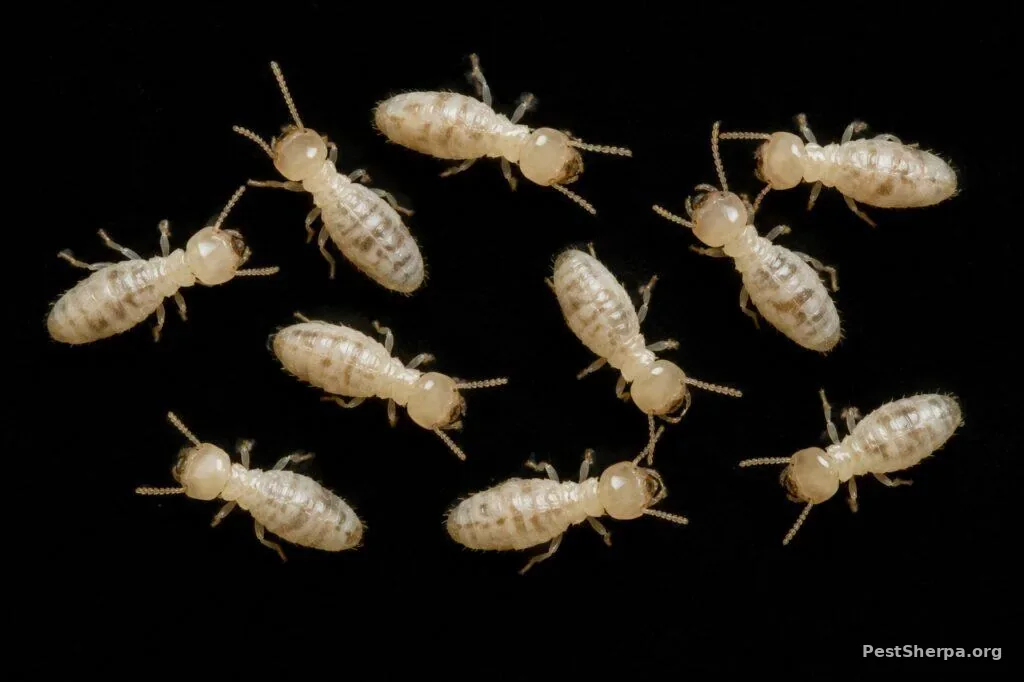
Workers: Pale cream to whitish, soft-bodied, wingless termites that feed on cellulose and maintain the colony.
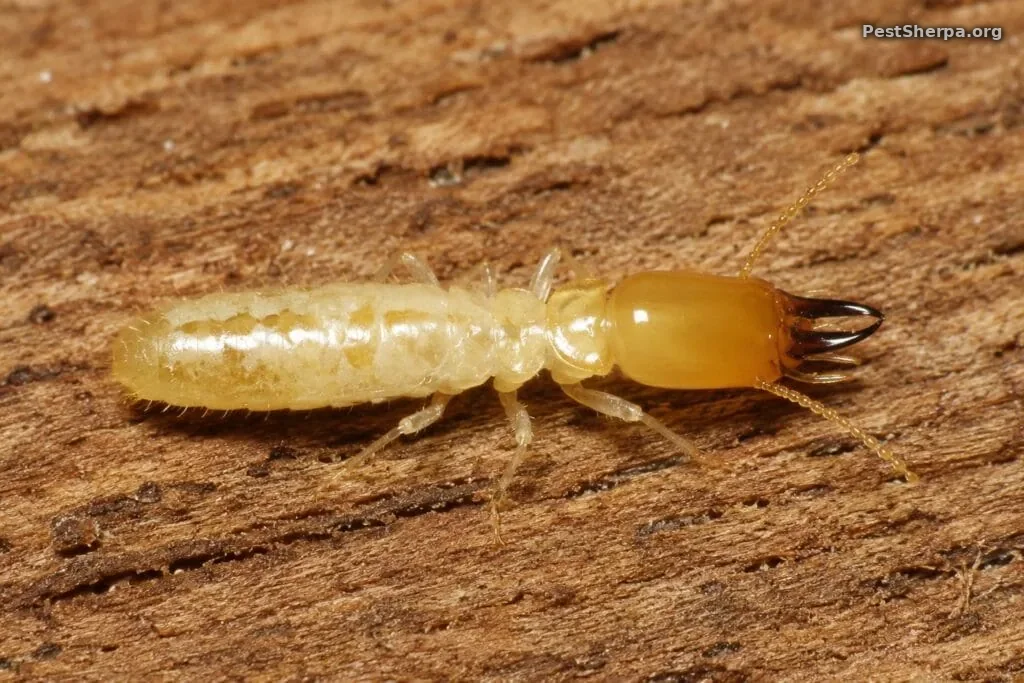
Soldiers: Similar in body color to workers but with enlarged yellowish to brown heads and defensive jaws.
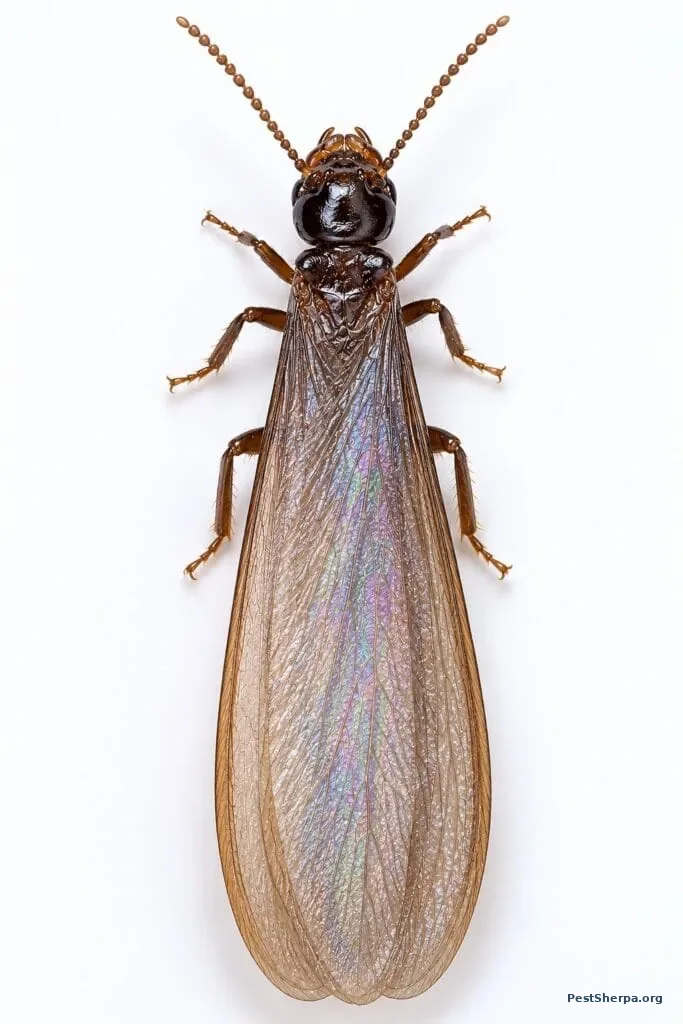
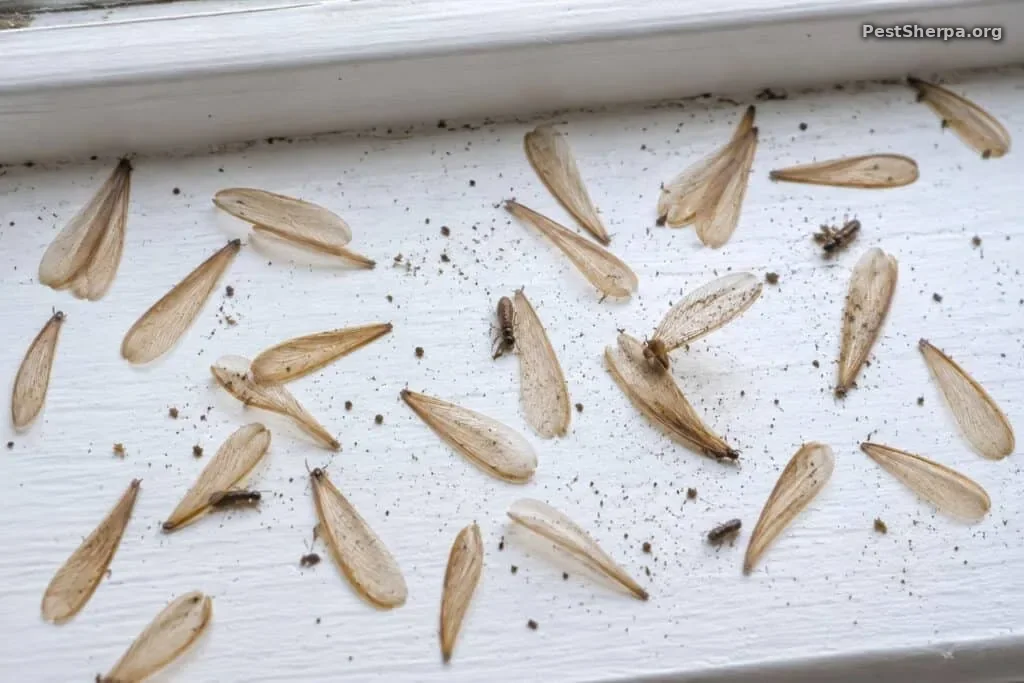
Swarmers, or alates: Dark-bodied reproductive termites with two pairs of equal-length wings. Swarmers are often noticed near windows, doors, vents, or lights.
The strongest homeowner identification clues include:
- Mud tubes on foundations, piers, crawl-space walls, slab edges, basement walls, or support posts.
- Wood that sounds hollow or breaks apart along the grain.
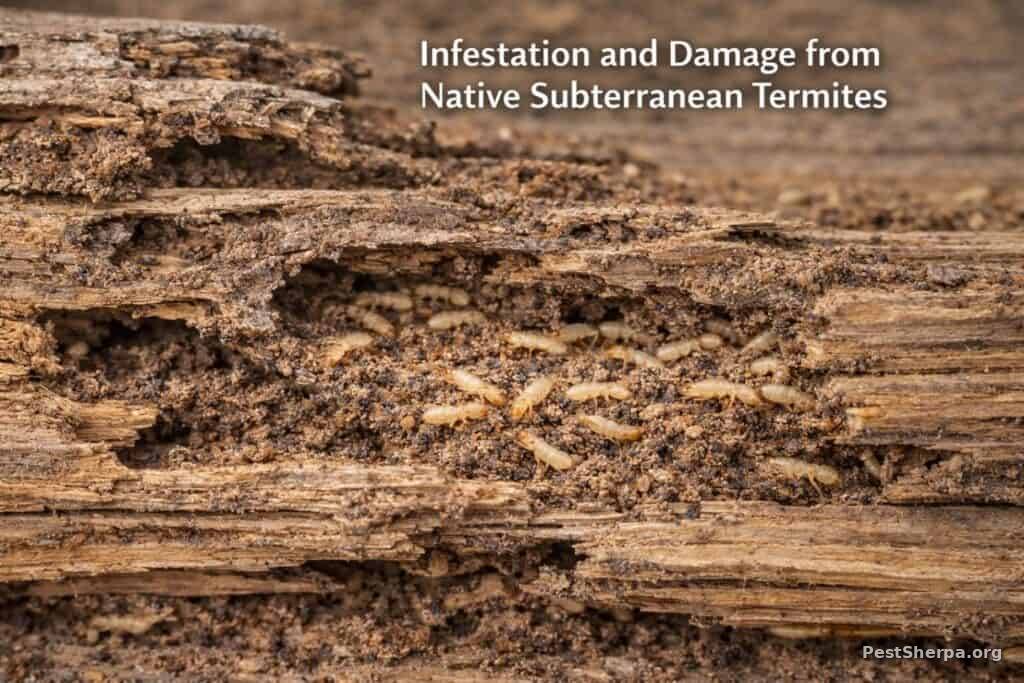
- Soil or mud packed inside damaged wood galleries.
- Discarded equal-length wings indoors.
- Swarming termites emerging inside or immediately around the structure.
- Hidden activity behind siding, baseboards, insulation, trim, flooring, or wall voids.
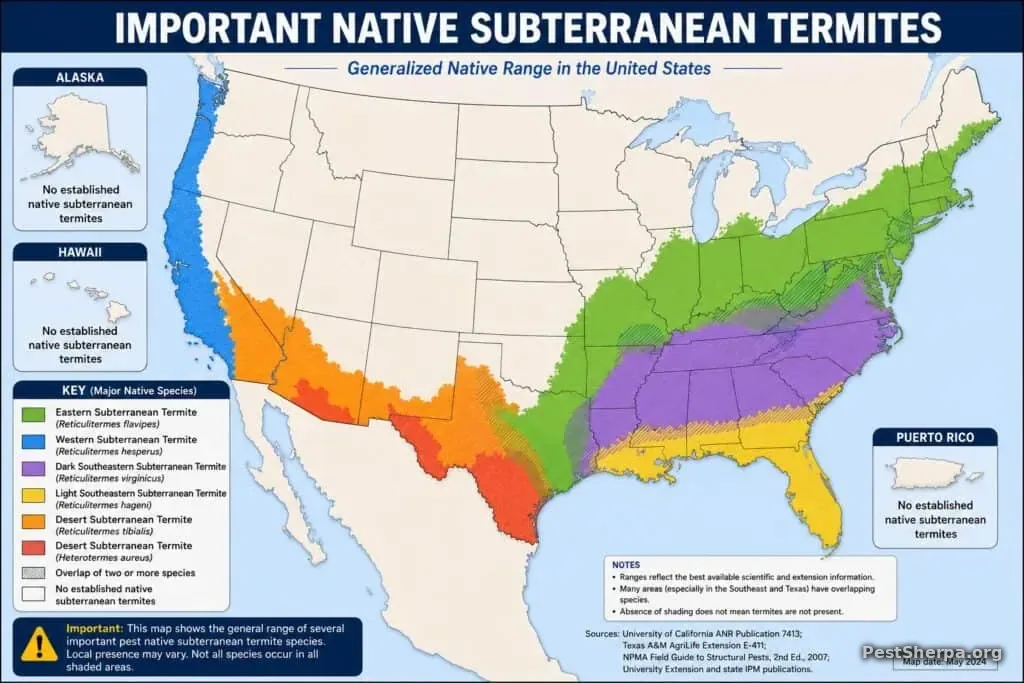
Native subterranean termites include several Reticulitermes species. For example, eastern subterranean termites are common in the eastern United States, while western subterranean termites are more associated with western regions with the desert subterranean termite in the southwest. There are two other species of importance, the Light Southeastern Subterranean Termite and the Dark Southeastern Subterranean Termite which are in our Pest Guides and on the range map. While these two species are often referred to as “minor,” these species can also infest and damage structures.
Homeowners often confuse native subterranean termites with carpenter ants. Flying ants have elbowed antennae, narrow waists, and unequal wing lengths. Termite swarmers have straighter antennae, thicker waists, and wings of equal length.
Why It Matters
Native subterranean termites are structural pests. They feed on cellulose and can damage framing lumber, sill plates, floor joists, subflooring, beams, trim, paper-faced drywall, cardboard, and other wood-based materials.
They are also ecologically important outdoors because they help break down dead wood and recycle nutrients. The problem begins when colonies connect to homes, decks, crawl spaces, basements, fence attachments, porches, or other structural wood.
The U.S. Environmental Protection Agency notes that termites cause billions of dollars in structural damage each year in the United States. Source: EPA termite guidance. What that means for one house is a different question, and I answer it in how much termite damage really costs.
Risk is higher when structures have:
- Wood-to-soil contact.
- Damp crawl spaces.
- Foundation cracks or slab penetrations.
- Leaking plumbing, roofs, gutters, or irrigation.
- Poor drainage near the foundation.
- Heavy mulch or soil against siding.
- Buried lumber, form boards, roots, cardboard, or construction debris.
- Decks, steps, porches, or fences made of untreated wood directly connected to the structure.
For a broader overview of termite categories, warning signs, and homeowner decision-making, see the Pest Sherpa termite guide.
What To Do: Practical Homeowner Steps
1. Preserve visible evidence
Take photos of mud tubes, damaged wood, swarmers, wings, or soil-lined galleries before cleaning, scraping, or repairing. Evidence patterns help determine whether activity is active, old, localized, or structurally connected.
2. Reduce moisture around the home
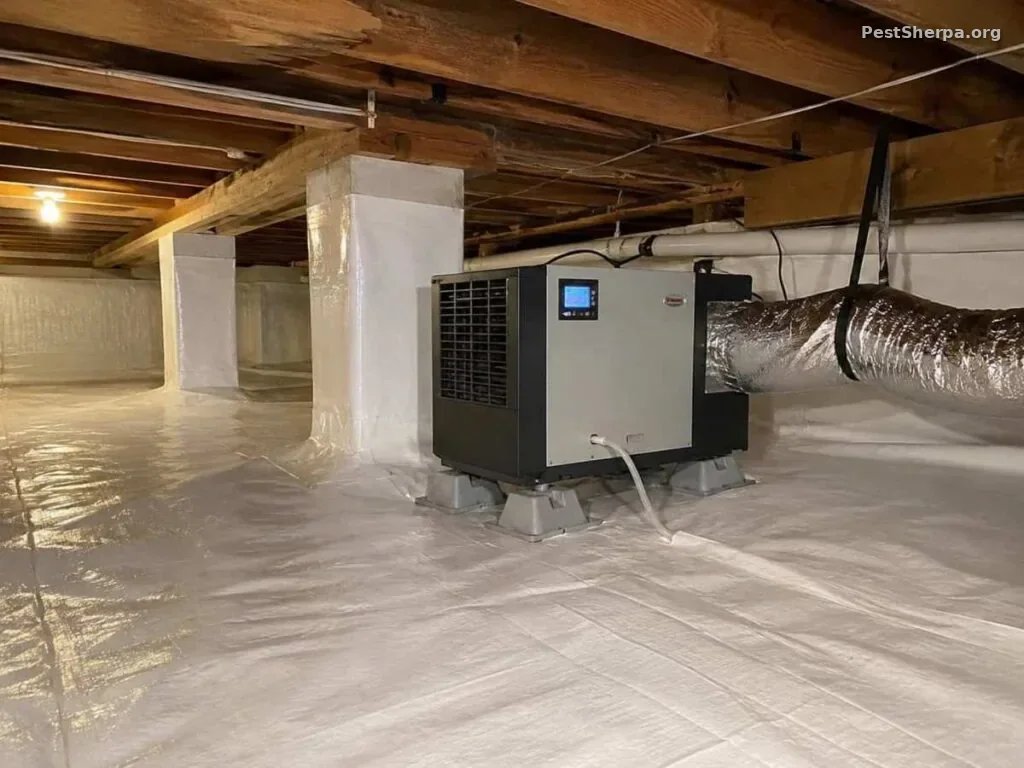
Repair plumbing leaks, roof leaks, clogged gutters, irrigation overspray, condensation problems, and poor drainage. Downspouts should move water away from the foundation, and crawl spaces should not remain chronically damp.
3. Remove wood-to-soil contact
Correct siding, trim, lattice, porch posts, stair stringers, deck components, or structural wood that directly contacts soil. Keep soil and mulch below siding and foundation inspection zones.
4. Remove cellulose debris
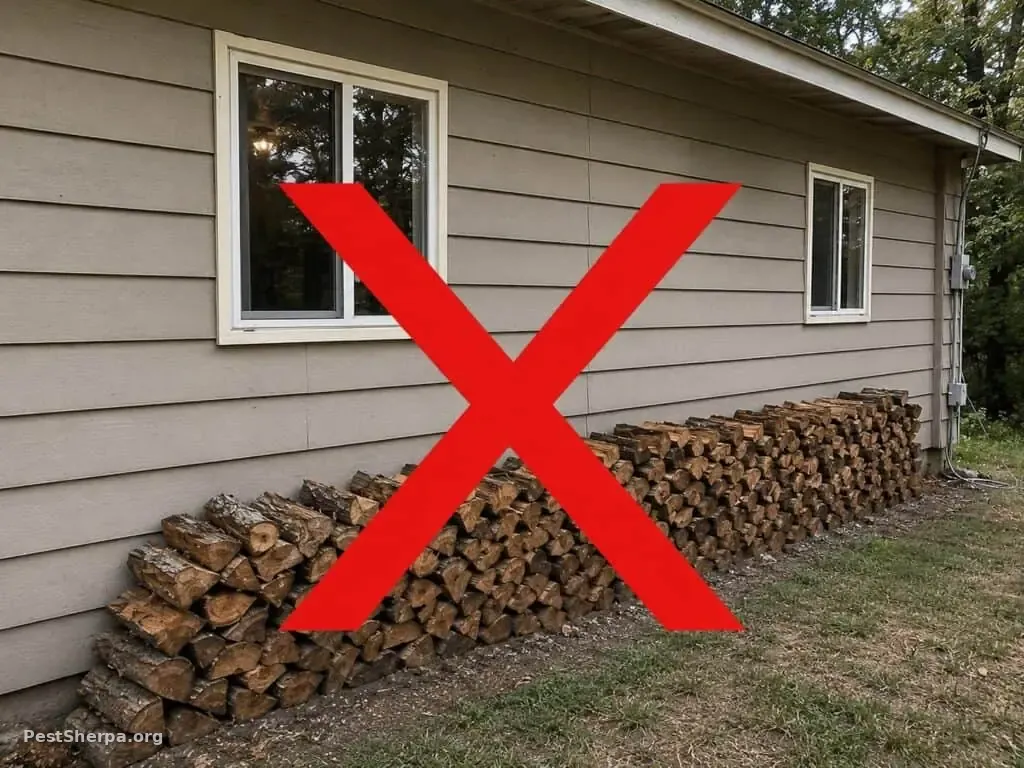
Move firewood away from the structure and keep it elevated. Remove buried lumber, cardboard, dead roots, scrap wood, form boards, and construction debris from crawl spaces and foundation areas.
5. Understand the limits of DIY termite control
Store-bought sprays usually do not eliminate established subterranean termite infestations inside structures. Effective treatment may require bait systems, soil termiticides, trenching, drilling, foam applications, or other professional methods based on construction type and infestation conditions.
The National Pesticide Information Center recommends proper termite identification before selecting treatment methods. Source: NPIC termite information.
DIY work is most useful for prevention support and correcting conducive conditions. It is not a reliable substitute for professional evaluation when termites are active in framing, joists, sill plates, wall voids, or subflooring.
When To Call a Pro
Contact a licensed termite professional if you find:
- Active mud tubes attached to the structure.
- Swarming termites indoors.
- Discarded equal-length wings inside the home.
- Soft, hollow, blistered, or soil-lined structural wood.
- Termites inside crawl spaces, basements, wall voids, subflooring, joists, sill plates, or framing.
- Repeated termite activity after prior treatment.
- Evidence during a real estate inspection or home sale.
- Uncertainty about whether the pest is native subterranean termites, Formosan subterranean termites, drywood termites, dampwood termites, or carpenter ants.
If you are unsure whether the activity requires treatment, use Ask the Sherpa before spending money on unnecessary or misdirected treatment.
Similar Pests / Misidentification Comparison
Native Subterranean Termites vs. Formosan Subterranean Termites
Formosan subterranean termites are also subterranean termites, but they are invasive in many U.S. regions where they occur and can form very large colonies. Native subterranean termites are often serious structural pests, but Formosan termite infestations may spread faster and cause more aggressive damage.
Native Subterranean Termites vs. Drywood Termites
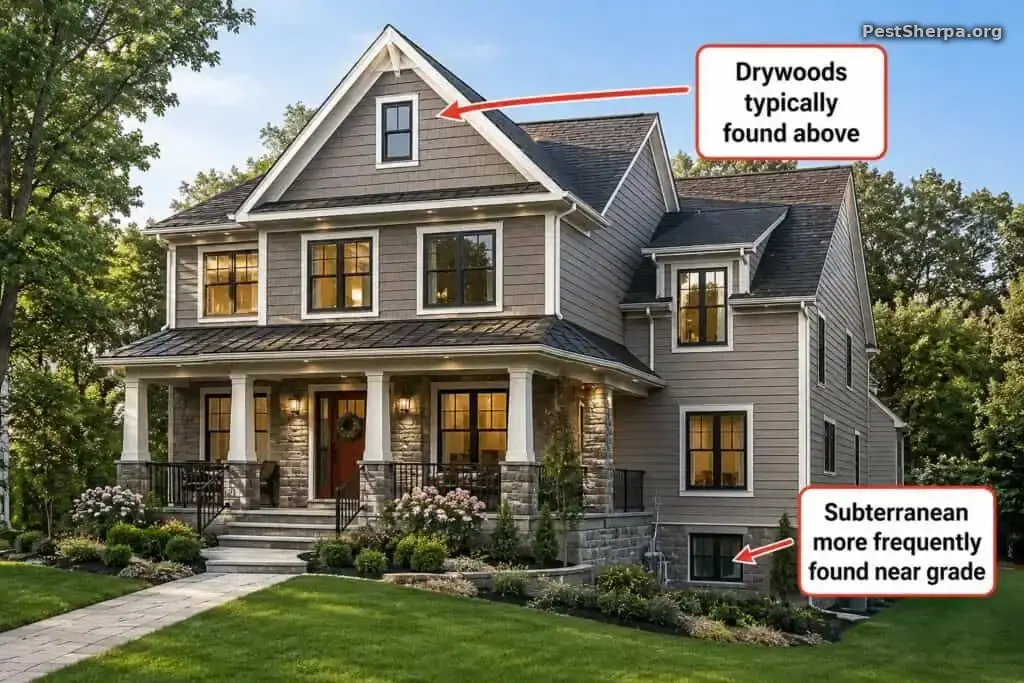
Drywood termites live inside dry wood and do not require soil contact. They commonly leave hard pelletized frass. Native subterranean termites usually maintain soil connection or moisture-protected pathways and often leave mud tubes or soil-lined galleries.
Native Subterranean Termites vs. Dampwood Termites
Dampwood termites are strongly associated with wet, decaying, or water-damaged wood. Native subterranean termites are more likely to travel from soil into structural wood through tubes, cracks, or hidden entry points.
Native Subterranean Termites vs. Carpenter Ant
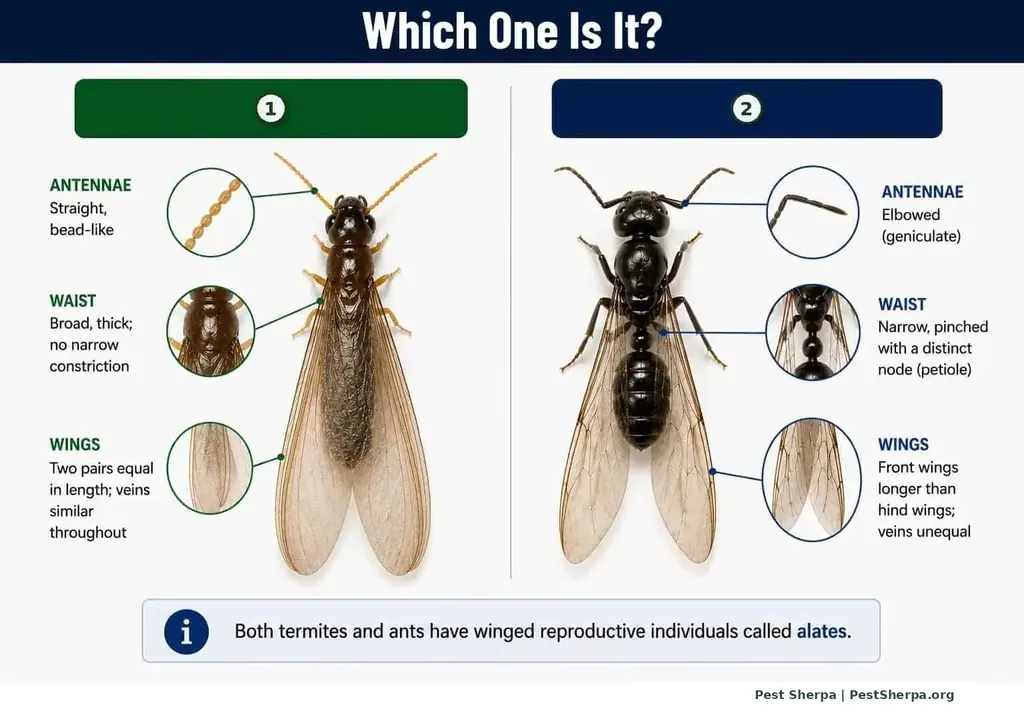
Which one do you see? Match the number:
- Termite swarmer (eastern subterranean termite alate): straight, bead-like antennae, a broad waist with no pinch, and two pairs of wings equal in length.
- Carpenter ant swarmer (winged carpenter ant): elbowed antennae, a narrow pinched waist with a node, and front wings longer than the hind wings.
Carpenter ants excavate wood for nesting but do not eat cellulose the way termites do. Carpenter ant debris is usually sawdust-like and may include insect parts. Subterranean termite damage is more likely to contain mud, soil, or moisture-lined galleries.
Native Subterranean Termites vs. Outdoor Termites in Logs
Finding termites in an old stump, log, or landscape timber does not automatically mean your home is infested. The risk increases when termites have moisture, buried wood, wood-to-soil contact, or a protected path into the structure.
Common Questions
- I heard that termites swarming is the sure sign of a problem but my inspector found termites and I didn’t see a swarm. Should I be worried?
- When do termites become active?
References
- University of Florida IFAS: Native Subterranean Termites: Reticulitermes Species
- University of Georgia Extension: Biology of Subterranean Termites in the Eastern United States
- NC State Extension: Monitoring and Management of Eastern Subterranean Termites
- University of Missouri Extension: Subterranean Termites
- Texas A&M Urban Entomology: Native Subterranean Termites
- University of California IPM: Subterranean and Other Termites
- U.S. Environmental Protection Agency: Termites: How to Identify and Control Them
- National Pesticide Information Center: Termites
This article was written by Greg Baumann, founder of Pest Sherpa, and reflects more than 40 years of professional pest management experience.
About the Author

Greg Baumann | Pest Control Expert
Greg Baumann is the founder of Pest Sherpa and a Pest Control Expert with more than 40 years of professional pest management experience. His articles combine decades of field experience, technical expertise, and science-based guidance to help homeowners identify pests correctly, understand real-world risks, and make informed pest management decisions.
Mission: Identify the pest. Understand the risk. Stop the problem. Prevent the comeback. Know when it’s time to call a professional.