
Light Southeastern Subterranean Termite (R. hageni): ID and Control
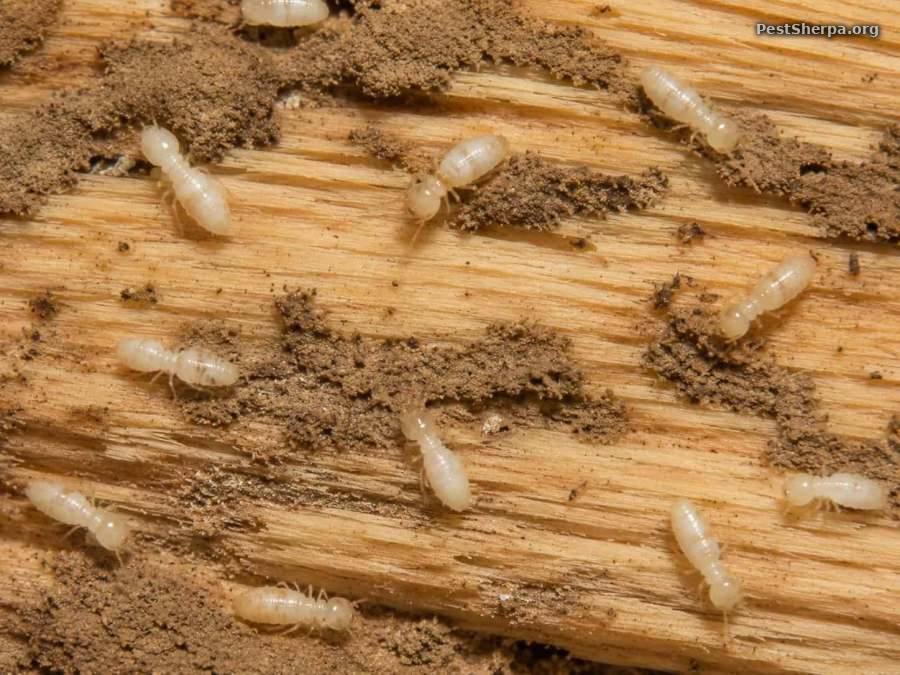
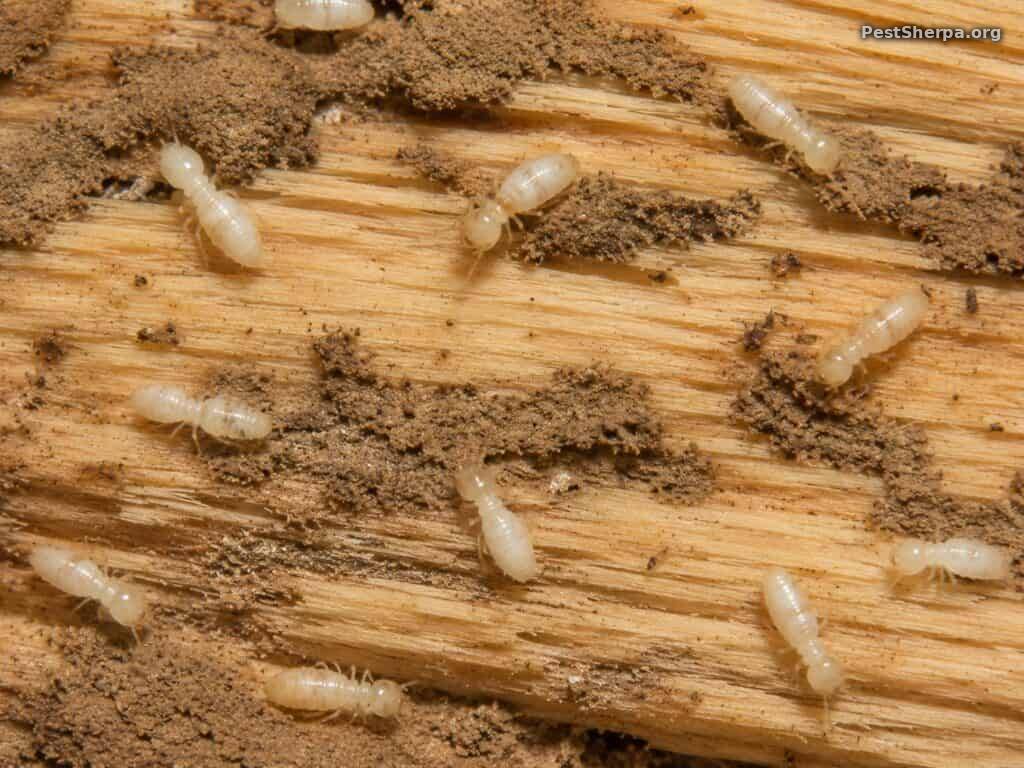
Light southeastern subterranean termites are native wood-destroying insects found throughout much of the southeastern United States. While less common than eastern subterranean termites, they can still cause serious structural damage when infestations remain hidden.
TL;DR
- Native subterranean termite found throughout the Southeast.
- Lives underground and feeds on structural wood and other cellulose materials.
- Most common signs are mud tubes, swarmers, discarded wings, and hollow wood.
- Can cause costly structural damage if left untreated.
- Professional inspection is recommended when activity is suspected.
How Serious Is It?
Moderate. This species is generally less destructive than Formosan termites, but this species can damage wood instructors.
Jump to:
Identification | Signs of Infestation | Why It Matters | US Map | What To Do | When To Call a Pro | Similar Species | Common Questions | References
Identification
The light southeastern subterranean termite, Reticulitermes hageni, closely resembles several other native subterranean termite species and is very difficult to identify by just characteristics of workers. Most homeowners cannot confirm the exact species without professional help, but they can recognize the signs of subterranean termite activity so understanding what a subterranean termite worker looks like is helpful.
Workers
Workers are creamy white, soft-bodied termites that avoid light and open air. They are usually found inside damaged wood, mud tubes, or soil-contact areas.
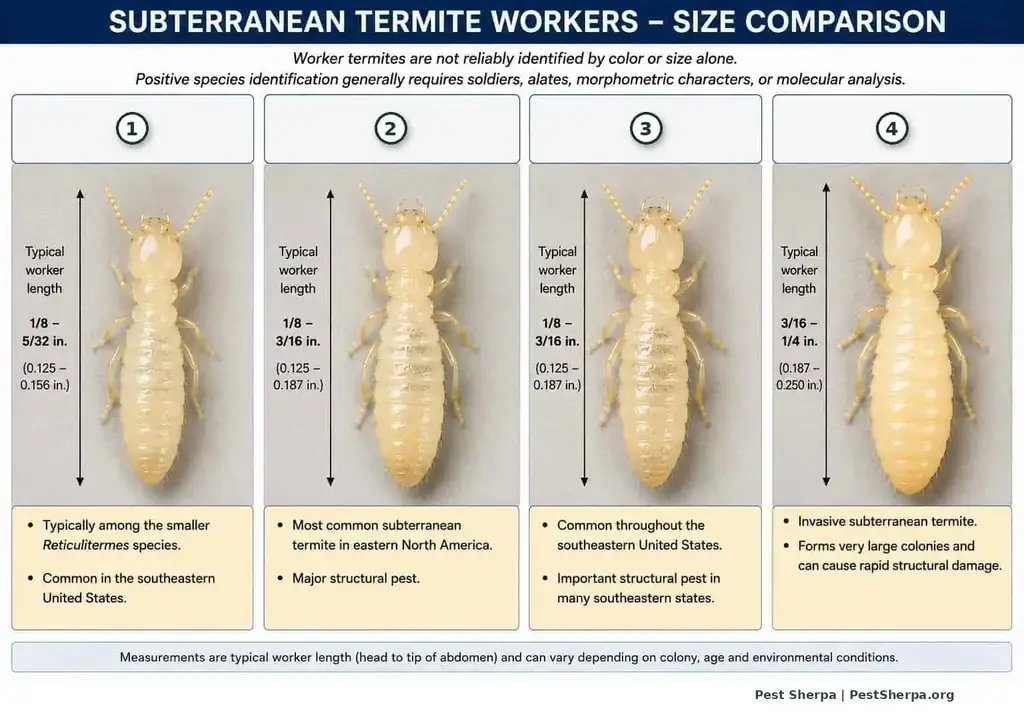
Which termite do you see? Match the number:
- Light southeastern subterranean termite (Reticulitermes hageni): typical worker 1/8 to 5/32 inch, among the smallest.
- Eastern subterranean termite (Reticulitermes flavipes): typical worker 1/8 to 3/16 inch.
- Dark southeastern subterranean termite (Reticulitermes virginicus): typical worker 1/8 to 3/16 inch.
- Formosan subterranean termite (Coptotermes formosanus): typical worker 3/16 to 1/4 inch, the largest of the four.
Workers look nearly alike. A pro confirms the species from soldiers or swarmers.
Soldiers
Soldiers have pale yellow-brown to amber heads, elongated rectangular head capsules, and curved mandibles used for colony defense.
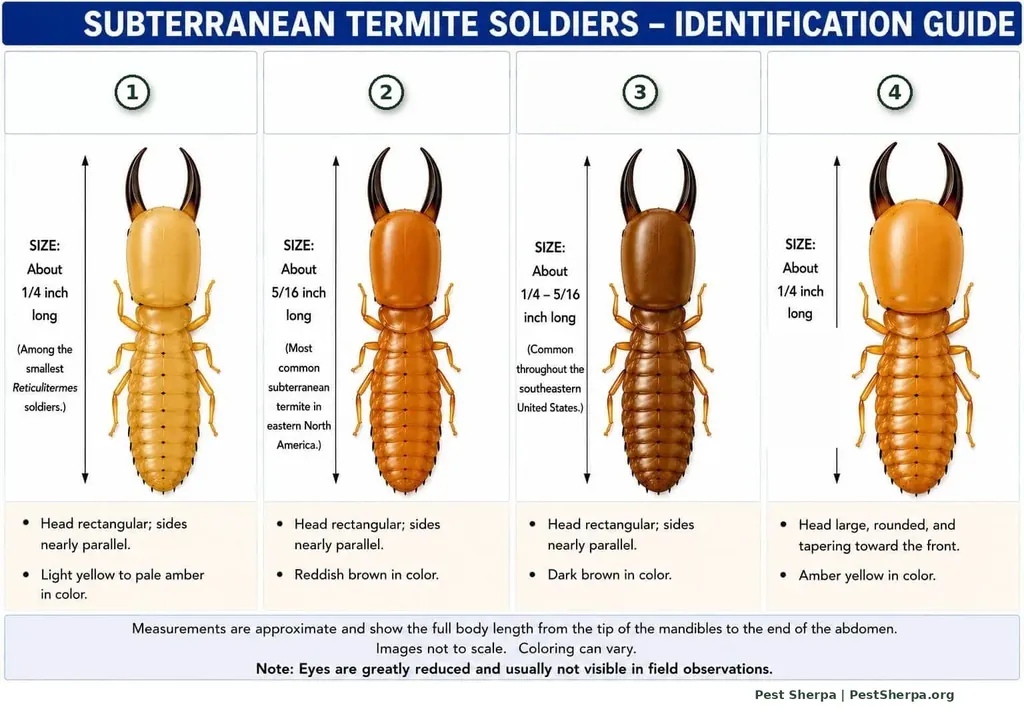
Which termite do you see? Match the number:
- Light southeastern subterranean termite (Reticulitermes hageni): about 1/4 inch, light yellow to pale amber rectangular head with nearly parallel sides.
- Eastern subterranean termite (Reticulitermes flavipes): about 5/16 inch, reddish-brown rectangular head with nearly parallel sides.
- Dark southeastern subterranean termite (Reticulitermes virginicus): 1/4 to 5/16 inch, dark brown rectangular head.
- Formosan subterranean termite (Coptotermes formosanus): about 1/4 inch, a large rounded head that tapers toward the front, amber yellow, and a more robust body.
Swarmers
Winged reproductives, or swarmers, have dark heads, pale yellow-brown bodies, smoky gray wings, straight antennae, broad waists, and two pairs of equal-length wings.
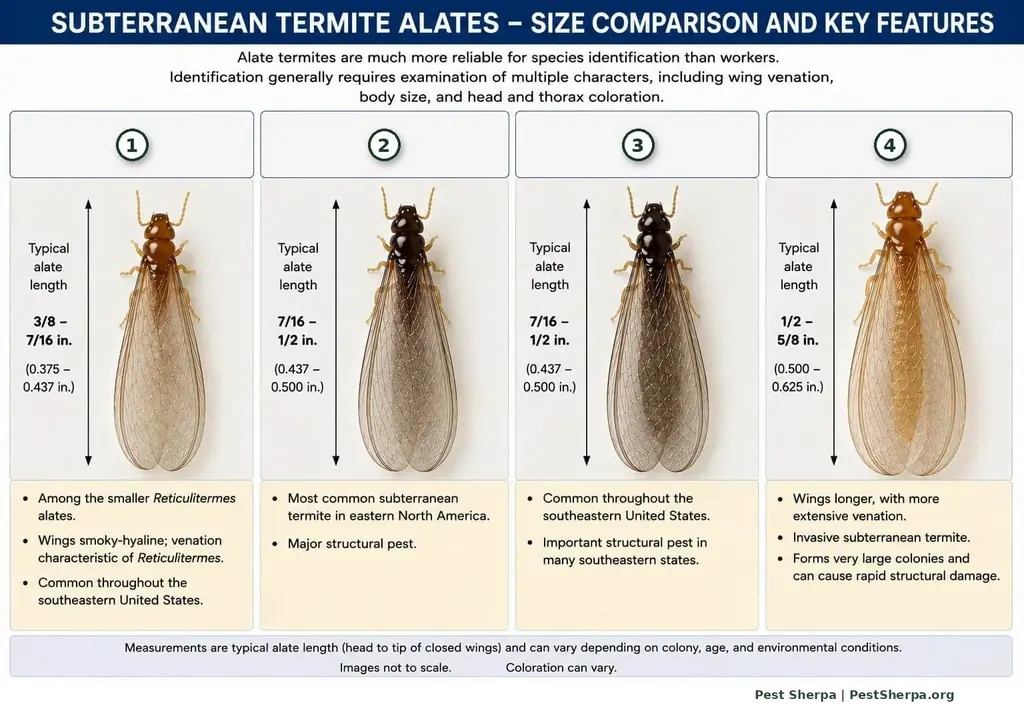
Which termite do you see? Match the number:
- Light southeastern subterranean termite (Reticulitermes hageni): typical swarmer 3/8 to 7/16 inch, among the smaller ones, with smoky wings.
- Eastern subterranean termite (Reticulitermes flavipes): typical swarmer 7/16 to 1/2 inch, dark brown to black body.
- Dark southeastern subterranean termite (Reticulitermes virginicus): typical swarmer 7/16 to 1/2 inch, dark body, similar in size to number 2.
- Formosan subterranean termite (Coptotermes formosanus): typical swarmer 1/2 to 5/8 inch, the largest, with a yellowish-brown body and longer wings with more veins.
Common Misidentifications
Light southeastern subterranean termites are often confused with eastern subterranean termites, Formosan termites, dark southeastern subterranean termites, and flying ants.
Flying ants have elbowed antennae, narrow waists, and unequal wing lengths. Termite swarmers have straight antennae, broad waists, and equal-length wings.
Signs of Infestation
Most homeowners never see the colony itself. Instead, they notice warning signs such as:
- Mud shelter tubes on foundation walls
- Hollow-sounding or damaged wood
- Blistered paint
- Swarmers indoors
- Discarded wings near windows or doors
- Soft flooring
- Wood containing soil or mud
- Moisture around structural wood
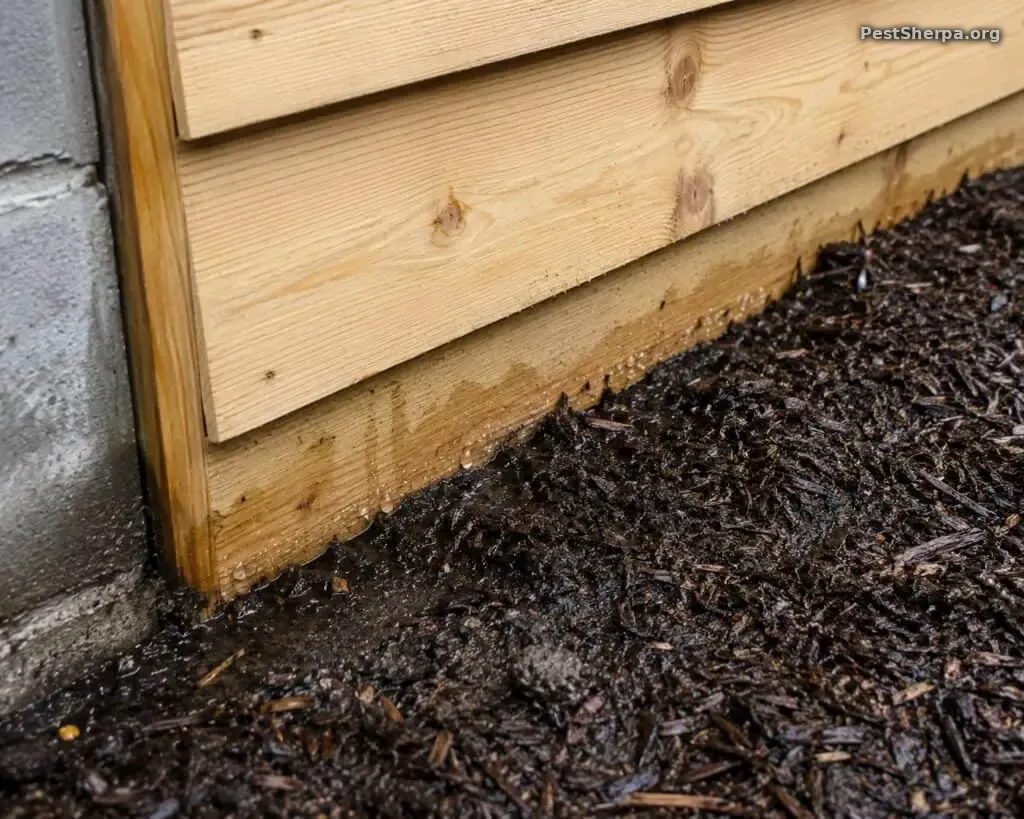
Earth/wood contact in high moisture areas commonly leads to subterranean termite infestation.
Why It Matters
This is a structural pest. Light southeastern subterranean termites feed on wood and other cellulose materials, often from the inside outward. Damage may remain hidden until wood is weakened.
Commonly affected areas include:
- Sill plates
- Floor joists
- Subflooring
- Support beams
- Wall studs
- Porch framing
- Deck structures
- Wood siding
Distribution and Habitat
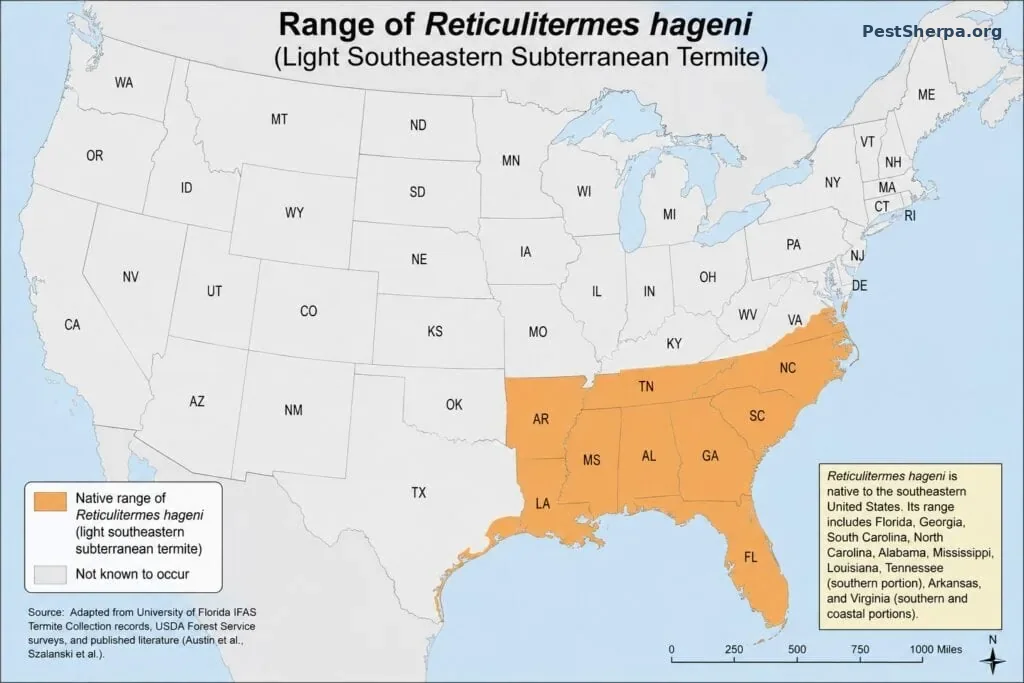
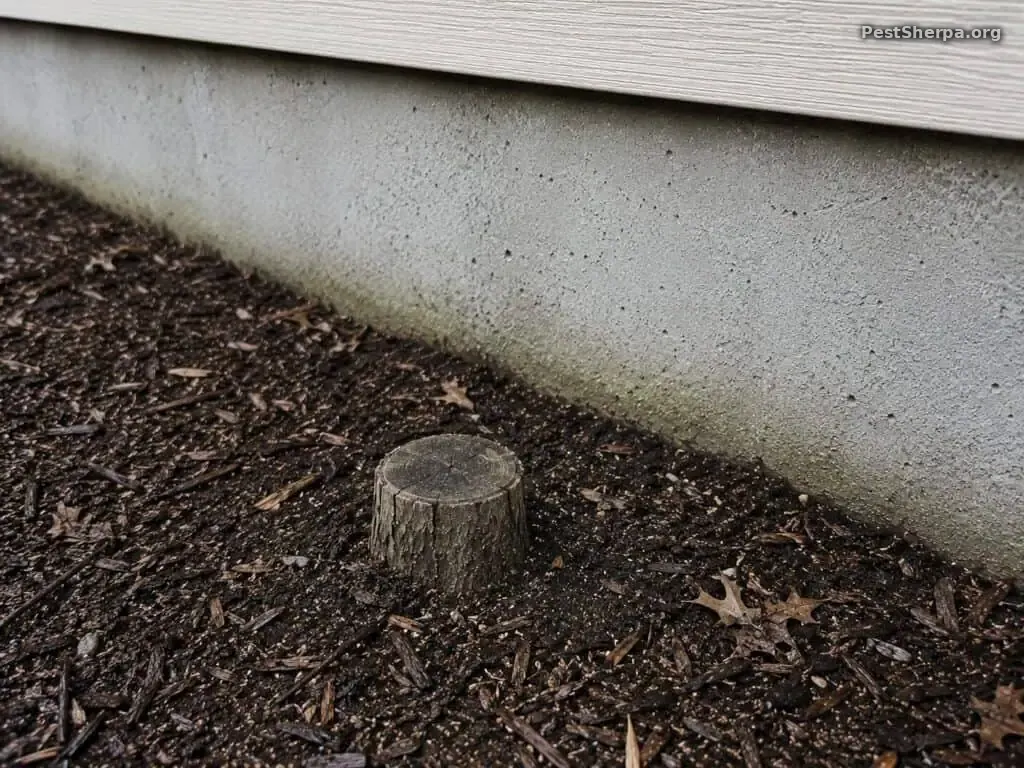
This species occurs throughout much of the southeastern and south-central United States. Colonies are usually associated with soil, tree stumps, crawlspaces, buried wood, wood debris, and moisture conditions that support termite survival.
What To Do
1. Reduce moisture
Fix plumbing leaks, roof leaks, drainage problems, wet crawlspaces, and gutter issues.
2. Remove wood-to-soil contact
Correct direct contact between soil and wood components such as siding, deck posts, porch framing, and stair stringers.
3. Remove wood debris
Remove stumps, scrap lumber, buried construction debris, fallen limbs, and firewood stored against the foundation.
4. Monitor for activity
Watch for new mud tubes, swarmers, discarded wings, soft wood, and moisture accumulation.
What usually does not work
- Spraying visible swarmers only
- Treating exposed wood while ignoring the colony
- Ignoring moisture problems
- DIY trenching without training
- Assuming activity is gone because termites are no longer visible
When To Call a Pro
Call a licensed termite professional when:
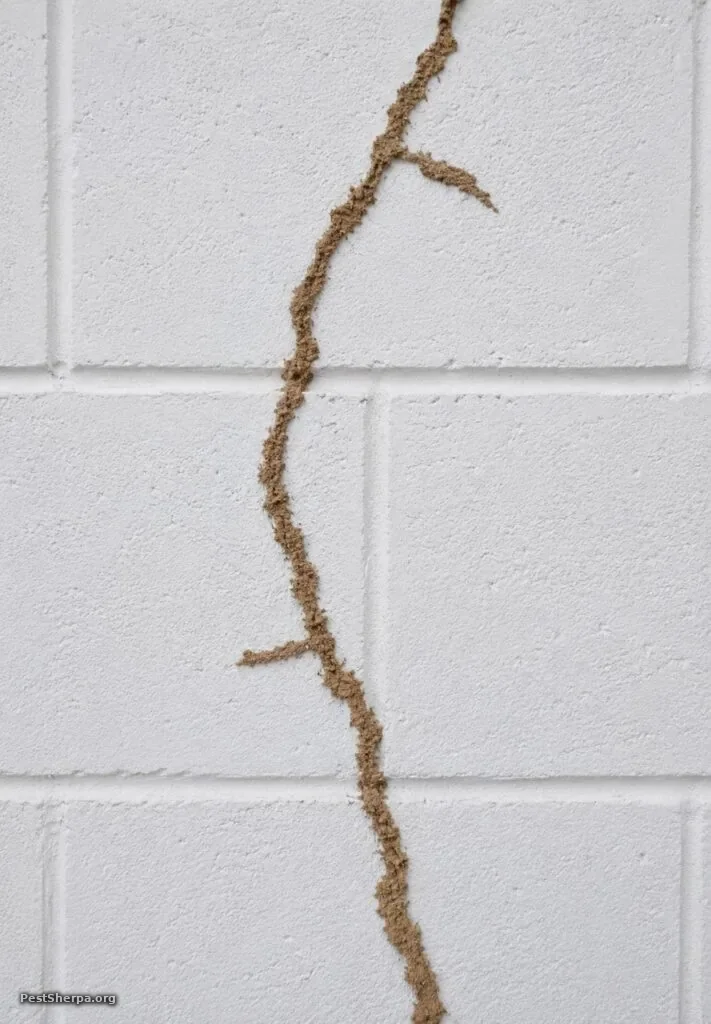
- Mud tubes are present
- Active termites are found
- Swarmers appear indoors
- Discarded wings are found repeatedly
- Structural damage is suspected
- Species identification is uncertain
- The property has a history of termite activity
Professional termite programs may include liquid termiticides, baiting systems, wood treatments, moisture correction, and follow-up monitoring.
Similar Species
| Species | Colony Size | Relative Damage Risk | Common Range |
|---|---|---|---|
| Light southeastern subterranean termite | Moderate | Moderate | Southeastern U.S. |
| Eastern subterranean termite | Large | High | Much of the U.S. |
| Formosan termite | Very large | Very high | Gulf Coast and Southeast |
| Dark southeastern subterranean termite | Moderate | Moderate | Southeast |
Light Southeastern vs. Eastern Subterranean Termites
Eastern subterranean termites are more common and are responsible for a larger share of termite damage in many areas.
Light Southeastern vs. Formosan Termites
Formosan termites form much larger colonies and can cause damage faster.
Termites vs. Flying Ants
Termite swarmers have straight antennae, broad waists, and equal-length wings. Flying ants have elbowed antennae, narrow waists, and unequal wing lengths. See full Pest Sherpa Termite vs Fly Ant Identification Guide for more details.
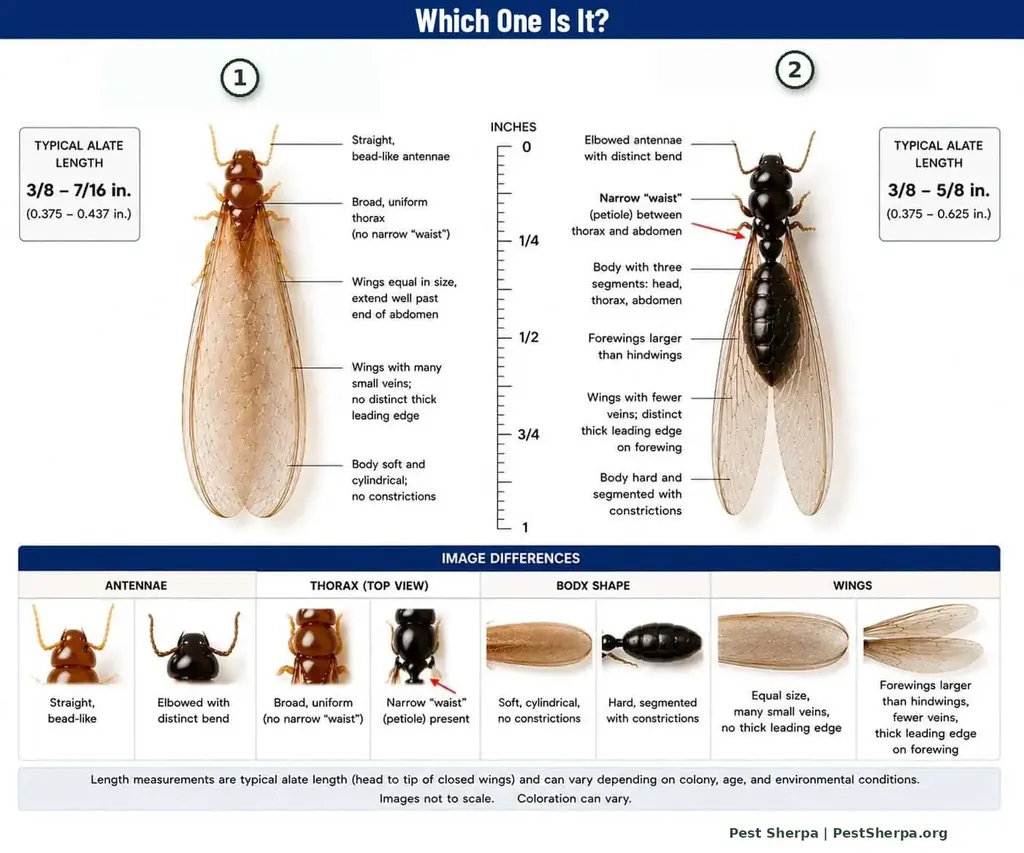
Which one do you see? Match the number:
- Termite swarmer (light southeastern subterranean termite alate): straight, bead-like antennae, a broad thorax with no narrow waist, and wings equal in size that extend well past the abdomen. 3/8 to 7/16 inch.
- Carpenter ant swarmer (winged carpenter ant): elbowed antennae, a narrow pinched waist, forewings larger than hindwings, and a hard, segmented body. 3/8 to 5/8 inch.
Expert Review
This guide was reviewed for technical accuracy using university extension resources, termite management references, and structural pest management best practices relevant to subterranean termites in the southeastern United States.
Common Questions
- I heard that termites swarming is the sure sign of a problem but my inspector found termites, and I didn’t see a swarm. Should I be worried?
- I don’t understand baiting. Why use a bait like Centricon (sic) to attract termites?
References
- Clemson Cooperative Extension: Termites of South Carolina
- University of Kentucky: Subterranean Termites
- University of Florida IFAS Extension: Subterranean Termites in Florida
- USDA Forest Service: Subterranean Termites: Their Prevention and Control in Buildings (HG-64)
- NPMA Field Guide to Structural Pests
This article was written by Greg Baumann, founder of Pest Sherpa, and reflects more than 40 years of professional pest management experience.
About the Author

Greg Baumann | Pest Control Expert
Greg Baumann is the founder of Pest Sherpa and a Pest Control Expert with more than 40 years of professional pest management experience. His articles combine decades of field experience, technical expertise, and science-based guidance to help homeowners identify pests correctly, understand real-world risks, and make informed pest management decisions.
Mission: Identify the pest. Understand the risk. Stop the problem. Prevent the comeback. Know when it’s time to call a professional.