
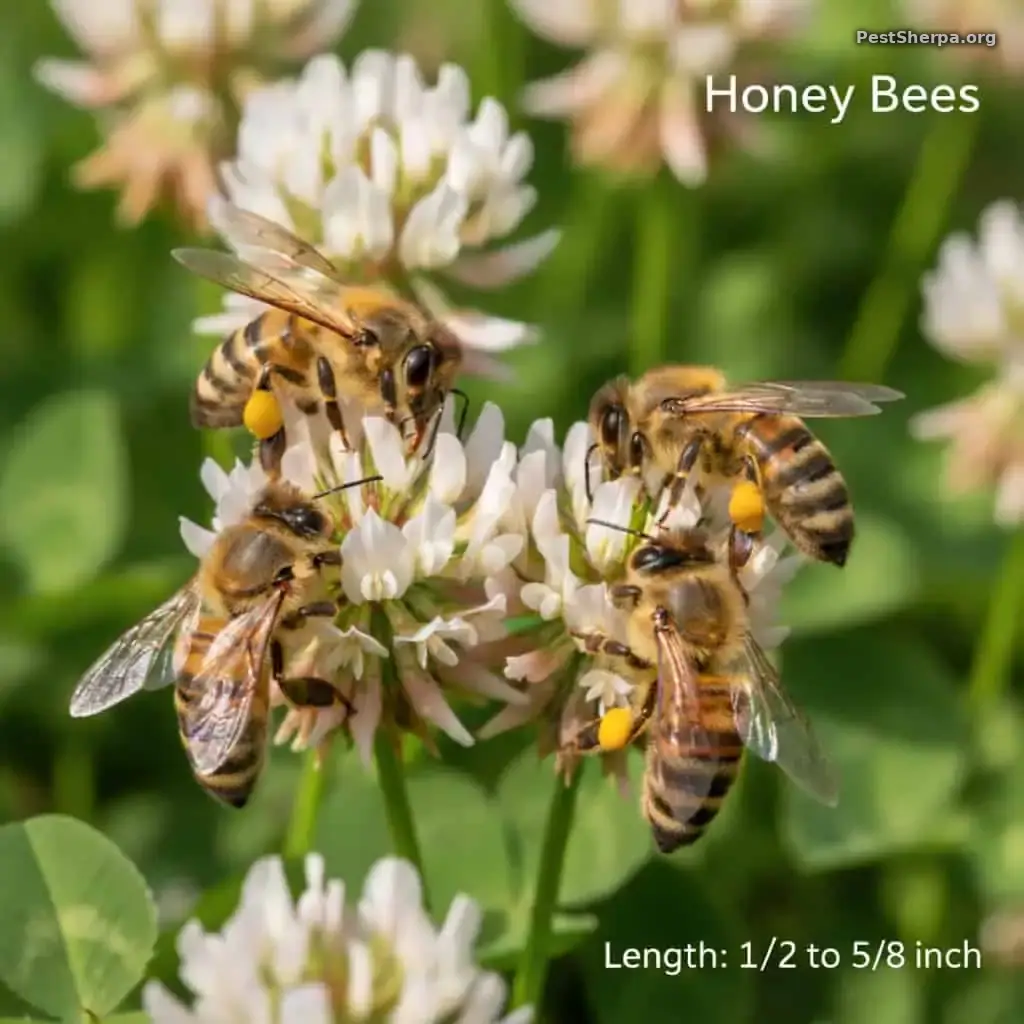
I read about how honey bees are endangered. What can I do to protect the bees?
Short answer: You help honey bees most by protecting forage and nesting habitat, avoiding unnecessary insecticide use on blooming plants, and calling a beekeeper (not a spray) when a swarm lands on your property. Panic killing of every bee you see does more harm than good.
What “endangered” means in plain language
Honey bees face real stresses: parasites such as Varroa mites, pathogens, poor nutrition when flowers are scarce, and pesticide exposure when labels are ignored. Scientists and USDA bee labs study these pressures because managed colonies support crop pollination. Wild native bees matter too. A healthy yard supports many pollinators, not only hive honey bees.
From a pest-management seat, I want homeowners to separate honey bees and gentle solitary bees from aggressive social wasps nesting in walls. Different insects need different responses. Indiscriminate fogging of “anything that buzzes” is the opposite of pollinator protection.
Practical steps around a home
- Plant a mix of blooming plants that flower across seasons. Native plants help local bees.
- Avoid spraying insecticides on plants in bloom. If a labeled product is needed, follow timing and bee-protection statements on the label.
- Mow less aggressively near wildflower edges when you can.
- Provide a shallow water source with landing stones on hot days.
- If a swarm clusters on a tree or fence, contact a local beekeeping club or extension office for removal options before anyone sprays.
- Leave solitary bee nesting blocks or bare soil patches only if you understand the species and neighbors’ comfort level.
When bees become a structure problem
Honey bees sometimes nest in wall voids or chimneys. That is a specialty removal, often with a beekeeper and a contractor to open and clean comb. Treating a wall nest casually can leave honey, wax, and dead brood that attract scavenger pests. Ask for live-removal options first when they are safe and available.
Bees vs wasps at a glance
If the insect is thin-waisted, nests in paper under an eave, and defends aggressively, you may be looking at yellowjackets or paper wasps, not honey bees. Mislabeling leads to the wrong response. When unsure, photograph from a safe distance and ask extension or a beekeeper before anyone sprays a pollinator swarm.
Related guides
References
- EPA: Pollinator Protection
- EPA: Best Management Practices to Protect Pollinators
- USDA ARS: Carl Hayden Bee Research Center
- NPIC: How to Read a Pesticide Label
This article was written by Greg Baumann, founder of Pest Sherpa, and reflects more than 40 years of professional pest management experience.
About the Author

Greg Baumann | Pest Control Expert
Greg Baumann is the founder of Pest Sherpa and a Pest Control Expert with more than 40 years of professional pest management experience. His articles combine decades of field experience, technical expertise, and science-based guidance to help homeowners identify pests correctly, understand real-world risks, and make informed pest management decisions.
Mission: Identify the pest. Understand the risk. Stop the problem. Prevent the comeback. Know when it’s time to call a professional.