
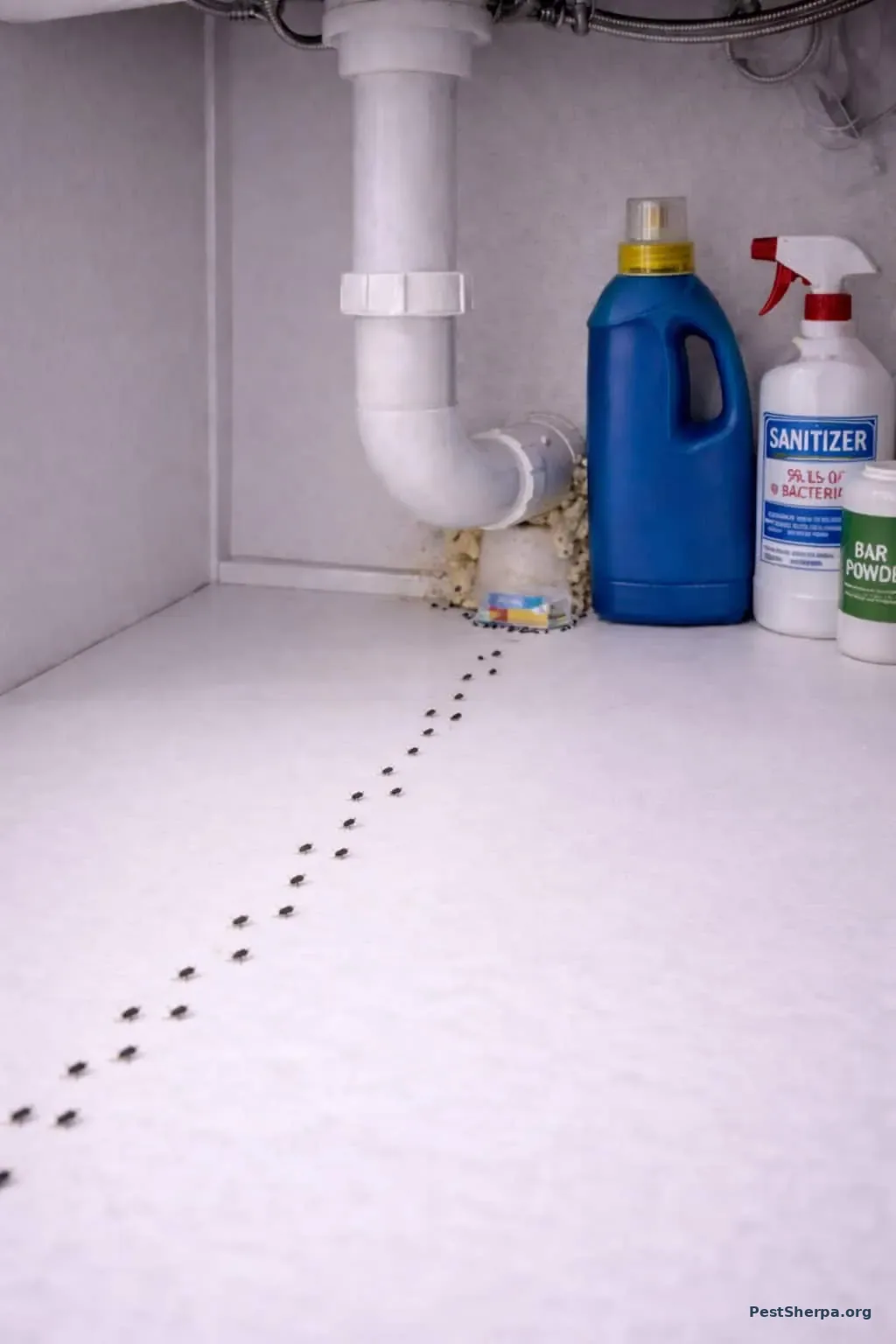
I see ants in my kitchen usually after rainy days. Is this something to be concerned about?
Short answer: Concerned enough to act, not enough to panic. Rain often pushes outdoor ant colonies to forage indoors for dry shelter and easy food. It is a pattern UC IPM describes when weather reduces outdoor options. Fix it before it becomes a standing kitchen trail.
What rainy-day kitchen ants usually mean
After rain, soil nests can flood or cool, and honeydew sources outdoors change. Foragers follow edges into kitchens because sinks, pet bowls, and sticky jars are reliable. Odorous house ants and pavement ants are common in this storyline. The ants are telling you moisture and food are available, not that your house is “infested beyond help.”
What to do
- Wipe trails with soapy water to remove scent marks.
- Dry under-sink cabinets; fix drip leaks.
- Move fruit and sweets into sealed containers; rinse recyclables.
- Place an appropriate bait along the active trail if ants continue, not a perimeter “bug bomb.”
- Seal gaps at windows, doors, and where pipes enter cabinets.
Call a professional if you see winged ants indoors in numbers (possible carpenter ant or termite swarmers, different problem), if trails persist after baiting/sanitation, or if you cannot find where they enter.
If the rainy-day visits happen every week, treat it like a moisture-and-food audit rather than a one-time spray job. Check dishwasher edges, refrigerator drip pans, and the trash can rim. Those quiet sticky spots keep recruiting foragers after the storm ends. Outdoor nests can sit in mulch or under slabs; trimming plants off siding and pulling mulch a few inches back from the foundation reduces the bridge into the kitchen.
One more ID tip: if the ants smell like coconut or rotten coconut when crushed, you are often dealing with odorous house ants, a species that commonly needs bait patience, not a heavy contact spray. If they nest in wood and you find frass or hollow-sounding trim, stop and compare carpenter ant signs in the Ant Guide before you assume it is a sugar trail pest.
Related guides
References
This article was written by Greg Baumann, founder of Pest Sherpa, and reflects more than 40 years of professional pest management experience.
About the Author

Greg Baumann | Pest Control Expert
Greg Baumann is the founder of Pest Sherpa and a Pest Control Expert with more than 40 years of professional pest management experience. His articles combine decades of field experience, technical expertise, and science-based guidance to help homeowners identify pests correctly, understand real-world risks, and make informed pest management decisions.
Mission: Identify the pest. Understand the risk. Stop the problem. Prevent the comeback. Know when it’s time to call a professional.