
Odorous House Ants: ID, Smell, and How to Get Rid of Them
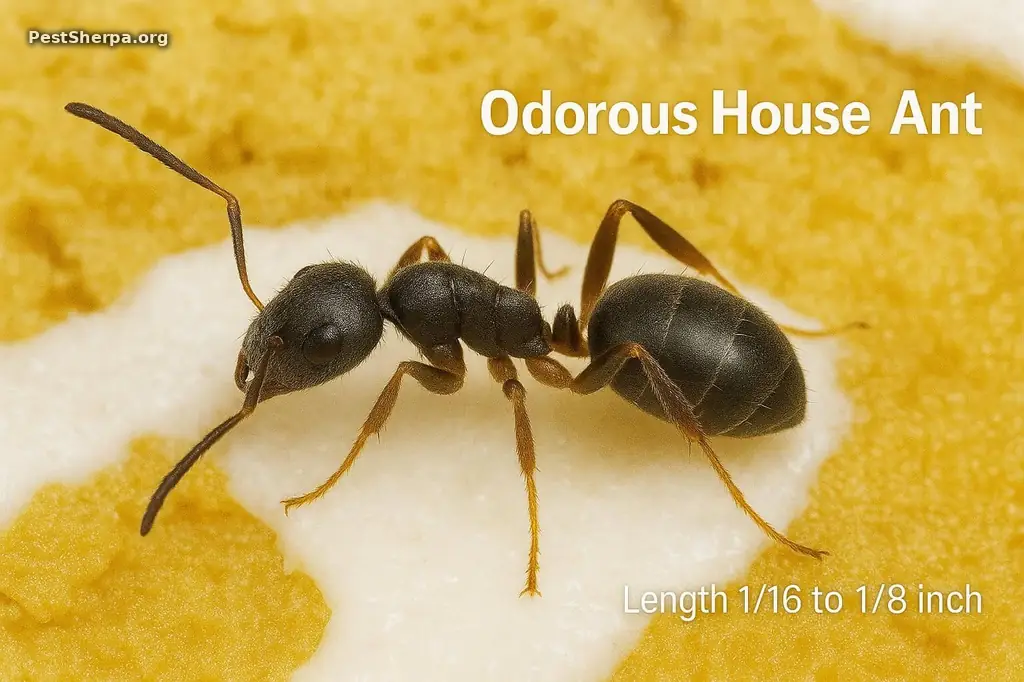
Odorous house ants are small brown-to-black ants that trail into kitchens, bathrooms, and other indoor spaces looking for food and moisture. Crush one and you get a strong rotten-coconut smell, the homeowner clue most people notice first. They do not damage wood like carpenter ants, but multi-queen colonies can keep coming back until you clean trails, fix moisture, and bait the foragers.
TL;DR
Odorous house ants are small brown-to-black ants that often trail indoors near sinks, counters, plumbing lines, and foundations. The best homeowner clue is the strong rotten-coconut smell when they are crushed. Another is a petiole node (the small bump at the waist) that is hard to see from above. They are mainly a nuisance and sanitation pest, not a structural wood pest. The most effective control plan is to clean trails, remove food access, and correct moisture. Then use bait placements near active foraging routes and seal obvious entry points. Repeated indoor activity usually means you are dealing with more than one nesting site. Helpful reference sources include University of Minnesota Extension, UC IPM, Utah State University Extension, and Penn State Extension.
Jump to: FAQ | Identification | Why It Matters | What To Do | When To Call a Pro | Lookalikes | References
Common Questions
Are these sugar ants?
Greg Baumann: Probably, but “sugar ant” is a nickname, not a species. In most U.S. homes, the tiny dark ants trailing to sweets turn out to be odorous house ants. Extension entomologists at Washington State University and the University of Nevada, Reno both list sugar ant as one of its common names. The same nickname also gets pinned on pharaoh ants and little black ants, and folks use it for other small kitchen trail ants like pavement and Argentine ants. Quick tell: crush one on a paper towel and sniff. Rotten coconut or blue cheese means odorous house ant. No real smell? Check pavement or Argentine ants. Tiny and pale yellow? Think pharaoh ants, and do not spray those.
Why do odorous house ants smell like rotten coconut?
When crushed, workers release a strong odor often compared to rotten coconut. That crush smell is the homeowner clue most people notice first. University sources also note that workers may raise the abdomen when disturbed and release that odor.
How are odorous house ants different from carpenter ants?
Carpenter ants are much larger, workers vary more in size, and they raise concern about moisture-damaged wood and structural voids. Odorous house ants are much smaller and do not damage wood. University of Minnesota Extension is clear that odorous house ants do not excavate wood like carpenter ants.
How do I get rid of odorous house ant kitchen trails?
Clean crumbs and sugary residues, wipe active trails with soapy water, fix moisture around sinks and plumbing, place sweet baits near foraging routes (keep sprays off bait spots), and seal obvious entry points. Spraying only the ants you can see usually fails because multi-queen colonies can keep returning.
Do odorous house ants bite or damage wood?
They are mainly a nuisance and sanitation pest. They do not excavate wood or act like wood-destroying insects, which is the key split from carpenter ants. Persistent kitchen trails still need sanitation, moisture fixes, and baiting aimed at the colony.
Why do odorous house ants keep coming back?
Colonies often have multiple queens and may use more than one nest site, so activity can drop briefly and then return in another spot. Clean trails, remove food access, correct moisture, bait foragers, and seal entry points. Repeated indoor activity after that usually means a professional should check for additional nests.
Identification: What an Odorous House Ant Looks Like
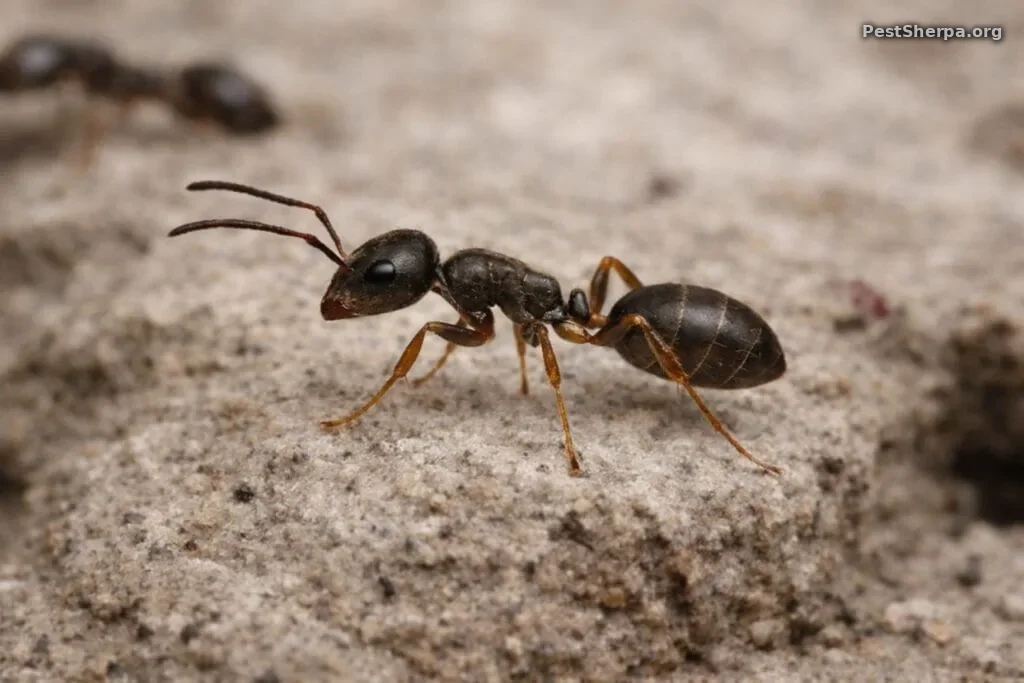
Odorous house ant workers are usually about 1/10 to 1/8 inch long and are brown to dark brown or black. The workers are usually all about the same size. One of the most useful ID traits is that the single petiole node is hidden beneath the front of the abdomen. So the waist looks smoother and less obvious from above than it does on many other ants. University sources also note that workers may raise the abdomen when disturbed and release a noticeable odor often compared to rotten coconut when crushed. See University of Minnesota Extension, UC IPM, and Utah State University Extension.
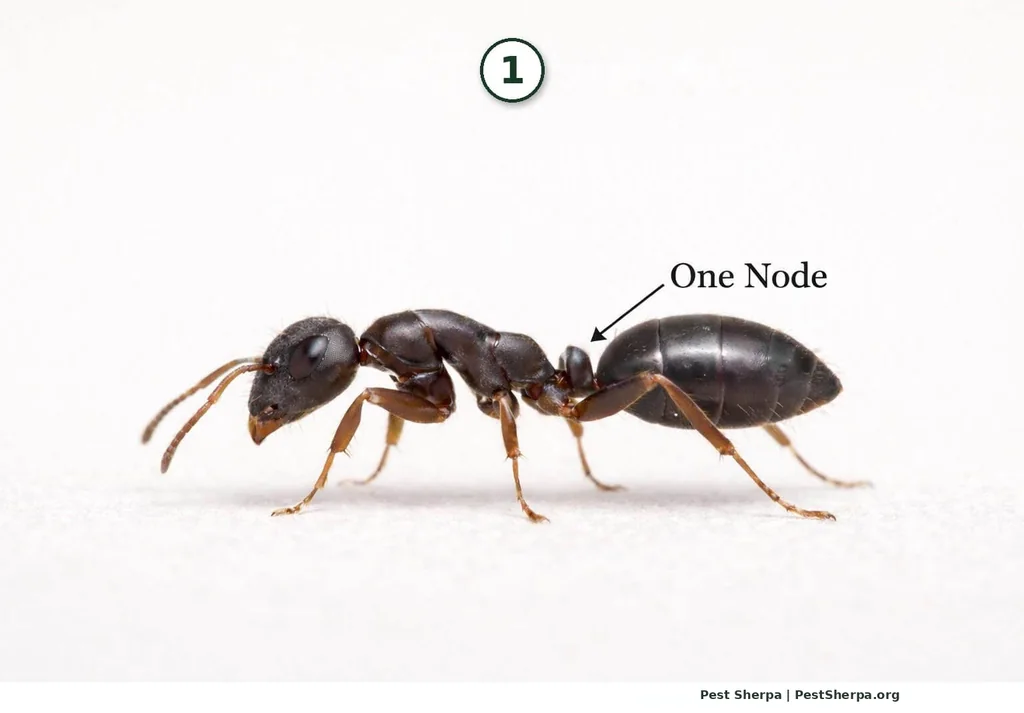
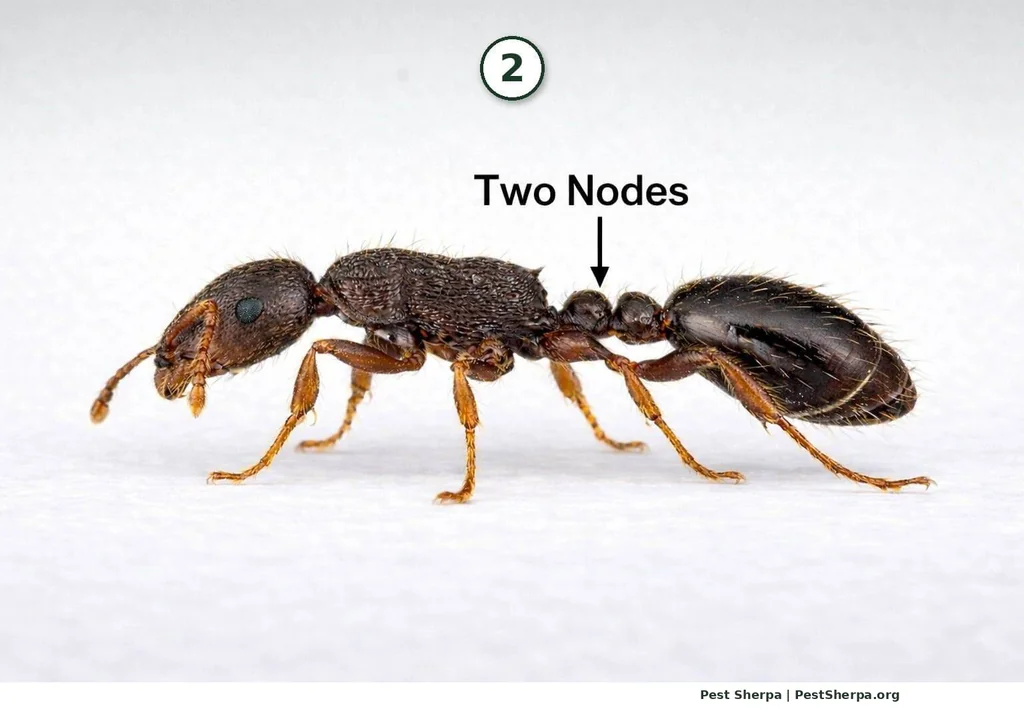
Which ant do you see? Match the number in the two photos above:
- Odorous house ant: one small, flat node on the waist (often hidden by the abdomen), brown to black, and a rotten coconut smell when crushed.
- Pavement ant: two nodes on the waist, fine parallel grooves on the head and thorax, dark brown to blackish.
Above: Odorous House Ants can look similar to Pavement Ants but there are differences in appearance. Successful pest control depends on proper identification as habits and control measures will vary depending on the type of ant.
Homeowners often find these ants along baseboards, countertops, plumbing penetrations, dishwashers, and food storage areas. Outdoors, look along foundations, mulch edges, and under cover such as stones, boards, and debris. Indoors, nests are often associated with moisture and protected voids, including wall spaces, under carpet edges, and around water pipes or heaters. These nesting patterns are described by Utah State University Extension and Penn State Extension.
What often misleads homeowners:
- Assuming every small dark ant is the same species.
- Confusing odorous house ants with Argentine ants or pavement ants.
- Thinking an indoor ant problem automatically means wood damage, which is more relevant to carpenter ants.
- Trying to identify them only by size without checking odor, node visibility, and nesting pattern.
Why It Matters
For most homeowners, odorous house ants are a nuisance and sanitation pest. They can travel through kitchens, pantries, trash areas, pet feeding zones, and bathrooms, but they do not excavate wood or act like wood-destroying insects. University of Minnesota Extension is clear that odorous house ants do not damage wood, which helps separate them from bigger concerns like carpenter ants.
They still matter because they can become persistent indoors. Utah State University Extension explains that colonies may contain multiple queens and may occupy multiple nest sites. That is one reason a problem can seem to disappear briefly and then return in another room or another part of the same room.
These ants are also strongly tied to sugar sources, honeydew (the sugary liquid aphids and similar insects leave behind), and moisture. Penn State Extension notes that they feed heavily on sweets and honeydew outdoors. University of Minnesota Extension notes that they can forage indoors for sweets, meats, and other foods. That means both indoor sanitation and outdoor conditions can keep the infestation going.
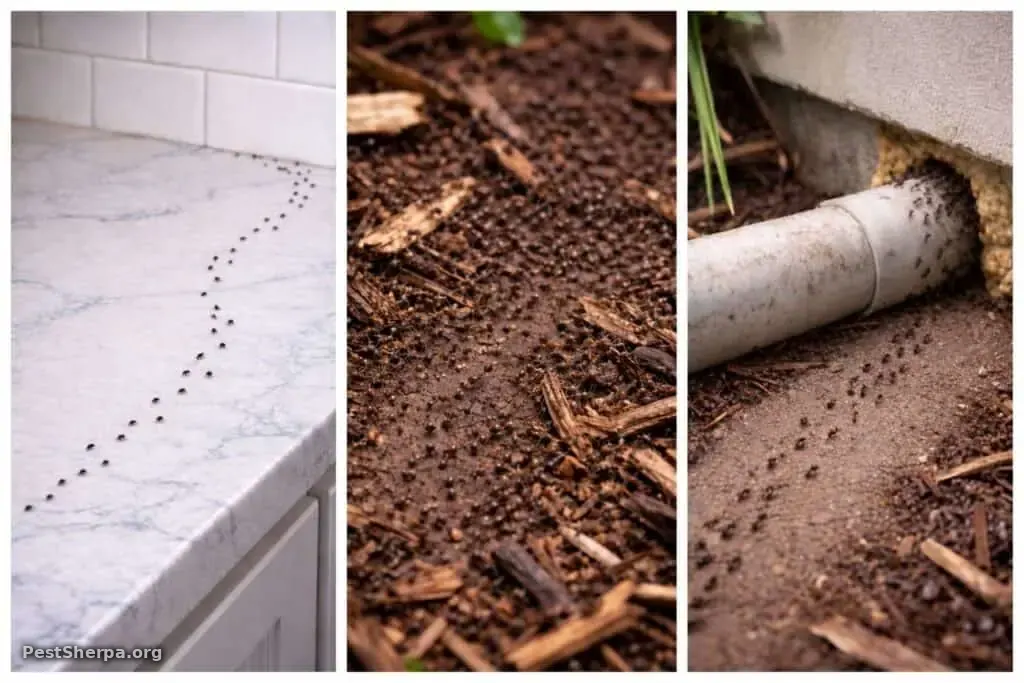
Above: Odorous house ants often live outside but can work their way into your home. Sometimes the first place you’ll see them is your kitchen counter, where they look for food and water. Usually, though, they are nesting outside or in a crawlspace and working their way in through plumbing or electrical penetrations.
What To Do: The DIY Steps That Actually Help
1. Clean food sources and wipe trails
Remove crumbs, sugary residues, drink spills, grease, and pet food access. Wipe active trails with soapy water. This matters because ants rely on chemical trail markers. Penn State IPM guidance specifically recommends wiping chemical trails. UC IPM notes that removing competing food improves bait performance.
2. Fix the moisture conditions that keep supporting them
Check around sinks, dishwashers, refrigerators, utility penetrations, water heaters, and exterior hose areas. Repair leaks and reduce dampness where possible. Outdoors, pull heavy mulch and debris back from the foundation if those areas stay moist. This is consistent with the nesting and habitat guidance from Utah State University Extension and Penn State Extension.
3. Use bait where ants are actively foraging
For odorous house ants, baiting usually makes more sense than trying to kill visible workers one by one. UC IPM notes that odorous house ants often prefer sweet baits. It also notes that small bait placements near active trails work better than random treatment. That same source notes they may sometimes take protein baits. Place baits in protected spots that children and pets cannot reach. Keep spray residues off bait placements.
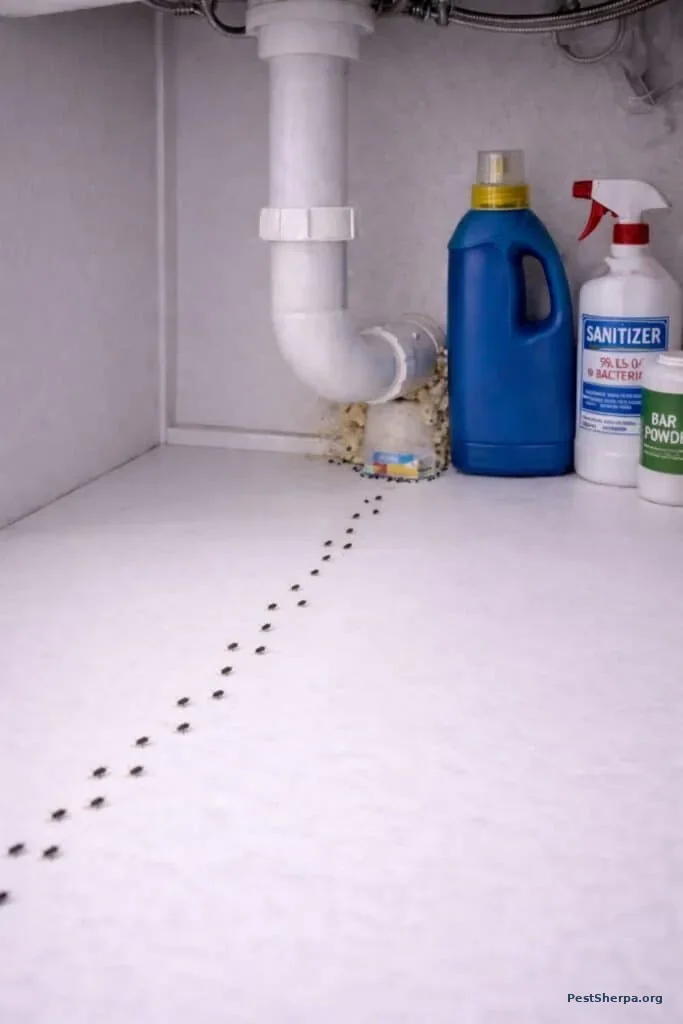
Above: Bait Station Placement. Always read, understand, and follow the label and keep all pesticides out of the reach of children and pets.
4. Seal obvious entry routes
Seal gaps around doors, windows, utility penetrations, siding gaps, and foundation cracks where appropriate. Exclusion works best after sanitation and moisture correction, not as a stand-alone fix.
What usually does not work well
- Spraying only the ants you can see.
- Skipping trail cleanup and food cleanup.
- Ignoring mulch, debris, aphids, or other honeydew sources outside.
- Using bait and repellent sprays in the same exact spots, which can reduce bait acceptance. See EPA guidance on ant management in child care settings.
- Assuming that a brief drop in activity means the infestation is gone.
Your ants may turn out to be a different species. If so, compare them with Argentine ants, pavement ants, and carpenter ants before copying any treatment plan.
When To Call a Pro
Call a licensed pest professional when the problem is more than occasional foragers. Good triggers include:
- Repeated indoor activity after you have already cleaned, dried, baited, and sealed.
- Ant activity in multiple rooms or on multiple levels.
- Suspected nesting in wall voids, under floors, or in inaccessible plumbing areas.
- Recurring infestations linked to landscaping, exterior nesting, or moisture you cannot easily correct.
- Multi-unit housing or cases where the species is uncertain.
University of Minnesota Extension specifically notes that persistent odorous house ant problems should be treated by a pest management professional. That is especially true when colonies are spreading by budding or when several nests are likely involved.
Similar Pests / Misidentification Comparison
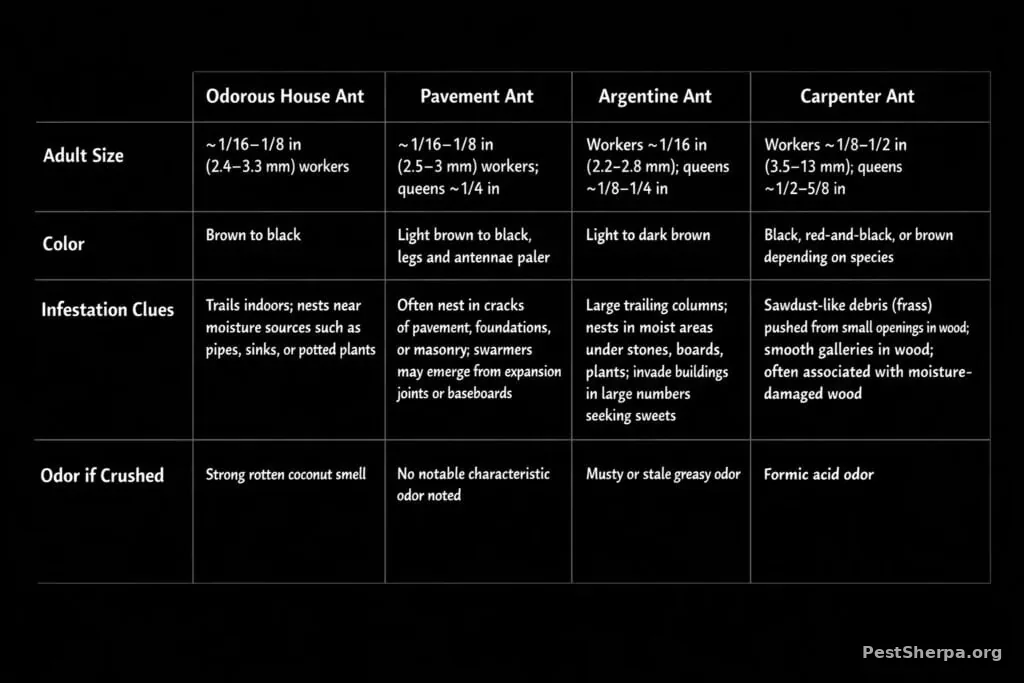
Above: Comparing traits and habits of the ants is vital for efficient pest control.
Odorous house ants vs. Argentine ants
Both can form large colonies and trail heavily to sweet foods. Argentine ants are usually lighter brown, and the node is more visible. Odorous house ants are darker and are best confirmed by the odor when crushed. Compare with Argentine ants.
Odorous house ants vs. pavement ants
Pavement ants usually have two visible nodes and are strongly associated with cracks in pavement, slabs, and foundation edges. Odorous house ants have one hidden node and are more often tied to odor, moisture, and indoor trail activity. Compare with pavement ants.
Odorous house ants vs. carpenter ants
Carpenter ants are much larger, workers vary more in size, and they raise concern about moisture-damaged wood and structural voids. Odorous house ants are much smaller and do not damage wood. Compare with carpenter ants.
Odorous house ants vs. tawny crazy ants
Tawny crazy ants are lighter brown and move faster and more erratically. They are usually known for very large outdoor populations in affected regions. Odorous house ants are darker and more reliably confirmed by odor. Compare with tawny crazy ants.
Odorous house ants vs. pharaoh ants
Pharaoh ants are tiny yellowish indoor ants that often nest in warm wall voids and can splinter into new colonies if sprayed. Odorous house ants are darker, smell like rotten coconut when crushed, and are more often tied to moisture and outdoor-to-indoor trails. Compare with pharaoh ants.
References
- University of Minnesota Extension: Ants in homes
- University of Minnesota Extension: Odorous house ant diagnostic page
- UC IPM: Odorous house ant identification key
- UC IPM: Odorous house ant baiting guidance
- UC IPM: Ants in homes and landscapes
- Utah State University Extension: Odorous house ants
- Utah State University Extension: Odorous house ant notes
- Penn State Extension: Odorous house ant
- Penn State Extension: Got ants? Eliminate them with IPM
- U.S. EPA: Management of ants in child care settings
This article was written by Greg Baumann, founder of Pest Sherpa, and reflects more than 40 years of professional pest management experience.
About the Author

Greg Baumann | Pest Control Expert
Greg Baumann is the founder of Pest Sherpa and a Pest Control Expert with more than 40 years of professional pest management experience. His articles combine decades of field experience, technical expertise, and science-based guidance to help homeowners identify pests correctly, understand real-world risks, and make informed pest management decisions.
Mission: Identify the pest. Understand the risk. Stop the problem. Prevent the comeback. Know when it’s time to call a professional.