Pharaoh ants are tiny indoor ants that can be difficult to identify and even harder to control if treated the wrong way. This guide explains how to recognize them, why spraying can make them worse, and what steps actually help reduce an infestation.
Pharaoh ants are tiny yellow to reddish indoor ants that are most often a nuisance and contamination-risk pest, not a wood-destroying pest. The biggest control mistake is spraying visible ants with repellent insecticides, which can cause the colony to split and spread. Correct identification matters because Pharaoh ants are often confused with thief ants, and control usually depends on patient, building-wide baiting rather than quick knockdown sprays.
TL;DR
Pharaoh ants are extremely small, pale yellow to reddish ants often found indoors.
They are mainly a nuisance and contamination-risk pest, not a structural wood-destroying pest.
Spraying visible trails can make infestations worse by causing colonies to split and spread.
Slow-acting baiting programs are usually more effective than repellent sprays.
Multi-unit buildings often require coordinated treatment for full control.
Pharaoh ants are often confused with thief ants and other small indoor ants.
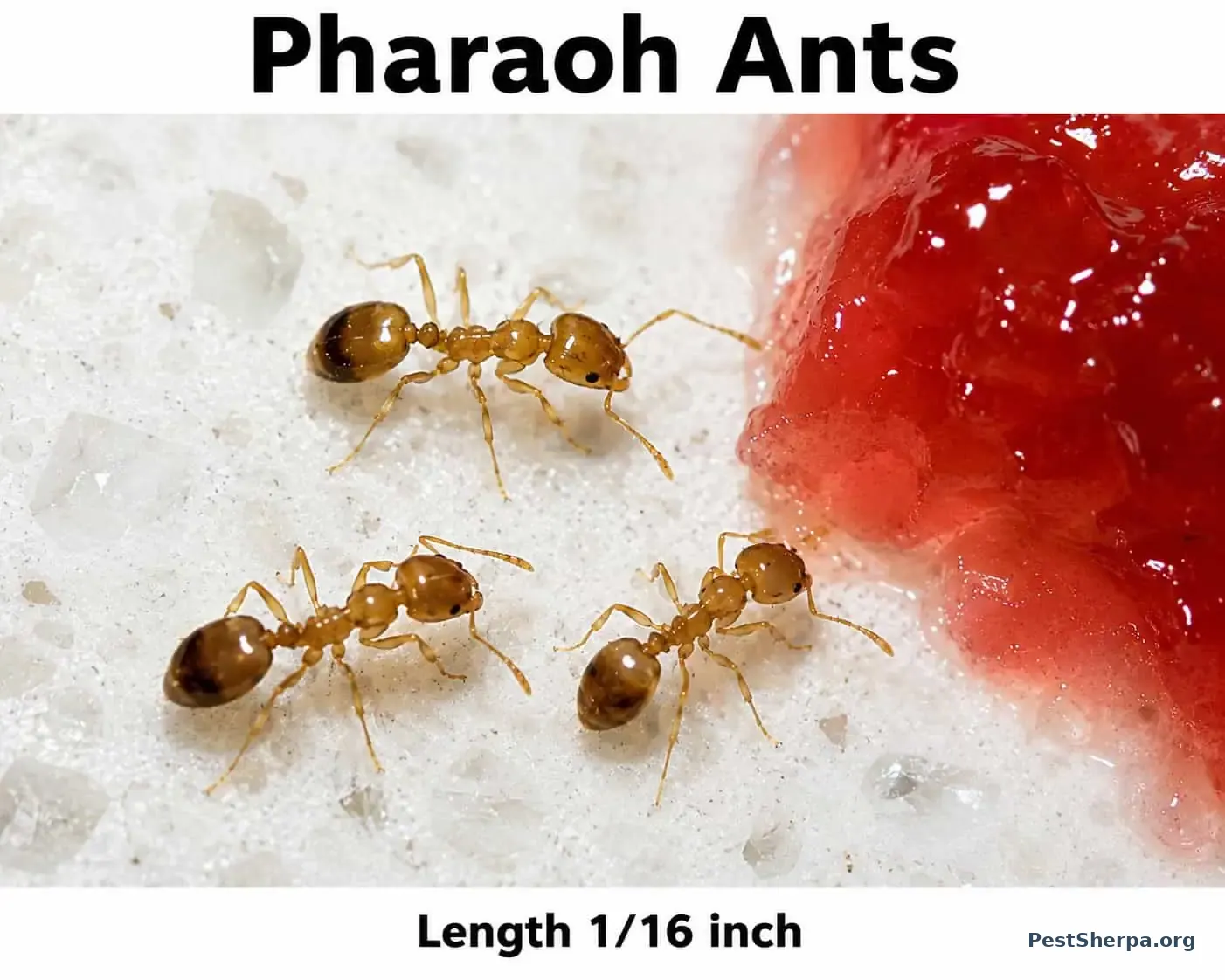
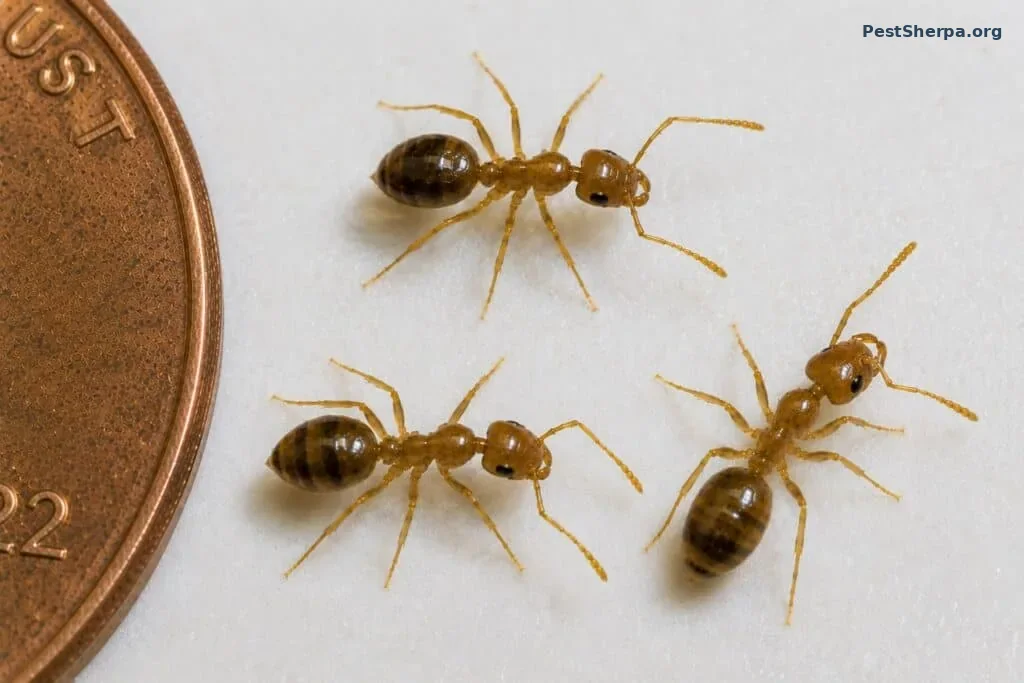
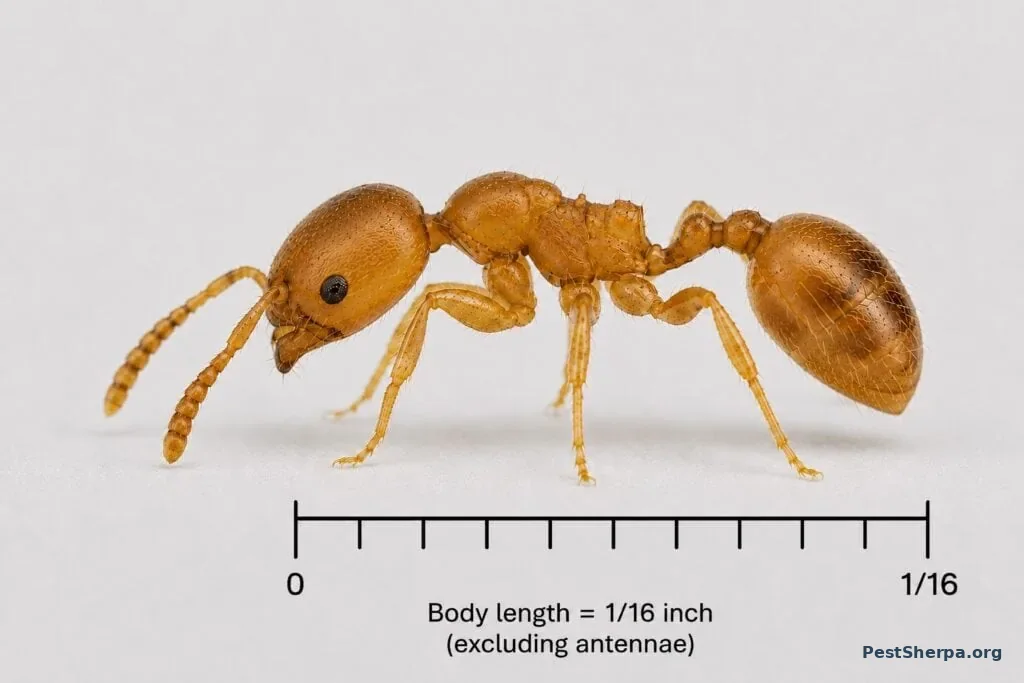
Size is the first filter: workers are about 1/16 inch, pale yellow to reddish, often with a slightly darker abdomen. Under magnification, look for two waist nodes and a 12-segmented antenna ending in a three-segmented club. That club detail helps separate them from thief ants, which are also tiny and yellowish but usually show a two-segmented club.
Behavior reinforces ID. Pharaoh ants thrive indoors in warm buildings, trailing along edges to kitchens, baths, laundry rooms, and wall voids. Activity can continue year-round where heating is steady. Outdoor mound builders are the wrong mental model.
Pharaoh ants (Monomorium pharaonis) are very small ants, usually about 1/16 inch long. Workers are light yellow to reddish yellow, often with a darker abdomen. They have elbowed antennae, two nodes in the narrow waist, and a 12-segmented antenna with a three-segmented club.
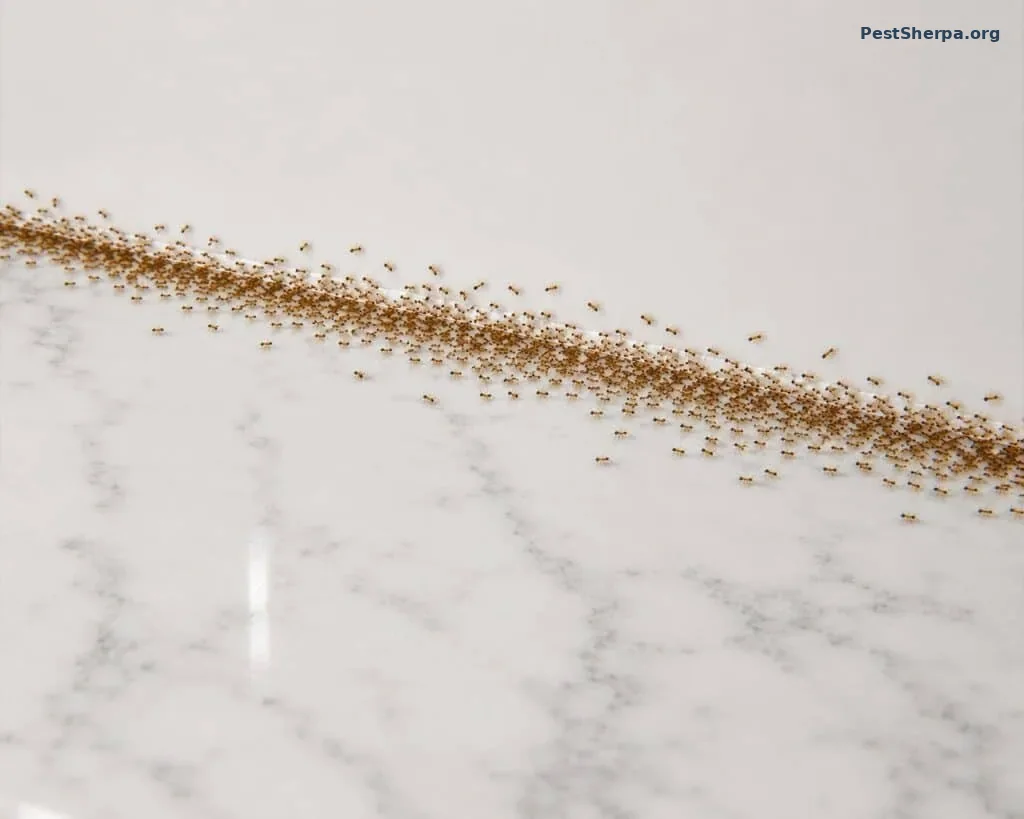
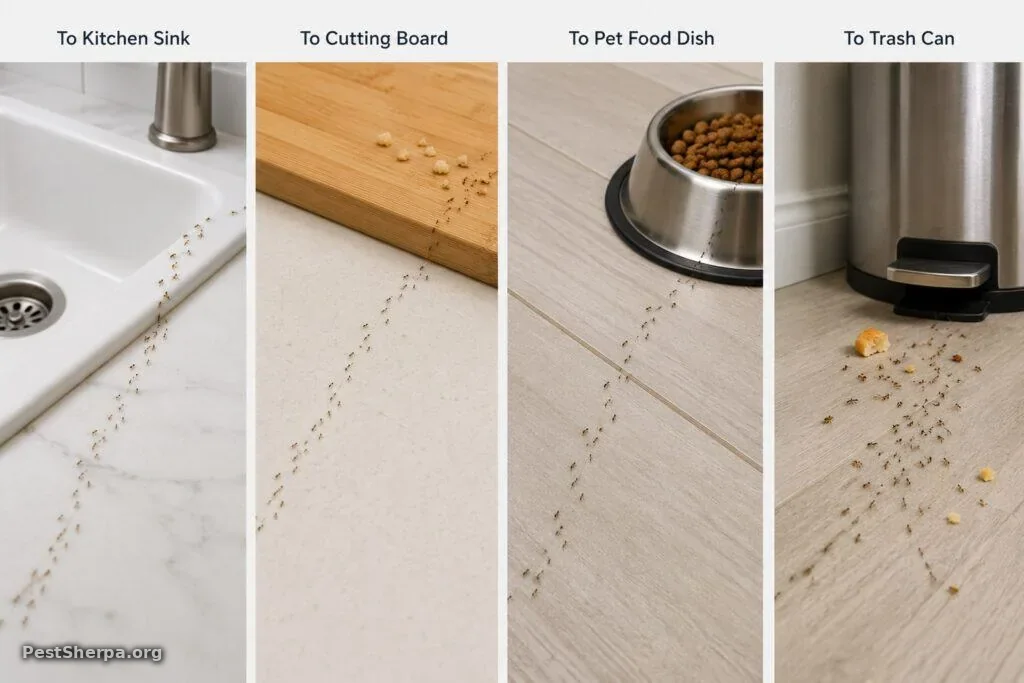
Homeowners usually notice Pharaoh ants as trails of tiny pale ants. Look around sinks, counters, bathrooms, kitchens, food storage areas, trash, pet food, or warm wall voids. In heated buildings, they can stay active year-round.
What Confirms the ID
Tiny workers, about 1/16 inch long.
Yellow to reddish body with a darker abdomen.
Two waist nodes.
Indoor trails near food, water, warmth, or wall voids.
Activity that worsens or spreads after spraying.
What Commonly Misleads Homeowners
Pharaoh ants are often confused with thief ants because both are tiny and yellowish. A microscope is often needed to separate the two. Thief ants are usually even smaller, have a 10-segmented antenna with a two-segmented club, and are often associated with grease, proteins, or outdoor-to-indoor seasonal activity.
They should also not be confused with larger indoor ants such as pavement ants or structural-risk ants such as carpenter ants.
Why Pharaoh Ants Matter
Beyond annoyance, Pharaoh ants matter in hospitals, clinics, and food settings because workers can contaminate sterile and food areas while nesting in inaccessible voids. In homes and apartments, the bigger day-to-day issue is colony budding. That means the wrong spray can split one colony into several that spread to new rooms or units.
They are often mixed up with thief ants and with odorous house ants. Odorous house ants are usually darker and may smell when crushed. Confirm before you choose a spray-heavy plan.
Pharaoh ants are not a structural pest. They do not eat wood, hollow out framing, or create damage like carpenter ants or termites. Their importance is mainly nuisance, sanitation, and contamination risk.
They are a special concern in hospitals, nursing homes, food-service areas, apartments, and other shared buildings. They can forage through unsanitary areas and then get into food, sterile supplies, and medical spaces.
For a typical homeowner, the realistic concern is persistent indoor activity and possible food or surface contamination. For healthcare, food-handling, childcare, elder-care, or multi-unit housing, the concern is higher because infestations can spread through connected rooms, voids, utility lines, and neighboring units.
Pharaoh ant trail locations
What To Do: Pharaoh Ant Control That Actually Helps
Successful programs are slow and deliberate. Keep competing food and water low and place fresh labeled baits on active trails. Resist the urge to wipe out every visible ant with a repellent aerosol. Dead foragers on the counter are not the same as colony control inside wall voids.
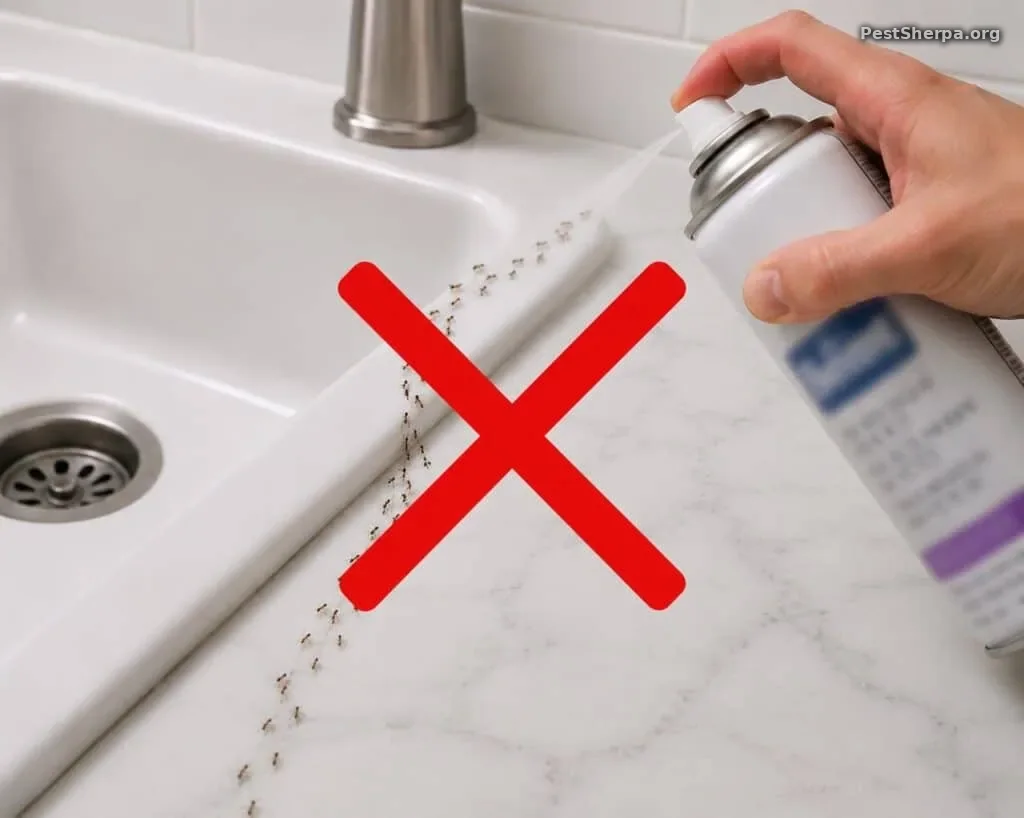
1. Do Not Spray the Ant Trails
Repellent sprays and many broad contact products can cause budding, where parts of the colony move and form new nesting sites. That is how a kitchen problem becomes a multi-room or multi-unit problem. If you must clean a counter, wipe with soap and water and return to baiting rather than chasing ants with spray.
This is the most important rule. Repellent sprays and many contact insecticides can make Pharaoh ants spread by triggering budding, where queens, workers, and brood split off to form new nests.
Spraying might control ants that you target, but it will scatter others and create even more difficult control
2. Use Baits, Not Quick-Kill Sprays
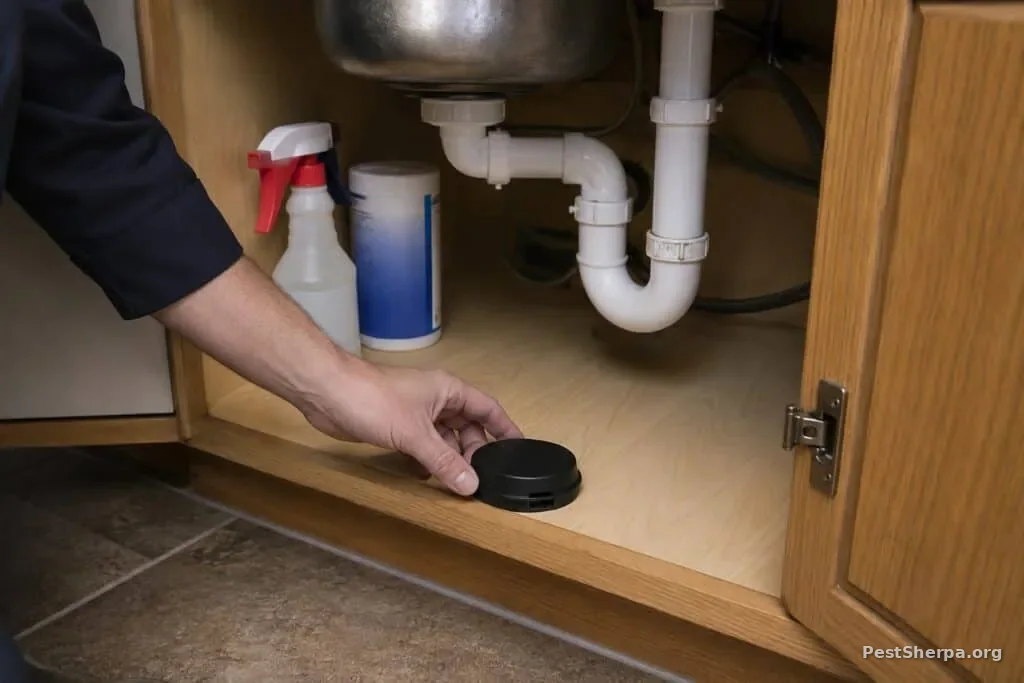
Use products labeled for Pharaoh ants or indoor ant baiting, and place them on active trails without blocking access. Replace bait that dries out or gets ignored. Protein and sweet preferences can shift with colony needs, so be prepared to adjust formulations while staying on label. Expect weeks, not overnight disappearance.
Pharaoh ant control usually depends on slow-acting bait placed where ants are actively foraging. Workers must live long enough to carry bait back and share it with queens, larvae, and nestmates.
Because Pharaoh ants can shift between sweets, proteins, and fats, bait preference can change. A bait that works one week may be ignored later. Testing small amounts of different labeled bait types is often more effective than relying on one product.
Proper bait placement will aid in long term control
3. Keep Baits Attractive
Clean up competing food, grease, sugary spills, and pet food.
Do not spray cleaners, repellents, or insecticides near bait placements.
Place baits close to active trails, cracks, plumbing lines, and warm voids.
Keep bait available long enough for colony-level feeding.
Replace dried, depleted, or ignored bait according to the label.
4. Correct Food, Water, and Access Conditions
Sanitation will not eliminate a Pharaoh ant colony by itself, but it makes baiting more effective. Store food in sealed containers, clean grease and residues, and empty trash often. Repair leaks, reduce moisture around sinks and bathrooms, and seal obvious cracks or utility gaps where practical.
5. Expect a Slower Process
Pharaoh ants are not usually eliminated overnight. In single-family homes with limited activity, improvement may happen sooner. In apartments, hospitals, restaurants, or large buildings, control often takes coordination across multiple rooms or units.
When To Call a Pro
Professionals are especially valuable in apartments, condos, hospitals, and restaurants where colonies span voids and units. Ask for a baiting-centered plan with follow-up visits, not a one-time fog or baseboard spray. If DIY baiting stalls after several weeks of consistent placement, bring in help before more budding occurs.
Call a licensed pest professional when any of these apply:
Ant activity continues after careful baiting and sanitation.
Activity appears in multiple rooms, floors, units, or adjoining spaces.
You are in an apartment, restaurant, healthcare facility, school, daycare, or elder-care setting.
Ants are found near medical supplies, food prep areas, electrical equipment, or sterile materials.
You already sprayed and the problem spread.
You are not sure whether the ants are Pharaoh ants, thief ants, pavement ants, or another species.
If you want help deciding whether the issue is manageable or needs professional inspection, use Ask the Sherpa.
Similar Pests / Misidentification Comparison
Tiny pale ants indoors are not all Pharaoh ants. Club segments and odor clues separate lookalikes, and treatment paths differ sharply once sprays enter the picture.
Ant Species Pest Guide
Tiny Grease-Feeding Ants Found Near Kitchens and Pantries
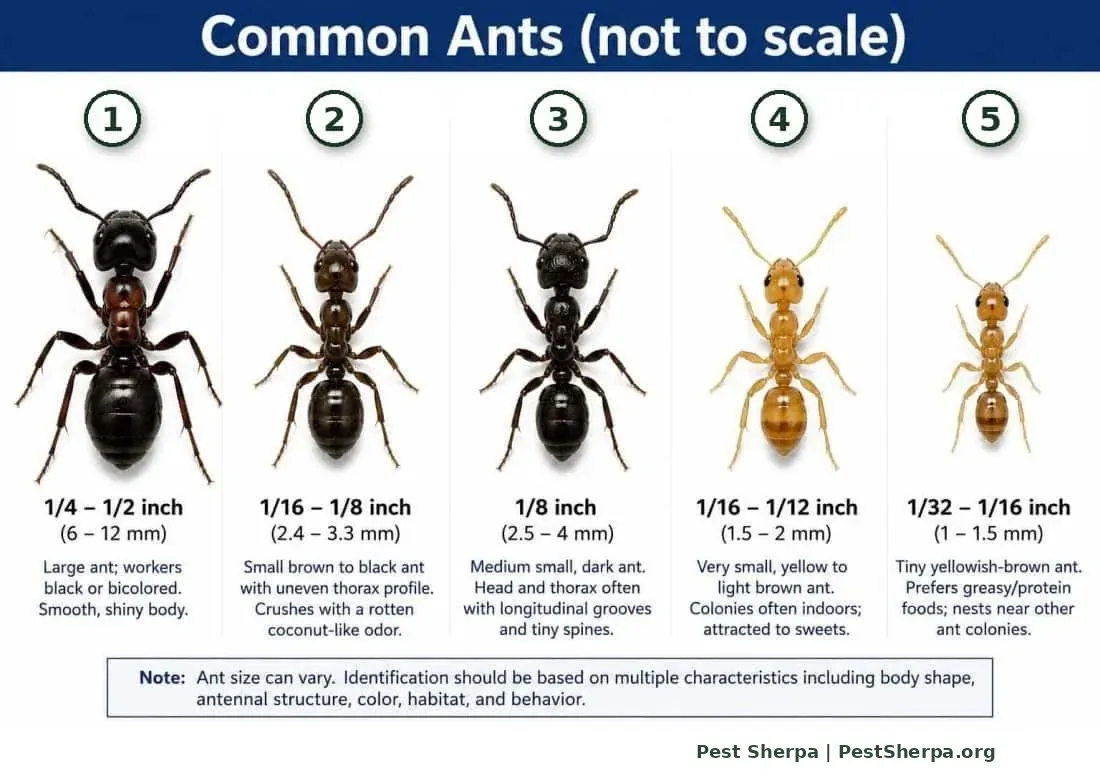
Which one do you see? Match the number:
Carpenter ant (Camponotus spp.): 1/4 to 1/2 inch (6 to 12 mm), workers black or two-toned, smooth and shiny.
Odorous house ant (Tapinoma sessile): 1/16 to 1/8 inch (2.4 to 3.3 mm), brown to black with an uneven thorax profile. Smells like rotten coconut when crushed.
Pavement ant (Tetramorium caespitum): about 1/8 inch (2.5 to 4 mm), dark, with fine grooves on the head and thorax and tiny spines.
Pharaoh ant (Monomorium pharaonis): 1/16 to 1/12 inch (1.5 to 2 mm), very small, yellow to light brown. Colonies are often indoors and like sweets.
Thief ant (Solenopsis molesta): 1/32 to 1/16 inch (1 to 1.5 mm), tiny and yellowish-brown. Prefers greasy and protein foods and nests near other ant colonies.
Thief ants: Very small yellowish ants that are easily confused with Pharaoh ants. Thief ants are often smaller and have a two-segmented antennal club rather than the Pharaoh ant’s three-segmented club.
Pavement ants: Usually darker and more associated with cracks in pavement, slabs, sidewalks, and foundations.
Odorous house ants: Small brown to black ants that often give off a rotten coconut-like odor when crushed. They have different nesting habits and treatment patterns.
Carpenter ants: Much larger ants that can excavate damp or damaged wood. Pharaoh ants do not create carpenter-ant-style wood galleries.
For broader ant identification and next steps, start with the Pest Sherpa ant guide.
Common Questions
Why did spraying make my ant problem worse?
Pharaoh ant colonies can bud when stressed by repellent sprays. Splitting creates new nesting sites and wider trailing. Switch to labeled baiting and sanitation instead of chasing foragers.
How small are Pharaoh ants?
Workers are usually about 1/16 inch long, pale yellow to reddish, often with a darker abdomen. Compare against a grain of rice and use magnification when possible.
Are Pharaoh ants the same as odorous house ants?
No. Odorous house ants are typically darker and may smell like rotten coconut when crushed. Pharaoh ants are tinier and paler, with different budding risk if sprayed.
How long does baiting take?
Often weeks of consistent placement and monitoring. Quick knockdown is a red flag that you may be killing foragers without reaching queens and brood in voids.
When should I call a professional?
Multi-unit buildings, food or health-care sites, failed DIY baiting, or uncertainty between Pharaoh ants and thief ants are strong reasons to hire help.
This article was written by Greg Baumann, founder of Pest Sherpa, and reflects more than 40 years of professional pest management experience.
About the Author
Greg Baumann | Pest Control Expert
Greg Baumann is the founder of Pest Sherpa and a Pest Control Expert with more than 40 years of professional pest management experience. His articles combine decades of field experience, technical expertise, and science-based guidance to help homeowners identify pests correctly, understand real-world risks, and make informed pest management decisions.
Mission:Identify the pest. Understand the risk. Stop the problem. Prevent the comeback. Know when it’s time to call a professional.