
Pavement Ants: Identification, Concern Level, and Control
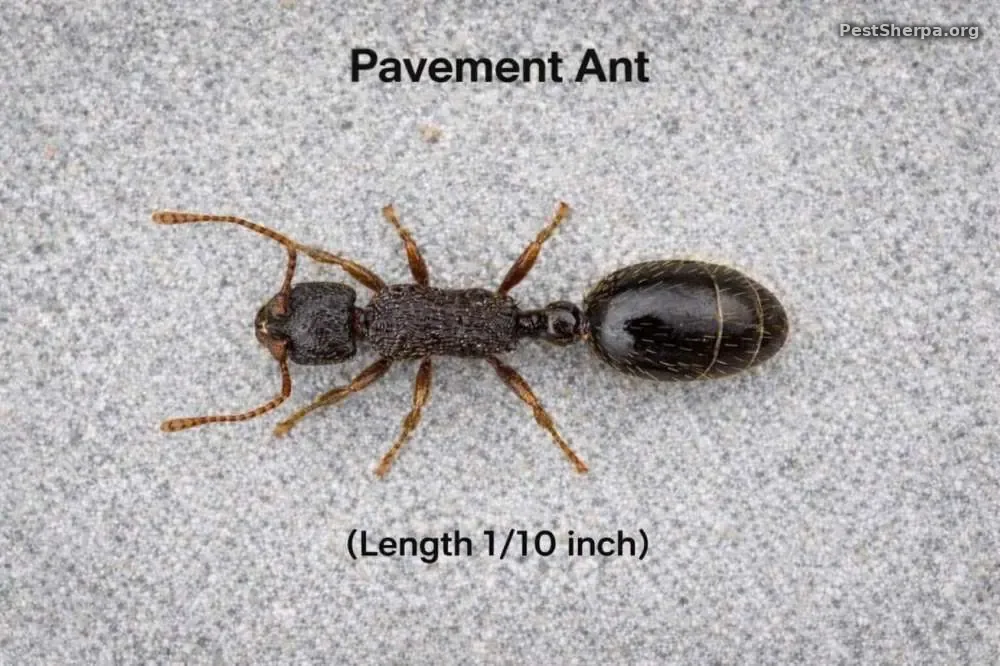
Pavement ants are one of the most common small ants homeowners see around sidewalks, patios, driveways, garage slabs, and foundation edges. In most homes, they are a nuisance and food-contamination pest, not a structural wood-destroying pest. The fastest path to control is: confirm the ID, find the entry route, remove what’s attracting them, and use targeted baiting-not random indoor sprays.
TL;DR
Jump to: Identification | Why It Matters | What To Do | When To Call a Pro | Lookalikes | Prevention | References
- Small, dark ants tied to concrete cracks and slab edges are often pavement ants
- Usually a nuisance, not structural damage
- Loose soil from cracks = strongest ID clue
- Baits + cleanup + sealing gaps work better than spraying
- If you see winged insects indoors, double-check ant vs termite before assuming anything
How to Identify Pavement Ants
Pavement ants (Tetramorium immigrans and related pavement-nesting ants) are among the most common small dark ants along sidewalks and slabs in many northern and temperate neighborhoods. Workers are usually about 1/8 inch long. The combination of two waist nodes, tiny thoracic spines (under magnification), and soil pushed from pavement cracks is more reliable than color alone.
Follow trails at dusk or after rain when foraging is obvious. Trails often lead from a crack at a driveway, patio, garage slab, or foundation edge into a kitchen, laundry, or basement. That outdoor nest link is the control target, not only the countertop.
Pavement ants are easiest to identify by combining appearance + location. Many ants are small and dark; pavement ants stand out because of where they live.
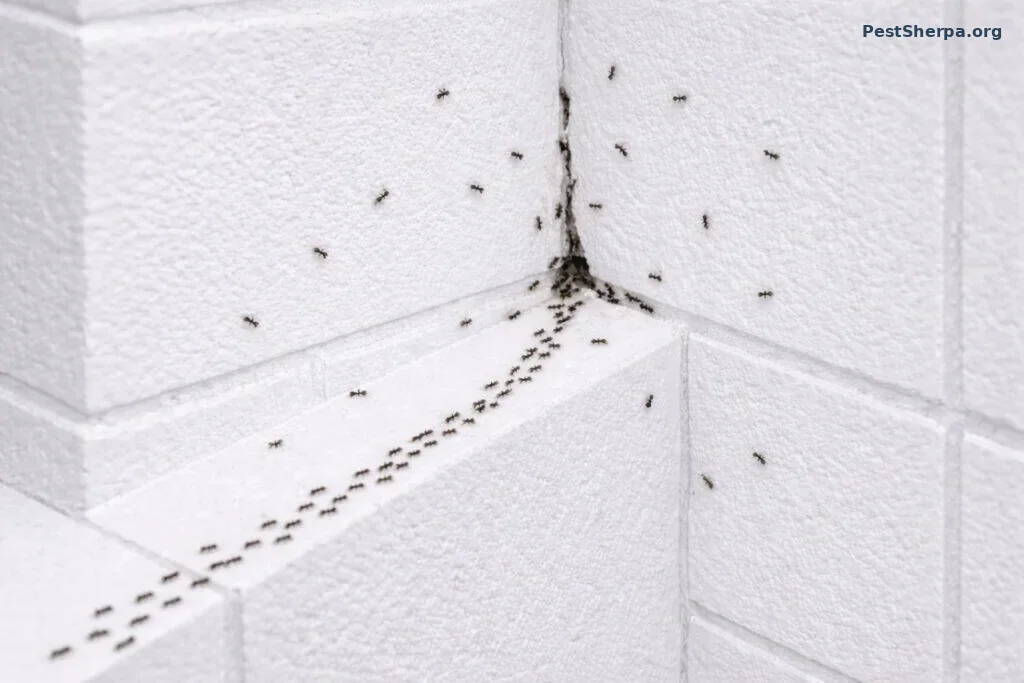
Look for ants trailing from a concrete crack near a foundation or walkway
What they look like (quick ID)
- Small (about 1/8 inch), dark brown to black
- Workers are fairly uniform in size
- Two-node waist (tiny “bumps” between thorax and abdomen)
- Small spines on the thorax (hard to see without magnification)
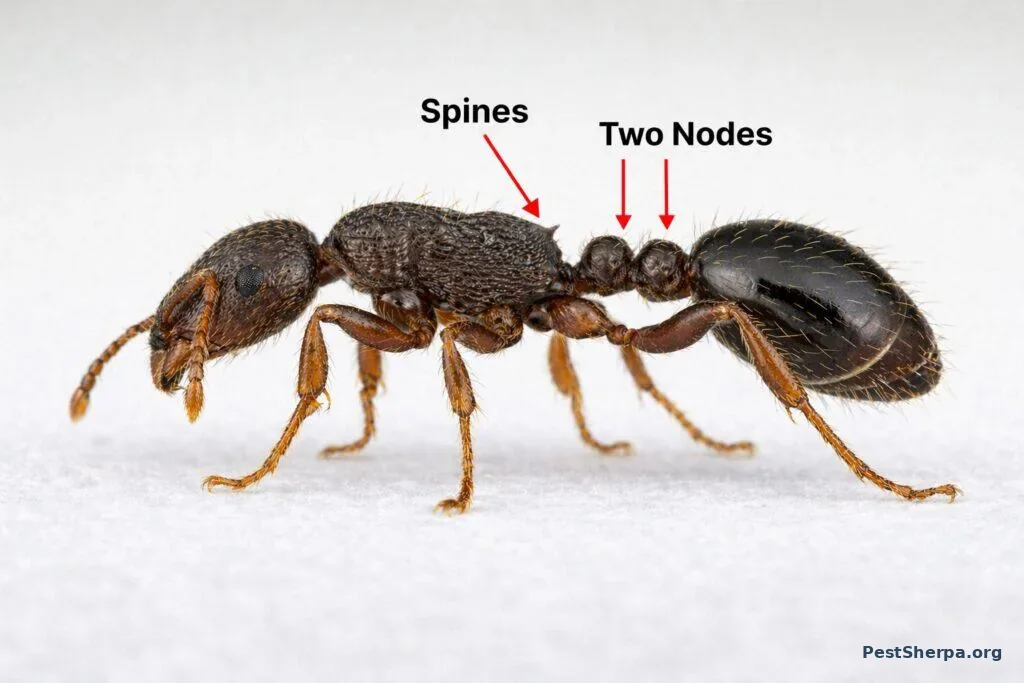
The spine is key to proper identification. A pavement ant has two-node waist and small thoracic spines
Where they come from (most reliable clue)
- Sidewalk and driveway cracks
- Patio joints and pavers
- Foundation seams and expansion joints
- Under stones, mulch edges, and landscape borders
- Indoors along baseboards, lower cabinets, and slab edges
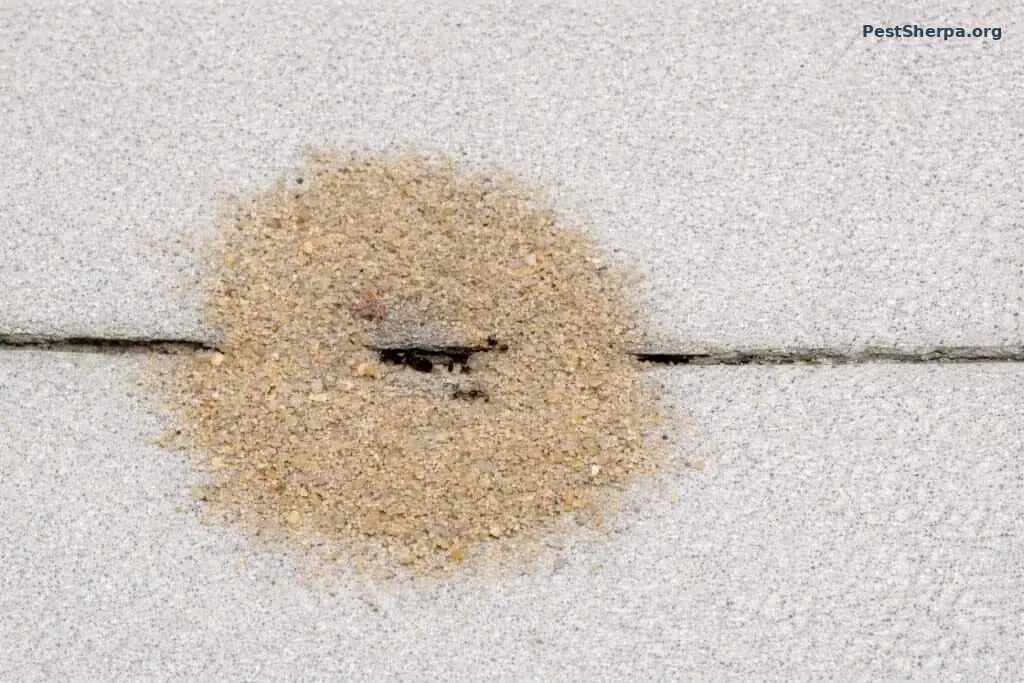
Loose soil pushed from a sidewalk crack by a pavement ant nest
What confirms the ID (use 2-3 together)
- Fine soil or grit pushed from a crack
- Trails that hug edges (baseboards, slab seams)
- Activity that returns to the same entry point
What commonly fools homeowners
- Odorous house ants (often smell when crushed; different waist profile), see: https://pestsherpa.org/pest-guide/ants/odorous-house/
- Argentine ants (heavier trails, larger connected populations), see: https://pestsherpa.org/pest-guide/ants/argentine/
- Winged ants vs termites (very common panic point-see below)
- If you suspect termites, compare with: https://pestsherpa.org/pest-guide/termites/eastern-subterranean/
- Odorous house ants (often smell when crushed; different waist profile)
- Argentine ants (heavier trails, larger connected populations)
- Winged ants vs termites (very common panic point-see below)
Why Pavement Ants Matter
Pavement ants contaminate food and annoy households, but they are not wood-destroying pests like termites or carpenter ants. The practical risk is persistent indoor trailing when outdoor nests along concrete stay active and find easy entry gaps. Spraying only indoor foragers usually resets the trail within days.
They are frequently confused with odorous house ants and Argentine ants. Wrong ID leads to the wrong bait expectations and timeline.
Pavement ants are frustrating, but for most homes they are not a structural threat.
- Nuisance level: High (they keep coming back)
- Food contamination: Moderate (kitchens, pantries, pet food)
- Structural damage: Low (they don’t excavate wood like carpenter ants)
- Health risk: Generally low, but still undesirable around food areas
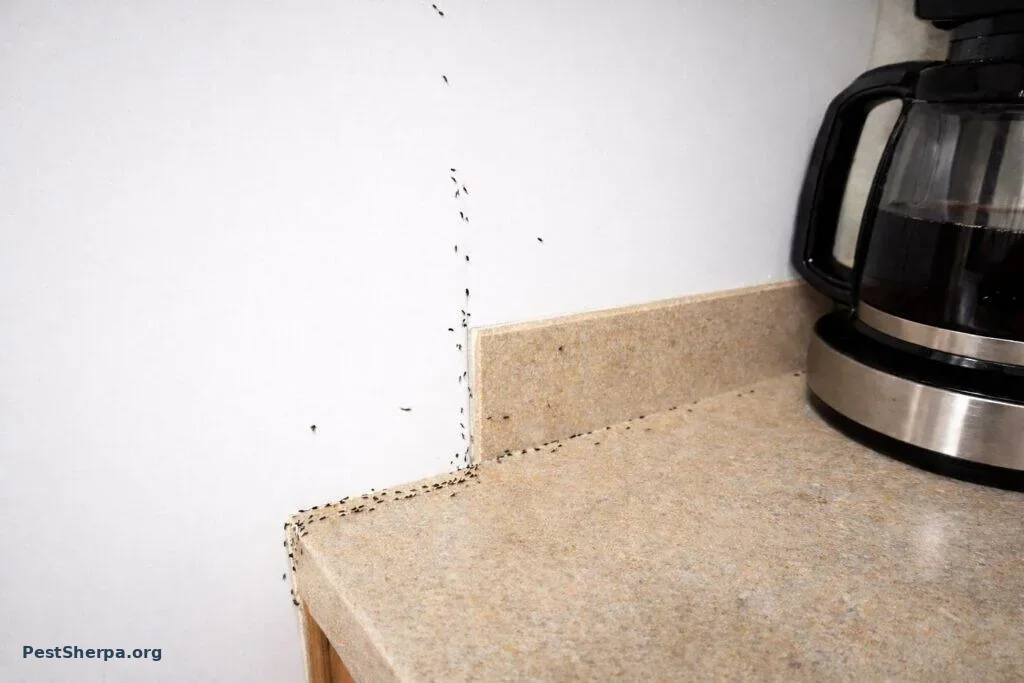
Pavement ants trailing indoors along a kitchen baseboard
What’s actually happening
- The colony is usually outside or under the slab
- Workers enter through tiny gaps to forage for food
- If the food source stays, the trail gets reinforced and returns
Key mindset shift: you’re not fighting the ants you see-you’re interrupting the system that keeps sending them.
What To Do That Actually Works
Think in three layers: remove the food and water cues feeding the trail, seal the obvious entry, and place slow-acting bait where workers are still foraging so it reaches the colony. Contact sprays on the counter kill what you see and can scatter foraging without finishing outdoor nests under slabs.
1) Find the entry point before treating
Follow the trail. Look for:
- Door thresholds
- Slab seams
- Baseboard gaps
- Utility penetrations
If you skip this step, you’ll treat symptoms-not the source.
2) Remove what’s feeding the trail
- Wipe crumbs, grease, and sugary residue
- Clean pet feeding areas
- Store food in sealed containers
- Empty trash frequently
- Fix leaks or damp spots
3) Seal the obvious entry gaps
- Caulk baseboard cracks and seams
- Fix door sweeps and weatherstripping
- Seal visible slab cracks that function as entry points
4) Use baits and modern liquids
Sugar-based baits often perform well when pavement ants are feeding on sweets, but preferences can shift. If workers ignore a bait, try a different labeled formulation rather than soaking baseboards. Keep bait fresh, out of reach of pets and children per the label, and give it several days before judging failure. Outdoor bait near the active crack can matter as much as indoor stations.
Baiting usually makes more sense than random spray applications. For deeper guidance on choosing the right approach.
Baits work because workers carry them back to the colony.
More modern liquids provide lasting control outdoors and in some cases, indoors. The aerosols from big box stores are not suggested generally and definitely no fogging is recommended.
How to use them correctly:
- Place small amounts right next to active trails if dispensing bait per label instructions or place prefilled station
- If using liquids, find the entry source per label
- Don’t scatter treatments everywhere
- Give it time-results are not instant
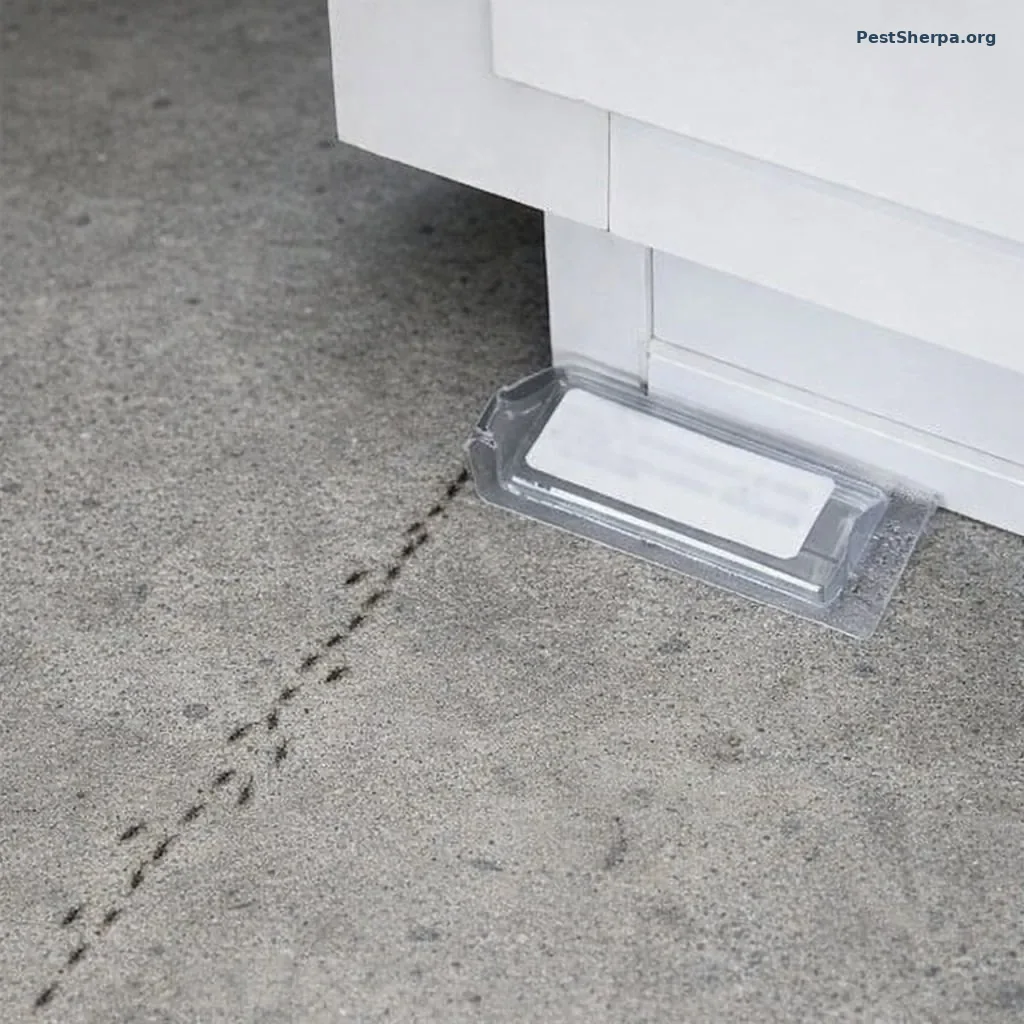
Small ant bait placements positioned near a pavement ant trail
What usually works
- Cleaning first, then baiting based on real trails
- Treating both inside and outside where activity connects
- Adjusting bait placement as trails shift
What usually wastes time
- Spraying visible ants indoors only
- Ignoring the outdoor nest source
- Treating before identifying the species
- Expecting instant results from baiting
When To Call a Pro
Call sooner when trails return after careful baiting, when nests appear along many slab edges at once, or when you keep seeing winged ants indoors and need a confident ant-versus-termite check. Multi-unit buildings and food businesses also benefit from coordinated treatment instead of apartment-by-apartment spray cycles.
Call a licensed professional when:
- Ants keep returning after cleanup + baiting
- Activity appears in multiple rooms or floors
- You suspect a nest under the slab or inside walls
- You are unsure whether insects are ants or termites
A pro can locate hidden nests, use professional-grade baits, and treat structural entry points more effectively.
Pavement Ants vs. Termites (Quick Reality Check)
Winged pavement ants have a narrow waist and uneven wing pairs typical of ants. Termite swarmers lack that pinched waist and have wings of more equal length. If you only see discarded wings on a windowsill, save a specimen or clear photo before cleanup. Misreading a termite swarm as ants delays a structural inspection.
If you see winged insects indoors, this matters.
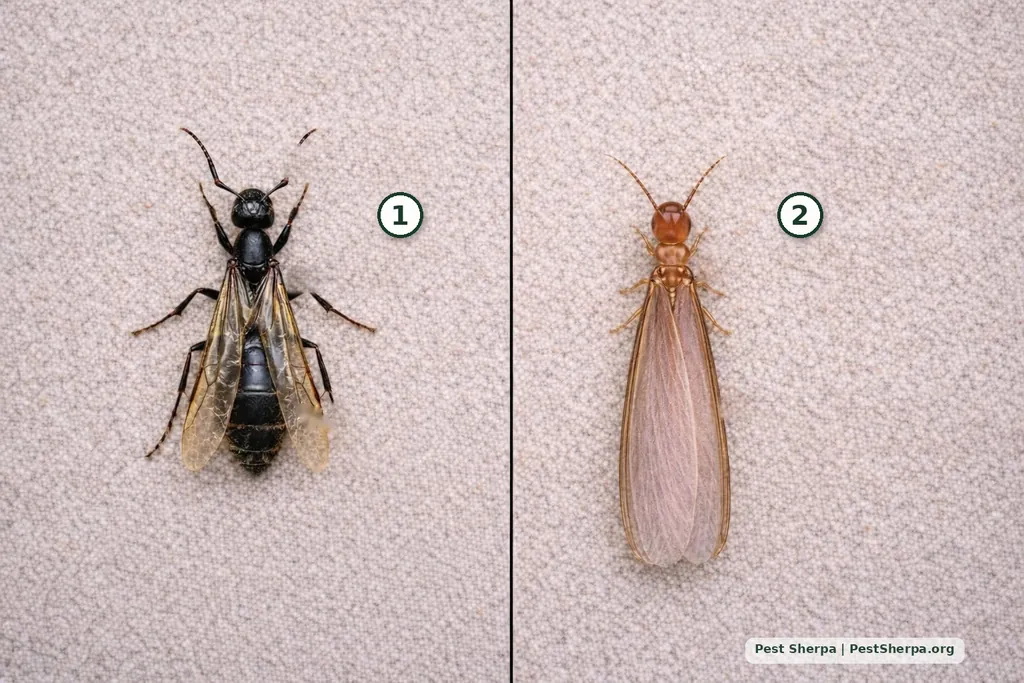
Which one did you find? Match the number:
- Winged ant: pinched, wasp-like waist and bent (elbowed) antennae. Front wings are longer than the back pair.
- Winged termite (swarmer): thick waist with no pinch, straight beaded antennae, and four wings of equal length that run well past the body.
Seeing number 2 indoors, especially near windows or piles of shed wings? Call a licensed termite pro for an inspection.
Ant swarmers:
- Elbowed antennae
- Pinched waist
- Front wings larger than back wings
Termite swarmers:
- Straight antennae
- Thick waist
- Wings all the same size
If you’re unsure, treat it as a potential termite issue until confirmed otherwise.
Lookalikes Fast Comparison
Use this table with nest location. Pavement cracks and slab edges favor pavement ants; rotten-coconut odor favors odorous house ants; huge continuous trails may signal Argentine ants in warmer regions.
| Pest | Key Difference | Why it matters |
|---|---|---|
| Odorous house ants | Often smell when crushed; different waist profile | Common indoor nuisance confusion |
| Argentine ants | Heavy trails, large connected populations | Harder to control without strategy |
| Carpenter ants | Much larger; linked to wood/moisture | Different inspection path |
| Termite swarmers | No narrow waist; more equal wings | Structural risk if misidentified |
Practical Prevention (Long-Term)
Keep food in sealed containers, wipe grease and spills, empty indoor trash regularly, and fix leaky sinks that create water stops for foragers. Outside, reduce mulch piled against the foundation, pull vegetation off siding, and note chronic cracks that keep producing soil. Sealing alone will not finish a nest under a slab, but it slows re-entry while bait works.
For broader kitchen-trail context, start with the ant guide.
- Keep food areas consistently clean
- Reduce moisture near foundation
- Limit mulch, debris, and clutter against the house
- Maintain door seals and exterior gaps
- Monitor recurring entry points seasonally
Common Questions
Are pavement ants dangerous?
They are mainly a nuisance and food-contamination pest. They do not destroy structural wood like termites or carpenter ants. Persistent trails still deserve a control plan.
Why do they come inside after rain?
Outdoor nests along slabs can shift foraging when soil moisture changes. Rain often pushes more workers onto indoor food and water sources through the same entry gaps.
Should I spray the trail?
Heavy contact sprays usually kill only visible foragers and can make baiting harder. Clean the attractant, seal gaps, and use labeled baits aimed at colony uptake.
How do I tell pavement ants from odorous house ants?
Crush-test odor (rotten coconut / blue cheese) points toward odorous house ants. Pavement ants are more tightly tied to soil pushed from concrete cracks and slab edges. Magnification of waist and spines helps.
When should I call a professional?
When baiting and sealing fail, nests line multiple slab edges, winged ants create termite confusion, or the building needs coordinated service.
References
- University of Minnesota Extension: Pavement Ant
- University of Minnesota Extension: Ants in Homes
- UC IPM: Pavement Ant Identification
- UC IPM: Ant Management Guidelines
- Penn State Extension: Pavement Ant
This article was written by Greg Baumann, founder of Pest Sherpa, and reflects more than 40 years of professional pest management experience.
About the Author

Greg Baumann | Pest Control Expert
Greg Baumann is the founder of Pest Sherpa and a Pest Control Expert with more than 40 years of professional pest management experience. His articles combine decades of field experience, technical expertise, and science-based guidance to help homeowners identify pests correctly, understand real-world risks, and make informed pest management decisions.
Mission: Identify the pest. Understand the risk. Stop the problem. Prevent the comeback. Know when it’s time to call a professional.