
Fly Guide: Identification, Breeding Sources, and What to Do
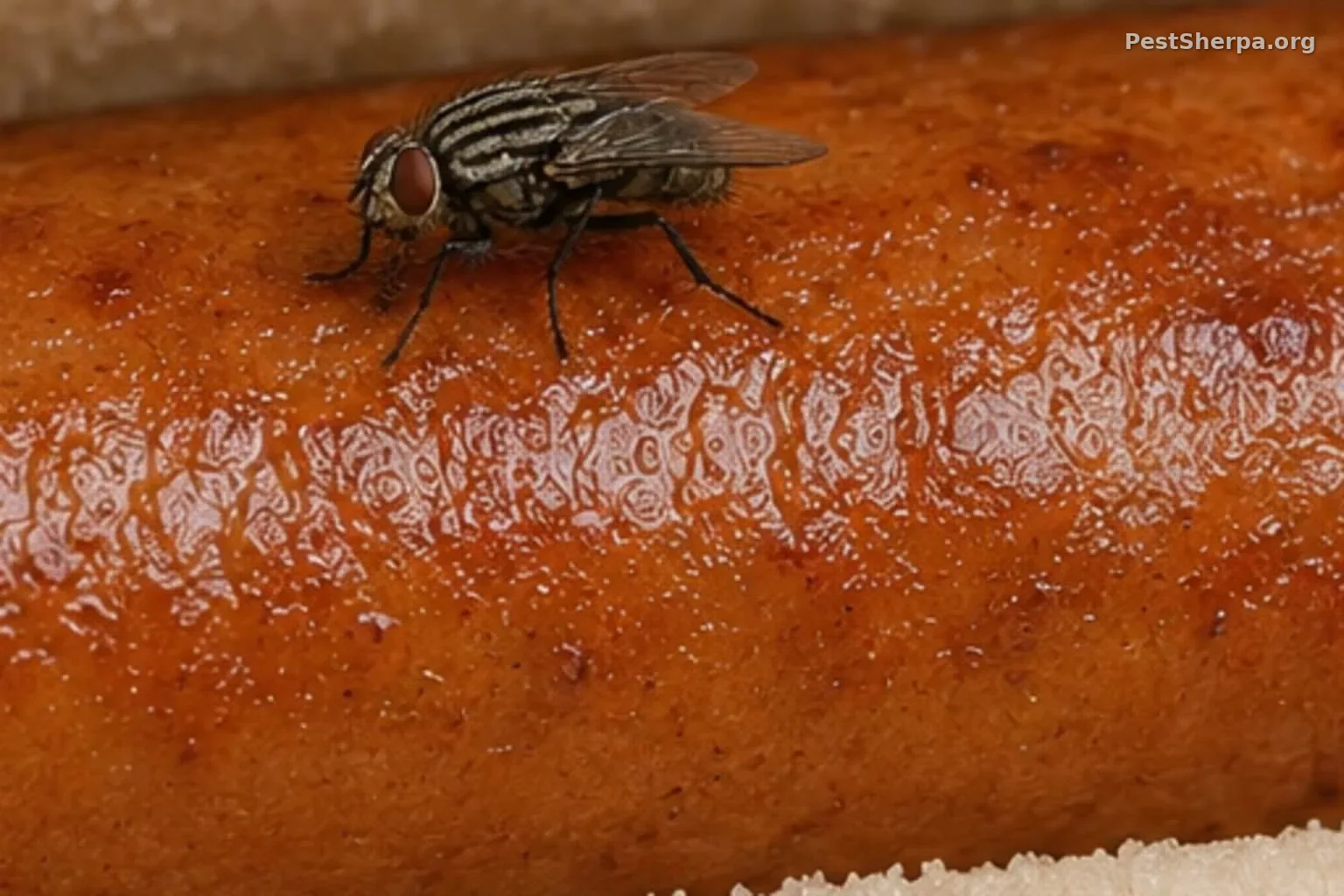
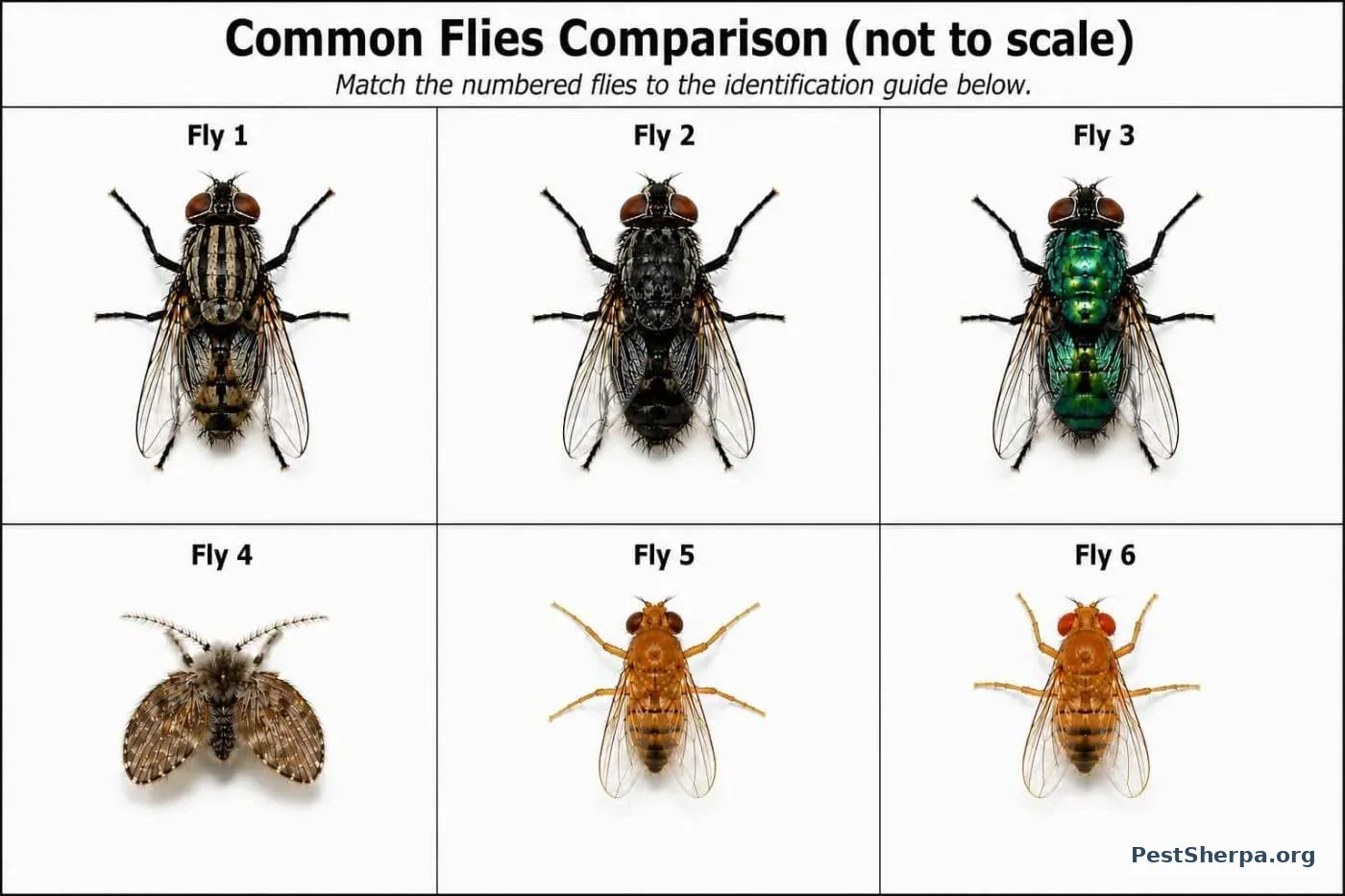
Comparison of various flies commonly found in homes and businesses
TL;DR: Flies Mean a Breeding Source Nearby
- Flies are not random → they indicate a food or breeding source
- Different flies = different sources (trash, drains, decay, wall voids, moist potting soil / houseplants)
- Killing visible flies does not solve the problem
- Source control is the only lasting solution
Drain flies often track with damp rooms and organic film, not just open trash. If bathrooms, basements, or mulch stay wet, the moisture pests pages cover the crawlers that show up in the same conditions.
Quick Jump to Resources Based on What You Are Seeing:
- Small flies around fruit or drains: vinegar flies / fruit flies
- Small dark slender flies around houseplants or moist potting soil: fungus gnats (not fruit flies, those hang around kitchens and fruit, often with red eyes)
- Larger shiny flies near trash or decay: green bottle flies / blow flies
- Flies appearing in walls or windows seasonally: cluster flies
- Common indoor flies: house flies
- Persistent small flies in drains, wet organic buildup, or commercial kitchens: dark-eyed vinegar flies / black-eyed fruit flies
- How to Identify Flies
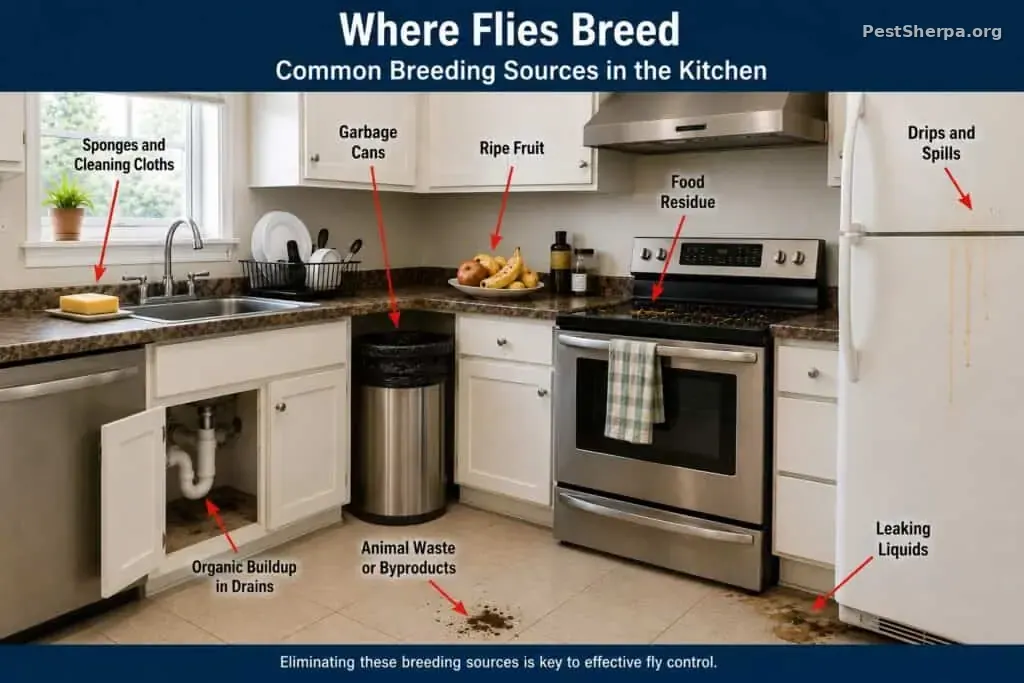
- Where Flies Breed
- What To Do: How To Treat
- Common Questions
- References
How to Identify Flies
Most fly infestations persist because the breeding source is misidentified.
Common Fly Identification Answers
Match the numbered flies in the comparison image with the descriptions below. Use several characteristics together, including body color, wing shape, thorax markings, eye color, size, and where the fly was found, to confirm the identification.
Fly 1: House Fly
Musca domestica
- Gray body with four dark stripes running lengthwise along the thorax
- Yellowish-gray abdomen with darker central markings
- Clear wings and large reddish-brown compound eyes
- Common around garbage, food waste, manure, kitchens, and buildings
Key clue: Look for four distinct dark stripes on the upper thorax.
Fly 4: Moth Fly or Drain Fly
Psychodidae
- Very small fly with a fuzzy, moth-like appearance
- Broad, hairy wings held roof-like over the body
- Usually rests on walls near sinks, showers, floor drains, or sewage areas
- Larvae develop in wet organic film inside drains and similar moist sites
Key clue: The fuzzy body and broad, hairy wings make this fly look like a tiny moth.
Fly 2: Cluster Fly
Pollenia rudis
- Dull gray or dark body rather than a shiny metallic body
- Fine golden or yellowish hairs on the thorax
- Gray-and-black checkered abdomen
- Often gathers at windows, attics, upper floors, and wall voids in cooler weather
Key clue: Cluster flies are relatively sluggish indoors and often appear in groups around sunny windows.
Fly 5: Dark-eyed Vinegar Fly
Drosophila repleta
- Small tan or brown fly with dark reddish-brown eyes
- Abdomen may have dark bands or mottled markings
- Often associated with fermenting material, drains, trash, or moist organic debris
- May be slightly larger and darker than the common red-eyed fruit fly
Key clue: The dark eyes distinguish this fly from the more familiar bright red-eyed vinegar fly.
Fly 3: Blow Fly
Calliphora vomitoria
- Robust fly with a shiny metallic blue, blue-green, or green body
- Large reddish-brown eyes and clear wings
- Strong buzzing flight
- Frequently associated with carrion, dead animals, garbage, and decaying organic material
Key clue: The bright metallic body and association with animal remains or decomposition distinguish blow flies from house and cluster flies.
Fly 6: Vinegar or “Fruit” Fly
Drosophila melanogaster
- Very small tan or yellow-brown fly
- Prominent bright red eyes
- Often hovers around overripe fruit, fermenting liquids, recycling containers, and food residue
- Breeds rapidly in moist, fermenting organic material
Key clue: The combination of a tiny tan body and bright red eyes is characteristic of the common vinegar fly.
Browse our expert guides to identify the fly you’re dealing with and learn the appropriate control strategy.
Cluster Flies: Identification, Causes, Treatment, and Prevention
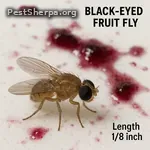
Dark-eyed Vinegar Flies (Drosophila repleta): ID and Control
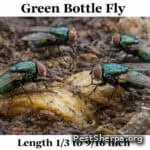
Do Green Bottle Flies Bite? Life Cycle, ID, and Control
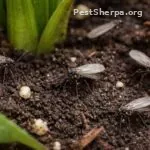
Fungus Gnats in Houseplants: Identification, Causes, and What To Do
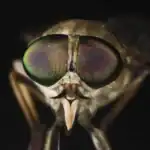
Horse Flies: Identification, Bites, and What Actually Helps
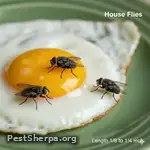
House Flies: Identification, Sources, Health Risks, and What to Do
Moth Flies (Drain Flies): Identification, Causes, and Prevention
Vinegar Flies (Fruit Flies): Identification, Prevention, and Control
Related Fruit Fly & Vinegar Fly Resources
- Common small flies around fruit, drains, recycling, or fermenting material: vinegar flies / common fruit flies
- Persistent dark-eyed flies breeding in drains, wet organic buildup, trash rooms, or commercial kitchens: dark-eyed vinegar flies (Drosophila repleta)
- Houseplants, moist soil, slender dark flies with long legs: fungus gnats
Key Identification Factors
- Size: tiny vs medium vs large
- Color: tan, black, metallic green/blue
- Behavior: hovering, fast flying, clustering
- Location: kitchen, drains, trash, windows
Common Misidentifications
- Fruit flies vs drain flies vs fungus gnats
- Blow flies vs house flies
- Cluster flies vs other seasonal flies
Why It Matters
Food Contamination Risk
- House flies and blow flies spread bacteria
- Contact with food and surfaces increases health risk
Hidden Breeding Sources
- Rotting food
- Organic buildup in drains
- Dead animals in walls (blow flies)
Recurring Infestations
- Without source removal, flies will return continuously
Key Insight: Flies are a symptom, the real problem is the breeding source.
Where Flies Breed (By Location)
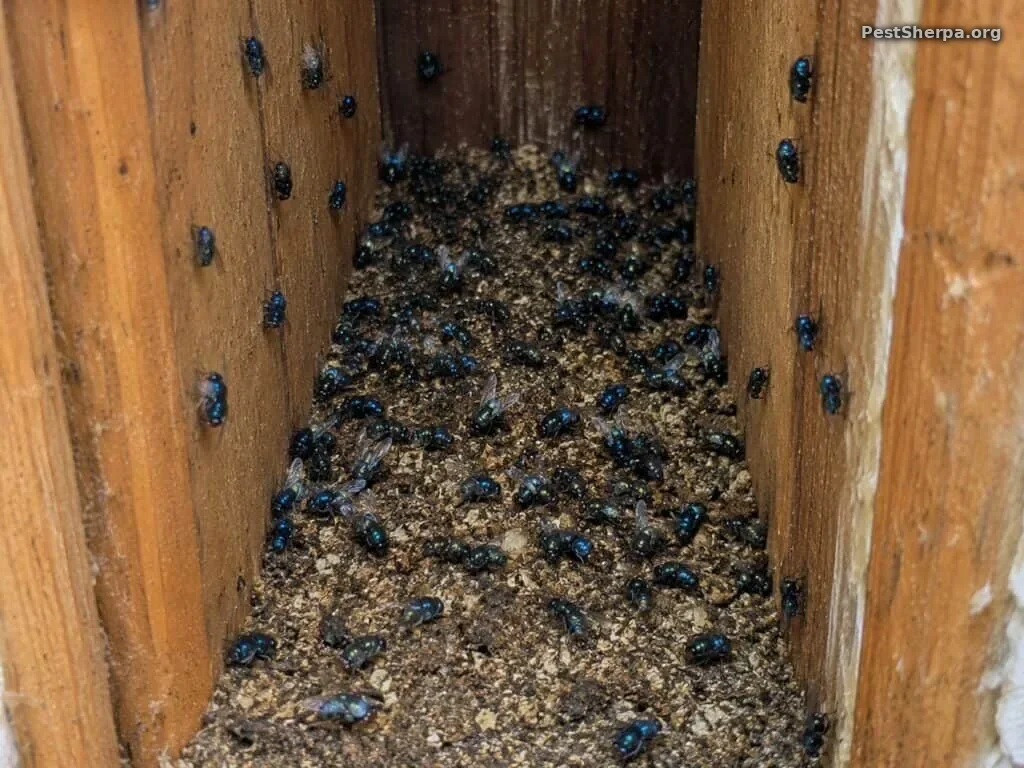
Blow flies in wall void
Kitchen Surfaces
- Overripe fruit
- Food spills and residue
- Recycling bins
Drains & Garbage Disposals
- Organic slime buildup
- Food particles trapped in pipes
- Moist environments ideal for larvae
Trash & Outdoor Waste
- Garbage cans
- Pet waste
- Compost piles
Wall Voids / Hidden Spaces
- Dead rodents or animals
- Forgotten food sources
Key Insight: If you don’t remove the breeding site, the flies will keep coming back.
Why Flies Suddenly Appear
If you are asking why there are so many flies in your house, they are not a random invasion. Flies often seem to show up overnight, but there is always a reason. A sudden pile of adults means a nearby breeding source is already producing them, garbage, a drain, forgotten food, pet waste, or a dead animal in a void.
Common Causes
- Dead animal in wall or attic → blow flies appear quickly
- Forgotten food or trash → rapid breeding cycle
- Drain buildup → steady emergence of small flies
- Seasonal changes → cluster flies entering homes
Flies gather at windows because of light, and because they are trying to get out. The window is not the source. Check trash, drains, fruit, pet waste, and a dead animal in a void if the flies are large and keep coming.
What This Means
- A sudden increase usually indicates a hidden or newly accessible breeding source
- The faster you identify it, the easier the problem is to control
What To Do
Scenario 1: Fruit Flies / Small Kitchen Flies
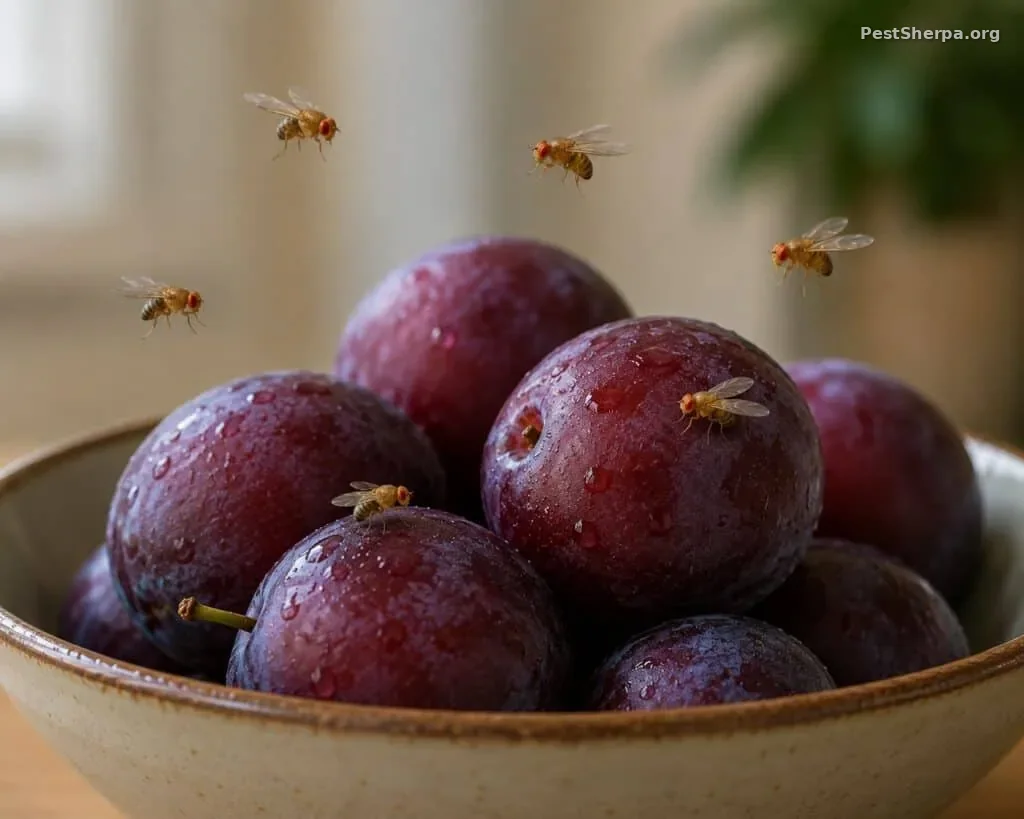
Vinegar (“fruit”) flies are often hovering near fresh fruit
Goal: Eliminate breeding material
- Remove overripe produce
- Clean drains and garbage disposals
- Empty trash frequently
Fruit Fly & Vinegar Fly Identification Resources
- Typical small tan flies around ripened fruit, recycling, spills, or kitchen drains: vinegar flies / common fruit flies
- Darker, more persistent flies associated with drains, garbage areas, breweries, bars, and wet organic buildup: dark-eyed vinegar flies (Drosophila repleta)
Scenario 2: House Flies
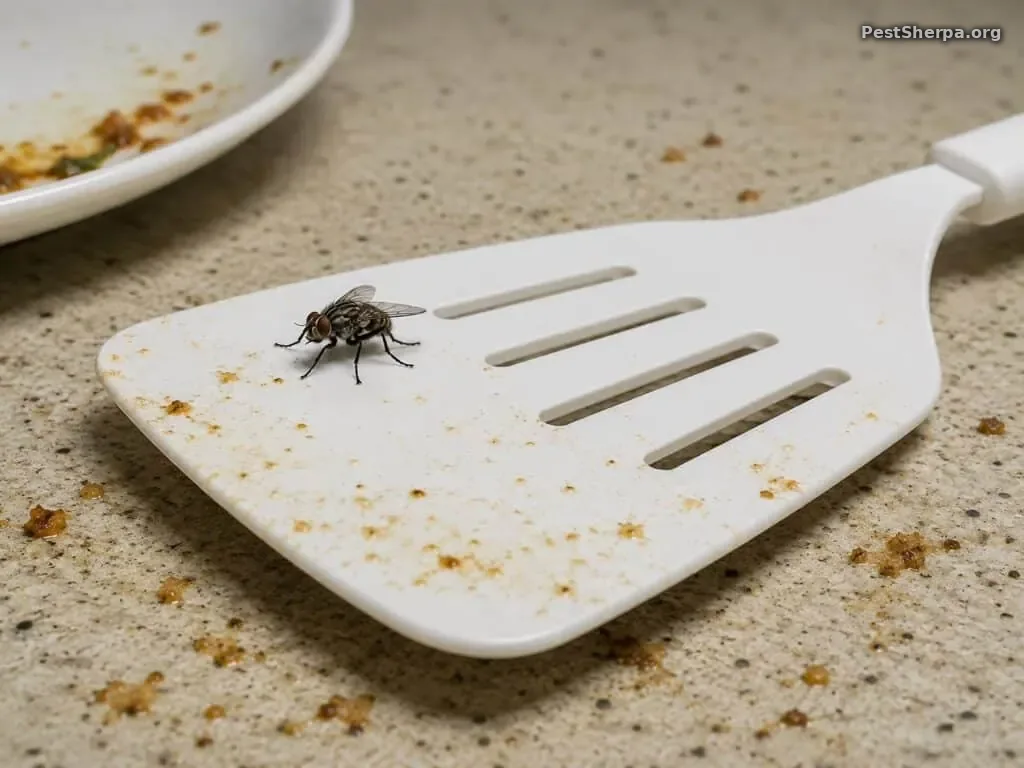
House flies find even the tiniest morsel of food.
Goal: Reduce attractants and entry points
- Keep trash sealed
- Clean food residues
- Install screens and seal gaps
Relevant guide:
Related Fly Identification Resources
- The most common indoor garbage and filth fly found in homes and businesses: house flies
Scenario 3: Blow Flies (Blue Bottle Flies)
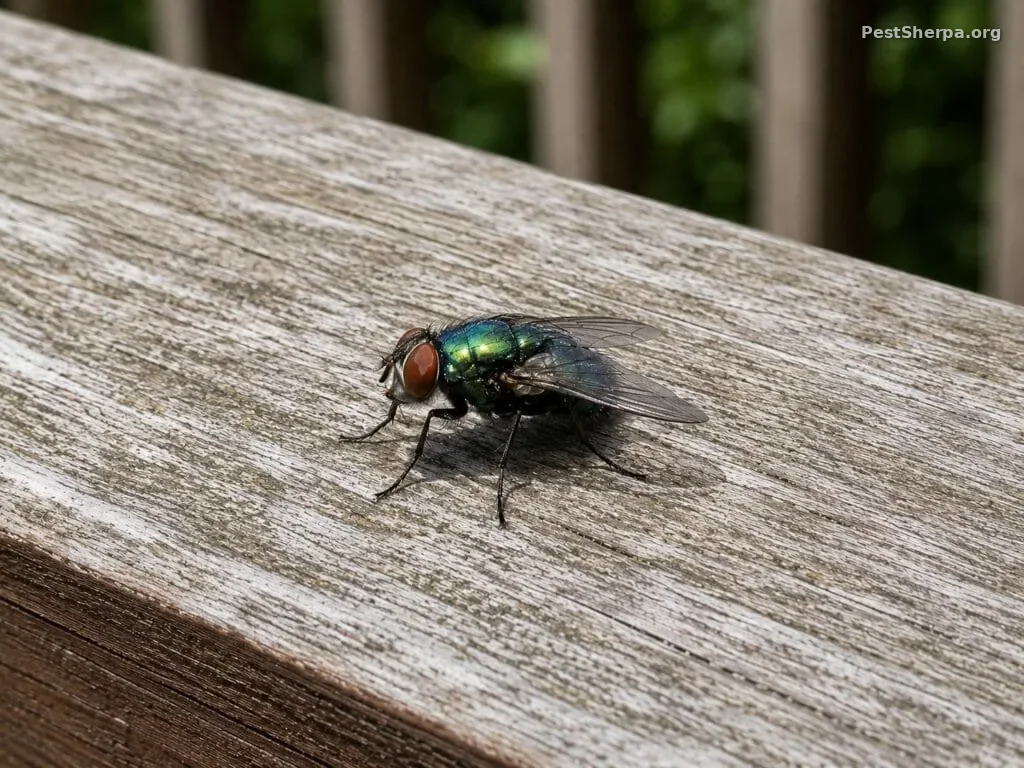
Note metallic appearance of blow flies, in this case a green bottle fly.
Goal: Locate and remove decay source
- Check for dead animals (walls, attic)
- Inspect trash and outdoor waste areas
Related Fly Identification Resource
Larger metallic flies associated with garbage, carrion, animal remains, or strong odors: green bottle flies / blow flies
Scenario 4: Cluster Flies
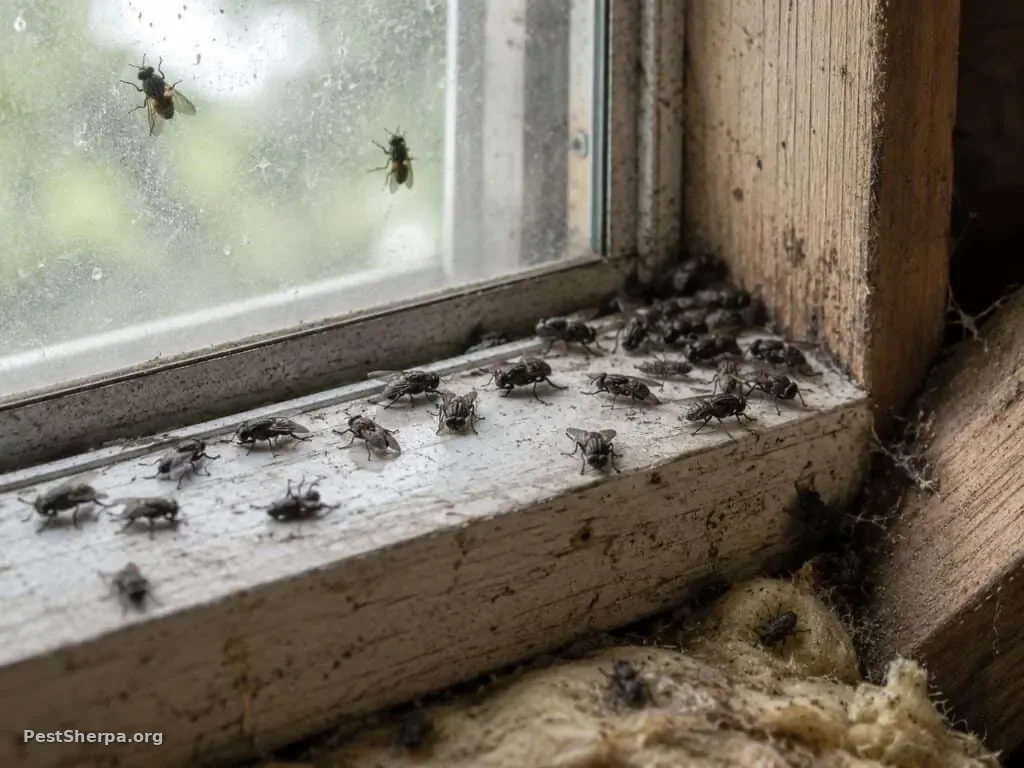
Cluster flies seem to find access to attics and are attracted to the light from windows.
Goal: Prevent seasonal entry
- Seal exterior cracks
- Focus on fall prevention measures
Related Fly Identification Resource
Slow-moving flies appearing around windows, attics, or wall voids during seasonal temperature changes: cluster flies
What Fails (Common Mistakes)
- Using sprays without removing breeding source
- Ignoring drains and hidden organic buildup
- Treating indoors only
When to Call a Professional
- You cannot locate the breeding source
- Flies persist after cleaning efforts
- Suspected dead animal in structure
- Large or recurring infestations
Species Hub (Compare Before You Act)
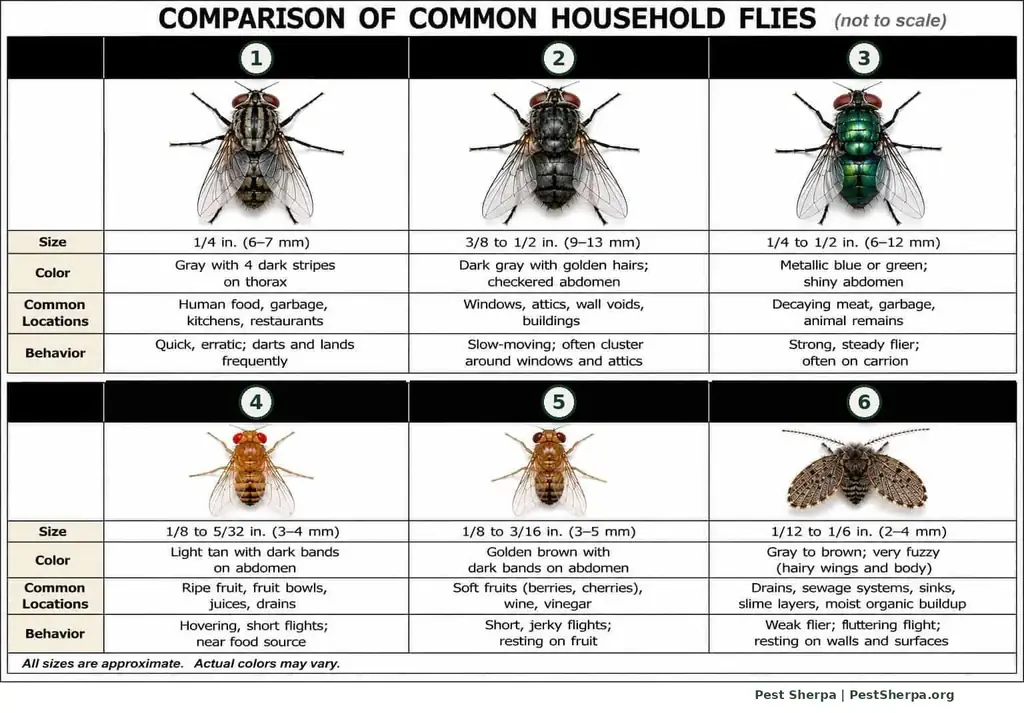
Which one did you find? Match the number:
- House fly: gray with four dark stripes on the thorax. About 1/4 inch.
- Cluster fly: dark gray with golden hairs and a checkered abdomen. Gathers at windows and in attics.
- Blue bottle fly: metallic blue or green with a shiny abdomen. Drawn to decaying meat and garbage.
- Fruit fly (vinegar fly): tiny, light tan with red eyes and dark bands on the abdomen.
- Dark-eyed fruit fly: tiny and golden brown with dark eyes.
- Drain fly (moth fly): fuzzy, gray to brown with hairy, moth-like wings. Rests on walls near drains.
Related Fly Identification Guides
- Fruit Flies
Small flies attracted to fermenting fruit, spills, recycling, and sugary residue.
Vinegar Flies / Fruit Flies Guide - Dark-Eyed Vinegar Flies
Persistent dark-eyed flies commonly breeding in drains, wet organic buildup, bars, and commercial kitchens.
Dark-Eyed Vinegar Fly (Drosophila repleta) Guide - House Flies
Common indoor filth flies associated with garbage, food waste, and sanitation issues.
House Fly Guide - Blow Flies
Larger metallic flies associated with carrion, trash, dead animals, and decay odors.
Green Bottle Fly / Blow Fly Guide - Cluster Flies
Slow-moving seasonal flies commonly found near windows, attics, and wall voids.
Cluster Fly Guide - Fungus Gnats
Houseplants, moist soil, slender dark flies with long legs.
Fungus Gnat Guide
Drain Fly Control Guide
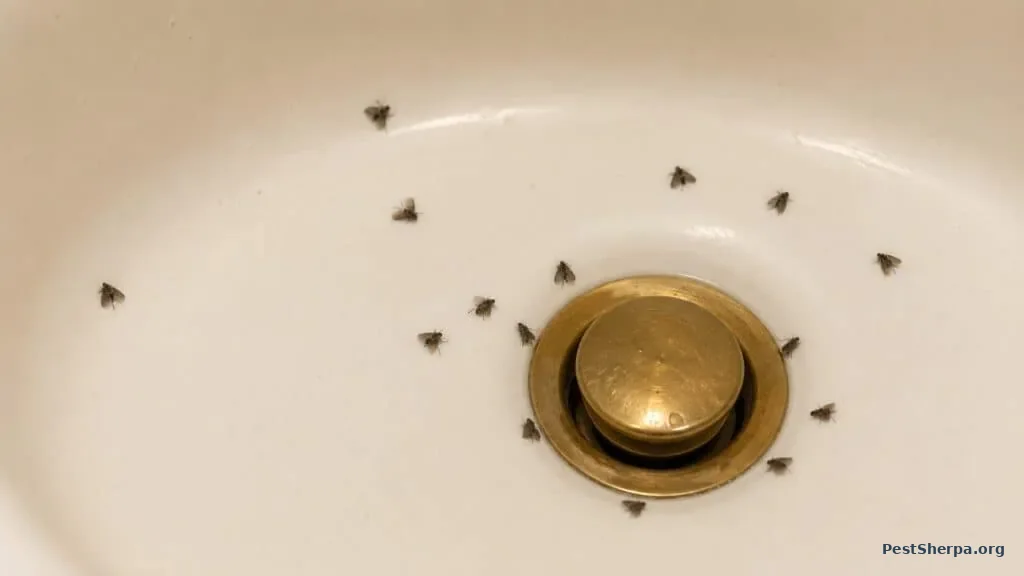
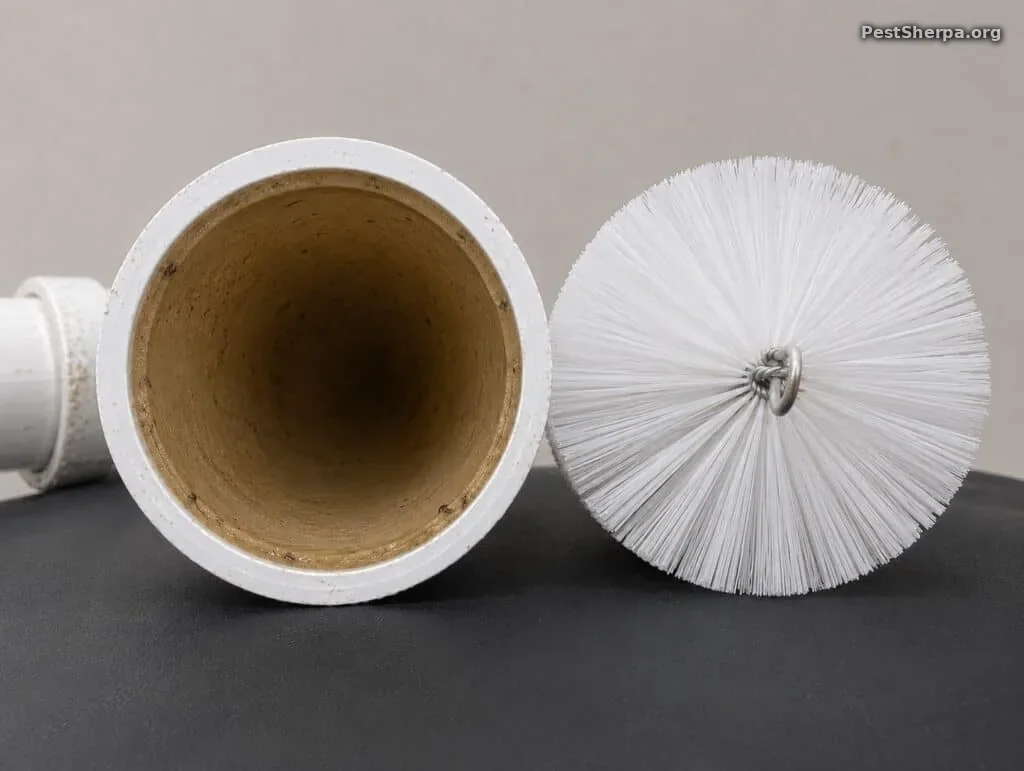
Above: Moth/Drain Flies in sink and drain cleaning by a professional pest control company followed by specialized treatment is often the best course of action
Why Drains Are a Major Source
- Organic sludge builds up inside pipes
- Provides food and moisture for larvae
- Often overlooked during cleaning
How to Confirm Drain Breeding
- Flies hover near sink or drain
- Activity increases at night
- Tape test over drain (flies collect underneath)
What Works
- Mechanical cleaning (brush or pipe cleaner)
- Boiling water flush (limited help)
- Enzyme-based cleaners to break down organic matter
What Does NOT Work
- Sprays alone (do not reach larvae)
- Occasional cleaning (problem returns)
Key Insight: Drain infestations require removal of buildup, not just killing adults.
Prevention Strategy
Sanitation
- Remove food and organic waste
- Clean drains regularly
Exclusion
- Seal entry points
- Install window screens
Monitoring
- Identify early activity
- Watch for recurring patterns
Common Questions
Are flies dangerous?
Filth flies (house flies and blow flies) can contaminate food and surfaces because they land on garbage, animal waste, and decay before they land on what you eat. They are contamination pests, not structural pests. They do not chew wood or nest in walls the way termites do. For the sanitation and source-risk picture, see Why It Matters.
What attracts house flies?
House flies follow food waste, garbage, pet waste, moisture, and decaying organic material. Sugary spills, dirty trash cans, and pet food add to the draw. Warm weather speeds breeding, so a small sanitation miss can turn into a lot of flies in a few days. See also: How do I keep pests out of trash cans?
Why do they collect at windows?
Flies collect at windows because of light and because they are trying to get out. The glass is not where they are breeding. If the same window keeps filling up, look for the source in trash, drains, fruit, pet waste, or a dead animal in a void. See Why Flies Suddenly Appear.
Do fly sprays work?
Sprays can knock down the adults you see. They do not stop the source. Eggs and larvae in a drain, trash can, or wall void keep producing new flies, so the problem returns. For the longer explanation, see Do fly sprays actually work?
When to call a pro?
Call a professional when flies keep returning after cleaning, you cannot find the breeding source, activity seems to come from walls, drains, or a crawlspace, or you suspect a dead animal in the structure. See When to Call a Professional on this page, and the longer Q&A When should I call a professional for flies?
References
- Integrated Pest Management (IPM) Resources
- EPA: Integrated Pest Management (IPM) Principles
Core EPA guidance explaining prevention-first pest management strategies, sanitation, exclusion, monitoring, and reduced-risk control practices. - EPA: Integrated Pest Management (IPM) Program Resources
EPA educational resources covering pest identification, monitoring, prevention, and long-term pest reduction strategies. - EPA: Pest Control Resources for Residents
Practical homeowner-focused guidance on safer pest prevention and control methods. - National Pesticide Information Center (NPIC): Integrated Pest Management
Science-based IPM overview developed through Oregon State University and EPA-supported programs. - University Extension Entomology References
- Purdue Extension: Fly Control Around the Home
Detailed extension guidance covering house flies, cluster flies, sanitation, exclusion, and structural prevention methods. - Colorado State University Extension: Flies in the Home
Identification and management guidance for common indoor nuisance flies, including house flies, fruit flies, fungus gnats, and cluster flies. - University of Minnesota Extension: Flies
University-backed identification information for nuisance flies commonly found in homes. - University of Kentucky Entomology: Cluster Flies, Face Flies, and Blow Flies in Homes
Strong reference for distinguishing cluster flies from blow flies and other large indoor flies. - Iowa State University Extension: Cluster Fly
Seasonal biology, overwintering behavior, and exclusion recommendations for cluster flies. - Texas A&M AgriLife Extension: Indoor Flies and Their Control
Comprehensive extension reference covering fruit flies, drain-associated flies, house flies, blow flies, and sanitation-focused management. - University of Arkansas Extension: Drain Flies
Useful reference explaining why adult fly spraying alone rarely solves drain fly infestations. - Illinois Department of Public Health: House Fly and Filth Fly Prevention and Control
Public health guidance on house flies, blow flies, carrion-associated flies, and contamination risks. - U.S. Army Public Health Center: Controlling Flies In and Around the Home
Public-health-focused guidance on fly sanitation risks, breeding sources, and prevention methods. - UC IPM: Fungus Gnats
University of California IPM guidance on fungus gnats in moist potting soil and houseplants.
This article was written by Greg Baumann, founder of Pest Sherpa, and reflects more than 40 years of professional pest management experience.
About the Author

Greg Baumann | Pest Control Expert
Greg Baumann is the founder of Pest Sherpa and a Pest Control Expert with more than 40 years of professional pest management experience. His articles combine decades of field experience, technical expertise, and science-based guidance to help homeowners identify pests correctly, understand real-world risks, and make informed pest management decisions.
Mission: Identify the pest. Understand the risk. Stop the problem. Prevent the comeback. Know when it’s time to call a professional.