
Cluster Flies: Identification, Causes, Treatment, and Prevention
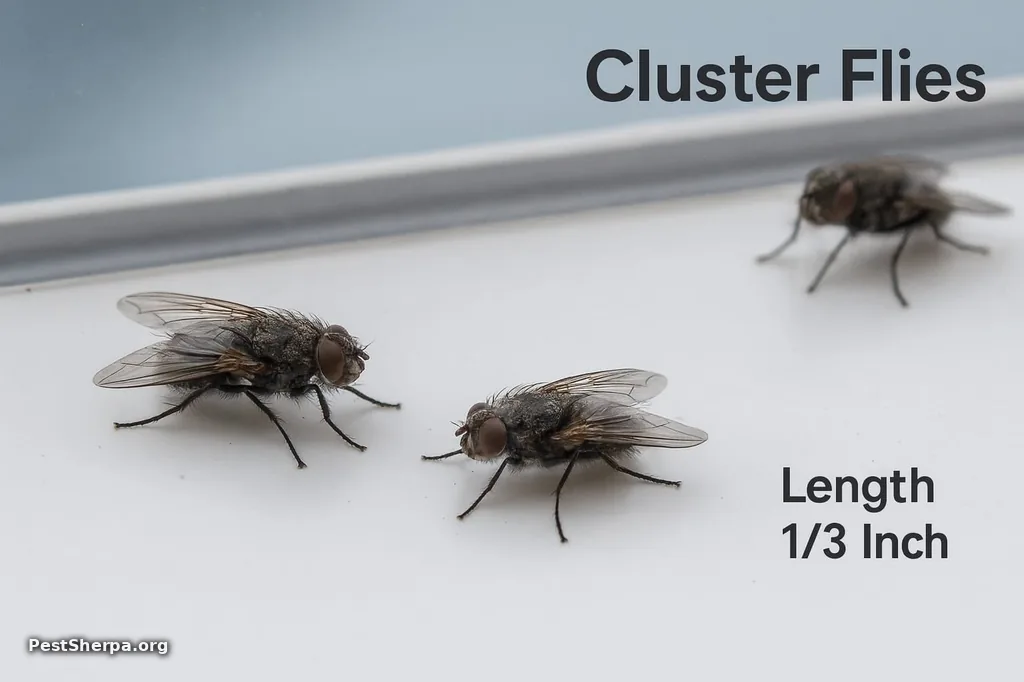
Cluster flies are large, slow-moving nuisance flies that often show up inside homes in fall, winter, or early spring. They can be unsettling when several appear at once, especially around windows, attic access points, or upper-floor rooms. The good news: cluster flies do not bite, do not reproduce indoors, are not known to spread disease in homes, and do not damage buildings. Their presence usually means adults found a way into protected spaces such as wall voids, attics, soffits, or window-frame gaps to overwinter.
This guide explains how to identify cluster flies, why they enter homes, how to tell them apart from filth flies, what to check first, and which prevention steps matter most before the next fall season.
TL;DR
If you are seeing large, sluggish gray flies indoors during cool weather, they may be cluster flies. They are also called attic flies because they often overwinter in attics, wall voids, and upper areas of buildings. They do not breed in garbage, drains, food, or dead animals. Instead, the larvae develop outdoors as parasites of earthworms in soil.
The most useful long-term fix is exclusion: seal cracks, screen vents, repair gaps around windows and doors, and focus on sunny upper exterior walls before late summer or early fall. Once cluster flies are already inside hidden voids, indoor sprays and foggers usually provide limited results. Vacuuming visible flies is often the safest short-term step.
Quick Navigation
- Quick Identification
- What Cluster Flies Mean in a Home
- Why Cluster Flies Enter Homes
- Do Cluster Flies Mean Something Is Rotting?
- Seasonal Activity and Life Cycle
- Inspection Checklist
- What To Do Now
- What Does Not Work Well
- How To Prevent Cluster Flies
- Pesticide Safety Notes
- When Professional Help May Be Needed
- Lookalikes and Common Misidentifications
- Frequently Asked Questions
- References
Quick Identification
Cluster flies are flies in the genus Pollenia. They are commonly compared with house flies, but they tend to look larger, darker, and slower.
| Feature | Cluster Fly Clue |
|---|---|
| Size | Medium to large fly, often about 7 mm or roughly 1/4 to 3/8 inch long |
| Color | Dull gray to brownish-gray, not metallic |
| Thorax | Short yellowish or golden hairs may be visible |
| Abdomen | Often has a checkered pattern |
| Movement | Sluggish, especially in cool indoor conditions |
| Common location indoors | Windows, upper rooms, attics, wall voids, light fixtures, and sunny areas |
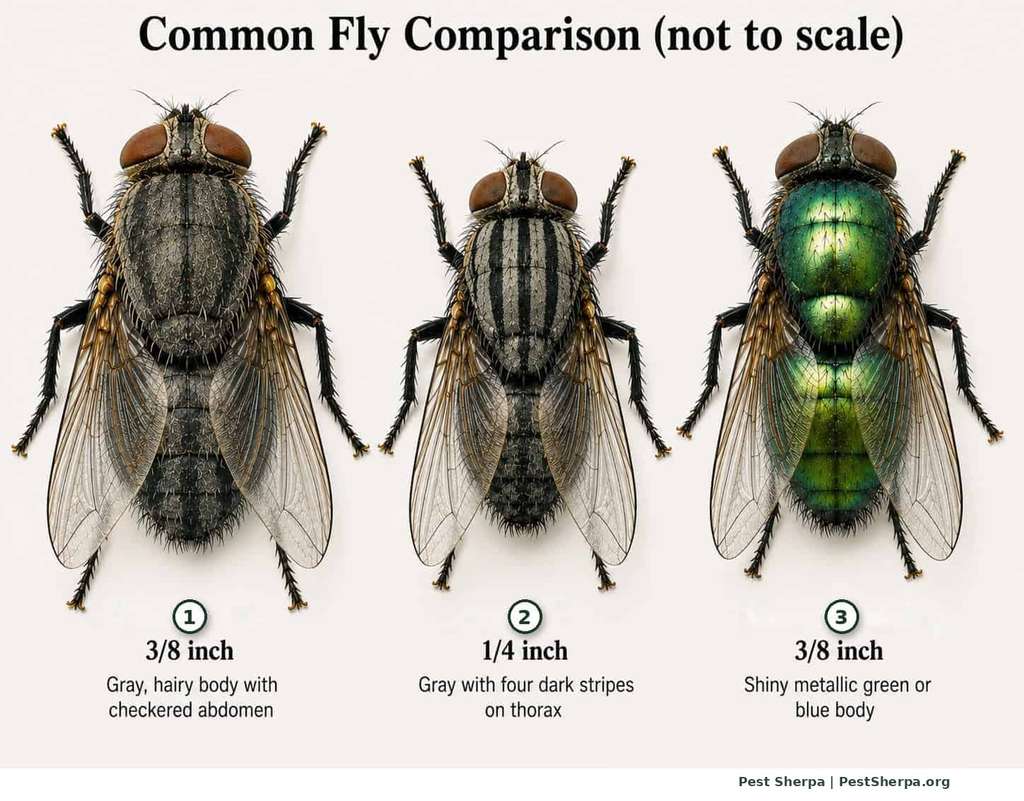
Which one do you see? Match the number:
- Cluster fly: about 3/8 inch, gray and hairy with a checkered abdomen and golden hairs on the thorax. Gathers in attics and on sunny windows in fall and late winter.
- House fly: about 1/4 inch, gray with four dark stripes on the thorax.
- Green bottle fly: about 3/8 inch, shiny metallic green or blue-green.
ICluster fly compared with house fly and metallic green bottle fly.
What Cluster Flies Mean in a Home
Cluster flies are usually a sign of seasonal overwintering, not indoor breeding. Adults enter buildings in late summer or fall and hide in protected spaces. Warm winter days, indoor heat, or spring weather can wake them and cause them to move toward light.
| What You See | Most Likely Explanation |
|---|---|
| One large sluggish fly | May have wandered in or emerged from a hidden overwintering space |
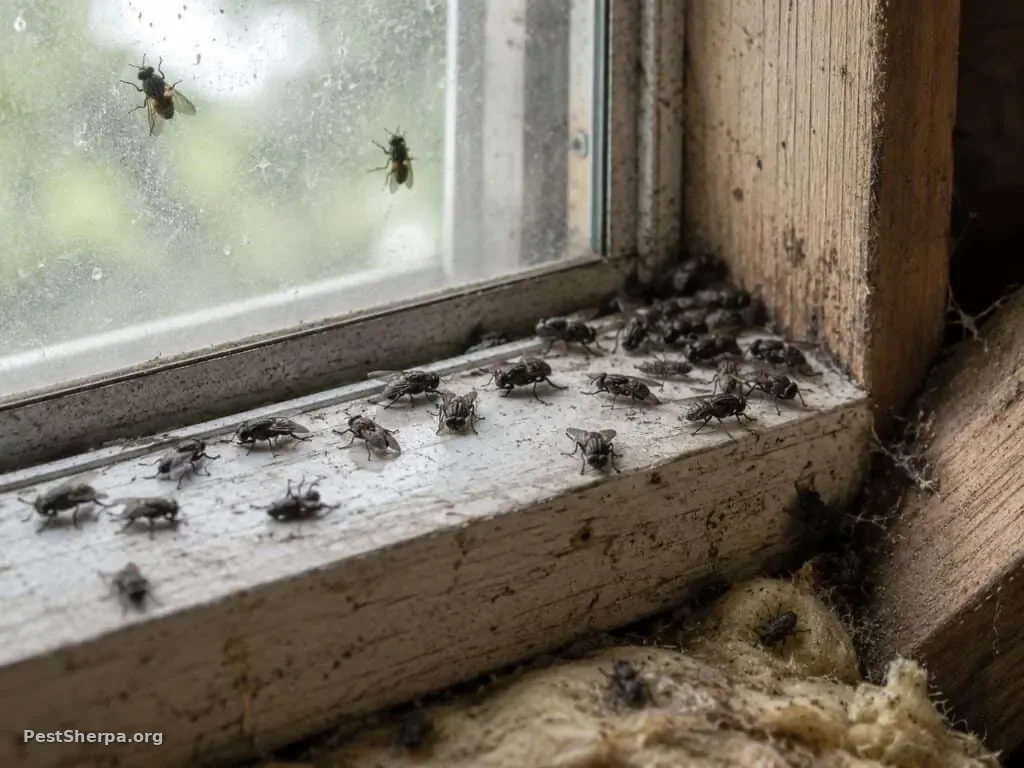
| Several flies near windows | Adults are moving toward light after leaving wall voids, attic spaces, or window-frame gaps |
| Flies mainly in upper rooms | Possible attic, soffit, wall void, or upper exterior entry point |
| Activity every winter or spring | The building may be a repeated overwintering site |
| Metallic green or blue flies | More likely a blow fly or bottle fly, not a cluster fly |
For broader fly identification, see the Pest Sherpa fly guide.
Why Cluster Flies Enter Homes
Cluster flies are outdoor insects for most of the year. In late summer and fall, adults look for protected overwintering places. Homes and other buildings can accidentally provide the shelter they need.
They often gather first on warm, sunlit exterior surfaces, especially upper walls, eaves, siding, window frames, and other areas heated by afternoon sun. From there, they may squeeze into small openings.
- Cracks around windows and doors
- Loose siding or trim gaps
- Soffits, louvers, and attic vents
- Gaps around utility lines, cables, pipes, and exterior penetrations
- Openings around rooflines, eaves, chimneys, and fascia boards
- Interior gaps around attic doors, ceiling fixtures, baseboards, and window-frame openings
Once inside, they may remain hidden for weeks or months. This is why a home can seem quiet for a while and then suddenly have flies at windows.
Do Cluster Flies Mean Something Is Rotting?
Usually, no. Cluster flies are different from many filth flies. They do not breed in garbage, pet waste, drains, decaying food, or dead animals. Their larvae develop outdoors in soil as parasites of earthworms.
However, correct identification matters. Metallic green or blue flies, strong foul odors, maggots, or flies appearing after rodent activity may point to a different issue, such as blow flies or bottle flies. For that situation, compare with the green bottle flies and blow flies guide.
| Sign | Cluster Fly More Likely? | Another Fly More Likely? |
|---|---|---|
| Dull gray fly, sluggish, winter window activity | Yes | Less likely |
| Metallic green or blue fly | No | Blow fly or bottle fly more likely |
| Strong decay odor | No | Dead animal or organic source possible |
| Maggots indoors | No | Active breeding source likely |
| Small fuzzy flies near drains | No | Drain flies more likely |
| Tiny flies around fruit, bottles, or fermenting material | No | Vinegar flies or fruit flies more likely |
Seasonal Activity and Life Cycle
Cluster flies have a complete life cycle: egg, larva, pupa, and adult. Adult females lay eggs in soil. The larvae seek out earthworms and develop as internal parasites. Adults then emerge and may produce multiple generations during the warm season, depending on climate and local conditions.
The generation most noticeable to homeowners is the late-season adult generation. These flies seek protected overwintering sites in late summer and fall. They may stay hidden through cold weather, then become active on warm winter days or in spring.
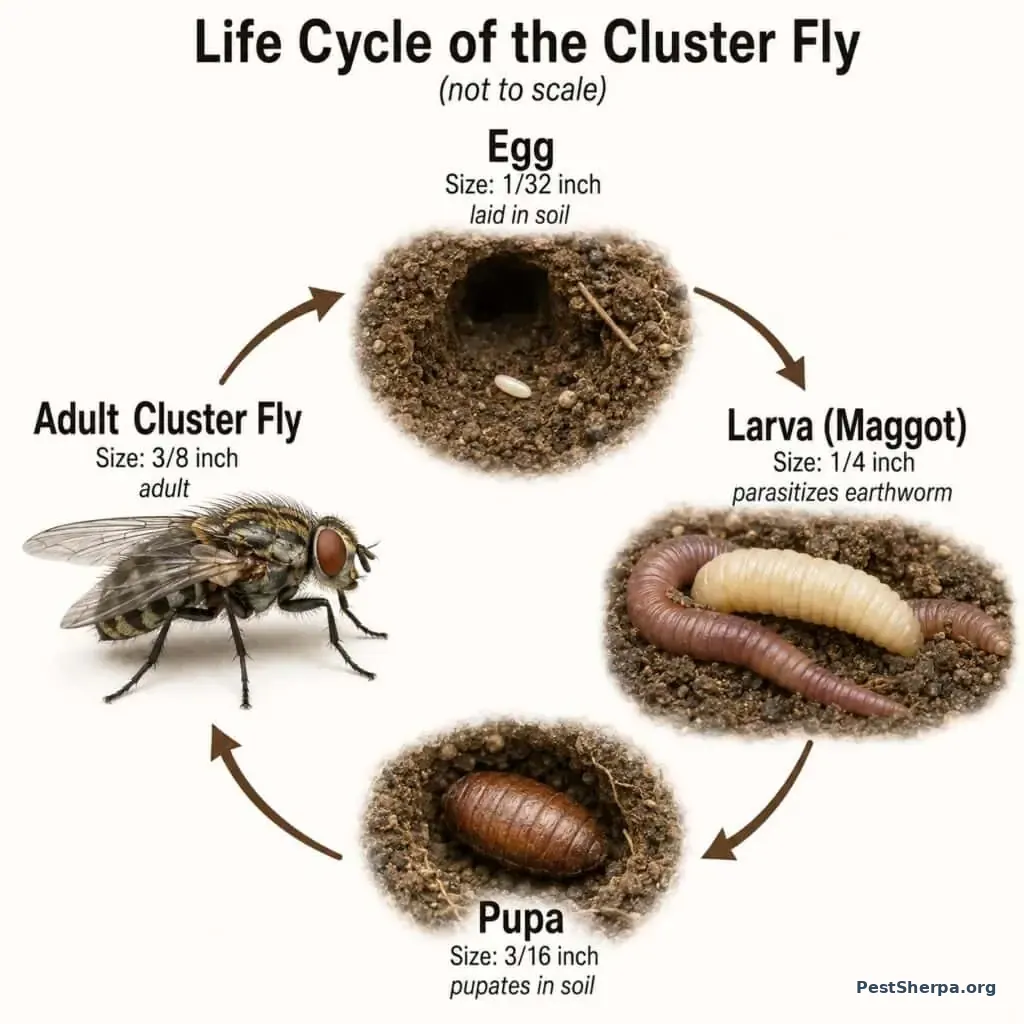
Cluster fly life cycle showing larvae developing with earthworms to adults which can overwinter in buildings.
Cluster Fly Inspection Checklist
Step 1: Confirm the Fly
Look for a dull gray, sluggish fly with yellowish hairs on the thorax. If the fly is shiny green or blue, tiny and fruit-associated, or fuzzy and near drains, it is probably not a cluster fly.
Step 2: Note Where They Appear
- Upper-floor windows
- Attic doors or attic stairs
- Ceiling lights or recessed fixtures
- Window frames and trim
- Rooms below attic spaces
Step 3: Check Exterior Entry Areas
Inspect the sunny sides of the building, especially upper south- and west-facing areas when practical. Look for gaps around siding, eaves, attic vents, rooflines, utility penetrations, and window trim.
Step 4: Check Interior Pathways
Cluster flies hidden in wall voids may enter living spaces through interior gaps. Check openings around attic hatches, light fixtures, ceiling fans, baseboards, older window pulley openings, and poorly sealed trim.
What To Do Now
1. Vacuum Visible Flies
Vacuuming is often the simplest short-term control. Empty the canister or discard the bag promptly so dead flies do not create odor or attract secondary pests.
2. Use Sticky Traps or Light Traps for Monitoring
Sticky traps can help you monitor where flies are appearing. Light traps may help reduce some adults in low-light indoor areas, but they will not remove flies hidden in walls or attics.
3. Seal Interior Openings
If flies are entering living spaces from attic or wall voids, seal small interior gaps around trim, light fixtures, attic hatches, and window frames where safe and appropriate. Do not seal active ventilation openings unless they are properly screened and intended to be screened.
4. Plan Exterior Exclusion Before Fall
The most important work happens before the next overwintering season. Exterior sealing is more useful before cluster flies begin entering buildings in late summer or fall.
What Does Not Work Well
- Foggers or bug bombs: They usually do not reach flies hidden deep in wall voids and attics.
- Endless indoor spraying: It may kill exposed flies but rarely solves the hidden overwintering population.
- Drain treatments: Cluster flies are not drain flies and do not breed in drain slime.
- Garbage cleanup alone: Good sanitation is useful for many pests, but cluster flies are not usually coming from indoor trash.
- Trying to treat the soil for earthworms: Earthworms are beneficial, and treating soil to target cluster fly larvae is not a practical household solution.
How To Prevent Cluster Flies
Prevention means making it harder for adult flies to enter before they begin overwintering.
Seal Exterior Gaps
- Caulk cracks around window and door frames.
- Repair loose siding, fascia, soffit, and trim gaps.
- Seal around utility penetrations, cables, pipes, and exterior wall openings.
- Install or replace weatherstripping where doors and windows do not close tightly.
Screen Vents and Openings
- Repair torn window and door screens.
- Use appropriate screening on attic vents, soffit vents, and louvers.
- Keep attic ventilation functional; screen openings without blocking needed airflow.
Focus on Timing
Late summer is the key inspection period in many regions. Once the flies have already moved into wall voids or attics, prevention becomes much harder until the next season.
Pesticide Safety Notes
Pesticides are not always necessary for cluster flies. When pesticides are used, they should be used carefully, only where the label allows, and only according to the product label directions. Avoid spraying food-contact surfaces, children’s items, pet areas, HVAC intakes, and poorly ventilated spaces unless the product label specifically allows that use.
Indoor sprays may reduce exposed flies but usually do not reach hidden clusters in wall voids or attics. Some treatments can also create a second problem if large numbers of dead flies remain hidden and attract carpet beetles or other scavenging insects. For carpet beetle comparison, see the black carpet beetle guide.
When Professional Help May Be Needed
Cluster flies are usually a nuisance issue, not an emergency. Professional help may be worth considering when identification is uncertain, flies return every year in large numbers, the activity is coming from high or difficult-to-access areas, or exterior exclusion work requires ladders, roofline inspection, or attic access that is not safe for the homeowner.
Professional help may also be useful if the flies are not actually cluster flies. Metallic flies, maggots, or strong odors may require a source investigation instead of overwintering-fly prevention. Rodent history can also change the investigation; compare possible rodent-related sources with the house mouse guide and Norway rat guide.
Lookalikes and Common Misidentifications
| Pest | How It Differs From Cluster Flies |
|---|---|
| House Fly | Common gray indoor fly; usually more active and more associated with food, garbage, and sanitation sources than cluster flies |
| Green Bottle Fly / Blow Fly | Metallic green or blue; often connected with carrion, garbage, pet waste, or other decomposing organic material |
| Drain Fly | Small, fuzzy, moth-like fly usually found near drains, plumbing biofilm, or wet organic buildup |
| Vinegar Fly / Fruit Fly | Tiny fly associated with fermenting fruit, bottles, drains, trash, or food residue |
| Face Fly | Can also overwinter in buildings; identification may require closer examination |
Frequently Asked Questions
Do cluster flies bite?
No. Cluster flies do not bite people or pets.
Do cluster flies spread disease?
Cluster flies are not considered disease-spreading filth flies in the way house flies, blow flies, or bottle flies may be. They are primarily nuisance pests indoors.
Are cluster flies breeding in my house?
Usually, no. Cluster flies do not reproduce indoors. Their larvae develop outdoors with earthworms in soil.
Why do cluster flies keep appearing at windows?
Adults hidden in walls, attics, or window-frame gaps often move toward light when temperatures warm. The window is usually where they are trying to exit, not where they are breeding.
Will cluster flies go away on their own?
Visible activity may decline as adults die or leave in spring. If the same entry points remain open, the problem can return the next fall.
What is the best long-term control for cluster flies?
Exclusion is the best long-term strategy. Seal gaps, repair screens, screen vents, and address upper exterior openings before late summer or early fall.
Should I use a bug bomb for cluster flies?
Bug bombs are usually a poor fit for cluster flies because the adults are often hidden in voids where foggers do not reach well. Vacuuming visible flies and improving exclusion are usually more practical.
References
- Clemson Cooperative Extension HGIC: Cluster Flies
- Michigan State University Plant & Pest Diagnostics: Cluster Fly
- University of New Hampshire Extension: Cluster Flies Fact Sheet
- University of Maine Cooperative Extension: Cluster Flies
- Virginia Cooperative Extension: Cluster Fly
- Connecticut Agricultural Experiment Station: Cluster Fly Pollenia
This article was written by Greg Baumann, founder of Pest Sherpa, and reflects more than 40 years of professional pest management experience.
About the Author

Greg Baumann | Pest Control Expert
Greg Baumann is the founder of Pest Sherpa and a Pest Control Expert with more than 40 years of professional pest management experience. His articles combine decades of field experience, technical expertise, and science-based guidance to help homeowners identify pests correctly, understand real-world risks, and make informed pest management decisions.
Mission: Identify the pest. Understand the risk. Stop the problem. Prevent the comeback. Know when it’s time to call a professional.