
Norway Rats: Identification, Signs, Damage, and What to Do
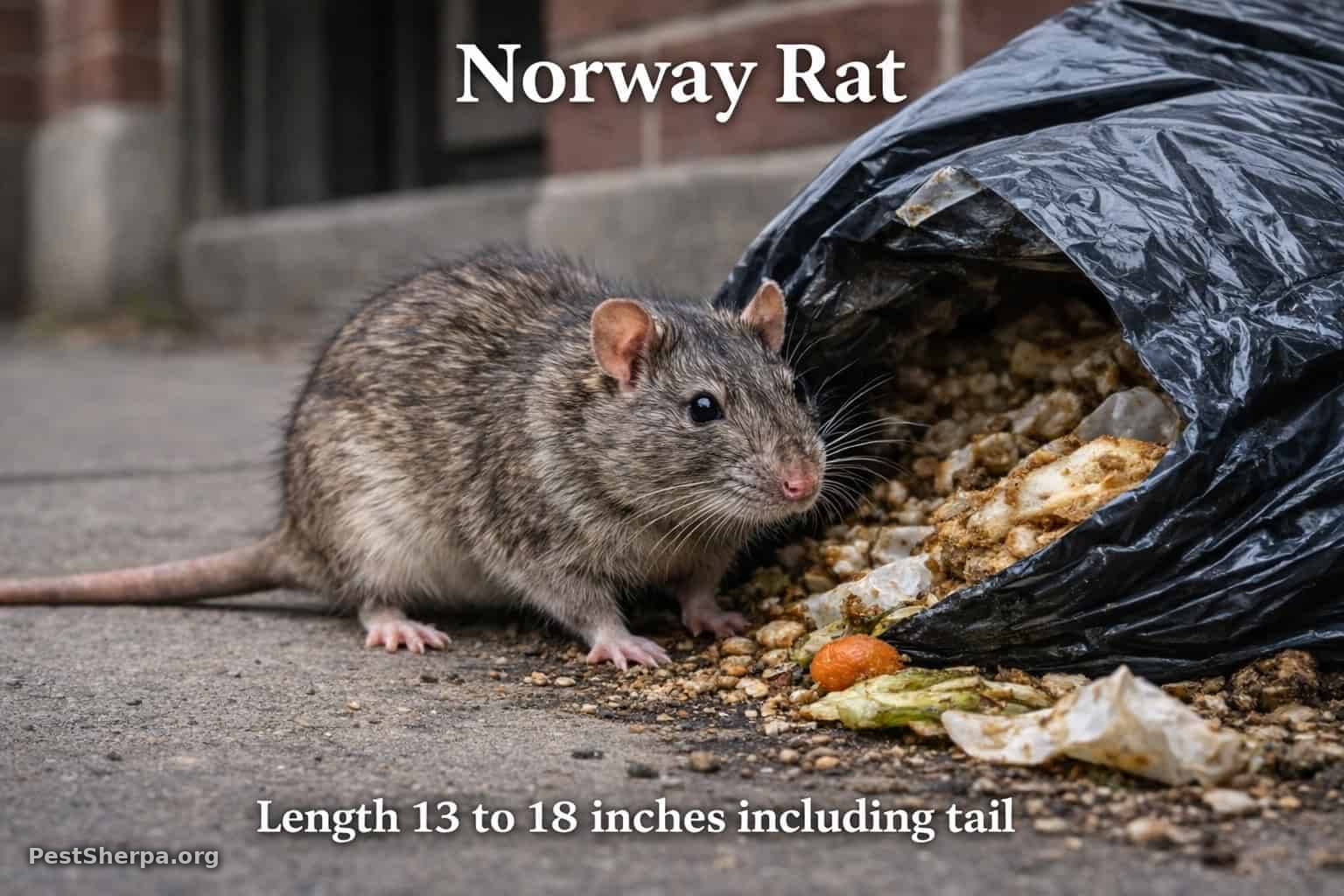
The Norway rat (Rattus norvegicus), also called the brown rat, sewer rat, or common rat, is a heavy-bodied commensal rodent that lives closely around people. In homes, businesses, farms, alleys, sewers, crawlspaces, basements, loading areas, and waste-handling zones, Norway rats use human-created food, water, shelter, and clutter to survive.
A Norway rat sighting does not always mean there is a large infestation, but it should be taken seriously. Rats can contaminate food and surfaces with urine, droppings, and hair; damage packaging, insulation, and wiring by gnawing; and create burrows around foundations, sidewalks, patios, and landscaping. The most effective response is not just trapping individual rats. It is finding where they are feeding, how they are entering, where they are nesting, and what conditions are allowing them to stay.
This guide explains how to identify Norway rats, how to tell them apart from similar rodents, what common signs mean, where to inspect first, which control steps matter most, and when professional help may be worth considering.
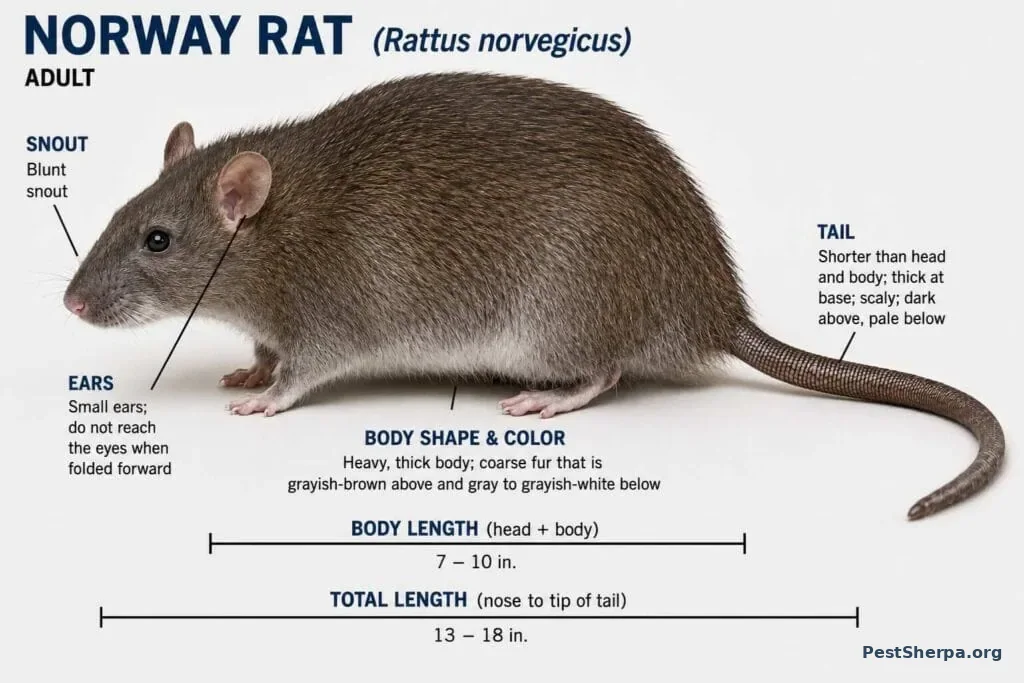
Norway rat showing heavy body, blunt nose, small ears, and shorter tail.
TL;DR
Norway rats are large, stocky rats that usually stay at ground level or below ground. They commonly nest in burrows, crawlspaces, basements, sewers, garages, cluttered storage areas, and voids near food and water. Key signs include capsule-shaped droppings, gnaw marks, rub marks, burrows, scratching sounds, tracks, damaged packaging, and repeated sightings.
One rat may be a wandering individual. Repeated sightings, fresh droppings, active burrows, gnawing, odor, or activity in several areas usually means a larger problem. Focus first on inspection, food removal, water reduction, exclusion, trapping, sanitation, and safe cleanup. Rodenticides are not always necessary and must be used only according to the label, with special care around children, pets, wildlife, and food-handling areas.
Quick Navigation
- What Norway Rats Mean Around a Home or Building
- Quick ID
- Identification
- Signs of Norway Rat Activity
- Where To Inspect First
- Why Norway Rats Suddenly Appear
- Biology and Life Cycle
- Habits and Behavior
- Risks, Damage, and Sanitation Concerns
- What To Do
- What Does Not Work Well
- How Long Rat Problems Last
- When Professional Help May Be Needed
- Lookalikes and Common Misidentifications
- Frequently Asked Questions
- References
What Norway Rats Mean Around a Home or Building
Norway rats are often a sign that food, water, shelter, or entry points are available. They may be using outdoor areas only, entering from outside, nesting under slabs or landscaping, or living inside hidden structural spaces.
| What You Notice | What It May Mean | First Place To Check |
|---|---|---|
| One rat outdoors | Possible nearby food, water, or shelter | Trash, pet food, bird seed, dense vegetation, woodpiles |
| Repeated sightings | Established activity nearby | Foundations, crawlspaces, garages, sheds, burrows |
| Droppings indoors | Rats may be entering or nesting inside | Basements, utility rooms, kitchens, storage areas |
| Burrows near a building | Possible nesting or sheltering at ground level | Slabs, steps, patios, retaining walls, landscaping |
| Scratching at night | Movement through voids, ceilings, walls, or crawlspaces | Attic edges, wall voids, crawlspace, utility chases |
| Gnawed packaging or wiring | Feeding and travel routes are active | Stored food, garages, utility areas, warehouses |
Expert Insight: Norway rat control works best when the inspection explains why the rats are there. Removing food, sealing entry points, reducing shelter, and placing traps along active travel routes are usually more important than treating random areas.
Quick ID: Norway Rat at a Glance
| Feature | Norway Rat |
|---|---|
| Scientific name | Rattus norvegicus |
| Common names | Brown rat, sewer rat, common rat |
| Body type | Large, heavy, stocky |
| Muzzle | Blunt |
| Ears | Relatively small compared with the head |
| Tail | Thick, scaly, usually shorter than head-and-body length |
| Typical nesting zone | Ground level, burrows, basements, crawlspaces, sewers, lower structural voids |
| Common evidence | Large droppings, burrows, gnaw marks, rub marks, tracks, scratching sounds |
Identification: What Norway Rats Look Like
Adult Norway rats are large, stocky rodents. They are usually brown to gray-brown above with a lighter gray or whitish underside. Their fur can look coarse or mottled because darker guard hairs mix with lighter body hairs.
The head is broad, the muzzle is blunt, and the ears are relatively small. The tail is thick, scaly, mostly hairless, and usually shorter than the combined length of the head and body. These features help separate Norway rats from roof rats, which are usually slimmer, more agile climbers with larger ears, a more pointed muzzle, and a tail longer than the head and body.
Norway rats are much larger than house mice. Rat droppings are also larger than mouse droppings, and rat gnaw marks are typically wider and more obvious.
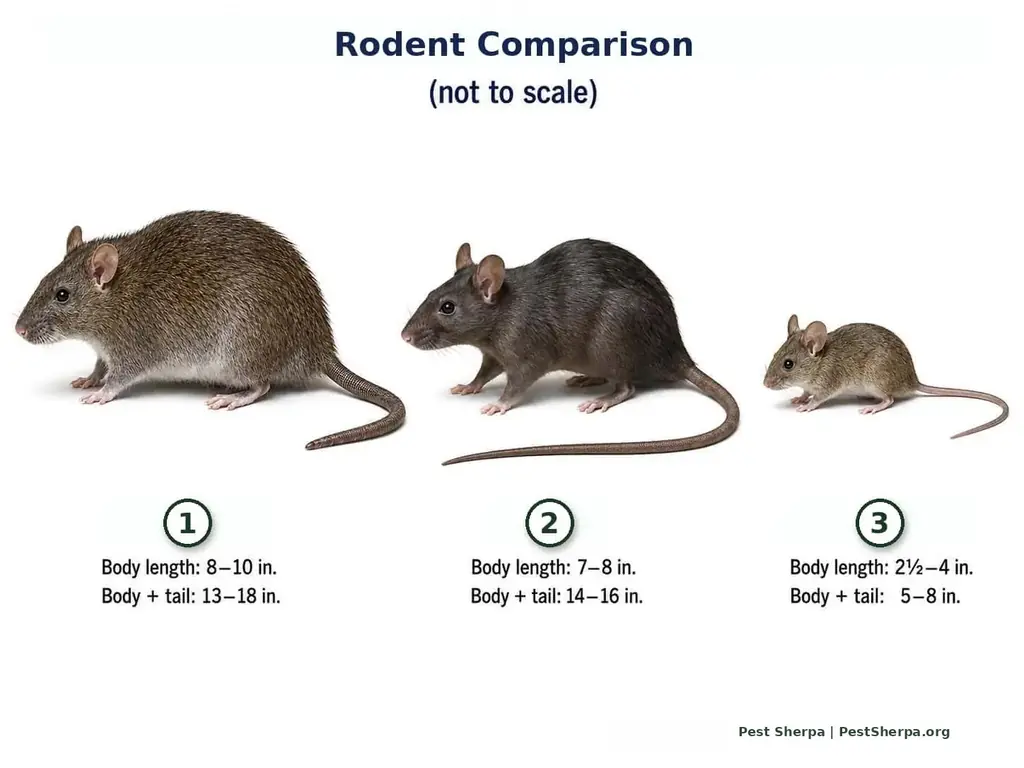
Which one did you find? Match the number:
- Norway rat: the largest and heaviest, with a blunt nose, small ears and a tail shorter than its body.
- Roof rat: slimmer and darker, with large ears and a tail longer than its body.
- House mouse: small, 2 1/2 to 4 inch body, with large ears for its size.
Norway rat, roof rat, and house mouse identification comparison.
Signs of Norway Rat Activity
Rats often leave evidence before they are seen. Fresh signs matter more than old signs, so look for new droppings, fresh gnaw marks, smooth burrow openings, disturbed soil, oily rub marks, or repeated nighttime sounds.
Droppings
Norway rat droppings are usually dark, capsule-shaped, and larger than mouse droppings. They are often found along walls, behind appliances, near food sources, in garages, around stored goods, under sinks, in basements, or close to burrow entrances.
Gnaw Marks
Rats gnaw to access food, enlarge openings, explore materials, and wear down continuously growing incisors. Look for chewing on wood, plastic, rubber, drywall, insulation, weatherstripping, food packaging, stored goods, and softer metals.
Rub Marks and Runways
Rats often travel along edges. Repeated movement can leave dark rub marks from body oils and dirt on walls, pipes, beams, baseboards, and foundation edges. Outdoor runways may appear as narrow paths through grass, weeds, or dust.
Burrows
Norway rats commonly burrow near foundations, under sidewalks, below patios, beside retaining walls, beneath concrete slabs, around dumpsters, and under dense landscaping. Active openings may look smooth, have fresh soil nearby, or show droppings and tracks close to the entrance.
Sounds and Odors
Scratching, squeaking, gnawing, or movement sounds at night may indicate activity in wall voids, ceilings, crawlspaces, or utility chases. A musky odor can develop where rats are nesting or where urine and droppings accumulate.
Where To Inspect First
Start where rats are most likely to find food, water, shelter, and entry points. Wear gloves when inspecting contaminated areas. Avoid sweeping or vacuuming dry droppings, urine, or nesting material because dust can become airborne.
| Inspection Area | What To Look For |
|---|---|
| Foundation perimeter | Burrows, gaps, utility penetrations, damaged vents, gnawing, rub marks |
| Trash and recycling areas | Loose lids, spilled food, grease, gnawed bags, droppings |
| Garages and sheds | Pet food, bird seed, grass seed, clutter, stored goods, droppings |
| Crawlspaces and basements | Entry gaps, damaged insulation, nests, droppings, rub marks, odor |
| Kitchens and pantries | Gnawed packages, droppings behind appliances, gaps around pipes |
| Landscaping | Dense groundcover, ivy, debris, woodpiles, low shelter near walls |
| Commercial loading or storage areas | Open dock gaps, pallets, spilled goods, wall-floor gaps, dumpster proximity |
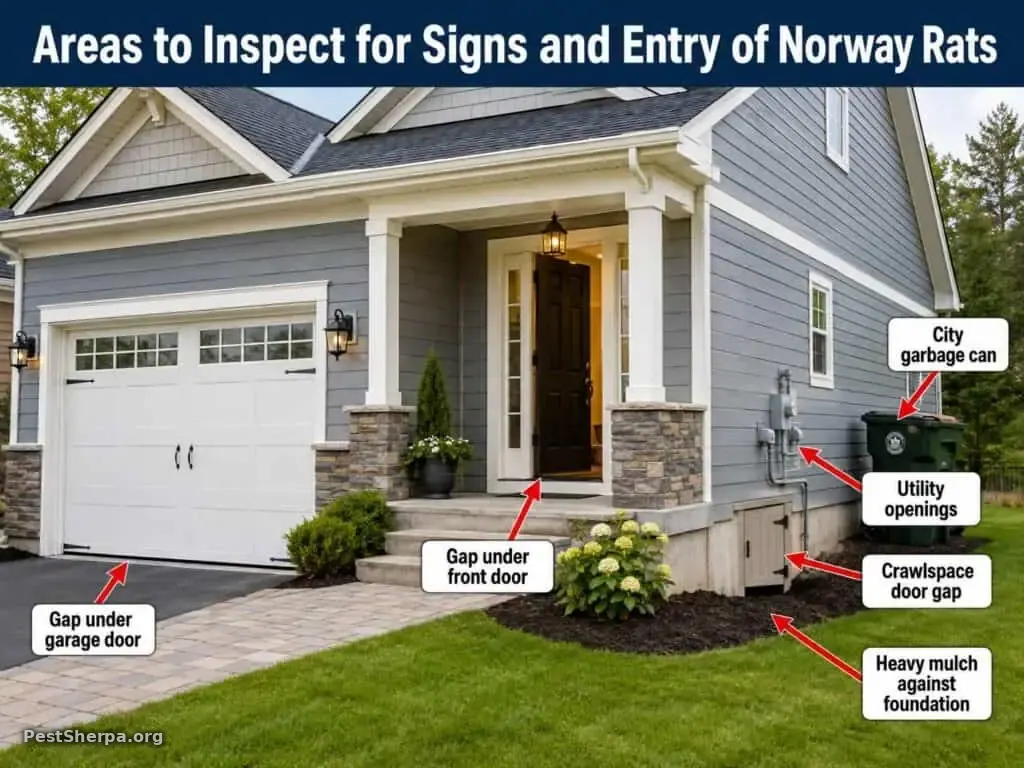
Norway rat inspection points around a home exterior.
Why Norway Rats Suddenly Appear
Rat activity may become noticeable even when rats have been nearby for a while. A sudden increase usually means something changed in the environment.
- New food sources appeared, such as open trash, pet food, spilled bird seed, compost, or garden produce.
- Nearby construction, flooding, sewer work, demolition, landscaping, or cleanup disturbed nesting sites.
- Cold, heat, drought, or heavy rain pushed rats toward shelter, water, or indoor access points.
- Outdoor clutter, woodpiles, dense vegetation, or stacked materials created new harborage.
- A nearby property has an active infestation and rats are moving along shared walls, alleys, fences, drains, or utility lines.
Biology and Life Cycle
Norway rats reproduce quickly when food, water, and shelter are steady. Breeding can occur throughout the year in protected environments. In colder climates, outdoor reproduction may slow during winter, but indoor or sheltered populations can continue when conditions remain favorable.
The gestation period is about three weeks. Litters commonly contain several young, and young rats develop quickly. Under favorable conditions, new generations can begin reproducing within a few months. This is why small, unnoticed rat problems can become much harder to manage if food, shelter, and entry points remain available.
Outdoors, Norway rats often nest in burrow systems. Indoors, nests may occur in crawlspaces, wall voids, basements, storage rooms, cluttered areas, utility chases, or other protected spaces. Nesting material may include shredded paper, insulation, fabric, cardboard, leaves, and other soft material.
Habits and Behavior
Norway rats are usually most active at night. They tend to follow edges such as walls, fences, pipes, beams, and foundation lines. Once they establish a route between food, water, and shelter, they often reuse the same runway.
They are cautious around new objects. This behavior can make newly placed traps or stations less effective at first if they are placed randomly or moved too often. Better results usually come from locating active runways and placing control tools where rats already travel.
Norway rats are strong gnawers and good diggers. They are not as strongly associated with elevated nesting as roof rats, but they can still climb, enter wall voids, use utility lines, and move through complex structures when access is available.
Risks, Damage, and Sanitation Concerns
Norway rats can create sanitation, property, and health-related concerns. They contaminate food, stored goods, and surfaces with droppings, urine, saliva, and hair. They may also carry parasites or pathogens, so droppings and nests should be handled carefully.
Gnawing can damage food packaging, stored materials, insulation, plastic components, wood, weatherstripping, and wiring. Burrowing can affect soil stability around slabs, patios, sidewalks, steps, and foundations, especially if activity continues over time.
For broader rodent-related disease background, see Pest Sherpa’s hantavirus and rodent identification resource. Not every rat sighting means a disease exposure has occurred, but rodent-contaminated areas should be cleaned using public-health guidance rather than dry sweeping or vacuuming.
What To Do About Norway Rats
1. Confirm the Rodent
Try to confirm whether you are dealing with Norway rats, roof rats, mice, or another rodent. Compare body size, tail length, nesting location, droppings, and travel routes. Correct identification affects trap placement, exclusion work, and inspection priorities.
2. Map Activity
Note where droppings, rub marks, gnaw marks, burrows, sounds, odors, or sightings occur. Look for patterns rather than treating every room or outdoor area the same way. Most rat control begins with finding active routes between shelter and resources.
3. Remove Food and Water
- Use tight-fitting lids on trash and recycling containers.
- Store pet food, bird seed, livestock feed, and grass seed in rodent-resistant containers.
- Clean food spills, grease, and crumbs promptly.
- Pick up fallen fruit, garden produce, and pet waste.
- Repair leaks and reduce standing water where practical.
4. Reduce Shelter
- Move stored materials away from walls and foundations.
- Thin dense groundcover, ivy, weeds, and low vegetation near structures.
- Remove debris, unused equipment, and clutter that provides cover.
- Keep firewood and stored materials elevated where possible.
5. Exclude Entry Points
Seal gaps around doors, utility lines, vents, pipes, foundation openings, crawlspace access points, and loading areas. Rats can enlarge weak materials by gnawing, so exclusion usually requires durable materials such as metal flashing, hardware cloth, concrete, mortar, or other rodent-resistant repairs.
6. Use Traps Strategically
Traps are most useful when placed along active runways, against walls, near burrow entrances, or close to known feeding routes. Keep traps away from children, pets, and non-target wildlife. Check them regularly and follow the manufacturer’s instructions.
7. Be Careful With Rodenticides
Rodenticides are not always necessary and can create risks if used incorrectly. Always read and follow the product label. Use only products labeled for the site and pest involved, and keep baits away from children, pets, wildlife, food, food-preparation surfaces, drains, and ventilation pathways. Loose or unsecured bait is unsafe and can increase unintended exposure.
8. Clean Contaminated Areas Safely
Wear gloves when cleaning rodent-contaminated areas. Do not sweep or vacuum dry droppings, urine, nests, or dead rodents. Ventilate enclosed spaces when appropriate, wet contaminated material with disinfectant according to public-health guidance, then wipe and discard waste safely.
What Does Not Work Well
- Ignoring food and shelter: Traps alone rarely solve the problem if rats still have easy food, water, and nesting cover.
- Random trap placement: Traps placed away from active runways are easier for rats to avoid.
- Sprays for rat problems: Insect sprays do not solve rodent activity and may create unnecessary pesticide exposure.
- Unsecured bait: Loose bait can endanger children, pets, wildlife, and non-target animals.
- Foam-only exclusion: Rats may gnaw through weak sealants unless repairs include rodent-resistant materials.
- Relying on sound devices: Ultrasonic devices are a common question, but they should not replace inspection, exclusion, sanitation, and trapping. See Pest Sherpa’s Q&A on whether ultrasonic repellents work.
How Long Rat Problems Last
The timeline depends on whether the source of the problem is corrected. A single outdoor visitor may disappear after food or shelter is removed. An established infestation can continue as long as rats have access to food, water, nesting space, and entry points.
| Situation | Likely Outcome |
|---|---|
| One outdoor sighting | May be short-lived if attractants are removed |
| Fresh droppings indoors | Entry points and nesting areas need investigation |
| Active burrows | Outdoor shelter and food sources are supporting activity |
| Rats keep returning after trapping | Food, access, or shelter is still available |
| Commercial or multifamily setting | Usually requires coordinated inspection, exclusion, sanitation, and monitoring |
When Professional Help May Be Needed
Some rat problems can be reduced with careful sanitation, exclusion, and trapping. Professional help may be worth considering when the source is hidden, the property is complex, or the activity keeps returning.
- Droppings appear in multiple rooms or levels.
- Rats are heard inside walls, ceilings, crawlspaces, or attic edges.
- Burrows are active near foundations, slabs, patios, or retaining walls.
- There is wiring, insulation, food-storage, or structural damage.
- Children, pets, livestock, wildlife, or food-handling areas increase safety concerns.
- Rodenticides may be needed, but you are unsure how to use them safely and legally.
- The property is a restaurant, grocery, school, healthcare facility, warehouse, multifamily building, or farm facility.
Lookalikes and Common Misidentifications
| Rodent | How It Differs From Norway Rats | Where It Is Often Found |
|---|---|---|
| Roof Rat | Slimmer body, pointed muzzle, larger ears, tail usually longer than head and body | Attics, trees, rooflines, vines, elevated voids |
| House Mouse | Much smaller, smaller droppings, can enter very small gaps | Kitchens, pantries, basements, walls, stored goods |
| Deer Mouse | Smaller, often with white underside and larger eyes; more associated with rural, field, cabin, shed, or garage settings | Sheds, garages, cabins, rural structures, stored materials |
| Pack Rat or Woodrat | May build bulky stick nests or collect objects; not the same as a commensal sewer rat | Outbuildings, desert or wooded areas, vehicles, sheds, attics in some regions |
| Voles | Shorter tail, outdoor runway damage, usually not an indoor pantry rodent | Lawns, gardens, groundcover, mulch beds |
Frequently Asked Questions
Does one Norway rat mean I have an infestation?
Not always. One rat may be moving through the area. Repeated sightings, fresh droppings, burrows, gnaw marks, rub marks, or nighttime sounds suggest ongoing activity and should be investigated.
Where do Norway rats usually nest?
Outdoors, Norway rats often nest in burrows near foundations, slabs, sidewalks, dumpsters, retaining walls, and dense landscaping. Indoors, they may use crawlspaces, basements, wall voids, storage rooms, utility chases, and cluttered low-disturbance spaces.
How do I know whether I have Norway rats or roof rats?
Norway rats are usually heavier, more ground-oriented, and have a blunt muzzle, smaller ears, and a tail shorter than the head-and-body length. Roof rats are usually slimmer, better climbers, and have a longer tail, pointed muzzle, and larger ears.
Can Norway rats get into walls?
Yes. Although they are strongly associated with ground-level burrows and lower structural areas, Norway rats can enter wall voids, utility chases, crawlspaces, ceilings, and other hidden spaces if openings are available.
Should I use poison for Norway rats?
Not automatically. Rodenticides may be part of some rat management programs, but they can create risks when used incorrectly. Start with inspection, sanitation, exclusion, and trapping. If rodenticides are used, read and follow the label and use them in a way that protects children, pets, wildlife, food, and non-target animals.
Is it safe to vacuum rat droppings?
No. Do not sweep or vacuum dry rodent droppings, urine, nests, or dead rodents. Public-health guidance recommends wetting contaminated material with disinfectant before cleanup so particles are less likely to become airborne.
Why do rats keep coming back after I trap them?
Recurring rat activity usually means food, water, shelter, or entry points remain. Trapping removes individuals, but long-term control depends on correcting the conditions that keep attracting and supporting rats.
Where do Norway rats go in winter?
Winter does not shut Norway rats down. They usually stay near ground level in walls, basements, crawlspaces, burrows, wall holes, and sewers. They can remain outdoors when food and shelter stay available. Warm winter evenings often mean more open foraging; cold nights keep them closer to cover except when they need food. Inspect monthly for burrows and seal foundation gaps before cold weather settles in. See also: Where do rats go in winter?
References
- University of California Agriculture and Natural Resources: Rats
- North Carolina State Extension: Surveillance and Management of Common Structure-Invading Rats
- Utah State University Extension: Norway Rat
- University of Missouri Extension: Controlling Rats
- Nebraska Extension: Controlling Rats
- Centers for Disease Control and Prevention: Controlling Wild Rodent Infestations
- Centers for Disease Control and Prevention: How to Clean Up After Rodents
- University of Illinois Extension: Norway Rat
This article was written by Greg Baumann, founder of Pest Sherpa, and reflects more than 40 years of professional pest management experience.
About the Author

Greg Baumann | Pest Control Expert
Greg Baumann is the founder of Pest Sherpa and a Pest Control Expert with more than 40 years of professional pest management experience. His articles combine decades of field experience, technical expertise, and science-based guidance to help homeowners identify pests correctly, understand real-world risks, and make informed pest management decisions.
Mission: Identify the pest. Understand the risk. Stop the problem. Prevent the comeback. Know when it’s time to call a professional.