
Pack Rats (Woodrats): Identification, Signs, Damage, and What To Do
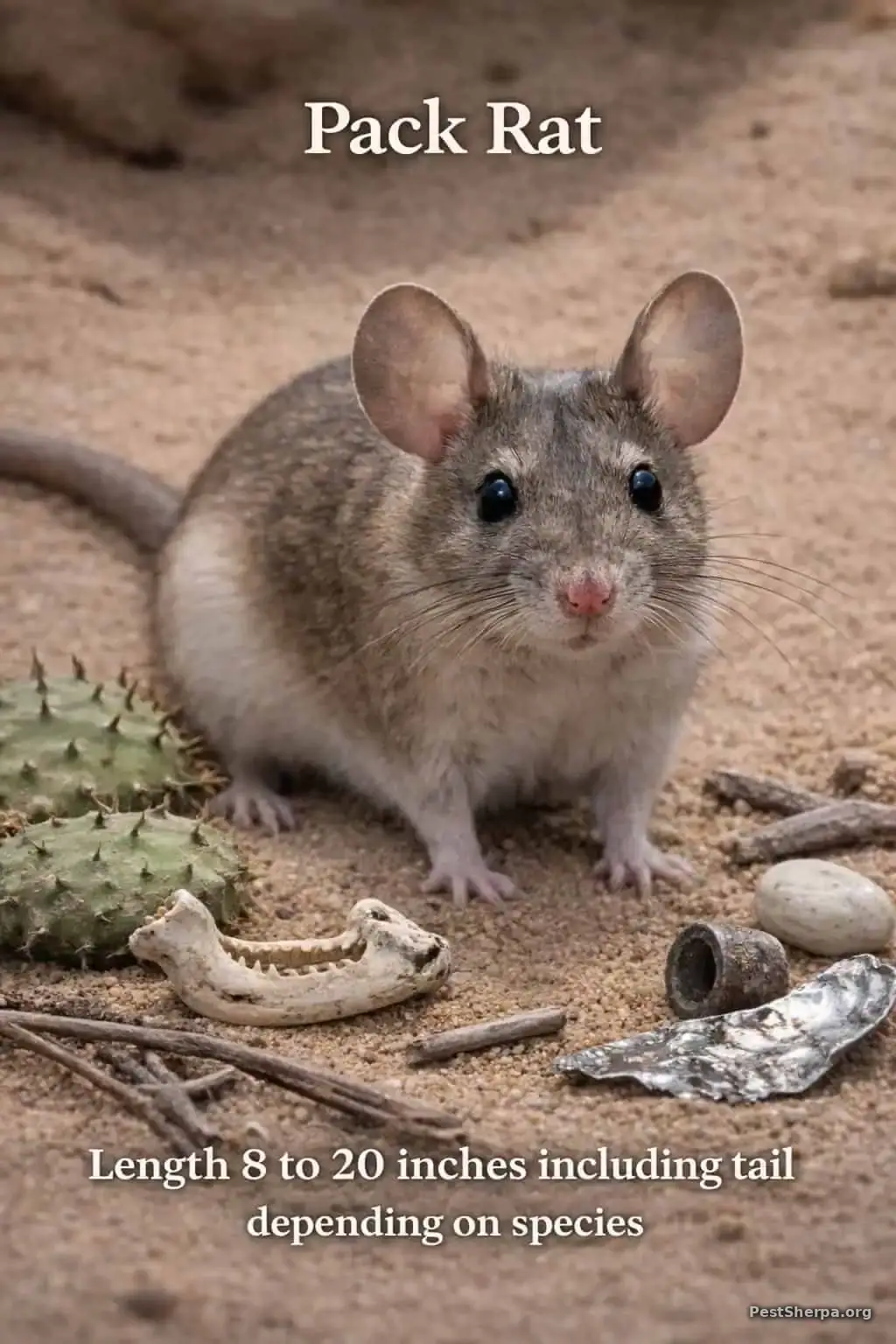
Pack rats, also called woodrats, are native rodents in the genus Neotoma. They are not the same thing as Norway rats, roof rats, or house mice. Most pack rats live outdoors in natural habitats, but they may move into sheds, cabins, garages, crawl spaces, attics, vehicles, and stored equipment when food, shelter, nesting material, or weather conditions make those areas attractive.
The most useful clue is not just the animal itself. Pack rats often leave behind large stick-and-debris nests called middens, droppings, urine odor, gnaw marks, clipped plant material, and collected objects. This guide explains how to identify pack rats, what their activity usually means, where to inspect, what not to do, and which next steps are safest.
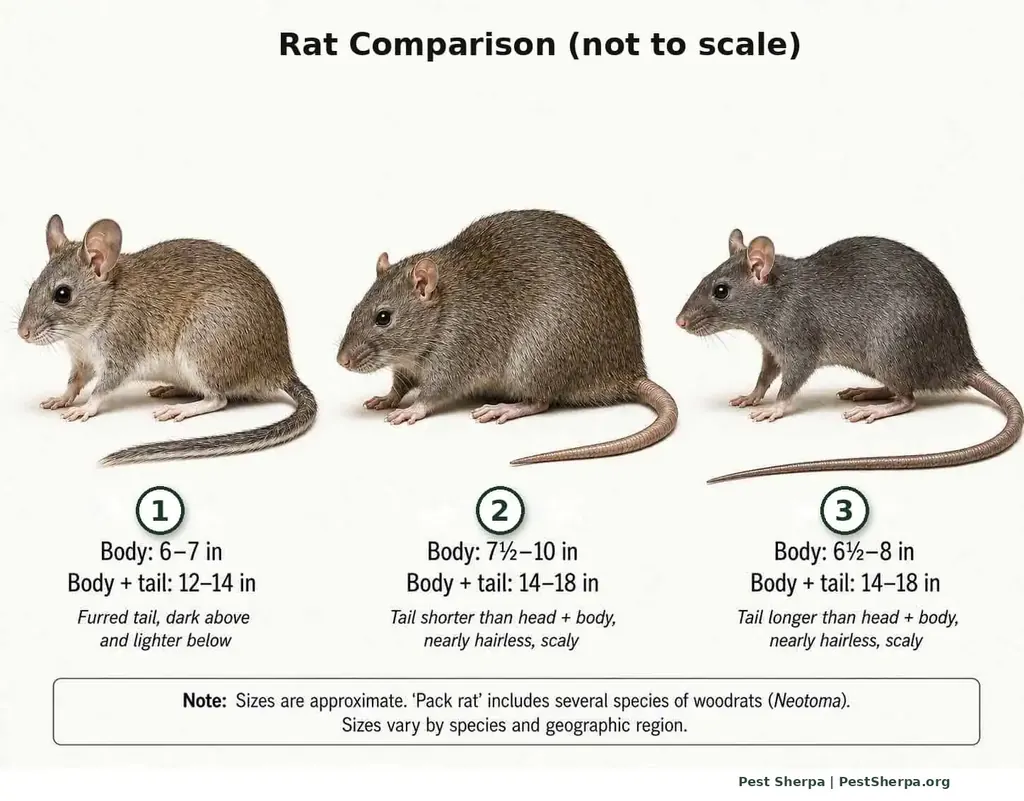
Which one did you find? Match the number:
- Pack rat (woodrat): furred tail that is dark above and lighter below, large ears and a soft, brownish coat.
- Norway rat: the largest and heaviest, with a tail shorter than its head and body. Nearly hairless, scaly tail.
- Roof rat: slimmer and darker gray, with a tail longer than its head and body.
Pack rat with furry tail compared with commensal rats that have scaly tails.
TL;DR
Pack rats are native woodrats known for building bulky nests and collecting sticks, plant material, bones, shiny objects, cloth, paper, and other debris. They usually live outdoors, but they can become a problem around homes, cabins, sheds, vehicles, and equipment.
A furred tail but not bushy like a squirrel, large ears, large eyes, soft gray-brown fur, and a nest made of sticks or debris are strong clues. Repeated noises in an attic, nesting in a vehicle engine compartment, gnawed wiring, or accumulated droppings near a midden deserve careful inspection.
The most effective long-term approach is identification, source investigation, exclusion, habitat cleanup, safe removal where legally allowed, and careful cleanup of contaminated nesting material. Do not sweep or vacuum dry rodent droppings or nests.
Quick Navigation
- Identification
- Pack Rat Lookalikes
- Distribution and Habitat
- Why Pack Rats Enter Homes, Sheds, and Vehicles
- Nesting Behavior and Pack Rat Habits
- Damage and Signs
- Health and Cleanup Concerns
- Inspection Checklist
- What To Do
- What Not To Do
- How Long Activity May Last
- When Professional Help May Be Needed
- FAQs
- References
Identification: What Pack Rats Look Like
Pack rats belong to the genus Neotoma. Size varies by species and region, but many are medium-sized rodents with a rat-like body, soft fur, large ears, large eyes, and a well-haired tail. Some species have a noticeably bushy tail, while others have a less bushy but still furred tail.
Key identification clues include:
- Soft gray, brown, cinnamon, buff, or yellowish-gray fur
- Lighter belly and feet
- Large ears and large dark eyes
- Long tail covered with fur tight to the tail or long hairs
- Bulky nests made of sticks, cactus pieces, leaves, shredded insulation, cloth, paper, or debris
- Collected objects near or inside the nest, including shiny items, bones, bits of plastic, paper, and household materials
The tail is one of the easiest field clues. Pack rats have furred tails. Commensal rats such as Norway rats and roof rats have scaly, mostly hairless tails.
Quick ID: A rat-sized rodent with a furry tail and a nearby pile of sticks, debris, or collected objects is more likely to be a pack rat than a Norway rat or roof rat.
Pack Rat Lookalikes and Common Misidentifications
| Animal | How It Differs From a Pack Rat | Why It Matters |
|---|---|---|
| Norway rat | Stockier body, blunt nose, scaly tail, often burrows around foundations or clutter. | Usually managed as a commensal rat; indoor control strategies and sanitation focus may differ. |
| Roof rat | Sleeker body, scaly tail often longer than head and body, strong climber, often uses attics and dense vegetation. | May look similar from a distance, but the tail and nesting debris help separate them. |
| House mouse | Much smaller, usually gray or brown, with a thin scaly tail and small droppings. | Mouse-sized traps and exclusion assumptions may fail if the animal is actually a pack rat. |
| Deer mouse | Smaller than a pack rat, often with a sharply two-toned body and tail. | Important in some rodent health-risk investigations, especially in cabins and outbuildings. |
| Tree squirrel | Usually larger, more active during the day, with a full bushy tail and different droppings. | Attic noises and gnawed openings can overlap, so entry points and nesting material matter. |
Distribution and Habitat
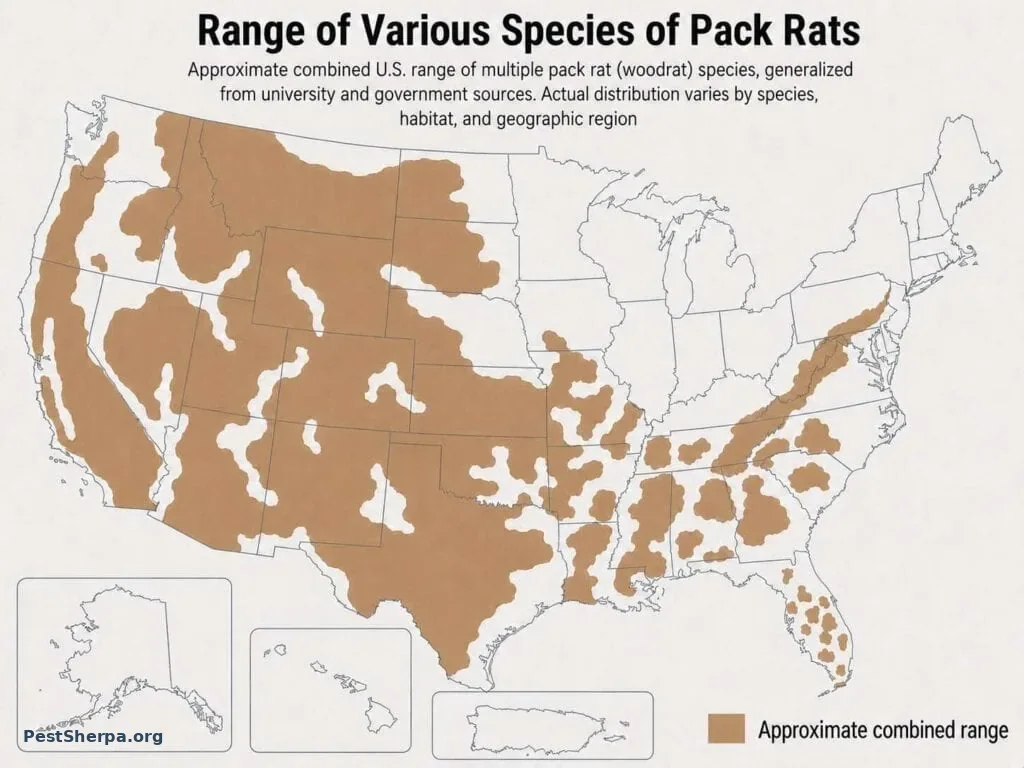
Woodrats occur across much of North America, with different species occupying different regions. They are especially familiar in the western and southwestern United States, but species such as eastern woodrats occur in wooded and rocky habitats farther east. So this is not a type of rat that only occurs in the west, as is widely assumed.
Common outdoor habitats include:
- Rocky slopes, cliffs, ledges, and outcrops
- Desert scrub, cholla, cactus stands, yucca, and brushy areas
- Woodland edges, thickets, and dense vegetation
- Woodpiles, debris piles, old equipment, sheds, barns, and abandoned structures
- Cabins, vacation homes, and rural structures near natural habitat
Pack rats are wildlife, not just “dirty house rats.” That distinction matters because local rules may affect trapping, relocation, lethal control, nest removal, and protected species concerns. Always check state and local wildlife rules before attempting control beyond basic exclusion and sanitation.
Why Pack Rats Enter Homes, Sheds, Garages, and Vehicles
Pack rats usually enter structures because the site offers shelter, nesting material, food, or protection from weather and predators. A single animal can create a surprising amount of debris, odor, and damage if it repeatedly uses the same protected location.
Common reasons pack rats appear near people include:
- Brush, cactus, dense vegetation, or woodpiles close to the structure
- Gaps under eaves, at rooflines, around vents, or around utility penetrations
- Stored pet food, livestock feed, bird seed, fallen fruit, nuts, or garden crops
- Parked vehicles, trailers, boats, tractors, or equipment that sit unused for long periods
- Construction, wildfire, drought, brush clearing, or habitat disturbance nearby
- Warm protected spaces such as attics, crawl spaces, sheds, garages, and engine compartments
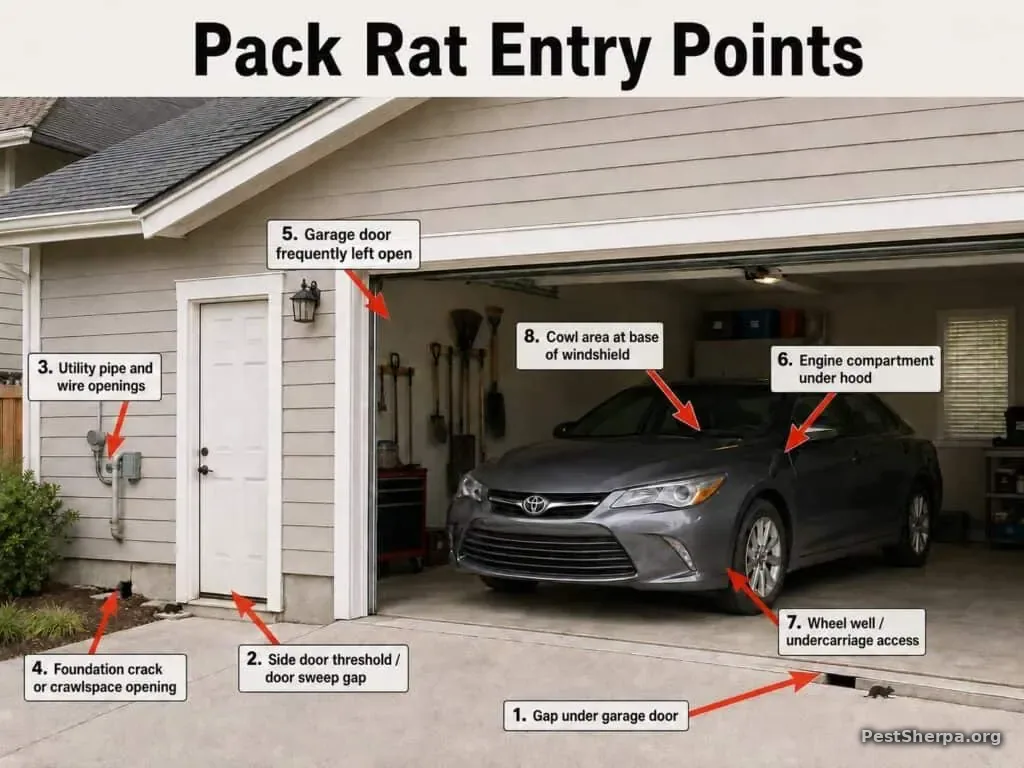
Common pack rat entry points and nesting areas around a home, shed, and vehicle.
Nesting Behavior and “Pack Rat” Habits
The name “pack rat” comes from the animal’s habit of collecting and carrying objects back to the nest. Their nests, often called middens, may be made from sticks, cactus pieces, leaves, bark, grass, bones, paper, cloth, insulation, cardboard, plastic, and other available material.
Outdoor middens may be built under shrubs, at tree bases, in cactus, inside rock crevices, on ledges, or in abandoned burrows and nests. Around structures, pack rats may build nests in:
- Attics
- Crawl spaces
- Wall voids
- Sheds and barns
- Garages and storage rooms
- Vehicle engine compartments
- Trailers, boats, tractors, and stored equipment
Pack rats are mostly nocturnal. They are generally solitary, although nests can occur close together where food and shelter are good. One animal may use more than one nest site, so a single visible midden does not always show the full activity area.
Biology and Life Cycle
Pack rat biology varies by species, climate, and region. In warmer areas, breeding may occur over a longer season; in colder regions, activity is more seasonal. Litters are usually small compared with commensal rats and mice, but repeated breeding can still support local activity when shelter and food remain available.
Like other rodents, pack rats have incisors that continue growing. Gnawing helps maintain those teeth and can damage wood, plastic, insulation, stored goods, drip lines, vehicle components, and wiring.
Pack rats are primarily plant feeders. Depending on the species and habitat, they may eat leaves, stems, seeds, fruits, nuts, bark, twigs, cactus pads, garden crops, stored feed, and pet food.
Damage and Signs of Pack Rat Activity
Pack rats can be more damaging than their numbers suggest because they concentrate nesting, gnawing, droppings, urine, and stored material in specific sites.
| Sign | What It May Mean |
|---|---|
| Large stick or debris pile | Possible pack rat midden or nest |
| Furred-tail rodent seen at night | Strong pack rat clue, especially near natural habitat |
| Gnawed wires or vehicle insulation | Possible nesting in engine compartment or stored equipment |
| Droppings near debris pile | Active or recently active nest site |
| Strong urine or musky odor | Accumulated nest contamination or latrine area |
| Missing small objects or shiny items | Possible collecting behavior |
| Clipped twigs, fruit damage, garden damage | Feeding or nest-building nearby |
| Noises in attic or walls at night | Rodent activity; identification still needed |
Common damage includes gnawing on wood, wiring, plastic, irrigation tubing, vehicle components, stored materials, furniture, insulation, and plantings. Nesting material placed near engines, heaters, electrical components, or other heat sources can create safety concerns.
Health and Cleanup Concerns
Pack rats should be treated as a sanitation and cleanup concern when nests, droppings, urine, or dead rodents are present. They can harbor fleas, mites, ticks, and other ectoparasites. In some regions, pack rat nests are also associated with kissing bugs, also called conenose bugs.
Rodent-associated disease risks vary by region, rodent species, and exposure situation. Woodrats are not the only rodents of concern, and not every nest means disease is present. The practical safety rule is the same: avoid breathing dust from rodent-contaminated material.
Do not sweep, vacuum, or blow out dry rodent droppings, urine, or nesting material. Before cleanup, ventilate enclosed spaces when appropriate, keep children and pets away, wear gloves, wet contaminated material with an appropriate disinfectant, and follow public health cleanup guidance. For broader rodent disease context, see the Pest Sherpa hantavirus disease prevention guide.
Pack Rat Inspection Checklist
Inspection works best when you look for nests, entry points, food sources, travel routes, and damage at the same time.
1. Start Outdoors
- Look under shrubs, cactus, woodpiles, debris piles, rock walls, ledges, and dense vegetation.
- Check around sheds, barns, garages, crawl-space doors, foundation vents, and utility penetrations.
- Look for clipped vegetation, stored plant material, droppings, tracks, rub marks, and stick piles.
2. Inspect the Structure
- Check attic vents, soffits, roof returns, chimney gaps, wall penetrations, foundation openings, crawl-space access doors, and garage door edges.
- Look for shredded insulation, stored debris, droppings, urine staining, odor, and gnaw marks.
- Do not disturb dry nests or droppings until you are ready to clean them safely.
3. Check Vehicles and Equipment
- Open the hood and inspect the engine compartment before starting a vehicle that has been parked for a while.
- Look for sticks, leaves, insulation, shredded fabric, droppings, urine odor, and chewed wires.
- Check tractors, boats, trailers, RVs, ATVs, stored machinery, and seasonal equipment.
4. Map the Pattern
Note where signs are fresh, where old nests are located, where food is available, and where entry points are found. Fresh droppings, new plant material, recent gnawing, and repeated nighttime noise suggest current activity.
What To Do About Pack Rats
1. Confirm the Rodent
Before choosing traps, exclusion materials, or cleanup steps, confirm whether you are dealing with a pack rat, Norway rat, roof rat, mouse, squirrel, or another animal. The tail, nest structure, droppings, location, and damage pattern all help.
2. Remove Food and Shelter Pressure
- Store pet food, livestock feed, bird seed, and garden seed in rodent-resistant containers.
- Remove fallen fruit, nuts, and spilled feed.
- Reduce brush, cactus debris, stacked materials, and dense groundcover near buildings.
- Move woodpiles and stored materials away from walls when possible.
- Repair irrigation leaks and avoid creating sheltered, damp nesting areas.
3. Exclude Them From Structures
Exclusion is the long-term foundation. Seal gaps around foundations, vents, eaves, doors, rooflines, utility penetrations, and crawl-space access points using rodent-resistant materials such as metal flashing, hardware cloth, metal mesh, and properly fitted covers. Foam, caulk, plastic, and soft wood alone are not reliable against rodent gnawing.
Because pack rats can climb, inspect higher openings as well as ground-level openings. Avoid sealing an animal inside a wall, attic, crawl space, or vehicle compartment.
4. Address Active Animals Where Legal and Appropriate
Trapping may be used in some situations, but rules vary by state, species, site, and method. Some woodrats or local populations may be protected, and relocation may be prohibited or discouraged. Check local wildlife regulations before trapping, relocating, or using any lethal control.
Rodenticides are not always necessary for any rodent and can create risks for children, pets, wildlife, and scavengers. They can also lead to dead rodents in inaccessible spaces. When any pesticide or rodenticide is used, read and follow the label, use only legal products for the site and pest, keep products away from children and pets, and DO NOT use in any way that is not noted on the label.
5. Clean Contaminated Areas Safely
After activity is resolved, remove nests and contaminated materials carefully. Use wet cleanup methods, gloves, ventilation, and disinfectant guidance rather than dry sweeping or vacuuming. Replace damaged insulation when needed and have chewed wiring inspected before using affected circuits, vehicles, or equipment.
What Not To Do
- Do not assume every rat-like rodent is a Norway rat or roof rat.
- Do not sweep, vacuum, or use compressed air on dry droppings or nest material.
- Do not seal openings until you have considered whether an animal may be trapped inside.
- Do not rely on ultrasonic devices, home remedies, mothballs, strong odors, or repellents as a complete solution.
- Do not place poison casually in attics, crawl spaces, sheds, garages, or outdoors where children, pets, wildlife, or non-target animals may contact it.
- Do not ignore vehicle nests; wiring damage can create starting, safety, and fire concerns.
- Do not relocate wildlife without checking local law and humane handling guidance.
How Long Will Pack Rat Activity Last?
Pack rat activity can continue as long as food, shelter, entry points, and nesting sites remain available. A single animal may use a site repeatedly, and old nests can make an area attractive again if they are not removed after safe cleanup.
| Situation | Likely Outcome |
|---|---|
| One outdoor sighting near natural habitat | May be normal wildlife activity; monitor for signs near structures. |
| Fresh debris in attic, shed, or vehicle | Active or recent nesting likely; inspect and address entry points. |
| Food and shelter remain available | Activity may continue or return. |
| Animal removed but entry points remain | Another rodent may use the same route. |
| Exclusion and habitat cleanup completed | Long-term recurrence risk is reduced. |
When Professional Help May Be Needed
Some pack rat situations can be handled with careful inspection, exclusion, food removal, and safe cleanup. Professional or wildlife-management help may be worth considering when identification is uncertain, activity is inside a structure, there is extensive contamination, or electrical damage is suspected.
Consider additional help when:
- You hear repeated activity in walls, ceilings, or attics but cannot locate the entry point.
- A vehicle, tractor, RV, boat, or stored equipment has nesting or chewed wiring.
- There are heavy droppings, urine odor, or large contaminated nests.
- You are unsure whether local wildlife rules allow trapping or removal.
- The nest is in a difficult location such as a wall void, crawl space, roofline, chimney, or utility area.
- Children, pets, immunocompromised people, or food-storage areas could be exposed to contaminated materials.
Prevention
Long-term prevention is mostly about reducing shelter, food, and access.
- Inspect attics, crawl spaces, sheds, and garages seasonally.
- Keep vegetation, woodpiles, and stored materials from pressing directly against structures.
- Store food, feed, pet food, bird seed, and grass seed in rodent-resistant containers.
- Pick up fallen fruit and nuts.
- Repair gaps around doors, vents, eaves, foundations, rooflines, and utility penetrations.
- Move parked vehicles or stored equipment periodically when possible.
- Check engine compartments before starting vehicles that have been parked in rodent-prone areas.
- Remove inactive nests only after confirming they can be handled safely and legally.
Frequently Asked Questions
Are pack rats the same as regular rats?
No. Pack rats are native woodrats in the genus Neotoma. Norway rats and roof rats are introduced commensal rats in the genus Rattus. The furry tail and midden-building behavior are important differences.
Do pack rats infest houses?
They can enter attics, crawl spaces, sheds, garages, cabins, and wall voids, but they are usually wildlife using a structure for shelter rather than a classic indoor house pest. The response should focus on identification, entry points, nesting sites, and safe cleanup.
Why are pack rats in my vehicle?
Engine compartments and stored equipment provide shelter, warmth, nesting material, and protection. Vehicles parked for long periods near brush, cactus, woodpiles, or natural habitat are more likely to be used.
Do pack rats carry disease?
They can carry ectoparasites, and some rodent-associated pathogens are regionally important. Not every pack rat or nest is infected, but droppings, urine, nests, and dead rodents should still be handled with safe cleanup methods that avoid breathing contaminated dust.
Do ultrasonic repellents work for pack rats?
Ultrasonic devices and odor-based repellents should not be relied on as a complete solution. Exclusion, food reduction, habitat cleanup, and safe removal of active animals are more important.
Can I remove a pack rat nest?
Maybe, but first consider whether it is active, whether local wildlife rules apply, and whether droppings or urine are present. Do not dry sweep or vacuum nest material. Use wet cleanup methods and protective precautions, especially in enclosed spaces.
What is the fastest way to stop pack rats from coming back?
The fastest long-term improvement is usually to remove nearby food and shelter, locate active nests, seal entry points with rodent-resistant materials, and clean contaminated areas safely after activity is resolved.
References
- University of Arizona Cooperative Extension: Pack Rats
- UC Statewide IPM Program: Rats
- Montana Fish, Wildlife & Parks: Living With Woodrats (Pack Rats)
- University of Arizona Cooperative Extension: Hantavirus and Disease Prevention
- Centers for Disease Control and Prevention: How to Clean Up After Rodents
- UC Statewide IPM Program: Conenose Bugs
- Internet Center for Wildlife Damage Management: Woodrats
This article was written by Greg Baumann, founder of Pest Sherpa, and reflects more than 40 years of professional pest management experience.
About the Author

Greg Baumann | Pest Control Expert
Greg Baumann is the founder of Pest Sherpa and a Pest Control Expert with more than 40 years of professional pest management experience. His articles combine decades of field experience, technical expertise, and science-based guidance to help homeowners identify pests correctly, understand real-world risks, and make informed pest management decisions.
Mission: Identify the pest. Understand the risk. Stop the problem. Prevent the comeback. Know when it’s time to call a professional.