
Horse Flies: Identification, Bites, and What Actually Helps
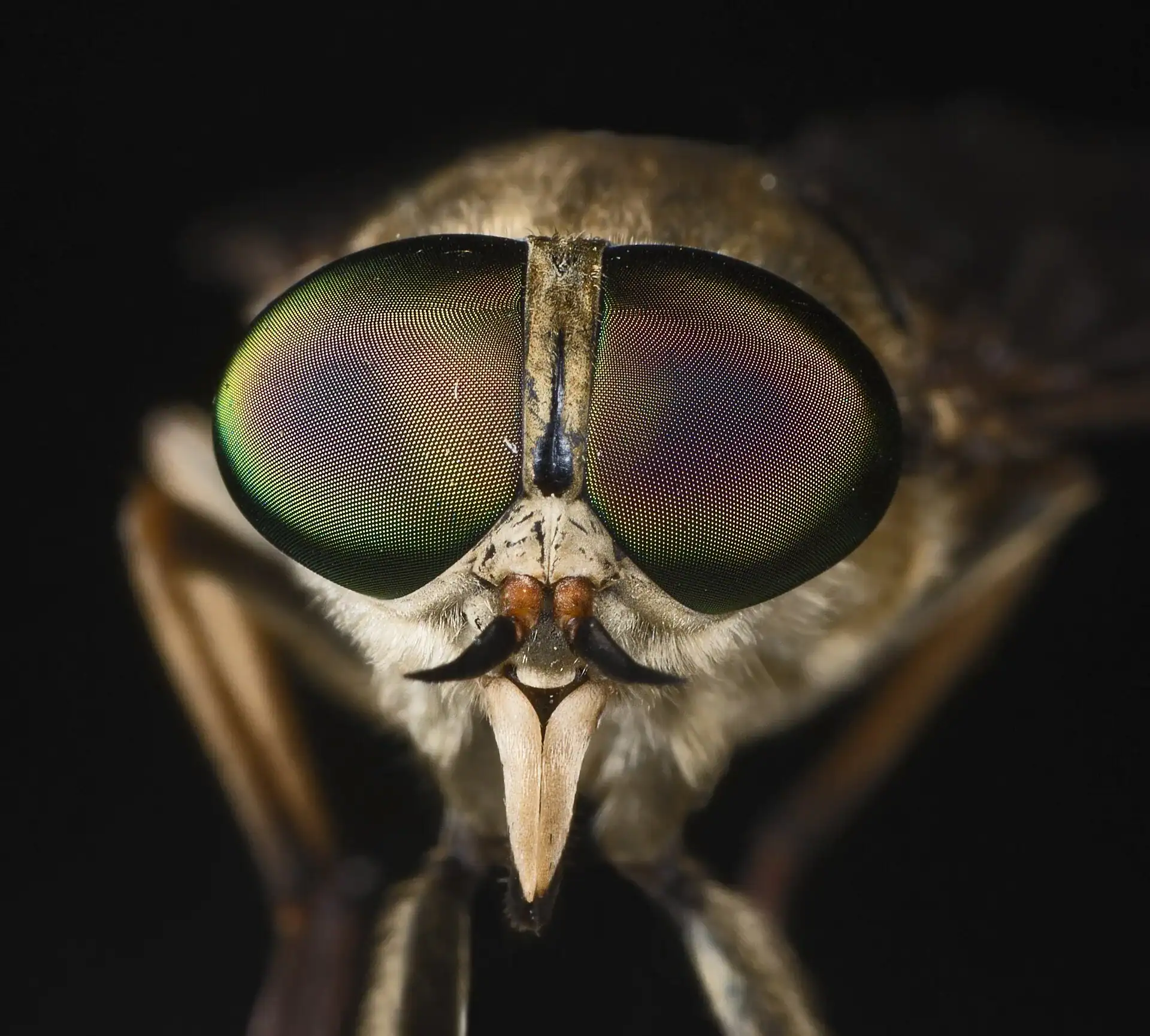
A horse fly bite feels like a hot needle, and the fly frequently returns for more. These are not house flies that have wandered outdoors; they are tabanids, built to cut skin and take blood, and they are found mostly near wet ground during the warm months. This guide covers identification, why control is so difficult, what actually reduces bites, and what to expect around horses and livestock.
Key Points
Horse flies and deer flies are tabanids (family Tabanidae). Horse flies are usually larger; deer flies are smaller cousins in the same family. Only females bite. They cut the skin and lap blood, and they are persistent in daylight outdoors near wet habitats, marsh edges, and damp ground.
Tabanids can rarely be eliminated from a property, because their breeding sites span the surrounding landscape rather than a single trash can. That is why yard fogging and indiscriminate spraying so often disappoint.
Manage exposure instead: wear light-colored clothing, move through open shade when you can, use EPA-registered repellents labeled for biting flies where appropriate, such as when working near animals when these flies are an issue, and protect livestock on farms. Concentrate on avoidance and the comfort of your animals rather than on a promise of zero flies.
In This Guide
- Identification
- Quick ID Table
- Life Cycle and Season
- Bites and Health
- What To Do
- Horses and Livestock
- Prevention Around Homes
- When a Pro Helps
- Frequently Asked Questions
- References
How to identify horse flies and deer flies
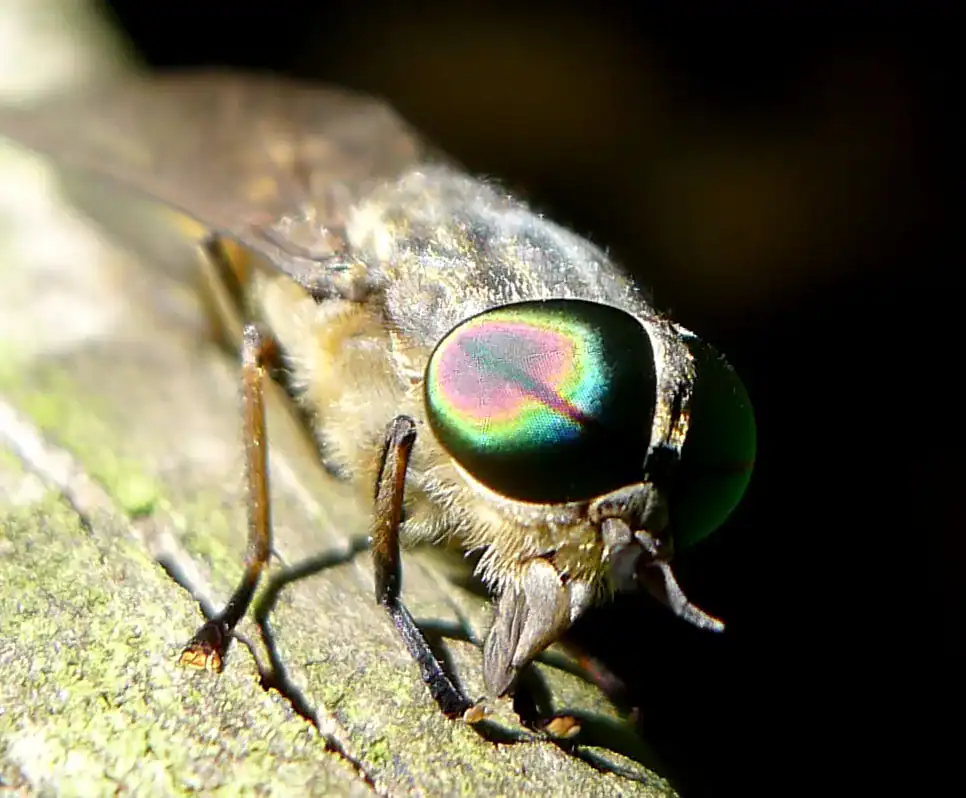
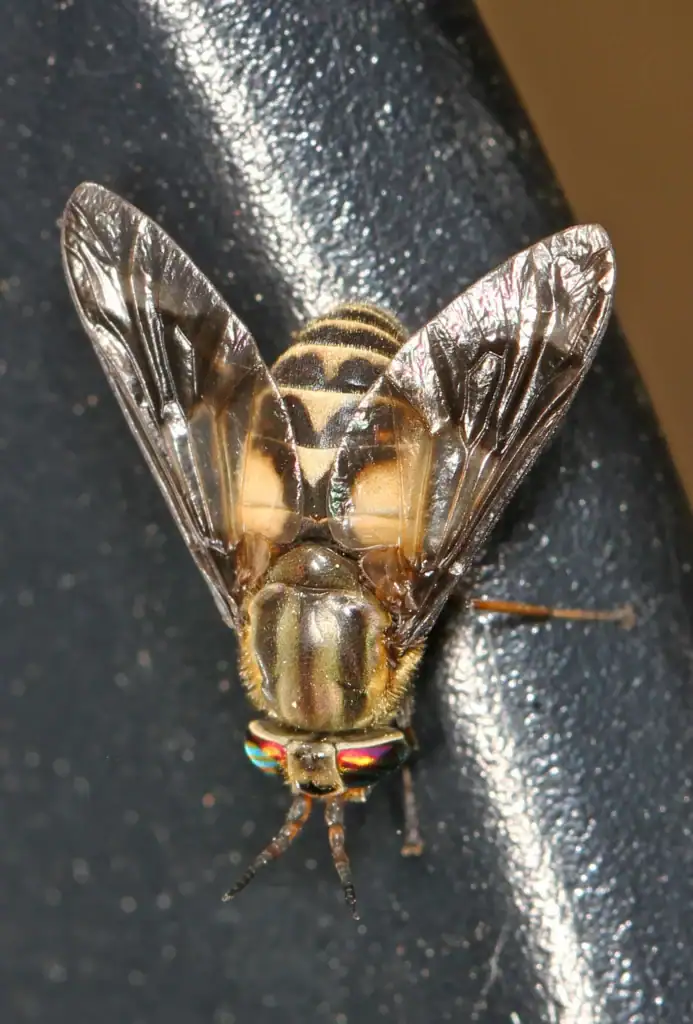
Horse flies are stout, from roughly 3/8 to over an inch long depending on species, often gray or black, with large heads and huge eyes that may show stripes. Wings are often clear or uniformly tinted. Deer flies are smaller (about 1/4 to 1/2 inch), commonly with dark wing patches, and their eyes may be spotted. Both are strong fliers. [University of Maryland Extension] [University of Maine Extension]
Quick ID table
| Fly | Size | Wings | Typical bite target | Notes |
|---|---|---|---|---|
| Horse fly (Tabanus/Hybomitra) | Larger, stout | Often clear | Body and legs of large mammals | May pursue people near wetlands |
| Deer fly (Chrysops) | Smaller | Dark bands/patches | Head and shoulders | Very annoying on trails |
| House fly | Medium | Clear | Does not bite | Indoor/outdoor filth fly |
| Mosquito | Slender | Scales | Anywhere exposed | Different mouthparts; disease vectors vary |
Other fly species are covered in the flies hub, including fungus gnats, which concern houseplant owners for entirely different reasons.
Life cycle and season
Females lay eggs on vegetation or objects over or near water and wet ground. Larvae live in wet soil, mud, marsh edges, and similar damp habitats and often prey on other small animals. Pupation happens in mud near those edges. The full cycle can take from a few months to about two years depending on species and climate. Adults are strong fliers, most active in warm daytime hours, and often concentrate near wooded wet edges rather than the middle of a breezy lawn. [University of Maryland Extension] [Penn State Extension]
This biology explains why efforts to eliminate horse flies across a property usually fail. Your lot may contribute a small amount of breeding habitat, but adults commonly fly in from wetlands, creek bottoms, and irrigated margins beyond the fence. Fogging the patio does not change the surrounding watershed. After more than forty years in pest management, I would rather give homeowners an honest account of what can be controlled than sell them a treatment that cannot deliver.
Seasonal pattern: pressure typically arrives as a warm-season pulse lasting from several weeks to a couple of months, earlier in the Deep South and later at higher latitudes. Annoyance peaks at midday and in the afternoon on sunny, humid days. Cool, windy conditions or fully shaded open ground usually bring relief, even when the flies remain in the area.
Bites and health
The bite is painful because the mouthparts cut the skin rather than pierce it quietly, as a mosquito’s do. Swelling and itching from the fly’s saliva are common, so clean the wound and watch for secondary infection. Purdue notes that some regional horse fly species are less focused on people than deer flies are, but many areas have tabanids that readily bite hikers, anglers, and people working in their yards. [Purdue Public Health Entomology] [University of Maine Extension]
After a horse fly bite
- Wash with soap and water.
- A cold pack and anti-itch treatments help many people.
- Seek care for signs of infection or a strong allergic response.
This is general information, not medical advice.
Concern about disease is usually overstated where people are concerned, since tabanids are primarily a nuisance and a source of blood loss. Some species can mechanically transmit certain livestock pathogens under particular conditions, but that is a matter for a farm owner to discuss with a veterinarian, not a reason to fog an entire subdivision.
What to do (and what not to expect)
Purdue’s public health entomology guidance is direct: controlling horse flies and deer flies is nearly impossible with the tools a homeowner can legally and practically use in natural wetlands. The larvae are widely dispersed, sprays aimed at adults barely affect such strong fliers, and many traps are more useful for monitoring than for relief. [Purdue Public Health Entomology]
- Change your exposure. Midday along sunny marsh edges is the period of greatest annoyance, so shade and timing help considerably.
- Cover up. When tabanids are numerous, long sleeves, long pants, and a hat are far more effective than light summer clothing.
- Do not rely on yard fogging. You will kill nontarget insects and still encounter flies arriving from wet habitat beyond your property.
- Traps: Penn State discusses properly placed traps for horse properties. Placement in sunny locations with an unobstructed view toward fly sources matters, and results vary. [Penn State Extension]
What not to do
- Do not drain natural wetlands in hopes of solving a horse fly problem; doing so is often illegal and ecologically harmful.
- Do not expect mosquito control services marketed for Culex and Aedes species to eliminate tabanids.
- Do not confuse horse flies with stable flies or house flies and end up treating the wrong problem.
Notes for horses and livestock
Penn State’s guidance focuses on horses, and the same principles apply to many livestock operations:
- Dark animals can attract more flies than light-colored ones in the same pasture.
- Provide shelters and canopy shade away from wooded wet edges so animals can choose refuge.
- Turning animals out at night avoids the daytime biters, when your management allows it.
- Fly sheets, boots, masks, and regular applications of labeled synthetic pyrethroid wipe-on products are part of a realistic program, though none guarantees freedom from bites.
- Place traps carefully so that animals cannot become tangled in them. A sunny, unobstructed view toward fly sources matters more than accumulating devices in a barn aisle.
Blood loss and irritation are more consequential for livestock than for most people in a backyard. Work with your veterinarian on animal products and withdrawal times, and do not assume that a residential mosquito contract covers tabanids around pastures. [Penn State Extension]
On small farms, combine protection for the animals with exposure management for people. Schedule farrier visits and turnout chores outside the midday peak when you can, and locate wash racks in open, breezy areas rather than against a hedge bordering a marsh.
Prevention around homes
- Accept that a nearby pond or marsh determines the level of pressure in your area.
- Hold outdoor gatherings in open, breezy areas when possible, because tabanids tend to stay along edges.
- Repair screens to keep out other flies, although tabanids are not usually the primary flying insect indoors.
- For filth flies indoors, begin with the flies guide.
If a different fly is breeding in drains or trash, that is a solvable sanitation problem; horse flies, by contrast, are a matter of outdoor habitat. If you have questions, Ask the Sherpa.
Why they chase cars and people
Tabanids respond to dark shapes, carbon dioxide, and movement, which is why they follow tractors, joggers, and livestock along wooded lanes. Penn State notes that dark horses can attract more pressure than light-colored horses in the same pasture. Moving into an open breeze or deep shade often reduces the rate of attack, even though the flies remain in the area. [Penn State Extension]
For people on trails, a long-sleeved shirt and fewer stops along sunny marsh edges help more than another application of mosquito repellent. Deer flies in particular target the head and neck, and a light-colored hat with a neck drape, though old-fashioned, remains practical.
If the flies you are dealing with are breeding in a trash can or a drain, you do not have horse flies. Turn to the flies hub and identify the species before you buy traps.
Horse flies versus other biting flies
Stable flies bite around the ankles and breed in decaying vegetation mixed with manure near barns. Mosquitoes breed in containers of standing water that you can empty, and black flies have their own stream-based ecology. Horse flies and deer flies, however, are tied to marshes and wet soils that you usually cannot and should not destroy. Identifying the biting insect determines whether sanitation will help. [Purdue Public Health Entomology] [University of Maryland Extension]
House flies and bottle flies that appear on kitchen windows are an entirely different problem. Begin with house flies or the flies hub when the issue is filth flies indoors rather than biting flies along the shoreline.
Practical bite reduction for yards and trails
On small properties near wetlands, expect seasonal pressure lasting from a few weeks to a couple of months, depending on latitude. Plan outdoor events for a breezy open lawn rather than a shaded path along the marsh edge, and keep mowed trails wide where you can, because deer flies hunt along edges. A handheld swatter still works when a single fly targets you on the deck, even though control at the population level does not.
Purdue’s caution about repellents bears repeating: products that perform well against mosquitoes often disappoint against tabanids. Clothing and behavior do more of the work. Where you do use an EPA-registered repellent, choose one labeled for biting flies and follow the label. [Purdue Public Health Entomology]
If children’s sports or evening cookouts fall during the peak weeks, temporary relief consists of lightweight long sleeves, hats to protect against deer flies around the head, seating in the open away from the wet tree line, and realistic expectations. That is useful advice for consumers; a promise to eliminate horse flies from the neighborhood is not.
Livestock and small farms
Livestock operations experience tabanids as blood loss and interrupted grazing, and occasionally as a concern about mechanical transmission of pathogens that warrants a discussion with a veterinarian. Penn State’s guidance for horses, covering shelter placement, turnout timing, sheets and masks, and trials of trap placement, is the realistic set of tools. Moving a trap ten yards can change catch rates, because these flies navigate by line of sight. [Penn State Extension]
Owners of backyard chickens sometimes blame horse flies for every summer stress. Confirm which fly is present, manage manure and moisture for the species that actually breed on the property, and use physical barriers against true tabanids.
What realistic success looks like
Success means fewer interrupted cookouts and calmer livestock during the peak weeks, not a property that never sees another tabanid. Keep a record of your own season: the date of the first painful bite, the peak week, and the week activity fades. That personal calendar will tell you when to schedule trail rides, outdoor events, and pasture rotations more reliably than any product label.
If a salesperson promises a yard treatment that will eliminate horse flies for the summer, ask what has become of the nearby marshes, and then reread Purdue’s discussion of control. [Purdue Public Health Entomology]
Mosquitoes and some other flies that breed in containers on your own property are problems you can solve. Treat tabanids as a matter of managing exposure, and direct your sanitation efforts where they will pay off. The flies hub helps sort out which problem is which.
When a pro visit helps (and when it does not)
Call a pest management professional if you need help distinguishing horse flies from stable flies breeding in soiled hay, or if fly pressure indoors actually involves a sanitation species described in the flies hub. A competent technician will tell you when tabanids are a habitat issue beyond the reach of a yard spray.
Decline any sales presentation that promises zero horse flies on a lot bordering a wetland. Ask instead for a species identification, an assessment of whether any breeding sites on the property, such as irrigation leaks or manure management, are worth correcting, and an explanation of realistic protection options for animals and people. The usual hiring principles still apply: confirm the license and insurance, and get the methods in writing. See how to hire a licensed pest control company.
Common questions about horse flies
Do horse flies bite people?
Yes. Females cut the skin and lap up the blood, producing a sudden and painful bite, while males feed on nectar and do not bite.
Horse fly vs deer fly?
Horse flies (Tabanus, Hybomitra) are larger and usually have clear or evenly tinted wings. Deer flies (Chrysops) are smaller, have dark bands on the wings, and often bite the head and shoulders.
Can horse flies spread disease?
They are primarily a nuisance and a source of blood loss. Some tabanids can mechanically transmit certain livestock pathogens under particular conditions, but for people the usual concern is a painful bite and the risk of secondary infection if the wound is not properly cleaned, not disease transmission in the home.
Why don’t sprays work?
The larvae are scattered throughout wet natural habitats where insecticides are impractical, and the adults are large, strong fliers. Purdue notes that sprays aimed at adults provide little lasting relief.
Do horse flies come indoors?
Rarely to feed. Females usually attack outdoors during the day, near woods, pastures, and wetlands.
What repellent works?
DEET-based repellents are considerably less effective against tabanids than against mosquitoes. Clothing, shade, timing, and, for livestock, physical barriers matter more.
How long is the life cycle?
It often takes many months to two years, depending on the species and the climate. Eggs are laid near water, and the larvae develop in wet soil or mud.
References
- University of Maryland Extension: Horse and Deer Flies
- Penn State Extension: Protecting Horses From Horse and Deer Fly Bites
- Purdue Public Health Entomology: Horse and Deer Flies
- University of Maine Extension: Horse Flies
- University of Minnesota Extension: Fly Control Around Horses
- Ohio State Extension Ohioline: Horse and Deer Flies
This article was written by Greg Baumann, founder of Pest Sherpa, and reflects more than 40 years of professional pest management experience.
About the Author

Greg Baumann | Pest Control Expert
Greg Baumann is the founder of Pest Sherpa and a Pest Control Expert with more than 40 years of professional pest management experience. His articles combine decades of field experience, technical expertise, and science-based guidance to help homeowners identify pests correctly, understand real-world risks, and make informed pest management decisions.
Mission: Identify the pest. Understand the risk. Stop the problem. Prevent the comeback. Know when it’s time to call a professional.