
Flea Guide: Identification, Bite Risk, and What to Do
Fleas in homes are a pet + premises system: adults live and feed on animals while eggs, larvae, and pupae develop in bedding, carpet, furniture, and resting areas. This hub covers cat fleas (Ctenocephalides felis) and dog fleas (C. canis) together, not as a cat-flea-only monograph. Ask a veterinarian for on-pet products; follow EPA labels indoors.
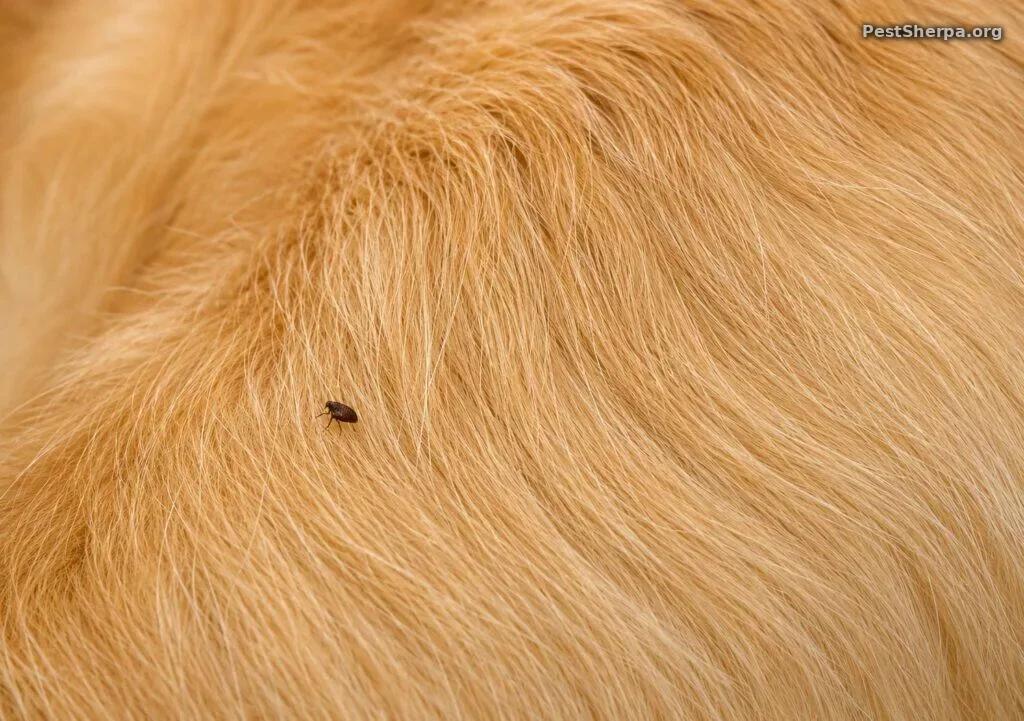
TL;DR: Identify / Treat the System
- Treat pets and the premises together (pet-only treatment often fails)
- Bite Risk = itch and allergy first (ankles/lower legs on people; flea-allergy dermatitis on pets)
- Pupae are hard to kill: adults can keep emerging after treatment; keep vacuuming
- Cat and dog fleas look alike; household IPM is the same approach for both
- Never use dog-only products on cats, especially permethrin or amitraz
Start here based on what you’re seeing:
- Fleas on a cat
- Fleas on a dog
- Ankle bites at home (also see dog fleas)
- Flea dirt on bedding (also see cat fleas)
- Fleas return after treating pets only: premises stages remain (also dog fleas)
Flea Species Guides
Browse the species guides for cat fleas and dog fleas, then use the same pet-plus-premises system on this hub.
Cat Fleas: Ctenocephalides felis Identification, Biology, Risks, and Integrated Control
Dog Fleas: Identification, Biology, and Control
Cat Fleas: Identification, Bite Risk, and Control
Dog Fleas: Identification, Bites, Life Cycle, and Control
Flea Facts That Explain Why One Spray Rarely Works
Quick Navigation
- How to Identify Fleas
- Why It Matters
- Flea vs bed bug vs mite bites
- What To Do
- What Fails
- When to Call a Pro / Vet / Physician
- Compare Cat Fleas vs Dog Fleas
- Prevention
- Common Questions
- References
How to Identify Fleas
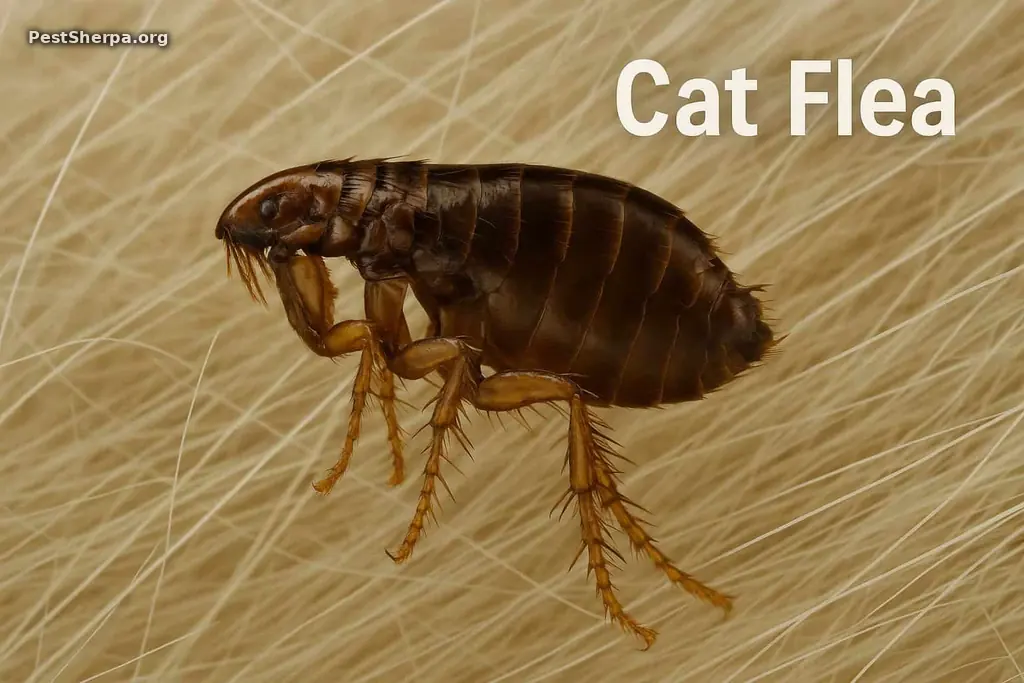
Adult fleas are small (about 1/16 to 1/8 inch), wingless, laterally flattened, and reddish-brown to dark brown. Both species have pronotal and genal combs and jumping hind legs. Only adults suck blood (CDC DPDx; UC IPM; Texas A&M AgriLife).
Shared signs in the home
- On pets: fleas seen while combing (neck, base of tail); black “flea dirt” on fur or bedding
- On people: itchy bites often on ankles and lower legs
- In the environment: eggs fall into carpet, cracks, and resting spots; larvae hide in humid, protected microhabitats
Cat fleas vs dog fleas (equal look)
Cat fleas (C. felis) and dog fleas (C. canis) look very similar naked-eye. Definitive separation uses head profile, genal spines, and hind-tibia characters under magnification (CDC DPDx; UF/IFAS), not homeowner spine-count taxonomy. Household IPM is the same for both.
One attributed nuance: UC IPM, Texas A&M AgriLife, and Mississippi State Extension report that C. felis is often the flea found on dogs (and cats) in homes, without inventing a national percentage.
Why It Matters
People: itch first
- Small central red spot with a red halo; usually minor itching (UC IPM)
- Common on ankles / lower legs (TAMU; CDC)
- Allergic reactions may appear 12 to 24 hours later and last a week or more (TAMU)
Pets: allergy and comfort
- Fleabite allergic dermatitis: one or two bites can trigger intense itching in sensitive animals (UC IPM; TAMU)
- Heavy infestations can contribute to anemia in puppies and kittens (Mississippi State Extension)
- Skin disease or suspected tapeworm segments → veterinarian (do not diagnose here)
Key insight: Itching and allergic reactions are the most common consequences of flea bites. However, cat fleas can transmit a typhus-like illness to people, and they spread the bacteria behind cat-scratch disease from cat to cat. Dogs and cats can get tapeworms by swallowing infected fleas while grooming. [UC IPM] [CDC: About Cat Scratch Disease] Plague in the United States is primarily associated with infected rodent fleas, not ordinary household cat flea infestations. (Texas A&M states cat fleas do not carry plague).
Flea bites vs bed bug bites vs mite lookalikes
Greg Baumann insight: Itch is a poor ID. If the welts sit on your ankles and the pets are chewing the tail-base, work the pet-plus-premises system: cat fleas and dog fleas use the same program. If the marks showed up after a night’s sleep on arms, neck, or face and you find dark spots on mattress piping, that is a bed bug inspection, not a flea fogger. Tiny red specks on a sunny windowsill that smear red when smashed are usually clover mites, and they do not bite. [CDC flea prevention] [CDC bed bugs] [EPA how to find bed bugs] [Texas A&M AgriLife] [Maryland Extension]
| Cue | Cat fleas / dog fleas | Bed bugs | Clover mites |
|---|---|---|---|
| Bite people? | Yes, prefer pets; will bite people, often ankles and lower legs | Yes, usually while you sleep. Marks can wait a day or more; some people never react | No. Plant feeders. A red smear is crushed pigment, not a blood meal |
| Where it shows | Ankles, feet, lower legs; pets scratch neck and tail-base | Face, neck, arms, hands: skin uncovered in bed. Random or a line | Sunny windowsills and walls, not the ankle line |
| Room evidence | Jumping adults; black flea dirt on fur or bedding; eggs in carpet and pet rest areas | Dark fecal spots, rusty stains, shed skins on mattress seams and the headboard | Period-sized reddish specks; eight legs, very long front pair; crush-stain if smashed |
| First move | Treat every pet and vacuum/wash the premises. Same IPM for both species | Inspect the sleep site. Do not fog. See the bed bug guide | Vacuum the sill; do not crush; caulk sunny-side cracks |
What To Do
Fleas are a pet-plus-premises job. The short version follows CDC and EPA guidance. [CDC: Getting Rid of Fleas] [EPA: Controlling Fleas and Ticks Around Your Home]
- Every pet, same day: a product your veterinarian picks for each animal’s species, age, and weight.
- The house, same day: vacuum carpets, furniture, cracks, and pet resting spots, and wash pet bedding in hot, soapy water.
- Follow up: Flea pupae are protected within cocoons and may survive initial treatment. New adults can continue emerging for approximately two weeks or longer. Continue vacuuming and monitoring. Additional pesticide treatments may be necessary, but their timing depends on the products used, label directions, and the severity of the infestation. CDC describes follow-up treatments within 5 to 10 days, while some longer-lasting treatments do not require reapplication that soon.
- Empty house that “came alive”: adults wait in their cocoons until vibration and warmth signal a host. Expect a burst of fleas, then work the plan.
What Fails (Common Mistakes)
Treating only the pets, stopping the vacuuming when a few fleas appear, spraying sunny lawns instead of shaded pet resting spots, and blaming fleas for every itch. Never use dog-only products such as permethrin on cats.
When to Call a Pro / Vet / Physician
Greg Baumann insight: Call for skill, not for panic. A veterinarian chooses the on-pet product; a physician looks at unexplained fever or a rash you cannot place; a licensed pest-control operator handles the premises when vacuuming and pet treatment are not enough. Itch and allergy are the usual story. Typical pet fleas are not a plague headline. [CDC] [EPA pet products] [Texas A&M]
- Veterinarian: product choice for every pet’s species, age, and weight; intense itching, hair loss, or suspected flea-allergy dermatitis; anemia concern in puppies or kittens; tapeworm segments; any reaction after a pet product. Never use a dog-only product on a cat, especially permethrin or amitraz.
- Physician: persistent unexplained itching, or fever, headache, or rash after possible flea or animal exposure. Those systemic signs are uncommon relative to ordinary itch and are pathogen- and region-specific, not a reason to assume plague from a house cat flea.
- Licensed pest control: moderate-to-severe or persistent home infestation after honest pet treatment, vacuuming, and laundry; indoor/outdoor labeled products, and follow-ups; wildlife, rodent, or feral sources in the structure; a vacant house that “comes alive” when you move in. If the evidence is mattress spotting and no pets, start with bed bugs instead of a flea assumption.
Compare Cat Fleas vs Dog Fleas
Cat Fleas (Ctenocephalides felis)
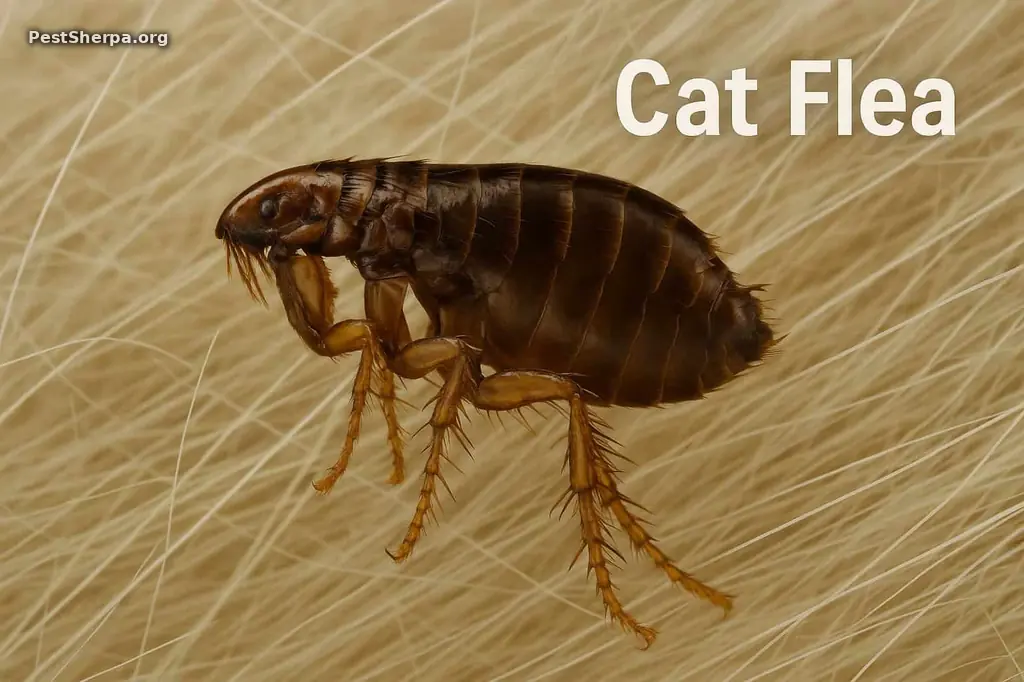
Cat fleas feed on cats, dogs, and other mammals. Extension sources often tie household flea problems to this species. Same pet-plus-premises IPM as dog fleas.
Dog Fleas (Ctenocephalides canis)
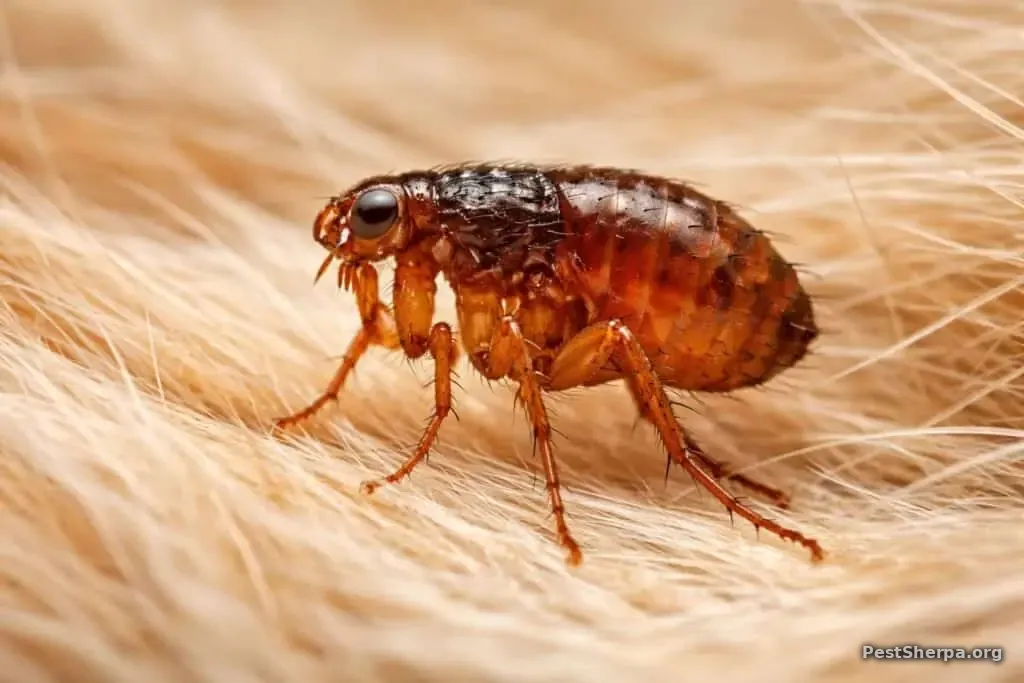
Dog fleas look similar to cat fleas and are encountered less frequently in many U.S. home accounts (UF/IFAS; UC IPM for California). Treat the infestation as a system either way.
Naked-eye, cat fleas (Ctenocephalides felis) and dog fleas (C. canis) are the same reddish-brown, wingless, sideways-flat jumper with comb rows on the head and thorax. Entomologists separate them under magnification by head profile, the first two genal spines, and hind-tibia characters, not a homeowner spine-count. Extension sources in California, Texas, and Mississippi report that the flea on many dogs in homes is still the cat flea. A Georgia survey found dog fleas on more than one in five fleas taken from dogs there, a state study, not a national percentage. Either way, wash the bedding, vacuum the rest areas, and ask a veterinarian before you touch a pet product. [CDC DPDx] [UF/IFAS IN1033] [UC IPM] [Mississippi State]
Prevention
- Year-round pet prevention where pets can support fleas year-round, via your veterinarian (CDC)
- Wash pet bedding regularly; vacuum pet rest areas
- Reduce shaded outdoor harborage; open sleeping areas to sunlight; avoid over-watering
- Limit wildlife/stray attractants: store pet food; reduce debris under decks and shrubs
- Match species and weight on every pet product label, never dog-only formulas on cats
Common Questions
- Why do fleas come back after I treated my pets? Eggs, larvae, and pupae in carpet and bedding were skipped. Adults can keep emerging from cocoons. Keep vacuuming and treat premises on a label schedule.
- Are fleas on my dog definitely “dog fleas”? Not necessarily. Sources report cat fleas are often found on dogs in homes (UC IPM; TAMU; Mississippi State). Species look alike; management is the same system.
- Can I use my dog’s flea product on the cat? No. Never use dog-only products on cats, especially anything with permethrin or amitraz. Ask a veterinarian.
- Are these flea bites or bed bug bites? Bites alone cannot tell you. Flea marks often sit on ankles and lower legs when pets or carpet are involved. Bed bug marks often show on skin that was uncovered in bed, sometimes in a line, and may wait a day or more. Confirm with flea dirt and jumping insects, or with fecal spots and skins on the mattress. See cat fleas, dog fleas, and bed bugs.
- Are the red specks on my windowsill fleas? Usually not. Clover mites are period-sized, eight-legged, and gather on sunny sills. They do not bite. If you smash them they leave a red stain that is body pigment, not blood. Vacuum; do not crush. Clover mites.
References
- University of California IPM: Pest Notes: Fleas
- CDC: About Fleas
- CDC: Getting Rid of Fleas
- U.S. EPA: Controlling Fleas and Ticks on Your Pet
- Texas A&M AgriLife Extension: Controlling Fleas
- UF/IFAS: Dog Flea Ctenocephalides canis (EENY589/IN1033)
- CDC: Preventing Fleas
- U.S. EPA: Controlling Fleas and Ticks Around Your Home
- CDC: About Bed Bugs
- U.S. EPA: How to Find Bed Bugs
- UF/IFAS: Cat Flea Ctenocephalides felis (EENY-011/IN137)
- CDC DPDx: Fleas
- Mississippi State Extension: Control Fleas on Your Pet, Your House, and Your Yard (P2597)
- University of Maryland Extension: Clover Mites
- UF/IFAS: Clover Mite (EENY-437/IN776)
Itchy bites after yard time are not always fleas. Engorged, eight-legged arthropod hitchhikers, or a bull’s-eye rash worry, belong with ticks.
This article was written by Greg Baumann, founder of Pest Sherpa, and reflects more than 40 years of professional pest management experience.
About the Author

Greg Baumann | Pest Control Expert
Greg Baumann is the founder of Pest Sherpa and a Pest Control Expert with more than 40 years of professional pest management experience. His articles combine decades of field experience, technical expertise, and science-based guidance to help homeowners identify pests correctly, understand real-world risks, and make informed pest management decisions.
Mission: Identify the pest. Understand the risk. Stop the problem. Prevent the comeback. Know when it’s time to call a professional.