
Dog Fleas: Identification, Bites, Life Cycle, and Control
Quick answer: Dog flea bites on people are usually small, itchy red spots, often around the ankles or where clothing sits tight. Confirm fleas with a pet comb or a white-sock check on resting areas, then treat the pet and the environment together so eggs, larvae, and pupae do not keep producing new adults.
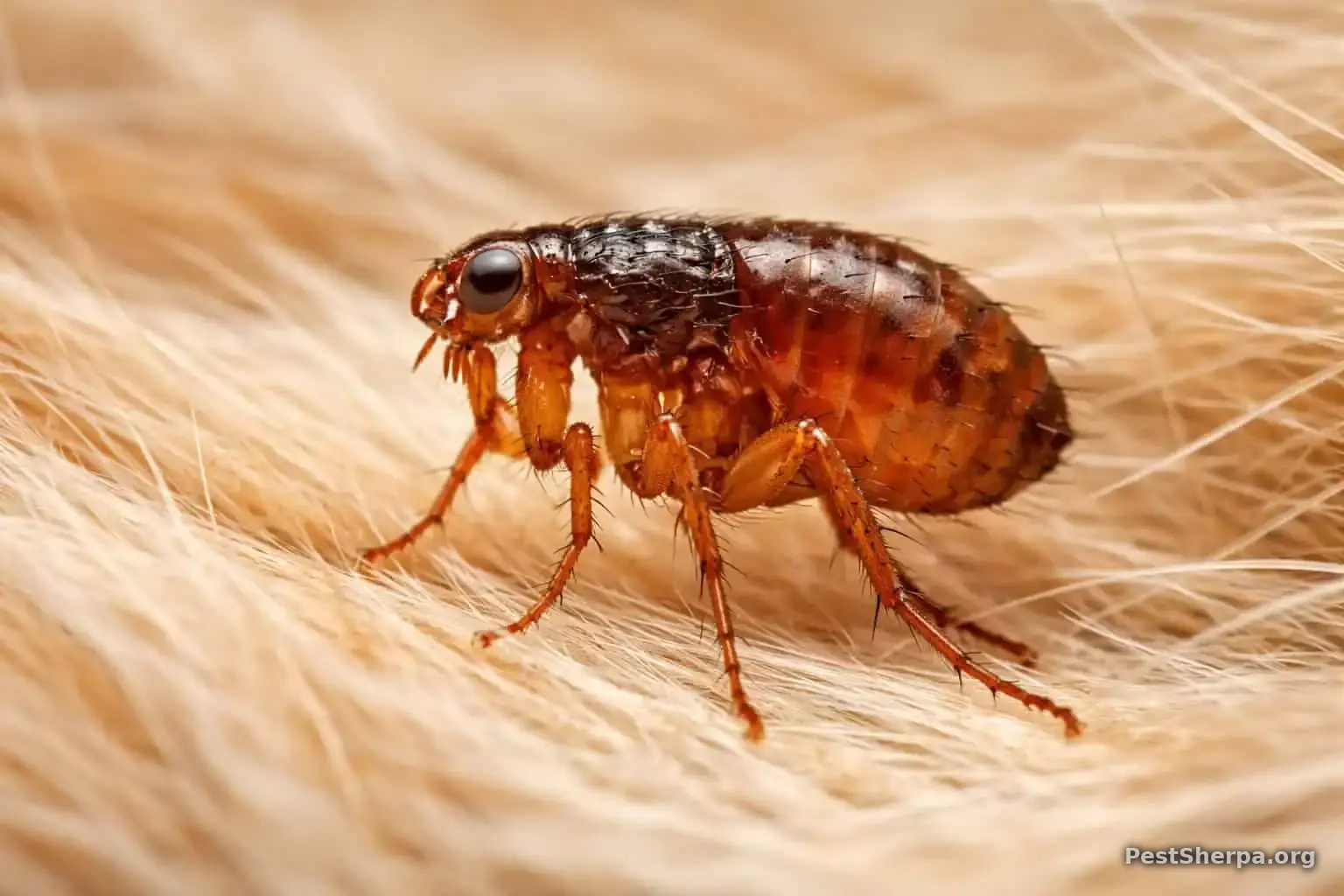
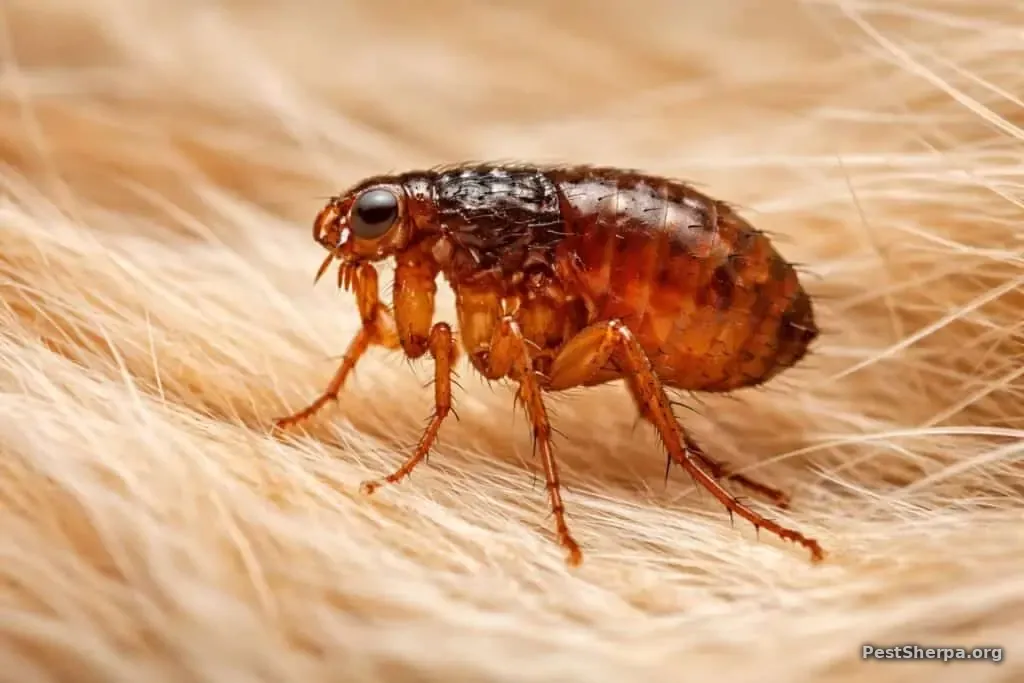
The dog flea, Ctenocephalides canis, is a small blood-feeding insect that can infest dogs, pet bedding, carpets, furniture, wildlife resting areas, and shaded outdoor spaces. Although this pest is called the dog flea, many flea infestations found on dogs are actually caused by the closely related cat flea, Ctenocephalides felis. For homeowners, the most important goal is usually not separating the two species under magnification. It is confirming that fleas are present and breaking the flea life cycle on pets and in the environment.
Fleas are frustrating because most of the infestation is often hidden. Adult fleas on a dog are only part of the problem. Eggs, larvae, and pupae may be scattered through pet bedding, rugs, carpets, furniture seams, shaded soil, crawlspace edges, or areas where pets and wildlife rest. Successful control requires pet treatment, cleaning, source correction, and follow-up.
| Common name | Dog flea |
|---|---|
| Scientific name | Ctenocephalides canis |
| Size | About 1/16 to 1/8 inch long |
| Color | Reddish-brown to dark brown |
| Wings | None |
| Jumps? | Yes |
| Main concern | Pet-health pest, nuisance biting pest, and possible parasite/vector concern |
| Best control approach | Treat pets, clean resting areas, vacuum, launder bedding, correct sources, and follow up |
TL;DR
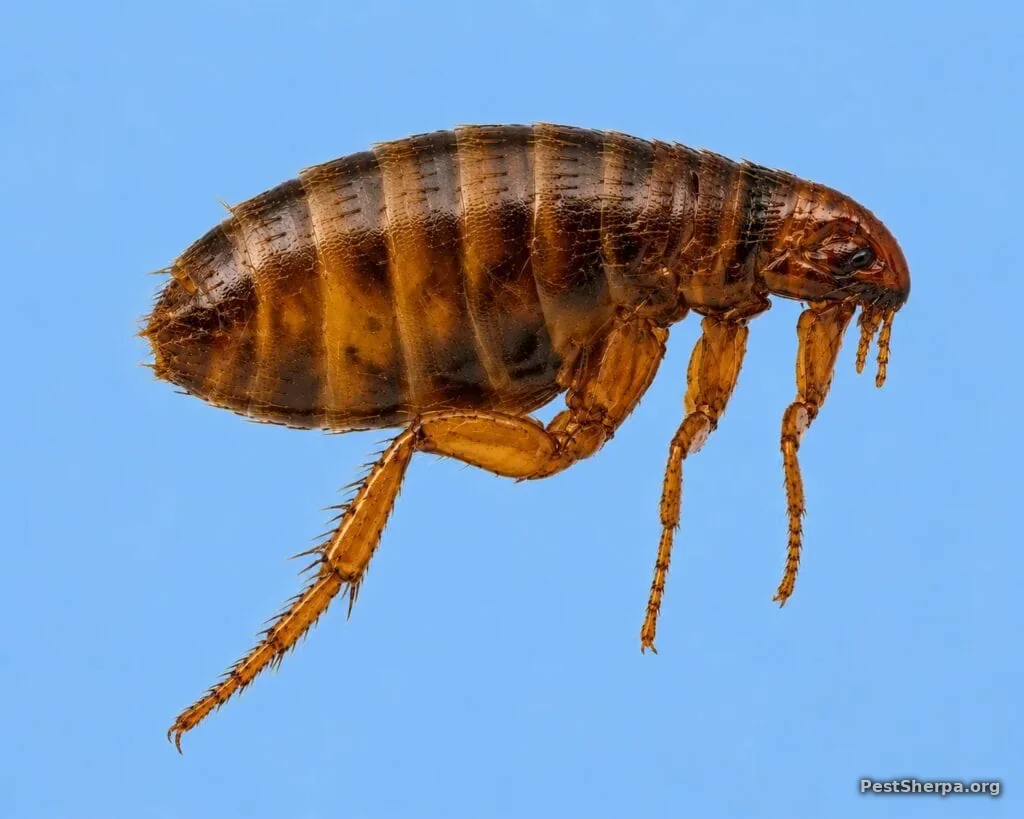
Dog fleas are tiny, reddish-brown, wingless insects that jump when disturbed and feed on blood. Signs include live jumping fleas, black flea dirt in pet fur, pets scratching or chewing, hair loss near the tail base, and itchy bites around ankles or lower legs. To control fleas, treat every pet with veterinary guidance, vacuum thoroughly, wash pet bedding, correct indoor and outdoor source areas, and expect follow-up because hidden pupae can keep producing new adults.
Jump To:
- How to Identify Dog Fleas
- Signs You Have Fleas
- Why Dog Fleas Matter
- Dog Flea Life Cycle
- Where Fleas Hide
- What To Do
- What Usually Does Not Work
- When To Call a Professional
- Similar Pests and Misidentification
- Dog Flea Comparison Table
- Prevention
- FAQ
- References
How to Identify Dog Fleas
Adult dog fleas are small, wingless insects measuring about 1/16 to 1/8 inch long. They are reddish-brown to dark brown, flattened from side to side, and built to move through animal fur. Their most noticeable homeowner-level trait is jumping. If a tiny dark insect jumps from a pet, pet bed, sock, carpet edge, or upholstered furniture, fleas should be high on the suspect list.1
Most homeowners confirm fleas by signs rather than by species-level anatomy. True dog fleas and cat fleas look very similar without magnification. University of Florida IFAS Extension notes that dog fleas and cat fleas are separated by small features such as head shape and comb spines, which are not practical for most homeowners to inspect without magnification.12
Signs You Have Fleas
- Live jumping insects on pets, bedding, rugs, furniture, or socks
- Black flea dirt in pet fur that turns reddish-brown when moistened on a white paper towel
- Pets scratching, chewing, licking, or biting at the skin
- Hair loss or irritation near the tail base, rump, belly, thighs, or hindquarters
- Small itchy bites on people, often around ankles or lower legs
- Activity concentrated where pets sleep, rest, or travel repeatedly
Fleas are commonly confused with bed bugs, ticks, lice, and springtails. Unlike bed bugs and lice, fleas jump readily. Unlike blacklegged ticks and Lone Star ticks, fleas do not attach for long feeding periods.
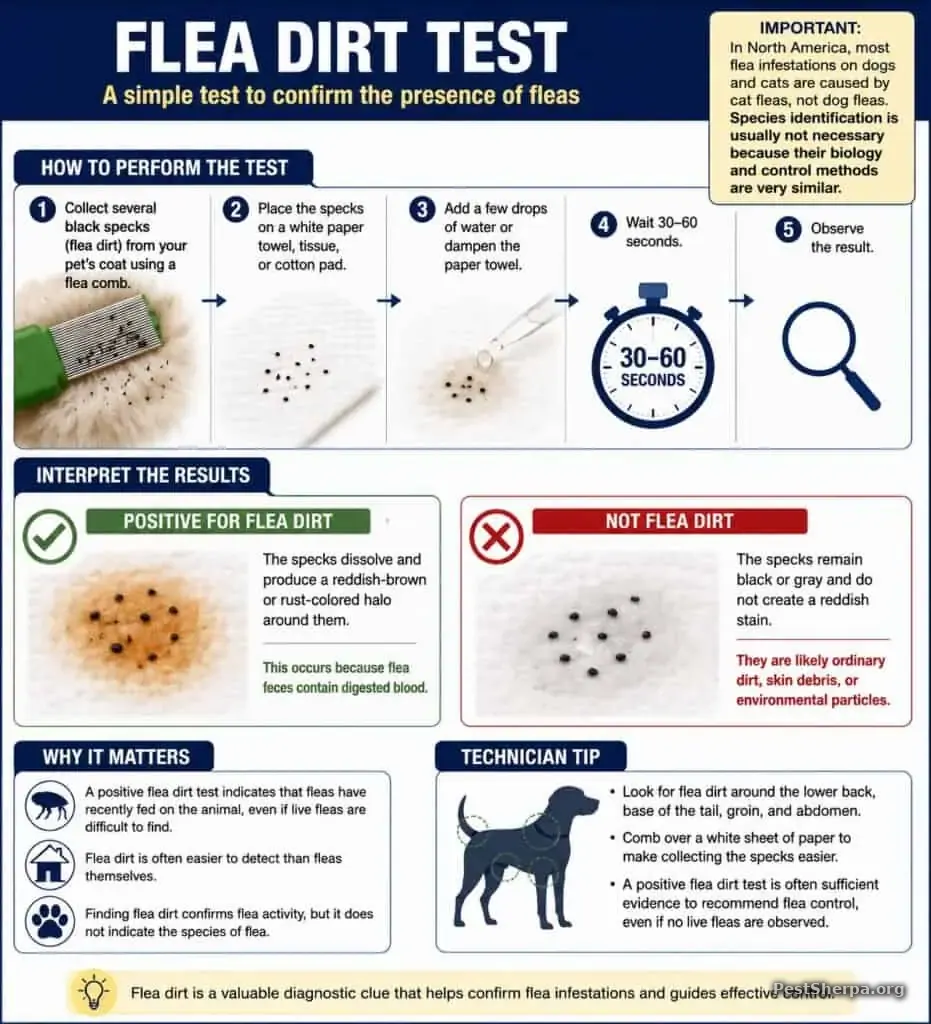
Flea dirt often turns reddish-brown when moistened because it contains digested blood.
Why Dog Fleas Matter
Dog fleas are mainly a nuisance and pet-health pest. They do not damage wood, framing, insulation, drywall, or stored products. Their importance comes from blood feeding, allergic reactions, rapid reproduction, and hidden immature stages that can keep an infestation active after adults are treated.
- Flea bites can cause itching, irritation, and discomfort.
- Pets may develop flea allergy dermatitis.
- Heavy infestations can contribute to anemia, especially in young, small, elderly, or weakened animals.
- Fleas can serve as intermediate hosts for tapeworms when infected fleas are swallowed during grooming.
- Some fleas can carry pathogens, although most household infestations are primarily nuisance and pet-health problems.
The CDC explains that fleas feed on animal or human blood and that bites can cause discomfort, itchiness, and irritation.4 The Merck/MSD Veterinary Manual also emphasizes the connection between fleas, pet irritation, flea allergy dermatitis, and recurring infestations when pets and environments are not managed together.7
Cat fleas (Ctenocephalides felis) and dog fleas (Ctenocephalides canis) are closely related species that look very similar and share nearly identical life cycles, habits, and control methods. Entomologists can distinguish them by examining subtle differences in the shape of the head and certain comb-like spines under magnification, but these differences are usually of little practical importance to homeowners.
In North America, many flea infestations found on both dogs and cats are caused by the cat flea. Despite its name, the cat flea readily feeds on dogs, cats, wildlife, and occasionally people. Dog fleas occur less frequently in many household infestations, but the control approach is usually similar.7
For most homeowners and pet owners, the important question is not whether the flea is a cat flea or a dog flea, but rather how quickly and thoroughly the infestation can be eliminated.
Dog Flea Life Cycle
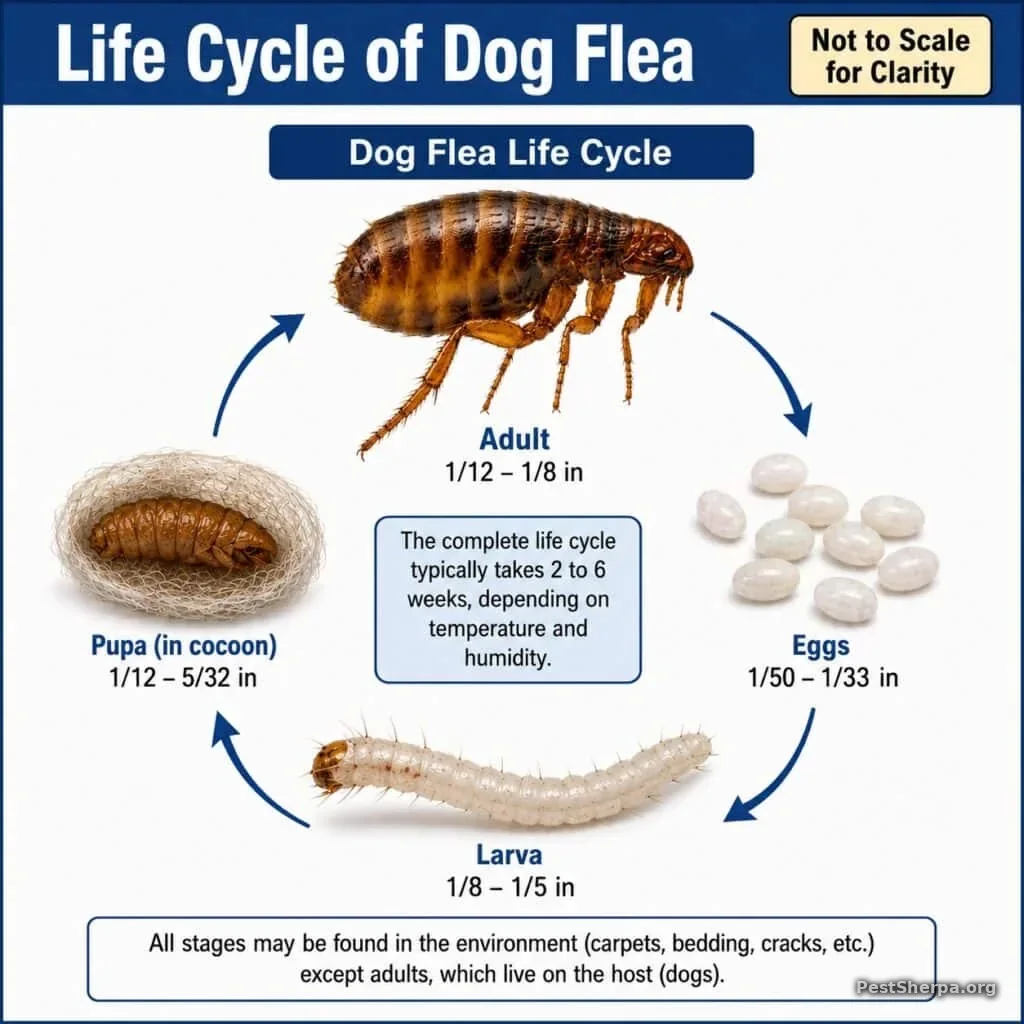
Fleas develop through four stages: egg, larva, pupa, and adult. Adult fleas are the stage people notice, but the hidden stages are why infestations can be difficult to eliminate. Eggs, larvae, and pupae are usually found away from the pet in resting areas, bedding, carpets, cracks, furniture, shaded soil, or protected outdoor areas.3
- Eggs: Flea eggs are small, pale, and not sticky. They fall from the host into bedding, carpet, furniture, or soil.
- Larvae: Larvae avoid light and feed on organic debris, including adult flea feces.
- Pupae: Pupae develop inside protective cocoons and can remain hidden until warmth, vibration, or carbon dioxide signals that a host may be nearby.
- Adults: Adult fleas emerge, seek a host, feed on blood, and reproduce quickly under favorable conditions.
The pupal stage is one of the biggest reasons flea problems seem to “come back.” New adults may continue emerging after the first treatment, especially when pupae were protected in carpets, cracks, bedding, or furniture.
Where Fleas Hide
Adult fleas live on pets and other hosts, but most of the developing population is often off the animal. Focus inspection and cleanup where pets actually spend time.
- Pet bedding and blankets
- Carpet edges and rugs
- Furniture seams and under cushions
- Cracks along baseboards and floors
- Dog crates, kennels, and favorite resting areas
- Shaded soil, crawlspace edges, decks, porches, and outdoor pet shelters
- Wildlife resting or nesting areas near the structure
What To Do
Successful flea control requires treating pets and the environment at the same time. Treating only the dog, only the carpet, or only the yard usually leaves part of the flea life cycle untouched.
1. Treat Every Pet With Veterinary Guidance
Start with the animals. Ask a veterinarian which flea product is appropriate for each pet’s species, age, weight, health status, and exposure risk. Every dog and cat in the home should be considered, even if only one pet appears itchy.
Use flea and tick products exactly as labeled. EPA guidance explains that products should be used only on the animal species and size or weight specified by the label. Never apply a dog-only flea product to a cat unless a veterinarian specifically directs it.5
2. Vacuum Pet Resting Areas Thoroughly
Vacuum carpets, rugs, furniture edges, cracks, under furniture, pet bedding areas, and places where pets sleep. Vacuuming helps remove eggs, larvae, flea dirt, and debris that larvae feed on. Empty vacuum contents into a sealed bag and discard it outside. EPA and CDC flea guidance both emphasize thorough vacuuming and cleaning as part of flea control.68
3. Wash Bedding and Washable Fabrics
Wash pet bedding, blankets, slipcovers, and washable rugs. Use hot water and high heat drying when the fabric allows. Focus on where pets actually rest, not just where people notice bites.
4. Correct Indoor and Outdoor Source Areas
Indoors, focus on pet beds, carpet edges, furniture, rugs, and cracks near resting areas. Outdoors, reduce shaded organic debris, keep grass trimmed, remove old animal bedding, and prevent wildlife from nesting near the structure. Raccoons, opossums, feral cats, rodents, and other hosts can keep fleas active around a property.
5. Use Labeled Environmental Products Carefully When Needed
Some established infestations require labeled environmental products. Insect growth regulators, often called IGRs, can help interrupt flea development. Adulticides may also be used in active areas when appropriate. Follow all label directions, keep people and pets away until treated areas are safe to re-enter, and avoid random broad spraying.
The NC State Extension guide to flea biology and control explains that effective flea management depends on understanding where immature stages develop and combining pet treatment with environmental control.3
What Usually Does Not Work
- Treating only the dog while ignoring the home
- Bathing the pet once and assuming the infestation is gone
- Using foggers or bug bombs as the main strategy
- Ignoring cats or other pets in the household
- Skipping vacuuming and bedding cleanup
- Ignoring crawlspaces, wildlife sources, shaded yard areas, or pet shelters
- Assuming every unexplained bite is from fleas without confirming the pest
When To Call a Professional
Professional flea treatment may be justified when the infestation is widespread, persistent, or connected to hidden sources. A good inspection should confirm the pest, locate source areas, coordinate with veterinary pet treatment, and explain why follow-up may be needed.
- Fleas continue biting people after pets have been treated under veterinary guidance.
- Multiple rooms show flea activity.
- The home was vacant or previously occupied by pets.
- Wildlife nesting, crawlspaces, decks, or shaded outdoor areas may be involved.
- There are infants, elderly residents, immunocompromised residents, or highly sensitive pets in the home.
- You are unsure whether the pest is fleas, bed bugs, ticks, lice, springtails, or another small pest.
Similar Pests and Common Misidentification
Correct identification matters because flea treatments will not solve every biting or jumping insect problem. Use this section to compare dog fleas with the most common lookalikes.
- Cat fleas: The most common flea found on many dogs and cats. They look very similar to dog fleas without magnification, and control is usually similar.
- Bed bugs: Bed bugs do not jump. They are usually associated with beds, furniture seams, and sleeping areas.
- Blacklegged ticks: Ticks crawl and attach for extended feeding. They do not jump like fleas.
- Lone Star ticks: Larger than fleas, usually picked up outdoors, and attached to skin rather than jumping repeatedly.
- Head lice: Human scalp parasites that cling to hair and do not jump.
- Springtails: Tiny jumping insects sometimes mistaken for fleas, but they do not bite or feed on blood.
Dog Flea Comparison Table
| Pest | Jumps? | Bites? | Common Clue | Most Likely Source |
|---|---|---|---|---|
| Dog flea | Yes | Yes | Live fleas, flea dirt, itchy pets | Dogs, wildlife, pet resting areas |
| Cat flea | Yes | Yes | Looks nearly identical to dog flea | Cats, dogs, wildlife, pet bedding |
| Bed bug | No | Yes | Spots, shed skins, bugs near sleeping areas | Beds, furniture, travel items |
| Blacklegged tick | No | Yes | Attached tick on skin | Outdoor vegetation, wildlife areas |
| Head louse | No | Yes | Nits attached to hair | Human scalp contact |
| Springtail | Yes | No | Moisture areas, sinks, windows, soil | Damp organic material |
Prevention
Long-term flea prevention depends on consistent pet care, sanitation, and source reduction. Homes with pets should maintain veterinarian-recommended flea prevention, especially in warm climates or during flea season.
- Keep pets on appropriate flea prevention as directed by a veterinarian.
- Wash pet bedding regularly.
- Vacuum pet resting areas often.
- Reduce shaded, protected outdoor resting areas.
- Discourage wildlife from nesting around decks, sheds, crawlspaces, and foundation edges.
- Inspect pets after boarding, grooming, travel, or outdoor wildlife exposure.
- Use the broader Pest Sherpa pest guide library when you need to compare fleas with other household pests.
Dog Flea FAQ
Are dog fleas and cat fleas the same?
No. Dog fleas and cat fleas are different species, but they look very similar. Many fleas found on dogs are actually cat fleas. For most homeowners, the control approach is similar: treat all pets, clean the environment, and address source areas.
Can dog fleas bite people?
Yes. Fleas can bite people, especially around ankles and lower legs. Bites alone do not prove fleas, so look for live jumping insects, flea dirt, pet scratching, or activity around pet resting areas.
Can fleas live in carpet?
Yes. Eggs, larvae, and pupae can develop in carpets, rugs, cracks, pet bedding, and furniture. Adult fleas are the most visible stage, but hidden immature stages are often what keep infestations going.
Do flea bombs work?
Foggers or bug bombs are usually not the best primary strategy. They may miss protected areas where flea larvae and pupae develop, and they do not replace pet treatment, vacuuming, laundering, source correction, or targeted applications.
Why do fleas come back after treatment?
Fleas often seem to return because pupae were already hidden in the environment before treatment. New adults may continue emerging for a period of time, which is why follow-up and continued pet protection are important.
Conclusion
Dog fleas are persistent because the visible adults are only part of the infestation. Eggs, larvae, and pupae in bedding, carpets, furniture, cracks, and outdoor resting sites can keep the problem active. The best results come from combining veterinary pet treatment, vacuuming, laundering, source correction, careful use of labeled products, and professional help when the infestation is widespread or difficult to locate.
References
- University of Florida IFAS Extension. Dog Flea, Ctenocephalides canis.
- University of Florida IFAS Extension. Cat Flea, Ctenocephalides felis.
- NC State Extension. Biology and Control of Fleas.
- Centers for Disease Control and Prevention. About Fleas.
- U.S. Environmental Protection Agency. Controlling Fleas and Ticks on Your Pet.
- U.S. Environmental Protection Agency. Controlling Fleas and Ticks Around Your Home.
- Merck/MSD Veterinary Manual. Fleas in Dogs and Cats.
- Centers for Disease Control and Prevention. Getting Rid of Fleas.
- U.S. Environmental Protection Agency. EPA’s Regulation of Flea and Tick Products.
This article was written by Greg Baumann, founder of Pest Sherpa, and reflects more than 40 years of professional pest management experience.
About the Author

Greg Baumann | Pest Control Expert
Greg Baumann is the founder of Pest Sherpa and a Pest Control Expert with more than 40 years of professional pest management experience. His articles combine decades of field experience, technical expertise, and science-based guidance to help homeowners identify pests correctly, understand real-world risks, and make informed pest management decisions.
Mission: Identify the pest. Understand the risk. Stop the problem. Prevent the comeback. Know when it’s time to call a professional.