
Blacklegged Deer Tick: Identification, Lyme Risk, and Removal
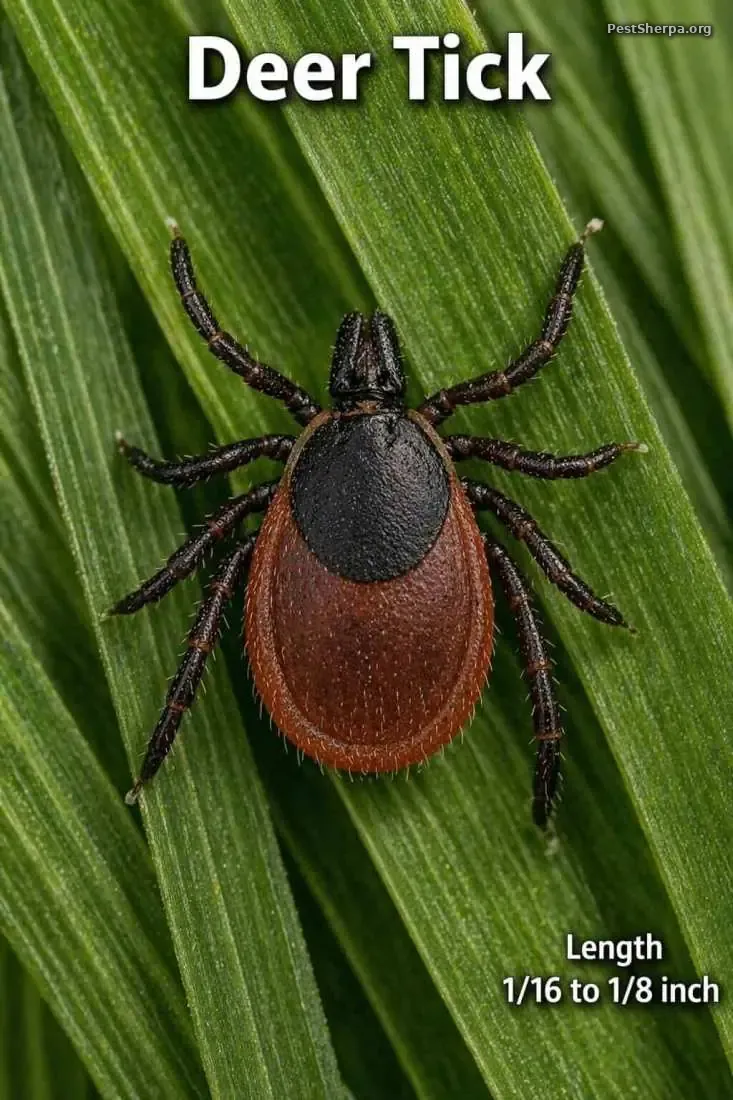
Updated for accuracy: Deer ticks, more accurately called blacklegged ticks, are small blood-feeding arachnids that matter because they can transmit Lyme disease and other tick-borne pathogens. The biggest homeowner mistake is assuming every tiny tick is harmless, or waiting too long to remove an attached tick.
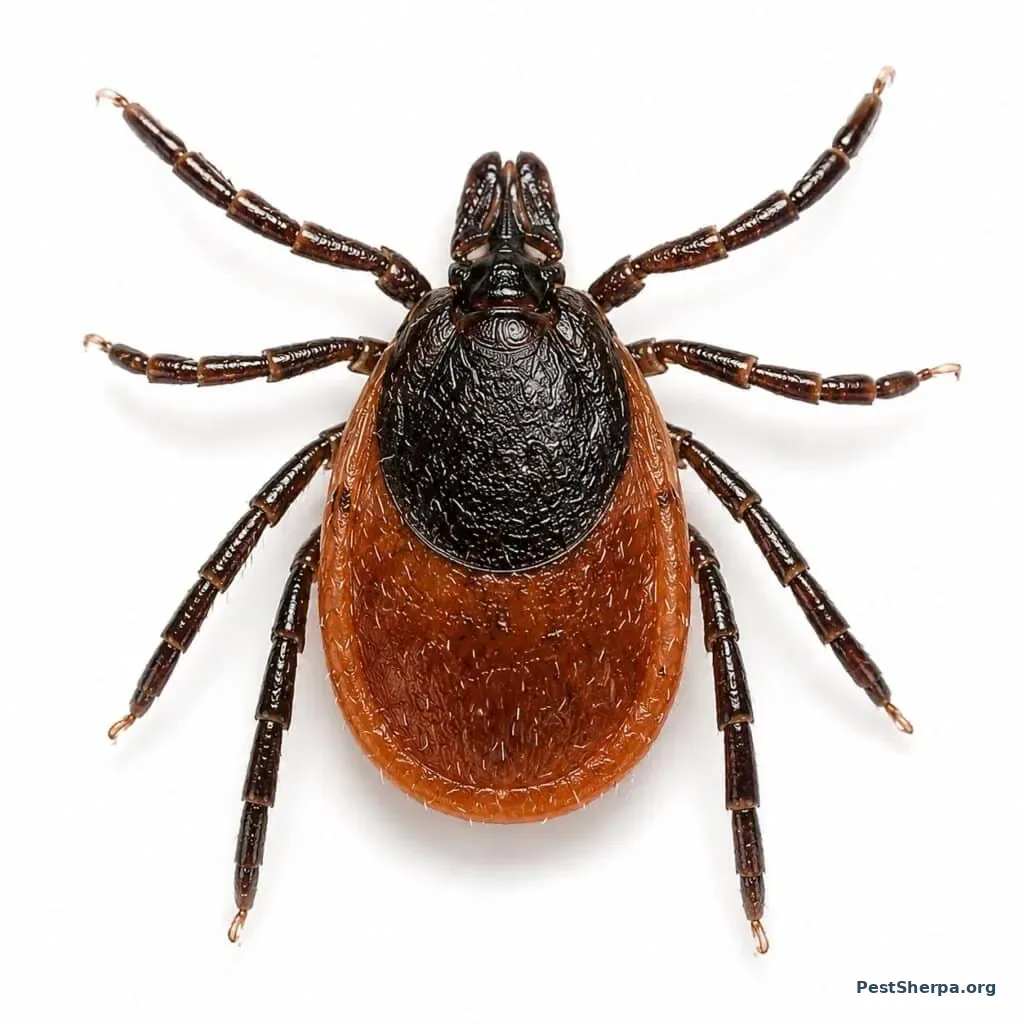
Adult female blacklegged/deer tick (Ixodes scapularis).
TL;DR
Blacklegged ticks are very small, dark-legged ticks most often encountered in wooded edges, leaf litter, tall grass, and brushy yard borders. Nymphs are especially risky because they can be about the size of a poppy seed and may stay unnoticed. If a tick is attached, remove it promptly with fine-tipped tweezers; do not wait for a medical appointment just to remove it. For disease background, see Pest Sherpa’s guide to Lyme disease.
Jump to: Identification | Why It Matters | What To Do | When To Call a Pro | Lookalikes | Common Questions | References
Identification
The eastern blacklegged tick, Ixodes scapularis, is commonly called the deer tick. On the Pacific Coast, the related western blacklegged tick, Ixodes pacificus, fills a similar disease-vector role. The CDC notes that blacklegged ticks spread Lyme disease in the northeastern, mid-Atlantic, and north-central United States, while western blacklegged ticks are the main Lyme vector in Pacific Coast areas.
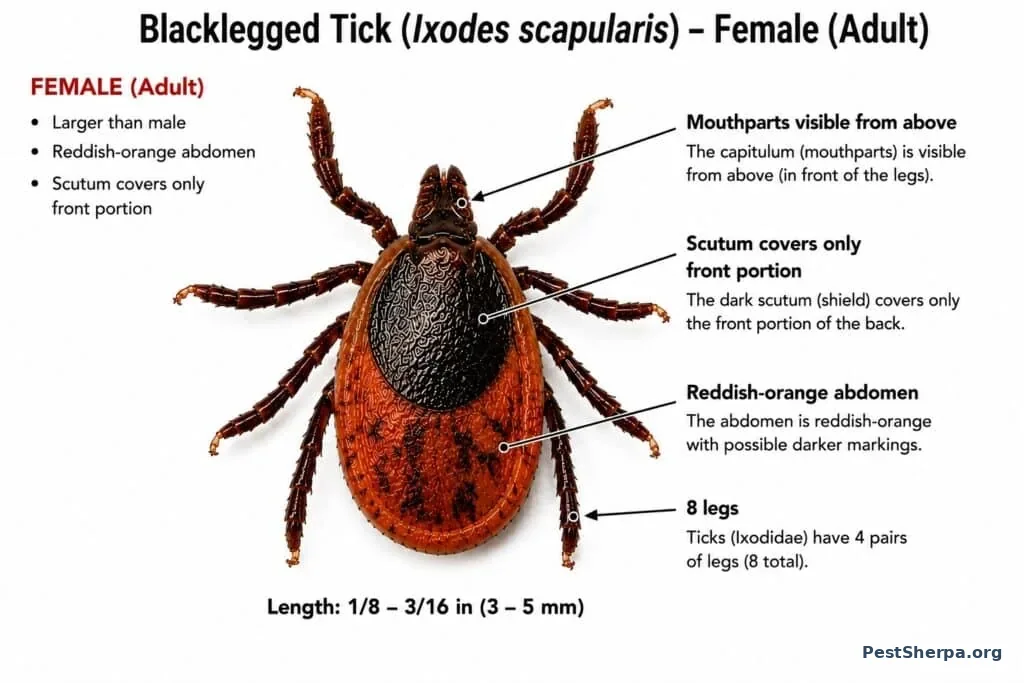
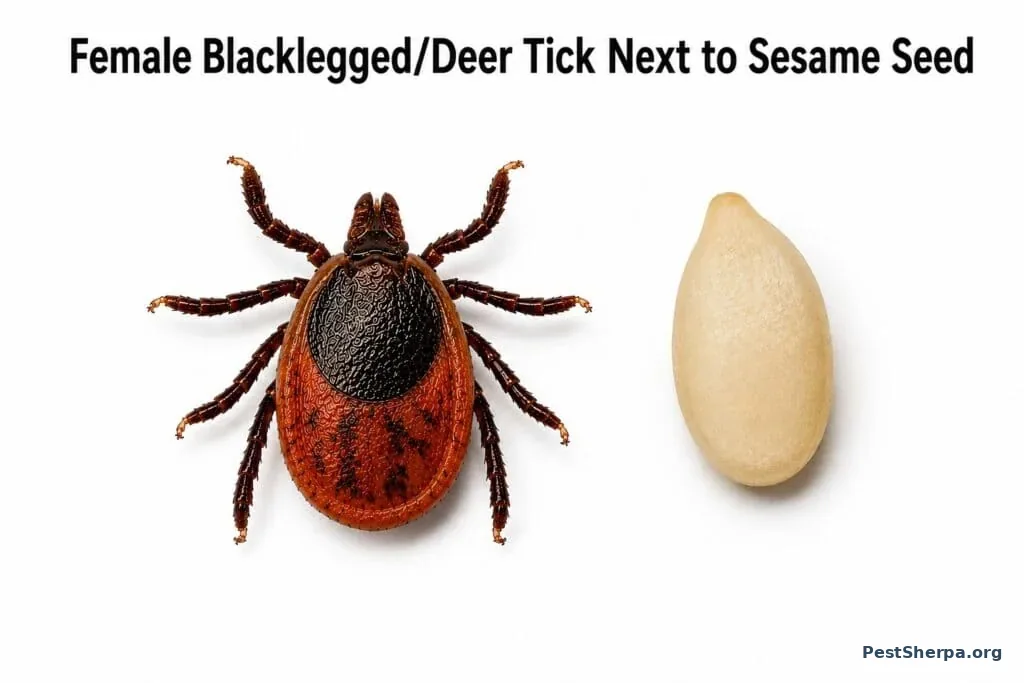
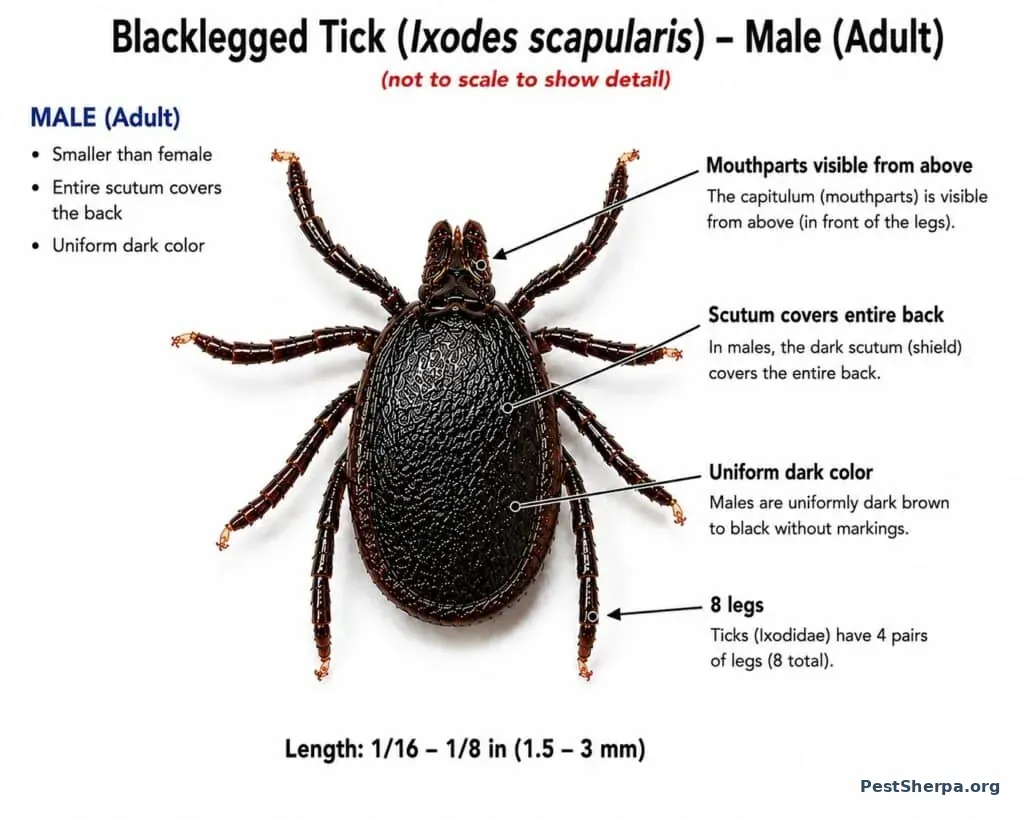
Adults are small hard ticks. Unfed adult females are roughly sesame-seed sized, with a dark scutum near the head, dark legs, and a reddish-orange rear body. Adult males are darker overall.
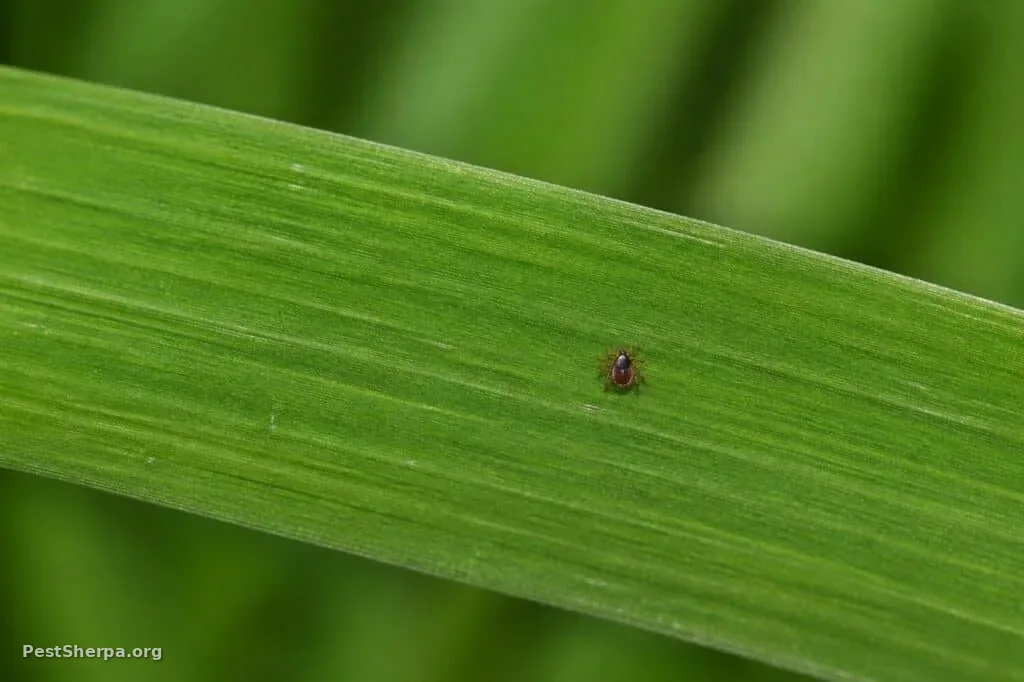
Nymphs are much smaller and are often compared to a poppy seed, which is why they are easy to miss during a tick check.
Confirming features include:
- Eight legs in nymphs and adults; larvae have six legs.
- No wings and no antennae.
- Dark legs, small body size, and a hard shield-like scutum.
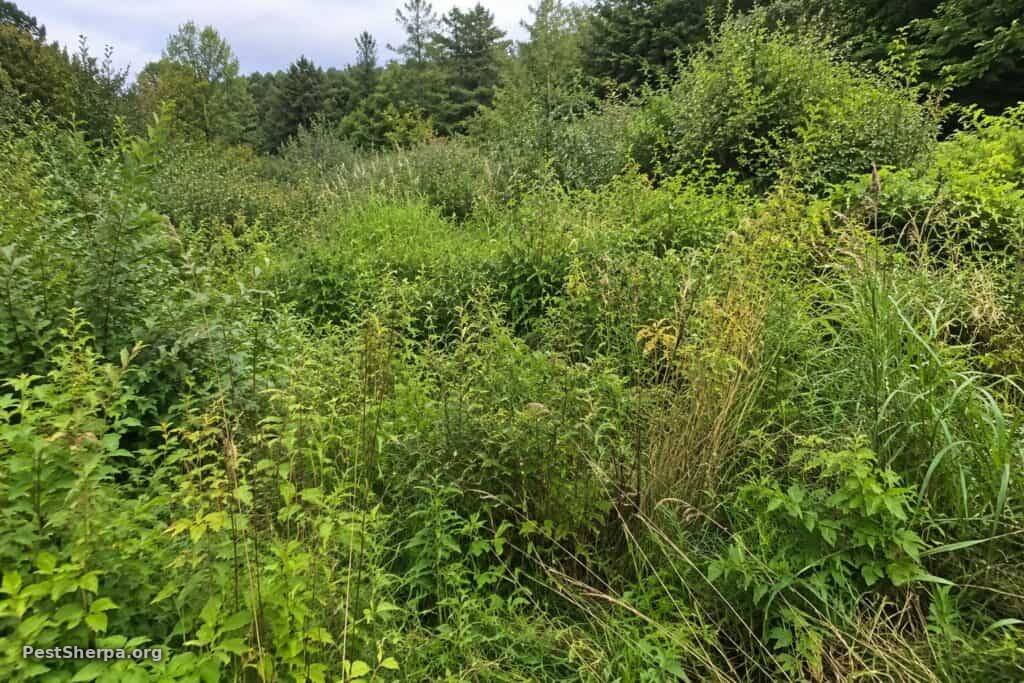
- Typical habitat: leaf litter, wooded edges, brush, tall grass, shaded ground cover, and yards bordering woods.
What commonly misleads homeowners:
- Calling every tick a “deer tick” without checking markings, size, and region.
- Confusing blacklegged tick nymphs with tiny seed ticks or immature Lone Star ticks.
- Assuming a tick must jump or fly. Ticks do neither; they wait on vegetation and grab passing hosts.
- Thinking deer alone create the problem. Deer support adult ticks, but small mammals such as mice are important hosts for immature stages.
Why It Matters
Blacklegged ticks are a health-related pest, not a structural pest. They do not damage wood, framing, insulation, or stored products. The concern is bite exposure and possible transmission of tick-borne disease.
According to the CDC, Lyme disease is caused by Borrelia bacteria spread through blacklegged tick bites. The CDC also notes that, in most cases, an infected tick must be attached for more than 24 hours before Lyme disease bacteria are transmitted, so prompt removal matters.
Blacklegged ticks may also transmit anaplasmosis, babesiosis, Powassan virus disease, and Borrelia miyamotoi infection. Risk varies by region, season, tick life stage, and local infection rates. Nymphs are especially important because they are tiny and active during late spring and early summer, when many people are outdoors.
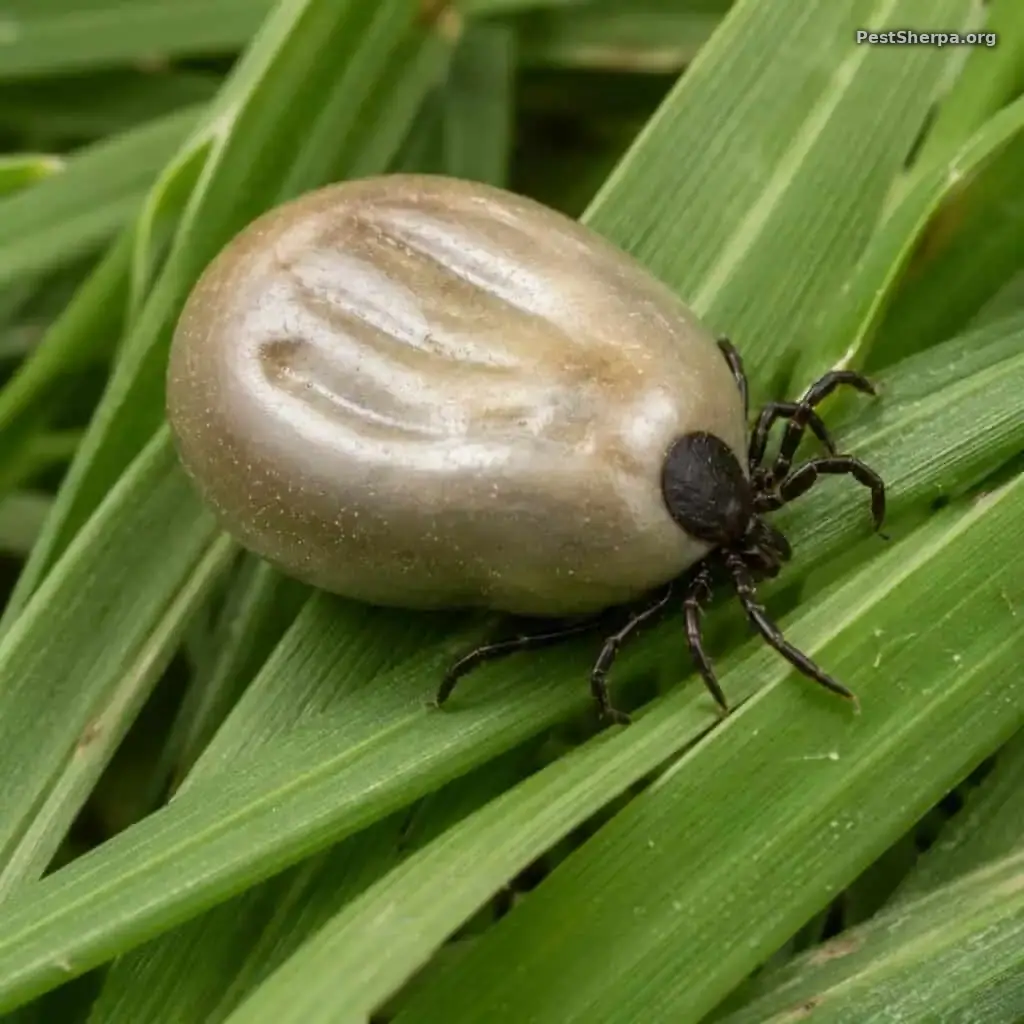
Engorged female after feeding on blood.
What To Do
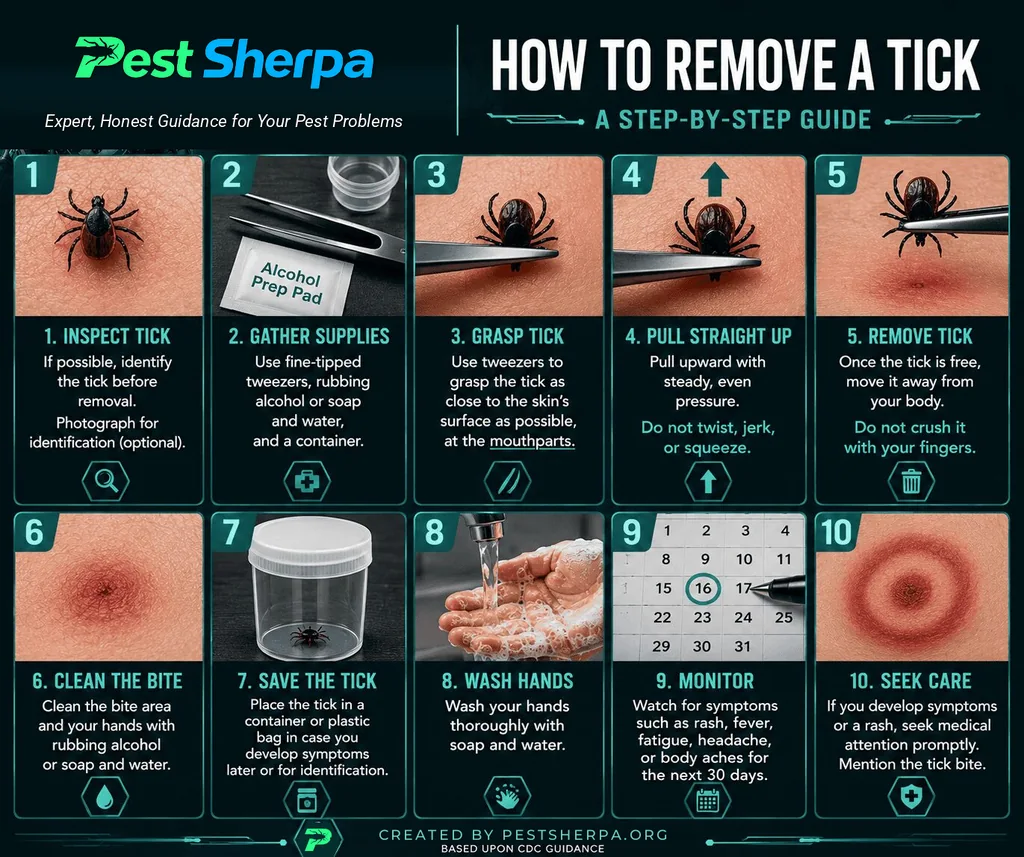
1. If a tick is attached, remove it now
Use fine-tipped tweezers. Grasp the tick as close to the skin as possible and pull upward with steady, even pressure. Do not twist, burn, smother, crush, or coat the tick with petroleum jelly. After removal, clean the bite area and your hands with soap and water or rubbing alcohol.
2. Save the tick and document the bite
Place the tick in a sealed bag or container, note the date, and take a clear photo if possible. This can help with identification if symptoms develop or a clinician asks about the bite.
3. Watch for symptoms
Contact a healthcare provider if you develop fever, rash, chills, headache, fatigue, muscle aches, joint pain, or other concerning symptoms after a tick bite. An expanding rash can occur with Lyme disease, but not every Lyme case has the classic bull’s-eye appearance.
4. Reduce tick habitat around the home
- Remove leaf litter from lawn edges, patios, play areas, and fence lines.
- Keep grass mowed and trim brush along paths and yard borders.
- Create a dry wood-chip or gravel border between woods and high-use lawn areas.
- Move firewood, brush piles, and clutter away from the house.
- Discourage rodent harborage; rodents such as deer mice can support tick life cycles.
- Keep play equipment and seating away from wooded edges and dense vegetation.
5. Use personal protection correctly
Wear long pants, tuck pants into socks in high-risk areas, use light-colored clothing so ticks are easier to spot, and perform full-body tick checks after outdoor activity. Use EPA-registered repellents according to the label, and consider permethrin-treated clothing or gear where appropriate. Permethrin products are for clothing and gear, not bare skin.
What usually wastes effort
- Relying on one yard spray while leaving leaf litter, brush, and rodent habitat untouched.
- Using ultrasonic devices or unproven repellents instead of label-approved products.
- Assuming a short lawn alone eliminates risk if the property borders woods or heavy leaf litter.
- Waiting to remove an attached tick until someone else can identify it.
When To Call a Pro
Call a licensed pest professional when tick exposure is recurring around the property rather than a one-time outdoor encounter. Strong triggers include:
- Multiple ticks found on people or pets after using the yard.
- Tick activity near playsets, patios, dog runs, trails, or shaded lawn edges.
- A wooded or brushy property border that cannot be easily maintained.
- Heavy leaf litter, rodent activity, or wildlife traffic near the home.
- Uncertainty about whether you are seeing blacklegged ticks, Lone Star ticks, dog ticks, or another species.
- High-risk occupants, pets, or frequent outdoor use where prevention needs to be more systematic.
A good tick program should combine inspection, habitat reduction, targeted treatment where appropriate, and realistic expectations. The goal is to reduce exposure risk, not make an outdoor property permanently tick-free.
Similar Pests / Misidentification Comparison
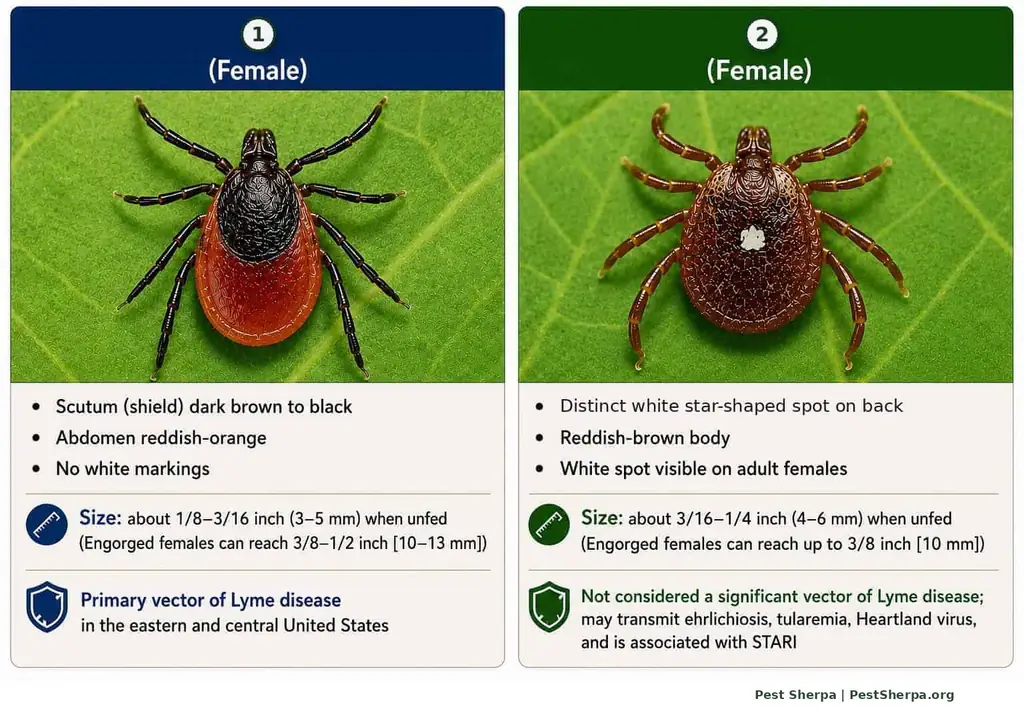
Which one did you find? Match the number:
- Blacklegged tick (deer tick): dark brown to black shield, reddish-orange abdomen and no white markings. The main carrier of Lyme disease in the eastern and central United States.
- Lone star tick: reddish-brown with a single white spot in the middle of the back on adult females. Not a significant carrier of Lyme disease, but can spread other illnesses.
- Lone Star tick: Adult females have a single pale “star” spot on the back and are often more aggressive host-seekers. Compare with Pest Sherpa’s Lone Star tick guide.
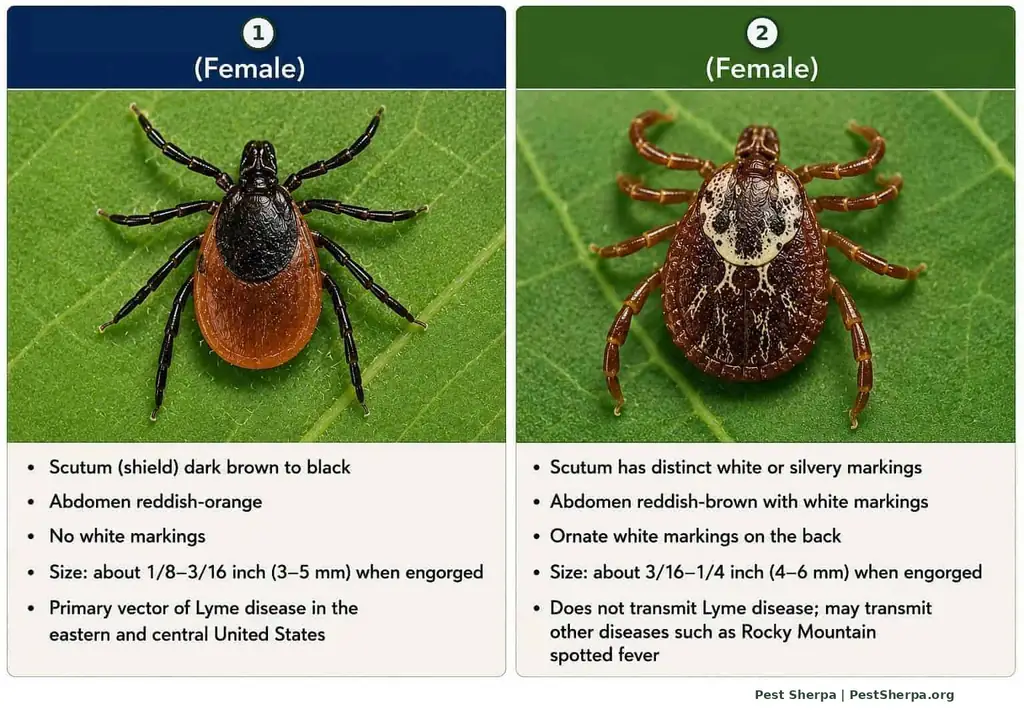
Which one did you find? Match the number:
- Blacklegged tick (deer tick): dark brown to black shield, reddish-orange abdomen and no white markings. The main carrier of Lyme disease in the eastern and central United States.
- American dog tick: reddish-brown with ornate white or silvery markings on the shield. Can carry Rocky Mountain spotted fever.
- American dog tick: Usually larger than a blacklegged tick, with ornate pale markings on the scutum. Common in grassy and shrubby areas.
- Brown dog tick: More uniformly reddish-brown and strongly associated with dogs and indoor kennel-style infestations.
- Western blacklegged tick: Similar role on the Pacific Coast; regional location is often important for interpretation.
- Tick larvae or “seed ticks”: Very tiny and six-legged. They may occur in clusters and can be mistaken for mites or small insects.
If the tick is tiny, dark-legged, found after time in wooded or brushy habitat, and you are in a Lyme-endemic region, treat the identification seriously and remove attached ticks promptly.
Common Questions
Our local news station had a story on ticks. Is Lyme disease a real threat?
References
- CDC: About Lyme Disease
- CDC: How Lyme Disease Spreads
- CDC: What to Do After a Tick Bite
- U.S. EPA: Repellents: Protection against Mosquitoes, Ticks and Other Arthropods
- Ohio State University Extension: Blacklegged (Deer) Tick
- University of Minnesota Extension: Ticks
- University of Rhode Island TickEncounter: Blacklegged Tick
- Connecticut Agricultural Experiment Station: Managing Exposure to Ticks on Your Property
This article was written by Greg Baumann, founder of Pest Sherpa, and reflects more than 40 years of professional pest management experience.
About the Author

Greg Baumann | Pest Control Expert
Greg Baumann is the founder of Pest Sherpa and a Pest Control Expert with more than 40 years of professional pest management experience. His articles combine decades of field experience, technical expertise, and science-based guidance to help homeowners identify pests correctly, understand real-world risks, and make informed pest management decisions.
Mission: Identify the pest. Understand the risk. Stop the problem. Prevent the comeback. Know when it’s time to call a professional.