
Tick Guide: Identification, Bite Risk, and What to Do
This hub covers two human-biting hard ticks readers often confuse: the blacklegged (deer) tick, Ixodes scapularis, and the lone star tick, Amblyomma americanum. Bite Risk depends on species, stage, attachment time, pathogens, and place (CDC). Check CDC county maps and Extension: presence is not nationwide and does not equal local transmission.
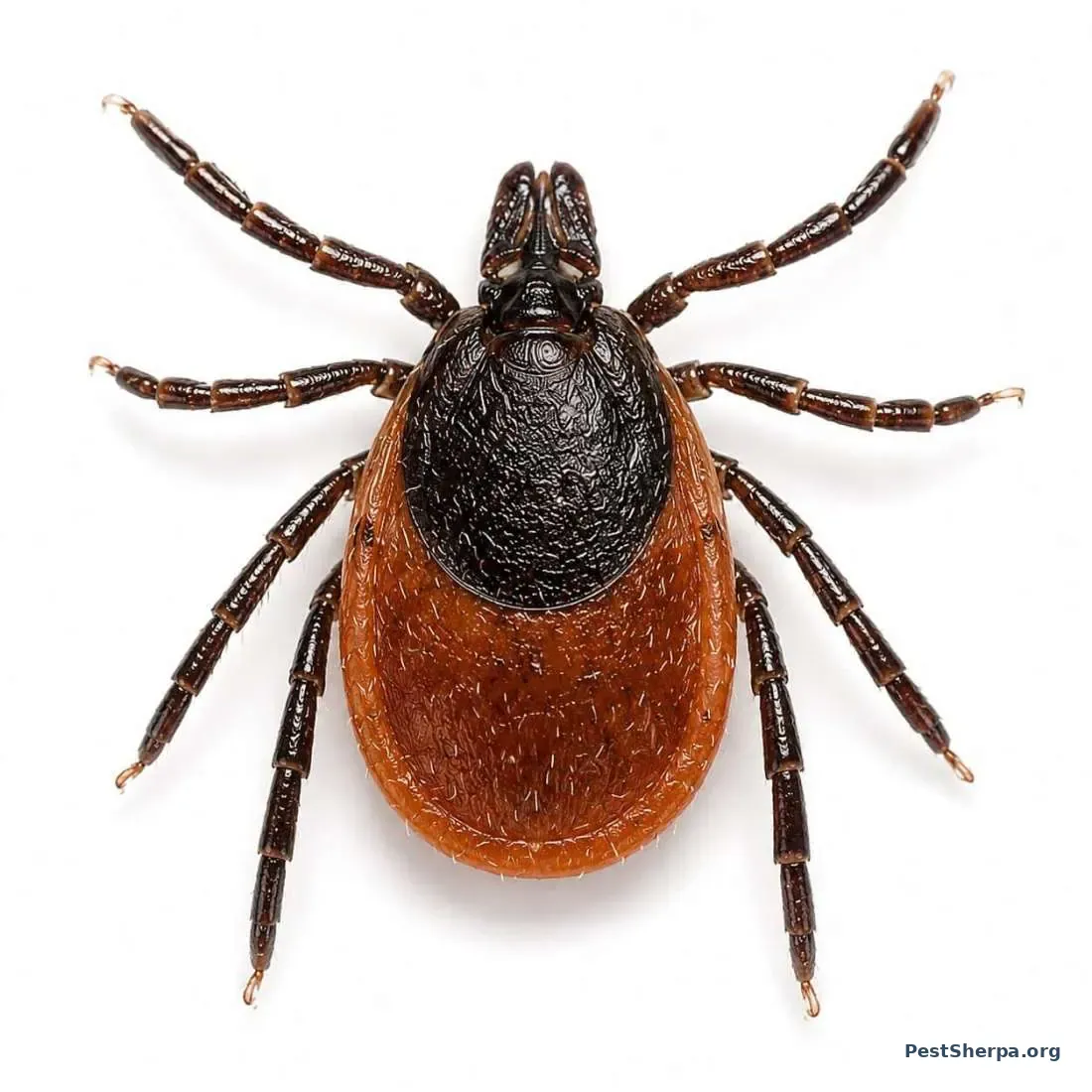
Unfed adult female blacklegged tick: orange-red body, dark scutum, no white spot. Photograph if you can, then remove promptly (CDC). Life-stage galleries live on the species pages.
TL;DR: Identify the Tick, Then Act
- Two species, different Bite Risk (blacklegged can transmit Lyme bacteria; lone star cannot)
- White “lone star” is adult-female only: nymphs look plain
- Remove attached ticks ASAP per CDC; do not wait for a clinic just to remove them
- Lyme bacteria usually need more than 24 hours of attachment (CDC); still remove immediately
- Ticks quest on low vegetation: they do not jump or drop from trees (Ohio State Extension)
Blacklegged ticks are the Lyme concern in much of the eastern U.S.: symptoms and public-health context are in the Pest Lab article on Lyme disease.
Start here based on what you’re seeing:
What this means right now
As of November 9, 2026: A 35-year Cary Institute study in PNAS found that tick numbers follow mice and acorn crops more than deer. A big mouse year meant about 40% more young ticks the next year, and a heavy acorn crop predicted more about two years later. It’s one New York forest, but if your oaks dropped a lot of acorns this fall, plan on extra tick checks the next two summers.
Tick Species Guides
Species pages own ID, removal, prevention, and FAQs. This hub is the Bite Risk fork.
Deer Ticks / Blacklegged Ticks
Blacklegged Deer Tick: Identification, Lyme Risk, and Removal
Lone Star Ticks: Identification, Bite Risks, and Prevention
Quick Navigation
- How to Identify Ticks
- Why It Matters
- What To Do
- When to Call a Physician vs a Pest Pro
- Compare Species Before You Act
- Common Questions
- References
How to Identify Ticks
Do not ID from the bite mark. CDC: a small mosquito-like bump that fades in 1 to 2 days is common and is not Lyme. Adult female blacklegged ticks have an orange-red body around a dark scutum and no white spot. Adult female lone star ticks are reddish-brown with one white/silvery scutum dot. Nymphs of both are tiny and plain. The white spot is adult-female pigment only (URI TickEncounter). Mottled scutum adults (often American dog tick) and western blacklegged ticks are out of scope. Use the species guides for stage photos.
Why It Matters
Most bites do not mean a named disease. Immediate lone-star redness is often saliva irritation, not infection (CDC). CDC: blacklegged ticks are widely distributed across the eastern United States; lone star ticks in the Northeast, South, and Midwest. Southeastern blacklegged ticks are almost never infected with Lyme bacteria (CDC). Do not apply Pennsylvania infection percentages nationally.
Blacklegged tick: Lyme (not STARI)
CDC lists Lyme bacteria (Borrelia burgdorferi and B. mayonii), plus anaplasmosis, babesiosis, B. miyamotoi, ehrlichiosis (E. muris eauclairensis), and Powassan virus. In most cases a tick must be attached more than 24 hours before Lyme bacteria are transmitted; removing within 24 hours greatly reduces Lyme chances (CDC). Nymphs are easy to miss. Deer do not infect ticks with Lyme bacteria (CDC). Pets can get Lyme and bring ticks indoors but do not spread Lyme directly to people. Ask a veterinarian. Penn State reports Powassan can transmit in as little as 15 minutes (PSU, not CDC’s Lyme-causes page). A few alpha-gal cases have followed blacklegged bites (CDC AGS); most U.S. AGS is linked to lone star ticks.
Lone star tick: STARI / alpha-gal (not Lyme)
CDC: lone star ticks cannot transmit Lyme disease bacteria; their saliva has been shown to kill Borrelia. STARI is a rash of unknown cause associated with lone star bites; it can mimic Lyme erythema migrans (EM), most often in the southern United States, where Lyme is rare. There is no diagnostic blood test. CDC also lists ehrlichiosis, Heartland virus, Bourbon virus, tularemia, and growing evidence that alpha-gal syndrome (a serious allergy to a sugar in most mammals) may follow lone star bites. Not every bite causes AGS. See a clinician for expanding rash, fever, or reactions after mammalian meat. This hub does not prescribe antibiotics.
What To Do
Remove attached ticks as soon as possible. Follow CDC What to Do After a Tick Bite (fine-tipped tweezers, steady pull, no petroleum jelly, heat, or nail polish). Do not delay removal to identify the tick. CDC generally does not recommend commercial tick tests to decide treatment. Clothing treated with 0.5% permethrin is for fabric, not skin (CDC/EPA). Stage photos, full removal walkthroughs, and yard/clothing checklists are on the blacklegged and lone star pages.
When to Call a Physician vs a Pest Pro
- Physician: rash or fever days to weeks after a bite; expanding rash, neurologic, joint, or cardiac symptoms (CDC Lyme); or allergic symptoms after mammalian meat (CDC AGS). Do not delay removal waiting for a clinic if you can tweeze now
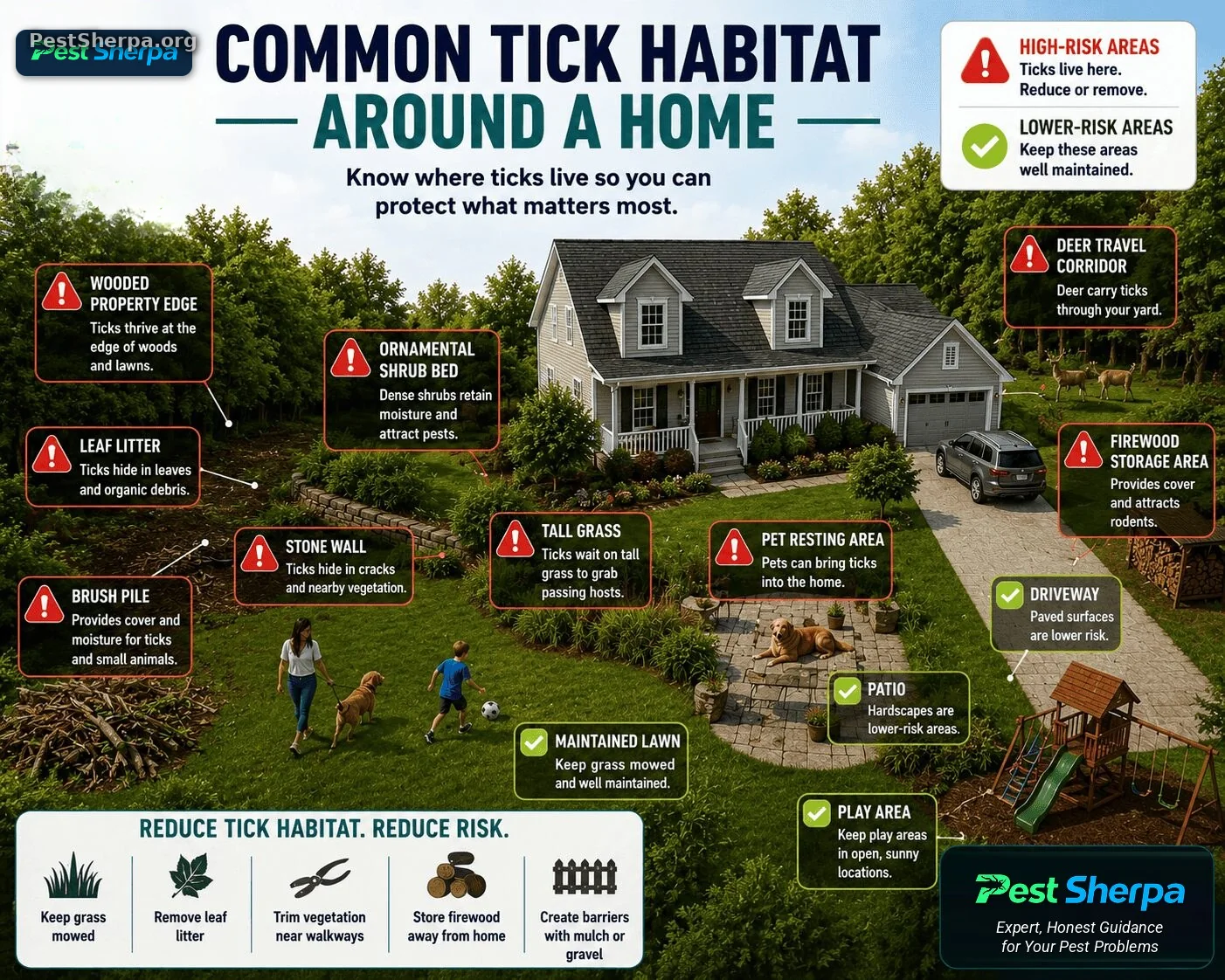
- Pest professional / Extension: recurring ticks in a wooded or leaf-litter yard, deer trails through the property, or mass seed-tick encounters. CDC: do not rely on spraying alone to reduce infection risk. Pets: veterinarian only
Compare Species Before You Act
Blacklegged / deer tick (Ixodes scapularis)
Blacklegged ticks are smaller at every stage. Adult females have a dark scutum and orange-red body with no star. Bite Risk centers on Lyme and other Ixodes pathogens in high-incidence regions, not every county.
Lone star tick (Amblyomma americanum)
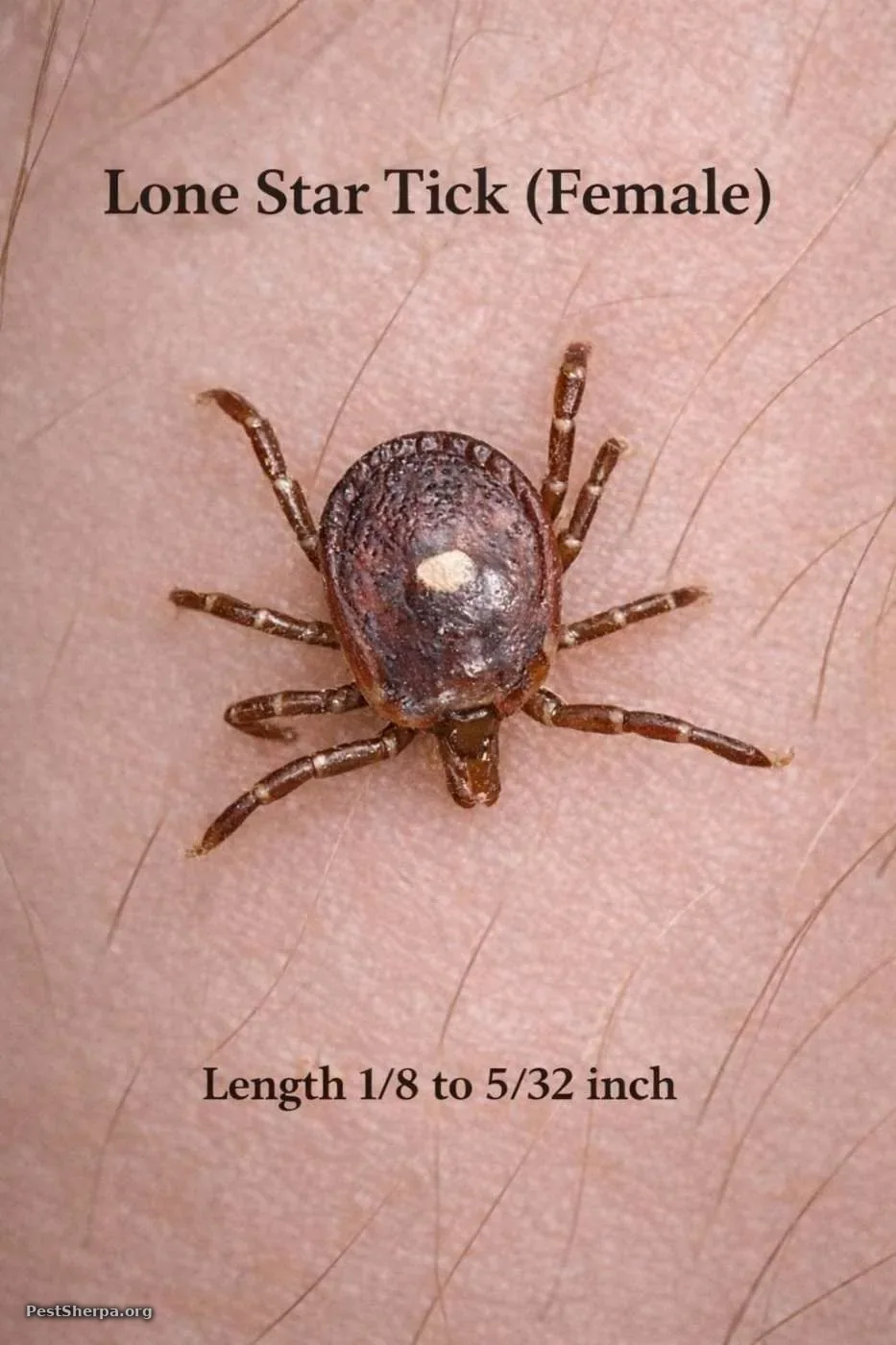
Lone star ticks are aggressive human biters. Adult females show the white spot; nymphs do not. Bite Risk includes STARI, ehrlichiosis, and possible alpha-gal, not Lyme (CDC).
Common Questions
- Does a lone star tick give you Lyme? No. CDC: they cannot transmit Lyme bacteria. STARI can mimic EM. See a clinician.
- Physician or pest pro? Expanding rash, fever, or meat reactions go to a clinician. Recurring yard ticks go to Extension or a licensed applicator. CDC: do not rely on spraying alone.
- Should I panic if I find one tick in the yard? No. In tick-prone areas, one find often means more are present. Trim vegetation, use a label-approved DEET tick repellent on skin or clothing, and check people and pets after outdoor time. See What should I do if I find a tick in my yard?
- Is a broadcast yard spray the best first step? Usually not. Personal protection and trimming beat broadcast applications that can also hit beneficial insects such as honey bees. If you use a yard product, it must be labeled for ticks and used exactly per the label.
References
- CDC: Where Ticks Live
- CDC: What to Do After a Tick Bite
- CDC: How Lyme Disease Spreads · About STARI · About Alpha-gal Syndrome
- Ohio State ENT-0096 · HYG-2073 · Penn State Extension: Common Ticks · URI TickEncounter ID Guide
- CDC: Preventing Tick Bites
This article was written by Greg Baumann, founder of Pest Sherpa, and reflects more than 40 years of professional pest management experience.
About the Author

Greg Baumann | Pest Control Expert
Greg Baumann is the founder of Pest Sherpa and a Pest Control Expert with more than 40 years of professional pest management experience. His articles combine decades of field experience, technical expertise, and science-based guidance to help homeowners identify pests correctly, understand real-world risks, and make informed pest management decisions.
Mission: Identify the pest. Understand the risk. Stop the problem. Prevent the comeback. Know when it’s time to call a professional.