
How can I get rid of old pest control products I have in my garage?
Quick answer:
Do not throw old pest control products into household trash, pour them down drains, dump them outdoors, or burn them. Many pesticides require special disposal because they can contaminate water, create safety hazards, or violate local disposal regulations. In most situations, the safest option is a local household hazardous waste collection program.
Why This Matters
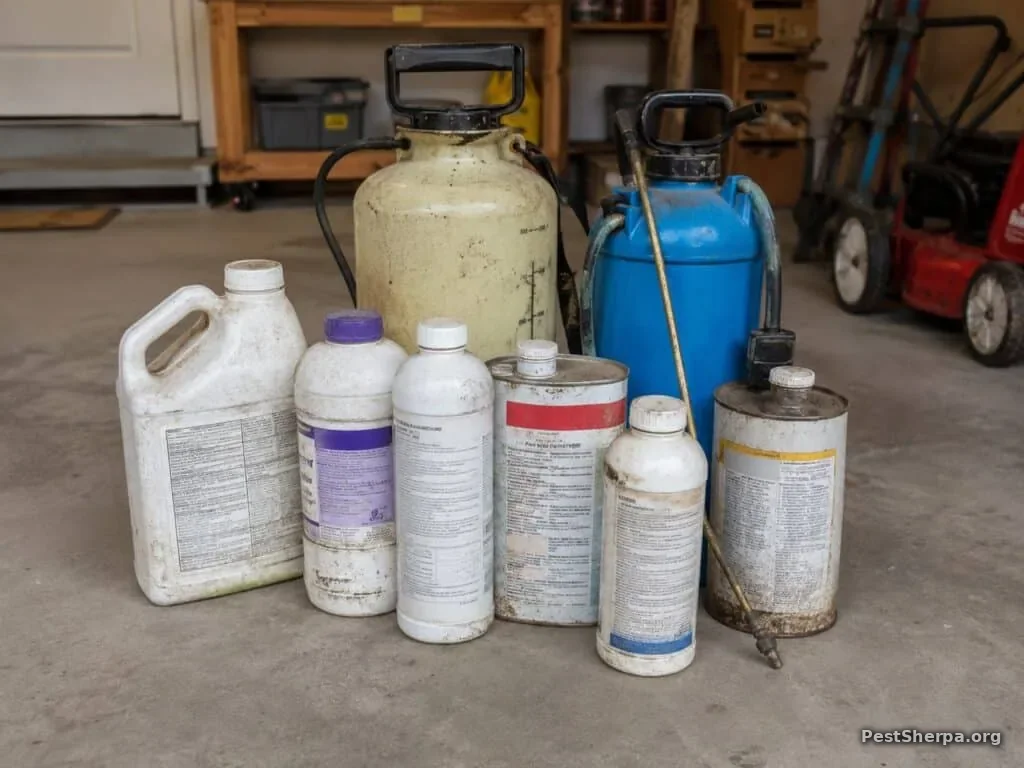
Many homeowners forget about old pest control products sitting in garages, sheds, utility rooms, or storage cabinets for years. Some may be partially used sprays, concentrates, foggers, rodent baits, dusts, or outdated chemicals stored long after their original use.
The problem is that pesticides are not ordinary household waste. Even older products may remain toxic, flammable, pressurized, or environmentally hazardous long after they stop being effective or useful.
Improper disposal can create risks for children, pets, sanitation workers, wildlife, groundwater, septic systems, and stormwater systems.
What Most Homeowners Miss
One of the biggest mistakes homeowners make is assuming that old pesticides become harmless with age. In reality, some products become more concerning as containers deteriorate, labels fade, or years of heat and moisture exposure weaken the packaging.
Temperature swings inside garages and sheds can slowly damage containers over time, especially aerosol products and older liquid concentrates. Professionals occasionally encounter garages filled with leaking cans, rusted lids, damaged bait containers, or pesticides with labels that are no longer readable.
Another common issue is homeowners storing products “just in case” for years without realizing how much chemical material has accumulated. It is not unusual for professionals to find decades-old pest control products still sitting on shelves from previous homeowners.
Aerosol cans, rodent baits, concentrated insecticides, and older liquid pesticides may all require different handling considerations than ordinary household trash.
What You Should NOT Do
- Do not pour pesticides down sinks, toilets, storm drains, or septic systems.
- Do not dump leftover chemicals outdoors.
- Do not burn pesticide containers.
- Do not mix different chemicals together.
- Do not place leaking pesticides loosely into household garbage.
- Do not reuse pesticide containers for any other purpose.
- Do not leave old pesticides accessible to children or pets.
What To Do Instead
- Keep products in their original containers whenever possible.
- Read the label for disposal instructions.
- Store leaking containers temporarily inside a larger sealed plastic container.
- Wear gloves when handling damaged or leaking products.
- Contact your local household hazardous waste collection program.
- Check county or municipal waste-management websites for pesticide disposal events.
- Transport products upright and secured if taking them to a disposal facility.
- Avoid transporting leaking products loosely inside vehicle interiors where spills or fumes may become a problem.
When Old Products Should Probably Not Be Used
Even when older pest control products are still sealed, homeowners should avoid using pesticides that are unlabeled, leaking, badly deteriorated, improperly stored, or no longer clearly identifiable.
Products exposed to years of garage heat, freezing temperatures, moisture, or damaged packaging may no longer perform as intended and may create unnecessary handling risks. If you cannot clearly identify the product or safely follow the label instructions, disposal is usually the better option.
Risk Level
| Situation | Risk Level | What It Usually Means |
|---|---|---|
| Modern sealed product with readable label | Low | Usually manageable through local disposal guidance |
| Old partially used pesticides stored for years | Moderate | Careful handling and disposal are recommended |
| Leaking, rusted, damaged, or unlabeled containers | Elevated | Potential exposure and contamination risk |
| Strong odors, chemical spills, mixed products, or unknown substances | High | Professional or hazardous waste assistance may be needed |
DIY vs. Professional Help
Most homeowners can safely manage disposal of small amounts of old pest control products by following label instructions and using approved local hazardous waste collection programs.
Not every old pest control product automatically requires emergency handling. But leaking, unlabeled, deteriorating, or unidentified chemicals should always be handled carefully.
Professional guidance becomes more important when containers are leaking, labels are missing, products are very old or unidentified, large quantities are involved, or chemical exposure may have occurred.
In some situations, pest management professionals, hazardous waste teams, or local environmental agencies may help determine how certain products should be handled safely.
What Professionals Often Encounter
- Leaking aerosol cans stored in hot garages
- Old concentrates with unreadable labels
- Outdated pesticides no longer legally sold
- Rodenticide containers damaged by moisture
- Improperly stored chemicals near food or pet supplies
- Unknown pesticides left behind by previous homeowners
- Multiple incompatible chemicals stored together
Sherpa Insight
One of the biggest concerns with old pest control products is that homeowners often no longer remember exactly what is inside the container or whether the product is still stable. Once labels are damaged or containers begin leaking, trying to guess what the product is, or whether it is still safe to handle, becomes risky. In many cases, keeping unidentified or deteriorating pesticides creates more risk than value. If you are uncertain what the product is or whether the container is safe, it is time to handle it carefully and dispose of it properly.
Related Pest Resources
- Roof Rats: Identification, Damage Risk, and Control
- Deer Mice: Identification, Biology, Habits, and Control
This article was written by Greg Baumann, founder of Pest Sherpa, and reflects more than 40 years of professional pest management experience.
About the Author

Greg Baumann | Pest Control Expert
Greg Baumann is the founder of Pest Sherpa and a Pest Control Expert with more than 40 years of professional pest management experience. His articles combine decades of field experience, technical expertise, and science-based guidance to help homeowners identify pests correctly, understand real-world risks, and make informed pest management decisions.
Mission: Identify the pest. Understand the risk. Stop the problem. Prevent the comeback. Know when it’s time to call a professional.