
Spider Guide: Identification, Risk, and What to Do
Most spiders in and around homes are not medically important. UC Statewide IPM: they are beneficial predators, and most cannot harm people. Identify first and check geography before you assume a medical emergency. This hub covers brown recluse (Loxosceles reclusa) and yellow sac spiders (Cheiracanthium spp.). This page does not diagnose bites.
Some outdoor spiders enter homes during late summer and fall, although their seasonal behavior differs from that of overwintering insects such as boxelder bugs and stink bugs. Some spider species also live indoors year-round. See overwintering invaders for that pattern.
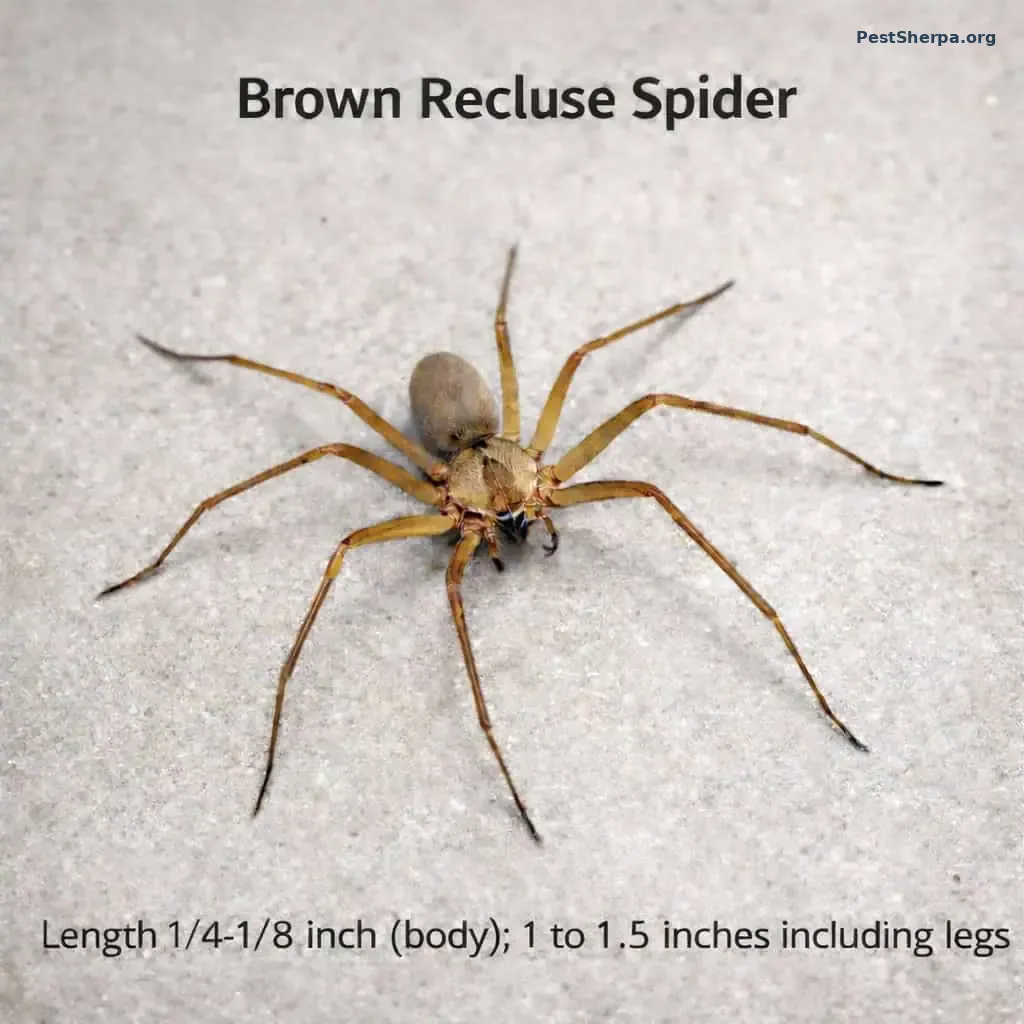
Brown recluse is the medically important member of this hub. Range still decides Risk: L. reclusa is not nationwide. Full ID, habits, and control live on the species pages.
TL;DR: Identify First, Then Act
- Most household spiders are not a medical emergency
- Brown recluse is not nationwide: south-central Midwest core
- Yellow sac ≠ recluse medically: typical bites are milder (bee-sting-like)
- Vacuum and exclusion first; species pages hold the full checklists
Start here based on what you’re seeing:
- Tan to brown spider, possible violin, south-central Midwest
- Pale yellow hunter with a silken tube in a wall-ceiling corner
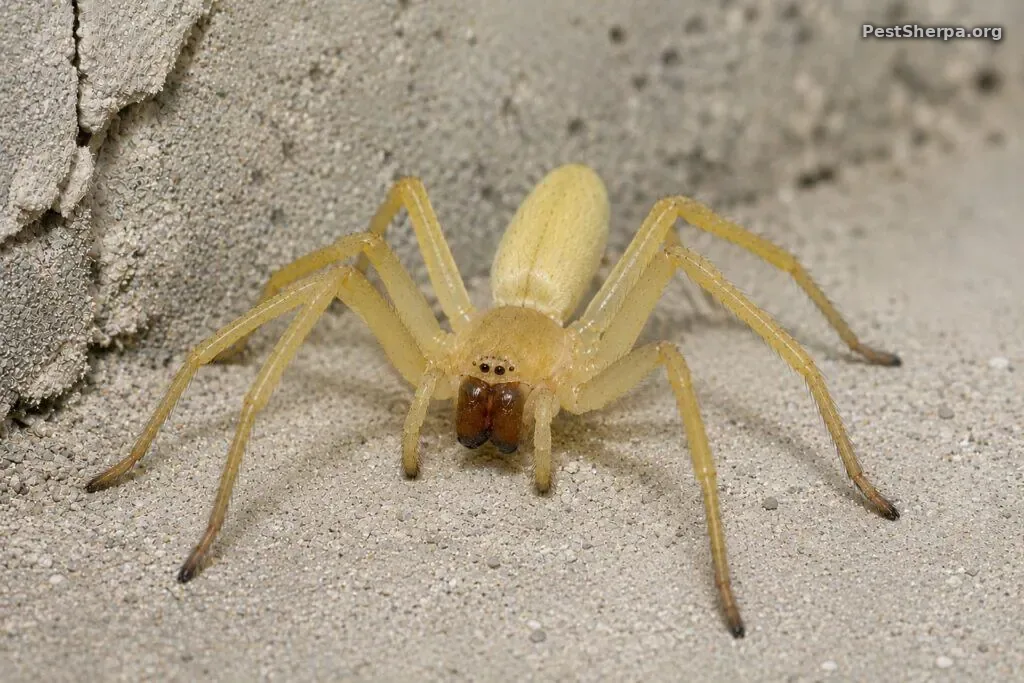
Size + lookalike tease: Adult yellow sac and brown recluse spiders can be in a similar small body-length range, so don’t ID from “big vs tiny” alone. Use color, eyes, retreat, and geography: pale yellow hunter with a silken tube in a wall-ceiling corner is usually a sac spider. A plain tan spider found in undisturbed clutter within brown recluse range warrants closer examination. Brown recluses have six eyes arranged in three pairs, but additional physical characteristics are needed for reliable identification. Jump to the comparison table below, then open the matching species guide. [Penn State] [UC IPM] [UC Davis]
Spider Species Guides
Species pages own Identify, Risk, and What To Do. This hub is the router.
Brown recluse: Loxosceles reclusa
Yellow sac spiders: Cheiracanthium spp.
Brown Recluse Spiders: Identification, Range, Bites, and Control
Hobo Spiders: Identification, Range, and the Necrosis Myth
Joro Spider: Identification, Range and What to Do
Jumping Spiders: Identification, Bites, and What to Do
Yellow Sac Spiders: Size Comparison, ID vs Recluse, and Control
Quick Navigation
- How to Identify Spiders
- Why It Matters
- What To Do
- When to Call a Professional
- Compare Brown Recluse vs Yellow Sac
- Common Questions
- References
How to Identify Spiders
Do not ID from a wound. UKY: most home spiders are harmless predators of nuisance insects. CDC/NIOSH: most bites occur because a spider is trapped or touched. Eye pattern, web type, and where you live belong on the species pages. Use those checklists there, not a reprint here.
Range honesty: brown recluse is not nationwide. CDC/NIOSH: midwestern and southern United States. Maps adapted from Richard S. Vetter (UC Riverside) via extension: south-central Midwest. UC IPM: southeastern Nebraska to southwestern Ohio, south through Texas to north Georgia; no California populations of L. reclusa. Penn State: sixteen established states; isolated hitchhikers are not outdoor range. Other native Loxosceles live mainly in the Southwest; the common name “brown recluse” applies only to L. reclusa. Yellow sac spiders occur far more broadly (species differ).
If it has eight eyes, banded or spiny legs, a patterned abdomen, a large obvious cobweb, or you are far outside the south-central range, it is almost certainly not L. reclusa. Wolf spiders and cellar spiders are common mix-ups. UC IPM: of nearly 600 California “recluses” submitted, only one was L. reclusa (a Missouri-move household); yellow sacs were among the look-alikes.
Why It Matters
Use Risk, not scare wording. People often live with recluses and are never bitten (UKY; Military Public Health). Typical bites: spider trapped in shoes, clothing, bedding, or stored items.
UKY: recluse bites are usually painless at first; redness may appear in 3 to 8 hours; most stay localized and heal in about three weeks. Most brown recluse bites cause little or no significant tissue injury. Penn State Extension estimates that approximately 90% result in no reaction or a small localized lesion, while approximately 10% may develop dermonecrosis. Serious systemic reactions are uncommon but can occur, particularly in children, and Penn State treats a systemic reaction as a true emergency. UC IPM and Military Public Health also use about-10% language for more serious tissue injury. Do not average them into a new statistic.
Yellow sac is not “the other recluse.” Penn State (January 19, 2026) and UC IPM: immediate burning like a bee sting, redness, sometimes swelling. PSU: verified-bite studies failed to confirm necrotic lesions once associated with Cheiracanthium. “Brown recluse bite” is widely overdiagnosed where no Loxosceles exist; mimics include MRSA. Seek a clinician for unexplained necrotic wounds. Save the spider if it is safe to do so.
What To Do
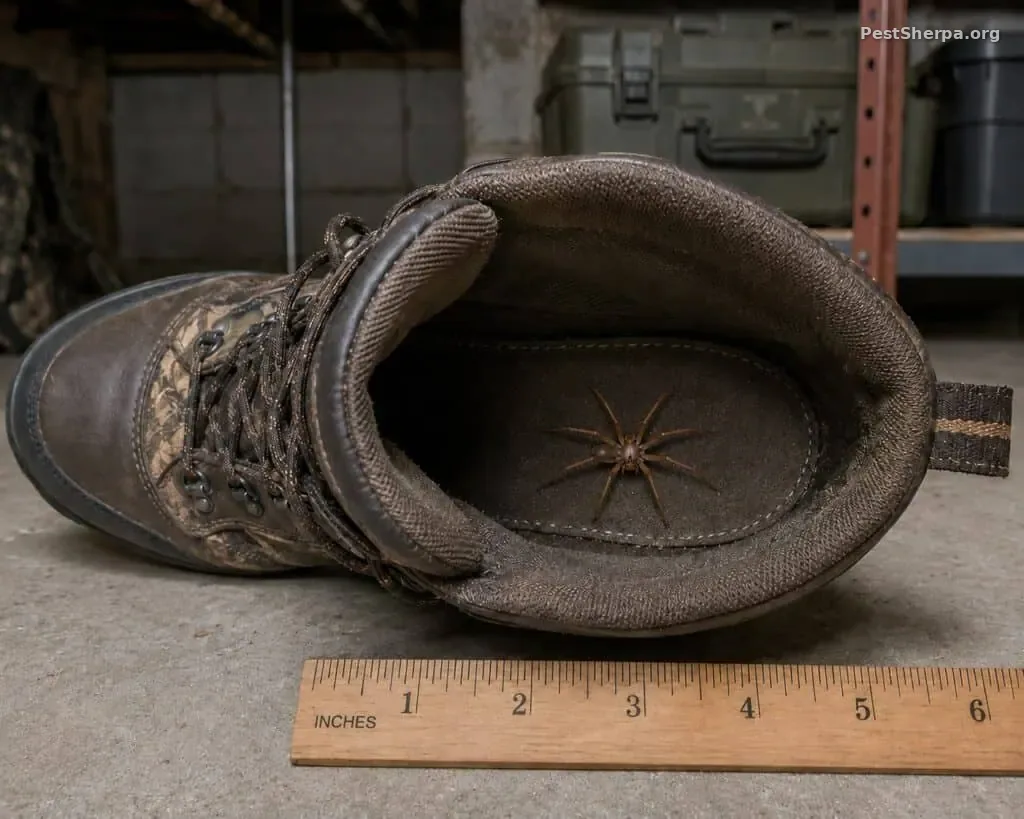
Identify first. Vacuum the spider and web, then exclude (seal gaps, screens, door sweeps). Shake shoes and stored clothing. Full prevention and IPM live on the brown recluse and yellow sac pages. Pesticides last and label-only; this hub is not a spray-out guide. Wisconsin A2135: eradicating every spider is difficult and unnecessary. Greg shared more on what draws spiders into bathrooms with Good Housekeeping.
When to Call a Professional
- Confirmed or strongly suspected brown recluse infestation (many spiders, shed skins, repeated glue-trap captures): UKY, often best done by professionals because of secretive harborages
- A single spider generally does not justify professional treatment. However, homeowners may reasonably request help with identification, repeated encounters, or personal safety concerns.
- Medical care is not pest control: necrotic or systemic symptoms → a clinician. Do not self-treat necrosis
Greg Baumann insight: Most spiders are not aggressive toward people, and bites frequently occur when a spider is trapped against the skin in clothing, shoes, or bedding. Some species, including yellow sac spiders, may occasionally bite without obvious provocation. One pale spider in a ceiling corner is usually a yellow sac job for the vacuum, not an automatic treatment. Call a licensed professional when you have a confirmed or strongly suspected brown recluse population (repeated captures, shed skins, many spiders in clutter) because these spiders hide in secretive harborages that DIY sprays miss. Medical symptoms, especially spreading or necrotic wounds, belong with a clinician, not a pesticide label. Spiders are usually not aggressive; most bites happen when one is trapped against skin in clothing, shoes, or bedding. [University of Kentucky] [UC IPM] [CDC/NIOSH]
Compare Brown Recluse vs Yellow Sac Before You Act
Brown recluse
Brown recluse spiders are a south-central Midwest house species, not a nationwide pest. A minority of bites can necrose (PSU / UC IPM / Military ~10% language, not every sore). Use the species page for eyes, violin caveats, and control.
Yellow sac spiders
Yellow sac spiders are pale hunters with corner sacs and occur far outside recluse range. Typical bite: immediate bee-sting-like pain. PSU 2026: verified bites have not confirmed necrotic lesions.
Yellow sac vs brown recluse (size + lookalike)
This labeled chart answers the “size comparison” question on the hub page itself: eyes, color, retreat, and range matter as much as millimeters. (Not to scale.)
| Cue | Yellow sac | Brown recluse |
|---|---|---|
| Body size | About 3/16 to 3/8 inch (♀ ~5 to 10 mm; ♂ slightly smaller) | About 1/4 to 3/8 inch body (~9 mm); long legs can make it look larger |
| Eyes | Eight eyes in two roughly equal rows | Six eyes in three pairs (best ID cue; needs a hand lens) |
| Look | Pale yellow / cream; may show a faint darker stripe on the abdomen; no reliable violin | Tan to chocolate brown; plain abdomen; violin mark helpful but not reliable alone |
| Where / web | Night hunter on walls & ceilings; small silken sac in upper corners | Dark clutter, closets, shoes, storage; small irregular silk retreat, not an orb web |
| Geography | Broad U.S. occurrence (species differ): common far outside recluse range | Not nationwide: south-central Midwest core (midwestern & southern U.S. per CDC/NIOSH) |
| Risk framing | Typical bite: immediate burning / bee-sting-like pain; verified-bite studies have not confirmed necrotic lesions (Penn State) | Medically important species in range; minority of bites more serious tissue injury (UC ~10% language): ID and geography first; wounds alone don’t diagnose |
Greg Baumann insight: People often ask for a size chart because a pale spider on the ceiling looks “wrong.” Fair question. Just remember both adults are small. The faster tell is usually the corner silk tube (yellow sac) versus a plain brown spider in undisturbed clutter inside recluse country (then confirm six eyes). Vacuum the spider and the retreat, seal gaps, and save ID drama for a clear photo or a trapped specimen, not for guessing from a sore.
Common Questions
- Are brown recluses nationwide? No. CDC/NIOSH: midwest and southern U.S. Vetter maps: south-central Midwest core. Isolated finds are not established outdoor populations.
- Is a yellow sac as serious as a recluse? No. Typical bites are milder. Penn State (2026): verified-bite studies failed to confirm necrotic lesions.
- Do conkers keep spiders away? No. Horse-chestnut conkers are not a proven spider repellent. Treat them like other pest myths and use exclusion instead. See Do conkers keep spiders away?
How big is a yellow sac spider compared with a brown recluse? Both are small. Extension sources put yellow sac adults roughly in the 5 to 10 mm body-length range (about ¼ to ⅜ inch for many females) and brown recluse bodies around 9 mm / up to about ⅜ inch, so size alone rarely settles the ID. Better cues: yellow sacs are usually pale yellow hunters with eight eyes and a silken corner sac; brown recluses are tan-to-brown with six eyes in three pairs, a possible violin mark (unreliable alone), and a south-central Midwest range, not nationwide. See the table above and the yellow sac and brown recluse guides. [Penn State] [Penn State recluse] [UC IPM] [UC Davis]
References
- CDC / NIOSH: Venomous Spiders at Work
- UC Statewide IPM: Pest Notes: Brown Recluse and Other Recluse Spiders (ANR 7468)
- UC Statewide IPM: Pest Notes: Spiders (ANR 7442)
- University of Kentucky Extension: Brown Recluse Spider (ENTFACT-631)
- Penn State Extension: Brown Recluse Spiders
- Penn State Extension: Agrarian Sac Spider and Longlegged Sac Spider
- UC Davis: Yellow Sac Spider
- CDC / NIOSH: Venomous Spiders
This article was written by Greg Baumann, founder of Pest Sherpa, and reflects more than 40 years of professional pest management experience.
About the Author

Greg Baumann | Pest Control Expert
Greg Baumann is the founder of Pest Sherpa and a Pest Control Expert with more than 40 years of professional pest management experience. His articles combine decades of field experience, technical expertise, and science-based guidance to help homeowners identify pests correctly, understand real-world risks, and make informed pest management decisions.
Mission: Identify the pest. Understand the risk. Stop the problem. Prevent the comeback. Know when it’s time to call a professional.