
Yellow Sac Spiders: Size Comparison, ID vs Recluse, and Control
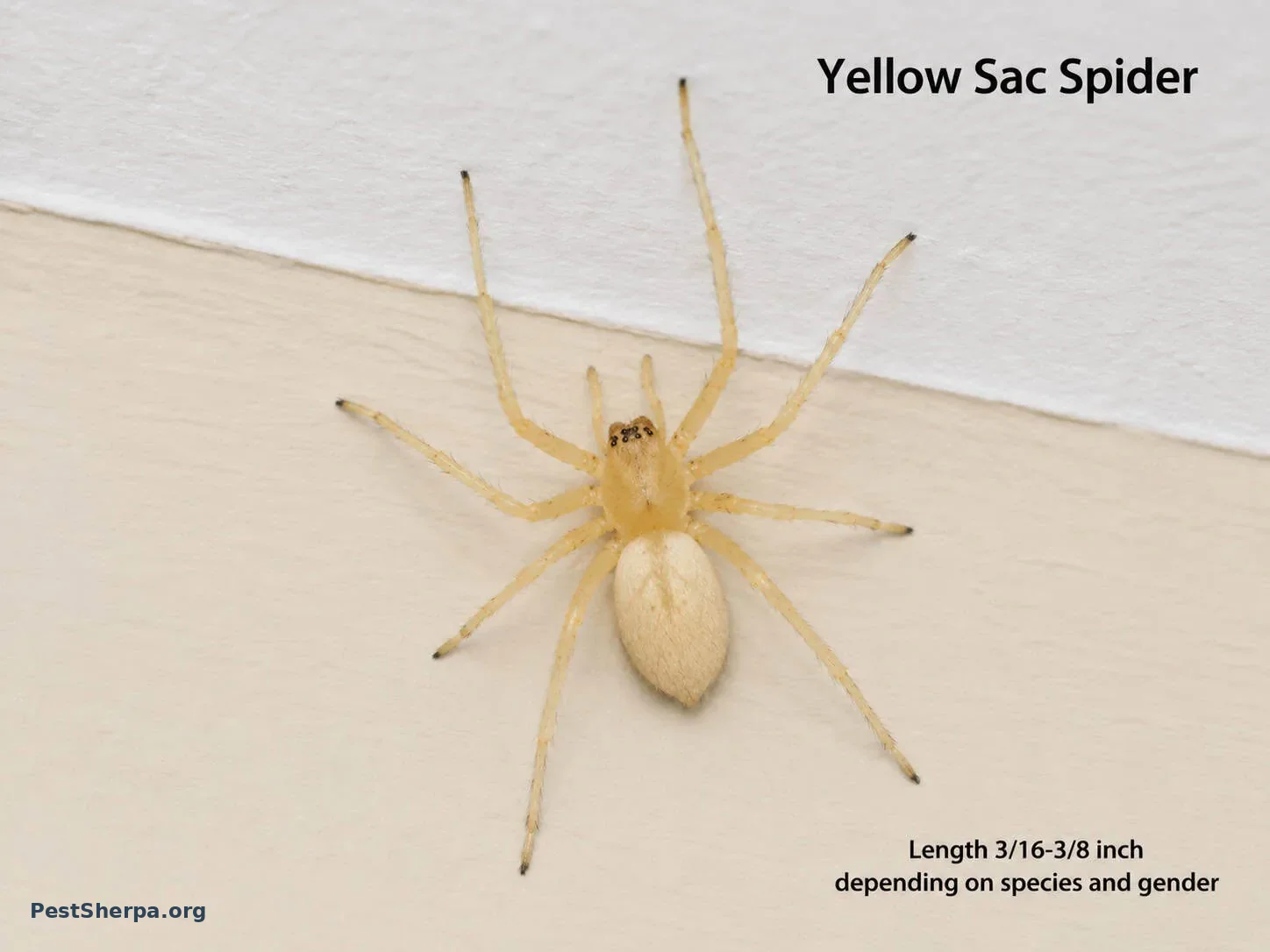
Yellow sac spiders are small, pale hunting spiders often found inside homes, apartments, garages, offices, and other structures throughout North America. Unlike web-building spiders, they actively roam walls, ceilings, and floors at night searching for insect prey. Homeowners who see a small yellow spider in the house often fear a brown recluse. Most pale or yellowish house spiders are not recluses. This guide covers yellow sac identification, a clear yellow sac spider vs brown recluse comparison, and practical control. Although they are beneficial predators outdoors, their wandering behavior indoors and occasional bites often cause concern.
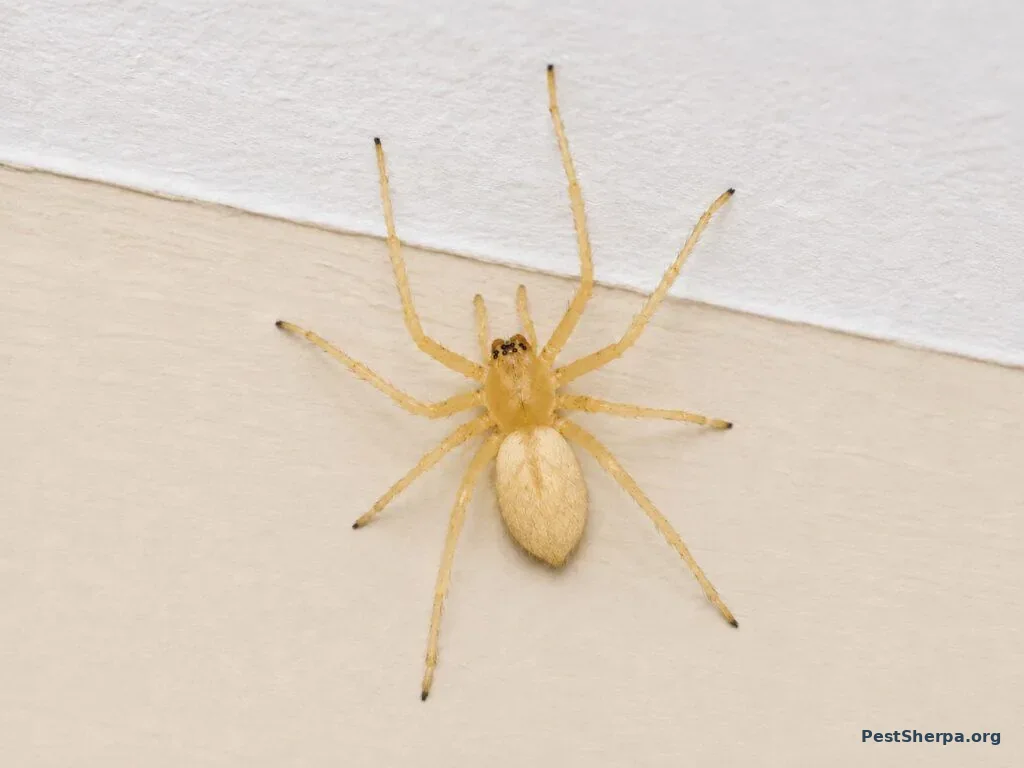
Yellow sac spider size comparison (quick)
Homeowners searching for a yellow sac spider size comparison usually need body length, not a guess from a phone photo. Size alone does not separate yellow sac spiders from brown recluses; use markings and eyes with the table below.
| Spider | Typical adult body length | About in mm | Notes |
|---|---|---|---|
| Yellow sac spider | About 3/16 to 3/8 inch | About 5 to 10 mm | Long legs can make it look larger than body length alone |
| Brown recluse | About 1/4 to 3/8 inch | About 6 to 10 mm | Similar body length range; do not ID by size alone |
TL;DR
- Yellow sac spiders are small, pale, wandering hunting spiders that often enter homes through gaps around doors, windows, siding, and foundations.
- They do not build large prey-catching webs. Instead, they rest in small silken retreat sacs during the day and hunt at night.
- Most bites happen when a spider is trapped against skin in clothing, bedding, towels, or shoes. Bites may be painful, but severe tissue damage is extremely rare.
- The best control plan is exclusion, insect reduction, clutter reduction, vacuuming spiders, and removing retreat sacs. Routine broad pesticide spraying is usually unnecessary.
- Yellow sac vs brown recluse: most “yellow house spiders” are not brown recluses. Use the comparison table below, photograph the spider if you need help, and consult local expertise when range and markings leave doubt. See also the brown recluse guide and the spiders hub.
Jump to: Identification | Why It Matters | What To Do | When To Call a Pro | Yellow Sac vs Brown Recluse | Similar Pests | FAQ | References
| Common name | Yellow sac spider |
|---|---|
| Common indoor species | Northern yellow sac spider and American yellow sac spider |
| Scientific genus | Cheiracanthium |
| Typical size | About 3/16 to 3/8 inch in body length |
| Color | Cream, pale yellow, light tan, or greenish-yellow |
| Webs | No large prey-catching webs; small silken retreat sacs only |
| Main concern | Nuisance pest with occasional bite risk |
| Best control approach | Exclusion, vacuuming, insect reduction, and targeted removal of retreat sacs |
Yellow Sac Spider vs Brown Recluse
If you found a pale spider and are asking “yellow sac spider vs brown recluse,” start here. Color alone is a weak ID tool. This side-by-side is for calm homeowner screening, not a medical diagnosis of bites or lesions.
| Feature | Yellow sac spider | Brown recluse |
|---|---|---|
| Color | Cream, pale yellow, light tan, or greenish-yellow | Tan to dark brown; often more uniform than patterned house spiders |
| Body length (size) | About 3/16 to 3/8 inch (about 5 to 10 mm) | About 1/4 to 3/8 inch (about 6 to 10 mm); similar range, so size is a weak ID tool |
| Body shape | Slender hunting spider with long legs | Compact recluse body profile; abdomen usually plain |
| Markings | No classic violin marking on the cephalothorax | Often associated with a violin-shaped marking (not always easy to see) |
| Eye arrangement | Not the recluse six-eye pattern; do not ID from a blurry phone photo alone | Six eyes in three pairs (a key recluse trait when you can see it clearly) |
| Web / sac habit | Small silken retreat sacs; hunts at night without large prey webs | Reclusive; hides in clutter, boxes, and quiet storage areas |
| Where people see them | Walls and ceilings at night; upper corners; windowsills | Closets, basements, attics, storage boxes, undisturbed clutter |
| Range caution | Widespread indoor wanderers in many regions | Established primarily in parts of the central and south-central U.S.; outside that range, false IDs are common |
| Medical risk framing | Occasional painful bite possible; severe tissue damage from verified yellow sac bites is extremely rare | Medically significant species; bites still require proper medical evaluation, and many “recluse bites” are misdiagnosed without the spider |
When in doubt, photograph the spider (top, or dorsal, view if safe) and note where you found it. Then compare it with the brown recluse page or ask local expertise. Do not rely on pale color alone.
Identification: What Yellow Sac Spiders Look Like
Yellow sac spiders are small, slender spiders belonging mainly to the genus Cheiracanthium. The two species most often encountered indoors are the northern yellow sac spider (Cheiracanthium mildei) and the American yellow sac spider (Cheiracanthium inclusum). Extension sources describe sac spiders as common around foliage, leaf litter, stones, boards, building exteriors, windowsills, siding, and wall-ceiling corners inside homes.12
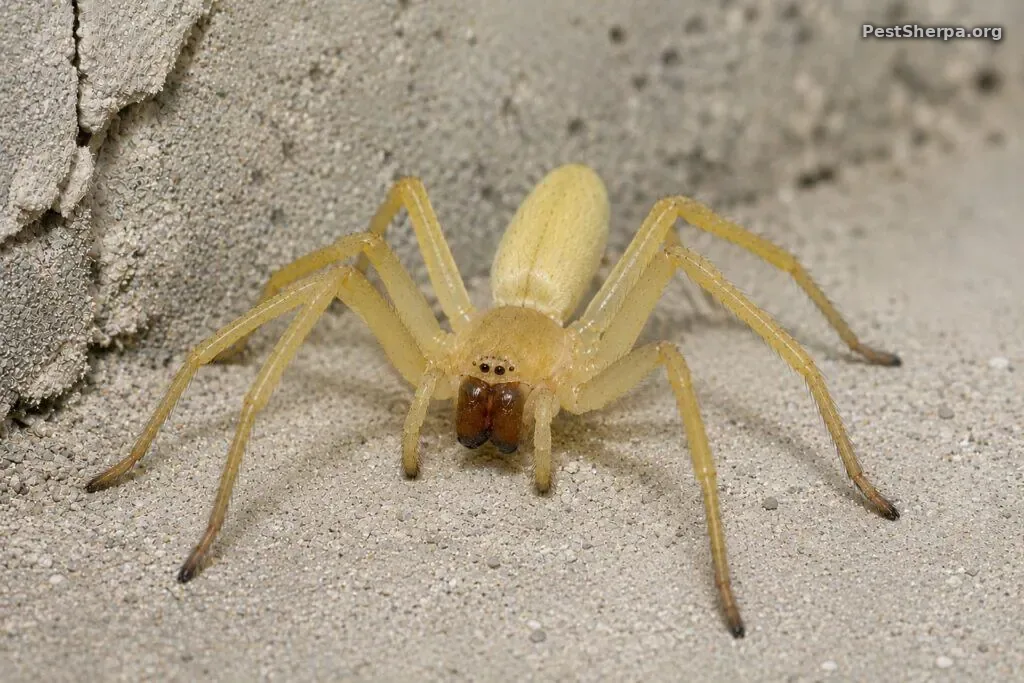
Adult females usually measure about 3/16 to 3/8 inch in body length, while males are slightly smaller. Their coloration ranges from cream and pale yellow to light tan or greenish-yellow.
Adult yellow sac spider
Homeowners usually identify yellow sac spiders by finding:
- Small pale spiders actively roaming walls and ceilings at night.
- Long, slender legs and a uniformly pale appearance.
- Small white silken retreat sacs in upper corners, behind furniture, around windows, or beneath stored items.
- Individual spiders rather than large webs.
The northern yellow sac spider often has darker mouthparts and darker leg tips that help distinguish it from many other pale indoor spiders.
Yellow sac spiders are often mistaken for juvenile brown recluse spiders. However, yellow sac spiders lack the distinct violin-shaped marking associated with brown recluse spiders and generally appear more uniformly pale.
What Commonly Misleads Homeowners
- Seeing a pale spider does not automatically mean it is a brown recluse.
- Yellow sac spiders do not build large visible prey-catching webs.
- Finding one spider indoors does not always indicate a major infestation.
- Bites are often blamed on spiders without confirming that a spider was actually present.
Signs You May Have Yellow Sac Spiders
Common signs include small pale spiders seen at night and silken retreat sacs in corners. Other signs are repeated sightings near windows or ceilings and indoor insect activity that may be attracting spiders. A single spider may simply be an occasional invader. Repeated sightings in multiple rooms suggest there may be more entry points, prey insects, or hiding areas to correct.
Where Yellow Sac Spiders Hide Indoors
Indoors, yellow sac spiders often rest in quiet, protected spots. Look where walls meet ceilings, in closets, garages, and storage rooms, behind furniture, around window frames, beneath stored items, and inside cluttered areas. Their small silk sacs can blend into light-colored walls and ceilings.
Why Yellow Sac Spiders Matter
Yellow sac spiders are mainly nuisance pests with occasional bite risk. Outdoors, they are beneficial predators that feed on flies, mosquitoes, moths, aphids, ants, and other small insects. Indoors, they become a concern because they roam at night and may hide in clothing, bedding, towels, and shoes.
Most reported bites involve localized pain, redness, itching, swelling, burning, or occasionally a small blister. Earlier reports sometimes connected yellow sac spider bites with severe necrotic skin lesions (dead skin tissue). But research on verified yellow sac spider bites found that serious tissue destruction is uncommon.5
For homeowners, the practical concern is usually not structural damage or a dangerous infestation. The concern is repeated indoor activity, bite anxiety, and the need to correct the conditions that allow spiders and their prey insects to remain inside.
What To Do: Practical Yellow Sac Spider Control
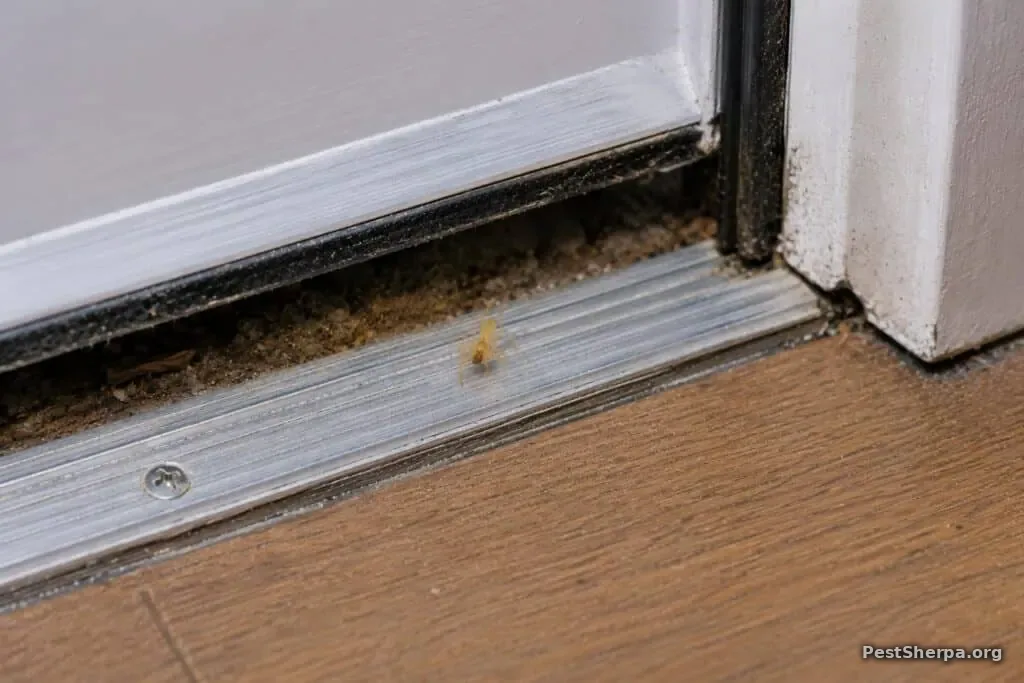
Gaps around doors can allow spiders and insects to enter homes.
1. Reduce Indoor Insect Activity
Yellow sac spiders follow their food. Reducing indoor insects often reduces spider activity.
- Eliminate standing water.
- Repair window and door screens.
- Use yellow outdoor lighting when practical.
- Keep doors closed, especially at night.
- Manage flies, moths, and other indoor insects.
Less prey generally means fewer spiders.
2. Seal Entry Points
Inspect and seal foundation cracks, utility penetrations, door gaps, window gaps, siding openings, and other exterior openings. Exclusion is one of the most important long-term steps because yellow sac spiders and their prey insects often enter through small structural gaps.
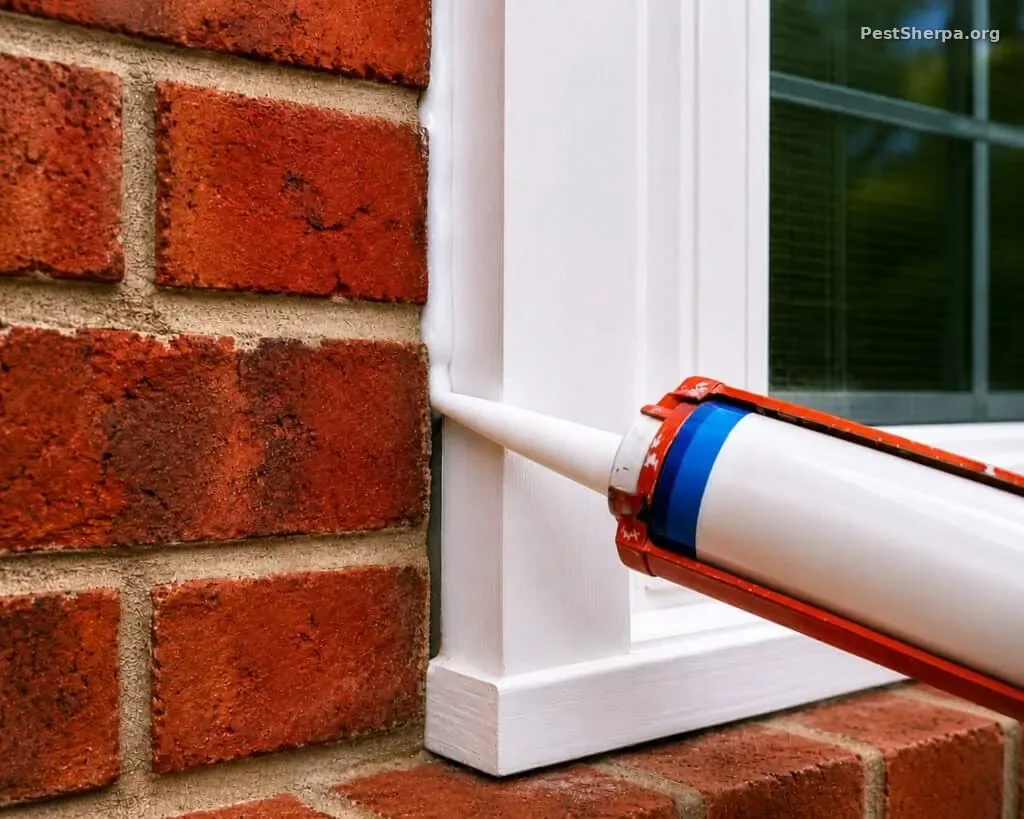
Sealing exterior gaps helps reduce spider and insect entry into structures.
3. Remove Retreat Sacs
Yellow sac spiders rest during the day in small silken sacs and hunt at night. Common retreat locations include wall-ceiling junctions, behind furniture, around windows, beneath stored items, closets, garages, and storage areas.
Vacuum retreat sacs and spiders whenever found. University extension guidance for spider control emphasizes routine cleaning, vacuuming, and physical removal as important management steps around homes and buildings.3
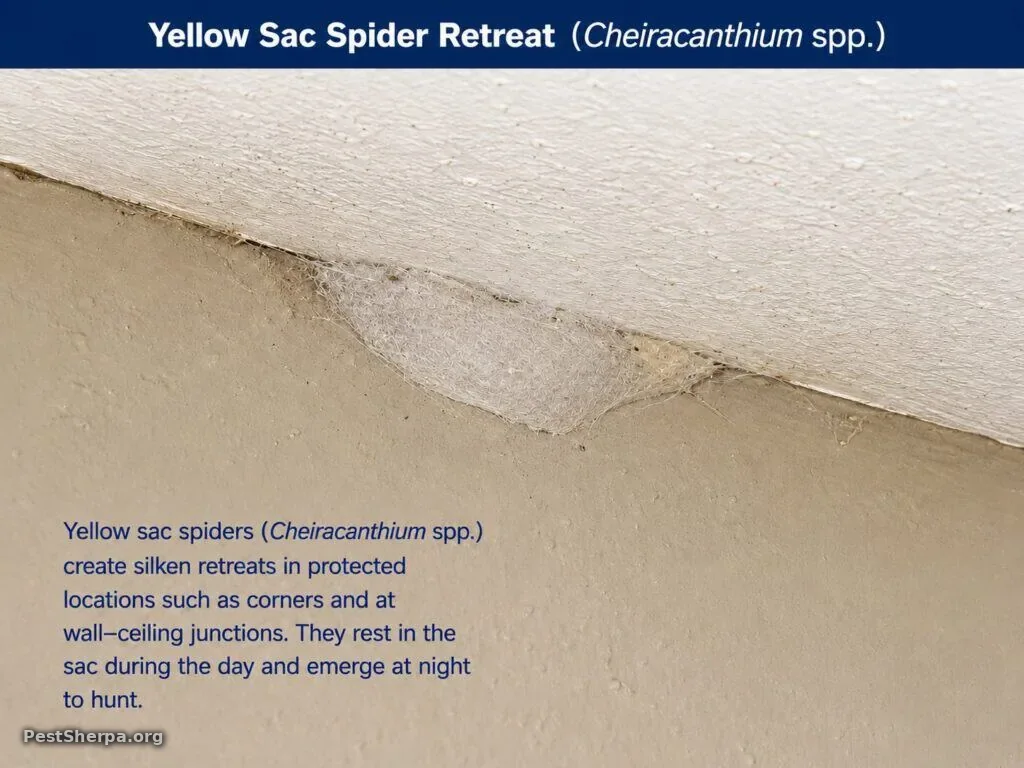
Silken retreat sac in a ceiling corner
4. Reduce Indoor Clutter
Clutter provides hiding places for both spiders and their insect prey. Pay special attention to storage rooms, garages, closets, attics, basements, and areas where boxes, clothing, or unused items remain undisturbed.
5. Trim Vegetation Around Structures
Outdoor populations often live in shrubs, tall grass, ground cover, ornamental plants, leaf litter, and protected areas near buildings. Keep vegetation from touching exterior walls and reduce dense growth near the foundation.

Vegetation touching a home can provide access to windows, siding, and other openings. Trimming vegetation back helps reduce access.
6. Monitor and Remove Individually
Most homes experience only occasional spider sightings. When spiders are found, vacuum them, remove retreat sacs, continue exclusion work, and reduce indoor insect activity.
If you prefer to relocate a spider outdoors, identify it first and avoid direct contact. Use a jar and lid to gently capture the spider, release it outside, and wear gloves. Do not handle unidentified spiders with bare hands, especially if brown recluse spiders occur in your region.
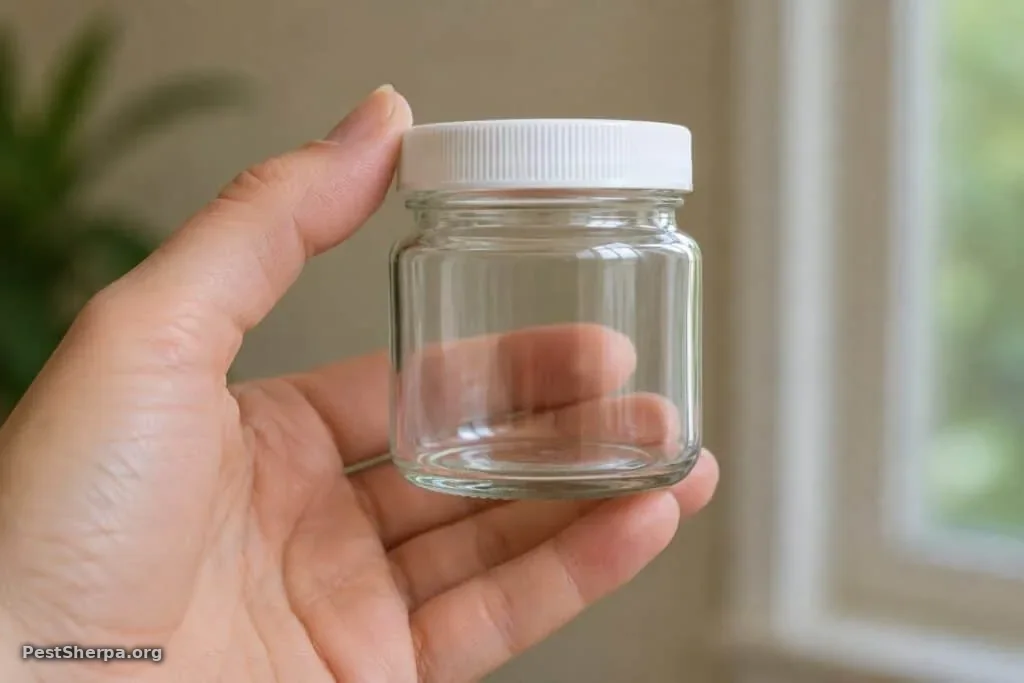
A jar and lid can be used to relocate a spider without touching it.
Large-scale pesticide applications are usually unnecessary for isolated sightings.
7. Use Pesticides Only When Necessary
If populations remain high after exclusion, cleaning, and insect reduction, focus treatments on cracks, crevices, and harborages. Always follow pesticide label directions. Integrated Pest Management uses pest identification, monitoring, prevention, and control methods together rather than relying on routine spraying alone.4
You may be unsure whether the issue is yellow sac spiders, another spider species, or a larger insect problem attracting spiders indoors. If so, a professional inspection may be the most efficient next step.
When To Call a Professional
Consider contacting a licensed pest professional when:
- Spider sightings remain frequent despite exclusion and cleaning efforts.
- Many retreat sacs are found throughout the structure.
- The home has chronic insect problems attracting spiders.
- Correct identification is uncertain.
- You suspect brown recluse spiders, black widow spiders, or another medically significant species.
- Someone in the home is repeatedly reporting bites and the source has not been confirmed.
A professional can confirm the pest, identify entry points and prey sources, and decide whether targeted treatment is justified.
Similar Pests / Misidentification Comparison
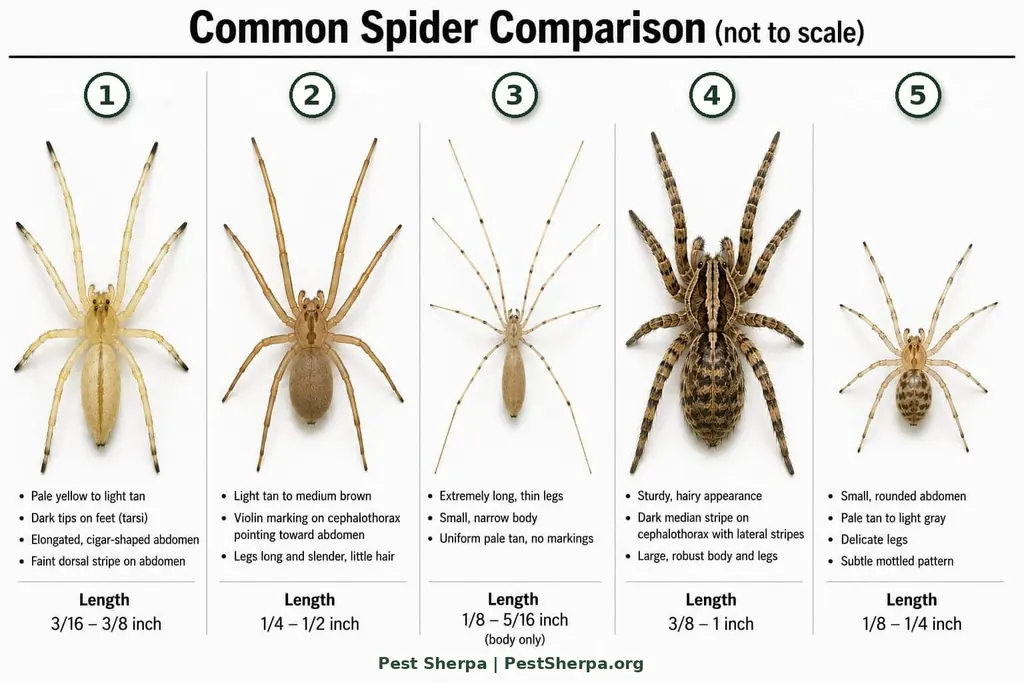
Which one did you find? Match the number:
- Yellow sac spider: pale yellow to light tan with dark tips on the feet and a cigar-shaped abdomen.
- Brown recluse: light to medium brown with a violin marking on the front body section, pointing back toward the abdomen.
- Cellar spider: very long, thin legs with a small, narrow body.
- Wolf spider: large and hairy with a dark center stripe and side stripes on the front body section.
- Juvenile house spider: small, round, mottled abdomen with delicate legs.
| Lookalike | How It Differs From Yellow Sac Spiders |
|---|---|
| Brown recluse spiders | Usually darker, associated with a violin-shaped marking and the six-eye pattern, and medically more significant. Yellow sac spiders are paler, lack the violin marking, and are often the real ID behind “small yellow spider in house” searches. See the full comparison table. |
| Cellar spiders | Have extremely long legs and build loose cobwebs. Yellow sac spiders actively hunt and do not build large prey-catching webs. |
| Wolf spiders | Larger, stockier, often ground-level hunters. Yellow sac spiders are smaller, paler, and commonly seen on walls or ceilings. |
| Juvenile house spiders | May appear small and pale but often build webs. Yellow sac spiders are better known for small retreat sacs and nighttime wandering. |
The most important misidentification issue is confusing yellow sac spiders with brown recluse spiders. This matters most in regions where recluse spiders occur. There, if the spider has a violin-like marking or unusual eye pattern, or you cannot confidently identify it, avoid handling it and consider expert confirmation.
Common Questions
How big is a yellow sac spider?
Adult females are usually about 3/16 to 3/8 inch in body length (about 5 to 10 mm). Males are slightly smaller. Long legs can make the spider look bigger than the body measurement alone.
Yellow sac spider vs brown recluse: can size tell them apart?
No. Body length ranges overlap (yellow sac about 3/16 to 3/8 inch; brown recluse about 1/4 to 3/8 inch on our recluse guide). Use color pattern, eye arrangement, and habits with the comparison table above, and see the brown recluse guide when range and markings leave doubt.
Are yellow sac spiders dangerous?
They can bite if pressed against skin, and bites may hurt. Verified severe tissue damage from yellow sac spiders is extremely rare in published bite reviews. Seek medical care for concerning skin symptoms rather than diagnosing from a photo online.
Should I kill a yellow sac spider?
You can remove or vacuum an individual spider if you do not want it indoors. Yellow sac spiders are beneficial outdoors as insect predators. Killing every pale spider you see does not fix entry points, clutter, or prey insects that keep inviting more indoors.
Do yellow sac spiders nest in the house?
They do not build large communal nests. They rest in small silken retreat sacs in corners, behind furniture, around windows, and in clutter. Removing sacs, reducing clutter, and sealing gaps matter more than fogging.
How do yellow sac bite risks compare with brown recluse myths?
Yellow sac bites can hurt, but verified cases of severe necrosis from yellow sac spiders are extremely rare according to published bite reviews. Many scary “recluse bite” stories never include a confirmed spider. Photograph the spider when possible, and seek medical care for concerning skin symptoms rather than diagnosing from the internet.
References
- Michigan State University Extension. Yellow Sac Spiders.
- Penn State Extension. Agrarian Sac Spider and Longlegged Sac Spider.
- University of Kentucky Department of Entomology. Eliminating Spiders Around Homes and Buildings.
- U.S. Environmental Protection Agency. Integrated Pest Management (IPM) Principles.
- Vetter, Richard S., Gail R. McIver, and others. Verified Bites by Yellow Sac Spiders: Where Is the Necrosis? American Journal of Tropical Medicine and Hygiene.
This article was written by Greg Baumann, founder of Pest Sherpa, and reflects more than 40 years of professional pest management experience.
About the Author

Greg Baumann | Pest Control Expert
Greg Baumann is the founder of Pest Sherpa and a Pest Control Expert with more than 40 years of professional pest management experience. His articles combine decades of field experience, technical expertise, and science-based guidance to help homeowners identify pests correctly, understand real-world risks, and make informed pest management decisions.
Mission: Identify the pest. Understand the risk. Stop the problem. Prevent the comeback. Know when it’s time to call a professional.