
New World Screwworm: Risks for Pets, Livestock, and Travelers
Consumer Information Notice
This article contains medically and scientifically accurate information about New World screwworm infestations. Because the insect develops within living tissue, some readers may find portions of the topic unpleasant or disturbing.
This article is intended for educational purposes only and is not a substitute for professional medical, veterinary, or public health advice. Anyone who suspects a screwworm infestation in a person or animal should seek immediate professional evaluation.
Medical Disclaimer
This article is based on research from public health literature, pest management resources, and governmental health agencies. It is intended for educational and informational purposes only. The information presented here does not constitute medical advice, diagnosis, or treatment. Pest-borne illnesses can present with symptoms that require professional medical evaluation. Anyone experiencing symptoms consistent with those presented here should consult a qualified healthcare professional.
TL;DR
- New World screwworm is a parasitic fly whose larvae feed on living tissue.
- It can infest livestock, pets, wildlife, and, very rarely, humans.
- Infestations often begin in small wounds, surgical sites, tick bites, or body openings.
- Symptoms include wounds that rapidly worsen, foul odors, drainage, and visible maggots.
- The United States eradicated screwworm in 1966, but the pest is back: animal cases in the outbreak that began in June 2026 have been confirmed in Texas, New Mexico, and Arizona.
- CDC rates the current risk to the U.S. public as very low, and no U.S.-acquired human cases have been reported.
- Untreated infestations can become severe and may be fatal.
- Early detection and prompt veterinary or medical treatment are critical.
- Government agencies continue to monitor and control screwworm using surveillance programs and sterile insect releases.
Direct Answer
New World screwworm (Cochliomyia hominivorax) is a parasitic blow fly whose larvae feed on living tissue rather than dead tissue. It primarily affects livestock and wildlife but can occasionally infest pets and, in rare cases, humans through open wounds or natural body openings. The United States eradicated New World screwworm in 1966, but animal cases in the outbreak that began in June 2026 have been confirmed in Texas, New Mexico, and Arizona, and infested-zone movement rules are in place. Prompt veterinary or medical treatment is essential because infestations can rapidly destroy healthy tissue.
Current U.S. Status
As of November 7, 2026: The Arizona Department of Agriculture lists five confirmed New World screwworm cases statewide: two dogs, two horses, and one sheep, with three active infested zones. ABC15 reports that AZDA announced an additional case Friday in a household dog near Thatcher in Graham County, with no known travel history.
I want pet owners, livestock producers, and travelers with animals to take that no-travel detail seriously. Do not assume only animals returning from a trip need attention. AZDA asks owners to inspect animals daily for open wounds and immediately report wounds with maggots consistent with screwworm to diseasereporting@azda.gov or 602-542-4293. If you are moving an animal, check the state’s current zone information first. Live animals cannot leave an active 20-kilometer (12.4-mile) infested zone without State Veterinarian inspection authorization.
How to report a suspected case
- Texas livestock and pets: Texas Animal Health Commission region office, or the veterinarian on call at 1-800-550-8242. TAHC asks for reports within 24 hours of suspicion.
- Texas wildlife: Texas Parks and Wildlife, 512-389-4505.
- Wildlife outside Texas, especially near the border: USDA Wildlife Services at 866-4USDA-WS (866-487-3297).
- Livestock outside Texas: your veterinarian, who reports to state animal health officials and APHIS. In New Mexico, contact the New Mexico Livestock Board.
- Pets: your veterinarian.
- People: your healthcare provider, right away. Do not try to remove the maggots yourself.
[APHIS: Report Suspected Cases] [TAHC] [CDC]
Greg Baumann insight: You do not need to hunt for screwworm flies, and you could not tell them apart if you tried. APHIS points out that many flies look alike and that a true screwworm fly could be one of the sterile ones released for eradication. Watch your animals instead: a wound that keeps getting bigger, smells bad, drains, or has maggots in it gets a call to the vet that same day. [APHIS]
On This Page
- Current U.S. Status
- What Is New World Screwworm?
- Why Is There Concern Now?
- How Common Is New World Screwworm?
- Quick Facts
- Identification
- Animals at Risk
- How Infestations Begin
- Signs and Symptoms
- Human Infections
- Why It Is Dangerous
- Control Methods
- Sterile Insect Technique
- Prevention
- Frequently Asked Questions
- Authoritative References
- Summary
What Is New World Screwworm?
The New World screwworm (Cochliomyia hominivorax) is one of the most destructive parasitic insects affecting animals in the Western Hemisphere.
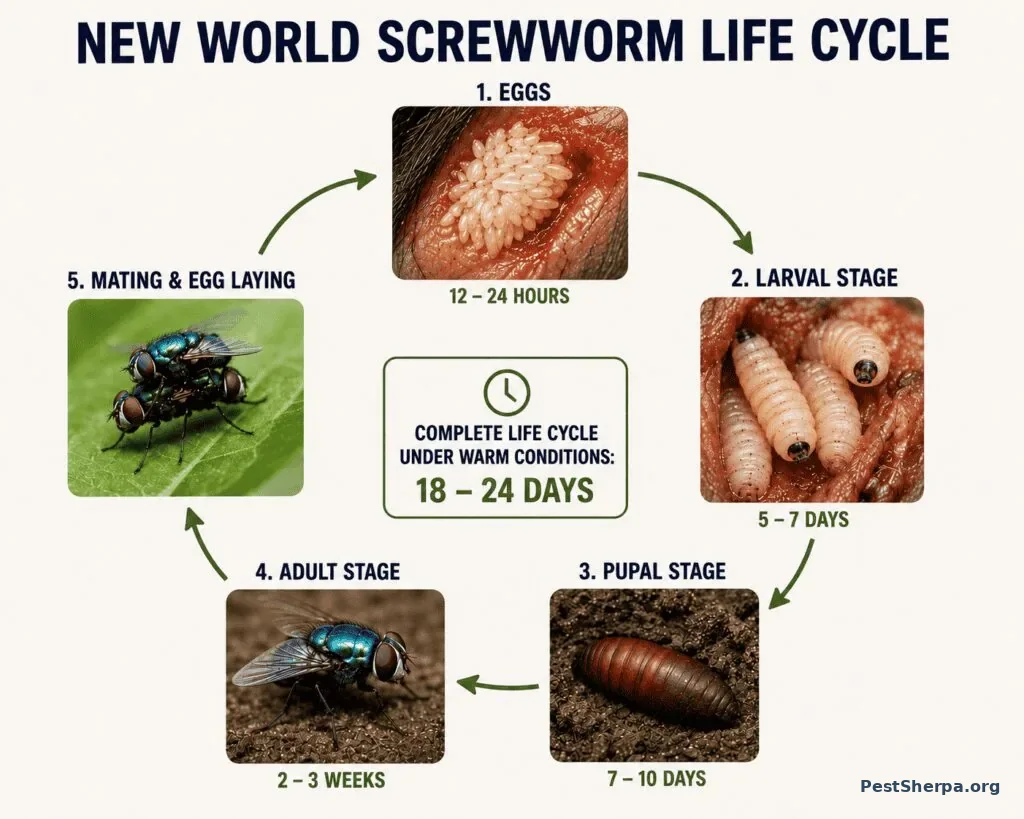
Unlike ordinary flies, which often lay eggs on dead animals or decaying material, New World screwworm females lay eggs on living animals. After hatching, the larvae feed on healthy, living tissue.
This unusual behavior makes New World screwworm one of the most medically and economically important insect pests affecting:
- Livestock
- Pets
- Wildlife
- Zoo animals
- Occasionally humans
Because infestations can progress rapidly and cause severe tissue damage, New World screwworm remains a major focus of animal health and agricultural protection programs.
Why Is There Concern Now?
New World screwworm was successfully eradicated from the United States during the 1960s through one of the most successful insect control programs ever conducted.
Beginning in 2023, however, screwworm populations expanded northward through portions of Central America and Mexico. On June 3, 2026, USDA confirmed the first U.S. animal case of the current outbreak in Texas, and animal cases have since been confirmed in New Mexico and Arizona as well (see Current U.S. Status). That has renewed concern among:
- Veterinarians
- Livestock producers
- Wildlife managers
- Public health officials
- Agricultural agencies
Although CDC rates the risk to the general public in the United States as very low, the 2026 cases in Texas, New Mexico, and Arizona already have significant consequences for livestock production, wildlife management, veterinary medicine, and interstate animal movement. For that reason, federal and state agencies continue intensive surveillance, animal inspections, trapping programs, and eradication efforts.
Because screwworm populations can spread rapidly under favorable conditions, early detection and rapid response remain essential to preventing establishment within the United States.
How Common Is New World Screwworm?
Fortunately, New World screwworm infestations remain uncommon in the United States due to decades of successful eradication efforts and ongoing surveillance programs.
Today:
- Human infestations are extremely rare.
- Most cases occur in livestock and wildlife.
- Pets can become infested if untreated wounds are exposed.
- Confirmed domestic animal cases in the 2026 U.S. outbreak have been reported in Texas, New Mexico, and Arizona (see Current U.S. Status).
- Federal and state animal health agencies closely monitor new reports to prevent the pest from becoming re-established.
For most homeowners, the likelihood of encountering New World screwworm is very low. However, ranchers, veterinarians, animal shelters, wildlife professionals, and travelers returning from affected regions should remain aware of the signs of infestation.
Quick Facts
| Scientific Name | Cochliomyia hominivorax |
| Common Name | New World screwworm |
| Type | Parasitic blow fly |
| Primary Damage | Larvae feed on living tissue |
| Primary Hosts | Livestock, wildlife, pets, occasionally humans |
| Human Risk | Rare |
| Geographic Concern | Americas |
| Treatment | Immediate medical or veterinary care |
| Prevention | Protect wounds, monitor animals, and report suspicious cases quickly |
What Does New World Screwworm Look Like?
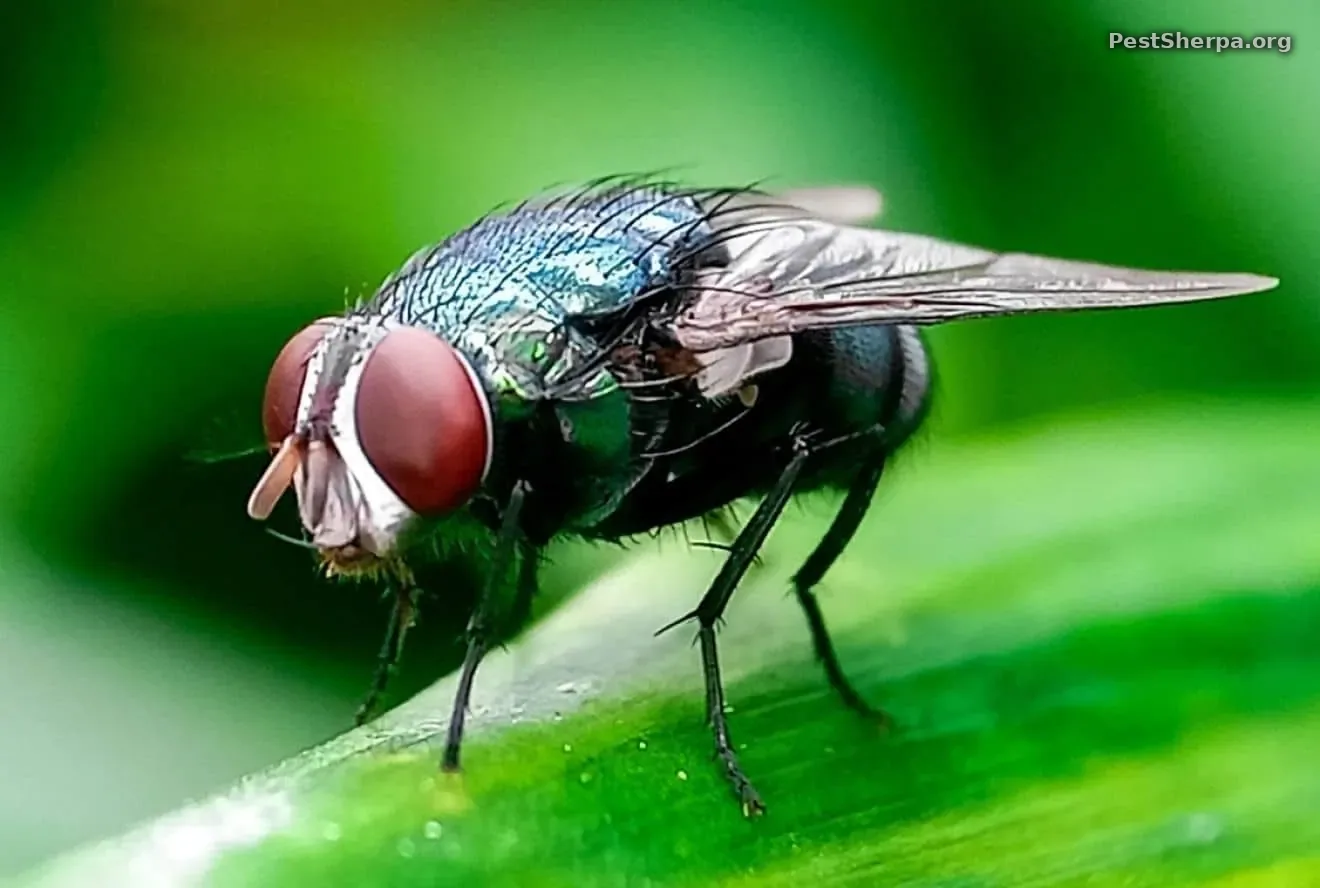
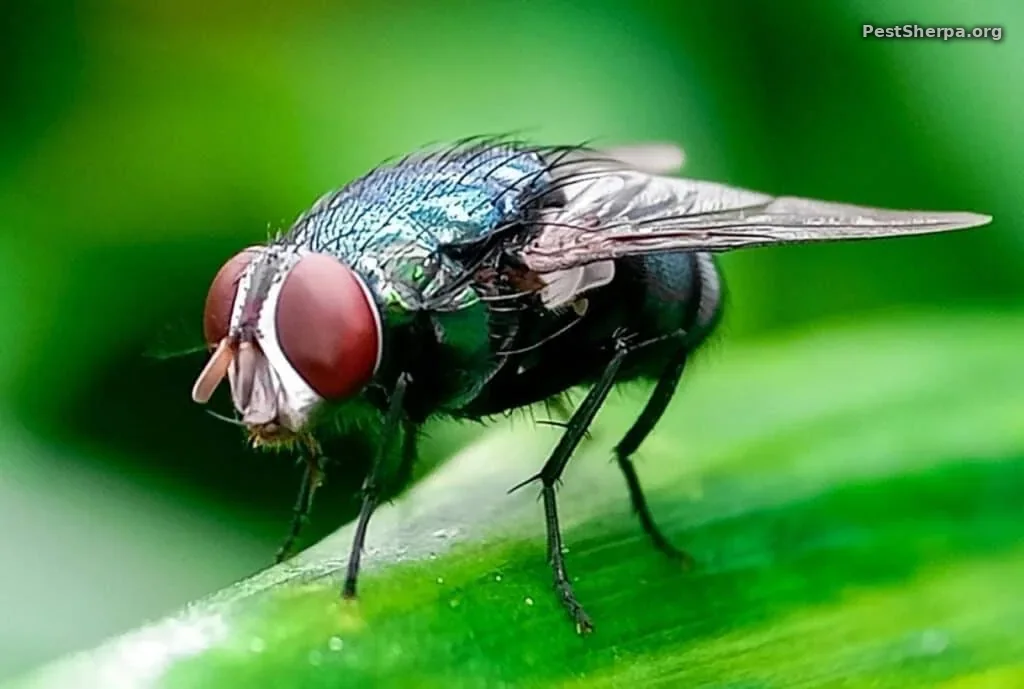
Adult New World screwworm flies resemble metallic blow flies and are often mistaken for harmless species.
Adult flies typically:
- Measure about 5/16 to 3/8 inch (8 to 10 mm) long
- Have a metallic blue-green body
- Display three dark stripes on the thorax
- Have reddish-orange eyes
The larvae, which cause all of the damage, are:
- White to cream-colored
- Cylindrical
- Up to 5/8 inch (15 mm) long
- Covered with rings of backward-pointing spines
These spines create the characteristic screw-like appearance that gives the insect its common name.
Because many fly species look similar, laboratory confirmation is often necessary.
Which Animals Can Become Infected?
New World screwworm can infest almost any warm-blooded animal.
Common hosts include:
- Cattle
- Horses
- Sheep
- Goats
- Swine
- Dogs
- Cats
- Deer
- Wildlife species
- Certain birds

Human infestations are rare but well documented.
How Does an Infestation Begin?
Female flies actively search for wounds or natural body openings where they can lay eggs.
Common locations include:
- Cuts and scrapes
- Surgical incisions
- Tick bites
- Branding sites
- Castration wounds
- Umbilical cords of newborn animals
- Ears
- Nostrils
- Mouths and mucous membranes
A female may deposit hundreds of eggs at one time.
Eggs usually hatch within 12 to 24 hours, and the larvae immediately begin feeding on living tissue.
Unlike most maggots, which consume dead tissue, New World screwworm larvae aggressively invade healthy tissue.
What Are the Signs of an Infestation?
Early detection is critical.
Warning signs include:
- Wounds that enlarge rapidly
- Failure of wounds to heal
- Foul odors
- Bloody or excessive drainage
- Visible maggots
- Tissue destruction
- Persistent licking, scratching, or rubbing
- Decreased appetite
- Depression or lethargy
- Unusual behavior
Multiple female flies may infest the same wound, resulting in hundreds or even thousands of larvae feeding simultaneously.
Can Humans Become Infected?
Yes, although human infestations are rare, and CDC reports no human cases acquired in the United States in the current outbreak. Most people promptly clean, cover, and monitor wounds, greatly reducing the opportunity for female screwworm flies to lay eggs. However, uncovered wounds, neglected injuries, chronic ulcers, and certain medical conditions can increase the risk of infestation. Individuals traveling in areas where screwworm is present should take extra precautions to protect open wounds and seek prompt medical attention if unusual symptoms develop.
Most human cases involve:
- Open wounds
- Surgical sites
- Ulcers
- Nasal passages
- Other exposed tissues
Symptoms may include:
- Severe pain
- Swelling
- Drainage
- Tissue destruction
- Visible larvae
- A sensation of movement within the affected area
Suspected human infestations require immediate medical evaluation.
Why Is New World Screwworm Such a Serious Problem?
New World screwworm causes substantial damage because:
- Larvae feed on living tissue
- Infestations worsen rapidly
- Multiple flies may infest the same wound
- Secondary infections are common
- Untreated infestations can be fatal
Economic impacts include:
- Veterinary expenses
- Animal deaths
- Reduced livestock production
- Labor costs
- Quarantine expenses
- Trade restrictions
- Surveillance and eradication costs
Before eradication, annual economic losses in the United States reached hundreds of millions of dollars.
How Is New World Screwworm Controlled?
Individual cases typically require:
- Removal of larvae
- Thorough wound cleaning
- Treatment of secondary infections
- Veterinary or medical care
- Continued monitoring
Large-scale control programs rely on:
- Animal inspections
- Veterinary reporting systems
- Wildlife monitoring
- Trapping networks
- Laboratory confirmation
- Animal movement restrictions
- Public education campaigns
- Government eradication programs
Rapid reporting remains one of the most important tools for preventing spread.
What Is the Sterile Insect Technique?
The Sterile Insect Technique, often called SIT, is one of the greatest successes in insect pest management.
The process works by:
- Raising millions of male screwworm flies in specialized facilities.
- Sterilizing the males using radiation.
- Releasing sterile males into affected areas.
- Allowing sterile males to mate with wild females, producing no offspring.
Repeated releases eventually collapse the wild population.
This technique successfully eradicated New World screwworm from the United States and remains the foundation of modern control programs.
What Should Pet Owners and Livestock Producers Do?
To reduce risk:
- Inspect animals regularly.
- Treat wounds promptly.
- Monitor surgical sites carefully.
- Examine newborn animals frequently.
- Keep wounds clean and protected.
- Watch for unusual behavior.
- Seek veterinary care immediately if wounds worsen unexpectedly.
- Report suspicious infestations to animal health authorities.
Early detection dramatically improves treatment outcomes and helps prevent spread.
Travelers and people in affected areas
CDC’s advice for anyone living in or visiting an area where screwworm flies have infested animals:
- Keep open wounds clean and covered, no matter how small.
- Wear loose long sleeves, long pants, a hat, and socks to limit exposed skin.
- Use an EPA-registered insect repellent, and treat clothing and gear with 0.5% permethrin.
- Sleep indoors with closed or screened windows, or under a bed net or in a screened tent if you are outside.
- If you see or feel maggots in a wound or body opening, contact a healthcare provider right away and tell them where you have traveled. Do not remove the maggots yourself, and do not throw live maggots in the trash or outside. If any fall out, put them in a leak-proof container with rubbing alcohol and bring them to your provider.
Traveling with a pet through an infested area? TAHC recommends making sure pets and vehicles are inspected for screwworm flies and larvae, and Texas and New Mexico movement rules apply to animals leaving infested zones. [CDC] [TAHC]
Although pest management professionals may receive questions about screwworm, diagnosis and treatment require immediate veterinary or medical care. Public health and animal health agencies lead surveillance and eradication efforts.
Frequently Asked Questions
Can New World screwworm spread from person to person?
No. Screwworm infestations cannot spread directly from one person or animal to another. New infestations occur only when adult female flies lay eggs on suitable wounds or body openings.
Can indoor pets get screwworm?
Yes, although the risk is very low. Pets with outdoor access or untreated wounds are at greater risk if they are in an area where New World screwworm is present.
How quickly does an infestation develop?
Eggs typically hatch within 12 to 24 hours. Once larvae emerge, they begin feeding immediately on living tissue, and significant damage can occur within a few days if left untreated.
How is screwworm diagnosed?
Diagnosis usually requires examination by a veterinarian or physician. Larvae are often submitted to a diagnostic laboratory where specialists identify the species using microscopic characteristics.
Why are screwworm larvae different from ordinary maggots?
Most fly larvae feed on dead or decaying organic material. New World screwworm larvae are unusual because they invade and consume healthy, living tissue, making them one of the most medically and economically important parasitic flies in the Western Hemisphere.
Is New World screwworm a pest control problem?
Not in the usual household pest control sense. Screwworm is primarily a medical, veterinary, agricultural, and public health issue. Suspected infestations should be handled by medical professionals, veterinarians, and animal health authorities.
Authoritative References
- U.S. Department of Agriculture APHIS: New World Screwworm Prevention for Animals
- USDA APHIS: Current Status of New World Screwworm
- Centers for Disease Control and Prevention: About New World Screwworm
- Centers for Disease Control and Prevention: New World Screwworm Situation Summary
- University of Florida IFAS Extension: New World Screwworm
- World Organisation for Animal Health: New World Screwworm
- USDA APHIS: Confirmed Detections of New World Screwworm (dashboard)
- USDA APHIS: Report Suspected Cases of Screwworm
- Texas Animal Health Commission: New World Screwworm
- New Mexico Department of Agriculture: NM confirms two additional New World screwworm cases (Oct. 15, 2026)
Summary
New World screwworm is one of the most destructive parasitic insects affecting animals in the Americas. Unlike ordinary flies, its larvae feed on living tissue, allowing infestations to become severe within days if left untreated. Eradication programs eliminated the pest from the United States in 1966, and the 2026 animal cases in Texas, New Mexico, and Arizona show why continued surveillance, rapid reporting, and coordinated response remain essential.
Fortunately, the overall risk to the general public remains very low. Even so, awareness is important. Prompt recognition, immediate veterinary or medical treatment, and reporting suspected infestations help protect pets, livestock, wildlife, agriculture, and public health from one of the world’s most destructive parasitic insects.
This article was written by Greg Baumann, founder of Pest Sherpa, and reflects more than 40 years of professional pest management experience.
About the Author

Greg Baumann | Pest Control Expert
Greg Baumann is the founder of Pest Sherpa and a Pest Control Expert with more than 40 years of professional pest management experience. His articles combine decades of field experience, technical expertise, and science-based guidance to help homeowners identify pests correctly, understand real-world risks, and make informed pest management decisions.
Mission: Identify the pest. Understand the risk. Stop the problem. Prevent the comeback. Know when it’s time to call a professional.