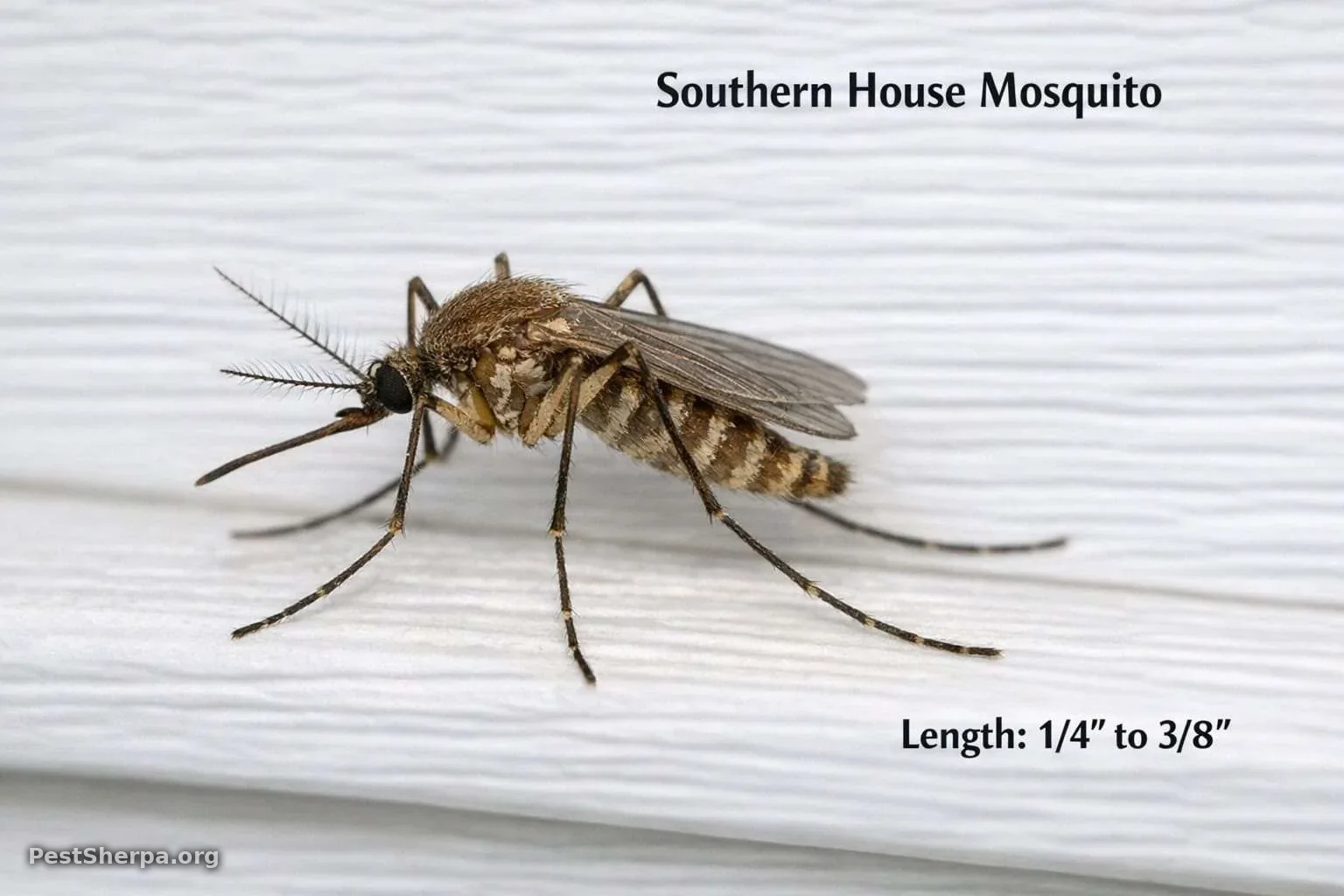
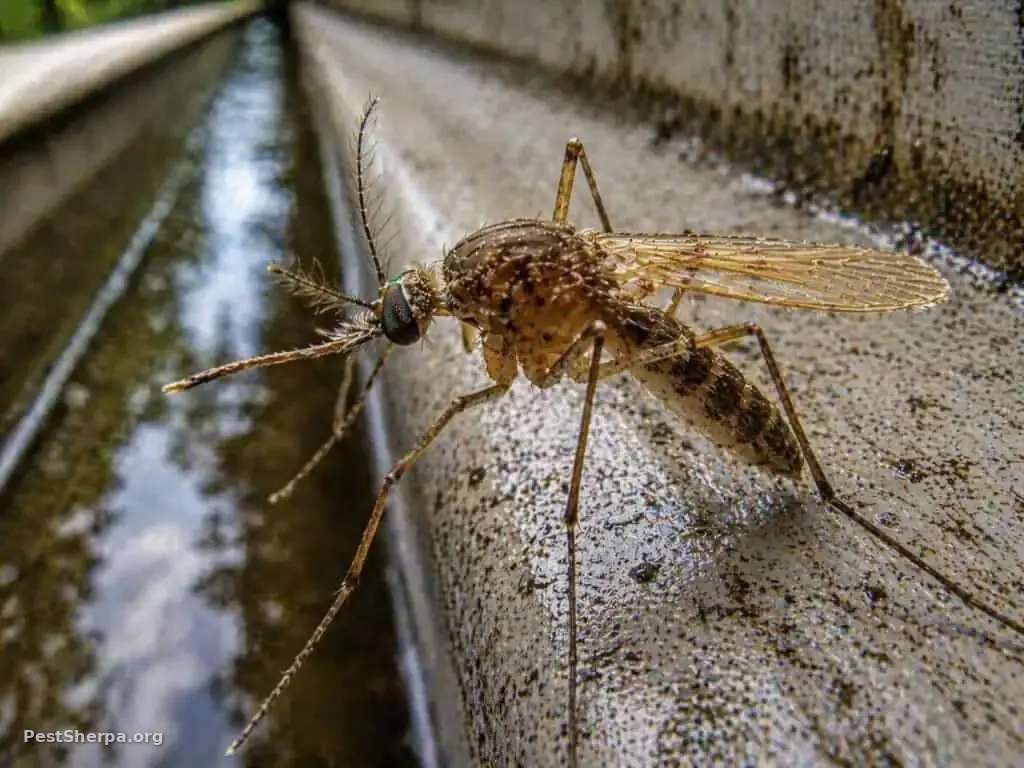
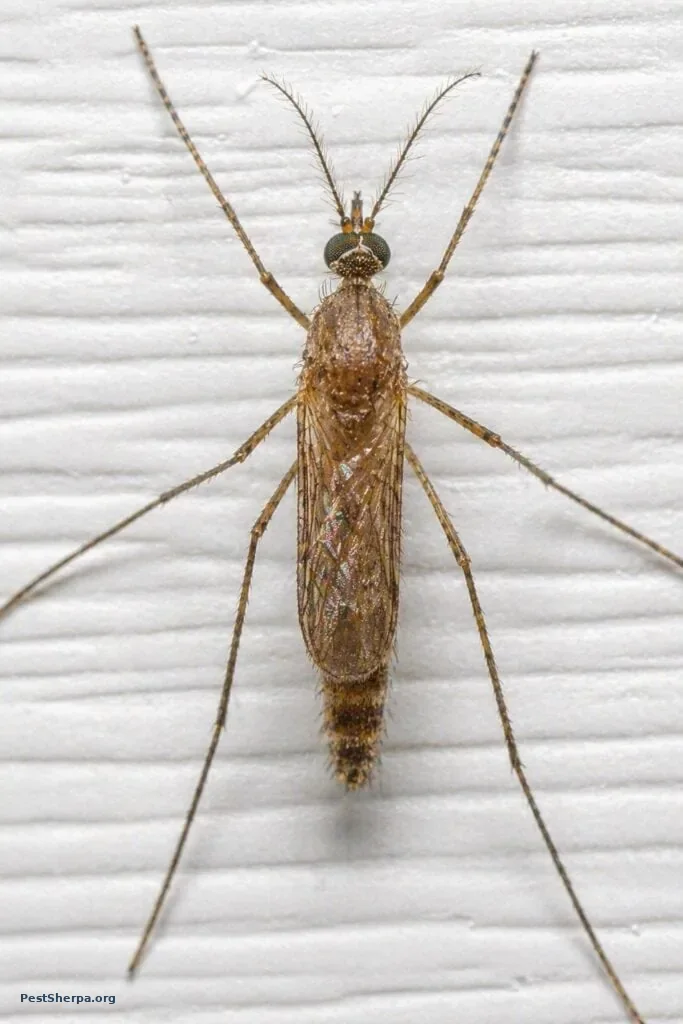
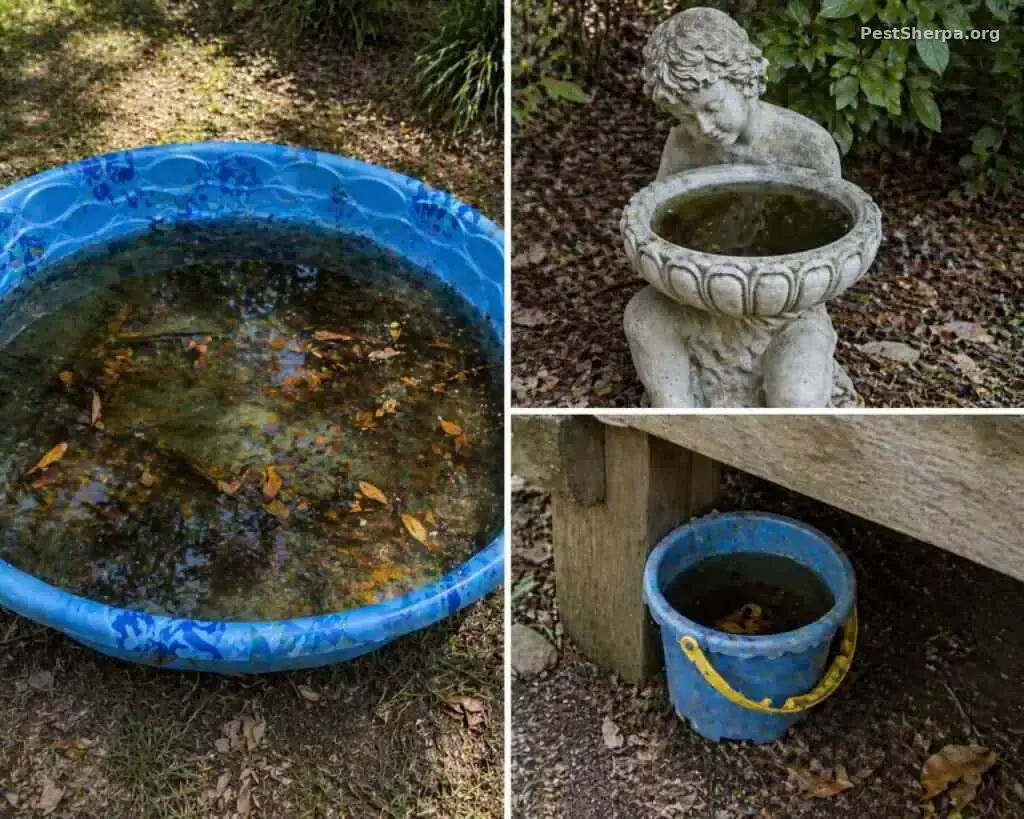
The southern house mosquito is a warm-region Culex mosquito that usually bites from dusk through dawn and often breeds in standing water with organic buildup, including catch basins, storm drains, clogged gutters, stagnant containers, and some wastewater-related sites.
It matters because it is a strong nuisance biter and an important public-health mosquito linked to West Nile virus and St. Louis encephalitis in the southern U.S.
If the mosquitoes you notice are small, dark, boldly black-and-white, and biting mainly during the day, you may be dealing with an Asian tiger mosquito or yellow fever mosquito instead.
Nuisance pest because evening and nighttime biting can be intense
Public-health pest because Culex mosquitoes are important vectors of West Nile virus, and southern house mosquitoes are important in the southern U.S. pattern
Sanitation / moisture warning sign because activity often points to standing water and drainage issues nearby
The biggest homeowner mistake is thinking the problem is always solvable by treating one yard. In many cases, the real source is shared drainage infrastructure, adjacent properties, or off-property standing water.
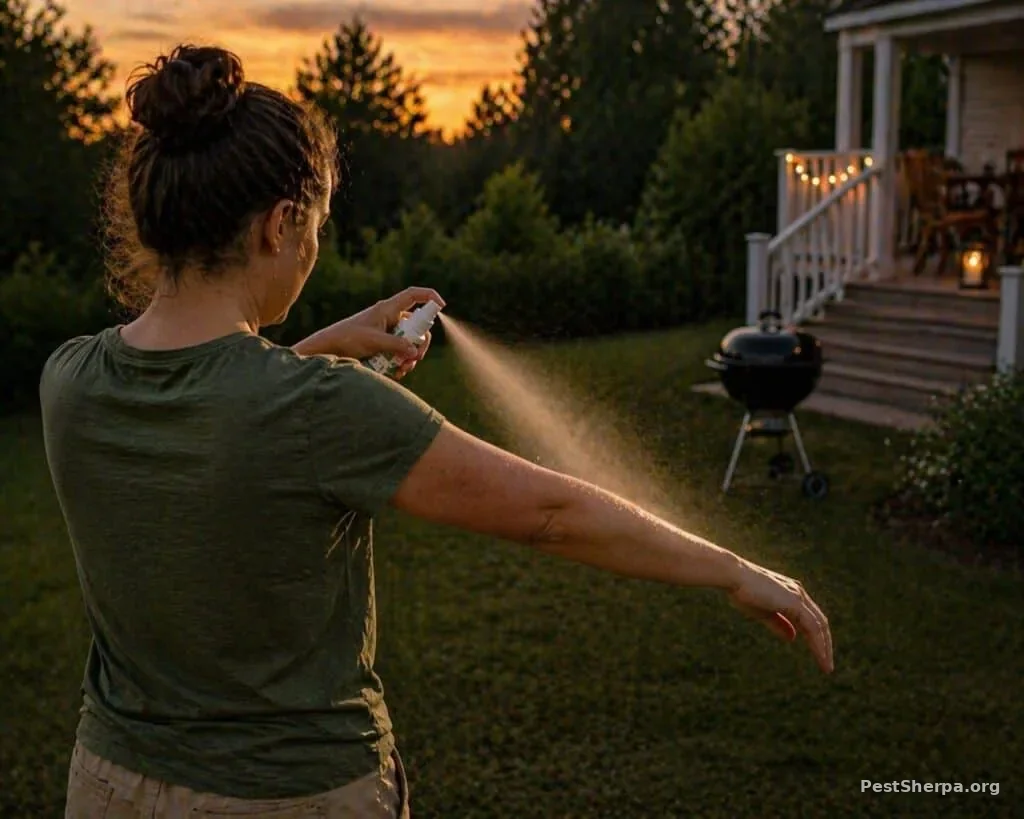
Personal protection matters most during dusk and nighttime activity windows when house mosquitoes are most active. Always read, understand, and follow repellent label.
What To Do
What works
Dump, drain, or refresh standing water
Clean gutters
Cover rain barrels and stored water
Use a labeled larvicide where water cannot be removed
Use EPA-registered repellent
Repair window and door screens
What does not work well on its own
Random adult spraying without source reduction
Repeated yard treatment when the source is actually a drain or basin
Assuming only “dirty-looking” water matters
What is often wasted effort
Fogging without understanding mosquito activity timing
Fixating on one container while ignoring gutters and drains
Trying to identify the mosquito only from a blurred quick look
You still have heavy dusk/night biting after cleanup
The source appears to be a storm drain, catch basin, or septic-related area
The pressure seems to involve multiple neighboring properties
There is a local disease advisory
You are not sure whether the issue is a Culex mosquito or a daytime Aedes mosquito
A good real-world trigger is this: you handled the obvious water sources, but the mosquitoes are still there in force.
Similar Pests / Misidentification Comparison
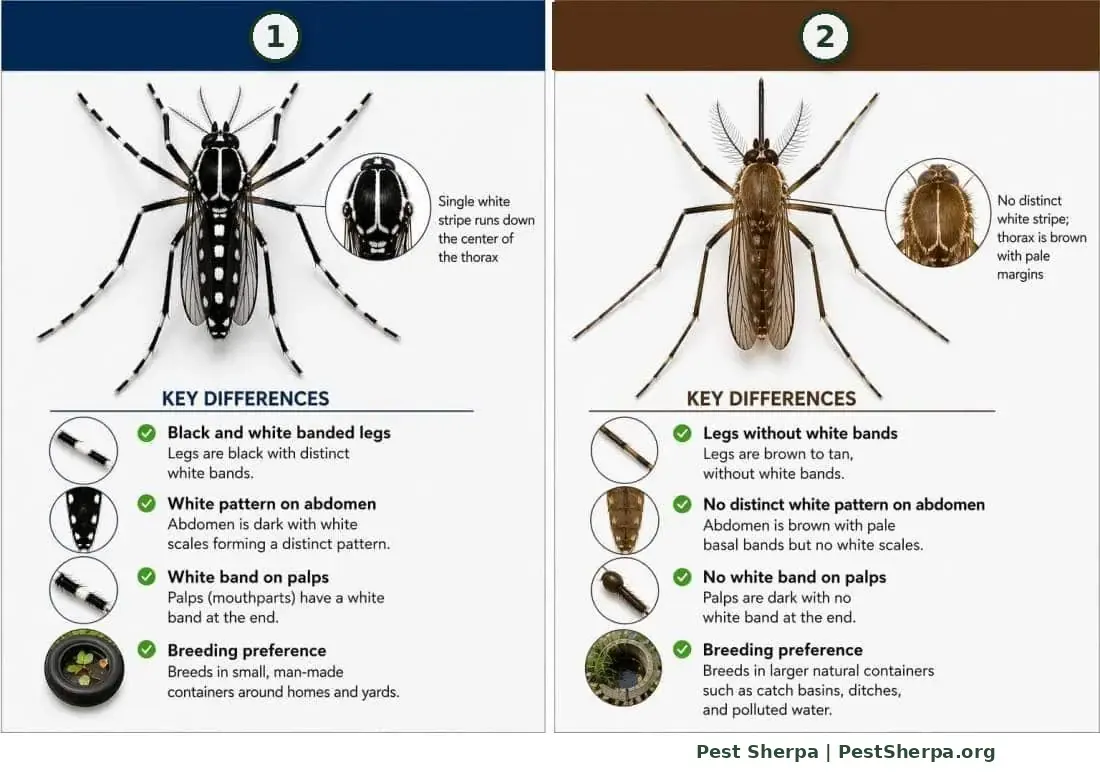
Which one do you see? Match the number:
Asian tiger mosquito (Aedes albopictus): black with a single white stripe down the center of the thorax, black and white banded legs, a white pattern on the abdomen and a white band on the palps. Breeds in small containers around homes and bites in the daytime.
Southern house mosquito (Culex quinquefasciatus): brown with no white stripe, legs without white bands and pale bands at the base of each abdominal segment. Breeds in larger, polluted water and bites at night.
Southern house mosquito vs. northern house mosquito
Both are house mosquitoes in the Culex group and can be hard to separate visually. Compare with the northern house mosquito page.
Southern house mosquito vs. Asian tiger mosquito
The Asian tiger mosquito is much easier to spot because it is black with bold white markings and is more associated with daytime biting.
Southern house mosquito vs. yellow fever mosquito
The yellow fever mosquito is another black-and-white Aedes mosquito and is also more associated with daytime activity.
Why the comparison matters
Misidentification leads to bad control choices. If you assume a daytime striped mosquito is the same as a nighttime house mosquito, you may chase the wrong breeding sites and treat at the wrong times.
This article was written by Greg Baumann, founder of Pest Sherpa, and reflects more than 40 years of professional pest management experience.
About the Author
Greg Baumann | Pest Control Expert
Greg Baumann is the founder of Pest Sherpa and a Pest Control Expert with more than 40 years of professional pest management experience. His articles combine decades of field experience, technical expertise, and science-based guidance to help homeowners identify pests correctly, understand real-world risks, and make informed pest management decisions.
Mission:Identify the pest. Understand the risk. Stop the problem. Prevent the comeback. Know when it’s time to call a professional.