
Head Lice: Symptoms, Identification, Treatment, and What Not to Do
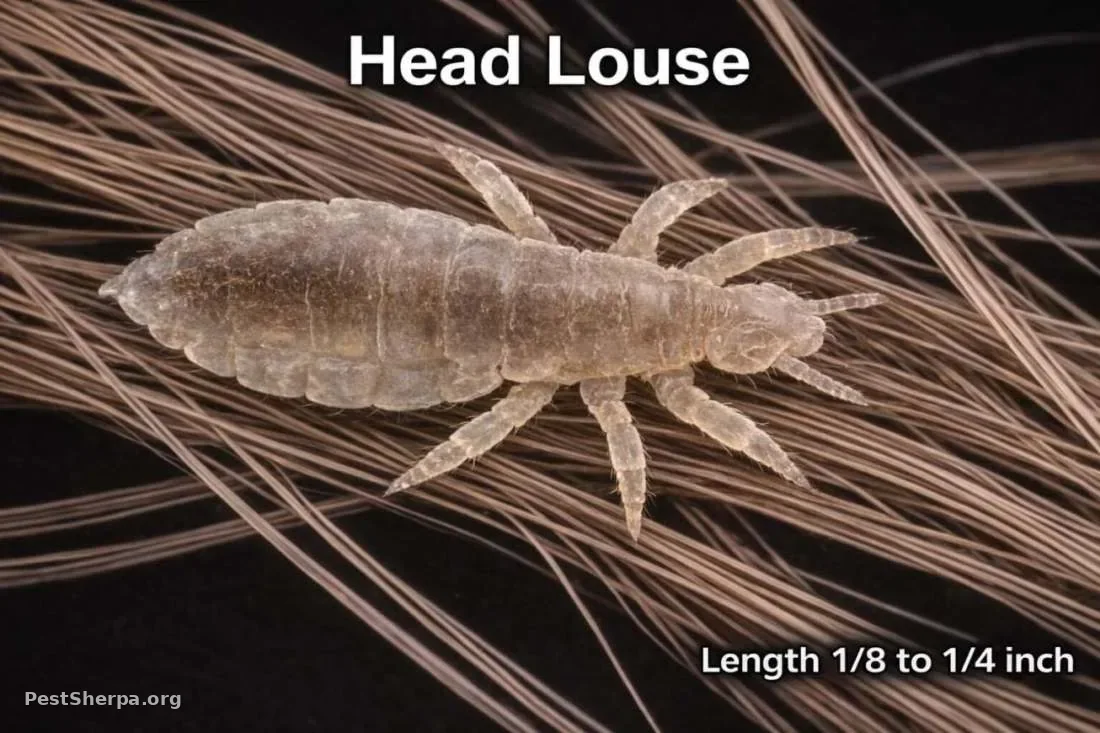
Head lice can be stressful to find, especially when a child is involved, but they are manageable with correct identification, targeted treatment, and limited cleaning of recent-contact items. Head lice are not a sign of poor hygiene, they do not jump or fly, and they are a human health medical issue rather than a structural pest problem. A pest control company should never treat for head lice. This guide explains what head lice look like, how they spread, what symptoms to watch for, what not to do, and when medical guidance may be needed.
TL;DR
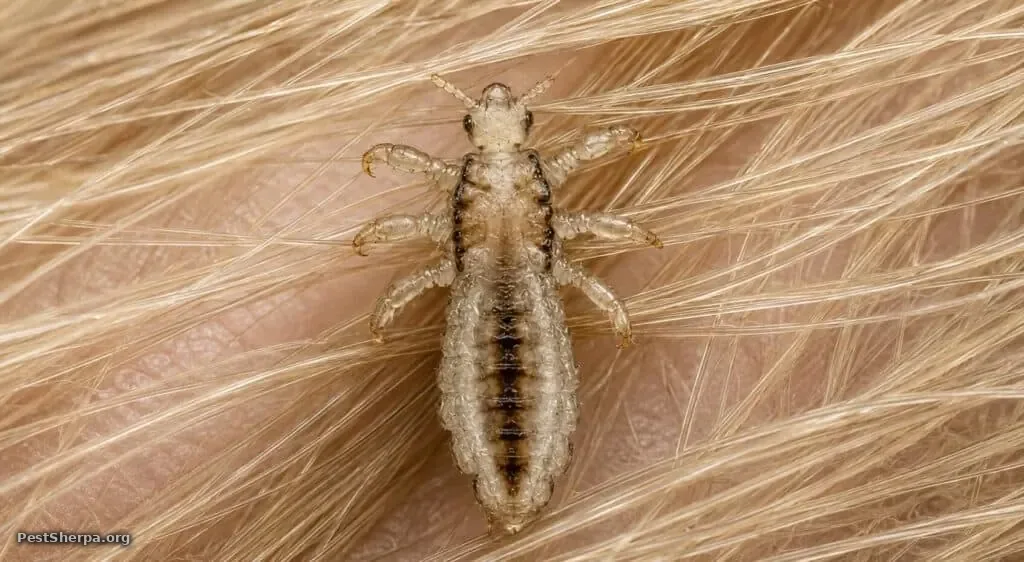
Head lice are tiny parasitic insects that live on the human scalp and spread mostly through direct head-to-head contact. They do not infest buildings, pets, furniture, or rooms the way some household pests can. The most reliable sign is finding a live crawling louse or viable nits attached close to the scalp, especially behind the ears or at the nape of the neck.
Do not use household sprays, foggers, pet products, garden pesticides, or building insecticides for head lice. Treatment should focus on the person, use products labeled for head lice, and follow label or clinician directions. Limited cleaning of bedding, hats, brushes, and clothing used shortly before treatment is usually enough.
Quick Navigation
- What Are Head Lice?
- Head Lice Symptoms to Watch For
- How to Identify Head Lice and Nits
- How Head Lice Spread
- Lice in Schools and Child Care Settings
- Head Lice Biology and Life Cycle
- Treatment: Safe Next Steps
- Environmental Steps: Keep It Targeted
- What Not To Do
- Lookalikes and Common Misidentifications
- When to Seek Medical Care Promptly
- Frequently Asked Questions
- References
What Are Head Lice?
Head lice (Pediculus humanus capitis) are tiny, wingless parasitic insects that live on the human scalp and feed on small amounts of blood. Adults are roughly sesame-seed sized, usually tan to grayish-white, and are built for gripping hair shafts with claw-like legs.
Head lice are different from household pests such as bed bugs or fleas. They are adapted to people, live on the scalp, and do not establish breeding populations in walls, carpets, mattresses, or furniture.
Head lice are a medical and personal-care issue, not a structural pest infestation. Room sprays, total-release foggers, and broad indoor insecticide applications are inappropriate for lice and can create avoidable chemical exposure. When the pest is uncertain, identification matters: a healthcare provider is the better resource for lice, while a licensed pest management professional may be appropriate if the insects are actually household pests such as bed bugs, fleas, or stored-product insects.
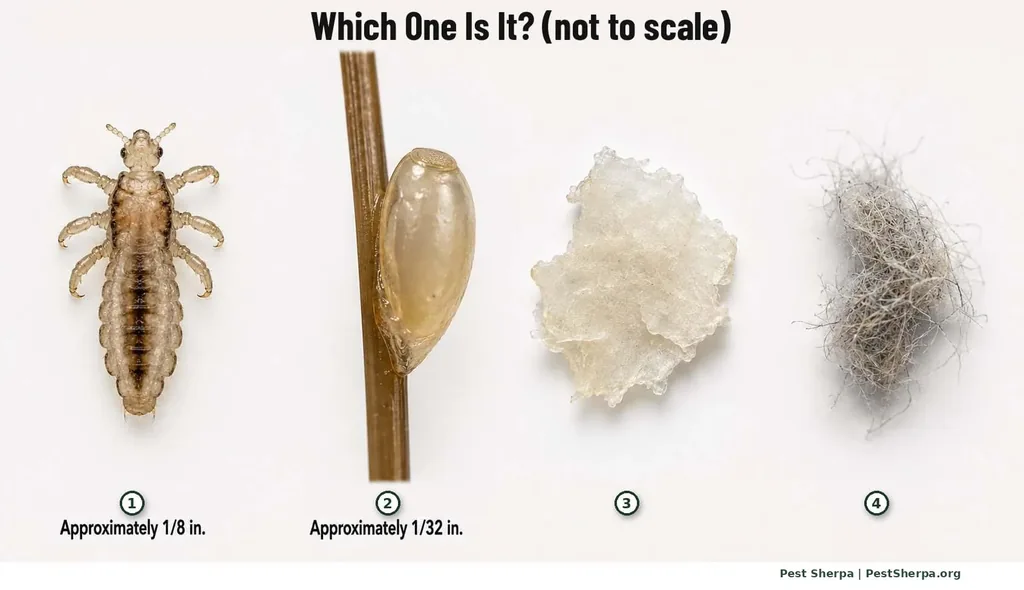
Which one do you see? Match the number:
- Adult head louse: about 1/8 inch, a six-legged wingless insect.
- Head louse nit (egg): about 1/32 inch, an oval egg glued firmly to the side of a hair shaft. Hard to slide off.
- Speck of dandruff: an irregular white flake of skin that brushes off easily.
- Lint: a loose clump of fibers that falls or brushes away.
Head louse and nit compared with dandruff and lint on hair.
Head Lice Symptoms to Watch For
Symptoms vary. Some people itch quickly, while others may have head lice for a while before noticing anything. Itching is often caused by sensitivity to louse saliva rather than by the bite itself.
- Scalp itching, especially behind the ears and near the nape of the neck
- A tickling or crawling sensation in the hair
- Red bumps, irritation, or scratch marks on the scalp, neck, or behind the ears
- Difficulty sleeping, since lice may be more noticeable when the person is resting
- Nits attached firmly to hair, especially close to the scalp
Itching alone does not prove head lice. Dandruff, dry skin, hair product residue, lint, and other scalp conditions can cause confusion. A careful inspection is the best next step.
How to Identify Head Lice and Nits
A confirmed case is usually based on finding a live crawling louse or viable nits attached close to the scalp. Nits farther from the scalp may be old, hatched, or no longer viable, depending on the situation.
| What You Find | What It May Mean | Helpful Clue |
|---|---|---|
| Live crawling louse | Active head lice | Moves quickly and clings to hair |
| Nits within about 1/4 inch of scalp | Possible active infestation | Firmly cemented to hair shaft |
| Nits far from scalp | May be old or hatched | Interpret with caution |
| White flakes that brush away easily | Often dandruff or residue | Not cemented to hair |
| Small jumping insects | Not head lice | Consider fleas or another pest |
Use bright light and a fine-toothed lice comb when inspecting. Check behind the ears, at the nape of the neck, along the hairline, and in warm areas close to the scalp. If the finding is uncertain, save a specimen on clear tape or in a sealed container and ask a healthcare provider, school nurse, or trained lice professional for help with identification.
How Head Lice Spread
Head lice cannot jump or fly. They crawl, and most spread happens through close head-to-head contact.
- Direct head-to-head contact, especially among children during play, sports, sleepovers, or close group activities
- Less commonly, recently used personal items such as combs, brushes, hats, helmets, headbands, scarves, or hair accessories
- Occasionally, recently used bedding or pillows when there has been close timing and direct head contact
Transmission is unrelated to cleanliness. Head lice can affect clean hair, dirty hair, short hair, long hair, and families from any background.
Lice in Schools and Child Care Settings
Head lice are common among preschool and elementary-age children. Their presence does not indicate poor hygiene, neglect, or an unsafe home. Stigma can make families delay reporting or treating lice, so calm, private communication is more useful than blame.
Public health and pediatric guidance generally discourages sending a child home early solely because head lice or nits are found. Many authorities also discourage strict “no-nit” policies because nits may remain attached after treatment and do not always indicate active spread. Families should follow local school or child care policy, but the practical focus should be prompt inspection, appropriate treatment when needed, and minimizing stigma.
Head Lice Biology and Life Cycle
Understanding the life cycle helps explain why follow-up checks and correctly timed retreatment may be needed.
- Eggs, or nits: Cemented to individual hairs, usually close to the scalp where warmth supports development
- Hatching: Often occurs about a week after eggs are laid, though timing can vary
- Nymphs: Immature lice that resemble smaller adults and must feed after hatching
- Adults: Reproductive stage; adult lice stay close to the scalp and move by crawling
- Off-scalp survival: Head lice do not survive long away from a human host, which is why whole-house treatment is unnecessary
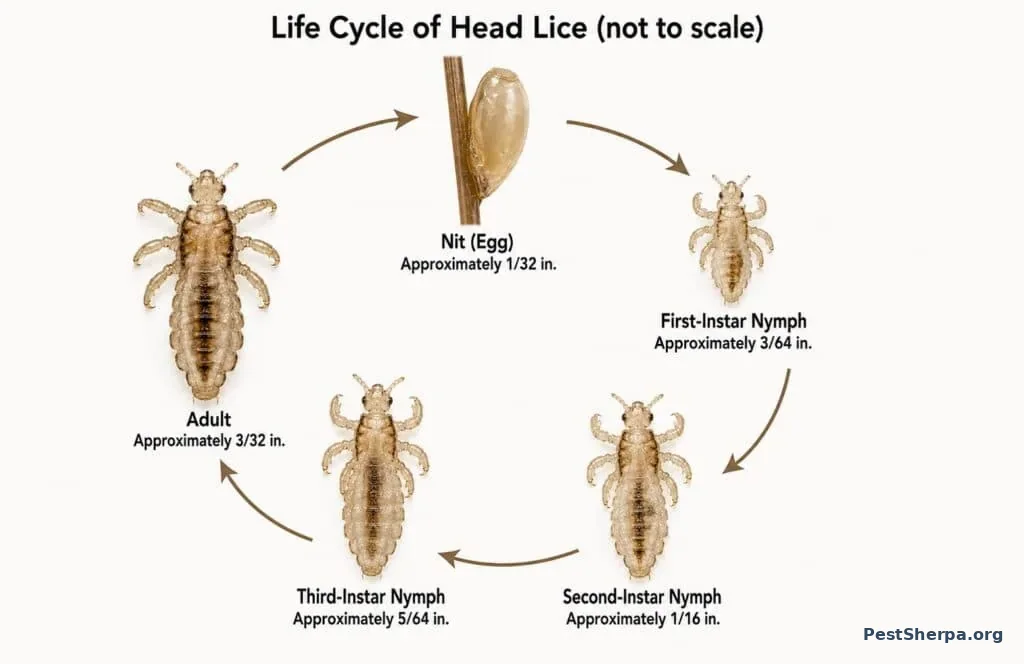
IHead lice life cycle showing nit, nymph, and adult louse on hair.
Treatment: Safe Next Steps
Treatment depends on correct diagnosis, age, medical history, pregnancy or breastfeeding status, allergies, and prior treatment attempts. A healthcare provider, pharmacist, school nurse, or reputable lice-treatment clinic operating under appropriate health oversight can help families choose a safe approach.
General treatment principles include:
- Treat only people with live lice or likely active infestation, unless a clinician or public health authority gives different guidance
- Use only products specifically labeled for head lice and follow the label exactly
- Check age restrictions carefully, especially for infants and young children
- Ask a clinician before treatment during pregnancy, breastfeeding, significant skin irritation, immune compromise, or when treating very young children
- Use a fine-toothed lice comb when recommended to remove lice and nits
- Follow label directions about whether retreatment is needed and when it should occur
Some lice products kill live lice but may not reliably kill all eggs. Others may have different retreatment instructions. Do not repeat applications more often than the label allows, and do not combine products unless directed by a clinician.
Environmental Steps: Keep It Targeted
Because head lice do not live long away from the scalp, extensive house cleaning is not needed. Focus only on items with recent head contact.
- Wash and dry clothing, bedding, hats, towels, and similar items used during the two days before treatment, using hot settings when the fabric allows
- For items that cannot be washed, use a sealed plastic bag for the time recommended by public health guidance or the product label
- Clean combs, brushes, and hair accessories according to public health recommendations
- Vacuum areas where the affected person recently sat, rested, or had hair-combing done
- Avoid excessive cleaning, carpet treatments, mattress spraying, or whole-room insecticide use
Targeted cleaning reduces the chance of accidental transfer without turning a medical issue into a whole-house pesticide problem.
What Not To Do
- Do not use bug bombs, foggers, or room sprays for head lice.
- Do not apply household, pet, garden, or agricultural pesticides to a person’s scalp or hair.
- Do not use flammable, harsh, or home-remedy chemicals such as gasoline, kerosene, solvents, or similar products.
- Do not overtreat. More product is not safer or more effective than label-directed use.
- Do not assume every itch is lice. Confirm before treating, especially when no live lice are found.
If old or inappropriate pest control products are present in the home, do not repurpose them for lice. Follow local disposal guidance for unwanted pesticide products.
Lookalikes and Common Misidentifications
Several things can be mistaken for head lice. Correct identification prevents unnecessary treatment and helps determine whether the issue is medical, environmental, or pest-related.
| Possible Lookalike | How It Differs | Better Next Step |
|---|---|---|
| Dandruff or dry skin | Flakes usually brush away easily | Inspect under bright light before treating |
| Hair product residue | May look white but is not attached like a nit | Wash, comb, and recheck |
| Lint or fibers | Often loose and irregular in shape | Remove and inspect hair shaft |
| Cat fleas or dog fleas | Jumping insects; often associated with pets or pet resting areas | Inspect pets and pet bedding |
| Bed bugs | Do not live on the scalp; hide in cracks, beds, and furniture | Inspect sleeping areas if bites or bugs are found away from hair |
When to Seek Medical Care Promptly
Contact a healthcare provider before treatment or promptly after detection if:
- The affected child is very young, especially under two years old
- The person is pregnant, breastfeeding, immunocompromised, or has significant allergies or skin conditions
- There are signs of skin infection, such as oozing, crusting, increasing redness, swelling, pain, or fever
- Live lice persist after label directions have been followed correctly
- You are unsure whether the insects are lice, fleas, bed bugs, or another pest
Repeated treatment failure may be due to misidentification, missed live lice, incorrect timing, reinfestation from an untreated person, or reduced susceptibility to a product in some areas. A clinician can help sort out the cause.
Frequently Asked Questions
Do head lice mean my home is dirty?
No. Head lice are not a cleanliness problem. They spread mainly through close head-to-head contact and can affect anyone.
Can head lice jump or fly?
No. Head lice crawl. They do not have wings and they do not jump like fleas.
Do pets spread head lice?
No. Human head lice are adapted to people. Dogs and cats are not the source of human head lice.
Should the whole house be sprayed?
No. Spraying rooms, carpets, mattresses, or furniture is not needed for head lice and can create unnecessary exposure. Focus on the affected person and recently used items with head contact.
Can my child go to school with head lice?
Follow local school or child care policy, but many public health and pediatric sources discourage sending children home early or using strict no-nit policies. Prompt treatment at home and reduced stigma are usually emphasized.
Why do I still see nits after treatment?
Nits can remain attached to hair even after treatment. What matters is whether live lice are still present and whether the product label or clinician recommends retreatment. Continue careful checks and combing as directed.
References
- Centers for Disease Control and Prevention: Treatment of Head Lice
- Centers for Disease Control and Prevention: Providing Care for Individuals with Head Lice
- Centers for Disease Control and Prevention: Clinical Care of Head Lice
- American Academy of Pediatrics: Head Lice Clinical Report
- HealthyChildren.org / American Academy of Pediatrics: Controlling Head Lice and Reducing Stigma
- University of California Statewide IPM Program: Head Lice
- UCSF California Childcare Health Program: Fact Sheet for Families: Integrated Pest Management of Head Lice
This article was written by Greg Baumann, founder of Pest Sherpa, and reflects more than 40 years of professional pest management experience.
About the Author

Greg Baumann | Pest Control Expert
Greg Baumann is the founder of Pest Sherpa and a Pest Control Expert with more than 40 years of professional pest management experience. His articles combine decades of field experience, technical expertise, and science-based guidance to help homeowners identify pests correctly, understand real-world risks, and make informed pest management decisions.
Mission: Identify the pest. Understand the risk. Stop the problem. Prevent the comeback. Know when it’s time to call a professional.