
Brown Marmorated Stink Bug: Identification, Invasion Signs, Control
Brown marmorated stink bugs often appear suddenly on walls, windows, curtains, lights, and exterior siding in late summer, fall, or on warm winter days. They do not bite or damage the structure. Identify them first, then seal entry points and remove bugs carefully so you do not make the odor worse.
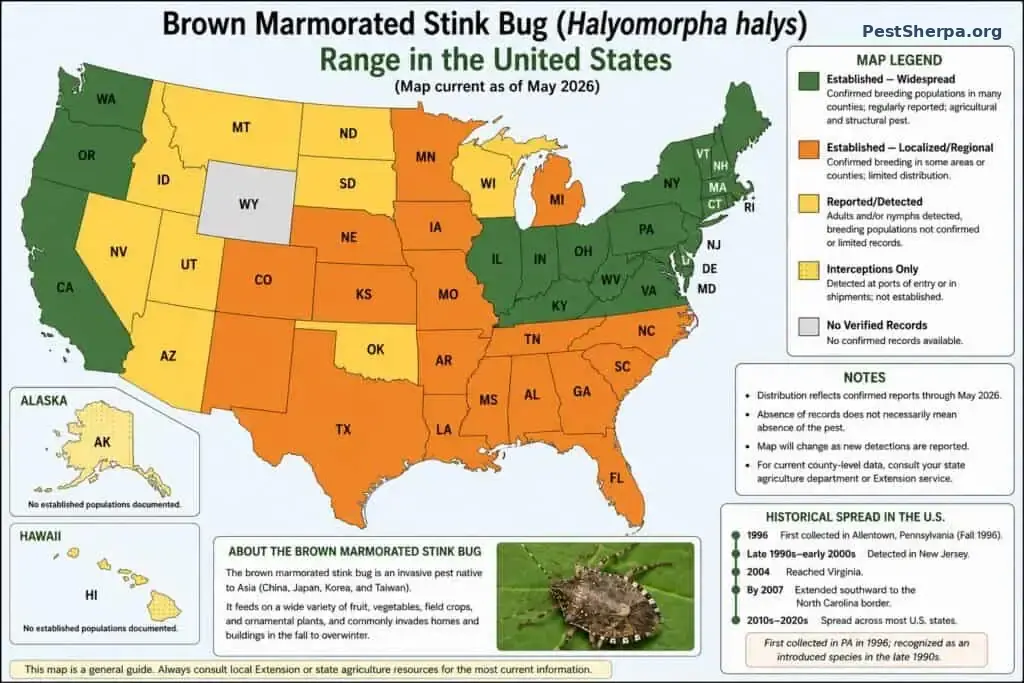
The brown marmorated stink bug (Halyomorpha halys), often shortened to BMSB, is an invasive stink bug from East Asia that arrived in the northeastern U.S. in the 1990s. It is an important agricultural pest and a common household nuisance in many parts of the United States. Indoors, it does not reproduce, eat wood, damage buildings, bite people, sting, or spread human disease. The problem is seasonal entry, indoor wandering, odor when crushed or disturbed, and recurring fall invasions if entry points are not corrected.
Outdoors it feeds on 100+ host plants. In 2010, Mid-Atlantic apple growers lost about $37 million to this pest (Growing Produce). That figure is agricultural crop loss, not household structural damage.
Adult brown marmorated stink bug showing mottled brown shield-shaped body and banded antennae.
TL;DR
- Brown marmorated stink bugs are shield-shaped, mottled brown insects about 14 to 17 mm long, roughly dime-sized.
- Key ID clues include alternating light and dark bands on the antennae and along the exposed edge of the abdomen.
- They become most noticeable around homes in late summer and fall as adults search for protected overwintering sites.
- They do not bite, sting, reproduce indoors, eat wood, or damage the house, but they can be a major nuisance in large numbers.
- The best home strategy is prevention: seal gaps, repair screens, close utility openings, reduce access to attics and wall voids, and remove visible bugs without crushing them.
- Indoor sprays and bug bombs are usually poor solutions because they do not fix entry points and may leave dead insects inside voids.
Quick Navigation
- What Brown Marmorated Stink Bugs Mean in Your Home
- Quick Identification
- Quick Assessment
- Where To Inspect
- Why They Suddenly Appeared
- Seasonal Activity and Life Cycle
- What To Do
- What Does Not Work Well
- How Long Will It Last?
- Health, Damage, and Safety Notes
- When Professional Help May Be Needed
- Lookalikes and Misidentifications
- FAQs
- References
What Brown Marmorated Stink Bugs Mean in Your Home
Seeing a brown marmorated stink bug indoors usually means an adult found a way inside while looking for winter shelter. A few bugs do not automatically mean an infestation is reproducing inside the home. BMSB adults overwinter in protected spaces, then may wander into living areas when indoor warmth or sunlight stimulates activity.
| What You See | What It Usually Means |
|---|---|
| One stink bug indoors | Likely accidental entry or movement from a hidden overwintering space |
| Several stink bugs at sunny windows | Adults may be trying to move toward light after overwintering in a wall void, attic, or other protected area |
| Many bugs on exterior siding in fall | Seasonal aggregation before overwintering; inspect entry points before they move inside |
| Bugs appearing repeatedly in winter | Adults may already be inside wall voids, attic spaces, soffits, or other concealed areas |
| Strong odor after vacuuming or crushing | Odor release from disturbed or crushed stink bugs |
Bottom line: The visible bugs are usually a symptom of access. Long-term improvement depends on exclusion and seasonal prevention, not only killing the insects you can see.
Quick Identification: What Brown Marmorated Stink Bugs Look Like
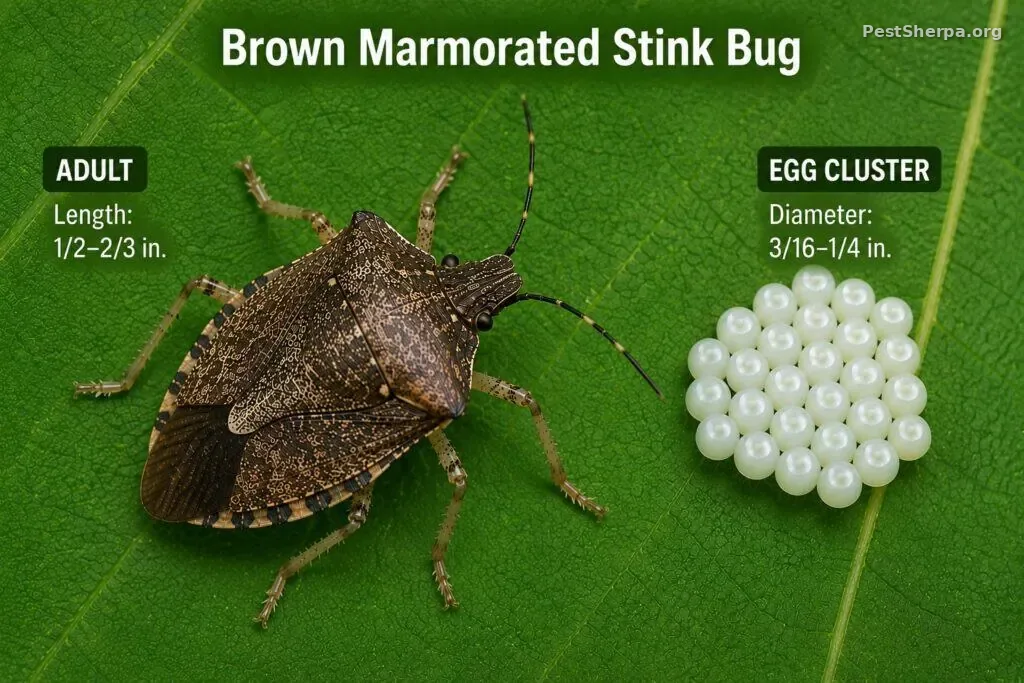
Adult brown marmorated stink bugs are broad, shield-shaped insects with a mottled brown, gray, and tan pattern. They are about 14 to 17 mm long. The word “marmorated” means marbled, which describes the irregular mottled pattern across the body.
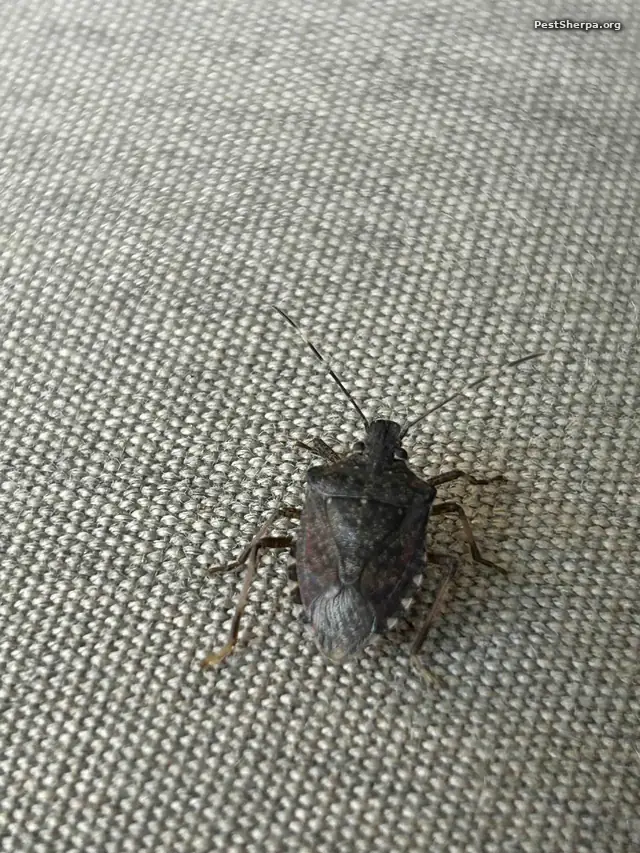
- Shape: shield-shaped body, wider across the shoulders
- Color: mottled brown, gray, and tan rather than one solid color
- Antennae: alternating light and dark bands near the outer segments
- Abdominal edge: alternating light and dark markings along the exposed side edges
- Odor: may release a strong smell when disturbed, crushed, or vacuumed
- Behavior: often gathers on sunny exterior walls, around windows, and in upper rooms during fall and winter
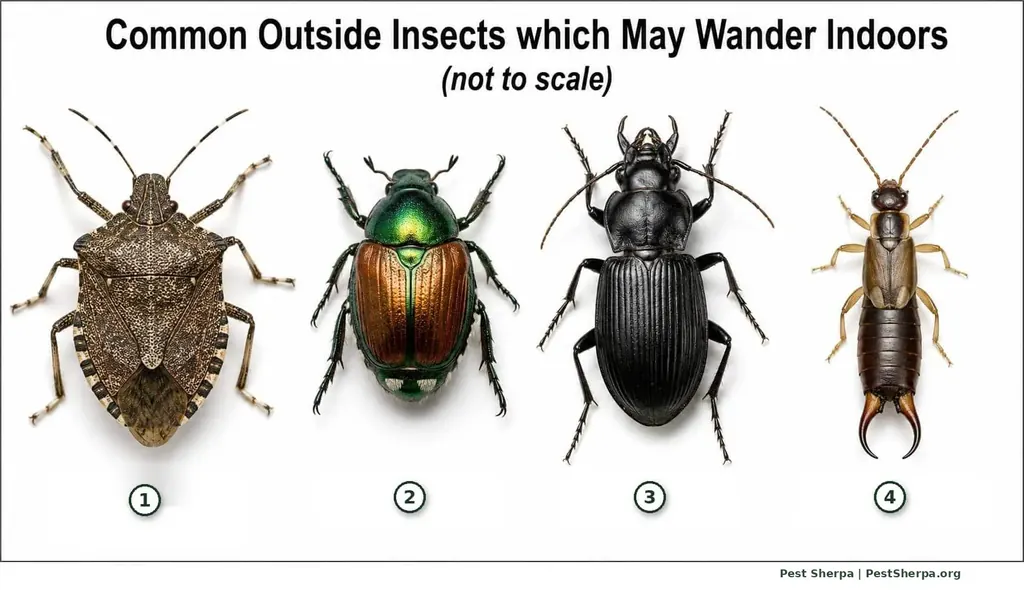
Which one did you find? Match the number:
- Brown marmorated stink bug: shield-shaped and mottled brown, with banded antennae and banded edges on the abdomen.
- Japanese beetle: metallic green head and thorax with copper wing covers.
- Ground beetle: shiny black with ridged wing covers and long legs.
- Earwig: slim and reddish-brown with a pair of pincers at the tail end.
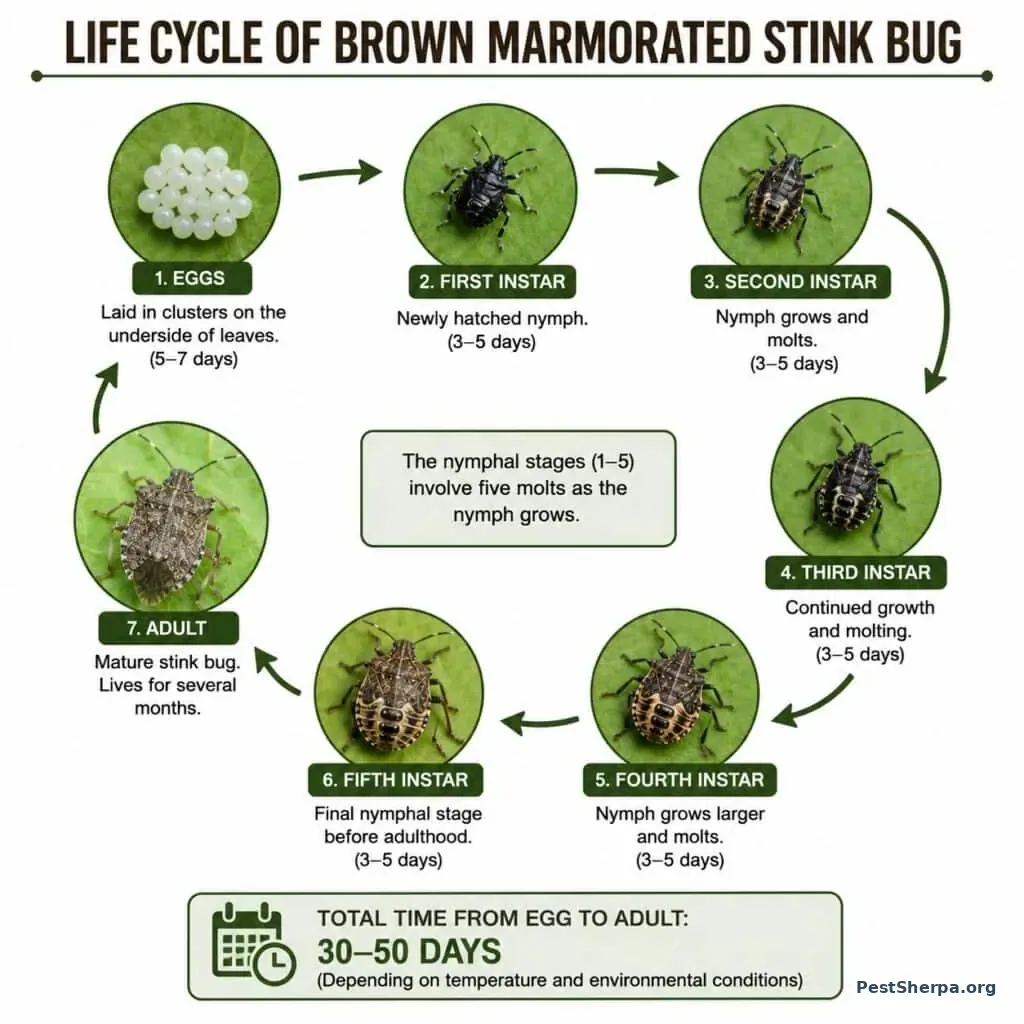
Nymphs are smaller and change appearance as they grow. Eggs are usually laid outdoors in clusters on plant surfaces, often on the undersides of leaves. Homeowners are much more likely to notice adult stink bugs than eggs or nymphs inside the house.
Brown marmorated stink bug adult, nymph, and egg cluster for identification.
Quick Assessment: How Serious Is It?
| Situation | Likely Severity | Best Next Step |
|---|---|---|
| One or two bugs indoors | Low | Remove without crushing; check nearby windows and door seals |
| Several bugs in one sunny room | Low to moderate | Vacuum carefully, empty vacuum outdoors, and inspect wall/attic access points nearby |
| Dozens on exterior walls in fall | Moderate | Prioritize exterior sealing, screens, vents, soffits, siding gaps, and utility penetrations |
| Repeated winter sightings from the same area | Moderate | Inspect attic, wall void access points, trim gaps, window frames, and ceiling penetrations |
| Large annual fall invasions | High nuisance pressure | Plan exclusion before late summer/fall activity begins; consider professional inspection for hard-to-find entry points |
Where To Inspect for Brown Marmorated Stink Bugs
Brown marmorated stink bugs use small openings to enter sheltered areas. The goal is to identify where adults are gathering outside and where they may be slipping into the structure.
Indoor Checks
- Sunny windows, especially upper-floor windows
- Window frames, sash gaps, and damaged screens
- Attic hatches, attic vents, and ceiling penetrations
- Fireplace areas, chimneys, and unused flues
- Baseboards, crown molding, and trim gaps near exterior walls
- Light fixtures, recessed lighting, and gaps around utility lines
Exterior Checks
- South- and west-facing walls that warm in afternoon sun
- Gaps around windows, doors, and garage doors
- Soffits, fascia, roofline gaps, and attic vents
- Loose siding, trim gaps, and openings behind shutters
- Utility penetrations for pipes, cables, conduits, and HVAC lines
- Foundation cracks and gaps where siding meets masonry
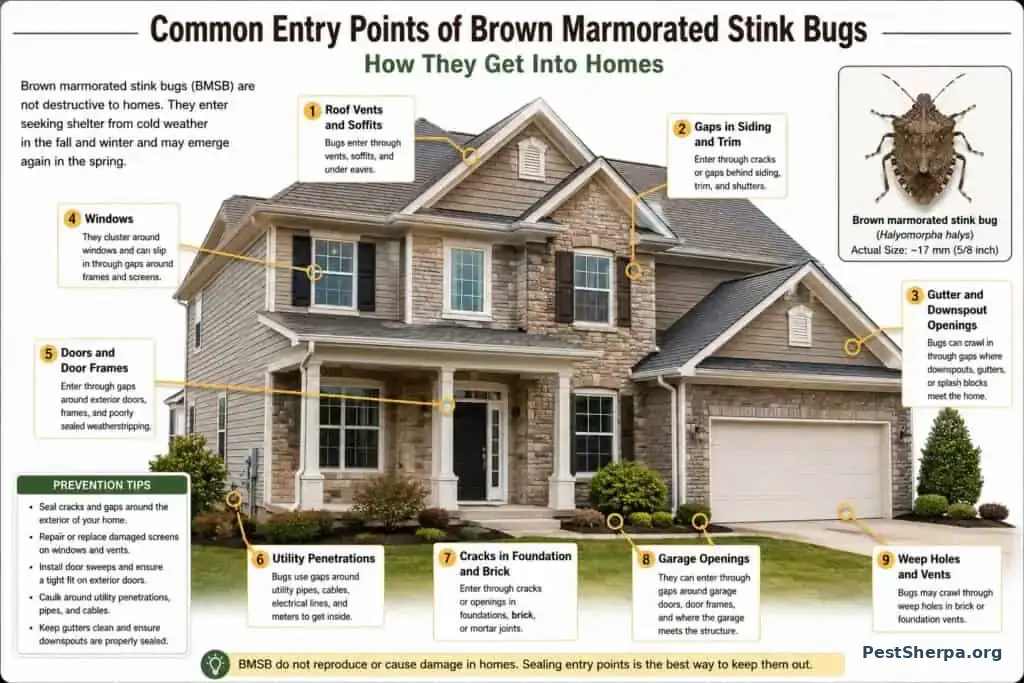
Common brown marmorated stink bug entry points around a house exterior.
Why Brown Marmorated Stink Bugs Suddenly Appeared
Sudden activity usually follows a seasonal pattern. In late summer and fall, adults gather on buildings and look for protected overwintering sites. Once inside, they may remain hidden for weeks or months. During warm winter days or when sunlight heats a wall, adults may become active and move into living spaces.
- Fall exterior gathering: adults are searching for shelter before winter.
- Warm winter day: overwintering adults become active and wander indoors.
- Sunny windows: bugs move toward light after emerging from hidden spaces.
- Recurring yearly problem: the structure likely has repeat entry points or favorable overwintering areas.
Seasonal Activity and Life Cycle
Brown marmorated stink bugs develop outdoors on plants. Their life cycle includes egg, nymph, and adult stages. Adults are the stage most often involved in home invasions because they seek protected places to overwinter.
| Season | What Usually Happens | Homeowner Focus |
|---|---|---|
| Spring | Overwintered adults emerge and move outdoors to feed | Remove indoor stragglers; note where they emerged |
| Summer | Adults and nymphs develop outdoors on host plants | Monitor garden or landscape plants if damage is a concern |
| Late summer to fall | Adults gather on structures and search for overwintering shelter | Seal gaps, repair screens, inspect siding, vents, soffits, doors, and windows |
| Winter | Adults remain hidden but may wander indoors during warm periods | Remove visible bugs without crushing; avoid indoor over-spraying |
Seasonal marmorated stink bugs around homes, eggs and adult.
Do Brown Marmorated Stink Bugs Damage Plants?
Yes. Outdoors, brown marmorated stink bugs feed on many fruit, vegetable, field, and ornamental plants. Feeding can cause pitting, scarring, discoloration, deformed fruit, mealy areas, or other plant injury. This is why BMSB is a serious agricultural pest in affected regions.
For most homeowners, however, indoor stink bug sightings are mainly a nuisance and exclusion issue. If you are also seeing plant damage, inspect host plants outdoors and compare the damage with other possible causes before assuming BMSB is responsible.
What To Do About Brown Marmorated Stink Bugs
1. Confirm the Identification
Look for the shield-shaped body, mottled brown pattern, banded antennae, and alternating light and dark markings along the abdomen. If the insect is black with red lines, bright green, or very small and round, compare it with lookalikes before choosing a response.
2. Remove Indoor Bugs Without Crushing Them
Use a cup-and-card method, tissue, or a vacuum with caution. Crushing stink bugs can release odor. If vacuuming many bugs, consider using a disposable bag or emptying the collection container outdoors soon after removal.
3. Seal Entry Points Before Fall Activity Peaks
Exclusion works best before large numbers enter. Focus on windows, doors, garage doors, siding gaps, soffits, attic vents, utility penetrations, and chimney areas. Repair torn screens and add or adjust door sweeps where light is visible under doors.
4. Reduce Exterior Access and Shelter
Trim vegetation touching the structure, remove clutter directly against the foundation, and inspect areas where bugs gather on warm exterior walls. These steps do not eliminate BMSB from the landscape, but they can reduce easy access to the building envelope.
5. Use Pesticides Carefully, If Used at All
Pesticides are not usually the main answer once stink bugs are already indoors. If any pesticide is used, read and follow the product label exactly, use only products labeled for the site and pest, and avoid spraying into wall voids or living spaces in ways that could create odor, residue, or dead insects in inaccessible areas.
What Does Not Work Well
| Method | Why It Usually Falls Short |
|---|---|
| Crushing stink bugs | Creates odor and does not address entry points |
| Bug bombs or foggers | Do not seal openings and may leave dead insects in hidden spaces |
| Indoor spraying after bugs appear | Targets symptoms, not the seasonal entry route |
| Only vacuuming visible bugs | Helpful for cleanup, but recurring activity continues if bugs are already in voids |
| Waiting until winter to seal obvious gaps | Many adults may already be inside by then |
The most effective long-term approach is usually timed prevention: inspect and seal before fall aggregation begins.
How Long Will Brown Marmorated Stink Bugs Last Indoors?
If only a few bugs entered accidentally, the problem may end after you remove them. If many adults entered attic spaces, wall voids, or other sheltered areas in fall, sightings may continue off and on through winter and into spring as bugs become active and move toward light.
- One or two bugs: often short-lived after removal.
- Winter stragglers: may continue appearing during warm or sunny periods.
- Large overwintering population: activity may continue in waves until adults leave or die.
- Recurring annual issue: likely to return unless exterior entry points are corrected before fall.
Health, Damage, and Safety Notes
Brown marmorated stink bugs are nuisance pests indoors. They do not bite, sting, suck blood, transmit human disease, reproduce indoors, or damage building materials. The main indoor concerns are odor, nuisance numbers, staining or residue if crushed, and homeowner frustration.
For children and pets, the safest approach is usually physical removal and exclusion rather than unnecessary indoor pesticide use. Avoid leaving piles of dead insects in accessible areas, and empty vacuum contents outdoors if odor becomes a problem.
When Professional Help May Be Needed
Professional help may be worth considering when stink bugs appear in large numbers every year, when you cannot identify entry points, when the home has high rooflines or difficult attic access, or when bugs are repeatedly emerging from wall voids, chimneys, soffits, or upper-story rooms.
A useful professional inspection should focus on identification, seasonal timing, structural access points, exclusion priorities, and whether any exterior treatment is appropriate for the site. For BMSB, long-term improvement usually depends more on prevention and exclusion than on repeated indoor treatment.
Lookalikes and Common Misidentifications
Several insects can be mistaken for brown marmorated stink bugs, especially other shield-shaped true bugs and seasonal home-invading insects.
| Lookalike | How It Differs | Why It Matters |
|---|---|---|
| Native brown stink bugs | May be brown and shield-shaped but lack the same combination of BMSB banding and mottled pattern | Some are agricultural pests, but not all have the same household invasion behavior |
| Green stink bugs | Usually green rather than mottled brown | More often noticed on plants than overwintering indoors in large numbers |
| Boxelder bugs | Black with red or orange lines; narrower body | Also seasonal home invaders, but identification and host plants differ |
| Kudzu bugs | Small, rounded, olive-brown true bugs | Another invasive nuisance pest in some regions, but not the same insect |
| Assassin bugs or kissing bugs | Longer body, different head shape, predatory mouthparts | Some can bite; accurate ID matters before handling |
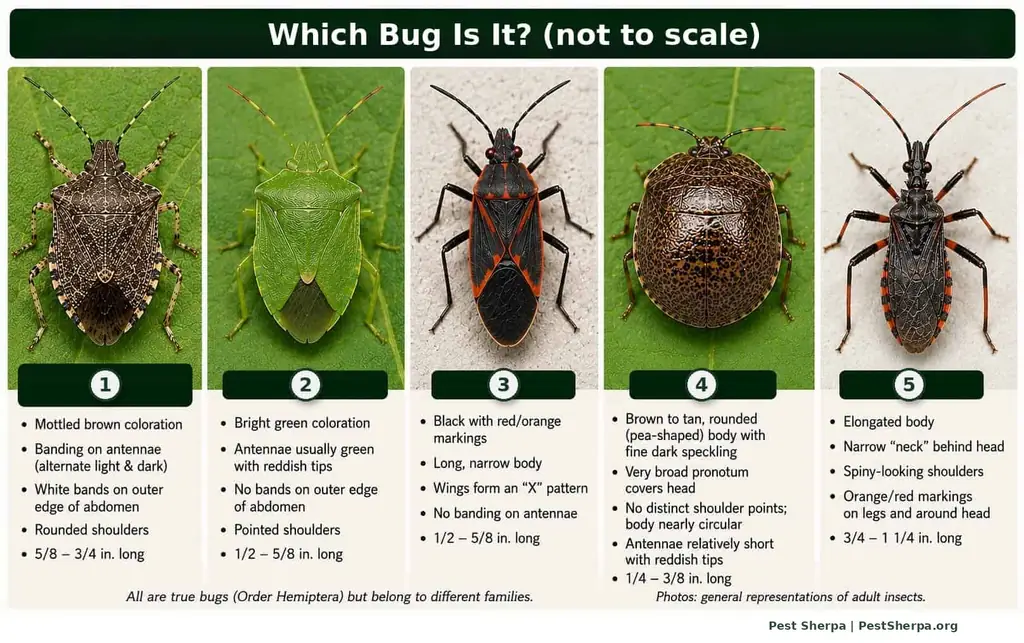
Which one did you find? Match the number:
- Brown marmorated stink bug: mottled brown with light and dark bands on the antennae and white bands along the outer edge of the abdomen. Rounded shoulders, 5/8 to 3/4 inch.
- Green stink bug: bright green with pointed shoulders and no bands on the edge of the abdomen. 1/2 to 5/8 inch.
- Boxelder bug: black with red to orange markings and a long, narrow body. The wings form an X on the back.
- Kudzu bug: small, round and pea-shaped, brown to tan with fine dark speckles. 1/4 to 3/8 inch.
- Assassin bug: long body, a narrow neck behind the head and orange to red markings on the legs.
Number 5 can bite, so do not pick it up with bare hands.
Comparison of brown marmorated stink bug and common lookalike insects.
FAQs About Brown Marmorated Stink Bugs
Do brown marmorated stink bugs bite?
No. Brown marmorated stink bugs are not known for biting or stinging people or pets.
Do stink bugs reproduce inside homes?
No. Indoor winter sightings are usually overwintering adults, not an indoor breeding population.
Why are stink bugs at my windows?
Adults that become active indoors often move toward light. The window is usually where they are trying to exit, not necessarily where they entered.
Should I crush stink bugs?
It is better not to crush them because they can release a strong odor. Use a cup, tissue, or careful vacuuming instead.
Will sealing gaps stop them immediately?
Sealing helps most when done before fall entry. If bugs are already inside wall voids or attic spaces, some may continue appearing until the overwintering population declines or exits.
Are brown marmorated stink bugs harmful to gardens?
They can damage fruit, vegetables, field crops, and ornamental plants outdoors. Indoor sightings, however, are usually a nuisance and overwintering issue rather than a plant-feeding issue inside the home.
What is the best time to prevent stink bugs from getting inside?
Late summer through early fall is the key prevention window because adults begin gathering on buildings and searching for overwintering sites before cold weather arrives.
References
- US EPA: Brown Marmorated Stink Bug
- Penn State Extension: Brown Marmorated Stink Bug
- USDA National Invasive Species Information Center: Brown Marmorated Stink Bug
- UC IPM: Brown Marmorated Stink Bug
- StopBMSB: Origins of BMSB
- Massachusetts Introduced Pests Outreach Project: Brown Marmorated Stink Bug
Bottom Line
Brown marmorated stink bugs are best handled as a seasonal exclusion problem. Remove visible bugs without crushing them, focus inspection on sunny exterior walls and small structural gaps, and prioritize sealing before fall activity peaks. Indoors, they are usually a nuisance rather than a health or structural threat, but recurring large numbers may justify a more detailed inspection of the building envelope.
This article was written by Greg Baumann, founder of Pest Sherpa, and reflects more than 40 years of professional pest management experience.
About the Author

Greg Baumann | Pest Control Expert
Greg Baumann is the founder of Pest Sherpa and a Pest Control Expert with more than 40 years of professional pest management experience. His articles combine decades of field experience, technical expertise, and science-based guidance to help homeowners identify pests correctly, understand real-world risks, and make informed pest management decisions.
Mission: Identify the pest. Understand the risk. Stop the problem. Prevent the comeback. Know when it’s time to call a professional.