
I live in Texas and my neighbor warned me that his house was just treated for termites. Does that put my house at risk?
Short answer: Your neighbor’s treatment does not automatically mean your house is next, but Texas subterranean termite pressure is real. Shared soil, fence lines, and conducive conditions can put both lots at risk. Treat the news as a cue to inspect your own foundation, not as a panic alarm.
Why a nearby treatment raises questions
Subterranean termite colonies forage through soil. In Texas, Formosan and native subterranean species are both concerns in many counties. A colony on one lot can extend foraging galleries toward another structure if wood, moisture, and soil pathways allow. That said, a treated house next door does not prove an active infestation in yours. It proves your neighbor found a problem worth fixing.
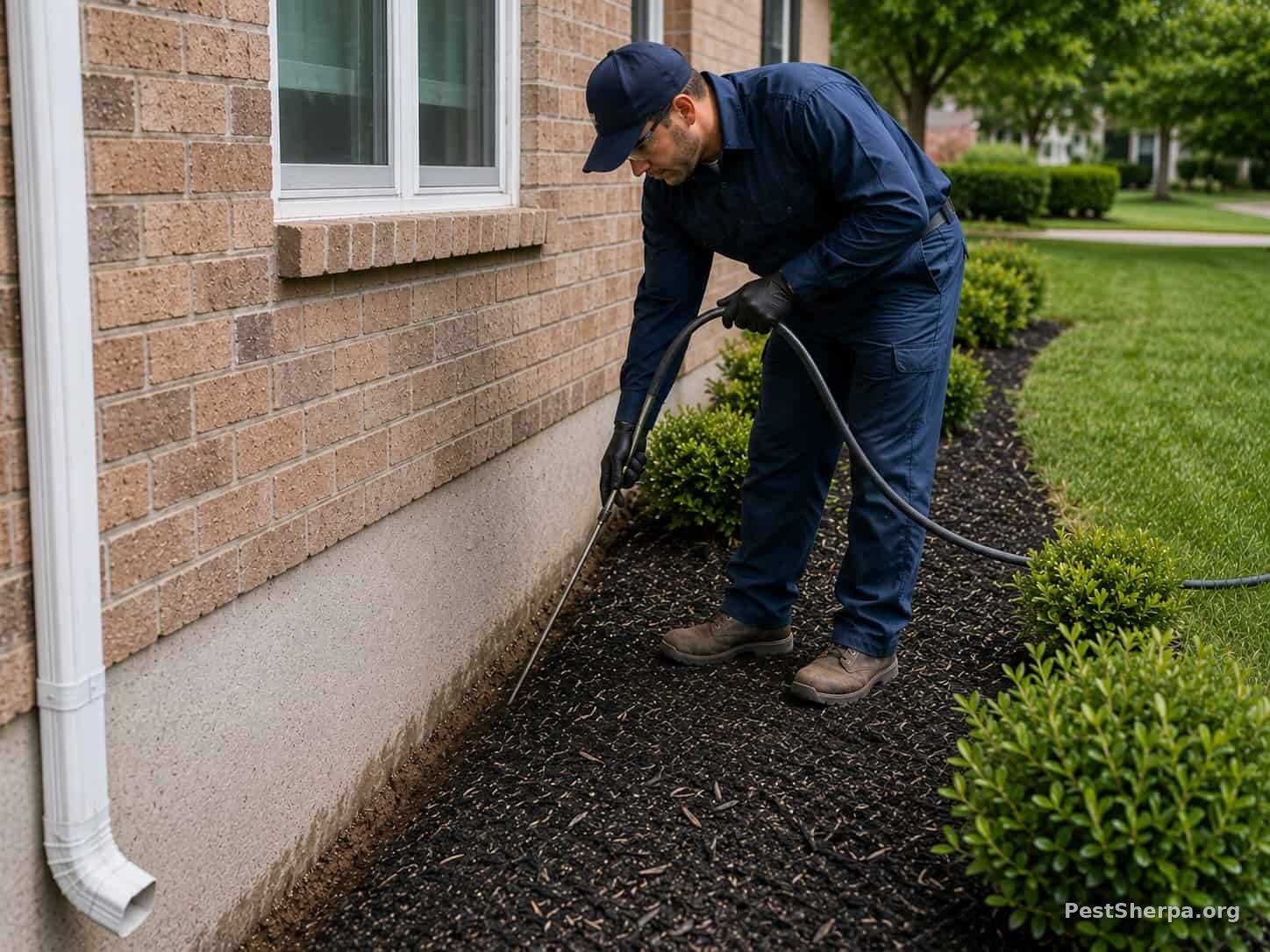
Liquid soil treatments create a treated zone under and around the treated structure. Bait stations manage colonies through foraging workers. Neither system sprays your house from across the fence. Your risk depends on your own moisture, wood-to-soil contact, cracks, and whether foragers are already visiting your slab.
What to check on your property
- Walk the foundation for mud tubes, especially at expansion joints, utility penetrations, and porch slabs.
- Look for discarded wings after warm rains (common swarm cue in Texas).
- Note wood touching soil: siding, door frames, form boards left in place, stacked lumber.
- Fix irrigation that keeps the foundation constantly wet.
- Ask when your last licensed termite inspection was. Annual checks are common in high-pressure areas.
What not to do
Do not pour leftover insecticides along the fence line “just in case.” Wrong products and incomplete barriers waste money and can create a false sense of safety. Do not assume that because your neighbor chose bait (or liquid), you must buy the same product. Species, construction type, and prior treatments all matter.
When a licensed inspector helps
If you find tubes, swarmers, or soft wood, get a licensed Texas pest control inspection. Even without signs, a baseline inspection after a neighbor treatment is reasonable education. Compare written findings and warranties. Our Termite Guide and hiring notes explain what a solid plan looks like.
Texas construction quirks
Slab homes, brick veneer, and expansion joints create classic entry lanes for subterranean foragers. Shared fence posts and buried scrap wood between lots can keep activity moving along a property line even after one house is treated. Your inspection should include those edge conditions, not only the living-room baseboards.
Related guides
References
- Clemson HGIC: Termites
- UF/IFAS: Subterranean Termites
- University of Kentucky: Subterranean Termites
- EPA: Safe Pest Control
This article was written by Greg Baumann, founder of Pest Sherpa, and reflects more than 40 years of professional pest management experience.
About the Author

Greg Baumann | Pest Control Expert
Greg Baumann is the founder of Pest Sherpa and a Pest Control Expert with more than 40 years of professional pest management experience. His articles combine decades of field experience, technical expertise, and science-based guidance to help homeowners identify pests correctly, understand real-world risks, and make informed pest management decisions.
Mission: Identify the pest. Understand the risk. Stop the problem. Prevent the comeback. Know when it’s time to call a professional.