
Spider Mites: Identification, Plant Damage, Life Cycle, and What To Do
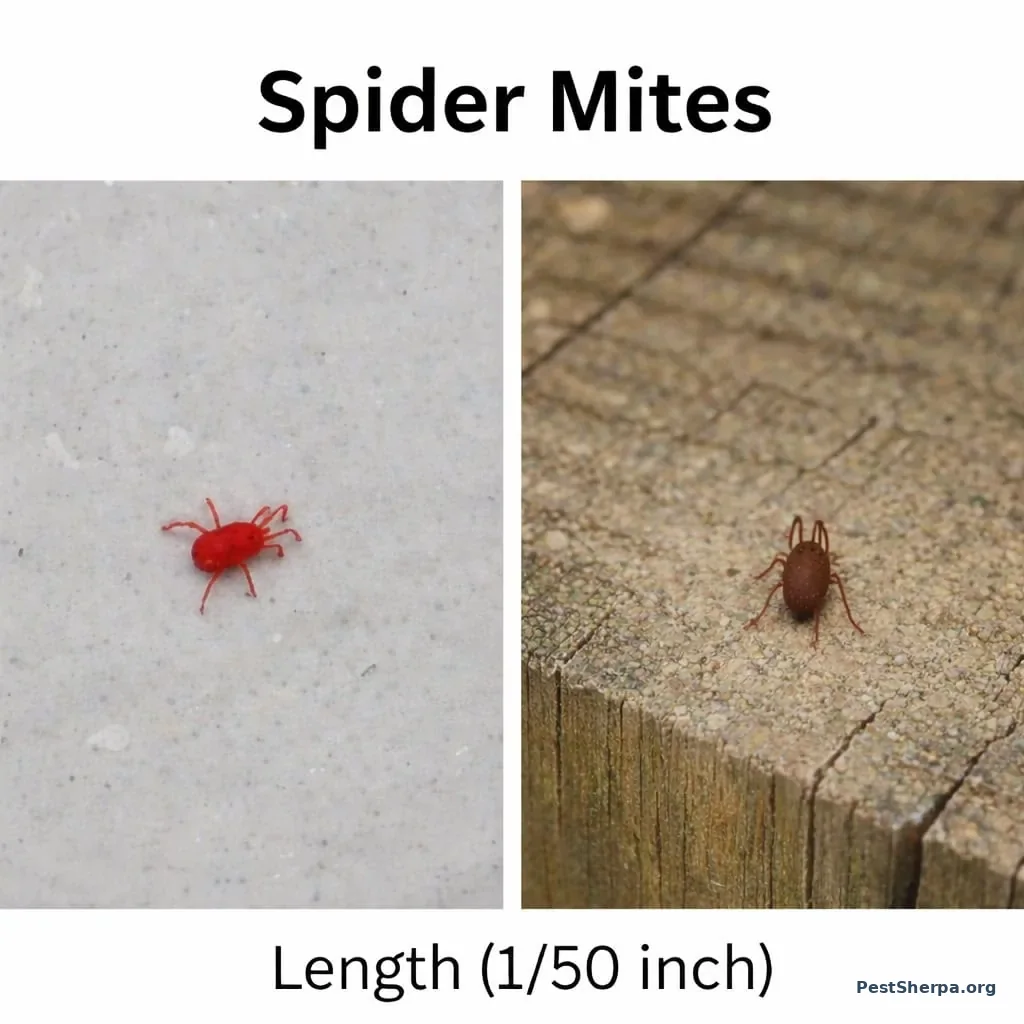
Spider mites are tiny plant-feeding arachnids that can damage houseplants, vegetables, ornamentals, shrubs, trees, and some turfgrass. They are not insects, and they are often easier to recognize by the plant injury they cause than by seeing the mites themselves.
Most spider mite problems start quietly on the undersides of leaves. As populations grow, leaves may develop pale stippling, yellowing, bronzing, dusty-looking foliage, fine webbing, leaf drop, or general plant decline. Warm, dry, dusty conditions and drought-stressed plants can make outbreaks worse.
TL;DR
If a plant has tiny pale speckles on the leaves, fine webbing, and tiny moving dots on the underside of leaves, spider mites are a strong possibility. They are usually less than about 1/50 inch long, so a 10X hand lens or white-paper tap test is helpful.
The most useful first steps are to confirm the pest, isolate infested houseplants when practical, rinse leaf undersides with water, reduce plant stress, remove heavily damaged leaves, and avoid broad insecticide use that can harm natural predators. Pesticides are not always necessary, and any pesticide product should be used only according to its label.
Quick Navigation
- Spider Mite Quick ID
- Identification
- What Spider Mite Damage Looks Like
- Where To Look on Plants
- Biology and Life Cycle
- Why Spider Mites Suddenly Get Worse
- Source Investigation Checklist
- Monitoring and Detection
- What To Do
- What Does Not Work Well
- How Long Spider Mites Last
- Spider Mites on Indoor Plants
- When Professional Help May Be Worth Considering
- Lookalikes and Common Misidentifications
- Frequently Asked Questions
- References
Spider Mite Quick ID
| Clue | What It Suggests |
|---|---|
| Tiny moving dots on leaf undersides | Possible spider mites, especially with stippling |
| Fine webbing on leaves, stems, or buds | Spider mite population may be building |
| Tiny pale, white, or yellow speckles on leaves | Feeding injury from mites or other piercing-sucking pests |
| Bronzed, dusty, yellowing, or drying leaves | Moderate to heavy feeding injury or plant stress |
| Flying insects around potting soil | More likely fungus gnats than spider mites |
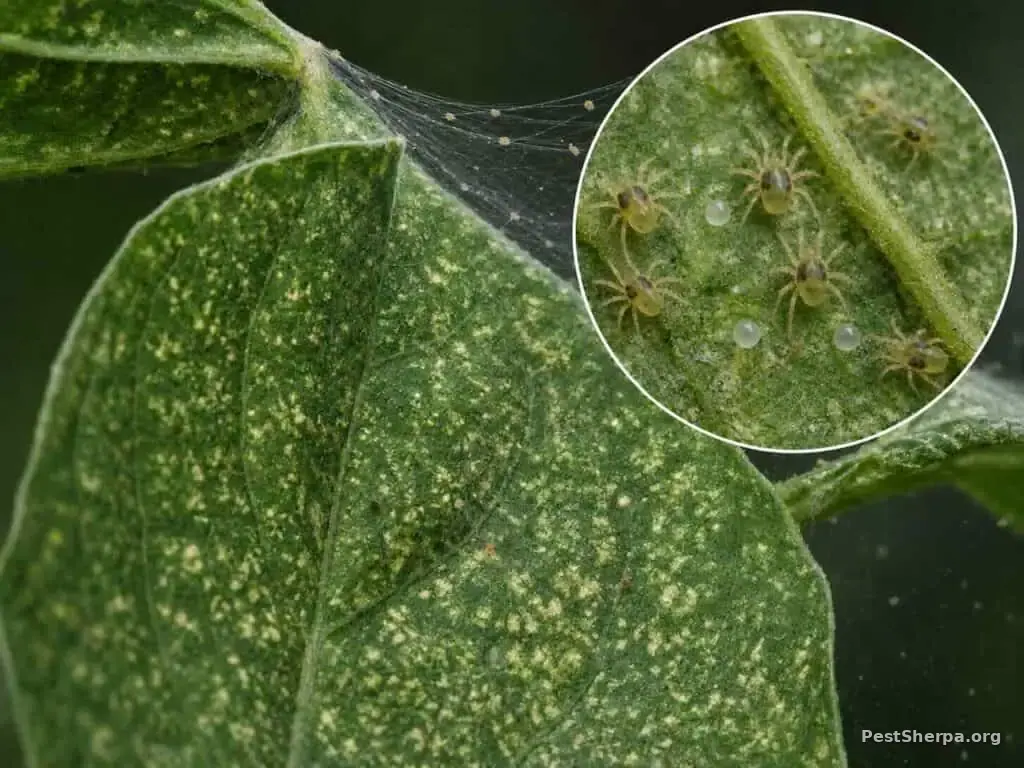
ISpider mite stippling and fine webbing on an infested plant leaf.
Identification: What Spider Mites Look Like
Spider mites are arachnids in the mite group Acari and the family Tetranychidae. They are related to spiders and ticks rather than insects. Adult spider mites have eight legs, no antennae, and a small oval body. Newly hatched larvae have six legs, which can make early stages look different from adults.
Spider mites are extremely small. Many important species are around 1/50 inch long, although adult size varies by species and some may approach 1/20 inch. Their color may appear pale green, yellowish, orange, red, brown, or translucent depending on species, host plant, age, and season. The twospotted spider mite, one of the most common plant-damaging species, often has two dark spots on the body.
To the naked eye, spider mites usually look like tiny moving specks. A 10X hand lens, phone macro lens, or white-paper tap test can make identification much easier.
Fine silk webbing is one of the most recognizable clues. Webbing is most noticeable when populations are high, but light infestations may show stippling before obvious webbing appears.
What Spider Mite Damage Looks Like
Spider mites feed with piercing-sucking mouthparts. They puncture plant cells and remove the contents, leaving tiny pale spots called stippling. Early injury may look like small white, yellow, or silvery dots on leaves.
As feeding continues, damaged areas may merge together. Leaves can look mottled, dusty, faded, bronzed, or yellow. Severe infestations may cause leaves to curl, dry out, or drop prematurely. Heavy feeding can weaken plants, especially seedlings, stressed plants, indoor plants, annuals, and valuable ornamentals.
| Damage Level | Common Signs | Practical Meaning |
|---|---|---|
| Light | Small pale speckles on a few leaves | Inspect closely and begin nonchemical steps |
| Moderate | More stippling, some yellowing, mites visible with tap test | Rinse leaves, reduce stress, remove badly damaged foliage |
| Heavy | Fine webbing, bronzing, leaf drop, many mites | Isolation, pruning, disposal, or labeled treatment may be needed |
| Recurring | New outbreaks after temporary improvement | Look for stressed plants, nearby infested plants, dust, or repeated reintroduction |
Where To Look on Plants
Spider mites usually begin feeding on the undersides of leaves. Look most closely at older leaves, leaves near dry or dusty areas, plants near windows or heat sources, and plants that are already water-stressed.
- Check leaf undersides for tiny moving dots.
- Look for fine silk webbing around leaf veins, stems, buds, and growing tips.
- Inspect plants near sunny windows, heating vents, dusty paths, walls, pavement, or dry garden edges.
- Compare damaged leaves with healthy leaves on the same plant.
- Check nearby plants because spider mites can move when foliage touches or when infested plants are relocated.
Biology and Life Cycle
Spider mites develop through egg, larval, nymphal, and adult stages. Eggs are tiny, round, and often laid on leaf undersides or within webbing. After hatching, larvae begin feeding and later develop into nymphs and adults. Spider mites develop through egg, six-legged larval, eight-legged nymphal, and adult stages. Many species have two nymphal stages before becoming adults.
Warm temperatures can speed development. Under favorable conditions, spider mites may complete development in about one to two weeks, and some populations can build even faster during hot weather. Multiple generations can occur in a single growing season.
Some spider mite species overwinter as eggs, while others overwinter as adult females in protected places such as bark cracks, bud scales, plant debris, or ground litter. Seasonal patterns vary by species and region. The twospotted spider mite is often associated with hot, dry summer conditions, while some mites on conifers and turf may be more active in cooler parts of the season.
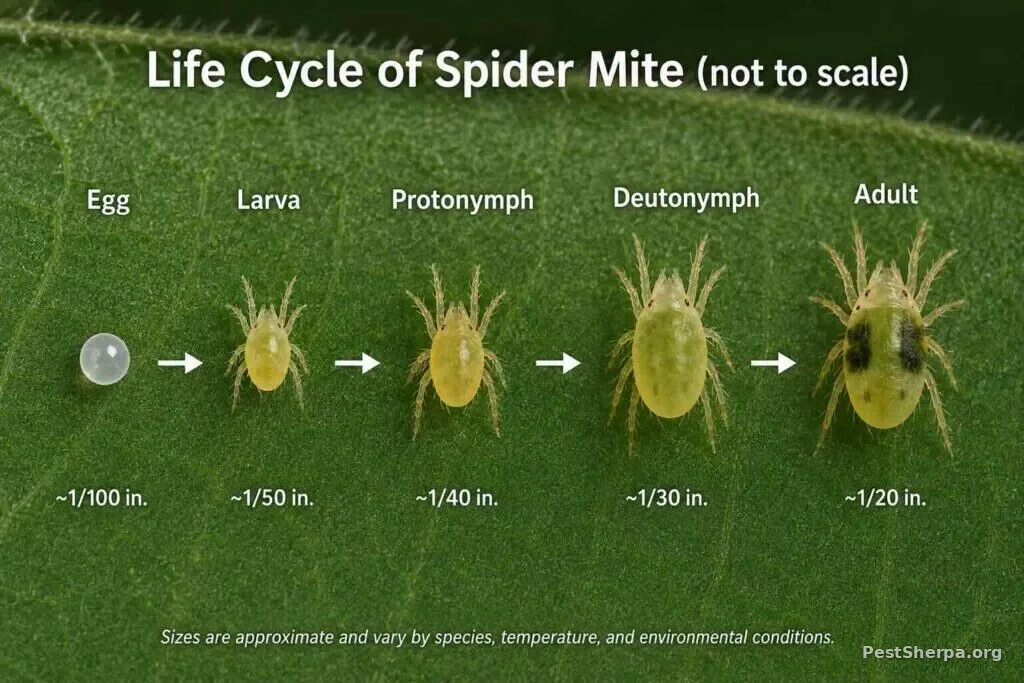
Spider mite life cycle showing egg, larva, nymph, and adult stages.
Why Spider Mites Suddenly Get Worse
Spider mite outbreaks often feel sudden because early populations are easy to miss. By the time webbing and bronzing are obvious, several life stages may already be present.
| Condition | Why It Matters |
|---|---|
| Hot, dry weather | Speeds reproduction and increases plant stress |
| Drought-stressed plants | Plants tolerate feeding injury less well |
| Dusty conditions | Favor spider mite outbreaks and may reduce the effectiveness of natural enemies |
| Overuse of broad insecticides | May reduce predators that normally suppress mites |
| New plants brought indoors or into a garden | Can introduce mites before symptoms are obvious |
| Plants touching each other | Allows mites to crawl from one plant to another |
Spider Mite Source Investigation Checklist
Spider mites do not come from food scraps, drains, walls, or household dirt. They are tied to plants. The source is usually an infested plant, stressed plant material, or a nearby plant environment that favors mites.
Step 1: Confirm the Plant Host
Identify which plant shows stippling, webbing, or leaf discoloration first. Inspect that plant before treating the whole room, greenhouse, garden bed, or landscape.
Step 2: Check Nearby Plants
Look at plants touching the infested plant or sharing the same shelf, bench, window, garden bed, or greenhouse area.
Step 3: Review Recent Plant Changes
Ask whether a new plant, cutting, seedling tray, hanging basket, or outdoor plant was recently brought into the area. New plant material can carry mites before damage is obvious.
Step 4: Look for Stress Factors
Check watering consistency, heat, reflected sunlight, dry indoor air, dusty leaves, crowded growth, and plants growing near pavement, walls, vents, or windows.
Step 5: Separate Lookalikes
Small pests around plants are not always spider mites. Fungus gnats are small flies around moist potting soil, springtails are moisture-associated jumpers, and clover mites are often seen crawling on walls, windows, or exterior surfaces rather than webbing plant leaves.
Monitoring and Detection
Early detection is one of the best ways to prevent serious spider mite damage. Because mites are so small, monitoring should focus on both symptoms and direct evidence.
Use the White-Paper Tap Test
Hold a white sheet of paper or cardboard under a suspect leaf or branch. Tap the foliage sharply. Spider mites may fall onto the paper and appear as tiny moving dots. A hand lens helps separate mites from dust or plant debris.
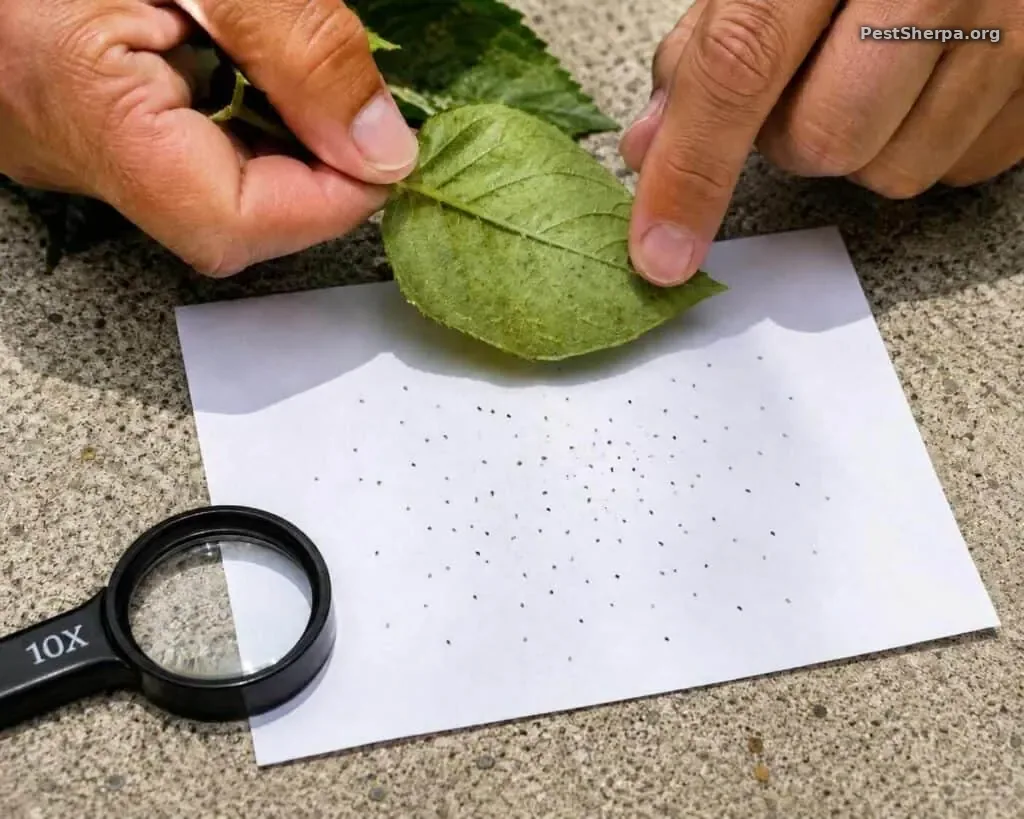
White paper tap test for detecting spider mites on plant leaves.
How Often To Check
During hot, dry periods or when plants are drought-stressed, inspect susceptible plants every few days. Indoors, check high-risk houseplants before placing them near other plants.
What To Do About Spider Mites
1. Confirm That Mites Are Present
Do not treat based on leaf speckling alone. Drought stress, nutrient issues, pesticide injury, leaf disease, aphids, thrips, and other plant problems can create confusing symptoms. Use a hand lens or tap test when possible.
2. Isolate Infested Houseplants When Practical
Move a heavily infested houseplant away from other plants if it can be done without spreading leaves or dropping debris. Avoid brushing infested foliage against healthy plants.
3. Rinse Leaf Undersides
A firm spray of plain water can dislodge mites and disturb webbing. Focus on the undersides of leaves, stems, and growing tips. For indoor plants, this may be done in a sink, shower, or outdoors where appropriate for the plant.
4. Reduce Plant Stress
Water plants appropriately for the species, avoid drought stress, reduce dust on foliage, improve spacing where practical, and avoid unnecessary fertilizer during drought or heat stress.
5. Remove Heavily Damaged Leaves or Plants
Leaves that are badly stippled, bronzed, dry, or webbed may not recover. Pruning or discarding heavily infested plant parts can reduce mite numbers and make monitoring easier. For a severely infested small houseplant, disposal may be more practical than repeated treatment.
6. Protect Natural Predators Outdoors
Predatory mites, minute pirate bugs, lacewings, predatory thrips, and small lady beetles can help reduce spider mite populations. Broad insecticide use can disrupt these natural enemies and may make mite problems worse.
7. Use Pesticides Carefully, If Needed
Pesticides are not always necessary. When a product is used, choose one labeled for the plant and pest, read and follow the entire label, and pay attention to leaf coverage, plant sensitivity, temperature limits, ventilation, food-plant restrictions, and child and pet precautions. Insecticidal soaps and horticultural oils are commonly used options for spider mites, but they must contact mites directly and can injure some plants if misused.
Avoid homemade pesticide mixtures, off-label use, and repeated broad-spectrum insecticide applications. Some insecticides that work on insects are poor choices for mites and may reduce beneficial predators.
What Does Not Work Well
- Ignoring leaf undersides: Many mites feed and lay eggs where people do not look first.
- Spraying only the top of leaves: Contact products are unlikely to help if they do not reach mites.
- Using bug bombs or indoor foggers: These are not a good solution for plant-based mite problems and may create unnecessary pesticide exposure.
- Repeated broad insecticide use: This can harm natural enemies and contribute to recurring mite outbreaks.
- Waiting for webbing before acting: Stippling often appears before obvious webbing.
- Treating every plant without checking: Start with the infested plant and nearby plants, then monitor.
How Long Spider Mites Last
The timeline depends on how early the problem is found, whether stressed plants improve, and whether eggs, nymphs, and adults are all addressed through repeated monitoring.
| Situation | Likely Pattern |
|---|---|
| Light, newly detected infestation | May improve with rinsing, stress reduction, and close monitoring |
| Heavy webbing and leaf drop | May require pruning, disposal, or labeled treatment |
| Hot, dry outdoor conditions continue | Populations can rebound quickly |
| Multiple infested houseplants | Repeated inspection and isolation may be needed |
| Plant remains drought-stressed | Damage and recurrence are more likely |
Spider Mites on Indoor Plants
Indoor spider mite problems are common because houseplants may experience dry air, limited natural predators, crowding, and stress from inconsistent watering or low light. Plants near sunny windows, heating vents, or dry rooms can be especially vulnerable.
- Inspect new houseplants before placing them near existing plants.
- Separate infested plants when practical.
- Rinse leaves thoroughly, especially undersides.
- Wipe smooth leaves with a damp cloth when the plant can tolerate it.
- Prune heavily damaged leaves that will not recover.
- Check nearby plants every few days until no mites or fresh damage are found.
Indoor plant problems can overlap. Small flies around moist potting soil point more toward fungus gnats, while tiny jumping pests in damp areas may be springtails. Spider mites are usually tied to leaf stippling, webbing, and mites on leaf undersides.
When Professional Help May Be Worth Considering
Professional help may be worth considering when spider mites affect valuable landscape plants, greenhouse plants, commercial plantings, turf, or large indoor plant collections, or when repeated nonchemical steps do not stop the problem.
- Valuable trees, shrubs, or greenhouse plants are declining.
- The plant is too large to rinse or inspect thoroughly.
- Damage continues despite repeated monitoring and rinsing.
- Plant species, pesticide labels, or site restrictions are confusing.
- The setting involves food crops, schools, healthcare, public spaces, or commercial production.
Lookalikes and Common Misidentifications
| Pest or Problem | How It Differs From Spider Mites |
|---|---|
| Clover mites | Often seen crawling on walls, windows, patios, or exterior surfaces; not usually causing fine webbing on leaf undersides indoors |
| Fungus gnats | Small flying insects around moist potting soil; adults fly, while spider mites crawl on leaves |
| Springtails | Tiny jumpers associated with moisture, soil, and organic matter; they do not create leaf stippling and webbing |
| Aphids | Soft-bodied insects often clustered on new growth; may produce sticky honeydew |
| Thrips | Slender insects that can cause silvery streaking, scarring, and black specks of frass |
| Drought stress | Can cause yellowing or browning without mites, webbing, or moving specks on the tap test |
| Nutrient or light problems | May cause discoloration but usually lack mites, webbing, and stippled feeding marks |
Frequently Asked Questions
Are spider mites insects?
No. Spider mites are arachnids, related to spiders and ticks. Adult spider mites have eight legs, while insects have six legs.
Can spider mites bite people?
Spider mites are plant-feeding mites and do not normally bite or feed on people. They do not infest people, damage structures, or infest stored food.
Why do spider mites keep coming back?
Recurring spider mite problems often involve eggs or nymphs that were missed, nearby infested plants, hot and dry conditions, drought-stressed plants, dust, or pesticide use that reduced natural predators.
Does webbing always mean spider mites?
Fine webbing on leaves and stems is a strong spider mite clue, especially with stippling and tiny moving dots. However, ordinary spider webs, plant fibers, or debris can be confused with mite webbing. Check leaf undersides to confirm.
Will water alone get rid of spider mites?
Water sprays can reduce spider mites by knocking them off leaves and disturbing webbing. Light infestations may improve with repeated rinsing and better plant care, but heavy infestations may require pruning, disposal, or labeled treatment.
Should I use insecticide for spider mites?
Not automatically. Spider mites are mites, not insects, and some insecticides can make outbreaks worse by harming natural enemies. Start with identification, rinsing, stress reduction, and monitoring. Use only products labeled for spider mites on the specific plant or site, and follow the label exactly.
Can I save a heavily infested plant?
Sometimes. The decision depends on the plant’s value, level of damage, ability to tolerate pruning or washing, and whether the infestation can be isolated. A severely damaged small houseplant may be better discarded to protect nearby plants.
References
- UC Integrated Pest Management: Spider Mites
- University of Minnesota Extension: Twospotted Spider Mites in Home Gardens
- Colorado State University Extension: Spider Mites
- University of Maryland Extension: Mites in Home Gardens
- Clemson Cooperative Extension Home & Garden Information Center: Integrated Pest Management for Spider Mites
This article was written by Greg Baumann, founder of Pest Sherpa, and reflects more than 40 years of professional pest management experience.
About the Author

Greg Baumann | Pest Control Expert
Greg Baumann is the founder of Pest Sherpa and a Pest Control Expert with more than 40 years of professional pest management experience. His articles combine decades of field experience, technical expertise, and science-based guidance to help homeowners identify pests correctly, understand real-world risks, and make informed pest management decisions.
Mission: Identify the pest. Understand the risk. Stop the problem. Prevent the comeback. Know when it’s time to call a professional.