
Springtails in the House: Identification, Moisture, and What to Do
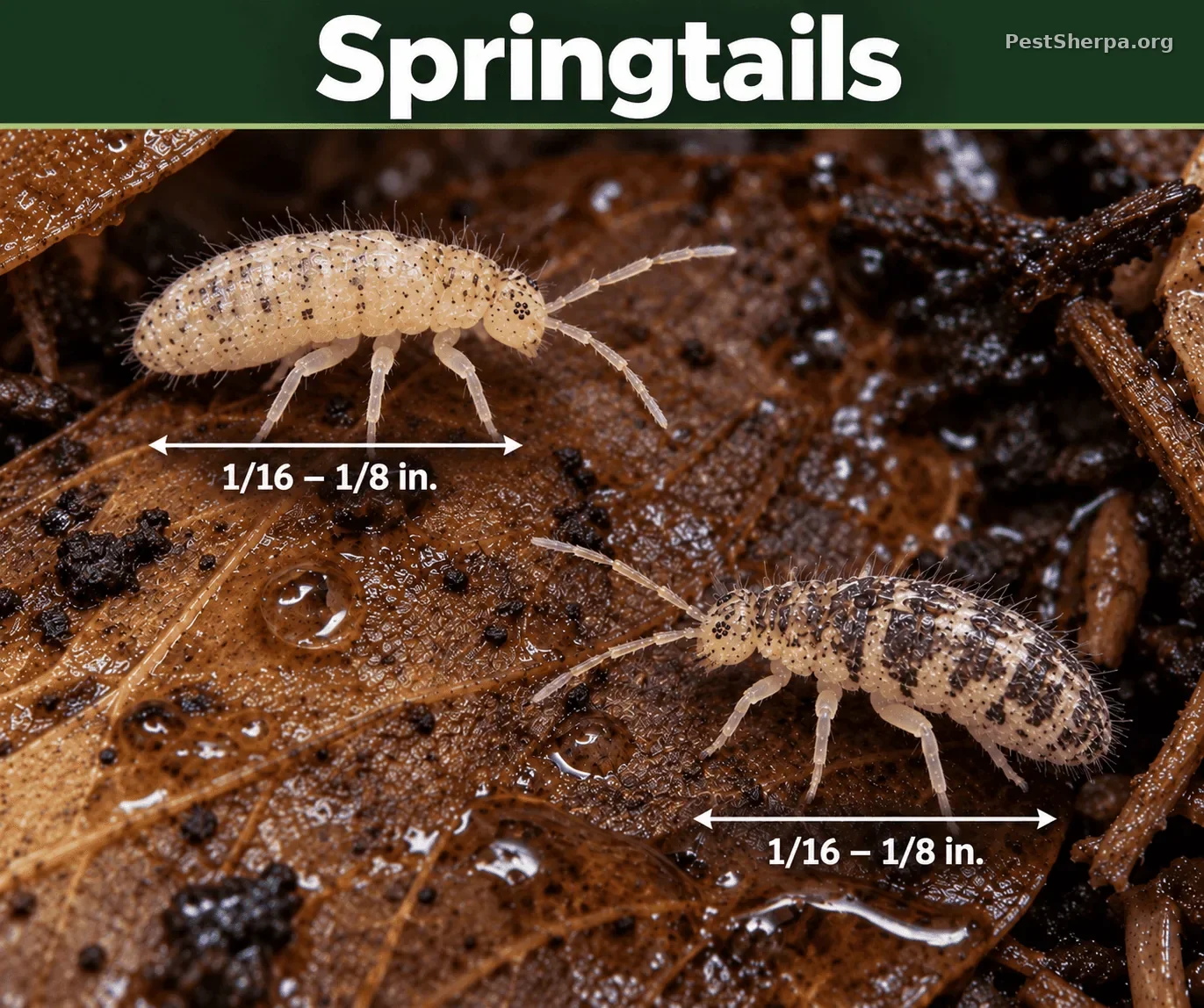
Springtails are tiny, moisture-associated arthropods in Collembola that often appear in damp places indoors and outdoors. Homeowners usually notice them in sinks, bathtubs, basements, crawl spaces, window sills, mulch beds, or the soil of overwatered houseplants. Because they can jump when disturbed, springtails are sometimes mistaken for fleas, but they are not parasitic and do not feed on people or pets.
Indoors, springtails are usually best understood as moisture indicators rather than destructive pests. They do not damage structural wood, furniture, clothing, or stored food. Their presence often points to excessive humidity, condensation, plumbing leaks, damp organic material, overwatered plants, or moisture trapped near the foundation. Springtails have been known to be present in snow primarily during early spring thaws.
The most effective long-term response is to find and correct the damp conditions that allow springtails to survive.
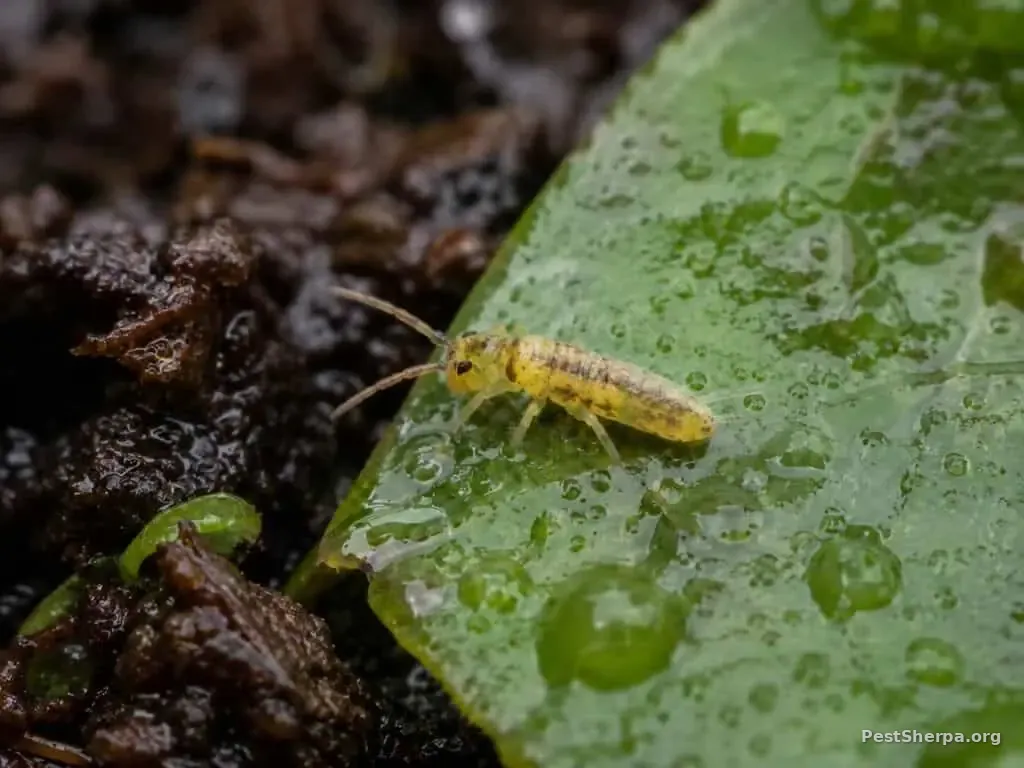
Tiny springtails on damp soil showing moisture-associated habitat.
TL;DR
Springtails are tiny, jumping, moisture-loving arthropods. A few indoors may simply be wanderers from damp soil or mulch. Repeated sightings, large numbers, or activity around sinks, tubs, basements, crawl spaces, or houseplants usually means moisture is present.
They do not bite, sting, spread disease, infest pets, or damage the home. Control should focus on drying damp areas, fixing leaks, reducing humidity, improving drainage, and allowing overwatered plant soil to dry.
Quick Navigation
- What Springtails Mean Indoors
- Identification
- Moisture Source Checklist
- Springtails in Houseplants
- Damage and Health Concerns
- What To Do
- What Does Not Work Well
- Lookalikes and Misidentifications
- Frequently Asked Questions
- References
What Springtails Mean Indoors
Springtails indoors usually mean one of two things: they wandered in from a damp outdoor source, or they have found enough moisture indoors to survive for a while. They dry out quickly in low-humidity conditions, so persistent activity deserves a moisture inspection.
| What You See | What It Often Means | Best Next Step |
|---|---|---|
| One or two springtails | Possible outdoor entry | Remove them and watch for repeat activity |
| Many in a sink or bathtub | They may be seeking moisture or trapped on smooth surfaces | Check humidity, drains, leaks, and nearby damp areas |
| Activity around houseplants | Potting mix may be staying too wet | Let soil dry more between waterings |
| Activity in basements or crawl spaces | High humidity, condensation, or damp organic material may be present | Inspect drainage, ventilation, leaks, and stored damp materials |
| Large numbers after rain or irrigation | Outdoor populations may be moving from saturated soil or mulch | Improve drainage and reduce damp habitat near the foundation |
Identification: What Springtails Look Like
Springtails are very small, wingless, soft-bodied arthropods. Many are about 1/16 to 1/8 inch long, although size varies by species. They may be white, gray, bluish-gray, brown, dark gray, black, or sometimes more brightly colored.
Body shape also varies. Some springtails are slender and elongated, while others are short and rounded. Most springtails have a furcula, a fork-like structure folded under the abdomen. When released, it propels the springtail away from disturbance. Some species have a reduced or absent furcula and do not jump.
| Feature | Springtail Clue |
|---|---|
| Size | Very small, often around 1/16 to 1/8 inch |
| Wings | No wings |
| Movement | May jump suddenly when disturbed |
| Body | Soft-bodied; may be slender or rounded |
| Habitat | Strongly associated with moisture, soil, mulch, leaf litter, fungi, algae, and damp organic matter |
Springtails are commonly confused with fleas because both are tiny and can jump. Fleas are flattened from side to side and are associated with people, pets, or wildlife hosts. Springtails are moisture-associated and do not live on pets. For comparison, see the Pest Sherpa cat flea guide.
Diet and Ecological Role
Springtails feed mostly on materials found in moist environments, including fungi, algae, bacteria, decaying plant matter, pollen, and microscopic organic debris. Outdoors, they are often beneficial because they help break down organic matter and recycle nutrients in soil.
Because their food sources are tied to damp organic material, springtails commonly live in mulch, compost, leaf litter, garden soil, rotting wood, and moist potting media.
Outdoor Habitats
Outdoors, springtails thrive where moisture and organic matter persist. Common habitats include garden soil, mulch beds, compost piles, leaf litter, damp landscaping materials, under bark, under rotting wood, near puddles, wet sidewalks and around swimming pools or irrigation runoff.
Heavy irrigation, poor drainage, thick mulch, and damp foundation-side landscaping can support large populations. When outdoor habitats become excessively wet, begin to dry, or are disturbed, springtails may migrate and sometimes enter nearby structures.
Moisture Source Checklist
If springtails keep appearing indoors, use them as a clue to look for moisture. The window, sink, or bathtub where they are found may not be the source. It may simply be where they became trapped or visible.
Check Indoors
- Plumbing leaks under sinks, tubs, toilets, laundry areas, and water heaters
- Condensation around windows, pipes, vents, or basement walls
- Damp crawl spaces, basements, wall voids, and utility penetrations
- Wet cardboard, stored paper, wood scraps, or organic debris
- Floor drains and areas that stay humid or wet
Check Outdoors Near the Structure
- Mulch piled thickly against exterior walls
- Leaf litter, compost, or damp organic debris near the foundation
- Downspouts discharging too close to the building
- Grading that directs water toward the structure
- Irrigation overspray or saturated landscape beds
- Damaged screens, door thresholds, vents, foundation cracks, and utility gaps
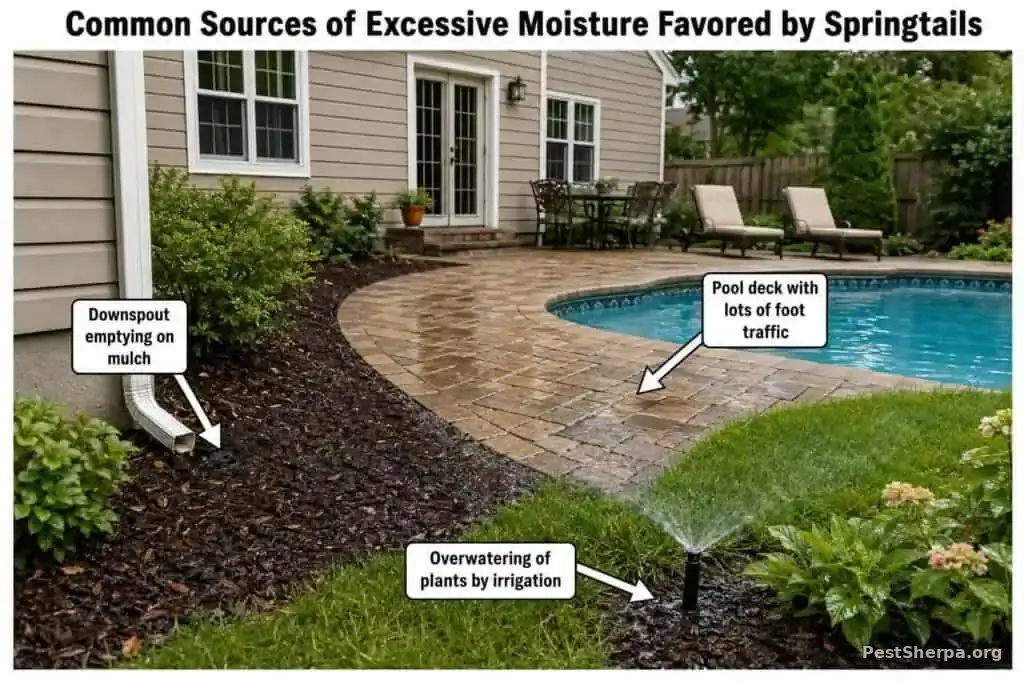
Common moisture sources around a home that can support springtails.
Springtails in Houseplants
Houseplants are one of the most common indoor springtail sources. Constantly wet potting mix encourages fungi and decaying organic material, which provide food for springtails.
If springtails are active in plant soil, reduce overwatering first. Let the potting mix dry more between waterings when the plant can tolerate it, empty standing water from saucers, and avoid keeping soil continuously saturated. If the potting media remains persistently wet, moldy, or poorly drained, repotting into fresh, well-draining media may also help correct the underlying moisture problem.
Small numbers in plant soil are usually a nuisance rather than an emergency. The bigger issue is often the watering pattern or potting conditions that allowed them to increase.
Damage and Health Concerns
Springtails do not bite, sting, infest pets, transmit disease, or damage structural wood, furniture, clothing, or stored food products. Their main impact indoors is nuisance activity and the moisture clue they provide.
Some springtails may occasionally feed on tender seedlings or young plant tissue in very damp growing environments, but plant injury is usually minor in home settings. Mature plants are rarely seriously affected.
The most important concern indoors is often the moisture condition supporting them. Persistent dampness can also favor mold, wood decay, and other moisture-associated pests.
What To Do About Springtails
1. Confirm That They Are Springtails
Look for very small, wingless, soft-bodied arthropods that jump when disturbed and appear in damp areas. Use magnification if needed.
2. Remove Visible Springtails
Vacuuming, sweeping, or wiping up visible springtails is often enough for small indoor numbers. Empty the vacuum or dispose of debris promptly.
3. Dry the Area
Use ventilation, fans, dehumidifiers, and moisture correction to dry damp basements, crawl spaces, bathrooms, laundry areas, and window areas. Repair leaks and remove wet materials that cannot dry properly.
4. Adjust Houseplant Watering
Allow potting media to dry more between waterings when appropriate for the plant. Avoid leaving pots in standing water, and replace media that stays wet or moldy.
5. Reduce Outdoor Moisture Pressure
Thin excessive mulch near the foundation, remove leaf litter, direct downspouts away from the structure, reduce irrigation overspray, and improve grading where water flows toward the home.
6. Seal Obvious Entry Points
Repair screens, seal gaps around doors and windows, close utility penetrations, and address foundation cracks where practical. Exclusion helps reduce entry, but it will not solve the problem if moisture remains.
What Does Not Work Well
- Repeated indoor spraying: it may reduce visible numbers temporarily but does not correct moisture.
- Pouring products down drains: springtails found in sinks and tubs are often trapped there, not breeding in the drain.
- Ignoring leaks or humidity: springtails often return when damp conditions remain.
- Overwatering plants after activity appears: saturated soil can make the problem worse.
Pesticides are usually not necessary for springtails. If any pesticide is considered, read and follow the label, keep products away from children, pets, food-preparation surfaces, drains, and ventilation intakes, and avoid applications that could wash into storm drains, creeks, or other water sources.
How Long Will Springtails Last Indoors?
Springtails trapped indoors without suitable moisture may die within a few days, although repeated outdoor migration can make the problem appear to last longer. If activity continues for days or weeks, moisture is probably still present. Once leaks, humidity, wet organic material, or overwatered plant soil are corrected, numbers usually decline without further action needed.
Similar Pests and Common Misidentifications
Because springtails are tiny, misidentification is common. Compare where the pest appears, whether it jumps or flies, and whether moisture is present.
| Lookalike | How It Differs | Helpful Comparison |
|---|---|---|
| Cat fleas | Flattened side-to-side, bite hosts, associated with pets or wildlife | Springtails are moisture-associated and do not live on pets |
| Clover mites | Tiny reddish mites often seen on sunny walls, windows, or siding | Springtails usually appear in damp areas and may jump |
| Moth flies or drain flies | Small fuzzy flies with wings, often associated with organic buildup in drains | Springtails are wingless and do not fly |
| Fungus gnats | Small flying insects often around damp houseplant soil | Springtails jump; fungus gnats fly |
| Pillbugs and sowbugs | Larger moisture-associated crustaceans with segmented bodies | Springtails are much smaller and may jump |
| Millipedes | Longer, many-legged occasional invaders after rain or moisture changes | Springtails are tiny and soft-bodied |
| Thrips larvae | Thrips larvae: Slender plant-feeding insects commonly found on leaves and flowers; they may cause silvery feeding damage. | Springtails are usually in soil or damp media and jump when disturbed |
When Professional Help May Be Worth Considering
Professional help may be worth considering when springtails persist after moisture corrections, when activity is heavy in crawl spaces or basements, when a hidden leak or water intrusion problem is suspected, or when the pest cannot be confidently identified. In those situations, the most useful inspection is usually focused on moisture, drainage, entry points, and habitat conditions rather than spraying alone.
Frequently Asked Questions
Do springtails bite people?
No. Springtails do not bite or sting people or pets.
Are springtails the same as fleas?
No. Springtails and fleas can both jump, but they are different pests. Fleas are parasites associated with hosts. Springtails are moisture-associated arthropods that feed mainly on fungi, algae, and decaying organic matter.
Why are springtails in my sink or bathtub?
They may be seeking moisture or may have become trapped on smooth surfaces. Check nearby humidity, plumbing leaks, condensation, floor drains, and damp materials.
Do springtails mean I have mold?
Not always. Springtails feed on fungi and other organic material, so their presence can indicate damp conditions that may also support mold. Look for the moisture source rather than assuming mold is present in every case.
Will springtails go away on their own?
Small numbers may disappear in dry indoor conditions. Persistent springtails usually continue until excess moisture, wet organic material, or overwatered plant soil is corrected.
Should I spray for springtails?
Usually no. Sprays may temporarily reduce visible numbers, but moisture correction is the key step. Indoor pesticide use is often unnecessary for springtails and should never replace drying, drainage, and sanitation work.
References
- UC IPM: Pest Notes: Springtails
- University of Minnesota Extension: Springtails
- Penn State Extension: Springtails
- Ohio State University Extension Ohioline: Springtails
- UConn Extension IPM Program: Springtails in the Greenhouse
- Virginia Cooperative Extension: Springtails
This article was written by Greg Baumann, founder of Pest Sherpa, and reflects more than 40 years of professional pest management experience.
About the Author

Greg Baumann | Pest Control Expert
Greg Baumann is the founder of Pest Sherpa and a Pest Control Expert with more than 40 years of professional pest management experience. His articles combine decades of field experience, technical expertise, and science-based guidance to help homeowners identify pests correctly, understand real-world risks, and make informed pest management decisions.
Mission: Identify the pest. Understand the risk. Stop the problem. Prevent the comeback. Know when it’s time to call a professional.