
Sowbugs: Identification, Why They Show Up, and What Helps
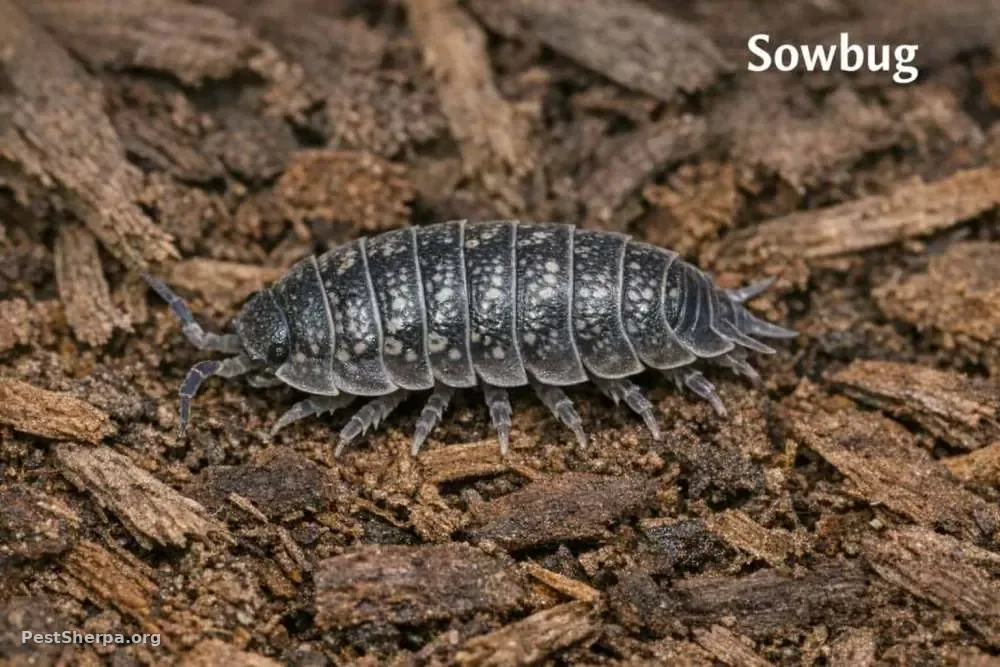
Updated for accuracy: Sowbugs are moisture-dependent isopods that usually live outdoors in damp, sheltered areas. Indoors, they are usually a nuisance signal of excess moisture, heavy harborage, or easy ground-level entry, not a true indoor infestation.
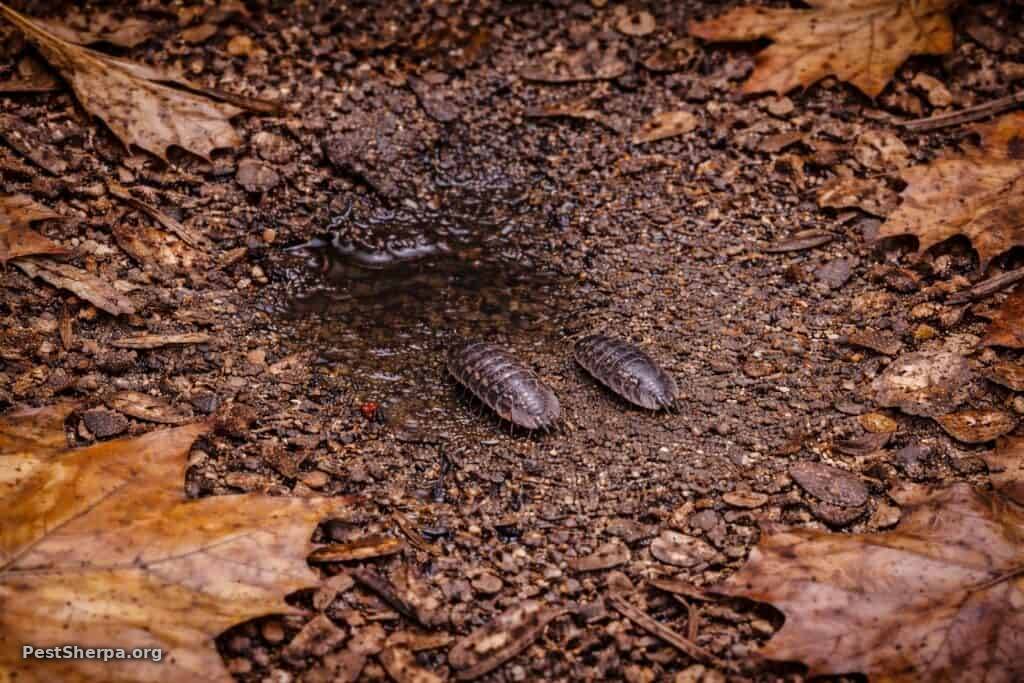
TL;DR
Sowbugs are small, gray, segmented crustaceans that stay tied to moisture. The most useful homeowner ID clue is that sowbugs stay relatively flat and have visible tail-like appendages at the rear. Unlike pillbugs (roly-polies), they do notroll into a tight ball.
In most homes, seeing sowbugs indoors means there is excess moisture or exterior conditions pulling them inside, not an indoor infestation.
The best control plan is to fix moisture, reduce outdoor hiding areas, and seal entry points. Sprays are secondary.
Jump to: Identification | Why It Matters | What To Do | When To Call a Pro | Lookalikes | References
Identification
Sowbugs are terrestrial crustaceans (not insects) in the order Isopoda. Adults are gray to slate gray, oval, segmented, and roughly fingertip-sized.
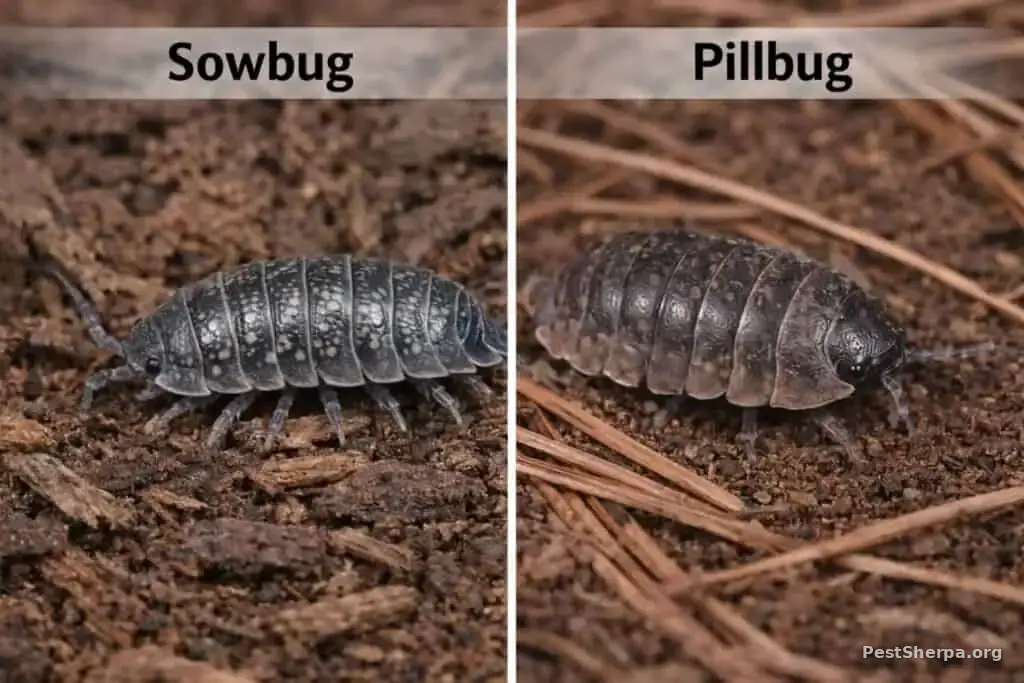
Key ID traits:
- Visible rear appendages (tail-like projections)
- Flattened body shape
- Cannot roll into a ball (unlike pillbugs)
- Strong association with damp environments
Common misidentifications:
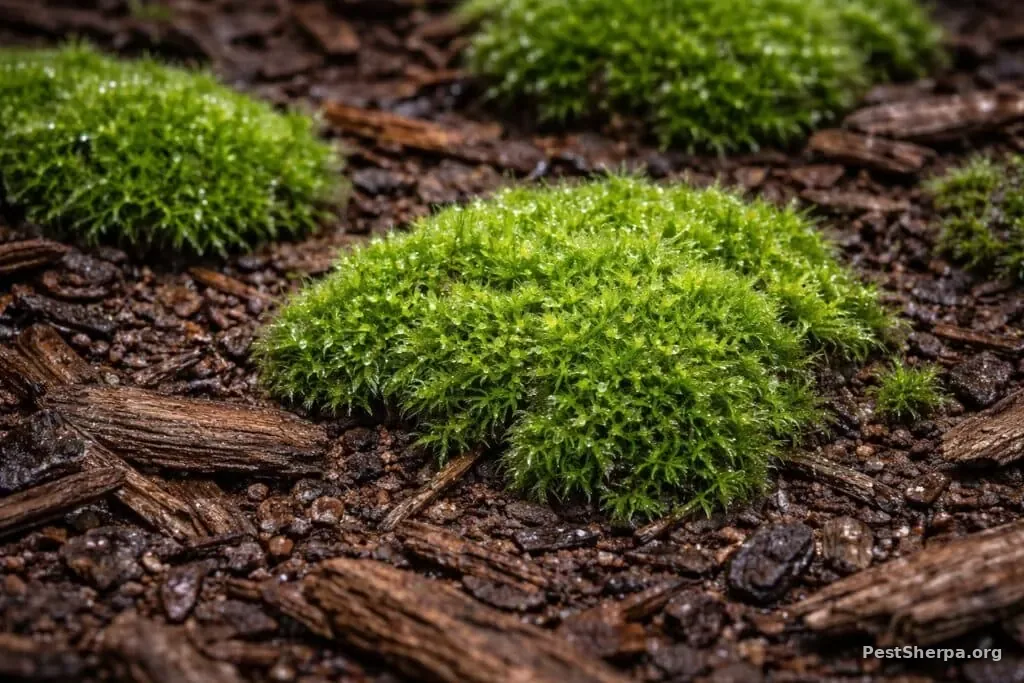
Where they are found: mulch beds, under stones, leaf litter, flowerpots, crawlspace edges, and damp shaded foundation areas.
In field inspections, sowbugs are almost always tied to mulch beds, crawlspace moisture, or debris against the foundation, not indoor breeding populations.
Why It Matters
Sowbugs are primarily nuisance pests and moisture indicators, not structural threats.
If you’re seeing them indoors, something around the structure is staying wet that shouldn’t be.
If conditions stay the same, you’ll continue to see them, because the environment is supporting them right next to the home.
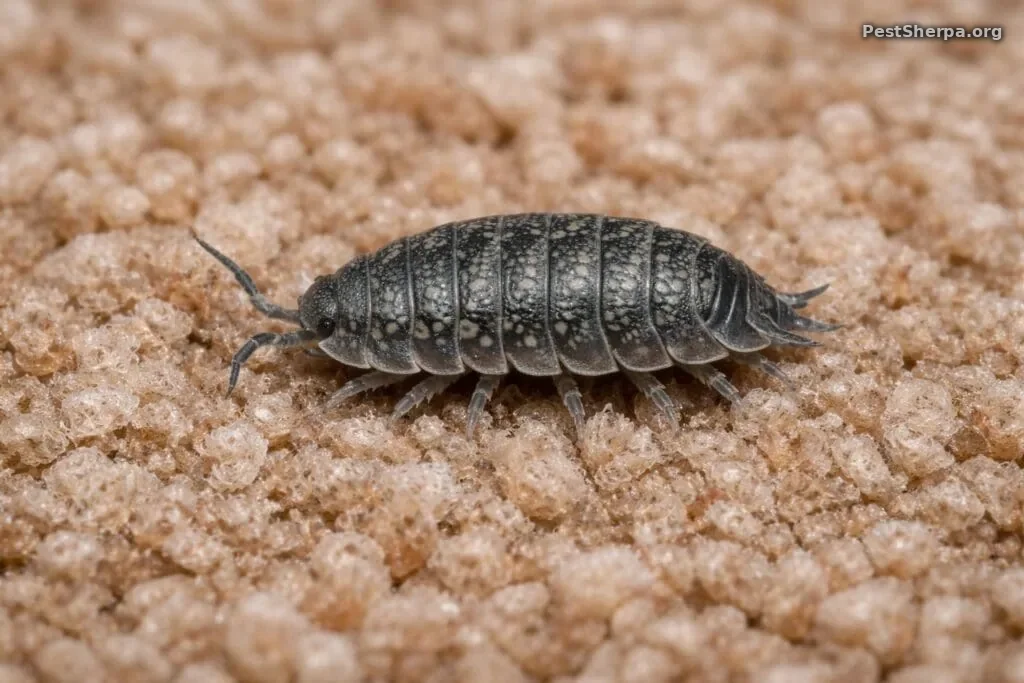
Outdoors, they are beneficial decomposers that feed mainly on decaying plant material. They may occasionally feed on seedlings, new roots, lower leaves, and fruits or vegetables touching damp soil. They do not damage wood, furniture, or the structure of your home. [UC IPM] [UMD]
What To Do
1. Fix moisture issues
- Repair leaks and drainage problems
- Improve grading away from the foundation
- Reduce irrigation near the home
- Ventilate crawlspaces and basements
2. Remove harborage
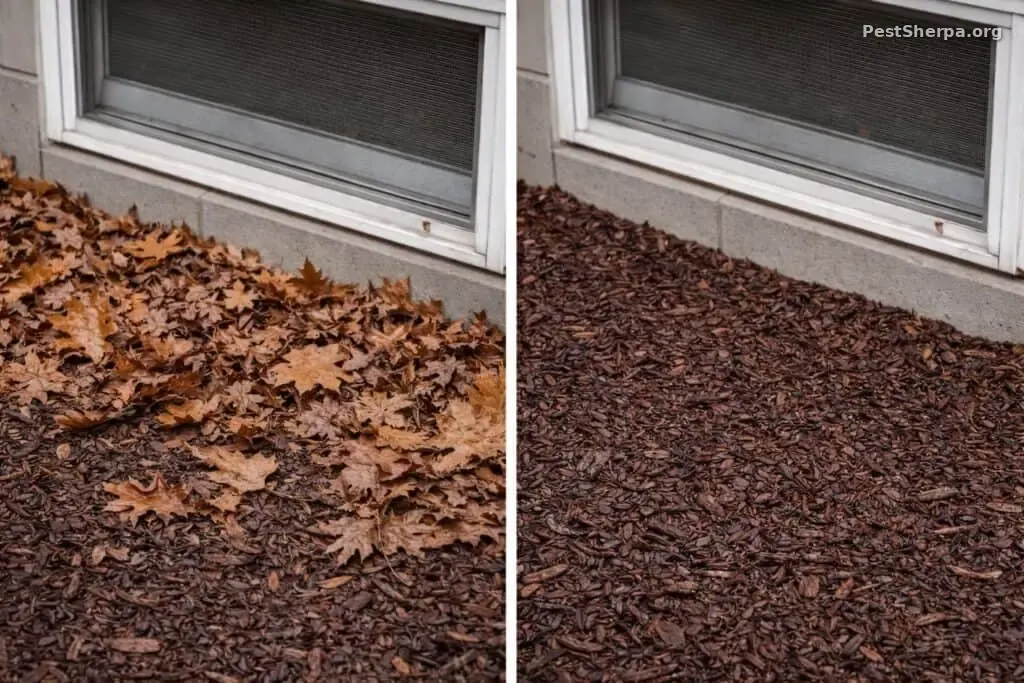
- Pull mulch and debris away from the foundation
- Remove leaf litter and clutter
- Elevate stored materials like wood or boards
3. Seal entry points
- Install door sweeps
- Seal cracks and gaps
- Fix thresholds and siding gaps
- Install weather stripping on doors and windows [UMD]
- Keep plants, mulch, and debris at least several inches back from the foundation, and even farther from doorways [UC IPM]
- Cut down outdoor lighting near doors, for example with motion-activated or yellow lights, which UC IPM suggests to draw fewer invertebrates toward entrances [UC IPM]
4. Indoor removal
Vacuuming is usually sufficient. Most sowbugs die quickly indoors due to dryness, so a few dead ones along a baseboard or in a basement doorway are expected after a wet spell. Sweep or vacuum them up, or carry live ones back outside. If you keep finding live ones in the same spot, that spot is staying damp; check under rugs, around floor drains, and along the wall where the floor meets the foundation. [UMD] [Utah State]
5. Pesticides (secondary)
Use only as a supplement to moisture and habitat correction, not a standalone solution. If you do use a product, choose one labeled for sowbugs and for the site, and read and follow the label exactly. Do not spray into drains, vents, or wall voids unless the label allows it, and keep children and pets off treated areas as the label directs. If sowbugs keep coming after a treatment, moisture and shelter still need work.
What wastes effort:
- Spraying visible individuals instead of fixing exterior moisture
- Ignoring mulch, debris, and drainage issues
- Treating sowbugs like an indoor infestation
If the insects are tiny and jumping, compare with springtails.
When To Call a Pro
Sowbugs alone rarely need a pro. They are a moisture signal, so a professional inspection is worth it when the sowbugs point to a bigger moisture or structural issue:
- Continued indoor activity after moisture fixes, especially live sowbugs found in numbers rather than a few dried ones
- Heavy populations around foundation or crawlspace
- Hidden drainage or moisture issues, such as a crawlspace, basement, or slab edge that stays damp
- Soft wood, musty odor, mold-like growth, or water staining near where they show up
- Exclusion is hard because of foundation cracks, grading, or recurring water intrusion
- Uncertain identification between pillbugs, millipedes, centipedes, or springtails.
A good inspector should look at the outside of the wall where you find them, the grading, gutters and downspouts, crawlspace ventilation, and door thresholds before recommending any spray. If they find a moisture problem, a plumber, gutter installer, or crawlspace contractor may fix more than a pest service will. See my moisture pest guide for related pests.
Lookalikes
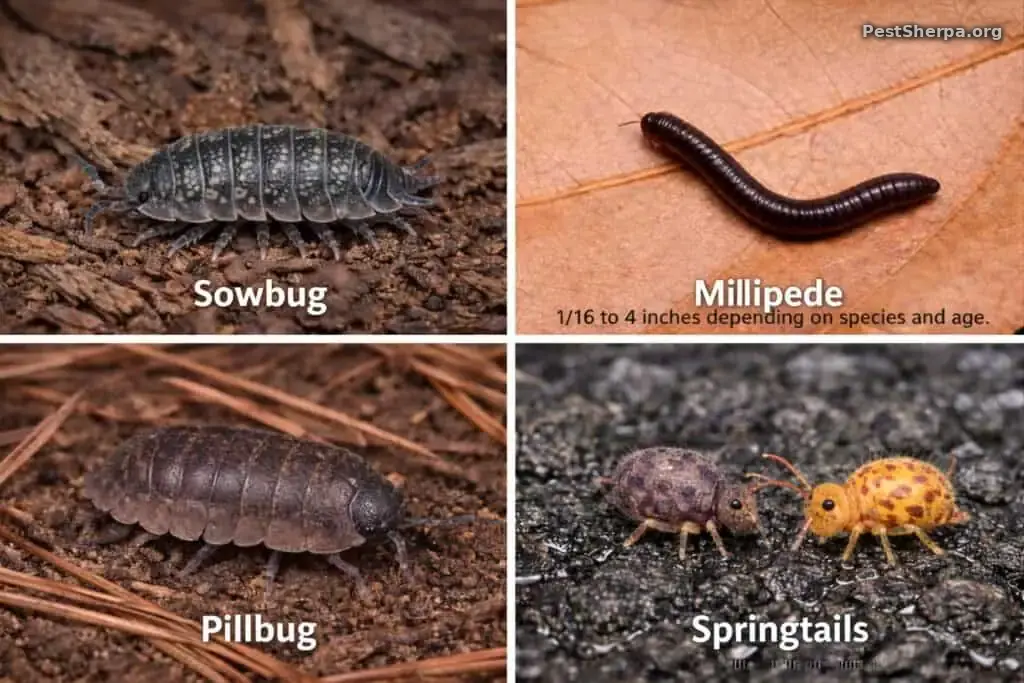
Sowbugs share damp spots with several other small, many-legged pests. The fix is about the same for all of them (dry it out, clear the foundation, seal the gaps), but getting the ID right keeps you from chasing the wrong problem. [UC IPM]
| Pest | Legs | Shape and size | Tell-tale behavior |
|---|---|---|---|
| Sowbug | 7 pairs | Oval, flatter back, two tail-like points at the rear; about 1/3 to 3/4 inch | Cannot roll up; scurries away |
| Pillbug | 7 pairs | Oval, more domed back, smooth rounded rear; about 1/3 to 3/4 inch | Rolls into a tight ball |
| Millipede | 2 pairs on most body segments | Long, round, wormlike; many are about an inch long | Slow; many curl into a spiral when they die |
| Centipede | 1 pair per body segment | Long, flattened; the house centipede is about an inch long with very long legs | Fast; hunts insects and spiders |
| Springtail | 3 pairs (insect-like) | Tiny, about 1/16 inch | Jumps when disturbed |
- Pillbugs are the closest match. Both are gray isopods with seven pairs of legs. Pillbugs roll into a ball and have a smooth, rounded rear. Sowbugs stay flat, cannot roll up, and have two small tail-like appendages. [UC IPM] [UMD]
- Millipedes have two pairs of legs on most body segments and a long, rounded body. Many common ones are dark brown and about an inch long. [Penn State]
- Centipedes are elongated and flattened with one pair of legs per segment. The house centipede is gray, about an inch long, with very long legs, and it feeds on insects and spiders. [UMD]
- Springtails are far smaller, about 1/16 inch, and jump using a tail-like spring tucked under the body. If the pests are tiny and jumping, they are not sowbugs. [UC IPM]
A quick count is the easiest field check: adult sowbugs and pillbugs have seven pairs of legs, insects have three, and centipedes and millipedes have many more. [UC IPM]
References
- UC Statewide IPM Program: Pillbugs and Sowbugs
https://ipm.ucanr.edu/home-and-landscape/pillbugs-and-sowbugs/ - University of Maryland Extension: Pillbugs and Sowbugs
https://extension.umd.edu/resource/pillbugs-and-sowbugs - Utah State University Extension: Isopods
https://extension.usu.edu/planthealth/ipm/notes_nuisance/isopods - UC IPM: Springtails
- Penn State Extension: Millipedes
- University of Maryland Extension: Centipedes
This article was written by Greg Baumann, founder of Pest Sherpa, and reflects more than 40 years of professional pest management experience.
About the Author

Greg Baumann | Pest Control Expert
Greg Baumann is the founder of Pest Sherpa and a Pest Control Expert with more than 40 years of professional pest management experience. His articles combine decades of field experience, technical expertise, and science-based guidance to help homeowners identify pests correctly, understand real-world risks, and make informed pest management decisions.
Mission: Identify the pest. Understand the risk. Stop the problem. Prevent the comeback. Know when it’s time to call a professional.