
Clover Mites: Identification, Causes, Prevention, and What To Do
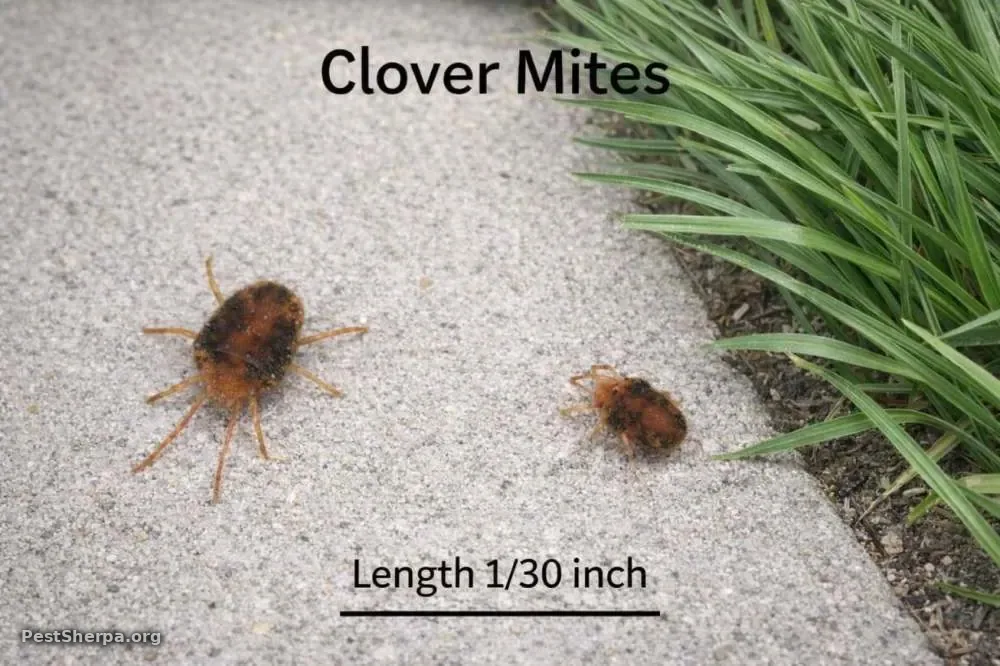
Clover mites are tiny plant-feeding arachnids that often appear on exterior walls, windowsills, siding, patios, and foundations during cool parts of the year. Their sudden appearance can be frustrating, especially when many tiny red or dark specks seem to show up at once.
The good news: clover mites do not bite people or pets, do not damage structures, and are not known to transmit disease. The main problem is nuisance activity and the reddish stain they can leave when crushed.
This guide explains how to identify clover mites, why they gather around homes, what conditions encourage them, how to remove them indoors without staining surfaces, and which prevention steps are most likely to reduce recurring problems.
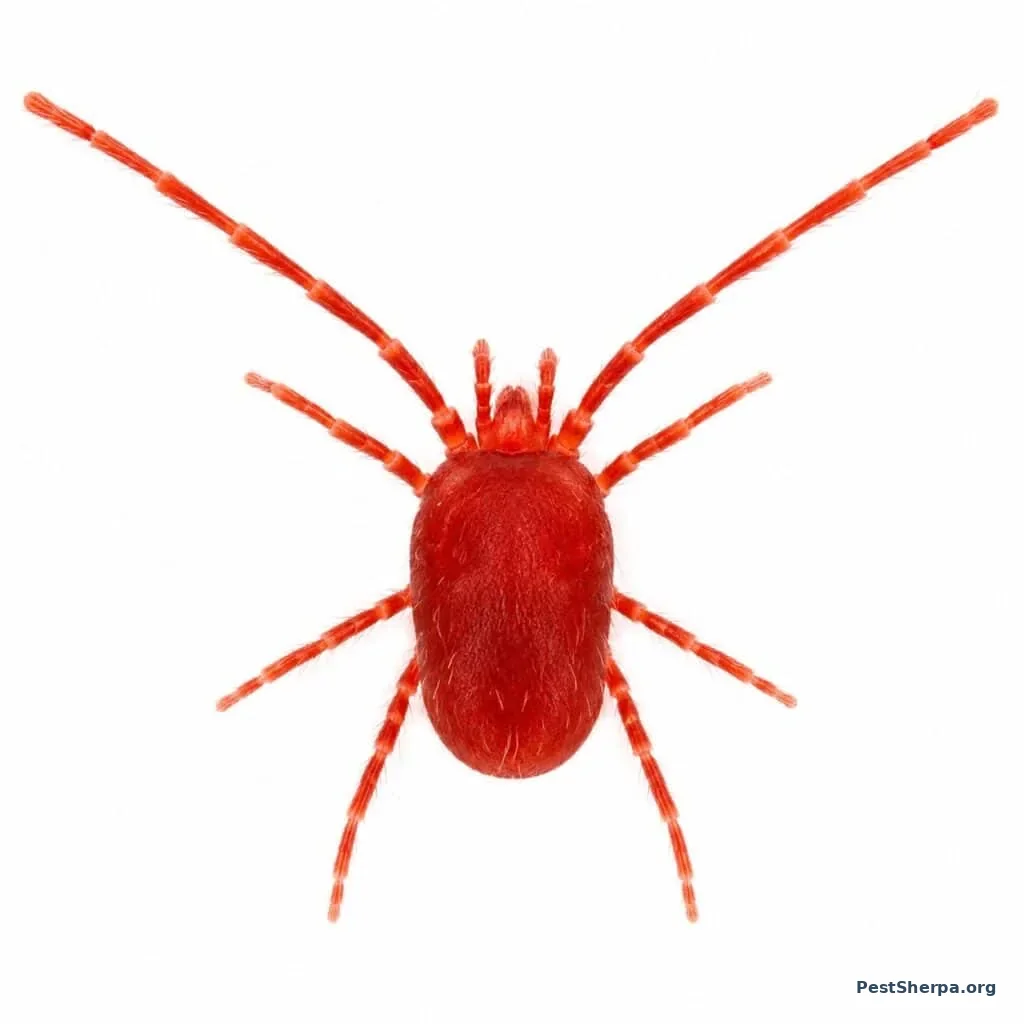
Clover mite on a light surface showing reddish body and long front legs.
TL;DR
Clover mites are tiny outdoor mites that feed on grasses, clover, and other plants. They often move onto homes in spring and fall, especially near sunny walls and dense vegetation.
They do not bite, infest stored food, reproduce indoors, or damage the house. Indoors, vacuuming is usually better than crushing them because crushed mites can leave red stains.
Long-term prevention focuses on reducing vegetation directly against the foundation, sealing small gaps around windows and doors, and avoiding lush over-fertilized turf right next to the building.
Quick Navigation
- Quick Identification
- What Clover Mites Mean Around a Home
- Are Clover Mites Harmful?
- Why Clover Mites Suddenly Appear
- Where To Inspect
- How To Remove Clover Mites Indoors
- Outdoor Prevention
- What Does Not Work Well
- Lookalikes and Common Misidentifications
- When Professional Help May Be Needed
- Frequently Asked Questions
- References
Quick Identification
Clover mites are very small mites, usually about 1/30 to 1/32 inch long. To the naked eye, they often look like tiny moving red, reddish brown, dark green, or dark brown specks.
| Feature | What To Look For |
|---|---|
| Body shape | Oval, tiny, mite-like body |
| Color | Reddish brown, dark red, dark green, or brown |
| Legs | Adults have eight legs |
| Key clue | Front pair of legs is much longer than the others and may look like antennae |
| Common locations | Sunny exterior walls, windowsills, foundations, patios, sidewalks, siding, and indoor window areas |
| Stain | Can leave a red or reddish-brown smear when crushed |
The long front legs are one of the best clues. Clover mites are arachnids, not insects, so adults have eight legs and no antennae. The front legs are often held forward, which is why they are sometimes mistaken for antennae.
What Clover Mites Mean Around a Home
Clover mites usually mean there is a favorable outdoor habitat nearby. They feed on plant fluids from grasses, clover, weeds, ground covers, and ornamental plants. They become a household nuisance when outdoor populations move onto buildings or enter through small gaps.
| What You See | Most Likely Meaning |
|---|---|
| One or two mites indoors | Accidental entry from outside |
| Many mites on sunny exterior walls | Outdoor population near the structure |
| Mites on windowsills | They entered through small gaps and moved toward light |
| Repeated spring or fall activity | Seasonal movement from turf, clover, or landscaping near the foundation |
| Activity near one side of the home | Likely source area nearby, often sun-warmed walls or dense vegetation |
Clover mites do not usually indicate a dirty home. They are more closely tied to outdoor vegetation, building gaps, seasonal weather changes, and sun-exposed surfaces.
Are Clover Mites Harmful?
Clover mites are mainly nuisance pests. They do not bite people or pets, infest stored food, damage wood, chew fabrics, or spread disease in homes.
The most common indoor issue is staining. When crushed, clover mites can leave red or reddish-brown marks on walls, curtains, carpets, painted surfaces, furniture, and window areas.
They also do not reproduce well indoors. Once inside, they usually die because indoor spaces do not provide the plant food and outdoor conditions they need.
Biology and Life Cycle
Clover mites belong to the mite group within the class Arachnida. Their commonly cited scientific name is Bryobia praetiosa, although clover mite taxonomy and related Bryobia species can be difficult to confirm without expert identification.
They develop through egg, larval, nymphal, and adult stages. Larvae have six legs, while nymphs and adults have eight. Eggs are often laid in protected outdoor cracks and crevices near buildings, under bark, near foundations, or in other sheltered areas.
Clover mites can reproduce without mating, a process called parthenogenesis. This helps explain why populations may build quickly when outdoor conditions are favorable.
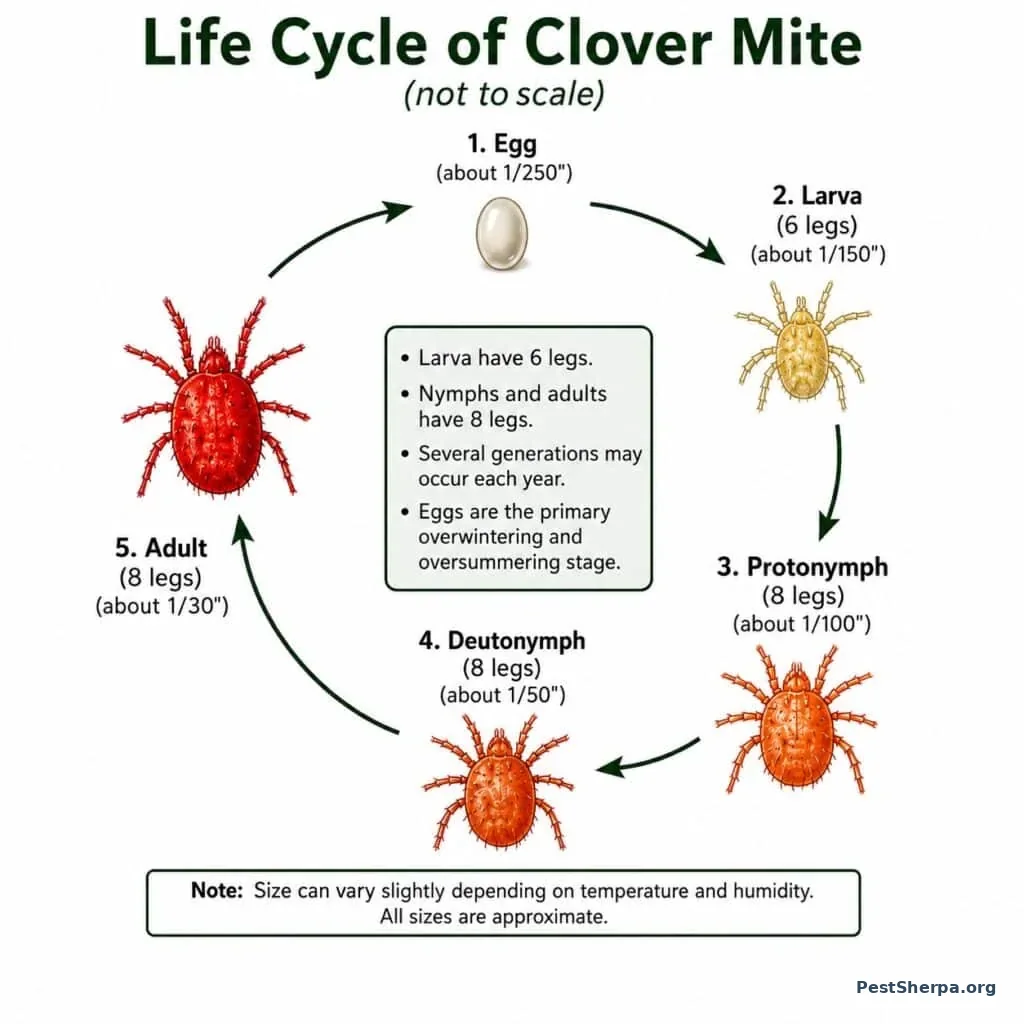
Clover mite life cycle from egg to larva, nymph, and adult.
When Clover Mites Are Most Active
Clover mites are most often noticed during cooler seasonal periods, especially spring and fall. In many regions, they are less active during very hot summer weather and may also be inactive during cold winter conditions.
Activity can vary by region. In some climates, clover mites are especially noticeable in early spring. In others, fall movement onto homes can be just as noticeable.
Why Clover Mites Suddenly Appear
Clover mite problems often seem sudden because many mites can move from outdoor habitat to visible surfaces at the same time. A wall, windowsill, or patio may look normal one day and be covered with moving specks the next.
Common triggers and contributing conditions include:
- Dense grass, clover, weeds, ivy, or ground cover touching the foundation
- Lush, well-fertilized turf near the building
- Sun-warmed south- or west-facing walls
- Seasonal temperature shifts
- Heavy rain, drying conditions, heat, or other weather changes
- Cracks around windows, doors, siding, trim, vents, and foundations
Clover mites do not need a large opening to get inside. Their tiny size allows them to enter through very narrow gaps around doors, windows, siding, and foundation joints.
Where To Inspect
Start outside. Indoor mites usually come from nearby outdoor populations, so the best clues are often around the building exterior.
Exterior Inspection Checklist
- Sunny exterior walls, especially south- and west-facing sides
- Window frames, sills, screens, and sliding door tracks
- Foundation cracks and expansion joints
- Patios, sidewalks, porch edges, and concrete seams
- Turfgrass, clover, weeds, ivy, and ground covers touching the structure
- Gaps under siding, trim, vents, and utility penetrations
Indoor Inspection Checklist
- Windowsills and window tracks
- Baseboards below active windows
- Sliding glass doors and thresholds
- Sunny rooms on the active side of the home
- Curtains, blinds, and nearby walls where stains may occur
If mites are concentrated around one window or one wall, focus prevention outside that same area first.
How To Remove Clover Mites Indoors
For indoor clover mites, removal should focus on avoiding stains and reducing entry points. Insecticides are usually not needed indoors.
1. Vacuum Instead of Crushing
Use a vacuum crevice tool to remove mites from windowsills, baseboards, curtains, and wall edges. Avoid wiping or smashing them on light-colored surfaces.
2. Use a Damp Cloth Carefully
On hard surfaces, a damp cloth or sponge may help remove mites, but wipe gently so they are not crushed into paint, fabric, or porous materials.
3. Check the Entry Area
After removing visible mites, inspect the closest window, door, siding edge, or foundation crack. Indoor removal will be temporary if the outdoor entry route remains open.
Outdoor Prevention
The most reliable clover mite prevention is habitat modification near the structure. The goal is to make the immediate foundation area less favorable and harder for mites to cross.
Create a Vegetation-Free Border
Maintain a vegetation-free strip around the foundation where practical. Many extension recommendations suggest a strip of bare soil, gravel, stone, or mulch between turf and the building. A commonly recommended range is about 18 to 24 inches, but local landscape design, drainage, and climate may affect what is realistic.
Manage Turf and Ground Covers
- Keep grass, clover, ivy, and dense ground covers from touching the foundation.
- Avoid over-fertilizing turf immediately next to the home.
- Trim vegetation away from siding, vents, and window frames.
- Correct irrigation patterns that keep foundation plantings overly lush.
Seal Common Entry Points
- Repair damaged screens and door sweeps.
- Seal gaps around window and door frames.
- Close cracks in foundations, trim, siding, and expansion joints where appropriate.
- Check utility penetrations, vents, and cable entry points.
These exclusion steps can also help with other occasional invaders such as springtails, pillbugs, and boxelder bugs.
Pesticide Notes and Safety
Pesticides are not always necessary for clover mites. Indoor spraying is rarely the best first step because mites do not reproduce indoors and dead or crushed mites may still need to be removed.
If an exterior pesticide is considered for a severe or recurring problem, use only products labeled for the site and pest, and read and follow the full label directions. Keep treatments away from children, pets, food-contact surfaces, drains, and areas where runoff could occur. Avoid improvised mixtures or applying products to surfaces not listed on the label.
For most homes, habitat reduction, sealing gaps, and vacuuming visible mites are safer and more practical first steps.
What Does Not Work Well
- Crushing mites: this can leave red stains.
- Only treating indoors: the source is usually outdoors.
- Ignoring vegetation against the foundation: dense plant growth often supports repeat problems.
- Relying on foggers or bug bombs: these do not fix outdoor habitat or entry points.
- Assuming every tiny red mite bites: clover mites do not bite, but some lookalikes can irritate skin or have different habits.
Lookalikes and Common Misidentifications
Many tiny mites and small insects are difficult to identify without magnification. Use behavior, location, and body features to narrow the possibilities.
| Lookalike | How It Differs | Helpful Next Step |
|---|---|---|
| Spider mites | Usually associated with plant damage, leaf stippling, and webbing on plants. | Inspect nearby houseplants, shrubs, and garden plants. |
| Chiggers | Larval mites associated with itchy skin reactions after outdoor exposure. | Consider recent time in tall grass, brush, or weedy areas. |
| Bird mites | Often linked to bird nests in vents, eaves, attics, or exterior fixtures. | Check for abandoned bird nests near the affected room. |
| Springtails | Often jump when disturbed and are associated with moisture. | Inspect for damp mulch, wet soil, leaks, or moisture near foundations. |
| Tiny ants or other insects | Have six legs and segmented insect bodies instead of eight-legged mite bodies. | Use a hand lens or clear photo for identification. |
If the pests are biting, jumping, coming from a bird nest, or damaging plants, they may not be clover mites.
When Professional Help May Be Needed
Professional help may be worth considering when the mites return every season in large numbers, the source area is hard to locate, or exclusion and landscape changes are difficult to complete safely.
It may also be useful when identification is uncertain. Some mites require different responses, especially if people are reporting bites or if activity may be linked to bird nests, rodents, stored products, or plant damage.
A careful inspection should come before treatment. The most effective plan usually identifies where mites are coming from, reduces habitat near the structure, closes entry points, and uses pesticides only when they are appropriate and labeled for the situation.
Frequently Asked Questions About Clover Mites
What causes clover mites in houses?
Clover mites enter homes when outdoor populations build up near the structure and move through small gaps around windows, doors, siding, or foundations. Dense vegetation and lush turf directly against the home can increase the chance of indoor activity.
Do clover mites bite?
No. Clover mites do not bite people or pets. If you are seeing tiny pests and also experiencing bites or skin irritation, consider a different pest or another source of irritation.
Why are clover mites on my windowsill?
They often enter near windows or doors and move toward light. The windowsill is usually where they collect, not necessarily where they started outdoors.
How do I remove clover mites without staining surfaces?
Vacuum them with a crevice tool instead of crushing them. If wiping is needed on a hard surface, use a damp cloth gently and avoid smearing them into porous or light-colored materials.
Will clover mites go away on their own?
Indoor mites often die on their own because they do not have suitable food indoors. However, recurring activity usually continues until outdoor habitat and entry points are addressed.
Do clover mites damage lawns or plants?
They feed on plant fluids and can sometimes cause silvery or bronzed discoloration on turf or plants, especially when populations are high. Around homes, they are usually more of a nuisance than a serious plant-damage problem.
Are clover mites the same as spider mites?
No. Clover mites and spider mites are both mites, but they have different habits and clues. Spider mites are more often noticed because of plant damage and webbing, while clover mites are often noticed crawling on walls, windows, and foundations.
References
- University of Minnesota Extension: Clover Mites
- Penn State Extension: Clover Mites
- UF/IFAS Extension: Clover Mite, Bryobia praetiosa Koch
- University of Kentucky Entomology: Clover Mites
- NC State Extension Publications: Clover Mites in Turf
- Clemson Cooperative Extension: Clover Mites
This article was written by Greg Baumann, founder of Pest Sherpa, and reflects more than 40 years of professional pest management experience.
About the Author

Greg Baumann | Pest Control Expert
Greg Baumann is the founder of Pest Sherpa and a Pest Control Expert with more than 40 years of professional pest management experience. His articles combine decades of field experience, technical expertise, and science-based guidance to help homeowners identify pests correctly, understand real-world risks, and make informed pest management decisions.
Mission: Identify the pest. Understand the risk. Stop the problem. Prevent the comeback. Know when it’s time to call a professional.