
Wood-Boring Beetle Guide: Identification, Damage Risk, and What to Do
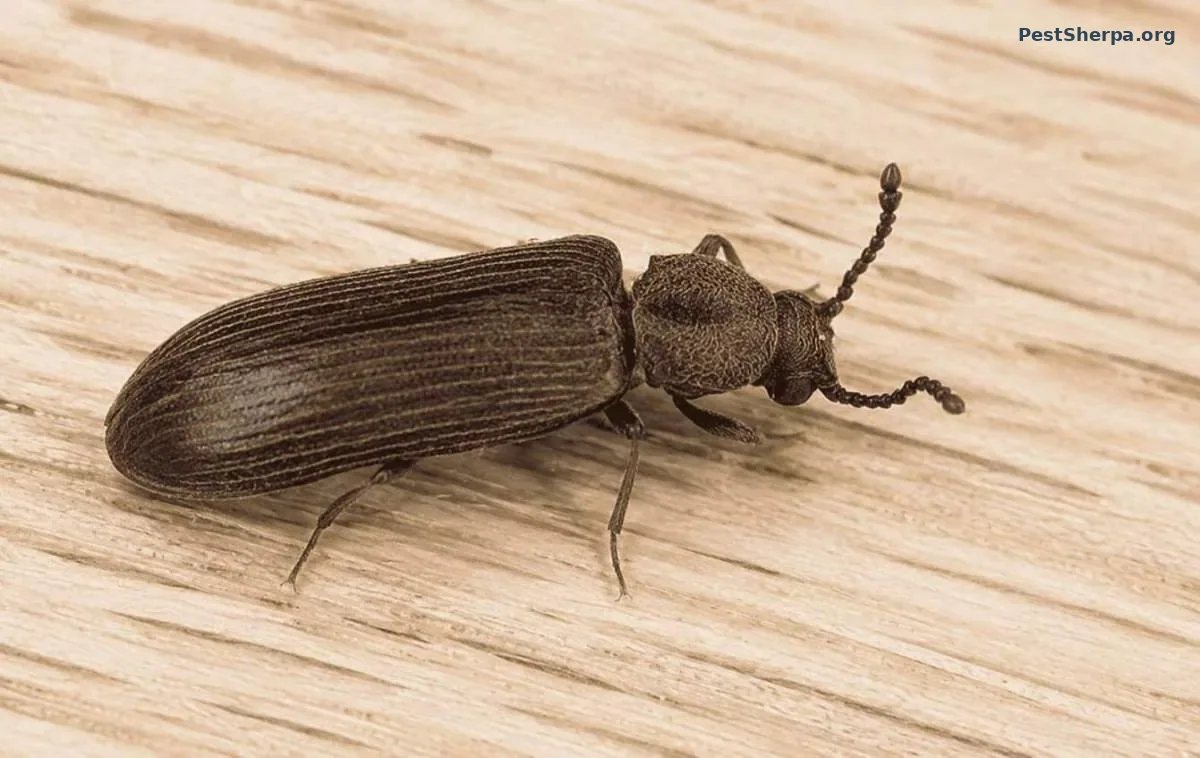
Wood-boring beetles damage wood in use: hardwood floors, furniture, and trim, or pine studs and joists. This hub covers two members: lyctid (true) powderpost beetles (now usually Bostrichidae, subfamily Lyctinae; formerly Lyctidae) and the old house borer (Hylotrupes bajulus, Cerambycidae). They are not termites; mud tubes or hexagonal ridged pellets point elsewhere. See the termite guide.
TL;DR: Identify the Borer Before You Treat
- Wood type first: pinhead holes and talc powder in hardwood or bamboo point to lyctids; oval holes and rasping in pine framing point to old house borers
- Damage is slow (UKY, UF/IFAS, UMD): confirm the insect and whether activity is current
- Lyctids need starch in hardwood sapwood, not cellulose; pine joists are not usual hosts
- The name old house borer is misleading: activity is often noticed in relatively new construction
- Do not treat from one hole
Start here based on what you’re seeing:
- Pinhead holes and flour-like dust on hardwood or bamboo
- Oval holes, barrel-shaped pellets, or rasping in pine framing
Not termites? Check the evidence: Mud tubes or soil-lined galleries point subterranean. Hard, ridged, six-sided pellets under tiny kick-outs point drywood termites. Flour-like powder from pinhead round holes in hardwood or bamboo points lyctid powderpost beetles. Oval, often ragged holes about ¼ to ⅜ inch with barrel-shaped pellets (or rasping) in pine framing point old house borers. Jump to the exit-hole / frass chart below before you treat. [UC IPM] [UC drywood] [UKY] [UKY OHB]
Species Guides
Species pages own full Identify and What To Do. This hub is the wood-type fork.
Lyctid Powderpost Beetles: ID, Damage, and What to Do
Old House Borers: Identification, Damage Signs, and What to Do
Quick Navigation
- How to Identify
- Damage Risk
- What To Do
- When to Call a Professional
- Compare Lyctid vs Old House Borer
- Exit hole & frass chart
- Common Questions
- References
How to Identify
Start with wood species, then holes and frass. Pinholes in oak flooring point toward lyctids; oval holes in pine joists toward old house borers, not the reverse (UKY). “Powderpost” is not one insect: lyctid, anobiid, and false powderpost beetles differ in host and moisture. In much of the East, the usual crawlspace “powderpost” of damp softwood framing is an anobiid (deathwatch), not a lyctid (NCSU). Full Identify and What To Do live on the species pages.
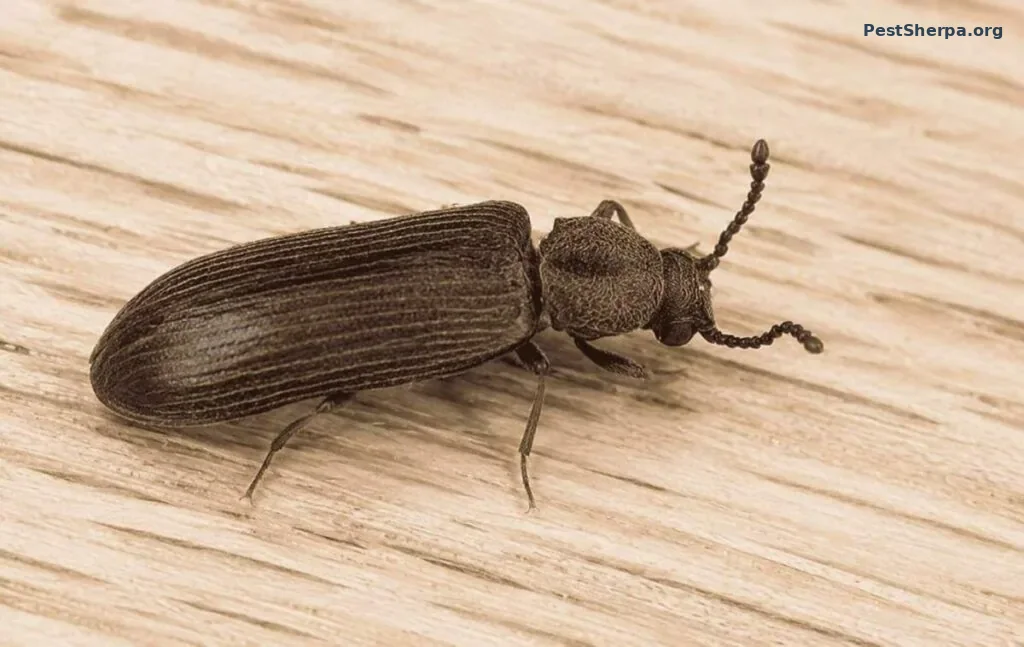
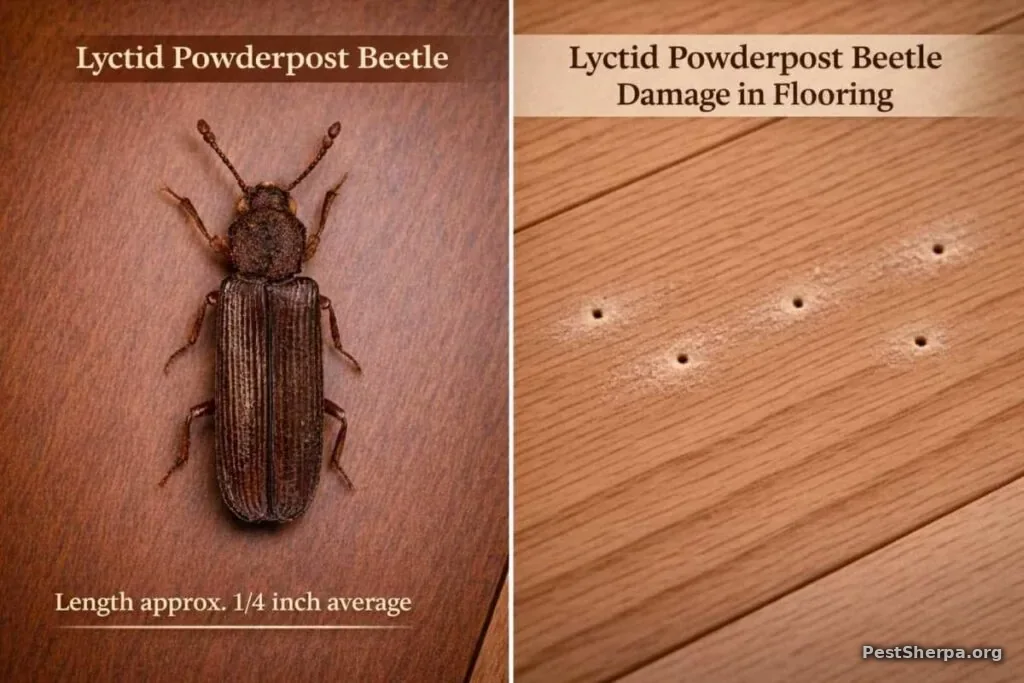
Lyctid adults are small and elongate, head visible from above, two-segmented club (UKY 1/16 to 1/4 inch). Round pinhead holes (~1/32 to 1/16 inch). UC IPM: only the tip of a click-pen fits. Frass is talc-like, not the ridged hexagonal pellets drywood termites leave.
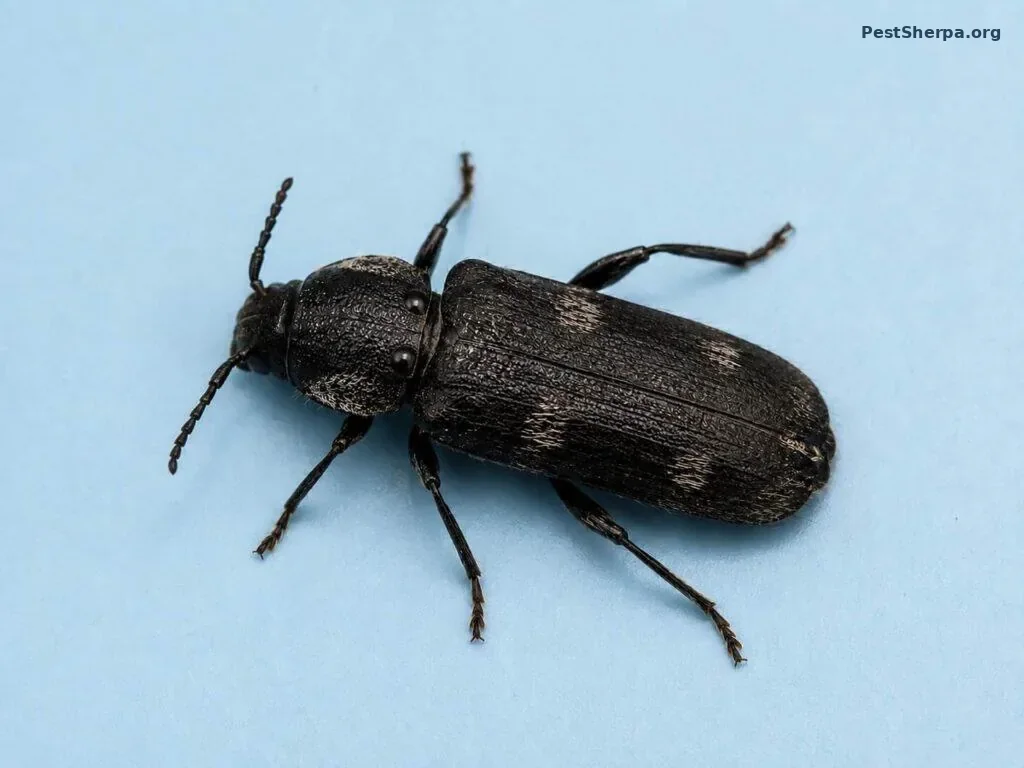
Old house borer adults are larger longhorns with two shiny black knobs on the pronotum (UKY; Penn State). Oval holes, often ragged, about 1/4 to 3/8 inch. Frass includes barrel-shaped pellets; galleries look rippled like beach sand.
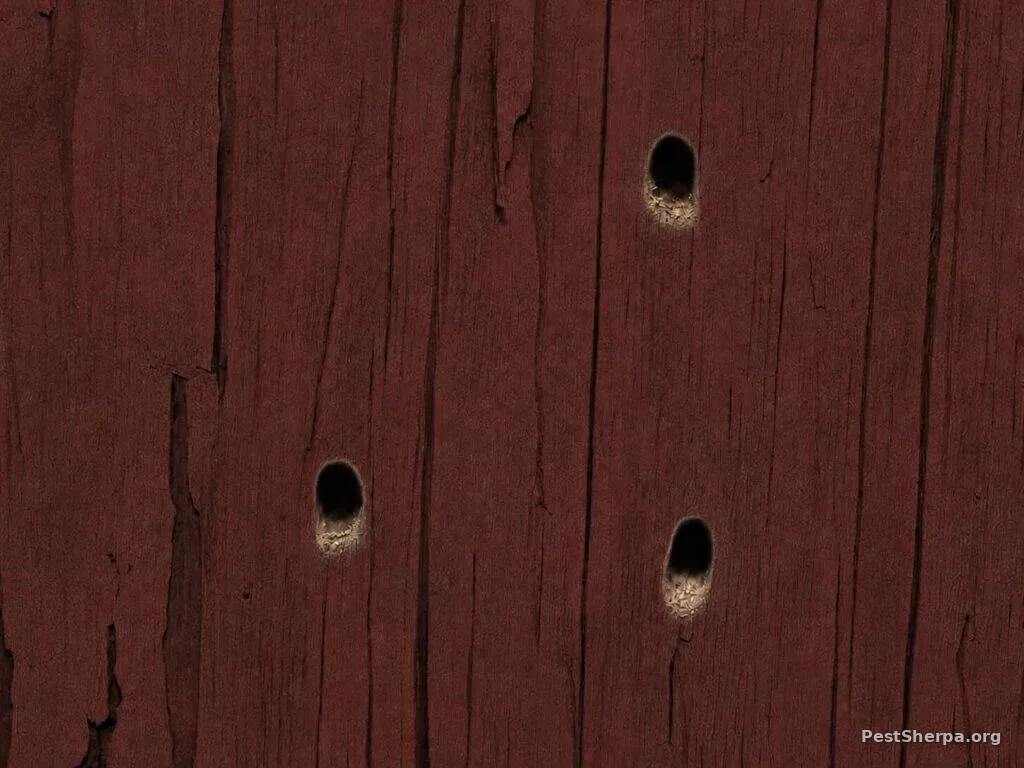
Fresh sawn-color powder supports current emergence; yellowed or caked powder may be old. Vibration can dump old gallery powder (UKY; Iowa State). Do not treat from one hole.
Damage Risk
This is a structural and finished-wood problem, not a kitchen nuisance. Lyctids reduce hardwood sapwood (floors, furniture, trim, bamboo) to flour-like frass and usually skip pine framing because larvae live on starch, not cellulose (UKY; UF); old house borers tunnel softwood studs, joists, beams, and log walls and, in damp poorly ventilated spaces, can reduce members to a thin shell (UKY). Confirm which wood is involved before assuming the house is failing.
What To Do
Note wood type, holes, and frass. Photograph holes, dust, and any adult. Sources agree damage is slow: take time to confirm which insect and whether activity is current (UKY; UF; UMD). Do not treat from one hole: fresh powder the color of newly sawn wood is a better clue than a single exit. Probe framing; NC State: a contractor or structural engineer if strength is in doubt. Localized boards can be replaced. Paint or varnish can block new lyctid eggs, but larvae already inside may still emerge. Keep crawlspaces dry. Species pages cover replacement and professional options.
When to Call a Professional
- Damage in framing, joists, beams, sills, or log walls, or wood that probes through
- You cannot tell beetle versus termite, or active versus old (UKY: this is often missed). If it is termites, use the Termite Control hub for treatment systems
- Rasping in walls plus oval holes in softwood. UMD: weeks or months to evaluate is acceptable
Greg Baumann insight: Beetle damage usually builds slowly. Extension sources say you can take time to confirm the insect and whether activity is current (UMD notes weeks or months of evaluation can be reasonable). Call a licensed professional when framing, joists, beams, sills, or log walls are involved; when wood probes soft or hollow; when you cannot tell beetle frass from termite tubes or drywood pellets; or when oval holes plus rasping show up in softwood. Localized hardwood boards often route to the lyctid guide (replace / finish / monitor). Structural softwood routes to the old house borer guide, and NCSU reminds us surface holes alone do not prove how much strength remains. [UMD] [UKY] [NCSU]
Compare Lyctid vs Old House Borer
Lyctid (true) powderpost beetles
Lyctids are tiny hardwood-sapwood pests: pinholes, talc frass, visible-headed adults to about 1/4 inch. They do not digest cellulose. UF usually cites seasoned wood less than five years old; MSU, most heavy infestations less than ten. Reinfestation is possible on unfinished new hardwood but often limited once sealed.
Old house borer (Hylotrupes bajulus)
Old house borers are large longhorns of structural softwood: oval holes (~1/4 to 3/8 inch), barrel-shaped pellets, possible rasping. They will not attack oak, ash, maple, or poplar furniture (UKY). MSU: they can reinfest exposed indoor softwood if moisture is suitable. Penn State often notes activity four to seven years after construction; UKY/MSU: most common under about 10 years old. UKY: in the U.S. this beetle does not infest firewood; UMD: a few indoor adults may have arrived on firewood or through an opening.
Exit hole & frass chart: lyctid vs old house borer
Use wood type first, then hole shape and what the dust feels like. This labeled HTML chart is the hub answer for exit-hole / frass ID. Keep the Greg photos already on this page; do not treat a remounted collage as the chart. (Not to scale.)
| Cue | Lyctid powderpost | Old house borer |
|---|---|---|
| Wood | Hardwood sapwood & bamboo (floors, furniture, trim), not typical pine studs | Softwood framing (pine, fir, spruce): studs, joists, beams, log walls |
| Exit holes | Round, pinhead size (~1/32 to 1/16 in). UC: only the tip of a click-pen fits | Oval, often ragged (~1/4 to 3/8 in) |
| Frass | Very fine flour / talc: no hard pellets | Powder plus tiny barrel-shaped pellets |
| Other field cues | Adults small, elongate, head visible from above; starch feeders, not cellulose digesters like termites | Possible rasping/clicking; galleries often look rippled like beach sand; two shiny knobs on adult pronotum |
| Active vs old | Fresh powder the color of newly sawn wood supports recent emergence; yellowed, caked, or cobwebbed powder (or vibration dumps) may be old. Clean, mark holes, and recheck. Do not treat from one hole alone. | |
| Termite mix-up | Not mud tubes. Drywood pellets are hard, ridged, and six-sided, not talc flour. If tubes or hexagonal pellets are present, open the termite guide / drywood guide before beetle treatment. | |
Greg Baumann insight: Homeowners often call every hole “termites” or every powder “powderpost.” Start with the wood. Oak flooring with flour dust is a different insect, and a different fix, than pine joists with oval exits and a rasping sound. Photograph the holes and the frass, clean a small area, and watch whether fresh powder returns before anyone sells you a whole-house treatment.
Common Questions
- Is this an old-house problem? Not necessarily. Lyctids usually involve newer hardwood; old house borers are often noticed in relatively new construction.
- Treat from one hole? No. Confirm activity first. Damage is slow; species pages cover options if infestation is current.
Is this powder from beetles or drywood termites? Rub a pinch between your fingers. Lyctid powder feels like flour or talc. Drywood termite droppings are hard pellets, often described as pepperlike, with ridges / six sides under a close look. Old house borer frass is powdery but usually includes tiny barrel-shaped pellets, and the exit holes are larger ovals in softwood. Mud tubes mean subterranean termites, not beetles. Compare the chart above, then the drywood and termite guides if pellets or tubes are present. [UC IPM] [UC drywood] [UKY]
How do I tell lyctid pinholes from old house borer exits? Measure and feel. Lyctid exits are round and pinhead-small (about 1/32 to 1/16 inch; UC: only a click-pen tip fits) in hardwood, with talc frass. Old house borer exits are oval, ~1/4 to 3/8 inch, often ragged, in softwood, with powder that includes barrel pellets, and sometimes a rasping sound in walls. Full detail: lyctid · old house borer. [NCSU] [UMD] [UKY]
References
- UC Statewide IPM: Pest Notes: Wood-Boring Beetles in Homes (UC ANR 7418)
- University of Kentucky Entomology: ENTFACT-616: Powderpost Beetles
- University of Kentucky Entomology: ENTFACT-653: Old House Borer
- UF/IFAS Featured Creatures: EENY283/IN559: Southern Lyctus Beetle, Lyctus planicollis
- UF/IFAS EDIS: ENY-266/IG119: Powderpost Beetles and Other Wood-Infesting Insects
- NC State Extension: Powderpost Beetles and Wood-Inhabiting Fungi
- UC Statewide IPM: Drywood Termites
- University of Maryland Extension: Old House Borer
- MU Extension: Wood-Boring Beetles (G7422)
- Penn State Extension: Old House Borer
This article was written by Greg Baumann, founder of Pest Sherpa, and reflects more than 40 years of professional pest management experience.
About the Author

Greg Baumann | Pest Control Expert
Greg Baumann is the founder of Pest Sherpa and a Pest Control Expert with more than 40 years of professional pest management experience. His articles combine decades of field experience, technical expertise, and science-based guidance to help homeowners identify pests correctly, understand real-world risks, and make informed pest management decisions.
Mission: Identify the pest. Understand the risk. Stop the problem. Prevent the comeback. Know when it’s time to call a professional.