
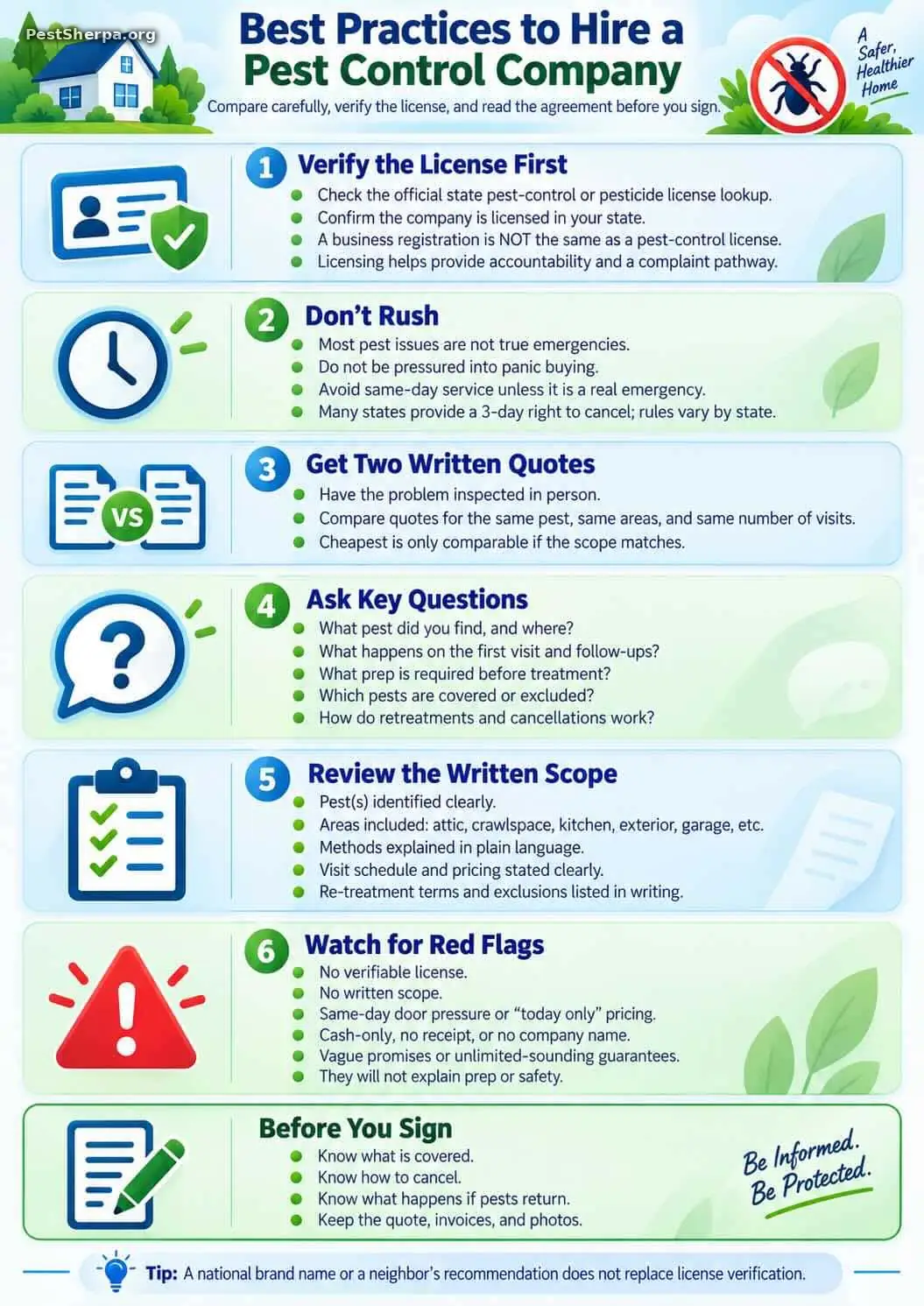
What to Look for When Hiring a Pro for Bed Bugs
Hiring help for bed bugs is one of the most consequential pest decisions a homeowner can make. Bed bugs hide in seams and cracks, reproduce with abundance of eggs, and often survive casual untargeted sprays that never reach the insect. The U.S. Environmental Protection Agency (EPA) advises getting a pest management professional involved as soon as possible when you plan to hire, using integrated pest management (IPM): inspection, nonchemical tools, targeted pesticides when needed, and monitoring, and expecting multiple visits. University of California Statewide IPM (UC IPM) is equally direct: confirmed infestations should be managed by trained professionals. This guide walks you through confirmation, DIY limits, evidence-based methods, credentials, bids, treatment day, and aftercare, so you hire for a plan, not a miracle spray. As with any pest issue, the first and most difficult goal is to stay calm. Bed bugs can be controlled in your environment and while the idea might be repulsive, while you want quick action, it is not a life threatening situation.
Confirm the Problem With Bugs or Signs, Not Bites Alone
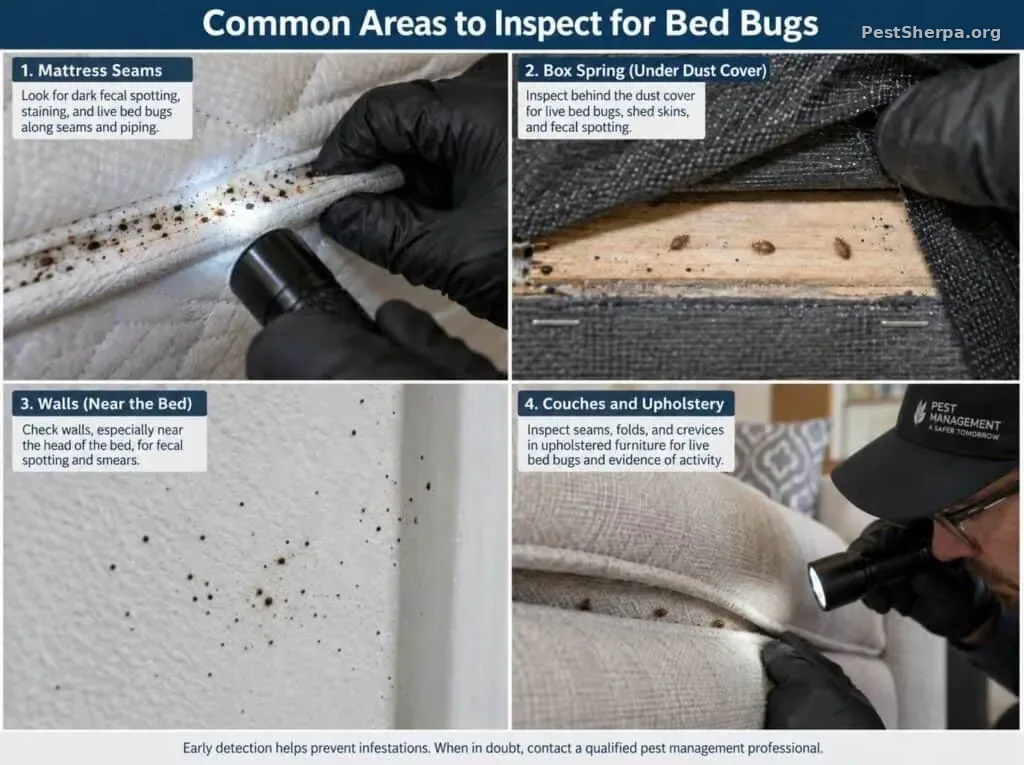
Welts and itch are not a diagnosis. UC IPM states that bites alone are not diagnostic; confirm bed bugs only by finding insects or their signs: fecal spots, blood spots on sheets, egg cases, and shed skins (exuviae). The Centers for Disease Control and Prevention (CDC) notes that bite marks may take as long as 14 days to appear in some people, and that you should also look for exoskeletons and rusty-colored blood spots. University of Kentucky Extension (Michael Potter) has reported that roughly 30% of people in studied infested apartments do not react even when bitten repeatedly, so “I don’t itch” does not rule bed bugs out. This inconsistency in reaction leads many people to believe that any reaction occurred the night before and may falsely blame a hotel when the bites may have occurred days before and even in another city.
For identification, habits, and look-alikes, use our bed bug identification and habits guide. On disease questions, see Can Bed Bugs Spread Disease? CDC, UC IPM, and NPMA as well as countless other credible source materials agree bed bugs are not known to spread human disease the way mosquitoes or ticks do, though scratching can lead to secondary skin irritation and sleep loss is real.
Where to look first
- Mattress seams, box springs (including under the dust cover), bed frames, and headboards: UC IPM notes that a large share of bugs are found in or near the bed.
- CDC guidance: search dresser tables, cracks and crevices, and behind wallpaper; bugs tend to live within about eight feet of where people sleep, though they can travel farther.
- Collect clear photos or specimens for Extension or a licensed professional: Oklahoma State University Extension emphasizes that skin irritation alone is not confirmation.
- Carpet beetle larvae, fleas, bat bugs, and even lint can confuse the eye; when unsure, get an ID rather than fogging “just in case.” Also be aware that in multifamily housing including hotels, dorms, etc., neighboring units may be the source of bed bug activity.
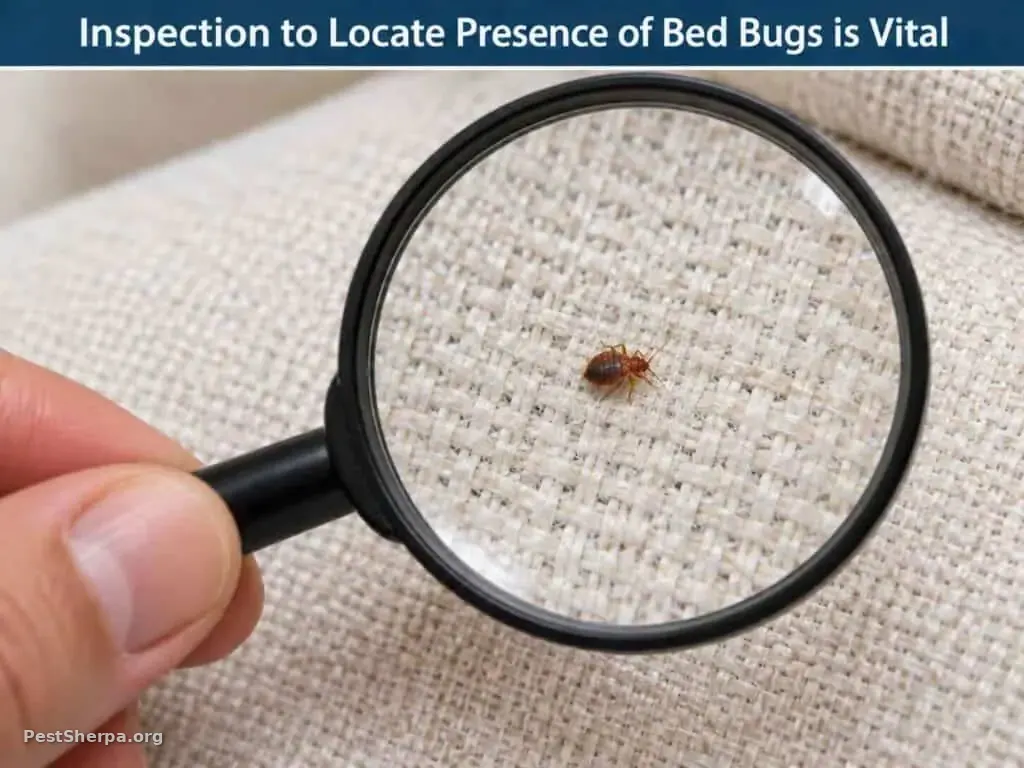
Proper and careful inspection is the key to developing an efficient and timely control plan.
DIY Versus Professional Control
EPA’s hiring guidance is clear: delay while you experiment can help an infestation spread. UC IPM and University of Minnesota Extension both steer confirmed infestations toward reputable, experienced companies. UMN notes that bed bugs are very difficult to control on your own and strongly discourages DIY insecticides and foggers. NPMA’s PestWorld FAQ likewise says DIY methods are rarely successful and that a licensed professional should build a tailored plan after inspection.
Reasonable homeowner support roles, while you arrange professional service, include targeted vacuuming of seams (seal and discard vacuum contents outdoors), hot wash and high-heat drying of washables, bed-bug-rated mattress and box-spring encasements, interceptor monitors under furniture legs, and careful decluttering. Oklahoma State University Extension warns: do not move belongings into other rooms before treatment; that spreads bugs to clean spaces and neighbors. If you are a renter, notify the landlord promptly; multi-unit buildings often need adjacent-unit inspection.
Decision rules that match the evidence
- Suspect bites only, no insects or signs → seek ID (Extension photos/specimen) before treating; do not fog preventively.
- Live bugs or clear signs confirmed → prefer professional IPM promptly (EPA, UC IPM, UMN, NPMA).
- Multi-room spread, failed DIY sprays/foggers, or multi-unit housing → stop chemical cycling and hire a bed-bug-experienced firm.
- Cost barriers → use nonchemical reduction steps from Extension as containment, not as a promise of full eradication.
What Good Treatment Means (IPM Toolkit)
Good treatment is a written plan: inspect and map harborages, combine nonchemical tactics with judicious insecticides when needed, and monitor until visuals and interceptors stay clear. Pesticides alone will not finish the job. That principle appears across UC IPM, EPA, and Rutgers New Jersey Agricultural Experiment Station guidance.
Evidence-aligned methods
- Professional whole-room heat. Protocols are described differently by source: attribute, do not merge. University of Minnesota Extension: bugs and eggs die within about 90 minutes at 118°F or immediately at 122°F, with room air often held around 135 to 145°F for roughly 6 to 8 hours with sensors throughout. Note these temperatures are not just air temperatures but must be the “core” temperatures of inside mattresses and other areas where bed bugs are present. UC IPM describes commercial heat as at least 140°F for 2 hours or 130°F for 3 hours (citing a minimum lethal temperature around 113°F). University of Kentucky describes specialized heating around 120 to 130°F with sensors. Heat is not “turn up the thermostat” or ordinary space heaters: EPA and UKY both reject that approach. Heat has no residual; many firms add perimeter insecticides afterward (UMN).
- Laundry / dryer heat. UC IPM: hottest dryer setting for at least 10 to 15 minutes. UKY: medium-high for about 10 to 20 minutes. UMN: dryer alone on high heat for about 30 minutes can kill bugs on items the fabric can tolerate. Follow care labels.
- Steam. Effective when heat contacts insects (UC IPM, Rutgers, UMN). UMN prefers commercial steamers with surface temperatures in the 160 to 180°F range, not carpet cleaners or clothing steamers that blow bugs away. This can be used with other methods or the steam just reach all areas where bed bugs are hiding.
- Freezing items (not houses). Prefer the more specific Rutgers/UMN DIY protocol: household freezer around 0°F (−18°C), sealed small items, at least four days after the item’s center reaches 0°F. UC IPM describes ≤32°F for several days, a milder wording; do not treat a briefly chilled bag as proven. Do not “freeze the house” by opening windows (UMN).
- Vacuuming, encasements, interceptors. Reduce populations and improve detection; encasements should be bed-bug-rated and left on long-term (UMN often advises a year or more). Encasements do not stop bugs crawling onto the bed to bite (UKY) but they will seal in any bed bugs and also prevent infestation of encased mattresses.
- Professional insecticides. Crack-and-crevice liquids, void dusts, and residuals in a multi-visit program. Pyrethroid resistance is common (UC IPM, Rutgers). Chemical programs often need two to three visits (UMN).
Gimmicks and poor primary strategies
- Total-release foggers / “bug bombs.” EPA’s fogger page says they should not be the sole control method because mist must contact the pest and will not reach hiding cracks; overuse can create fire/explosion risk. UC IPM, Rutgers, UMN, and UKY go further: OTC foggers are ineffective against harbored bed bugs and can be hazardous. Prefer IPM and professional methods.
- Ultrasonic “repellers.” Rutgers FS1251 cites testing in which devices did not affect bed bug behavior and have not been shown useful for control.
- Rubbing alcohol, kerosene, gasoline. Flammable and unsafe; EPA and UMN warn against them. Rutgers notes limited kill even in lab sprays.
- Mothballs. Rutgers: poor if any adult kill in sealed-bag tests and no significant egg effect.
- Most “natural” oils, dryer sheets, and household disinfectants as insecticides. Rutgers summarizes weak or failed results; do not substitute them for IPM.
- Switching sleeping rooms or dumping all furniture immediately. Bugs follow hosts; poorly discarded furniture can spread infestations (Rutgers, UMN, EPA DIY). This is also a good point to caution when acquiring used furniture or “dumpster diving” for discarded furniture including beds, mattresses and box springs.
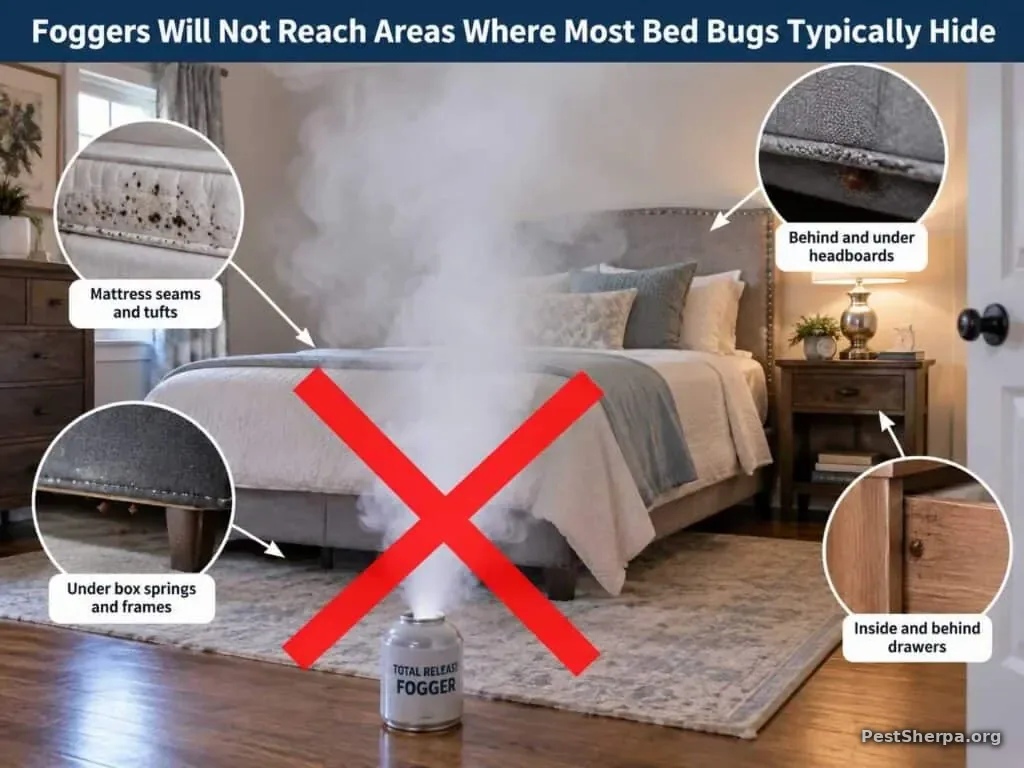
Big box store foggers are generally ineffective and a waste of time and money. Bed bugs are best handled professionally.
Credentials Worth Verifying
Pest control is licensed at the state level. Ask for company and applicator credentials and verify with your state agriculture or structural pest control board (California’s Structural Pest Control Board is one example UC IPM highlights; Minnesota uses MDA licensing; other states differ). Confirm insurance. Prefer firms that practice IPM and can document bed-bug-specific experience. NPMA membership can signal training but does not replace a state license. If a canine inspection is offered, UC IPM notes field accuracy varies. Confirm alerts with a visual professional inspection.
Questions to Ask Before You Sign
- Are you licensed and insured here, and can I see the license?
- How much bed bug experience does the on-site applicator have?
- Do you use IPM (inspect → nonchemical + targeted pesticides → monitor)?
- What methods do you offer (heat, chemical, combo, steam, encasements, interceptors) and why for my home?
- Will you inspect before quoting, and will you walk me through where you found bugs?
- How many visits are included, and what does follow-up cost if activity continues?
- What is my written prep checklist, and what happens if prep is incomplete?
- For heat: will you also apply a supplemental residual? (UMN recommends asking.)
- What are re-entry rules for people, children, and pets? Can I see product labels and SDS?
- What exactly does any warranty cover (surviving bugs vs. new introductions), for how long, and what voids it? Get it in writing. Do not assume a standard 30/60/90-day industry warranty.
Comparing Bids Fairly
Contact at least three licensed companies (OSU, UC IPM, and similar Extension advice). Compare scope: rooms treated, methods, included follow-ups, encasements/monitors, prep expectations, and warranty exclusions, not the boldest overnight claim. EPA’s Citizen’s Guide and hiring pages emphasize researching options carefully; the lowest bid without IPM or follow-up is often the most expensive path.
Treatment Day and Aftercare
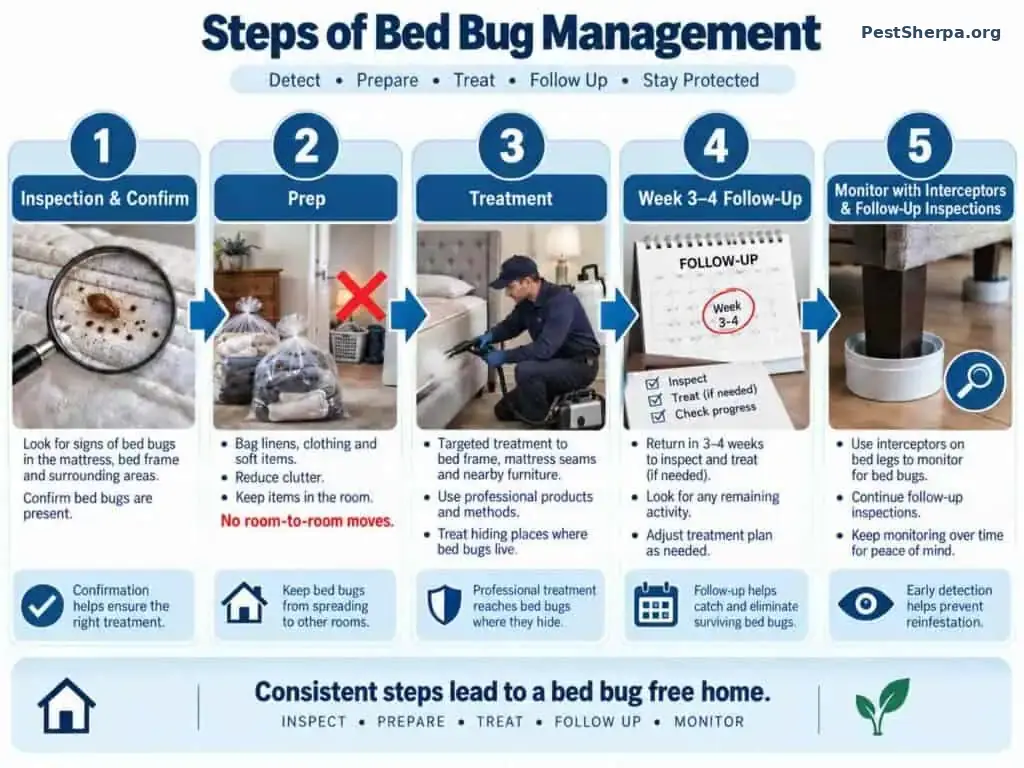
Expect identification, a prep review, and methodical work through beds, upholstery, and harborages. For chemical visits, UMN generally advises waiting until products have dried or until the technician clears re-entry. For heat, remove pets and heat-sensitive items as instructed. Improper preparation is one of the main reasons treatments fail (UMN). Follow the checklist without relocating clutter to untreated rooms.
Aftercare is measured in weeks. OSU describes a common follow-up around three to four weeks. UMN’s practical heuristic: roughly three weeks after treatment ends with no bites, live bugs, new fecal matter, or cast skins, control is likely, with caveats for infestation size, method, and multi-family pressure. Rutgers advises continuing until you cannot find bugs with visual checks plus monitors for about a month. Keep encasements and interceptors in place. No company can warranty against every hitchhiker from travel or used furniture: prevention habits still matter.
Hiring Checklist: Bed Bugs
- Confirm with insects or signs, not bites alone.
- Read bed bug identification and habits; notify landlords in multi-unit housing.
- Hire ASAP with an IPM plan; expect multiple visits (EPA).
- Reject fogger-only, ultrasonic, alcohol, and mothball “treatments.”
- Attribute heat/freeze numbers to their sources: do not blend conflicting protocols.
- Verify license/insurance; get prep, visit count, products, and warranty terms in writing.
- Complete prep carefully; monitor afterward; keep follow-up appointments.
- More questions? Ask the Sherpa or browse the pest control Q&A.
Bed bugs reward patience and precision. Hire the company that inspects thoroughly, explains IPM in plain language, and commits to follow-up, not the one selling an overnight fog.
During the bed bug resurgence panic the author was the industry spokesperson for bed bug information from the professional industry. He has appeared on dozens of television, streaming, radio, and in print and online media informative sessions as well as speaking before thousands of interested parties including doctors and nurses, inspectors, storage unit owners, first responders, and pest management firms on bed bug signs, biology, and control in private and public facilities including transportation.
For the full hire section (wildlife, German cockroaches, mosquitoes, termites, rodents, and licensed-company checklists), start at When to Hire a Pest Pro vs DIY.
Sources & Further Reading
Selected public authorities used to check the hiring guidance above (not an exhaustive bibliography):
- EPA: Hiring a Pest Management Professional for Bed Bugs
- EPA: Should I Use a Fogger?
- CDC: About Bed Bugs
- UC IPM: Bed Bugs
- Oklahoma State Extension: Choosing a PMP for Bed Bug Control
This article was written by Greg Baumann, founder of Pest Sherpa, and reflects more than 40 years of professional pest management experience.
About the Author

Greg Baumann | Pest Control Expert
Greg Baumann is the founder of Pest Sherpa and a Pest Control Expert with more than 40 years of professional pest management experience. His articles combine decades of field experience, technical expertise, and science-based guidance to help homeowners identify pests correctly, understand real-world risks, and make informed pest management decisions.
Mission: Identify the pest. Understand the risk. Stop the problem. Prevent the comeback. Know when it’s time to call a professional.