
Bed Bugs in Apartments: Shared Walls, Response, and What to Do

Bed bugs in apartments are a building problem, not just a single-unit problem. Shared walls, wall voids, electrical outlets, furniture turnover, and laundry rooms let these hitchhikers move farther than most residents expect. Treating only one apartment often leaves neighbors untouched, so the insects may return. This guide explains why multi-unit living is different, what signs to watch for, what not to do, and how residents and managers can respond together. It is educational guidance from Pest Sherpa and Greg Baumann. It is not legal advice and not a substitute for licensed inspection or your building’s policy.
“In apartments, the map matters as much as the mattress. If you only treat the unit whose resident complained, you are often treating the symptom while the population sits next door in a wall void.”
TL;DR: Bed Bugs in Apartments
Quick take: apartments are shared ecosystems. Bed bugs move through walls, outlets, and laundry paths. A single-unit spray often fails. Residents should report in writing, avoid foggers, and stop spreading belongings. Buildings should inspect adjacent and vertical neighbors and plan follow-ups. Jump to the Building Response Checklist for the full dual list.
- Bed bugs in apartments spread beyond one door because of shared structure and shared services.
- Early evidence is often spotting in mattress seams or sheets and blankets, baseboards, and outlet gaps, not insects walking in the open.
- Do not use bug bombs. They push bed bugs deeper into voids and toward neighbors.
- Senior and assisted living follow the same biology, with extra logistics around mobility and caregivers.
- Successful multi-unit work usually means inspection scope, prep, licensed treatment, and scheduled follow-ups.
Building Bed Bug Response Checklist
Single-unit treatment often fails in apartments because bed bugs use wall voids, adjacent units, and shared laundry. EPA bed bug guidance emphasizes finding harborages and using integrated approaches rather than relying on one product or one room. Use this dual checklist as a shared starting point for residents and building staff.
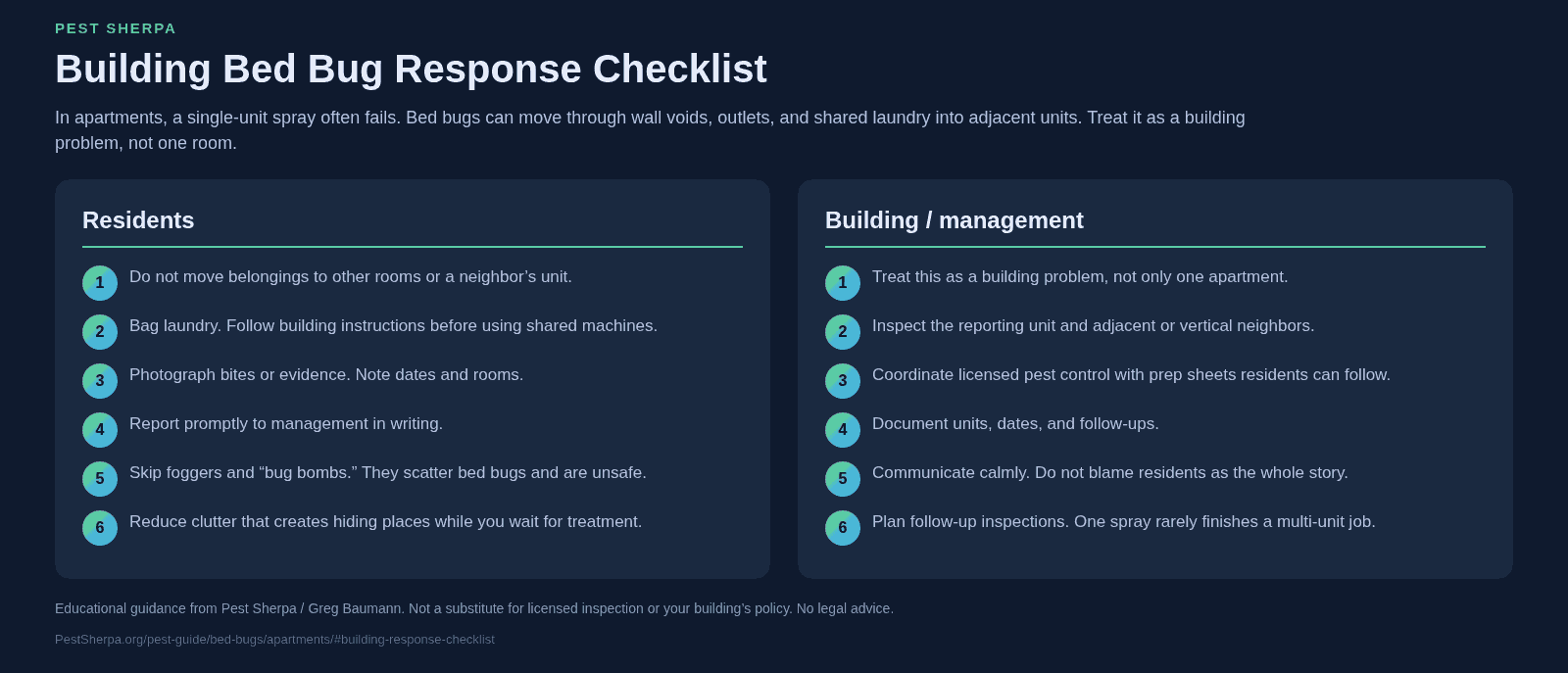
Residents
- Understand that a bed bug issue is not an indication of poor sanitation or building conditions. Bed bugs can infest the cleanest apartment complexes. While individual clutter may make control measures more complicated, personal cleanliness does not affect bed bug infestation.
- Do not move belongings room-to-room or to a neighbor’s unit.
- Bag laundry; follow building instructions before using shared machines.
- Photograph bites and evidence; note dates and rooms.
- Report promptly to management in writing.
- Avoid foggers and “bug bombs.” They scatter bed bugs and can be unsafe.
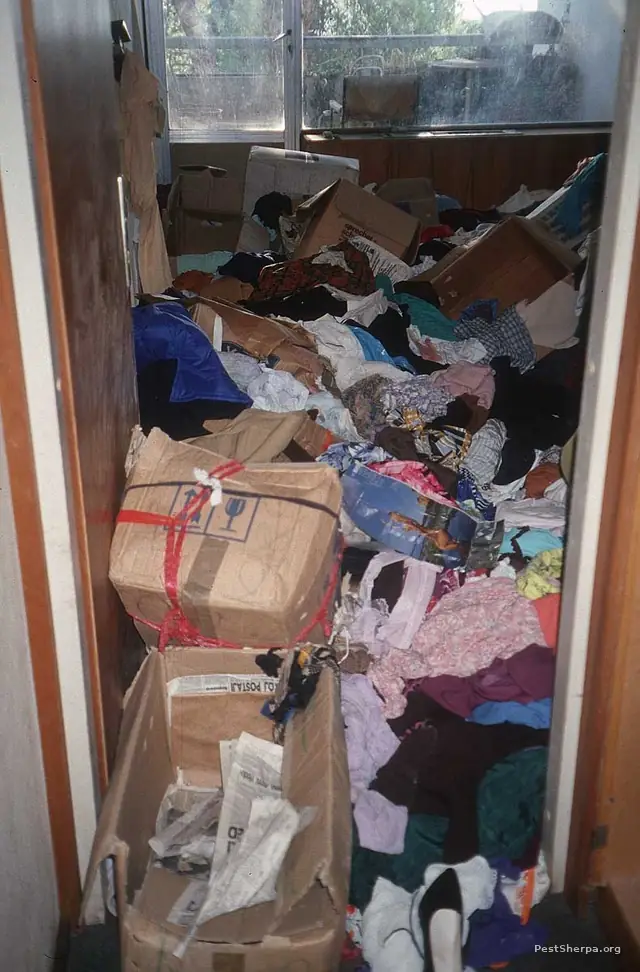
- Reduce clutter that creates harborages while waiting for treatment.
- Ask whether adjacent units will be inspected (politely, in writing).
Building / management
- Treat as a building problem, not only one apartment.
- Inspect the reporting unit and adjacent and vertical neighbors.
- Coordinate licensed pest control with prep sheets residents can follow.
- Pause or control shared laundry use if contaminated items are confirmed.
- Document units, dates, and follow-ups.
- Communicate calmly; avoid blaming residents as the whole story.
- Plan follow-up inspections; one spray rarely finishes multi-unit jobs.
Educational guidance from Pest Sherpa / Greg Baumann, not a substitute for licensed inspection or your building’s policy.
Why Apartments Are Different
A house infestation is usually contained by a single envelope. An apartment building is a connected system. Bed bugs do not need an open door to move. They exploit:
- Shared walls and voids between side-by-side units
- Vertical pathways such as plumbing and electrical chases between floors
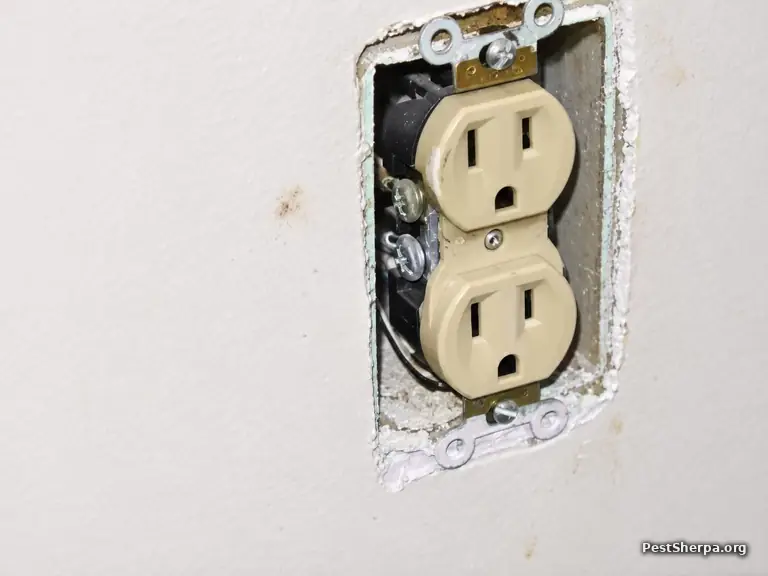
- Outlet and switch boxes that open into wall cavities
- Furniture turnover when residents discard or inherit mattresses and sofas, or changeover tenants when apartments are rented furnished.
- Shared laundry that can move hitchhikers if items are not bagged and heat-treated correctly
- Stigma and delay when people wait to report because they fear blame or eviction stress
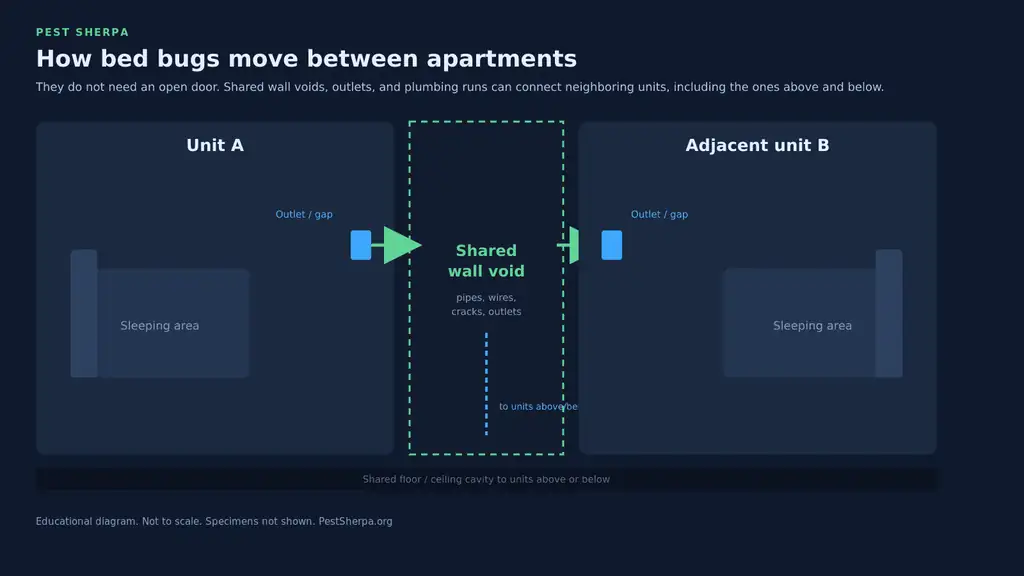
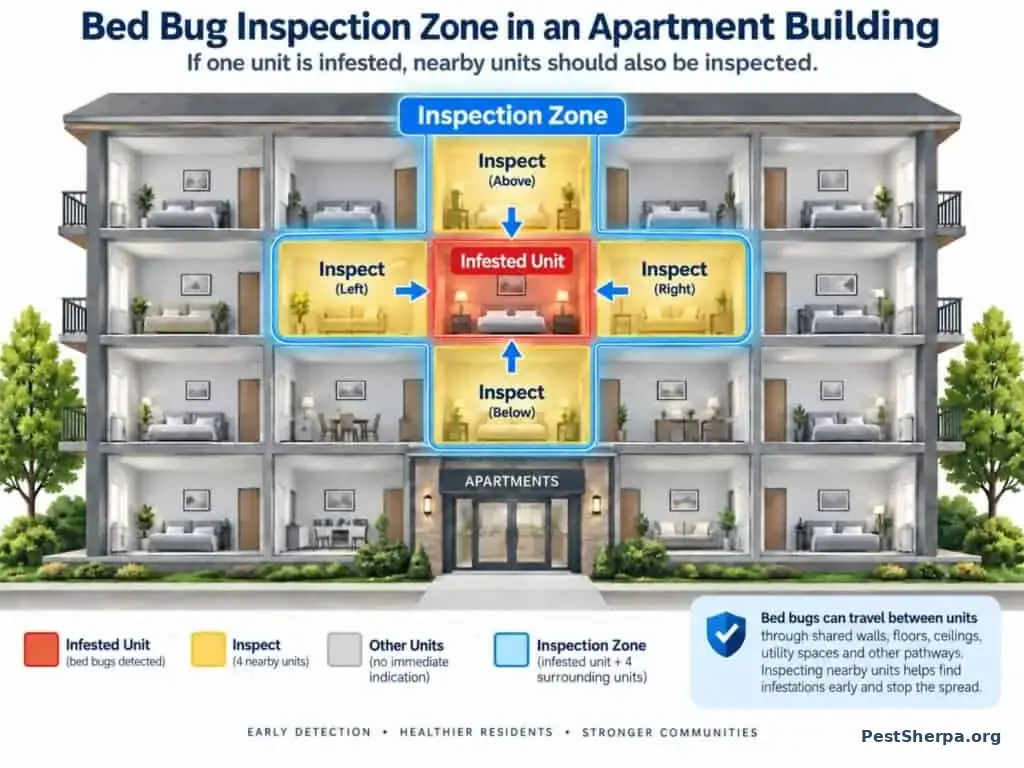
That is why journalists covering senior high-rises, subsidized housing, and campus buildings often hear the same story. A unit was treated to eliminate bed bugs, then the problem returned. The biology did not change. The scope of the response was too limited. Beyond just considering shared voids, consider that neighboring units may also be affected either as a source or as a potential next infested unit. A good strategy is to inspect all neighboring units adjacent, above and below. This is a proactive move to get a better picture.
Travelers facing a short stay have a different job. See Bed Bugs in Hotels: 5-Minute Room Inspection Checklist for a room check before you unpack. Hospitals and clinics manage introductions under facility policy; see Bed Bugs in Healthcare. Apartments are where people live every night, so the response has to account for neighbors.
Signs in an Apartment
Residents often notice sleep disruption or unexplained bites before they see a live insect. Look in the highest-probability places first:
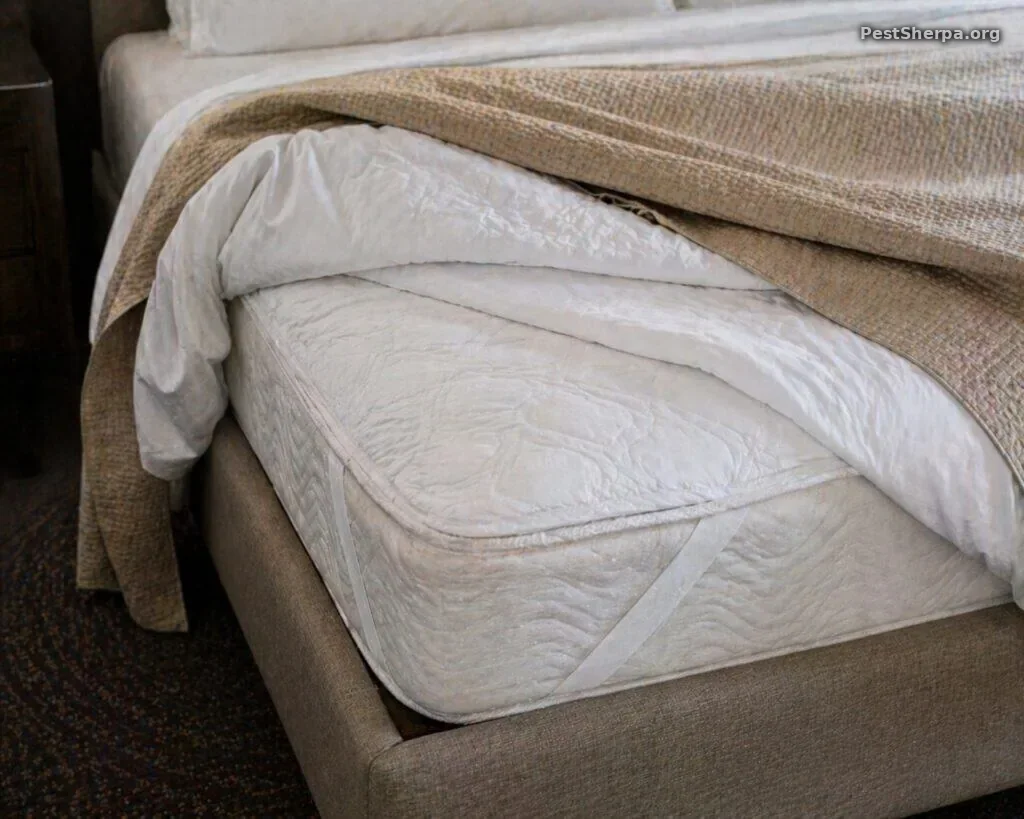
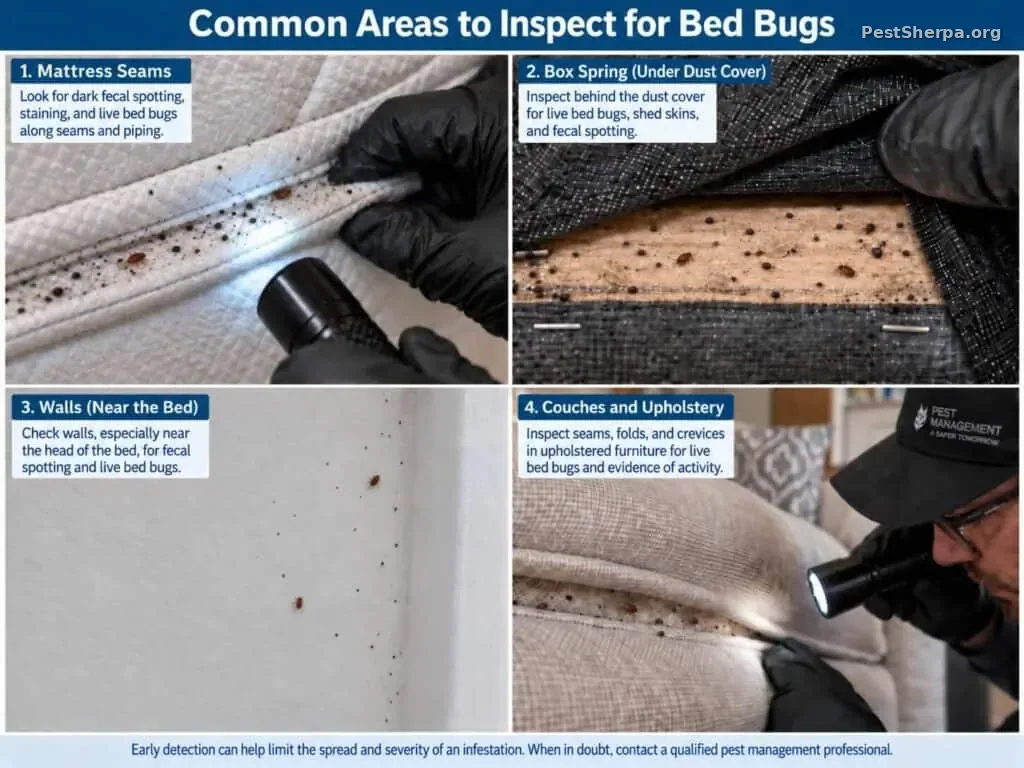
- Mattress seams, piping, labels, and corners; bed linens
- Box spring edges and bed frame joints
- Headboard and wall behind the bed
- Baseboards and carpet edges near sleeping areas
- Outlet and switch cover gaps on walls shared with another unit
- Upholstered furniture seams and undersides, nightstands, lamp and alarm clocks
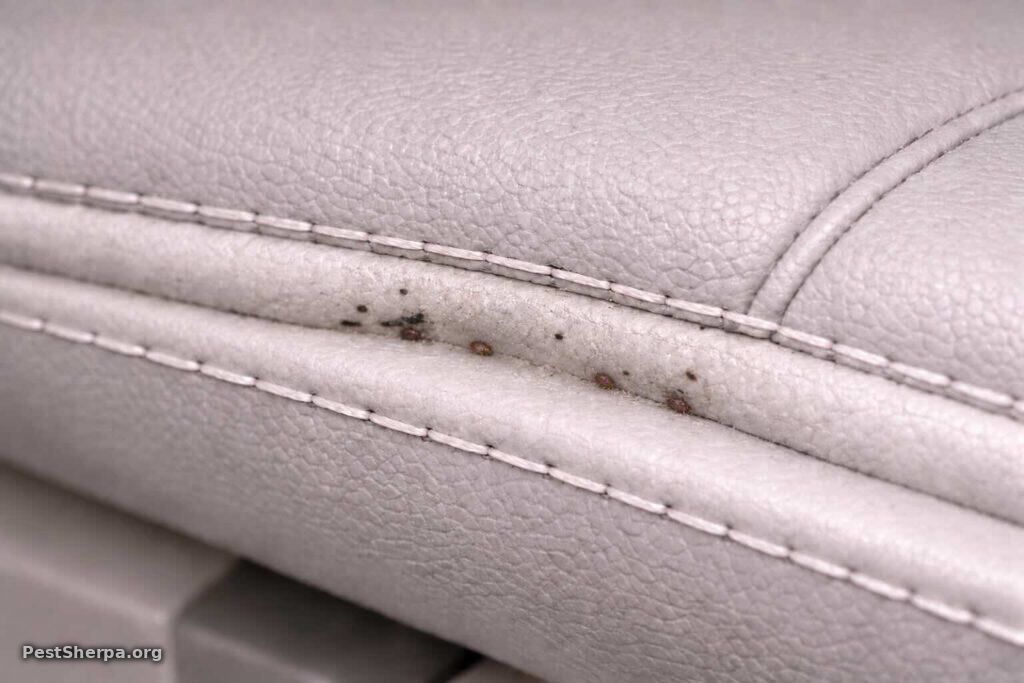
Evidence can include fecal spotting (dark dots), cast skins, eggs in protected cracks, and live insects. Bites vary widely by person and are not a reliable diagnosis by themselves. Photograph what you find and keep notes by date and room. For broader identification context, start with the complete Bed Bug Guide.
| Where to look | Why it matters in apartments | What you may see |
|---|---|---|
| Mattress seams | Primary harborage near sleepers | Spotting, skins, live bugs |
| Shared-wall outlets | Path into wall voids and neighbors | Bugs or spotting at cover edges |
| Baseboards | Travel line along floors and walls | Spotting in corners |
| Sofa / recliner seams | Secondary sleeping or resting sites | Spotting in folds |
| Laundry bag / hamper | Passive transport risk in the building | Hitchhikers on fabric |
What Not to Do
“Bug bombs are one of the fastest ways to turn a contained apartment problem into a multi-unit problem. Heat and pressure from foggers drive bed bugs into the very voids that connect you to your neighbors.”
- Do not set off foggers or bug bombs. They do not reach deep harborages and can scatter insects.
- Do not abandon a unit without bagging and isolating belongings. Moving “everything” through hallways and elevators can seed other floors.
- Do not donate or leave furniture in common areas as an offer to anyone for the taking without following building rules. Infested couches left in hallways are not a friendly gift to the next resident; it is gift of bed bugs.
- Do not assume any aerosol can will finish the job. Bed bug management needs a plan: inspection scope, prep, and follow-up.
- Do not wait in silence out of embarrassment. Delay helps populations grow and reach neighbors. There is no stigma association with a bed bug infestation. Bed bugs are excellent hitchhikers; they can enter a building many ways.
Senior and Assisted Living
Senior housing and assisted living use the same bed bug biology as any other multi-unit building. What changes is logistics. Residents may have limited mobility, more belongings in small spaces, medical equipment, and caregivers moving between rooms. Families often become advocates who need clear written communication with management.
- Ask how the community scopes inspections beyond the reporting room or apartment.
- Clarify laundry and belonging-handling steps that staff or family can actually complete.
- Document dates, units involved, and follow-up visits.
- Keep the focus on building response, not blame. Bed bugs hitchhike; they are not a personal hygiene judgment.
- Keep in touch with building staff as to if they hear of any pest issues in the building.
This section is in-page guidance only. There is no separate “senior housing” URL on this site. The apartment checklist above still applies.
How Treatment Usually Works in Multi-Unit Buildings
Effective apartment work usually follows an integrated pest management (IPM) pattern. Confirm the pest, define the scope, prepare units, apply appropriate methods, then verify with follow-ups. EPA discusses IPM as combining inspection, sanitation and harborage reduction, and carefully chosen control tools rather than product-only thinking.
- Inspection scope: reporting unit plus adjacent and vertical neighbors at minimum when activity is confirmed.
- Prep sheets: clear, realistic instructions for laundry, reducing clutter, and access to furniture.
- Licensed pest control: multi-unit jobs benefit from trained technicians who understand voids and monitoring, not one-off consumer sprays alone.
- Follow-ups: remaining bed bug eggs and survivors mean you should expect return visits. One treatment rarely closes a building-linked case.
- Communication: calm updates reduce panic and stop informal “DIY cascades” that spread insects.
Hire a licensed company when the building needs professional scope. This page does not recommend a specific vendor and is not a sales pitch. Your building’s contract and local licensing rules still govern who treats common areas and units.
When to Escalate
Most apartment cases improve when management and licensed pest control treat the situation as a building issue. Escalate documentation and outreach when patterns show the response is too narrow:
- Repeated treatments in one unit while adjacent units are never inspected
- Ongoing live activity after scheduled follow-ups
- Sleep loss, bite reactions, or anxiety that is affecting health (talk with a clinician about symptoms; pest control does not replace medical care)
- Furniture being moved through common areas without containment
- Very close communication with the pest control company is vital and updates should be shared with tenants.
Keep written records: dates, photos, unit numbers discussed, and responses received. Local housing or code channels exist in many communities. How you use them depends on your lease, local law, and circumstances. This is not legal advice. If you need legal interpretation, speak with a qualified attorney or a local tenant resource.
Frequently Asked Questions
Can bed bugs come through walls?
Yes. They can move through wall voids, outlet openings, and other structural gaps between units and floors. That is a core reason apartment responses should include neighbors, not only the reporting unit.
Should I throw out my mattress first?
Not automatically. Mattresses can often be encased and treated as part of a plan. Dumping a mattress in a hallway or dumpster without containment can spread the problem. Ask the licensed provider and your building what prep they want before you discard anything.
Is it my fault?
Bed bugs can hitchhike on belongings, furniture, and sometimes clothing including from offices and public transportation. Infestations happen in clean homes and unclean homes. Blame does not remove insects. Fast reporting and a building-scoped response do more good than shame.
What about Section 8 or senior buildings?
The biology is the same. Funding rules, property policies, and staffing may change who coordinates treatment and how notices work. Use written reporting, ask about adjacent-unit inspection, and keep records. Families supporting residents in senior or assisted settings should request the building’s pest response steps in writing.
Can I refuse treatment prep?
Prep requirements usually come from the building’s contracted pest company and management policy. If mobility or health limits what you can do, say so early and ask for reasonable help with laundry or access. Skipping prep can leave harborage areas untreated and prolong the problem for you and your neighbors. Depending on the lease, tenants might be legally responsible to comply with treatment prep requirements.
Are bed bugs a disease emergency?
CDC materials describe bed bugs as a pest concern with bites and quality-of-life impact. They are not proven to transmit human disease under typical conditions. Still, sleep loss and stress are real. Treat the pest problem seriously without treating it like a contagious pathogen scare.
How is this different from a hotel find?
A hotel guest can often change rooms and leave. An apartment resident lives in a connected building. Use the hotel inspection checklist when traveling, and use this apartment checklist when the issue is home.
References
- U.S. Environmental Protection Agency: Bed Bugs
- U.S. EPA: How to Find Bed Bugs
- U.S. EPA: Do-It-Yourself Bed Bug Control (includes cautions relevant to consumer products and incomplete control)
- U.S. EPA: Introduction to Integrated Pest Management
- Centers for Disease Control and Prevention: Bed Bugs
- CDC: About Bed Bugs
- Cornell IPM: Bed Bugs
- Cornell Integrated Pest Management: Bed Bugs
- Purdue Extension Entomology: Bed Bugs
Continue Learning About Bed Bugs
For identification, prevention, and home basics, explore the complete Bed Bug Guide. Situation-specific pages:
- Bed Bugs in Hotels: 5-Minute Room Inspection Checklist (travelers)
- Bed Bugs in Healthcare (clinical / facility context)
- This page: apartments and multi-unit living (residents and building staff)
This article was written by Greg Baumann, founder of Pest Sherpa, and reflects more than 40 years of professional pest management experience.
About the Author

Greg Baumann | Pest Control Expert
Greg Baumann is the founder of Pest Sherpa and a Pest Control Expert with more than 40 years of professional pest management experience. His articles combine decades of field experience, technical expertise, and science-based guidance to help homeowners identify pests correctly, understand real-world risks, and make informed pest management decisions.
Mission: Identify the pest. Understand the risk. Stop the problem. Prevent the comeback. Know when it’s time to call a professional.