
Western Encephalitis Mosquito (Culex tarsalis): ID and Risk
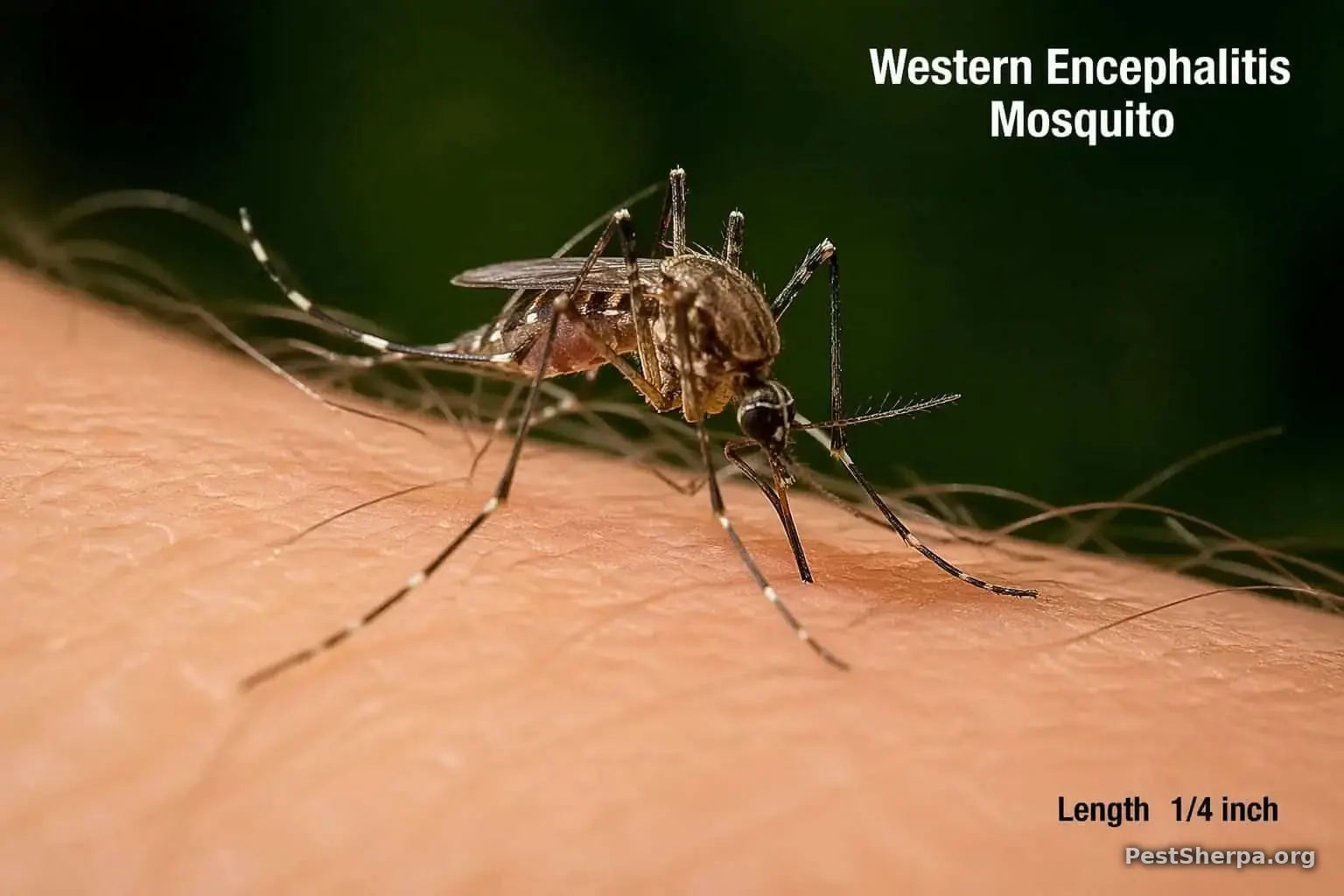
Field-reviewed guidance: The western encephalitis mosquito, Culex tarsalis, is a medically important mosquito in western and central North America. For homeowners, the key takeaways are simple. It is hard to confirm without magnification. It breeds in standing water. It is most active from dusk to dawn. Control works best when larvae are stopped before adults emerge.
TL;DR: Quick ID + What To Do
- Likely ID: A brownish Culex mosquito with pale bands on the legs and abdomen; confirmed ID usually requires close examination.
- Where it breeds: Irrigation water, ditches, ponds, marshes, flooded fields, storm drains, and stagnant containers.
- Main concern: Bite nuisance plus disease-vector potential, especially West Nile virus and historically western equine encephalitis.
- Best first move: Remove or treat standing water before adults emerge.
- Common mistake: Fogging adults while ignoring water sources.
Jump to: Identification | Why It Matters | What To Do | When To Call a Pro | Similar Mosquitoes | Common Questions | References
Identification: What Confirms Culex tarsalis?
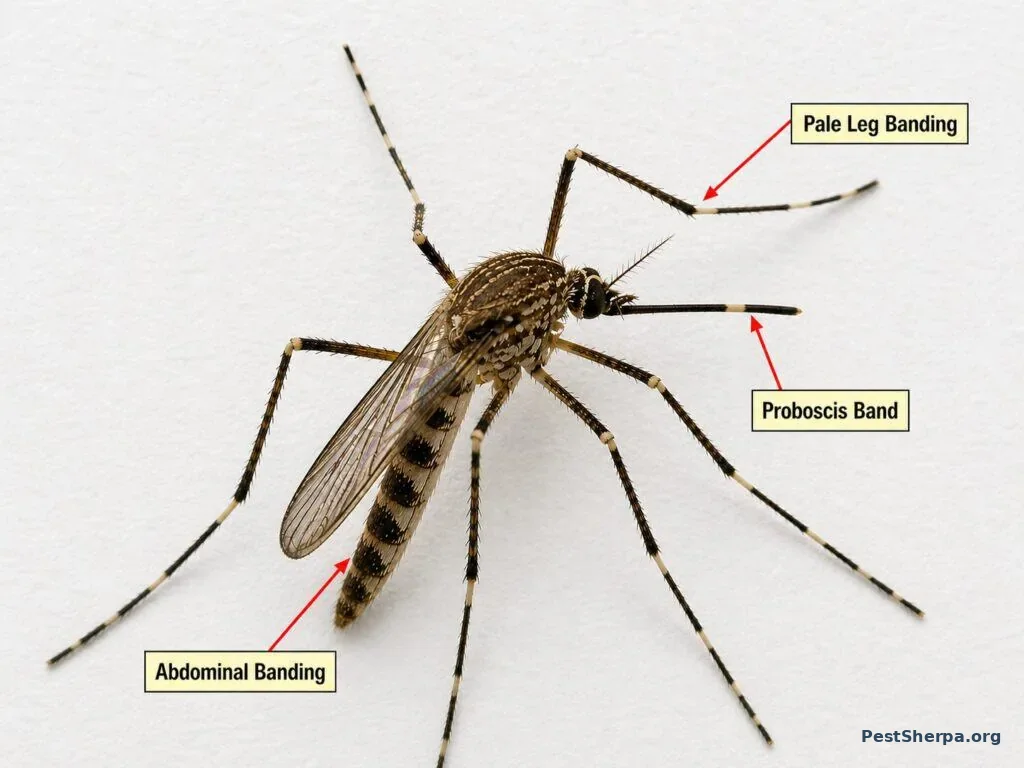
Culex tarsalis is a small to medium-sized mosquito with a slender body, long legs, narrow scaled wings, and a long proboscis. Adult females bite because they need blood meals to produce eggs; males do not bite.
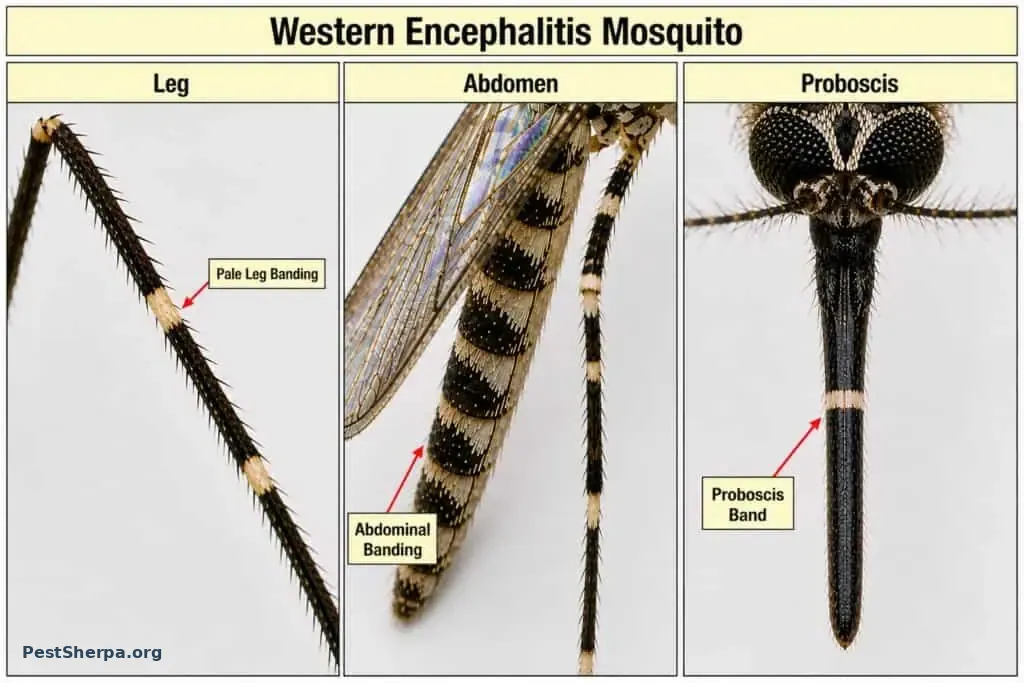
The most useful field clues are pale banding on the legs, pale abdominal bands, and a pale band on the proboscis (the long, beak-like mouthpart). South Dakota State University Extension notes that Culex tarsalis differs from some Aedes mosquitoes. It has a broader, blunt-ended abdomen and a pale band on the proboscis.
For homeowners, the practical answer is this. You can often suspect a Culex mosquito from behavior and habitat. Confirming the species usually takes magnification or trap identification by a professional, vector-control district, or entomology lab.
Where It Is Commonly Found
Culex tarsalis is strongly associated with western and central North America, especially agricultural, rural, semi-rural, and irrigated landscapes. Around homes, it may be connected to nearby ditches, stormwater areas, ponds, neglected pools, livestock water, marshy ground, or containers that hold stagnant water.
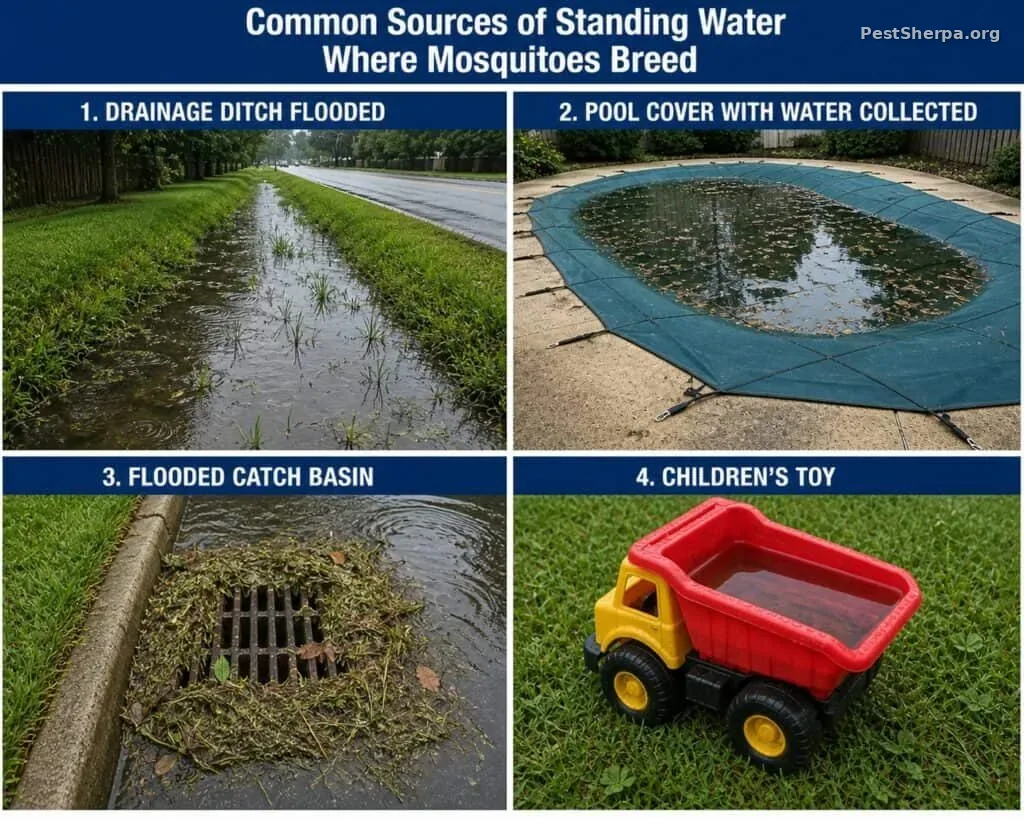
CDC guidance for Culex mosquitoes lists many common egg-laying sites. These include ponds, lake edges, swamps, unmaintained swimming pools, wastewater sites, storm drains, ditches, low-lying pastures, agricultural areas, buckets, tires, planters, toys, birdbaths, and flowerpots.
What Commonly Misleads Homeowners
- Assuming every mosquito in the yard is the same species. Several mosquitoes may be active on the same property.
- Blaming only ponds. Small stagnant sources like gutters, buckets, pool covers, and birdbaths can produce mosquitoes.
- Confusing dusk-biting Culex mosquitoes with day-biting yellow fever mosquitoes. Activity time and breeding site are important clues.
- Expecting visual ID from a flying mosquito. Most homeowners cannot reliably separate Culex tarsalis from the northern house mosquito or southern house mosquito without close inspection.
Why It Matters
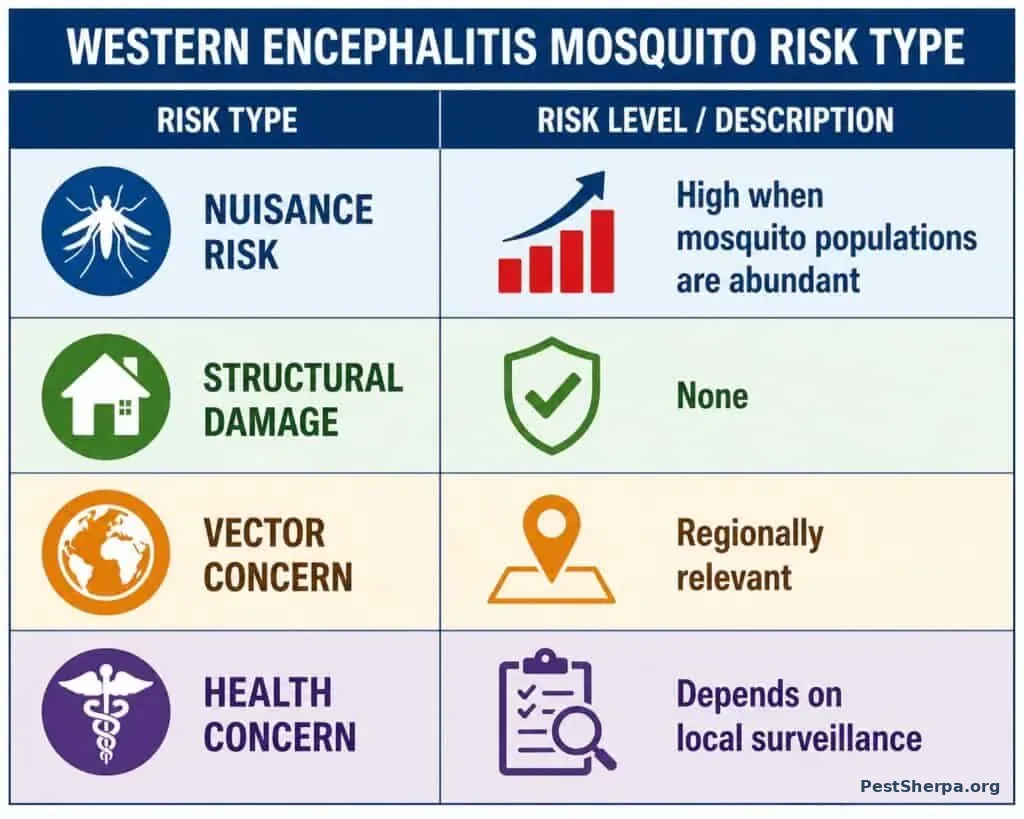
The western encephalitis mosquito is not a structural pest. It does not damage wood, insulation, wiring, or stored food. Its importance is medical and nuisance-related.
CDC identifies Culex tarsalis as the primary North American mosquito vector (carrier) for western equine encephalitis virus. CDC also notes that no human WEE cases have been reported in the United States since 1999. So the risk should not be overstated as a common household threat today.
The more practical modern concern in many western and central U.S. areas is West Nile virus risk. Colorado State University Extension identifies Culex tarsalis and Culex pipiens as important West Nile virus mosquitoes in Colorado. South Dakota State University Extension notes that Culex tarsalis is a greater West Nile concern than some floodwater mosquitoes. The reason is that it feeds on birds, and birds are the main hosts where West Nile virus multiplies.
Even when disease transmission is not occurring locally, heavy mosquito pressure can make yards, patios, livestock areas, and evening outdoor activity difficult to use.
What To Do: Realistic Mosquito Control
1. Remove standing water first
Mosquito control starts with water. Dump, drain, cover, or correct anything that holds water for more than a few days:
- Buckets, bins, toys, tarps, and plant saucers
- Birdbaths and pet bowls
- Clogged gutters and downspouts
- Pool covers and neglected pools
- Wheelbarrows, tires, and low yard spots
- Irrigation leaks, drainage ditches, and standing water near outbuildings
For a broader yard-focused checklist, see Pest Sherpa’s mosquito control guide.
I
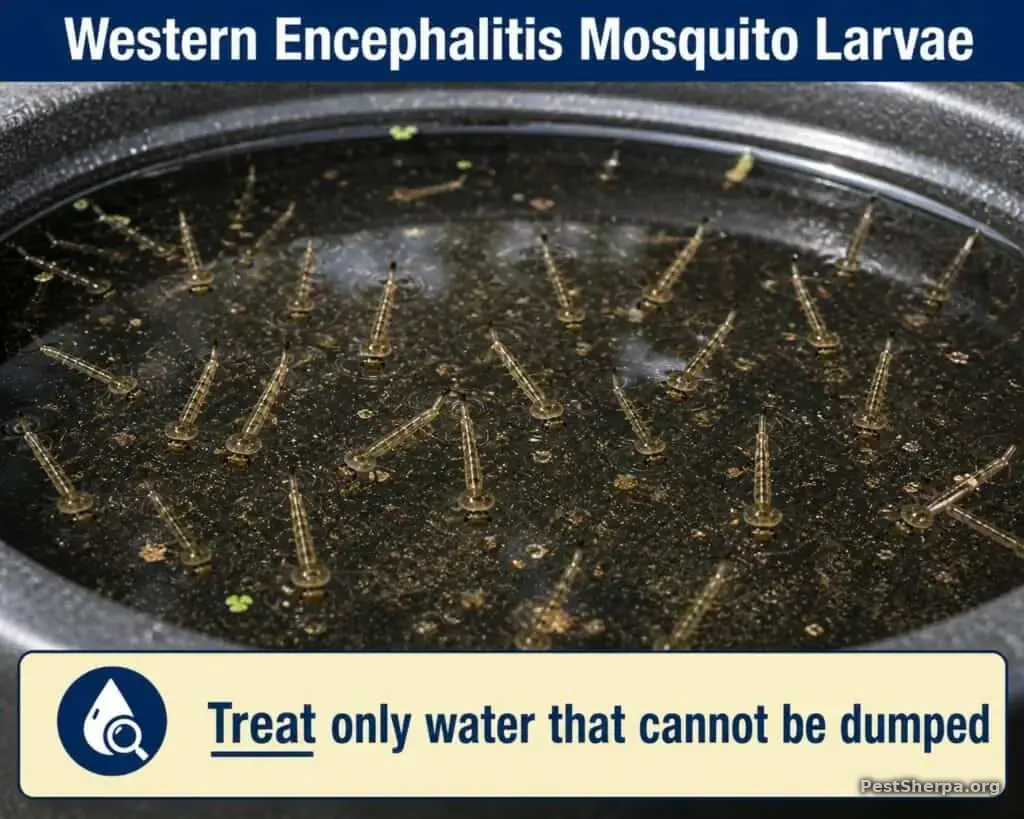
2. Treat water that cannot be dumped
When water cannot be removed, larval control is usually more effective than chasing adults. CDC states that larvicides (products that kill mosquito larvae) can be used in water where mosquitoes lay eggs. This is especially true for water that cannot be covered, dumped, or removed. CDC also says EPA-registered larvicides should be used according to the label.
EPA also emphasizes that mosquito control is most effective when immature stages are targeted while mosquitoes are concentrated, immobile, and accessible in breeding sites.
3. Reduce adult resting areas
Adult Culex mosquitoes often rest in cool, humid, shaded vegetation. Thin dense vegetation near patios, improve airflow, and keep grass trimmed around seating areas, sheds, kennels, and livestock zones.
4. Protect people during peak biting times
Culex mosquitoes are usually most active from dusk to dawn. Use window and door screens, wear long sleeves when practical, and use EPA-registered repellents according to label directions.
5. Know what usually fails
- Fogging alone: It may reduce adults temporarily but does not stop larvae from emerging.
- Bug zappers: They do not reliably solve mosquito breeding problems.
- Only treating your patio: Mosquitoes may be coming from ditches, neighboring properties, storm drains, or agricultural water.
- Ignoring water after rain: New breeding sites can appear quickly.
When To Call a Pro
Call a pest control professional, mosquito control district, or local vector-control agency when:
- Mosquitoes remain heavy after 1 to 2 weeks of water removal.
- You have standing water that cannot be safely drained or treated yourself.
- The property borders irrigation ditches, wetlands, livestock areas, retention ponds, or stormwater infrastructure.
- Mosquito activity is worst at dusk and dawn and appears to come from beyond your property.
- Local public health agencies report West Nile virus activity or elevated mosquito surveillance numbers.
- You need species identification from trap samples.
Similar Mosquitoes and Misidentification Comparison
| Mosquito | Typical Clues | Common Breeding Sites | Why It Gets Confused |
|---|---|---|---|
| Western encephalitis mosquito | Still water | Pale lags can be confused with other mosquitoes but the others are more pronounced | |
| Culex tarsalis | Brownish Culex; pale leg/proboscis banding; dusk-to-dawn biting | Irrigation water, ditches, ponds, marshes, stagnant containers | Looks similar to other small brown mosquitoes |
| Northern house mosquito | |||
| Culex pipiens | Brown to gray; subtle abdominal banding; often urban/suburban | Storm drains, catch basins, stagnant organic water, containers | Same genus and similar behavior |
| Southern house mosquito | |||
| Culex quinquefasciatus | Brown mosquito common in warmer regions | Urban stagnant water, drains, polluted water, containers | Another Culex mosquito tied to homes and disease risk |
| Yellow fever mosquito | |||
| Aedes aegypti | Black-and-white mosquito; lyre-shaped thorax marking; daytime biting | Small containers around people | Homeowners often group all mosquitoes together, but behavior and markings differ |
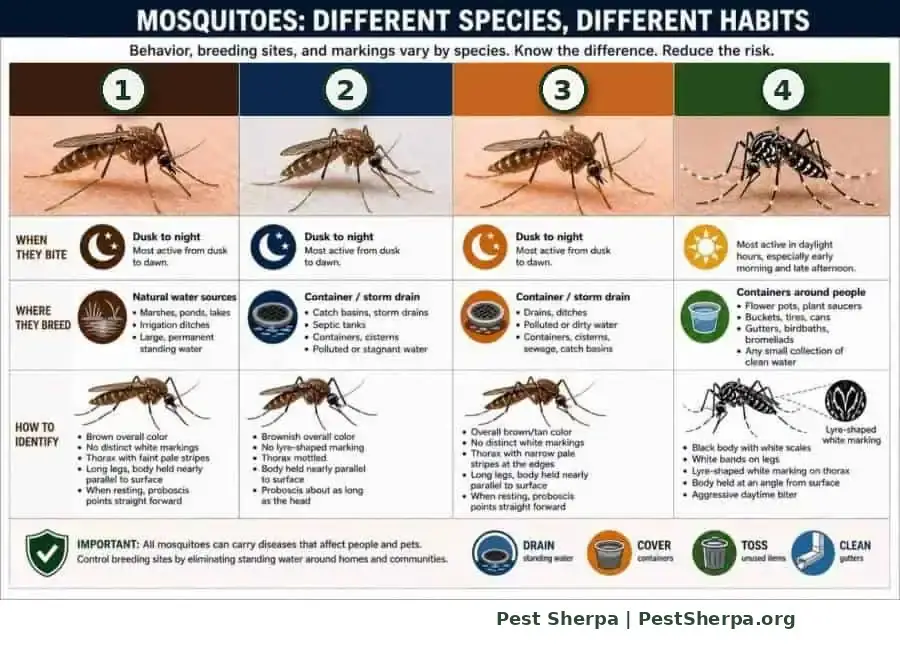
Which one do you see? Match the number:
- Western encephalitis mosquito (Culex tarsalis): common in the western U.S. Brown with faint pale stripes on the thorax, bites from dusk to night and breeds in natural water such as marshes, ponds and irrigation ditches.
- Northern house mosquito (Culex pipiens): common in cooler regions. Brownish with a mottled thorax, bites from dusk to night and breeds in catch basins, storm drains, septic tanks and polluted water.
- Southern house mosquito (Culex quinquefasciatus): common in warmer regions. Brown to tan with narrow pale stripes at the edges of the thorax, bites from dusk to night and breeds in ditches and polluted water.
- Yellow fever mosquito (Aedes aegypti): a daytime biter. Black body with white scales, white bands on the legs and a lyre-shaped white marking on the thorax. Breeds in small containers around people.
Final Takeaway
Culex tarsalis is best treated as a mosquito ID and public-health awareness issue, not a structural pest problem. The homeowner’s job is to remove standing water, treat unavoidable water correctly, reduce shaded resting sites, and protect people during dusk-to-dawn activity. When activity persists or disease surveillance is elevated, professional mosquito control or local vector-control guidance becomes the smarter next step.
Common Questions
References
- CDC: Western Equine Encephalitis: Clinical Features, Diagnosis, and Treatment
- CDC: About Culex Mosquitoes
- CDC: Larvicides
- EPA: Success in Mosquito Control: An Integrated Approach
- EPA: Repellents: Protection against Mosquitoes, Ticks and Other Arthropods
- UC IPM: Mosquitoes
- Colorado State University Extension: Mosquitoes and West Nile Virus
- South Dakota State University Extension: Know Your West Nile Virus Vectors
This article was written by Greg Baumann, founder of Pest Sherpa, and reflects more than 40 years of professional pest management experience.
About the Author

Greg Baumann | Pest Control Expert
Greg Baumann is the founder of Pest Sherpa and a Pest Control Expert with more than 40 years of professional pest management experience. His articles combine decades of field experience, technical expertise, and science-based guidance to help homeowners identify pests correctly, understand real-world risks, and make informed pest management decisions.
Mission: Identify the pest. Understand the risk. Stop the problem. Prevent the comeback. Know when it’s time to call a professional.