
Fungus Gnats in Houseplants: Identification, Causes, and What To Do
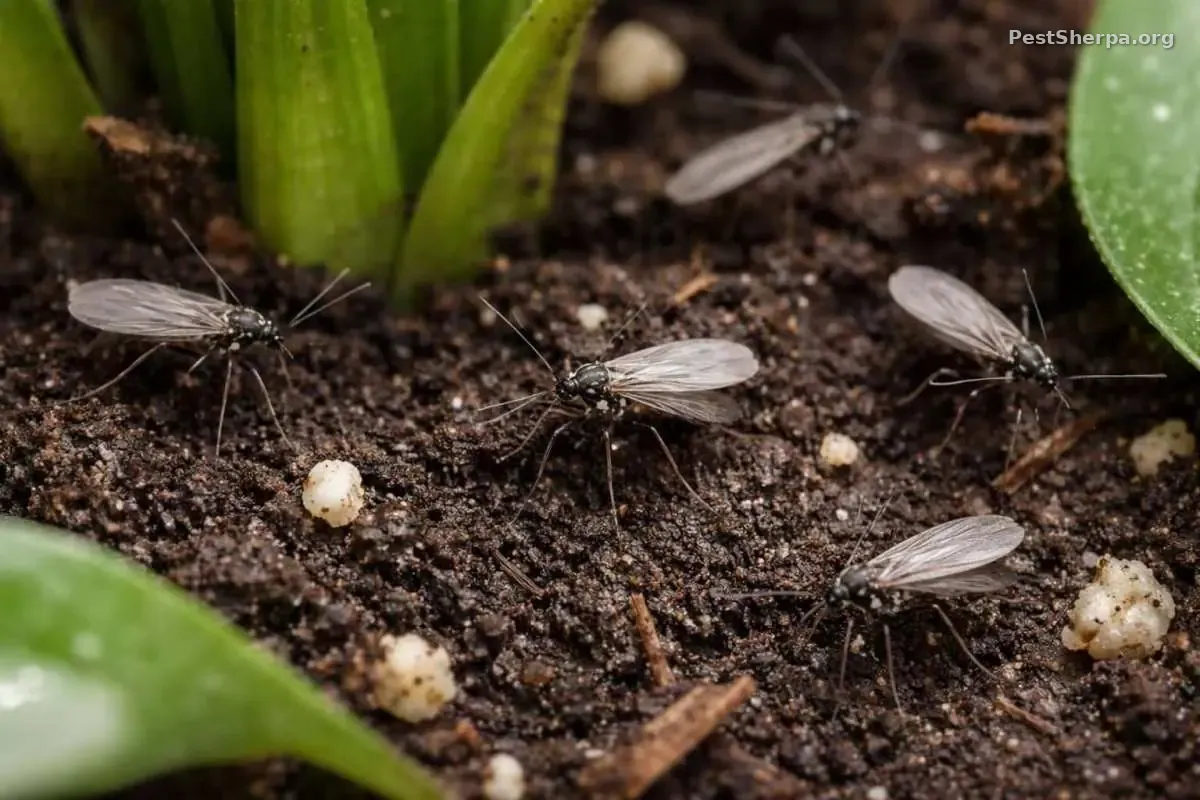
Fungus gnats (also searched as fungus gnat, fungal gnat, or gnats on indoor plants) are tiny, dark flies. They often appear around houseplants, seed-starting trays, office planters, greenhouses, and other damp growing media. They are usually more of a nuisance than a serious household pest. But they are useful clues. Overwatering is the main driver, and larvae in the soil keep the cycle going.
This guide explains what fungus gnats look like, both adults and larvae. It shows how to tell them apart from fruit flies and drain moth flies. It also covers which dry-down and plant-care fixes work without useless plug-in foggers.
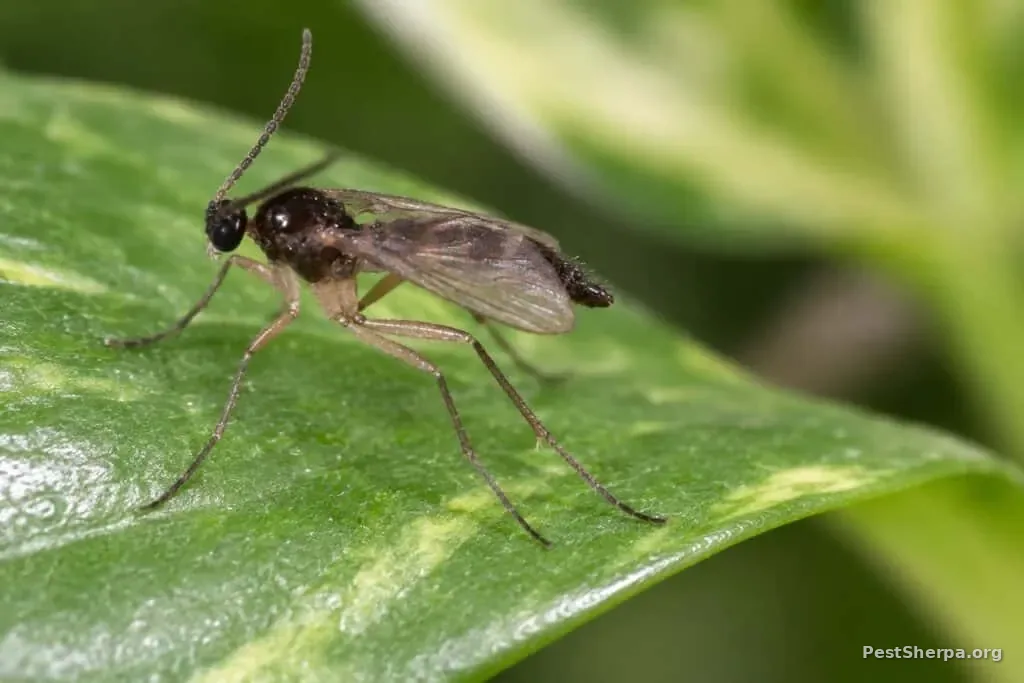
Adult fungus gnat near a houseplant pot.
TL;DR: What Do Fungus Gnats Look Like?
Adults: tiny dark, mosquito-like flies that weakly fly or run on pot rims around houseplants. Larvae: slender, translucent/whitish maggots in moist soil with a shiny black head capsule. Overwatering keeps both going.
| Compare | Fungus gnats | Fruit / vinegar flies | Drain moth flies |
|---|---|---|---|
| Look | Dark, delicate, mosquito-like | Tan/yellowish, compact | Fuzzy, moth-like wings |
| Where | Houseplant soil and damp media | Fruit, recycling, sweet residue | Drain slime / sewer film |
| Fix focus | Dry-down, drainage, clean media | Remove fermenting food sources | Clean drain film |
What works: sticky cards for monitoring, dry-down of the top soil, better drainage, cleaner potting mix. What fails: adult-only sprays and plug-in foggers that ignore larvae in soil. Related: flies hub, dark-eyed fruit flies for kitchen drain confusion, and moth flies for fuzzy drain flies.
Quick Navigation
- Quick ID
- What Fungus Gnats Mean Indoors
- Identification
- Life Cycle and Seasonal Context
- Source Investigation Checklist
- Impact on Plants
- What To Do
- What Does Not Work Well
- How Long Fungus Gnats Last
- When Professional Help May Be Needed
- Lookalikes
- FAQ
- References
Quick ID: Adults vs Larvae
| Feature | Fungus Gnat Clue |
|---|---|
| Adult size | Usually about 1/16 to 1/8 inch long |
| Adult appearance | Small, dark, delicate, mosquito-like fly with long legs |
| Flight behavior | Weak, short flights; often runs across soil or pot rims |
| Common location | Houseplants, seed trays, greenhouse benches, damp potting mix |
| Larvae | Slender, translucent to whitish, legless, with a shiny black head capsule |
| Main source | Moist organic growing media, fungi, algae, and decaying plant material |
Key point: Adults are the visible nuisance, but the larvae in moist soil or organic media are usually the reason the problem keeps returning.
What Fungus Gnats Mean Indoors
Fungus gnats usually mean that a plant or growing area has conditions favorable for larval development. In homes, the most common cause is overwatered or poorly draining houseplant soil. In greenhouses, offices, interiorscapes, and plant displays, fungus gnats may point to several problems. Look for wet growing media, algae, spilled potting mix, decomposing plant debris, or watering habits that keep surfaces damp.
| What You See | What It Usually Suggests |
|---|---|
| One or two small flies near a window | Possible outdoor entry or a small nearby plant source |
| Flies hovering around one plant | That pot may be staying too wet |
| Flies from multiple plants | Several pots may have damp organic media |
| Adults on yellow sticky cards | Useful confirmation and monitoring clue |
| Larvae visible in soil | Active breeding in the growing media |
| Declining seedlings plus gnats | Larval feeding, disease, or overly wet conditions may be stressing plants |
Fungus gnats are not a sign that every plant is doomed. They are usually a sign to slow down, confirm the pest, inspect moisture conditions, and correct the source.
Identification: What Fungus Gnats Look Like
Adult fungus gnats are small, delicate flies in the family Sciaridae. They are usually dark gray to black, with slender bodies, long legs, clear wings, and antennae that can make them look like tiny mosquitoes. Unlike mosquitoes, fungus gnats do not bite people and usually stay close to plants, pot rims, soil surfaces, windows, or lights.
The larvae are the stage most closely tied to the source. They are slender, legless, translucent to whitish, and have a distinctive shiny black head capsule. Larvae usually live in the upper moist layer of potting mix, seed-starting media, or other organic growing material. Fully developed larvae may reach about 1/4 inch long.
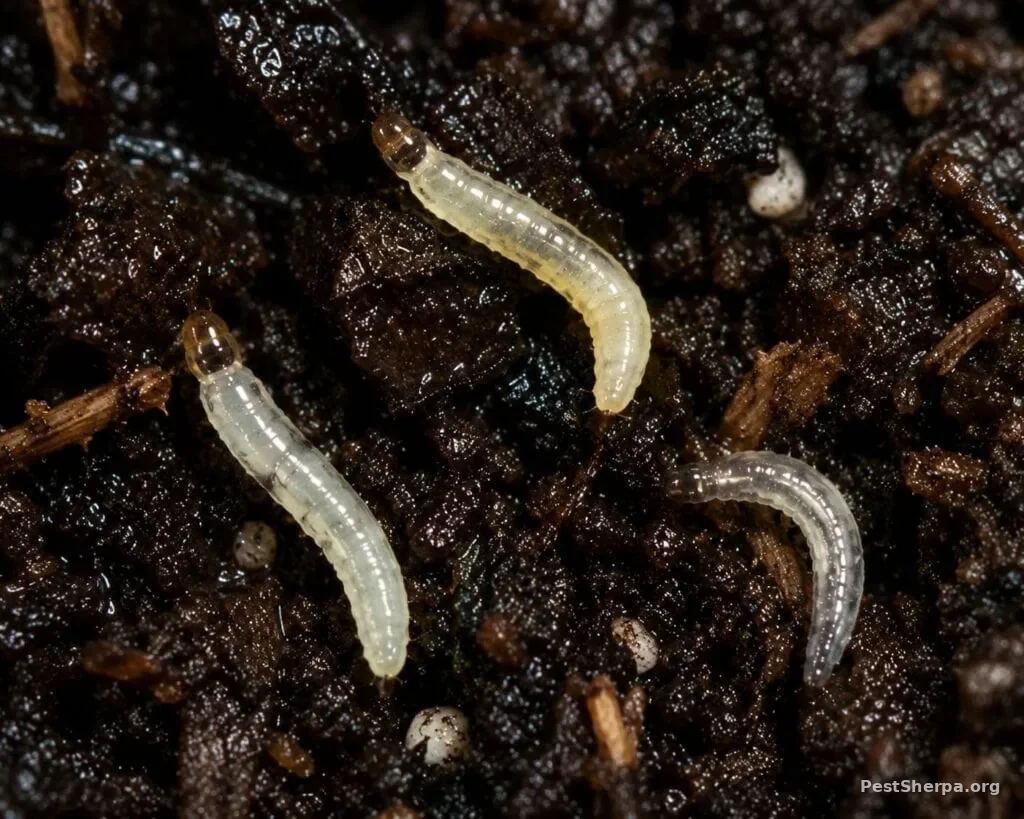
Fungus gnat larvae, about 1/4 inch long, with dark head capsules in moist potting soil.
Biology, Life Cycle, and Seasonal Context
Fungus gnats develop through complete metamorphosis: egg, larva, pupa, and adult. Females lay eggs in damp organic media. Larvae feed in the growing medium, pupate near the soil surface, and then emerge as adults.
Development speed depends on temperature, moisture, and food availability. Under favorable warm indoor or greenhouse conditions, a generation can develop in only a few weeks. That is why a small problem can seem to “suddenly” become noticeable after soil has stayed wet for a while.
In homes, fungus gnats can occur any time houseplants are overwatered or new plants are brought indoors. They are especially common when plants are moved inside or seedlings are started indoors. Winter watering habits that keep potting media damp for long periods also invite them.
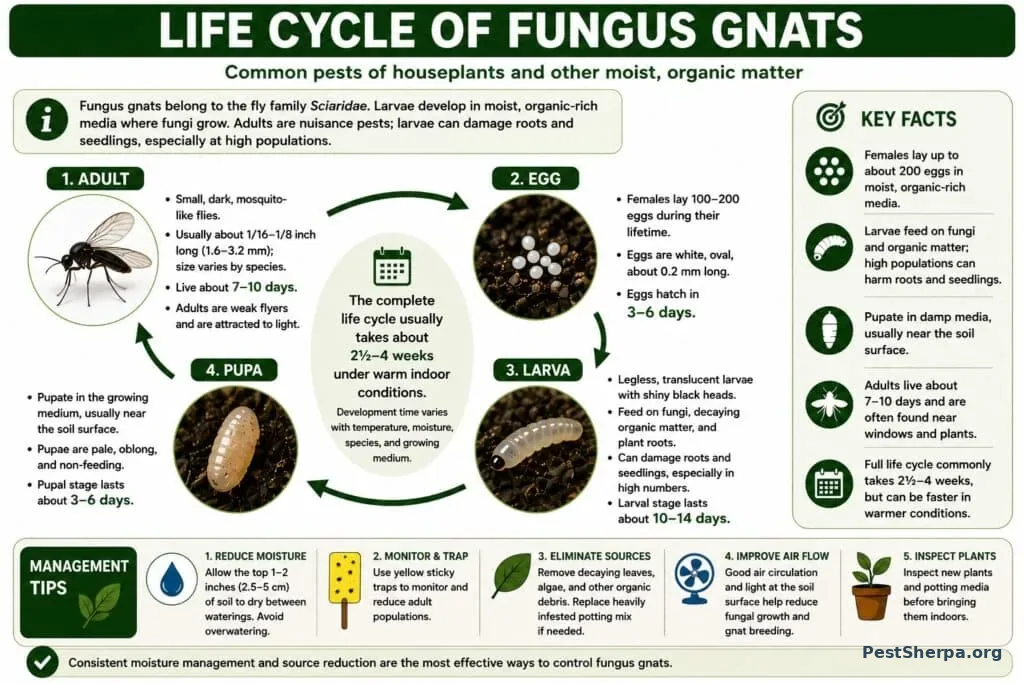
Fungus gnat life cycle from egg to larva, pupa, and adult in houseplant soil.
Fungus Gnat Source Investigation Checklist
1. Start With the Plants Closest to the Flies
Look at the plants closest to the adults, windows, lights, or sticky cards. Fungus gnats are weak fliers, so the source is often nearby.
2. Check Soil Moisture
Press a finger into the top layer of soil or use a moisture meter if available. Constantly damp surface media is one of the strongest clues.
3. Inspect Drainage
Check whether pots have drainage holes, saucers are holding water, decorative cachepots are trapping water, or compacted potting mix is staying wet too long.
4. Look for Organic Debris
Remove fallen leaves, dead stems, spilled potting mix, algae growth, and decaying plant material from pots, benches, and floors.
5. Check New Plants and Potting Mix
New plants, recently repotted plants, and bags of moist potting media can introduce or support fungus gnats. Isolate questionable plants until activity declines.
6. Use Yellow Sticky Cards for Monitoring
Place sticky cards near the soil surface, not just high above the plant. They help confirm adult activity and show whether numbers are increasing or declining.
Can Fungus Gnats Damage Plants?
In most homes, fungus gnats are mainly a nuisance. Adults do not bite, sting, or damage structures. However, larvae can stress seedlings, young plants, cuttings, and already weakened plants, especially when growing media remains wet and supports fungi or root problems.
In greenhouse, nursery, and interior plant settings, heavier infestations can matter more. Larvae may feed on root hairs or damaged roots, and wet media can also favor plant disease. For houseplants, the bigger issue is often the growing condition that allowed fungus gnats to thrive: too much moisture, poor drainage, or decaying organic material.
What To Do About Fungus Gnats
1. Confirm You Are Dealing With Fungus Gnats
Check for small, dark, mosquito-like flies near plants and weak, short flights around damp potting media. If the flies are fuzzy and coming from a drain, compare with drain flies. If they are tan or red-eyed and gathered around fruit, compare with vinegar flies.
2. Let the Surface Dry When the Plant Can Tolerate It
Allow the top layer of growing media to dry as much as the plant can safely tolerate before watering again. Avoid letting sensitive plants wilt severely, but do not keep the surface constantly wet. Bottom watering can help in some cases because it keeps the upper surface less attractive for egg laying.
3. Improve Drainage
- Empty saucers after watering.
- Make sure pots have drainage holes.
- Avoid letting decorative outer pots hold standing water.
- Consider repotting if the potting mix is compacted, sour-smelling, or staying wet too long.
4. Remove Larval Food Sources
Remove dead leaves, algae, spilled soil, decaying plant material, and wet organic debris. In greenhouses or interiorscapes, clean benches, floor edges, potting areas, and irrigation splash zones.
5. Use Sticky Cards as a Monitor, Not the Whole Solution
Yellow sticky cards catch adults and help track activity, but they do not remove larvae already developing in the soil. If sticky card counts stay high, keep looking for damp media or missed sources.
6. Use Labeled Larval Products Carefully When Needed
Some products labeled for fungus gnat larvae, including certain biological control products, may be appropriate for potting media or greenhouse use. Read and follow the label, use only where the product is labeled, and keep products away from children, pets, food-preparation surfaces, and water sources. Pesticides are not always necessary, and they work best when moisture and sanitation problems are corrected first.
What Does Not Work Well
- Only spraying adults: New adults can keep emerging from larvae in the soil.
- Leaving soil wet: Persistent moisture keeps the breeding site attractive.
- Using fruit fly traps as the main tool: Fungus gnats are usually tied to soil, not fruit.
- Treating drains without evidence: Drain products will not solve a fungus gnat problem coming from potted plants.
- Adding unverified home remedies: Cinnamon, coffee grounds, oils, and other household treatments may not address larvae and can sometimes affect plants or soil conditions.
How Long Will Fungus Gnats Last?
After moisture is corrected, adult fungus gnat activity often declines gradually as existing larvae finish development and adults die off. Sticky cards may still catch some adults for a while, especially if several pots were involved.
| Situation | Expected Pattern |
|---|---|
| One overwatered plant corrected early | Activity often drops as soil dries and adults are trapped |
| Several wet pots | Decline may take longer unless all sources are corrected |
| Greenhouse or plant display | Ongoing monitoring is important because irrigation and debris can maintain breeding |
| Source not found | Adults may continue appearing even after trapping or spraying |
When Professional Help May Be Needed
Many houseplant fungus gnat problems can be reduced with watering changes, drainage correction, sanitation, and monitoring. Professional help may be worth considering when the source is hard to find or the setting is a greenhouse or commercial interiorscape. It may also help when plants are valuable or sensitive, or activity keeps returning despite moisture correction.
Professional evaluation can also be useful when the pest is not clearly a fungus gnat. Small flies from drains, fruit, garbage, decomposing material, or plant soil require different source corrections. For broader fly comparisons, see the fly guide.
Lookalikes and Common Misidentifications
| Lookalike | How It Differs | Common Source |
|---|---|---|
| Vinegar flies / fruit flies | Often tan or yellowish; commonly seen around fruit, recycling, or fermenting residues | Overripe fruit, organic residue, bottles, cans, drains with food film |
| Black-eyed fruit flies | Small fruit fly type; often associated with decaying organic buildup | Wet organic residues, drains, trash, food debris |
| Drain flies | Fuzzy, moth-like wings; often rest on bathroom or kitchen walls | Drain film, wet organic buildup, sewer or filter areas |
| Phorid flies | Hump-backed appearance; run quickly on surfaces | Decaying organic material, drains, damaged sewer lines, wet debris |
| Springtails | Not flies; tiny jumping moisture-associated insects | Damp soil, mulch, wet foundations, moist plant media |
Misidentification is one of the biggest reasons small-fly problems drag on. The correct question is not only “What kills the adults?” but “Where are the immature stages developing?”
Frequently Asked Questions
Do fungus gnats bite people?
No. Adult fungus gnats do not bite people. They are mainly a nuisance indoors.
Why do fungus gnats keep coming back?
They usually keep coming back because larvae are still developing in damp growing media. Adult traps help, but moisture correction and source cleanup are the long-term steps.
Are fungus gnats the same as fruit flies?
No. Fungus gnats usually develop in moist soil or organic growing media. Fruit flies and vinegar flies are more closely tied to fermenting fruit, food residue, bottles, cans, and similar sources.
Should I throw away my plant?
Usually not. Many fungus gnat problems improve when watering, drainage, and debris are corrected. Repotting may be helpful if the potting mix is old, compacted, contaminated, or staying wet too long.
Do yellow sticky traps solve fungus gnats?
Sticky traps are useful for catching adults and monitoring activity, but they do not remove larvae in soil. Use them with moisture correction and source cleanup.
Can fungus gnats come from a bag of potting soil?
They can be associated with moist organic potting media, especially if a bag is damp, stored open, or contains decaying organic material. Store potting mix dry and sealed when possible.
How do I recognize fungus gnat larvae?
Look in the top inch of moist soil for slender, translucent to whitish larvae with a distinct shiny black head. They are not the same as springtails or fruit-fly larvae in a kitchen drain.
How long until fungus gnats are gone?
Expect gradual decline over one to several weeks after the media stays drier and breeding sites are corrected. Sticky cards should catch fewer adults as larvae stop developing. New plant hitchhikers can restart the cycle, so quarantine and check soil moisture on arrivals.
Can new plants bring fungus gnats home?
Yes. Nursery and store plants often travel in moist media. Isolate new plants briefly, avoid overwatering, and watch sticky cards near the new pot before mixing it into a dense plant shelf.
References
- UC IPM: Fungus Gnats
- Wisconsin Horticulture Division of Extension: Fungus Gnats on Houseplants
- Colorado State University Extension: Fungus Gnats as Houseplant and Indoor Pests
This article was written by Greg Baumann, founder of Pest Sherpa, and reflects more than 40 years of professional pest management experience.
About the Author

Greg Baumann | Pest Control Expert
Greg Baumann is the founder of Pest Sherpa and a Pest Control Expert with more than 40 years of professional pest management experience. His articles combine decades of field experience, technical expertise, and science-based guidance to help homeowners identify pests correctly, understand real-world risks, and make informed pest management decisions.
Mission: Identify the pest. Understand the risk. Stop the problem. Prevent the comeback. Know when it’s time to call a professional.