
Lyctid Powderpost Beetles: ID, Damage, and What to Do
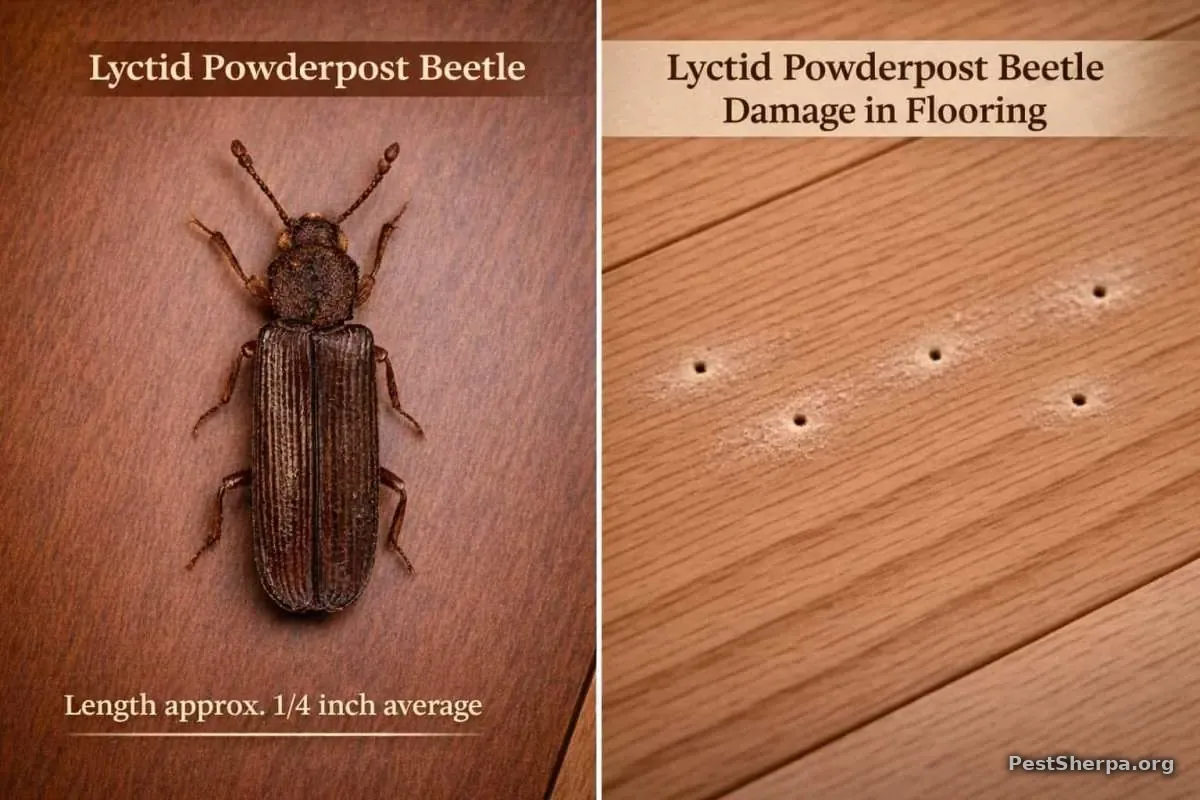
Lyctid powderpost beetles are small wood-boring beetles that can damage unfinished hardwood sapwood in flooring, furniture, cabinets, molding, paneling, picture frames, bamboo, and some imported hardwood products. Most people do not see the beetles first. They notice tiny round exit holes and very fine, flour-like powder beneath the wood.
That powder is an important clue, but it does not automatically prove that the infestation is still active. Old exit holes and leftover frass can remain visible long after beetles have emerged. The key is to identify the beetle group, determine whether fresh activity is continuing, and then decide whether monitoring, replacement, finishing, moisture correction, or professional treatment is appropriate.
TL;DR
Lyctid powderpost beetles are “true powderpost beetles” that infest starch-rich hardwood sapwood. They are called “true” because their frass is very powdery in consistency and other beetles are sometimes improperly put into this category. It is strictly an entomology judgment and is simply a matter of interest. They are most often associated with newer hardwood products, unfinished wood, poorly stored lumber, furniture, cabinets, flooring, paneling, bamboo, and imported hardwood items.
The most recognizable sign is very fine, talc-like or flour-like powder coming from tiny round exit holes. Fresh powder that reappears after cleaning is stronger evidence of active infestation than old holes alone. Note that rarely is an adult lyctid powderpost beetle observed. In fact, professional pest control technicians can go for years without seeing a live lyctid powderpost beetle. The exit holes and frass are the most common observations.
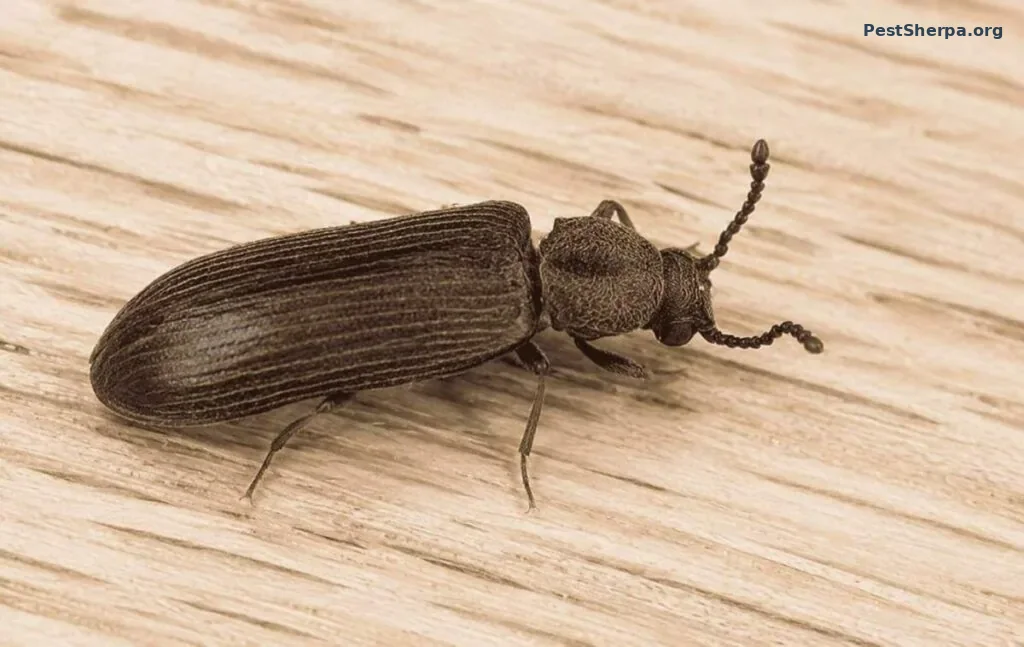
Adult lyctid powderpost beetle on unfinished oak floor. Adults are rarely observed and frass and damage are best signs of infestation.
The most useful first steps are to confirm identification, clean and document the powder, monitor for new activity, inspect nearby hardwood items, and avoid unnecessary spraying until the source and activity level are clear.
Quick Navigation
- Quick ID
- What Lyctid Powderpost Beetles Mean
- Identification
- Active Infestation or Old Damage?
- Wood They Infest
- Source Investigation Checklist
- Damage and Signs
- Biology and Life Cycle
- What To Do
- What Doesn’t Work
- How Long Activity Can Last
- Pesticide and Safety Notes
- When Professional Help May Be Needed
- Lookalikes
- FAQs
- References
Quick ID: Lyctid Powderpost Beetles
| Feature | What To Look For |
|---|---|
| Adult beetle | Small, narrow, flattened beetle; reddish-brown, dark brown, or black |
| Head | Visible from above, not hidden under a hood-like pronotum |
| Antennae | 11 segments with a two-segmented club at the end |
| Exit holes | Tiny, round holes, often about pinhead size |
| Frass | Very fine light colored powder that feels like flour or talc, not gritty pellets |
| Wood attacked | Hardwood sapwood, especially unfinished or unsealed finished material |
| Common locations | Hardwood flooring, furniture, cabinets, molding, paneling, tool handles, bamboo, baskets, picture frames, and imported hardwoods |
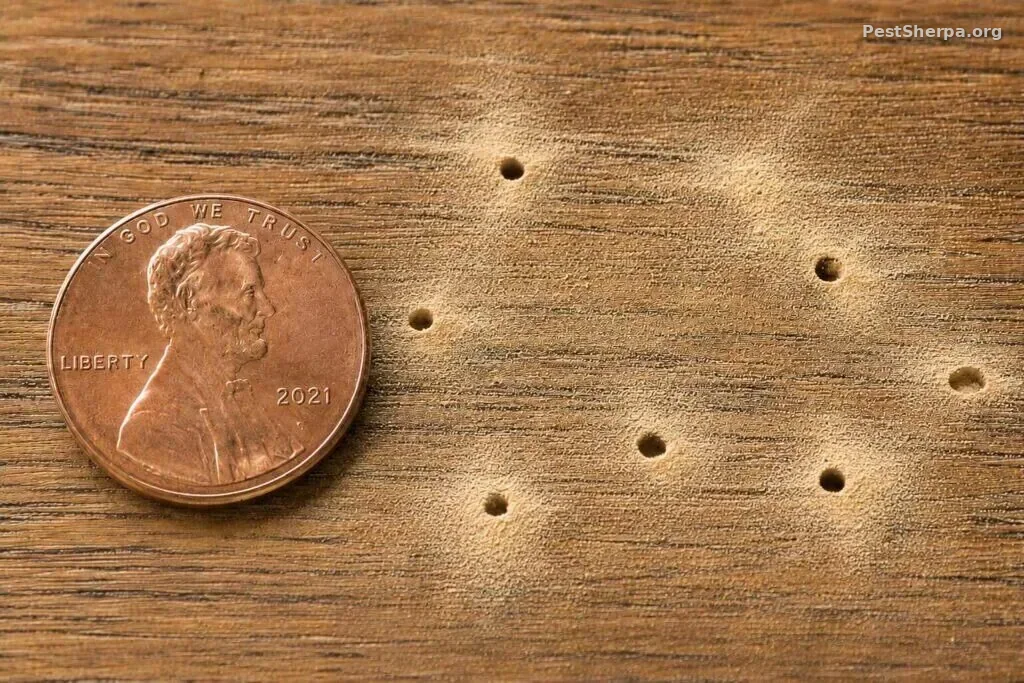
Lyctid powderpost beetle create small round exit holes and fine powdery frass in hardwood flooring.
What Lyctid Powderpost Beetles Mean in a Home
Lyctid powderpost beetles usually mean that a susceptible hardwood product contained enough starch, pores, and unfinished surface area for larvae to develop. Many indoor problems begin before the wood enters the home. Eggs or larvae may already be in lumber, flooring, furniture, cabinets, paneling, or decorative wood when the item is installed or brought inside. Custom hardwood kitchen cabinets may be installed unknowingly with powderpost beetles. It is not due to any lack of care by the cabinet manufacturer.
Finding one or two old holes in a hardwood item is different from finding fresh powder that keeps returning. The first may be old damage. The second suggests that beetles are still emerging or that larvae are still developing inside the wood.
| What You See | What It May Mean |
|---|---|
| Old holes with dark sides of the holes with no new powder | Possibly old damage; monitor before assuming activity |
| Fresh light colored powder beneath holes | Possible current emergence from the wood |
| Powder reappears after cleaning | Stronger evidence of active infestation |
| Holes limited to one board or one object | Localized problem and correction may be possible |
| New holes in many hardwood items | Broader source investigation is needed |
| Large oval holes or coarse frass | May be a different wood-boring insect, not lyctid beetles |
Important: Lyctid powderpost beetles are not termites. If you see mud tubes, soft blistered wood, swarmers, or hard drywood termite pellets instead of flour-like powder, compare the evidence with the Termite Guide before choosing next steps.
Identification
Lyctid powderpost beetles are true powderpost beetles in the subfamily Lyctinae, family Bostrichidae. Older pest references may list them under the former family name Lyctidae, so both terms appear in pest management literature.
Adults are small, elongated, and slightly flattened. They are usually reddish-brown to dark brown or black. A useful field clue is that the head is visible when viewed from above. This helps separate lyctids from some other powderpost beetles whose heads are hidden beneath the pronotum.
The larvae are cream-colored, C-shaped grubs that develop hidden inside wood. They cause most of the damage by feeding and tunneling through the sapwood. Because they remain inside the wood, the infestation may not be noticed until adults emerge.
Two lyctid species often mentioned in structural pest references are the southern lyctus beetle, Lyctus planicollis, and the velvety powderpost beetle, Trogoxylon parallelipipedum. Exact species identification usually requires close examination, so most homeowner decisions should focus on confirming the beetle group and whether activity is current.
Active Infestation or Old Damage?
One of the most common mistakes is assuming that every old exit hole means an active infestation. Exit holes remain after beetles leave, and fine powder can continue to sift from old galleries when the wood is bumped or vibrated.
To check for activity, clean the powder, photograph or mark the area, and recheck it over time. Fresh powder that reappears beneath the same wood is more meaningful than holes alone.
Practical Monitoring Steps
- Take clear photos of the holes, powder, and surrounding wood.
- Vacuum or gently clean the powder so new activity is easier to see.
- Use painter’s tape, a sketch, or dated photos to map where holes already exist.
- Recheck the area for new powder or new holes over the next several weeks or months.
- Save any beetles you find in a small container for identification.
- For rough or unfinished wood, a small test area may be sealed or filled and monitored for new emergence, but avoid altering valuable furniture, antiques, or finished surfaces without advice.
If the wood is valuable, structural, antique, or widespread, avoid sanding, sealing, or applying products before the situation is documented. Those actions can hide evidence needed for identification and may damage the item.
Wood Lyctid Powderpost Beetles Infest
Lyctid beetles are strongly associated with hardwood sapwood. They do not thrive in every type of wood. They need suitable pores for egg laying and enough starch in the sapwood for larvae to develop.
Commonly attacked materials include:
- Oak
- Hickory
- Ash
- Walnut
- Maple
- Mahogany and other imported hardwoods
- Bamboo and bamboo products
- Hardwood plywood, trim, furniture, baskets, tool handles, and picture frames
Structural framing lumber is often softwood, so lyctid activity in modern homes is more often tied to hardwood flooring, decorative trim, cabinetry, furniture, or stored hardwood stock than to wall studs or rafters. If damage is in softwood framing, consider other wood-boring insects such as old house borers, ptinidae family beetles (formerly anobiid), or termites.
Lyctid Powderpost Beetle Source Investigation Checklist
Start with the wood product showing fresh powder, then expand outward. Lyctid infestations are often localized to one board, one item, one batch of lumber, or one area where susceptible sapwood was included.
Check Recently Installed or Purchased Hardwood
- Hardwood flooring
- Cabinets and vanities
- Trim, molding, and paneling
- Hardwood stair parts
- New or used furniture
- Imported hardwood items
- Bamboo furniture, baskets, blinds, or decorative items
Check Stored Wood and Hobby Materials
- Hardwood boards stored in garages, basements, shops, sheds, or outbuildings
- Turning blanks, carving stock, slabs, and craft wood
- Salvaged wood, barn wood, and antique wood items
- Unfinished wood kept in damp or poorly ventilated areas
Check Nearby Rooms and Items
Adult beetles can emerge and move toward light, but they usually remain associated with the infested wood or nearby suitable hardwood. Inspect window sills, baseboards, the underside of furniture, the edges of flooring, cabinet interiors, and dust-prone ledges below suspected wood.
Damage and Signs of Infestation
Lyctid larvae tunnel inside wood and pack their galleries with very fine powder. Damage may be hidden until adults chew out through the surface and leave small round exit holes.
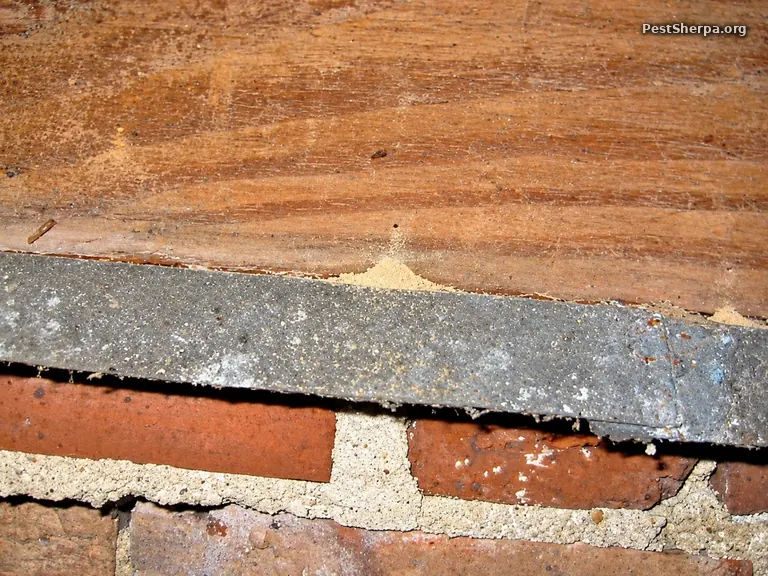
Common signs include:
- Tiny, round exit holes in hardwood
- Fine powder that resembles flour, face powder, or talc
- Small piles of powder beneath wood surfaces
- New holes appearing over time
- Powder reappearing after the area has been cleaned
- Localized weakening or shell-like wood in severe, long-running infestations
Biology and Life Cycle
Lyctid powderpost beetles have complete metamorphosis: egg, larva, pupa, and adult. The larval stage is the damaging stage.
Eggs
Females lay eggs in pores, cracks, crevices, or existing emergence holes in suitable bare or unfinished hardwood. Finished, sealed, painted, varnished, or waxed surfaces are less attractive for egg laying because the pores are blocked.
Larvae
After hatching, larvae bore into the wood and feed mainly on starch and other nutrients in the sapwood. They do not feed the same way termites do, and they are not digesting cellulose as their main food source. Their tunneling creates the fine powder that gives powderpost beetles their name.
Pupae and Adults
When mature, larvae pupate near the wood surface. Adults then chew out through small round holes. Adult beetles are often nocturnal and may be attracted to lights or windows after they emerge indoors.
Development time varies widely with beetle species, temperature, humidity, moisture content, and starch content of the wood. In favorable conditions, development may take months. In less favorable conditions, activity can stretch over several years.
What To Do About Lyctid Powderpost Beetles
1. Confirm the Beetle Group
Do not rely on holes alone. Hole shape, frass texture, wood type, adult beetles, and location all matter. Save any adults you find and compare the signs with the lookalike table below.
2. Determine Whether Activity Is Current
Clean the powder, document the area, and watch for fresh powder or new holes. If powder does not return, the damage may be old. If powder keeps reappearing, treat the area as potentially active.
3. Identify the Source Wood
Focus on hardwood sapwood, unfinished surfaces, recently installed materials, furniture, bamboo, imported hardwoods, and stored wood. If the activity is isolated to one board or item, broad treatment may not be necessary.
4. Reduce Conditions That Favor Reinfestation
- Keep hardwood products dry and well ventilated.
- Correct damp crawlspaces, leaks, or storage conditions that keep wood moisture elevated.
- Use properly dried hardwood materials when building or repairing.
- Inspect hardwood and bamboo products before bringing them indoors.
- Finish or seal bare, susceptible wood when appropriate for the item.
5. Consider Removal, Replacement, or Treatment Based on Extent
Localized infestations may be handled by removing or replacing a damaged board, trim piece, or item. Valuable furniture, antiques, musical instruments, artwork, and structural hardwood components require more caution. Heat, freezing, fumigation chambers, borate applications, or structural fumigation may be options in some situations, but the right choice depends on the item, the infestation, the wood finish, and local regulations.
Surface treatments generally require bare, unfinished wood to work properly. Products applied over varnish, paint, wax, polyurethane, or other sealed finishes may not reach larvae inside the wood.
What Doesn’t Work
- Assuming every hole is active. Old damage can remain long after beetles are gone.
- Using bug bombs or foggers. Foggers do not reach larvae protected inside wood.
- Spraying finished surfaces without a label-supported plan. Many treatments cannot penetrate sealed wood.
- Only vacuuming powder. Cleaning helps monitoring, but it does not solve an active source by itself.
- Treating for termites without confirming termites. Lyctid beetles, drywood termites, carpenter ants, and old house borers leave different signs.
- Ignoring the wood source. Adult beetles are the visible stage, but larvae inside susceptible hardwood are usually the reason activity continues.
How Long Can Lyctid Powderpost Beetle Activity Last?
Lyctid activity can last longer than people expect because larvae develop hidden inside wood. Adults may emerge months or years after the infested wood was installed or brought indoors.
Activity is more likely to decline when the susceptible wood dries, starch content becomes less favorable, exposed surfaces are sealed, or infested wood is removed. However, if fresh powder continues to appear, the wood should be treated as potentially active until monitoring or inspection shows otherwise.
Pesticide and Safety Notes
Pesticides are not always necessary for lyctid powderpost beetles. Identification, monitoring, moisture correction, removal, replacement, and finishing bare wood may be more appropriate than applying insecticides in many localized cases.
If a pesticide is used, read and follow the product label. Do not apply products to food-contact surfaces, dishes, cutting boards, toys, pet items, HVAC vents, drains, or finished surfaces unless the label specifically allows that use. Keep children and pets away from treated areas until the label says it is safe to return. Avoid off-label mixing, repeated spraying, or applying products into enclosed spaces without proper directions and ventilation.
When Professional Help May Be Needed
Professional help may be worth considering when the infestation appears active, widespread, structural, hard to access, or associated with valuable items. It may also be useful when the insect could be a different wood-destroying pest.
Consider a professional inspection or identification when:
- Fresh powder keeps returning after cleaning.
- New holes appear in multiple boards, rooms, or items.
- The affected wood is structural or difficult to access.
- The damaged item is valuable, antique, or easily harmed by heat, freezing, sanding, or chemicals.
- The evidence could also match termites, carpenter ants, old house borers, or other wood-boring insects.
- You are considering fumigation, borate treatment, or other regulated treatment options.
Lookalikes and Common Misidentifications
Several pests can leave holes, powder, pellets, sawdust, or other wood damage. Correct identification matters because the source, risk, and management options are different.
| Pest or Damage Type | Key Difference | Helpful Link |
|---|---|---|
| Lyctid powderpost beetles | Very fine flour-like frass; tiny round holes; hardwood sapwood | This guide |
| Ptinidae (formerly anobiidae) or furniture/deathwatch beetles | May infest hardwood or softwood; frass often feels gritty or contains pellets; more associated with higher moisture wood | No separate guide yet |
| Bostrichid false powderpost beetles | Often more cylindrical beetles; head usually hidden from above; frass may be more tightly packed and less talc-like | No separate guide yet |
| Old house borers | Larger beetles and larvae; usually softwoods; oval exit holes; coarse or pellet-mixed frass | Old House Borer Guide |
| Drywood termites | Hard, dry pellets rather than flour-like powder; pellets may collect below kick-out holes | Drywood Termite Guide |
| Subterranean termites | Mud tubes, soil contact, hidden galleries, and swarmers; not fine flour-like lyctid frass | Termite Guide |
| Carpenter ants | Excavate galleries but do not eat wood; debris may include sawdust, insulation, and insect parts | Carpenter Ant Guide |
| Carpenter bees | Large round entrance holes, often in exterior wood; coarse sawdust and staining may be present | Carpenter Bee Guide |
Frequently Asked Questions
Do lyctid powderpost beetles mean my house is structurally unsafe?
Not automatically. Many lyctid problems are localized to a hardwood board, furniture item, cabinet, trim piece, or flooring area. Structural concern depends on the location, extent, wood type, and whether activity is continuing.
Does fine powder always mean the infestation is active?
No. Old powder can sift from existing tunnels when wood is moved or vibrated. Fresh powder that reappears after cleaning is stronger evidence of current activity.
Can lyctid powderpost beetles spread to all wood in my home?
They are selective. Lyctids mainly infest suitable hardwood sapwood with enough starch and exposed pores. Many softwoods, finished surfaces, and older low-starch hardwoods are less suitable.
Why did beetles appear after new flooring or furniture was installed?
The wood may have contained eggs or larvae before installation or purchase. Adults can emerge later after development is complete, which makes the problem appear sudden.
Will sealing or varnishing wood help?
Sealing bare, uninfested, susceptible hardwood can reduce egg-laying opportunities by closing pores and cracks. However, beetles already developing inside finished wood may still emerge later through the surface.
Can I use a household freezer or oven for infested furniture?
Temperature treatments can damage wood, finishes, glue joints, antiques, instruments, and artwork if done incorrectly. Do not place valuable items in an oven or freezer without reliable guidance for that item and pest situation.
Do bug bombs kill powderpost beetle larvae?
No. Larvae are protected inside the wood. Foggers may kill exposed adults but do not reach the hidden life stages that cause the damage.
What should I save for identification?
Save any adult beetles, close photos of holes and powder, the type of wood if known, and notes about when powder appeared. This information helps separate lyctids from termites, old house borers, carpenter ants, and other wood-boring pests.
References
- UF/IFAS Extension: Southern Lyctus Beetle, Lyctus planicollis LeConte
- UF/IFAS Extension: Powderpost Beetles and Other Wood-Infesting Insects
- University of Kentucky Entomology: Powderpost Beetles
- University of Maryland Extension: Powderpost Beetles
- Iowa State University Extension and Outreach: Powderpost Beetles
- Purdue Extension: Powderpost Beetles
This article was written by Greg Baumann, founder of Pest Sherpa, and reflects more than 40 years of professional pest management experience.
About the Author

Greg Baumann | Pest Control Expert
Greg Baumann is the founder of Pest Sherpa and a Pest Control Expert with more than 40 years of professional pest management experience. His articles combine decades of field experience, technical expertise, and science-based guidance to help homeowners identify pests correctly, understand real-world risks, and make informed pest management decisions.
Mission: Identify the pest. Understand the risk. Stop the problem. Prevent the comeback. Know when it’s time to call a professional.