
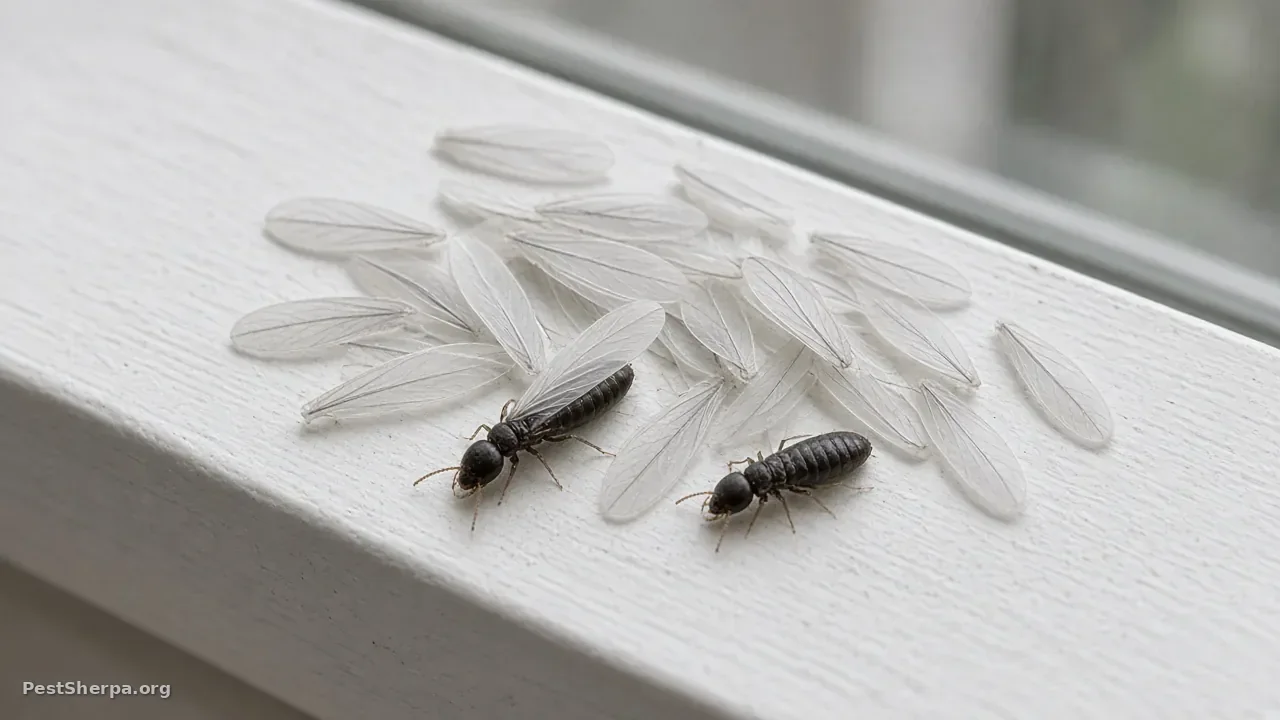
I heard that termites swarming is the sure sign of a problem but my inspector found termites and I didn’t see a swarm. Should I be worried?
Short answer: Yes, you should take the inspector seriously. Swarming is a dramatic sign, not the only sign. Subterranean termites often damage wood for years with no swarm indoors. Finding workers, soldiers, mud tubes, or damaged wood without a swarm is still an active problem.
Why swarming gets oversold
Swarmers are winged reproductives leaving to start new colonies. Homeowners notice them because they gather at windows and leave piles of wings. Many colonies, though, never swarm inside your living space in a given year. Outdoor flights can happen unnoticed. Drywood termites may release small numbers that are easy to miss.
Inspectors look for tubes, galleries, frass, moisture conditions, and live insects in wood. Those findings do not require a private fireworks show of swarmers to be valid.
What your report may mean
- Live termites or fresh tubes: active infestation needing a treatment plan.
- Old damage without live insects: still document and monitor; prior damage can hide new activity.
- Conducive conditions (wood-to-soil contact, leaks): fix these even if treatment style varies.
- Species ID (subterranean vs drywood) changes method and warranty expectations.
What to do next
Ask the inspector to show you the evidence on site. Get the findings in writing. Compare at least one additional licensed opinion if the bid is large or the method is unclear. Do not wait for a swarm “to prove it.” Swarming is a bonus alarm, not a required ticket for concern.
Related reading
Use the Termite Guide for signs and biology, and the baiting Q&A if a monitoring system was proposed. Hiring notes help you evaluate licenses and warranties without panic shopping.
Swarmers vs flying ants
Homeowners also confuse termite swarmers with winged ants. Termites have straight antennae, a broad waist, and equal-length wings; ants have elbowed antennae and a pinched waist. Either way, indoor piles of wings deserve an inspection. Do not wait for a second flight to believe the first report.
Document what you were shown
Ask the inspector to photograph tubes or damaged wood with a scale reference (a coin or tape measure). Keep the report. If a second company visits, shared evidence speeds agreement on method and reduces “he said, she said” about whether activity was real.
Related guides
References
This article was written by Greg Baumann, founder of Pest Sherpa, and reflects more than 40 years of professional pest management experience.
About the Author

Greg Baumann | Pest Control Expert
Greg Baumann is the founder of Pest Sherpa and a Pest Control Expert with more than 40 years of professional pest management experience. His articles combine decades of field experience, technical expertise, and science-based guidance to help homeowners identify pests correctly, understand real-world risks, and make informed pest management decisions.
Mission: Identify the pest. Understand the risk. Stop the problem. Prevent the comeback. Know when it’s time to call a professional.