
Acrobat Ants: Identification, Nesting, Damage, and Control
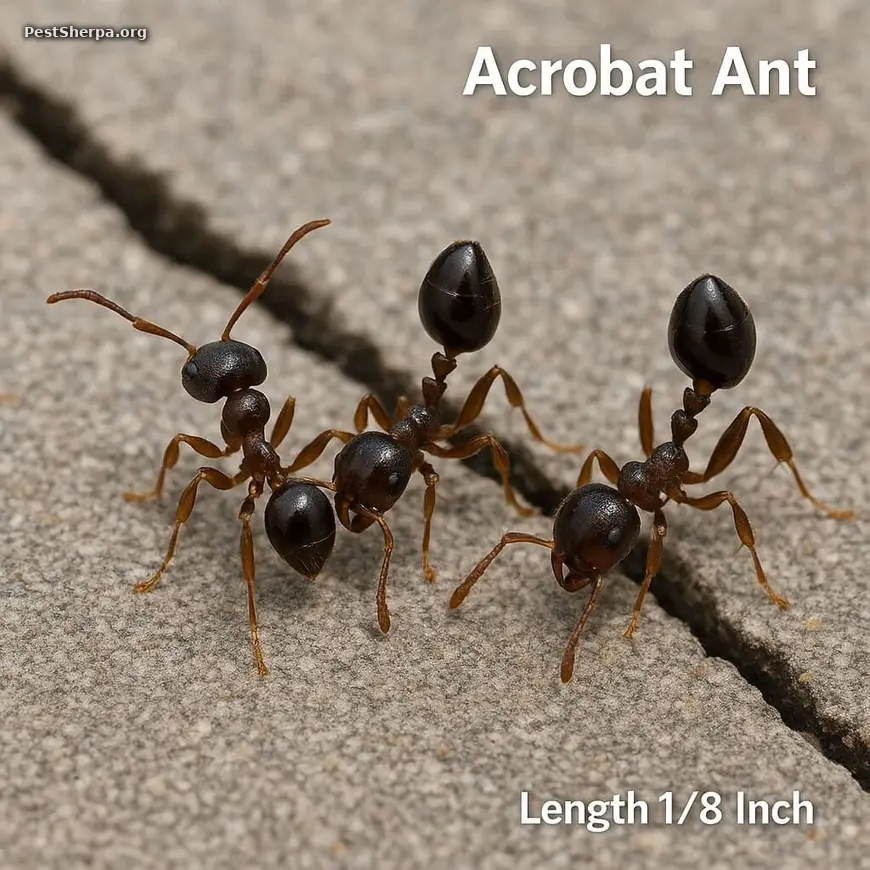
Acrobat Ants: Identification, Behavior, Nesting, and Professional Control
Acrobat ants are distinctive ants in the genus Crematogaster. They get their common name from the way workers raise their heart-shaped abdomen over the body when disturbed. This defensive posture makes them easier to recognize than many other household ants, but their nesting habits make infestations difficult to eliminate without a careful inspection.
Although Acrobat ants are not usually as structurally destructive as carpenter ants, they can become persistent nuisance pests when they nest in wall voids, insulation, moisture-damaged wood, or electrical equipment. Their presence may also point to hidden moisture problems, decayed wood, or old galleries left behind by termites or other wood-damaging insects.
For homeowners and businesses, the key issue is not simply killing the ants that are visible. Effective Acrobat ant control depends on finding where the colony is nesting, understanding how workers are entering the structure, correcting conditions that support the colony, and using treatment methods that reach the hidden nest.
| Quick Facts About Acrobat Ants | |
|---|---|
| Scientific genus | Crematogaster |
| Common name | Acrobat ants |
| Typical size | About 1/16 to 1/8 inch |
| Color | Light brown, reddish brown, dark brown, or black |
| Key identification trait | Heart-shaped abdomen raised over the body when disturbed |
| Common nesting sites | Moist wood, decayed wood, tree cavities, wall voids, insulation, and old insect galleries |
| Primary concern | Hidden nesting, nuisance activity, moisture association, and possible electrical equipment problems |
| Best control approach | Professional inspection, colony location, moisture correction, exclusion, targeted baiting, and non-repellent treatment |
Jump to a Section
- What Are Acrobat Ants?
- How to Identify Acrobat Ants
- Acrobat Ant vs. Carpenter Ant
- Where Acrobat Ants Nest
- What Acrobat Ants Eat
- Signs of an Acrobat Ant Infestation
- Are Acrobat Ants Dangerous?
- DIY vs. Professional Control
- Prevention and Long-Term Protection
- Frequently Asked Questions
- Authoritative References
What Are Acrobat Ants?
Acrobat ants are a group of ants in the genus Crematogaster. They are native ants found in many parts of North America and are commonly associated with trees, decaying wood, firewood, stumps, hollow limbs, and other protected nesting sites. Around structures, they may move indoors through tree limbs, utility lines, siding gaps, window frames, vents, and other exterior openings.
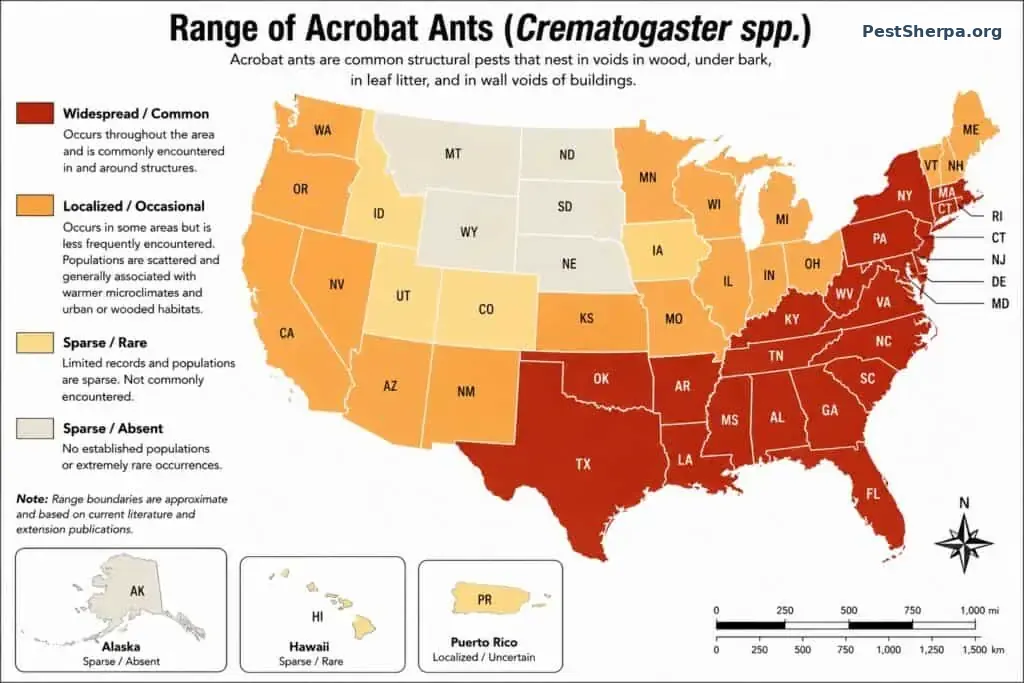
Their most recognizable behavior is defensive abdomen-raising. When disturbed, workers lift the gaster, or abdomen, above the body. From above, the abdomen often appears heart-shaped. This is one of the most useful traits for separating Acrobat ants from many other small household ants.
Acrobat ants do not usually begin by attacking sound, dry structural wood. Instead, they often take advantage of wood that has already been softened by moisture, decay, fungi, termites, carpenter ants, or other damage. That makes them especially important as a warning sign. Seeing Acrobat ants indoors may mean the visible ant problem is only part of a larger moisture or structural issue.
Expert Interpretation
With Acrobat ants, the visible trail is not the same thing as the colony. Workers may appear in a kitchen, bathroom, office, or utility room while the nest is hidden several rooms away inside a wall void, insulation pocket, window frame, door frame, tree cavity, or moisture-damaged area. The most effective treatment starts with inspection and source location, not broad spraying of the ants that happen to be visible.
Risk Assessment
| Category | Risk Level | Why It Matters |
|---|---|---|
| Human health risk | Low | Acrobat ants are not known as major disease-transmitting pests. |
| Food contamination | Moderate | Workers may forage indoors on sweets, proteins, grease, pet food, and exposed food residues. |
| Property concern | Moderate | They often nest in decayed or moisture-damaged wood and may reveal hidden building issues. |
| Electrical concern | Moderate to High | Colonies may occupy electrical boxes, wiring voids, or equipment spaces. |
| Difficulty to eliminate | High | Nests are often hidden, and visible workers may be far from the colony. |
| DIY success rate | Low to Moderate | Surface sprays usually affect only visible workers and may scatter activity. |
| Professional success rate | High | Inspection-based treatment can target the colony and correct the conditions supporting it. |
How to Identify Acrobat Ants
Acrobat ants are small ants, usually measuring about 1/16 to 1/8 inch long. Color can vary by species, but workers may appear light brown, reddish brown, dark brown, or black. Their most important identifying feature is the heart-shaped abdomen, especially when viewed from above.
When disturbed, Acrobat ant workers raise the abdomen over the thorax. This behavior is unusual enough that it can help homeowners and pest professionals quickly separate them from many other small ants. Workers also have elbowed antennae, a narrow waist with two nodes, and an uneven thorax profile.
Because several small ant species can appear similar at a glance, identification should be confirmed before treatment. Misidentifying Acrobat ants as another nuisance ant can lead to the wrong product choice, poor bait acceptance, or treatments that temporarily scatter the colony without eliminating it.
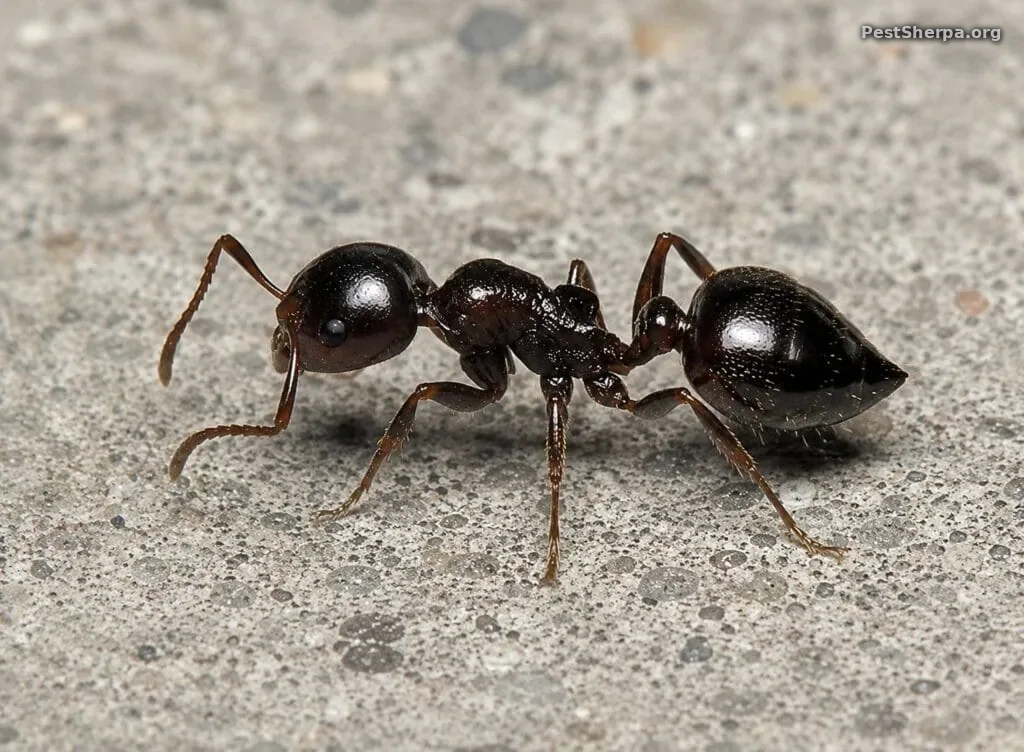
| Identification Feature | Acrobat Ant Description |
|---|---|
| Size | Small, usually about 1/16 to 1/8 inch |
| Color | Light brown, reddish brown, dark brown, or black |
| Abdomen | Heart-shaped when viewed from above |
| Defensive posture | Raises abdomen over the body when disturbed |
| Antennae | Elbowed antennae; commonly described with an 11-segmented antenna and clubbed tip |
| Waist | Two nodes between thorax and abdomen |
| Common indoor clues | Activity near windows, doors, wall voids, insulation, utility lines, or electrical boxes |
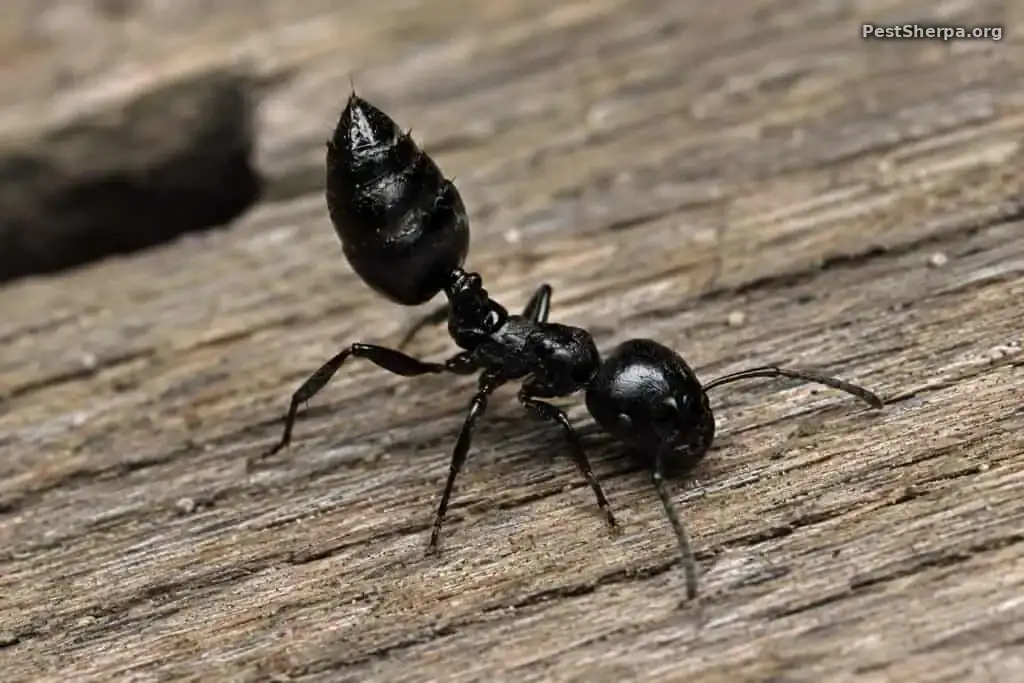
Acrobat ant with typical raised abdomen when startled
Acrobat Ant vs. Carpenter Ant
Acrobat ants are sometimes confused with small carpenter ants because both may be associated with wood. The difference is important. Carpenter ants are well known for excavating galleries in wood. Acrobat ants more often use existing cavities, decayed wood, old termite galleries, old carpenter ant galleries, and voids around doors, windows, siding, or insulation.
That distinction matters during inspection. An Acrobat ant infestation may not mean the ants caused the original damage. It may mean they found wood that was already softened by moisture, fungal decay, or prior activity from termites or other wood-associated insects.
| Characteristic | Acrobat Ant | Carpenter Ant |
|---|---|---|
| Heart-shaped abdomen | Yes | No |
| Raises abdomen defensively | Yes | No |
| Typical size | Small | Usually larger |
| Primary wood association | Moist, decayed, or previously damaged wood | Excavated galleries in wood |
| Use of old termite or carpenter ant galleries | Common | Possible, but carpenter ants also excavate their own galleries |
| Electrical void activity | Can occur | Less typical |
| Main treatment challenge | Finding hidden nests in voids or damaged wood | Finding parent and satellite colonies and correcting moisture conditions |
This comparison is not meant to turn the page into a carpenter ant article. It is included because homeowners often need to understand why Acrobat ants in wood do not always mean the same thing as a carpenter ant infestation. Correct identification determines the inspection plan, treatment method, and prevention strategy.
Ant Species Identification Guide
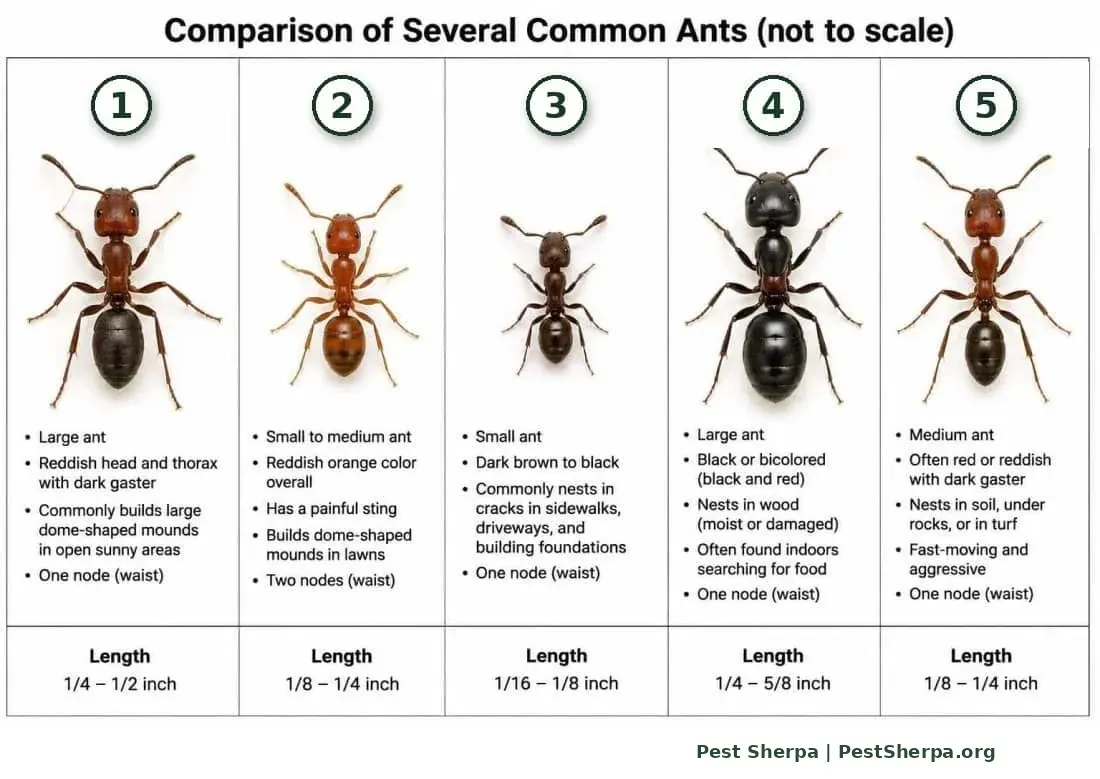
Mound Ants
Allegheny mound ants build large dome-shaped soil mounds in open, sunny areas, and those mounds can kill the grass and shrubs around them. They bite and spray formic acid rather than sting; see the Allegheny mound ant guide for ID and control.
Pest Sherpa Field Ant Guide
Field ants nest in soil, under rocks, or in turf, and some build loose soil mounds that get mistaken for fire ant or Allegheny mound ant nests. Check the workers before you treat; the ant guide walks through the common lookalikes.
Nesting Behavior and Preferred Habitats
Acrobat ants prefer protected nesting sites that offer moisture, shelter, and easy access to food. Outdoors, colonies are commonly found beneath loose bark, inside decaying logs, tree stumps, hollow limbs, fence posts, landscape timbers, and other wood that has been softened by weather or fungal decay. These natural nesting sites provide stable temperatures and protection from predators.
Inside buildings, Acrobat ants frequently establish colonies in wall voids, attic spaces, foam insulation, door and window frames, soffits, crawlspaces, and other concealed structural areas. Rather than excavating large galleries themselves, they commonly occupy existing cavities created by moisture damage, fungal decay, or previous activity from termites or carpenter ants. For this reason, an Acrobat ant infestation may indicate a hidden building problem that deserves further investigation.
Workers may travel surprisingly long distances from the nest to food sources. It is common for ants seen in a kitchen or bathroom to originate from a colony located in a completely different portion of the structure. Following worker trails often requires patience because the visible ants rarely reveal the actual nest location.
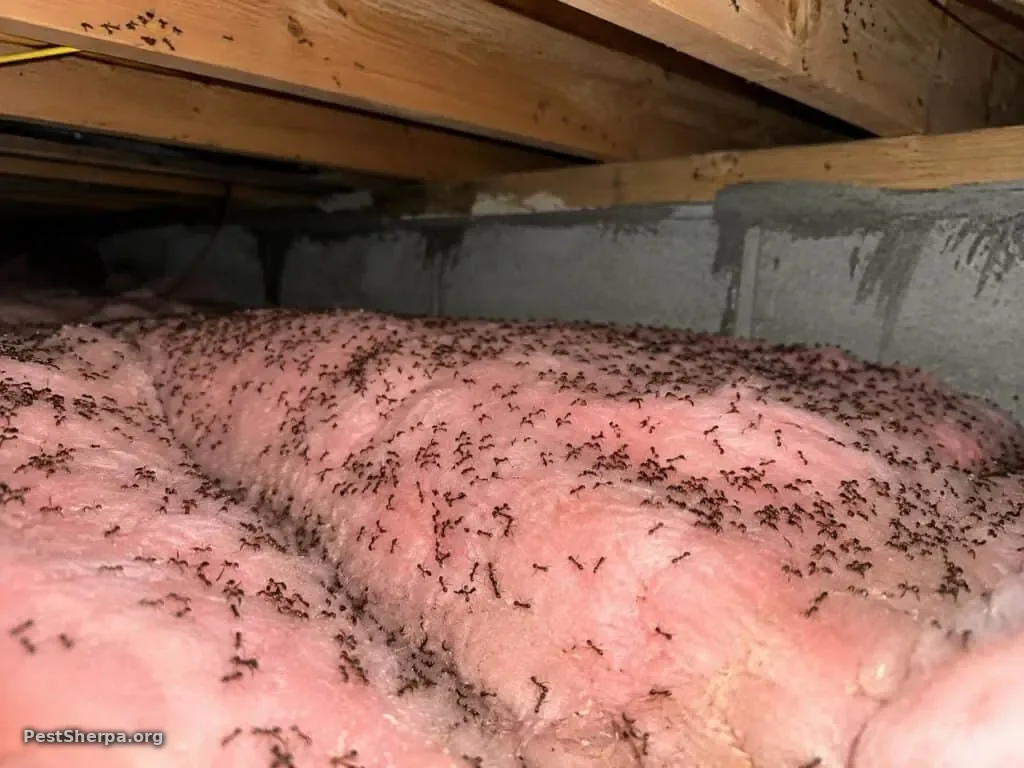
Acrobat ants discovered between insulation and floor above
Professional Tip
One of the first questions a pest management professional asks is why the colony selected that location. Moisture intrusion, leaking windows, roof leaks, plumbing leaks, deteriorated siding, or decayed trim often create ideal nesting sites. Eliminating those conditions greatly reduces the likelihood of future infestations.
Feeding Habits and Foraging Behavior
Acrobat ants are opportunistic omnivores that consume a wide variety of foods throughout the year. Outdoors they feed on living and dead insects while also collecting honeydew produced by aphids, scales, mealybugs, and other sap-feeding insects. Trees and ornamental shrubs supporting honeydew-producing insects often become important foraging areas.
Indoors they readily feed on sugars, syrups, fruit juices, grease, meats, pet food, and other protein-rich materials. Food preferences may change throughout the season depending on colony development, making bait selection more challenging than many homeowners expect.
Workers establish well-defined foraging trails that may follow utility lines, plumbing penetrations, baseboards, expansion joints, or hidden structural voids. These trails often remain active for weeks or months if the colony is not eliminated.
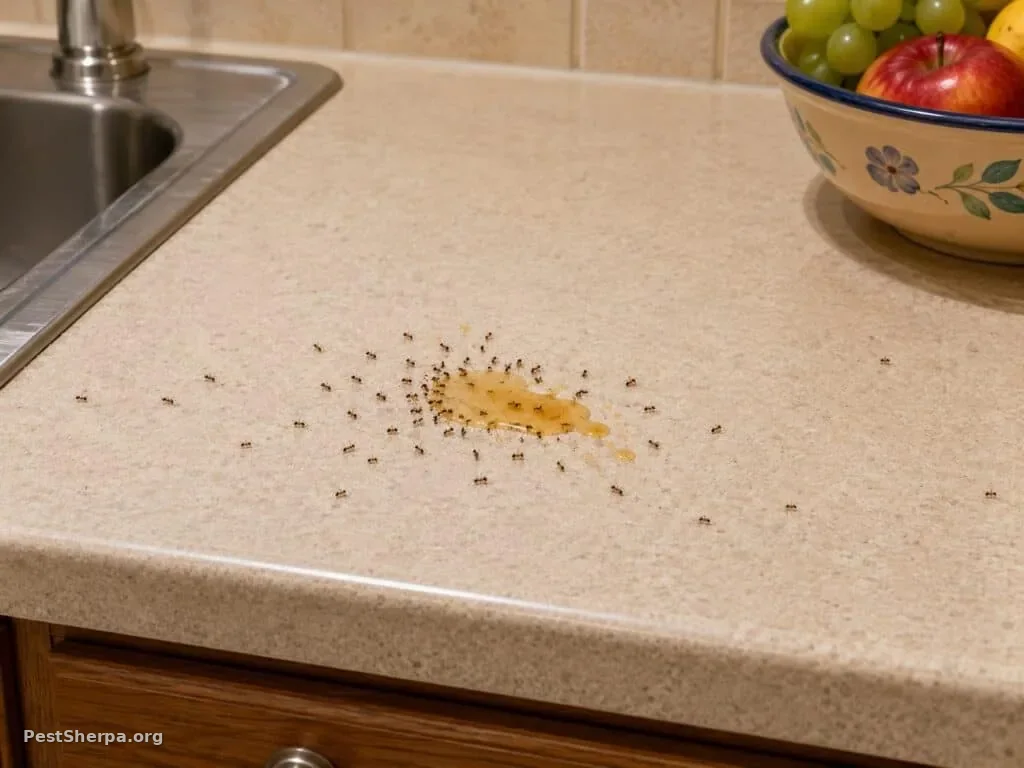
Acrobat ants feeding on spilled sweet fruit juice
Signs of an Acrobat Ant Infestation
Because colonies usually remain hidden, homeowners often notice worker ants long before the nest is discovered. Common indicators include:
- Persistent ant trails along walls, ceilings, windows, or utility lines.
- Workers entering or exiting electrical outlets, switches, or junction boxes.
- Ant activity around moisture-damaged trim, siding, or window frames.
- Small accumulations of nesting debris beneath hidden wall voids.
- Workers raising their heart-shaped abdomen when disturbed.
- Repeated sightings in kitchens, bathrooms, laundry rooms, or utility areas.
- Activity returning shortly after over-the-counter sprays are applied.
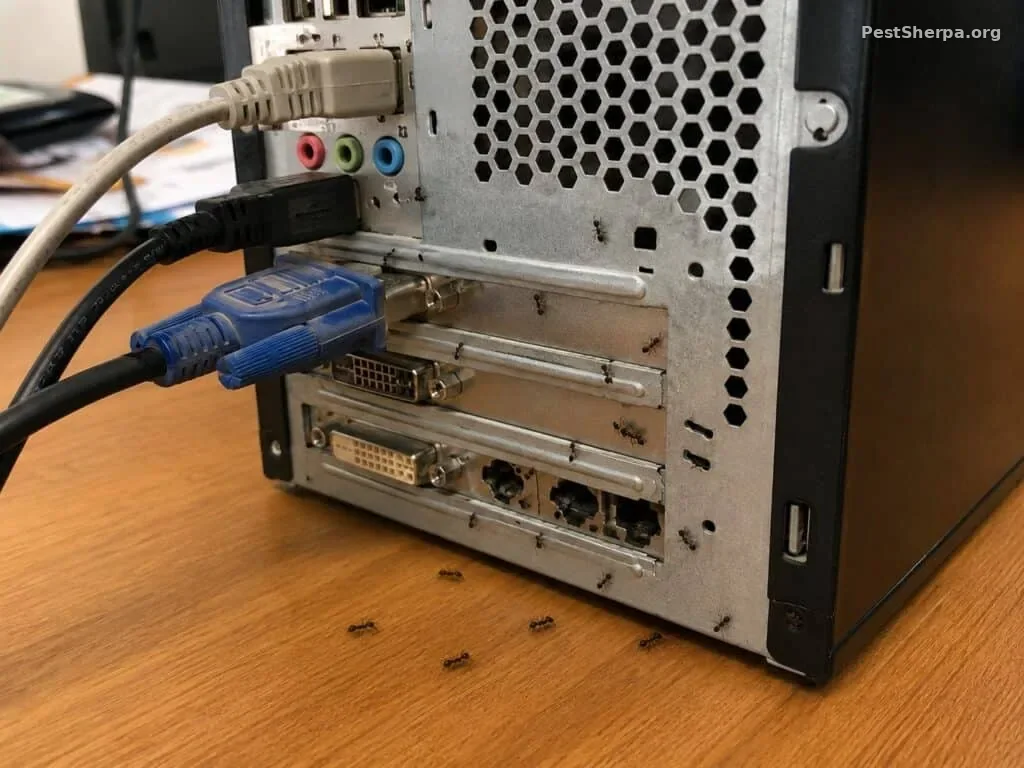
Acrobat ants infesting computer
Are Acrobat Ants Dangerous?
Acrobat ants are not considered major public health pests and are not known for transmitting diseases to people. They rarely bite unless handled directly, and bites are generally minor. Their primary significance comes from their ability to establish persistent hidden colonies inside buildings.
Perhaps the greatest concern is their association with structural moisture problems and their occasional occupation of electrical equipment. Colonies have been found inside junction boxes, electrical panels, switch boxes, conduit spaces, and other protected areas. While electrical damage is uncommon, large colonies can interfere with equipment and should be professionally evaluated.
Acrobat ants should also be viewed as a possible indicator species. Their presence frequently suggests deteriorated wood, water intrusion, or previous activity from other wood-associated insects. Correcting those underlying conditions is often just as important as treating the ants themselves.
| Potential Concern | Importance |
|---|---|
| Human health | Low |
| Food contamination | Moderate |
| Electrical equipment | Moderate |
| Hidden moisture damage | High |
| Difficulty locating nests | High |
Why DIY Treatments Often Fail
Many over-the-counter insecticides kill only the workers that are directly contacted. Because the queen and the majority of the colony remain hidden inside structural voids, visible activity often returns within days or weeks.
Repellent insecticides may actually complicate control by causing workers to avoid treated surfaces and establish new foraging routes. In some situations, portions of the colony may relocate into nearby voids, making the infestation appear to spread rather than decline.
Professional pest management programs focus on locating the colony, correcting moisture problems, sealing structural entry points, applying non-repellent products where appropriate, and selecting baits that match the colony’s current feeding preferences. This integrated approach is consistent with the principles of Integrated Pest Management (IPM) and generally provides more reliable long-term control than repeated surface spraying.
Prevention and Long-Term Protection
Long-term Acrobat ant management depends on eliminating the conditions that allow colonies to become established. Because these ants are strongly associated with moisture and existing structural voids, correcting building deficiencies is often just as important as applying insecticides.
- Repair leaking roofs, plumbing leaks, window leaks, and damaged siding.
- Replace moisture-damaged or decayed wood whenever practical.
- Trim tree limbs and shrubs so they do not contact the structure.
- Keep firewood, lumber, and landscape timbers away from exterior walls.
- Seal utility penetrations, siding gaps, and cracks around windows and doors.
- Reduce aphid and scale insect populations that provide honeydew for foraging ants.
- Maintain gutters and downspouts to prevent chronic moisture problems.
- Schedule periodic inspections if your property has experienced termite damage, carpenter ants, or recurring moisture issues.
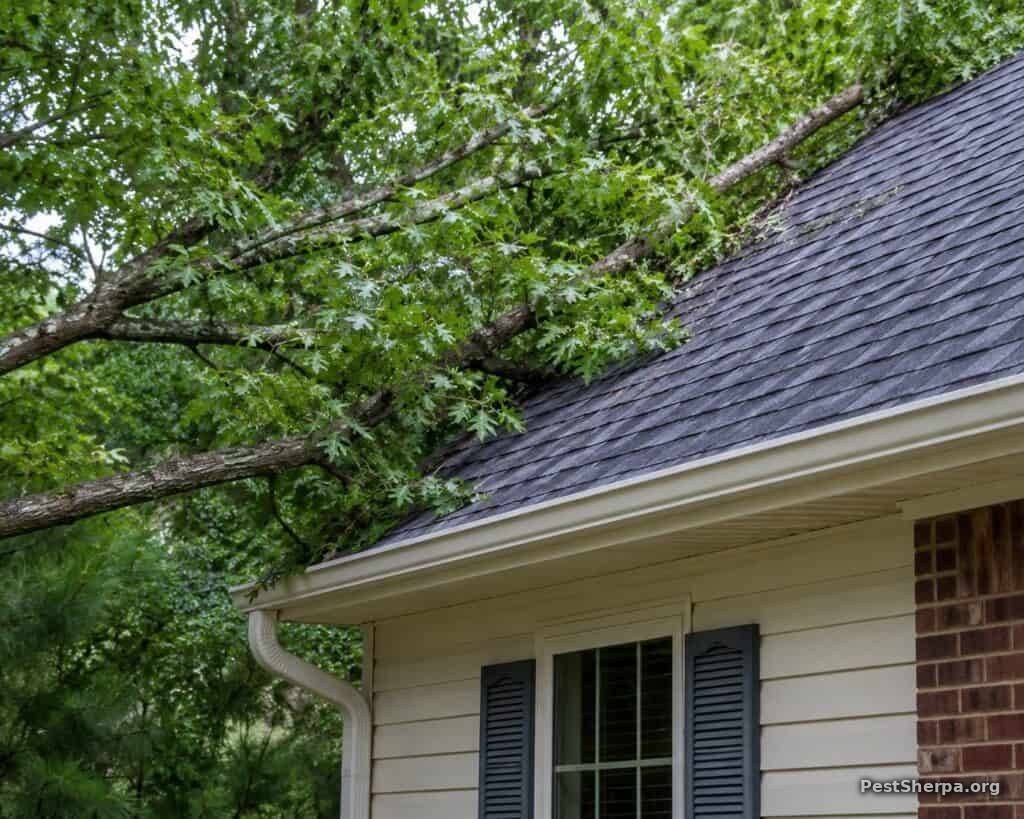
Tree branches touching house gives path for Acrobat ants and other nuisance ants to enter homes
Expert Insight
Acrobat ants are often secondary occupants rather than the original cause of structural problems. If a colony is discovered in damaged wood, the inspection should determine why that wood deteriorated in the first place. Moisture intrusion, poor drainage, plumbing leaks, or previous termite activity should be corrected to reduce the chance of future infestations.
What to Look For
If you observe one or more of the following conditions, a professional inspection is recommended:
- Repeated indoor ant activity despite previous treatments.
- Workers entering electrical outlets or wall voids.
- Ants disappearing beneath siding or exterior trim.
- Moisture-damaged wood with active ant trails.
- Workers displaying the distinctive raised heart-shaped abdomen.
- Evidence of previous termite or carpenter ant activity.
Frequently Asked Questions
What attracts Acrobat ants?
Acrobat ants are attracted to moisture-damaged wood, protected nesting sites, insects, honeydew produced by aphids and scales, and common household food sources including sugars and proteins.
Do Acrobat ants bite?
They can bite if handled but are not considered medically significant pests. Bites are generally minor and uncommon.
Can Acrobat ants damage a house?
Acrobat ants rarely damage sound structural wood. However, they commonly occupy moisture-damaged wood and existing insect galleries, making them an indicator of hidden structural conditions that deserve attention.
Why are Acrobat ants found in electrical equipment?
Electrical boxes, conduit, and wall cavities provide protected nesting locations. Large colonies occasionally interfere with electrical equipment, making professional inspection advisable.
Can I eliminate Acrobat ants myself?
Small outdoor colonies may sometimes be controlled, but indoor infestations are often difficult because the nest remains hidden. Successful long-term control usually requires locating the colony and correcting the conditions that allowed it to become established.
What is the best treatment for Acrobat ants?
The most successful programs combine inspection, moisture correction, exclusion, carefully selected non-repellent insecticides, targeted baiting, and ongoing monitoring using the principles of Integrated Pest Management (IPM).
Authoritative References
- Clemson Cooperative Extension: Acrobat Ants (HGIC 2400)
- Texas A&M AgriLife Extension: Acrobat Ant (Crematogaster)
- Iowa State University Extension: Acrobat Ant
- Virginia Cooperative Extension: Acrobat Ant (ENTO-405NP)
- National Pest Management Association (PestWorld): Ant Identification & Prevention
Conclusion
Acrobat ants are distinctive insects that are relatively easy to identify once their raised, heart-shaped abdomen is recognized. Eliminating them, however, is considerably more difficult than identifying them. Their tendency to nest inside hidden structural voids, moisture-damaged wood, insulation, and abandoned insect galleries often allows colonies to remain active long before homeowners realize a problem exists.
Because Acrobat ants frequently signal underlying moisture or structural issues, successful management involves more than simply killing the ants that are visible. A complete inspection, correction of conducive conditions, exclusion of entry points, and targeted treatment of the colony provide the best opportunity for long-term control. If ant activity continues after repeated over-the-counter treatments, or if workers are entering electrical equipment or damaged wood, a professional inspection is recommended.
This article was written by Greg Baumann, founder of Pest Sherpa, and reflects more than 40 years of professional pest management experience.
About the Author

Greg Baumann | Pest Control Expert
Greg Baumann is the founder of Pest Sherpa and a Pest Control Expert with more than 40 years of professional pest management experience. His articles combine decades of field experience, technical expertise, and science-based guidance to help homeowners identify pests correctly, understand real-world risks, and make informed pest management decisions.
Mission: Identify the pest. Understand the risk. Stop the problem. Prevent the comeback. Know when it’s time to call a professional.