Allegheny mound ants are large outdoor ants best known for building massive dome-shaped soil mounds in lawns, fields, and woodland edges. While they rarely invade homes, their colonies can spread across properties, damage vegetation, and become aggressive when disturbed, making correct identification and realistic long-term control important.
TL;DR
Mounds are large and dome shaped
Allegheny mound ants are large outdoor mound-building ants found mostly in the Midwest, Northeast, and parts of the eastern United States. They rarely invade homes, but their large mounds can damage lawns, kill nearby vegetation, and create aggressive outdoor activity when disturbed. Control is difficult because colonies are often interconnected underground and can persist for years.
Quick Takeaways
Large dome-shaped soil mounds are the biggest identification clue.
These ants are outdoor pests, not typical indoor invaders.
They do not sting, but they can bite aggressively if disturbed.
Spraying only the surface of the mound rarely solves the problem.
Slow-acting baiting and repeated long-term management usually work better than quick treatments.
They are often confused with fire ants, but Allegheny mound ants do not sting.
Identification: What Allegheny Mound Ants Look Like
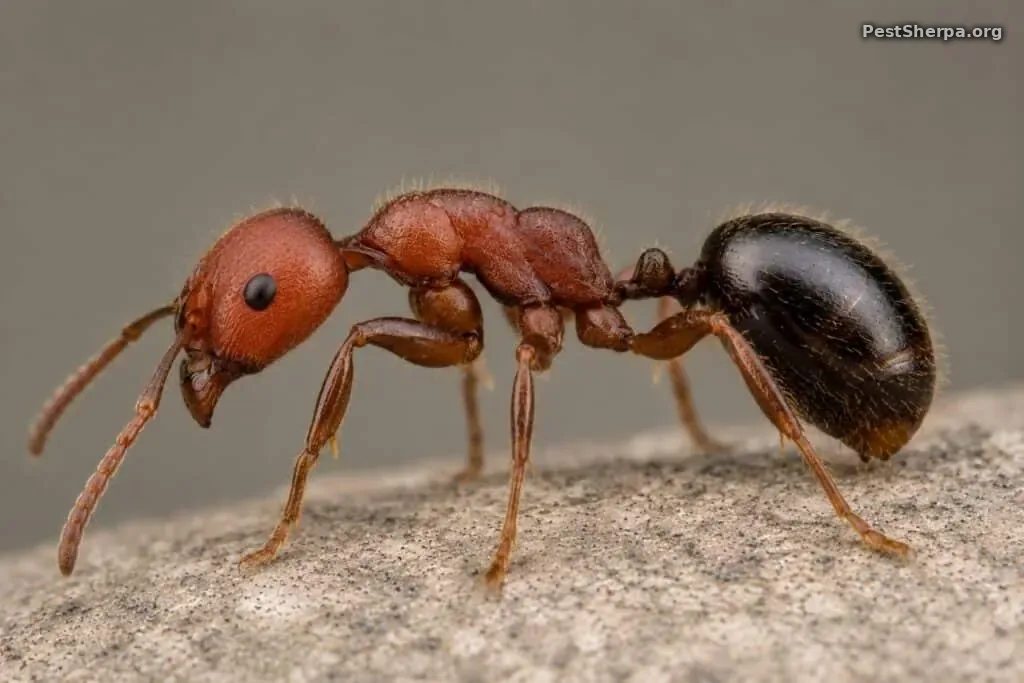
Look for a broad, dome-shaped soil mound in sunny lawn, pasture, or woodland edge, often with little vegetation on the mound itself. Workers with reddish-orange heads and thoraxes plus darker abdomens fit the common field look. Combine mound form, worker color pattern, and geography (eastern half of the U.S.) rather than relying on color alone.
Mounds can reach impressive size over years. Fresh soil on the dome, active workers on warm days, and a vegetation-free crown are practical field signs. Take a photo of the mound and a close worker shot before treating so you can compare with fire ant guides if needed.
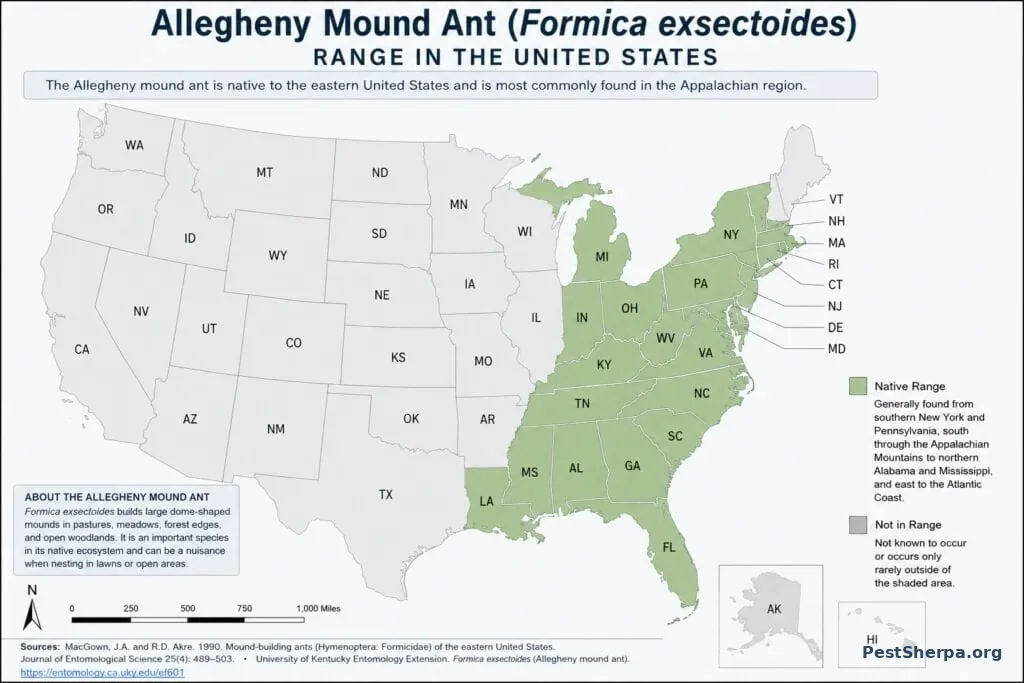
Allegheny mound ants (Formica exsectoides) are large field ants known for building massive dome-shaped soil mounds in sunny outdoor areas. Workers are reddish-orange on the head and thorax with a darker black or brown abdomen. Workers are usually about 3/16 to 1/4 inch long. These ants are found on the eastern half of the US.
These ants are most often found in:
Lawns near wooded areas
Pastures and fields
Open sunny woodland edges
Rural or semi-rural properties
Areas with multiple connected mounds
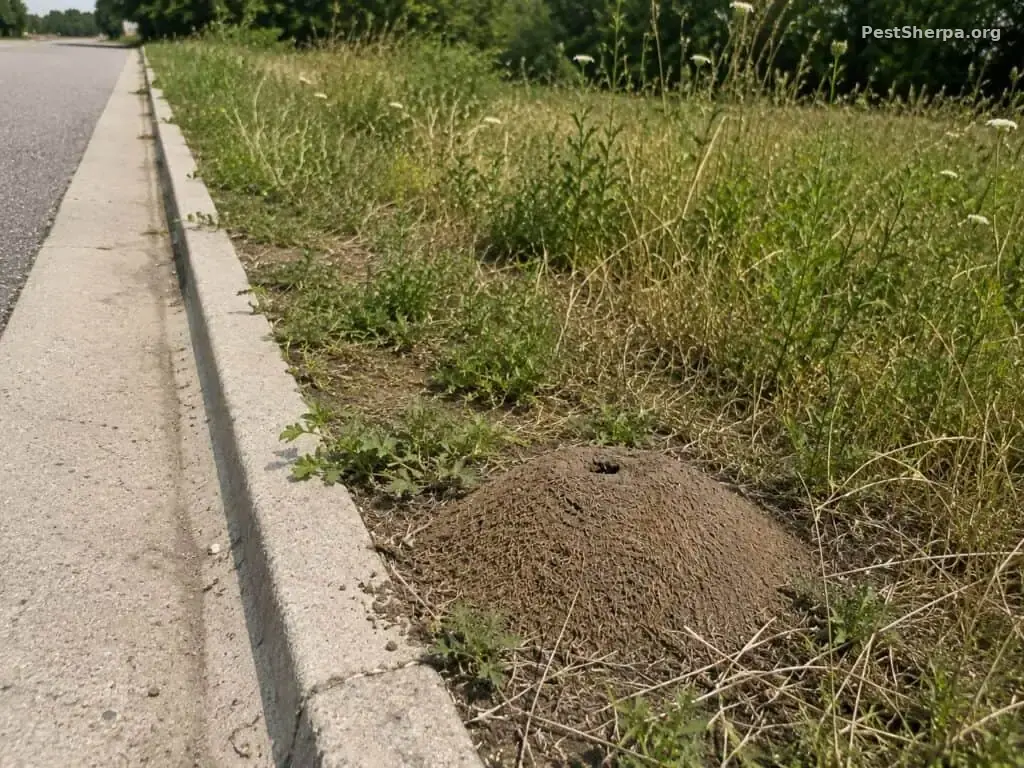
Mound…note rough texture and twigs
Their mounds can become very large over time, sometimes reaching several feet wide and several feet high. Mature colonies may also have interconnected underground tunnel systems linking multiple mounds together.
What Confirms the ID
Large dome-shaped outdoor soil mounds
Red-orange head and thorax with dark abdomen
Heavy outdoor activity around the mound
Aggressive biting behavior when disturbed
Vegetation damage around active colonies
Multiple mounds in an area are common
What Commonly Misleads Homeowners
Allegheny mound ants are commonly mistaken for fire ants because of their large mounds and aggressive behavior. However, they do not sting. They can bite and spray formic acid, but they are not true fire ants.
They may also be confused with larger outdoor field ants or even carpenter ants, though carpenter ants typically nest in damp wood rather than building huge exposed soil mounds.
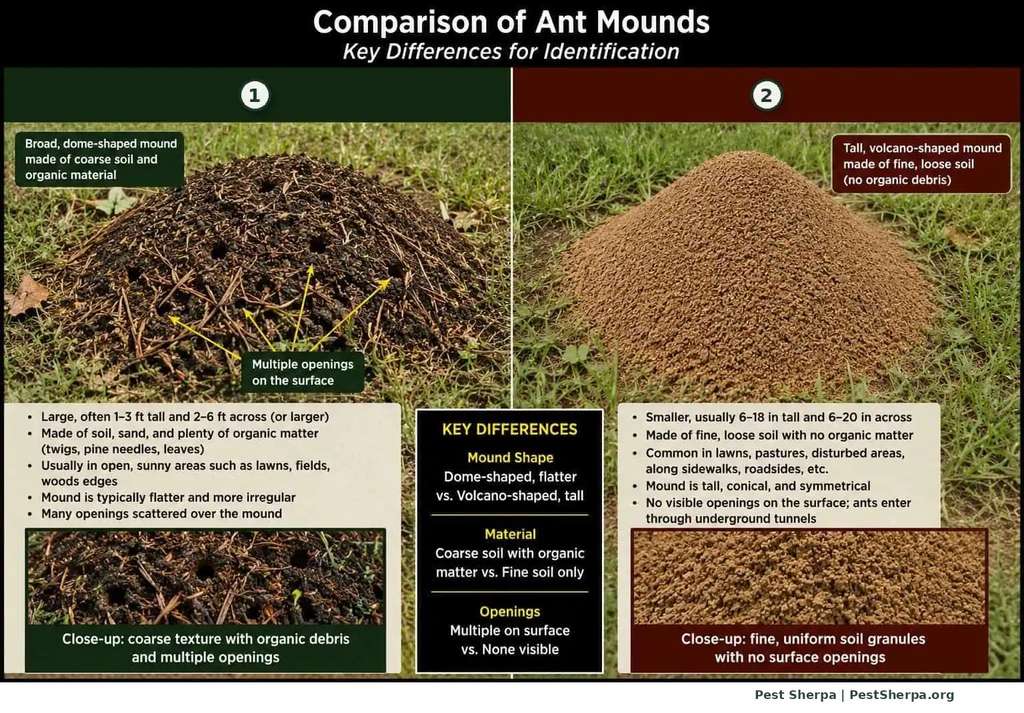
Which mound do you see? Match the number:
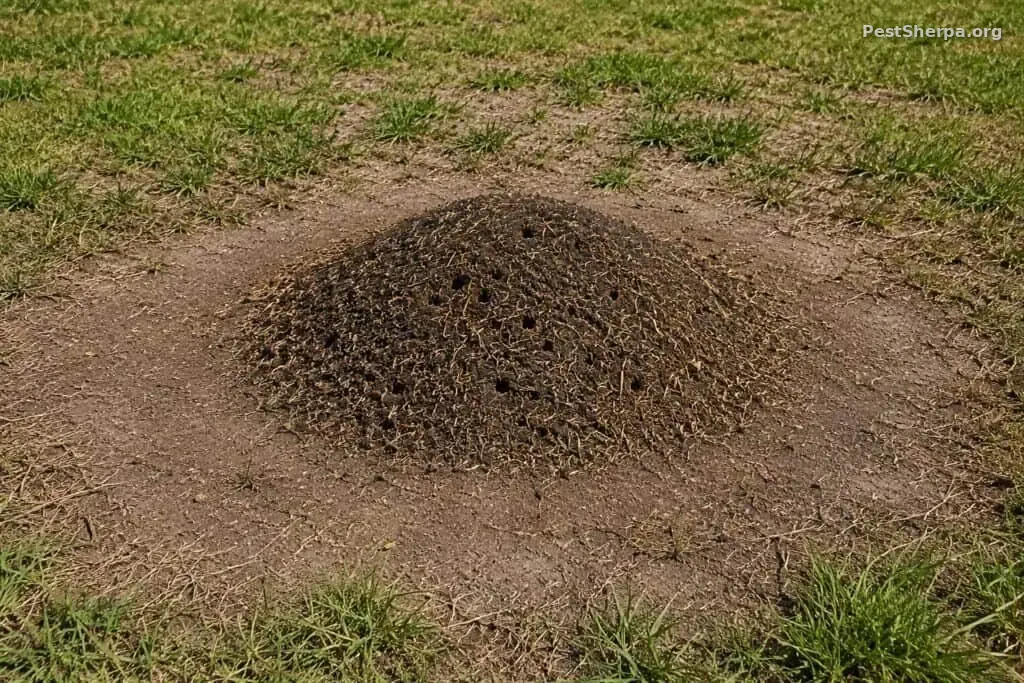
Allegheny mound ant mound (Formica exsectoides): broad, dome-shaped and often 1 to 3 feet tall, made of coarse soil mixed with twigs and pine needles, with many openings on the surface.
Red imported fire ant mound (Solenopsis invicta): smaller, usually 6 to 18 inches tall, made of fine loose soil with no organic debris and no visible openings.
Why Allegheny Mound Ants Matter
Large mounds can kill grass and shrubs by covering roots and changing soil conditions around the dome. Colonies may connect underground, so one mound is not always one isolated nest. That interconnected structure is why chopping the top off a mound or soaking the surface often fails and can make ants more defensive for a while.
Homeowners often assume any large mound means fire ants. Allegheny mound ants bite and can spray formic acid; they do not sting like fire ants. Correct ID changes both urgency and product choice.
Allegheny mound ants are primarily an outdoor nuisance and landscape pest. Unlike termites or carpenter ants, they do not damage homes structurally. The biggest problems are:
Large unsightly mounds in lawns and landscapes
Aggressive outdoor biting when disturbed
Damage to nearby trees, shrubs, and vegetation
Long-term expansion of interconnected colonies
These ants may kill nearby vegetation by injecting formic acid into plants around the mound, which can open the area to more sunlight and favor colony growth.
Note bare soil around mound
Older colonies may expand across large outdoor areas over many years, especially in sunny rural properties bordering woods or fields.
What To Do: What Actually Helps
Plan for patience. Allegheny mound ant colonies can persist for years, and surface-only treatments usually disappoint. Decide whether the mound is in a high-use lawn area where control is worth the effort, or in a remote edge where monitoring and vegetation protection may be enough.
1. Do Not Randomly Destroy the Mound
Raking open a dome without a follow-up plan can scatter workers and brood while leaving queens deeper in the system. If you must reshape a mound for mowing safety, pair that work with a labeled control strategy and expect activity to continue for a while.
Just removing the mound will only allow ants to build again very soon as the colonies are too deep to remove
Many homeowners try to flatten, rake, or dig apart the mound first. This often fails because colonies extend deep underground and may connect to additional nests. Disturbing the colony before treatment can spread activity and make management harder.
2. Focus on Long-Term Control
Large established colonies are rarely eliminated with one treatment. Multi-year management may be required for heavily established properties with numerous interconnected mounds.
3. Use Labeled Outdoor Ant Baits When Appropriate
Slow-acting outdoor ant baits are generally a better fit than blasting the mound surface with a contact spray. Place bait where foragers are active, protect it from rain when the label advises, and give the colony time to feed before you judge results. Follow every label site and rate instruction.
Granular bait around a mound
Slow-acting outdoor ant baits are often more effective than quick-contact sprays because workers can carry material deeper into the colony. Timing matters most during warm active periods in spring and summer.
Baiting results can vary. Some mound ants may collect bait without fully feeding on it, so repeated monitoring is important.
4. Reduce Honeydew Sources
These ants feed heavily on honeydew from aphids, scales, and similar insects. Managing sap-feeding insects on nearby shrubs and trees may help reduce long-term food availability around the colony.
5. Expect Re-Treatment
Large mound systems often require monitoring and repeated seasonal treatment. Quick “one-and-done” expectations are usually unrealistic for mature colonies.
When To Call a Pro
Call for help when mounds are numerous near a home, keep reappearing after treatment, threaten ornamental plantings you cannot sacrifice, or when you cannot tell Allegheny mound ants from fire ants. Liability-sensitive sites (schools, parks, shared HOA turf) also justify professional programs with follow-up.
Multiple mounds on undeveloped field next to a well maintained lawn
Professional help is usually warranted when:
Multiple large mounds are present across the property
For help evaluating whether your infestation is manageable or likely requires professional treatment, visit Ask the Sherpa.
Similar Pests / Misidentification Comparison
Mound size alone is not ID. Pair the mound shape with worker behavior: stinging fire ants versus biting, formic-acid-spraying Allegheny mound ants.
Ant Species Identification Guide
Mound Ants
Allegheny mound ants build large dome-shaped soil mounds in open, sunny areas, and those mounds can kill the grass and shrubs around them. They bite and spray formic acid rather than sting; see the Allegheny mound ant guide for ID and control.
Pest Sherpa Field Ant Guide
Field ants nest in soil, under rocks, or in turf, and some build loose soil mounds that get mistaken for fire ant or Allegheny mound ant nests. Check the workers before you treat; the ant guide walks through the common lookalikes.
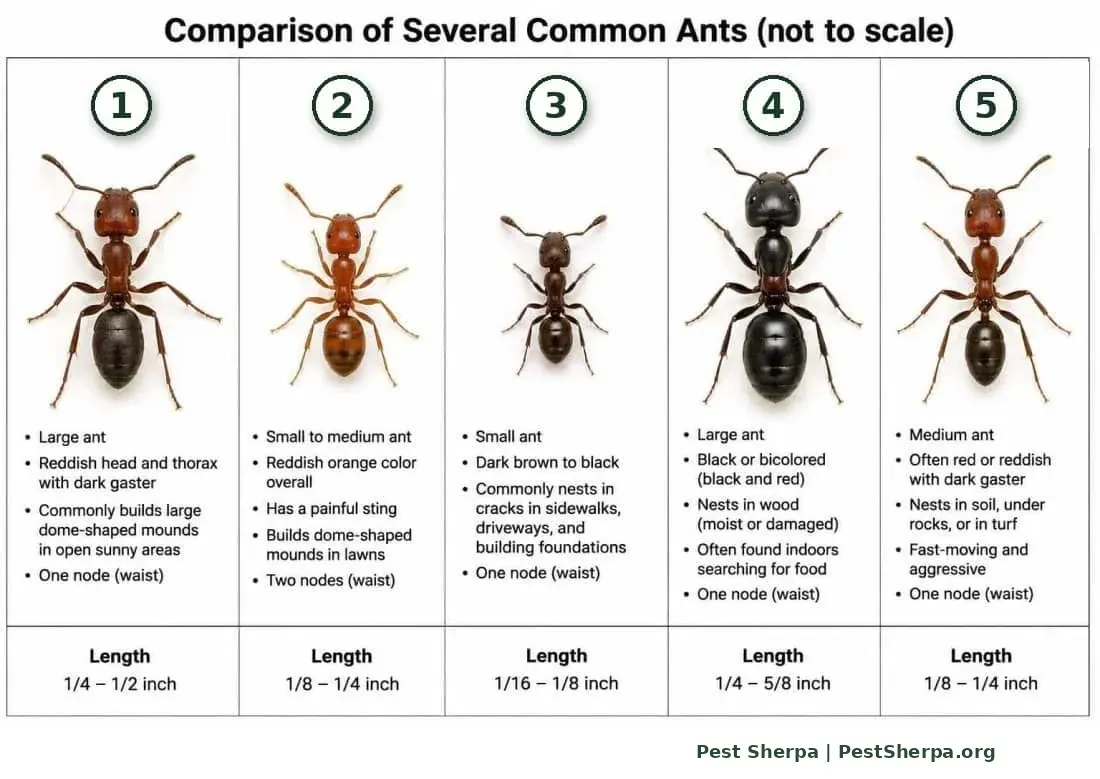
Which one do you see? Match the number:
Allegheny mound ant (Formica exsectoides): 1/4 to 1/2 inch, reddish head and thorax with a dark gaster, one node. Builds large dome-shaped mounds in open sunny areas.
Red imported fire ant (Solenopsis invicta): 1/8 to 1/4 inch, reddish orange overall, two nodes and a painful sting. Builds dome-shaped mounds in lawns.
Pavement ant (Tetramorium spp.): 1/16 to 1/8 inch, dark brown to black, one node. Nests in cracks in sidewalks, driveways and foundations.
Carpenter ant (Camponotus spp.): 1/4 to 5/8 inch, large, black or black and red, one node. Nests in moist or damaged wood.
Field ant (Formica spp.): 1/8 to 1/4 inch, often red or reddish with a dark gaster, one node. Fast-moving and nests in soil or turf.
Fire ants: Often confused because both create noticeable mounds, but fire ants sting while Allegheny mound ants bite and spray formic acid. Compare with the fire ant guide.
Field ants: Closely related outdoor mound-building ants that may appear similar but often create smaller colonies.
Pavement ants: Smaller ants associated with cracks in sidewalks and foundations rather than massive open-field mounds.
Carpenter ants: Large ants that nest in damp wood instead of creating large exposed soil mounds.
No. They can bite and spray formic acid when disturbed, but they do not sting like fire ants. That difference matters for risk framing and for choosing the right guide.
Will knocking down the mound solve the problem?
Usually not. Colonies often extend underground and may reconnect. Destroying only the visible dome can agitate workers without eliminating queens and brood.
Are these ants indoor kitchen pests?
They are primarily outdoor mound builders. Kitchen trails more often belong to other species. Still inspect if workers appear indoors near doors facing a mound field.
How long does control take?
Expect a longer program than a one-day spray. Baiting, habitat context, and possible re-treatment are normal. Multiple mounds may mean related sites that need a property-level plan.
When should I call a professional?
When mounds are widespread in high-use turf, DIY labeled efforts fail, plant damage is escalating, or fire ant lookalike ID is uncertain.
This article was written by Greg Baumann, founder of Pest Sherpa, and reflects more than 40 years of professional pest management experience.
About the Author
Greg Baumann | Pest Control Expert
Greg Baumann is the founder of Pest Sherpa and a Pest Control Expert with more than 40 years of professional pest management experience. His articles combine decades of field experience, technical expertise, and science-based guidance to help homeowners identify pests correctly, understand real-world risks, and make informed pest management decisions.
Mission:Identify the pest. Understand the risk. Stop the problem. Prevent the comeback. Know when it’s time to call a professional.