
West Nile Virus: Causes and Mosquito Identification
West Nile virus is driven by mosquito bites, especially from Culex species. This guide covers causes, mosquito identification cues, and practical prevention for property owners.
TL;DR
West Nile virus is the most widespread mosquito-borne disease in North America. The virus circulates naturally between birds and mosquitoes, primarily Culex mosquitoes. Humans and horses can become infected through female mosquito bites but are considered dead-end hosts because they do not significantly contribute to ongoing transmission. Eliminating standing water and reducing mosquito populations remain the most effective prevention strategies.
What this means right now
As of November 6, 2026: California is having its worst West Nile year in five. CDPH reports 528 human cases and 32 deaths year to date, with 27 new cases in a single week (westnile.ca.gov). Los Angeles County accounts for 304 cases and 13 deaths; Orange County has 66 cases and 7 deaths. The state calls this its highest West Nile activity in five years, and the season’s first real storm left standing water along the Central and South Coast (Medical Daily). Cool nights do not end the risk yet. Rain-filled buckets, planters, and tarps can hatch a new generation of mosquitoes within about a week. I dump standing water every few days, and I keep telling older adults to use an EPA-registered repellent at dusk and dawn until nights stay cold.
Jump to Section
- What Is West Nile Virus?
- Identification of Mosquito Vectors
- Mosquito Biology and Life Cycle
- West Nile Virus Transmission Cycle
- Why Birds Matter
- Health Risks and Clinical Outcomes
- Mosquito Surveillance Programs
- Mosquito Control and Prevention
- References
Medical Disclaimer
This article is intended for informational and educational purposes only and is not a substitute for professional medical advice, diagnosis, or treatment. Information about West Nile virus is based on pest management resources, university publications, medical literature, and federal public health agencies. Readers experiencing symptoms or seeking medical guidance should consult a qualified healthcare professional. For pest identification and control, property owners should consult a licensed pest management professional who has the training and experience necessary to evaluate pest issues and recommend appropriate control strategies.
What Is West Nile Virus?
West Nile virus (WNV) is a mosquito-borne virus that affects humans, birds, horses, and several other vertebrates. First identified in Uganda in 1937, the virus was detected in North America in 1999 and rapidly spread throughout the United States and Canada. Today, it is considered the most widespread mosquito-borne disease in North America.
Unlike many pests that create nuisance problems around homes, mosquitoes can serve as vectors capable of transmitting disease-causing pathogens. Understanding the biology of mosquito vectors, the ecology of West Nile virus, and the factors that influence transmission can help reduce the risk of human exposure.
Identification of Mosquito Vectors
Several mosquito species are capable of transmitting West Nile virus in North America, but the primary vectors belong to the Culex mosquito group. These mosquitoes are commonly referred to as house mosquitoes and are among the most important disease vectors encountered in urban and suburban environments.
Adult mosquitoes typically measure approximately 1/8 to 3/8 inch (3 to 10 mm) long. They possess slender bodies, long delicate legs, narrow wings, and elongated mouthparts known as a proboscis, which allows females to obtain blood meals.
Unlike some mosquito species that display bold black-and-white markings, most West Nile virus vectors are generally brown to tan and relatively inconspicuous. Proper identification often requires close examination and professional expertise.
See Pest Sherpa Mosquito Identification Guide for more information.
Mosquito Biology and Life Cycle
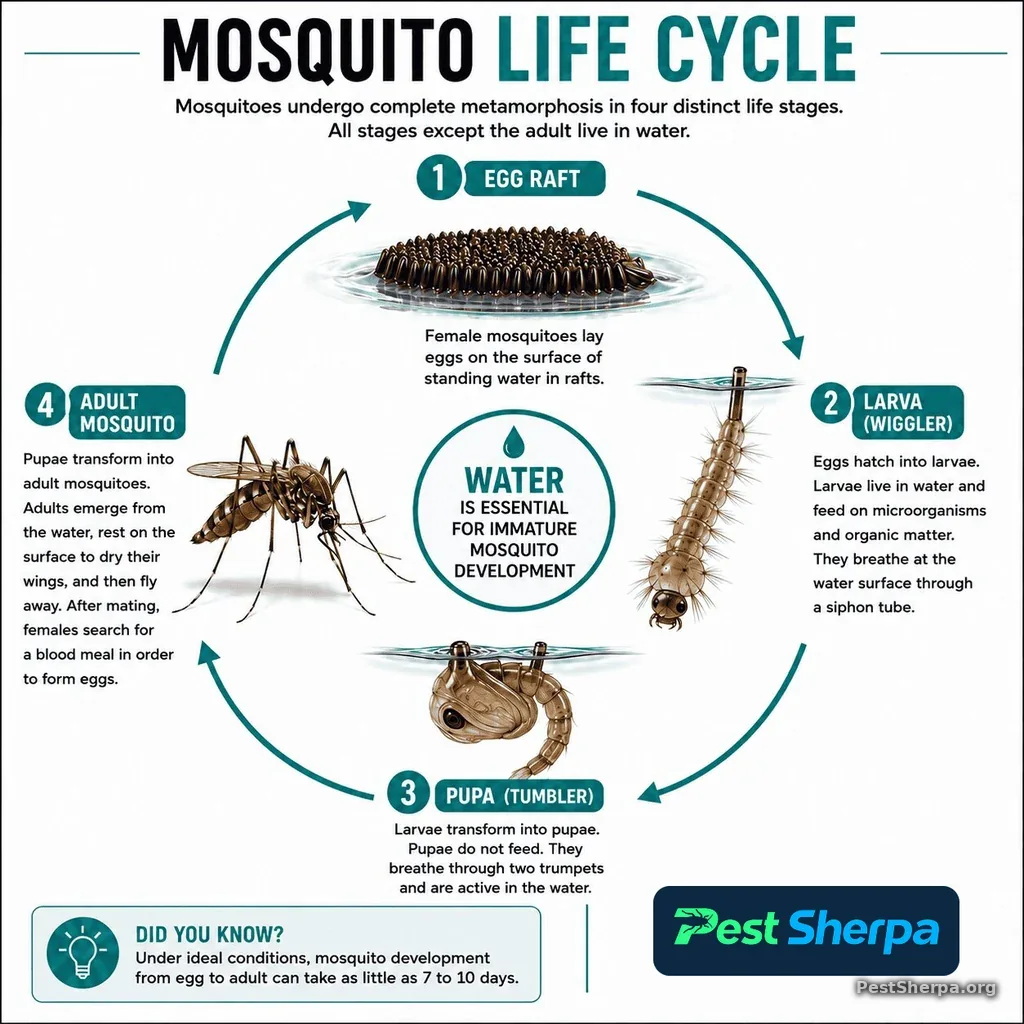
Mosquitoes undergo complete metamorphosis and develop through four distinct life stages:
- Egg
- Larva
- Pupa
- Adult
Female mosquitoes lay eggs on or near standing water. In many Culex species, eggs are deposited in floating clusters known as rafts. Larvae emerge and spend their development in water, feeding on microorganisms and organic material before transforming into pupae and eventually emerging as adults.
Under favorable summer conditions, development from egg to adult can occur in as little as 7 to 10 days. Warm temperatures and abundant standing water can therefore produce explosive population growth.
West Nile Virus Transmission Cycle
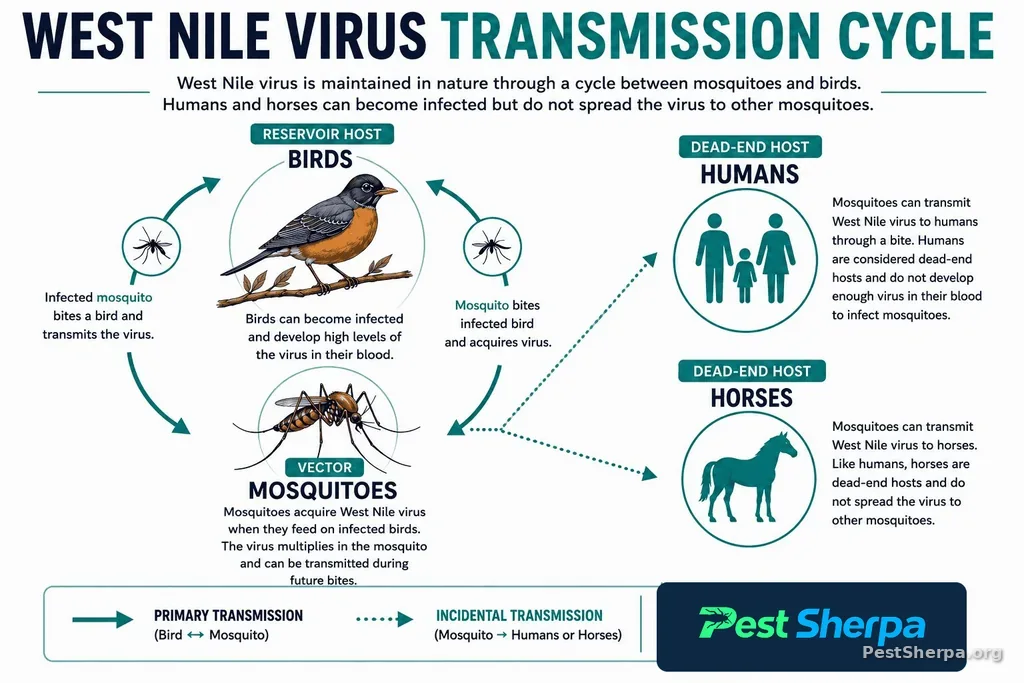
West Nile virus circulates naturally between mosquitoes and birds. This mosquito-bird cycle serves as the foundation of virus persistence in the environment.
When a mosquito feeds on an infected bird, it may acquire the virus. After a period of replication within the mosquito, the virus can be transmitted during subsequent blood meals. As additional birds become infected, the virus amplifies throughout local mosquito and bird populations.
Reservoir Hosts vs. Dead-End Hosts
Birds are considered reservoir hosts because the virus reaches concentrations high enough to infect feeding mosquitoes. Humans and horses are considered dead-end hosts because they generally do not develop viral concentrations sufficient to infect additional mosquitoes.
As a result, infected humans do not typically contribute to ongoing transmission cycles.
Why Birds Matter in West Nile Virus Ecology
Birds play a central role in West Nile virus ecology. Species such as robins, crows, jays, and many other common birds can become infected and help amplify the virus during mosquito season.
Because birds move throughout neighborhoods, parks, wetlands, and urban environments, they help distribute the virus across broad geographic areas. Areas with abundant bird populations and favorable mosquito breeding habitat may experience elevated West Nile virus activity.
Health Risks and Clinical Outcomes
Most individuals infected with West Nile virus never develop noticeable symptoms. When symptoms occur, they are often mild and resemble other viral illnesses.
- Fever
- Headache
- Fatigue
- Muscle aches
- General malaise
A small percentage of infections progress to severe neurological disease involving the brain or nervous system. Conditions such as meningitis and encephalitis represent the most serious forms of West Nile virus infection.
Older adults and individuals with weakened immune systems face an increased risk of severe illness and complications.
Mosquito Surveillance and Monitoring Programs
Public health agencies routinely monitor mosquito populations and West Nile virus activity through surveillance programs. These efforts help identify areas of elevated risk and guide mosquito management decisions.
- Mosquito trapping programs
- Testing mosquito pools for West Nile virus
- Dead bird monitoring programs
- Human disease surveillance
- Seasonal outbreak forecasting
Surveillance data helps local agencies determine when mosquito populations are increasing and whether disease activity may require intervention.
Mosquito Control and Prevention
Effective mosquito management relies on an integrated approach that combines inspection, habitat modification, monitoring, and targeted treatments.
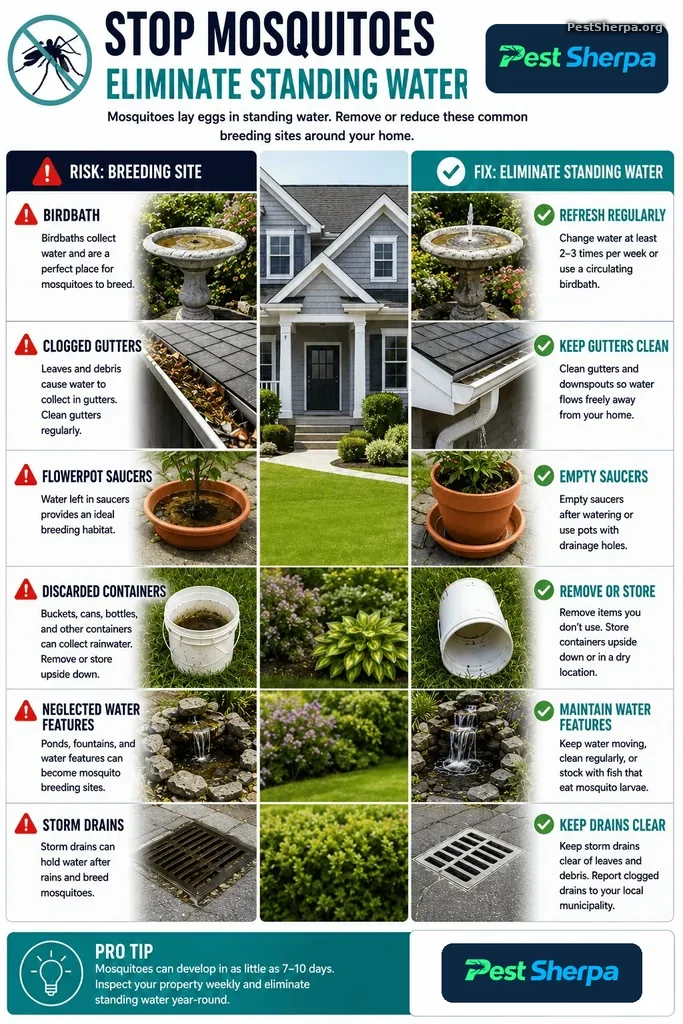
Sherpa Insight: Most mosquito problems begin long before homeowners notice adult mosquitoes. Eliminating standing water where mosquitoes breed is often far more effective than treating adult mosquitoes after populations become established.
Common mosquito breeding sites include:
- Storm drains
- Birdbaths
- Clogged gutters
- Tree holes
- Discarded containers
- Poorly maintained water features
- Abandoned swimming pools
- Roadside ditches
When breeding sites cannot be eliminated, pest management professionals may utilize larvicides to prevent immature mosquitoes from developing into adults. Professional mosquito management programs may also include targeted adulticide applications, trapping programs, and ongoing monitoring.
Importance of Professional Pest Management
Mosquito management is often more complex than homeowners realize. Breeding sites may be hidden, difficult to access, or located on neighboring properties. Effective management requires identifying the conditions that support mosquito development and implementing long-term corrective measures.
Licensed pest management professionals apply integrated pest management principles that combine environmental management, biological controls, monitoring, and targeted pesticide applications when necessary.
Conclusion
West Nile virus remains an important public health concern throughout North America. The virus is maintained through a natural transmission cycle involving birds and mosquitoes, with humans serving as incidental hosts. Understanding mosquito biology, transmission pathways, surveillance efforts, and effective control strategies is essential for reducing disease risk.
Because mosquito populations can increase rapidly and breeding habitats are often overlooked, professional mosquito management programs play an important role in reducing mosquito abundance and minimizing opportunities for disease transmission.
Related Pest Sherpa Resources
- Mosquito identification and biology
- Hiring a pro for mosquitoes
- Disease and public health hub
- Mosquitoes in the nation’s capital, a history of disease and public health in Washington, D.C.
- Southeast mosquito protection after heavy rain
- Ask the Sherpa
References
- Centers for Disease Control and Prevention: Transmission of West Nile Virus
- Centers for Disease Control and Prevention: Data and Maps for West Nile Virus
- National Pest Management Association: NPMA Field Guide to Structural Pests, 2nd Edition
- University of Florida IFAS Extension: Mosquitoes
- University of California Agriculture and Natural Resources: Mosquitoes
- U.S. Environmental Protection Agency: Mosquito Control
- Sejvar, James J.: Clinical Manifestations and Outcomes of West Nile Virus Infection
- Petersen, Lyle R., and Anthony A. Marfin: West Nile Virus: A Primer for the Clinician
- Colpitts, Tonya M., et al.: West Nile Virus: Biology, Transmission, and Human Infection
- Chancey, Christopher, et al.: The Global Ecology and Epidemiology of West Nile Virus
This article was written by Greg Baumann, founder of Pest Sherpa, and reflects more than 40 years of professional pest management experience.
About the Author

Greg Baumann | Pest Control Expert
Greg Baumann is the founder of Pest Sherpa and a Pest Control Expert with more than 40 years of professional pest management experience. His articles combine decades of field experience, technical expertise, and science-based guidance to help homeowners identify pests correctly, understand real-world risks, and make informed pest management decisions.
Mission: Identify the pest. Understand the risk. Stop the problem. Prevent the comeback. Know when it’s time to call a professional.